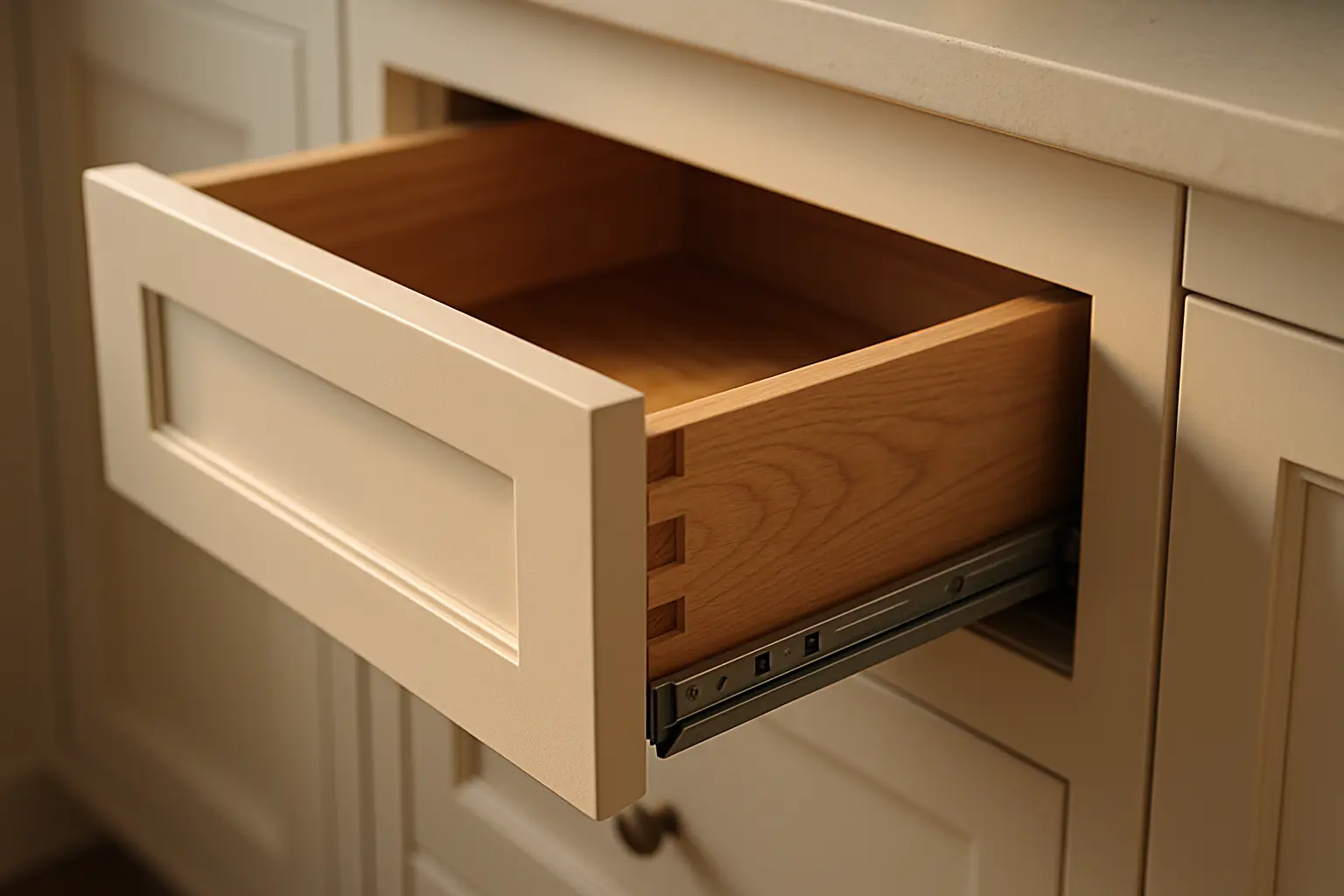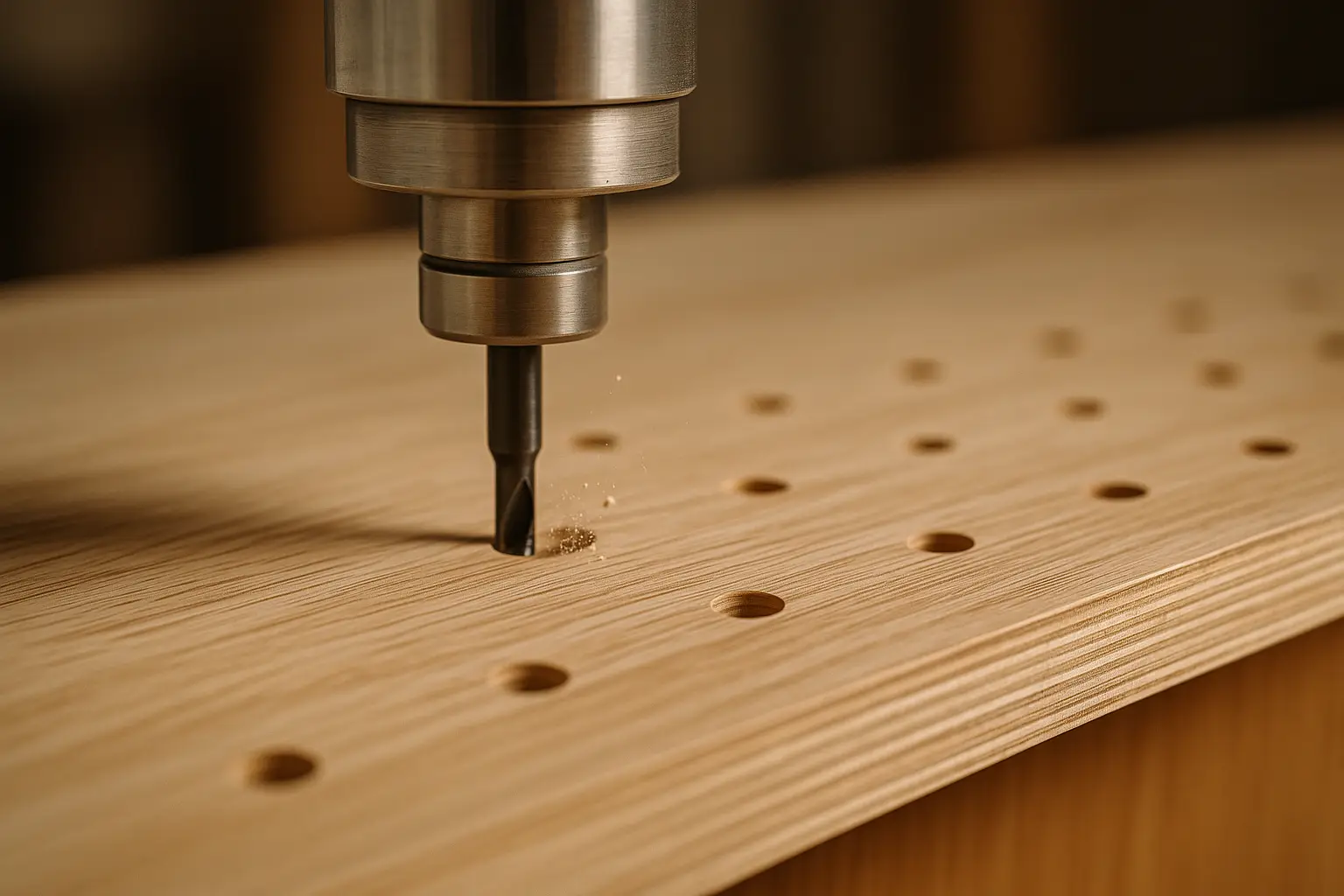
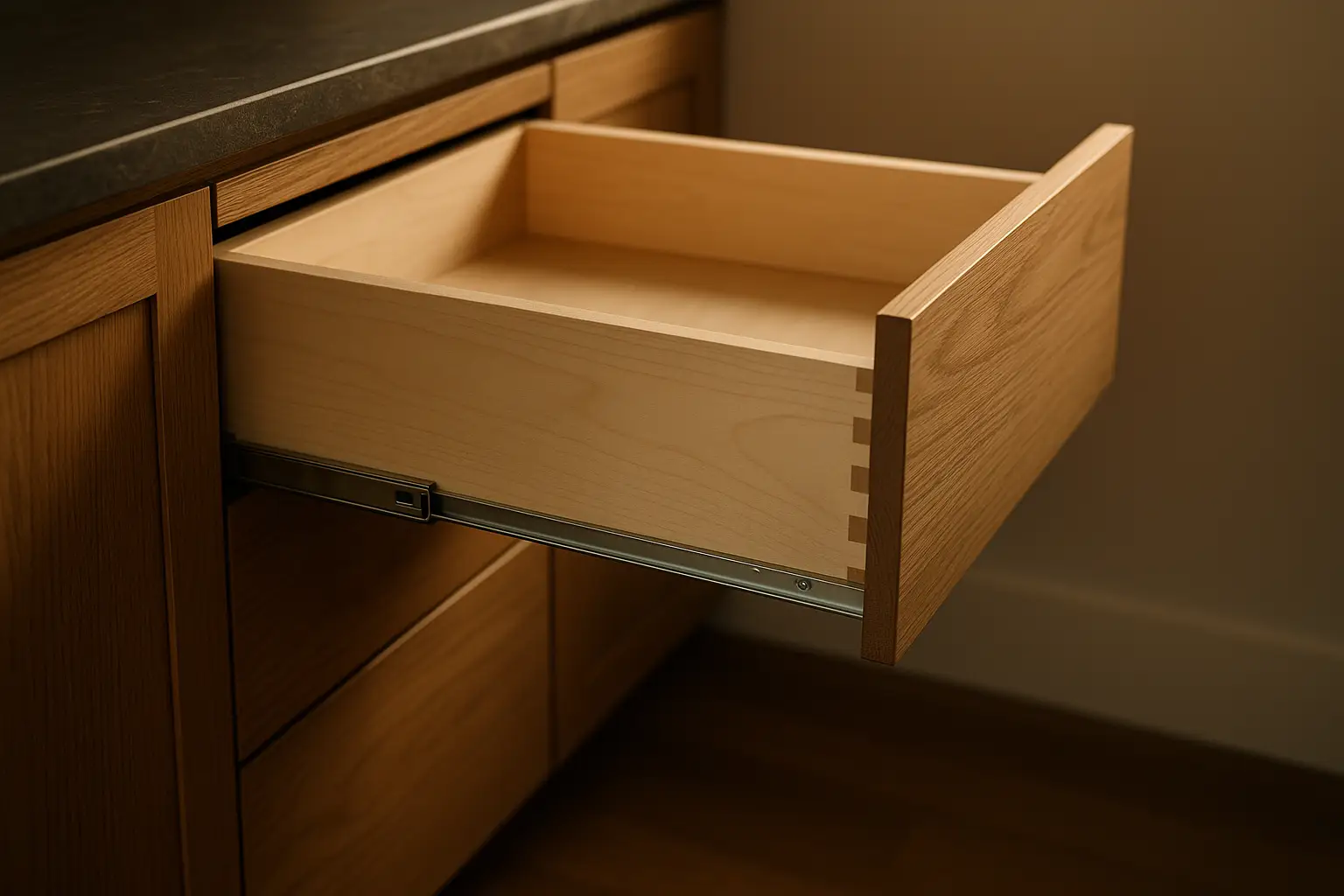
Walk into almost any recently remodeled kitchen in San Jose, San Francisco, or San Mateo, and you'll likely see frameless cabinets. Also called European or full-access cabinets, they've moved from a specialty choice to the default for contemporary and transitional homes. The reasons are practical, not just stylistic. Frameless construction changes how you use the box, how it looks, and how the doors and drawers behave over years of daily use. Here's what actually drives that popularity, and where the tradeoffs live.
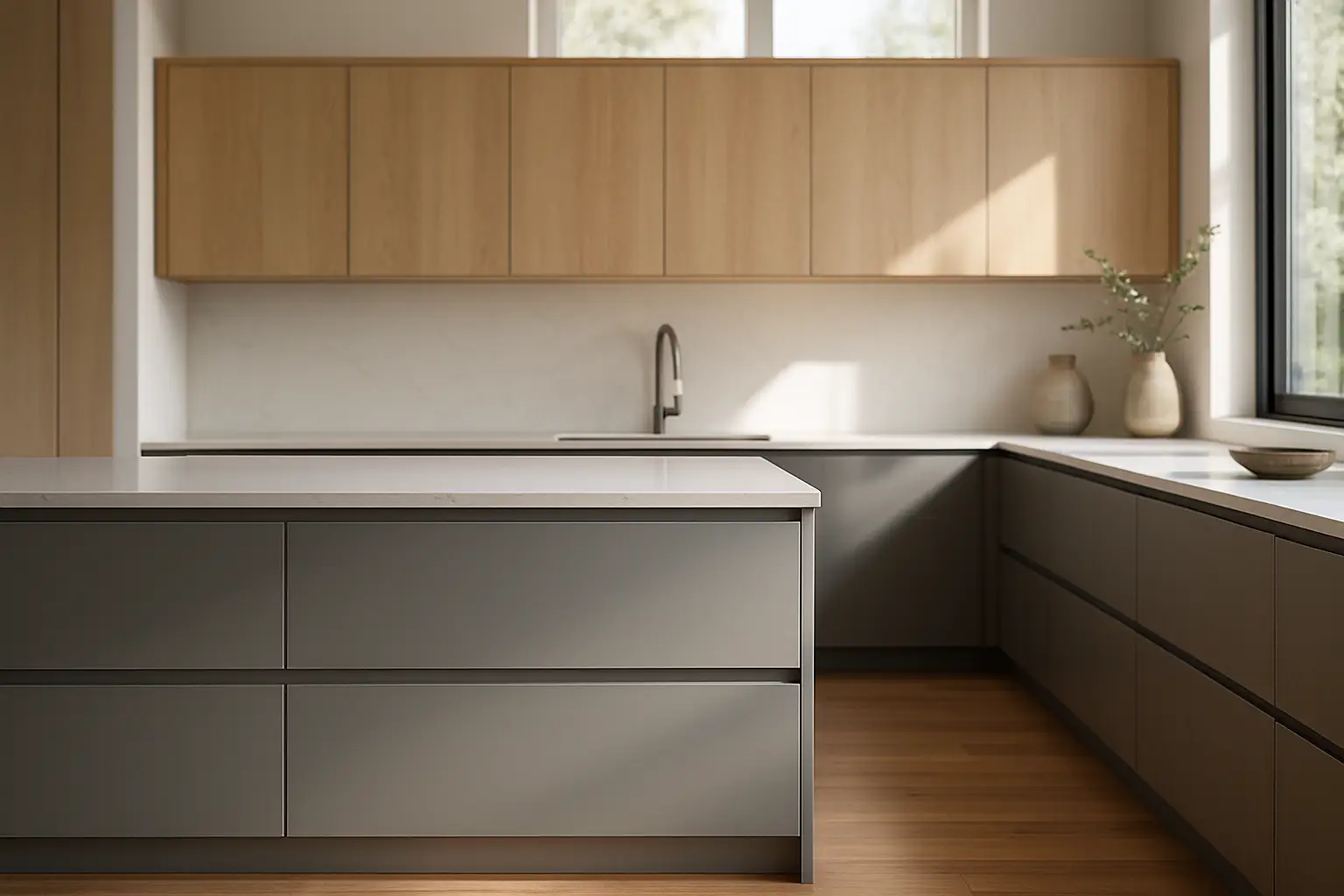
What Frameless Construction Actually Changes
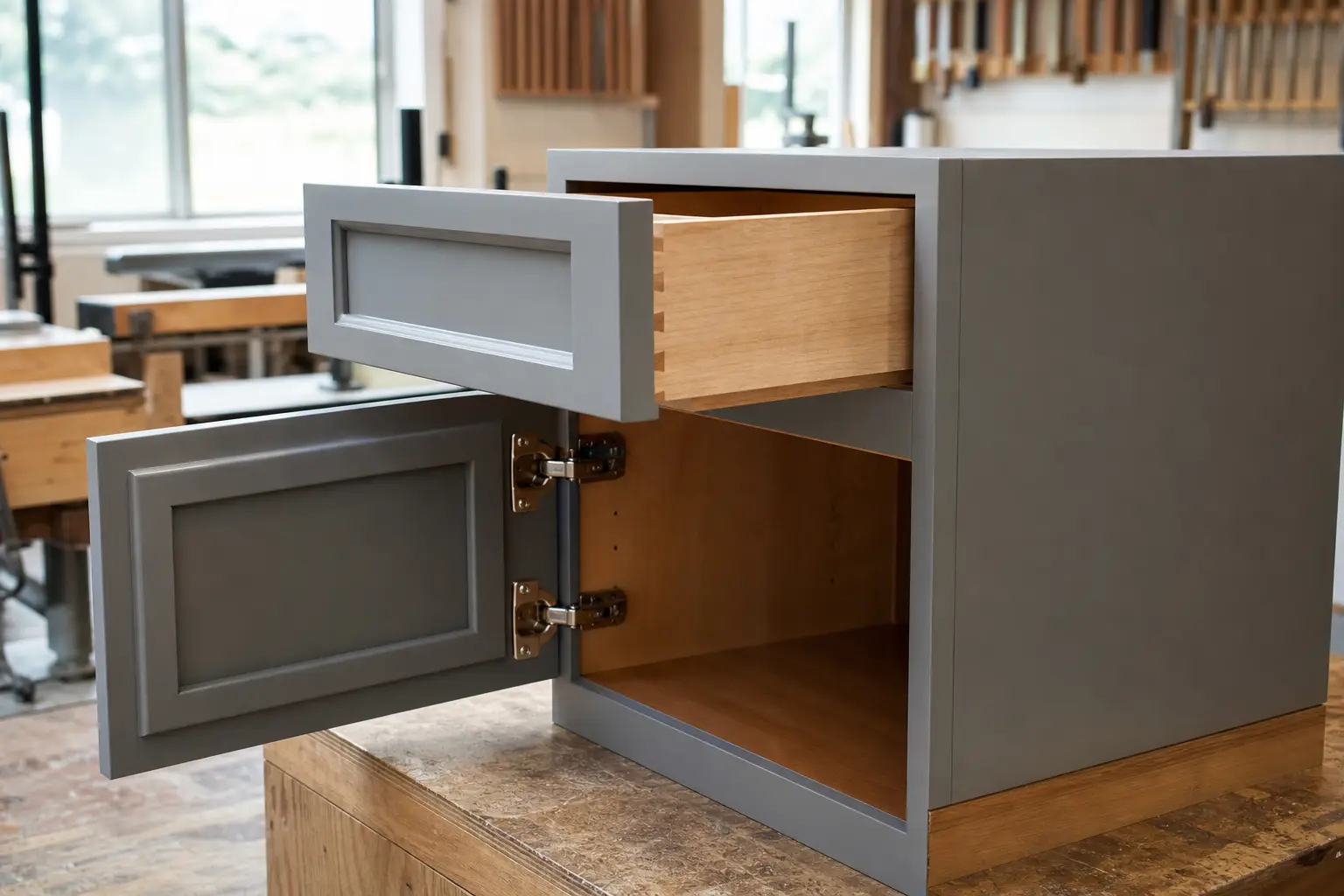
A traditional face-frame cabinet has a solid wood frame, usually 1.5 inches wide, attached to the front of the box. Doors mount to that frame, and the frame partially covers the opening. A frameless cabinet skips the frame entirely. Doors attach directly to the side panels of the box, which are typically 3/4-inch plywood or MDF, using cup hinges bored into the door.
The result is a wider opening. On a standard 15-inch base cabinet, dropping the face frame can recover 2 to 3 inches of usable width and full height access to the interior. You can reach the back corners of a drawer without a frame lip in the way, and pull-outs run the full internal width. For anyone who has fought to get a stockpot past a face-frame stile, the difference is obvious the first week.
Structurally, frameless boxes rely on thicker, well-joined panels and a solid back or steel hanging rail to stay square. That's why panel material and edgebanding quality matter more here than in framed construction. A cheap frameless box built from thin particleboard can rack over time. A properly engineered one built from furniture-grade plywood stays tight for decades.
The Look That Reads as Modern
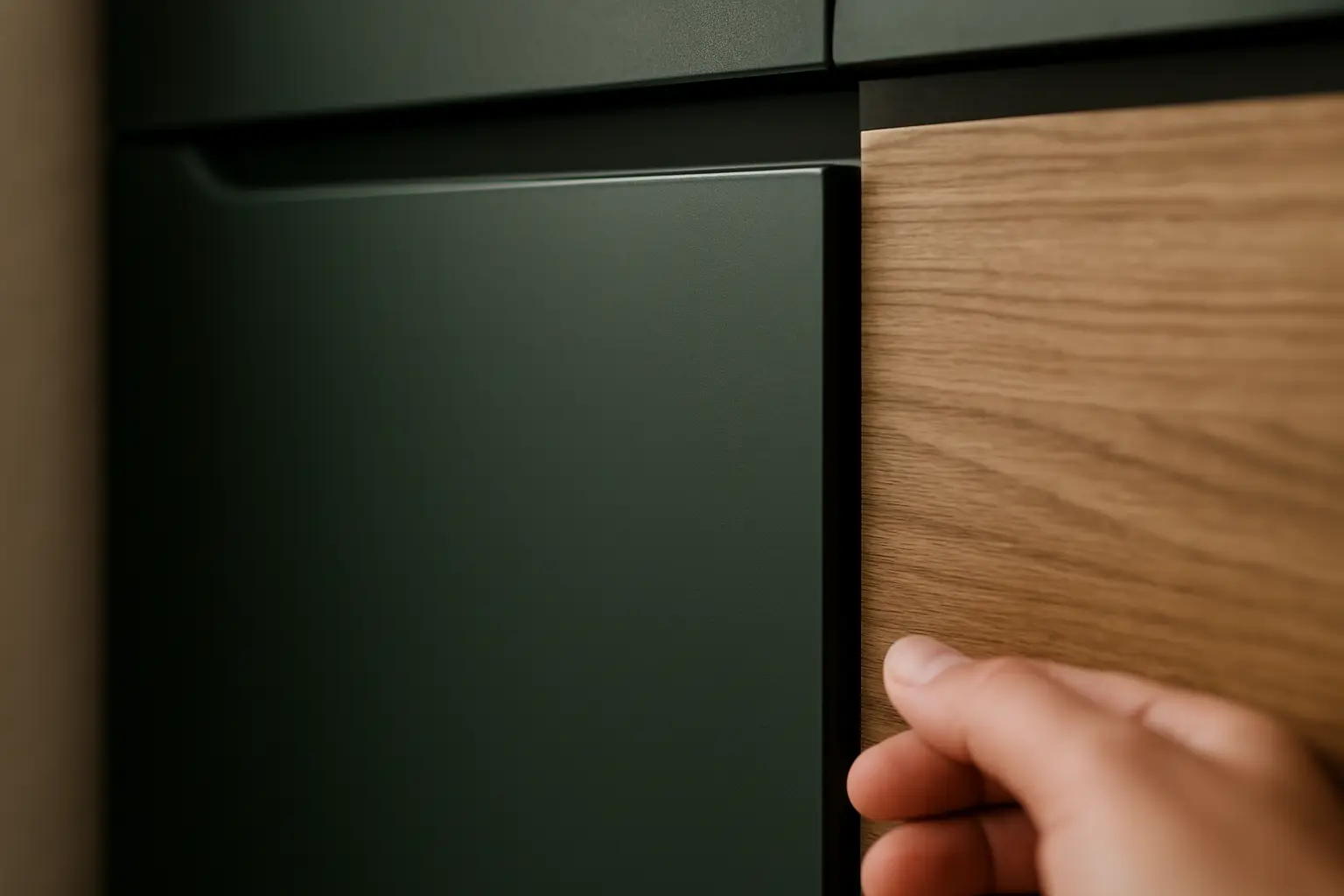
Frameless cabinets are the backbone of the clean, flat-panel kitchens that dominate design right now. Because doors sit close together with only a narrow reveal between them, usually around 1/8 inch, the fronts read as a continuous surface. That's the look behind slab-door kitchens, full-overlay Shaker runs, and handleless designs with integrated finger pulls or touch-latch mechanisms.
Face-frame cabinets can achieve full overlay too, but you always see a bit of frame at the reveals, and the doors sit slightly proud. For homeowners chasing a crisp, architectural feel, frameless is the shorter path. It pairs naturally with the mixed-material palettes we see across Bay Area remodels: white oak or walnut fronts, matte painted islands, and slab quartz or porcelain counters.
Finish options are the same either way. We build frameless boxes with painted MDF doors for a smooth, joint-free look, or with plywood boxes and solid wood or veneer fronts when clients want visible grain. Thermofoil and high-gloss acrylic fronts also read well on frameless because there's no frame to interrupt the reflection.
Hardware Is Where Frameless Earns Its Keep
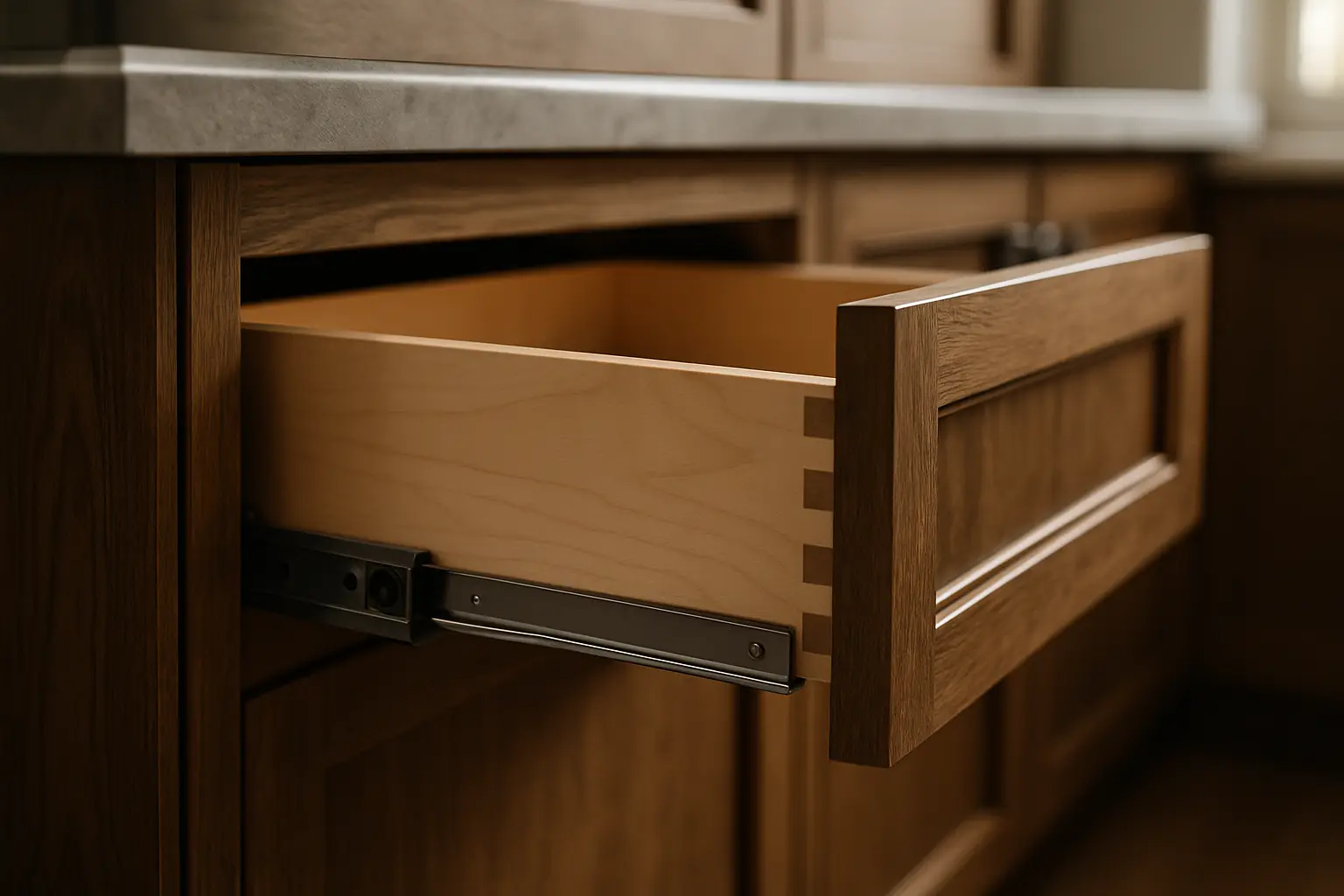
Modern cabinet hardware was largely designed around frameless construction. Soft-close cup hinges, the kind that let a door glide shut silently from a few inches away, mount cleanly to a frameless side panel and adjust in three directions so doors line up precisely. Full-extension, soft-close undermount slides let a drawer pull all the way out, and because there's no frame narrowing the box, the drawer boxes themselves are wider.
That matters for storage systems. Deep pull-out pantries, blind-corner organizers, and trash pull-outs all fit better in frameless boxes because they use the full interior width. Dovetail drawer boxes, which we build from solid maple or Baltic birch, ride on those undermount slides and hold up to heavy loads without racking.
We do recommend paying attention to hinge quality here. Because the door carries directly on the hinge with no frame support, a well-made hinge with a robust cup and a metal mounting plate is worth the small upcharge. It's the part you'll touch thousands of times a year.
Custom, Semi-Custom, and RTA: How Frameless Gets Built
You'll find frameless cabinets at every price tier, and the construction differences are real. Ready-to-assemble (RTA) frameless cabinets ship flat and use cam locks or dowels for assembly. They're the budget option and often built from thinner engineered panels with basic hardware. Where a custom box uses 3/4-inch plywood sides and a European six-way adjustable soft-close hinge, an RTA box often drops to 1/2-inch particleboard with a two-way clip hinge, and that gap shows up in door alignment within a year or two.
Semi-custom frameless lines offer a fixed menu of sizes, door styles, and finishes with better hardware and more reliable boxes. Full custom, which is what American Built Cabinets builds in our San Jose shop, lets you specify exact dimensions, panel material, interior fittings, and finish, so the cabinets fit the room instead of forcing the room to fit stock sizes. That flexibility pays off in the older San Francisco and Peninsula homes where walls are rarely plumb and ceilings vary.
Because we manufacture locally, our lead time on custom frameless runs about three weeks, far shorter than the many-week waits common with imported or national semi-custom lines. Building here also means our own team handles quality control on every box, and warranty support is a phone call, not a claims process routed through a distributor.
FAQ
Q1: Are frameless cabinets actually stronger than face-frame cabinets?
A1: Neither is inherently stronger; it depends on materials and joinery. A frameless box built from 3/4-inch furniture-grade plywood with a solid back and steel hanging rail is very rigid and holds heavy stone counters without issue. A poorly built frameless box from thin particleboard can sag, so panel quality matters more than the style label.
Q2: Do frameless cabinets give you more storage space?
A2: Yes, meaningfully. Removing the 1.5-inch face frame widens the opening and lets drawers and pull-outs use the full internal width. On a typical run of base cabinets you gain a few inches of usable space and easier access to back corners and full-height interiors.
Q3: Can frameless cabinets look traditional, or only modern?
A3: They can do both. Frameless construction pairs with slab and flat-panel doors for a modern look, but it also works with full-overlay Shaker doors for a transitional or classic feel. The construction method is separate from the door style, so you have wide latitude on appearance.
Q4: What door and box materials do you recommend for frameless cabinets?
A4: For boxes we favor 3/4-inch furniture-grade plywood for strength and moisture resistance, which matters in Bay Area kitchens. For painted doors, MDF gives the smoothest, joint-free finish; for a natural grain look, solid wood or veneered fronts in white oak or walnut are popular. Drawer boxes should be dovetailed maple or Baltic birch.
Q5: How long does it take to get custom frameless cabinets in the Bay Area?
A5: Because we manufacture in San Jose, our typical lead time for custom frameless cabinets is about three weeks after the design and materials are finalized. Local production also means faster revisions and direct warranty support, compared to the longer waits common with imported or national semi-custom lines.
Q6: Are frameless cabinets harder to install?
A6: They install a bit differently but not harder for an experienced crew. There's no face frame to screw through, so cabinets join panel-to-panel and hang on a rail or ledger. Careful shimming and leveling matter more because the tight door reveals will show any misalignment, which is why professional installation is worth it.