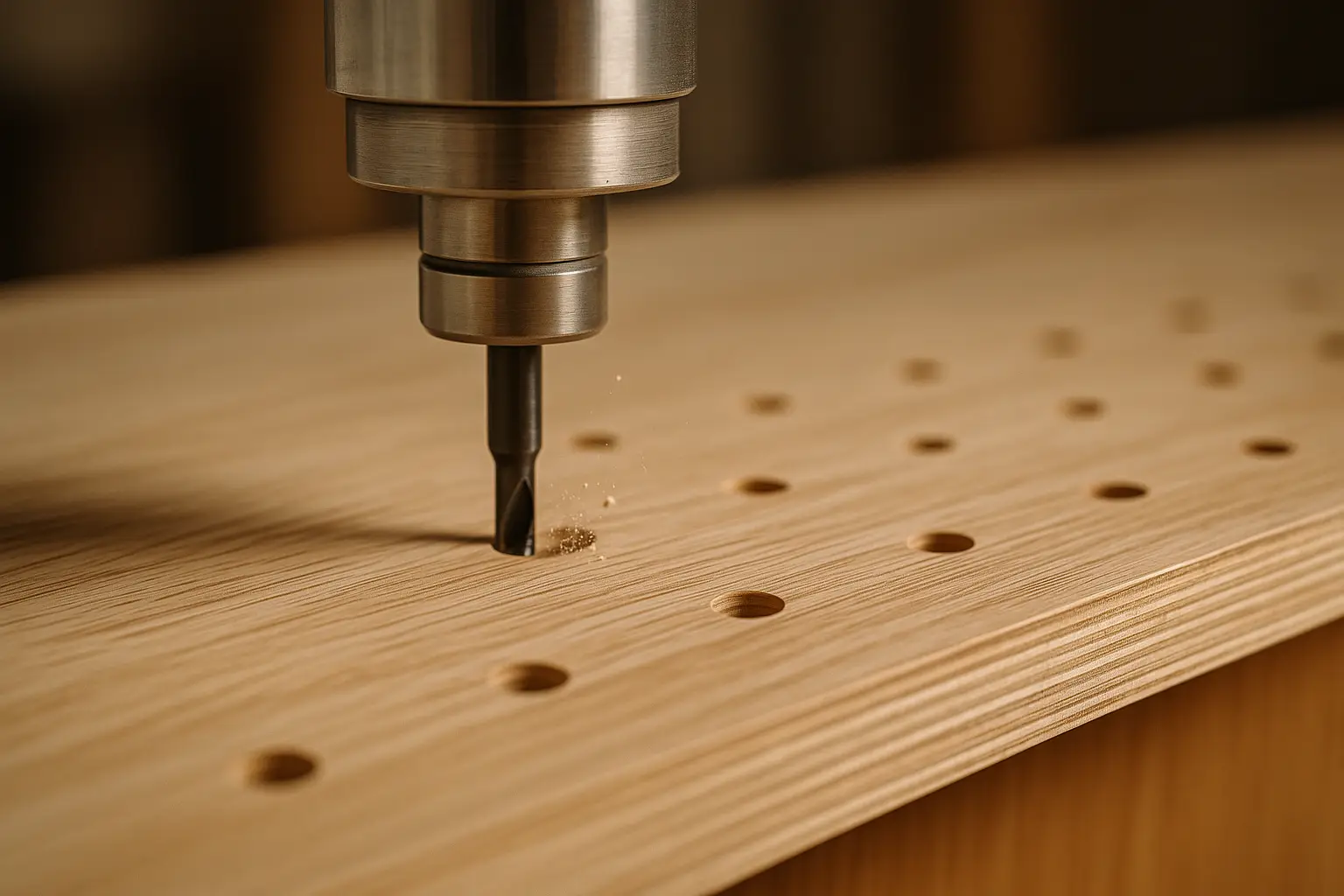
Cabinet trends move slower than paint colors, and that is a good thing when a kitchen renovation runs into five figures. The shifts we expect to see in 2026 across San Jose, San Francisco, and San Mateo kitchens are less about chasing a look and more about materials, storage, and finishes that hold up in daily use. Here is what homeowners and builders are actually asking us for, and where it makes sense to spend versus save.
Warm Woods Return, but Stained, Not Painted-Over
For nearly a decade, painted white and gray Shaker doors dominated Bay Area kitchens. That is changing. We are quoting far more rift-cut white oak, walnut, and knotty alder in natural or lightly stained finishes, where the grain stays visible instead of being buried under paint. The appeal is partly practical: a clear or lightly toned finish on real wood hides fingerprints and minor scuffs better than a high-gloss white, which shows every mark near the sink and trash pull.
If you love the warmth but worry about cost, know that solid wood doors run more than a veneer over MDF or plywood core. A common middle path is a wood-veneer slab or Shaker door on a plywood box, which gives you the grain you want without the price and seasonal movement of full solid-wood panels. In our shop, veneered doors on a 3/4-inch plywood carcass are one of the most stable, best-value combinations for the Bay Area's mild but humid coastal swings.
Two-Tone and Mixed-Material Kitchens Keep Growing
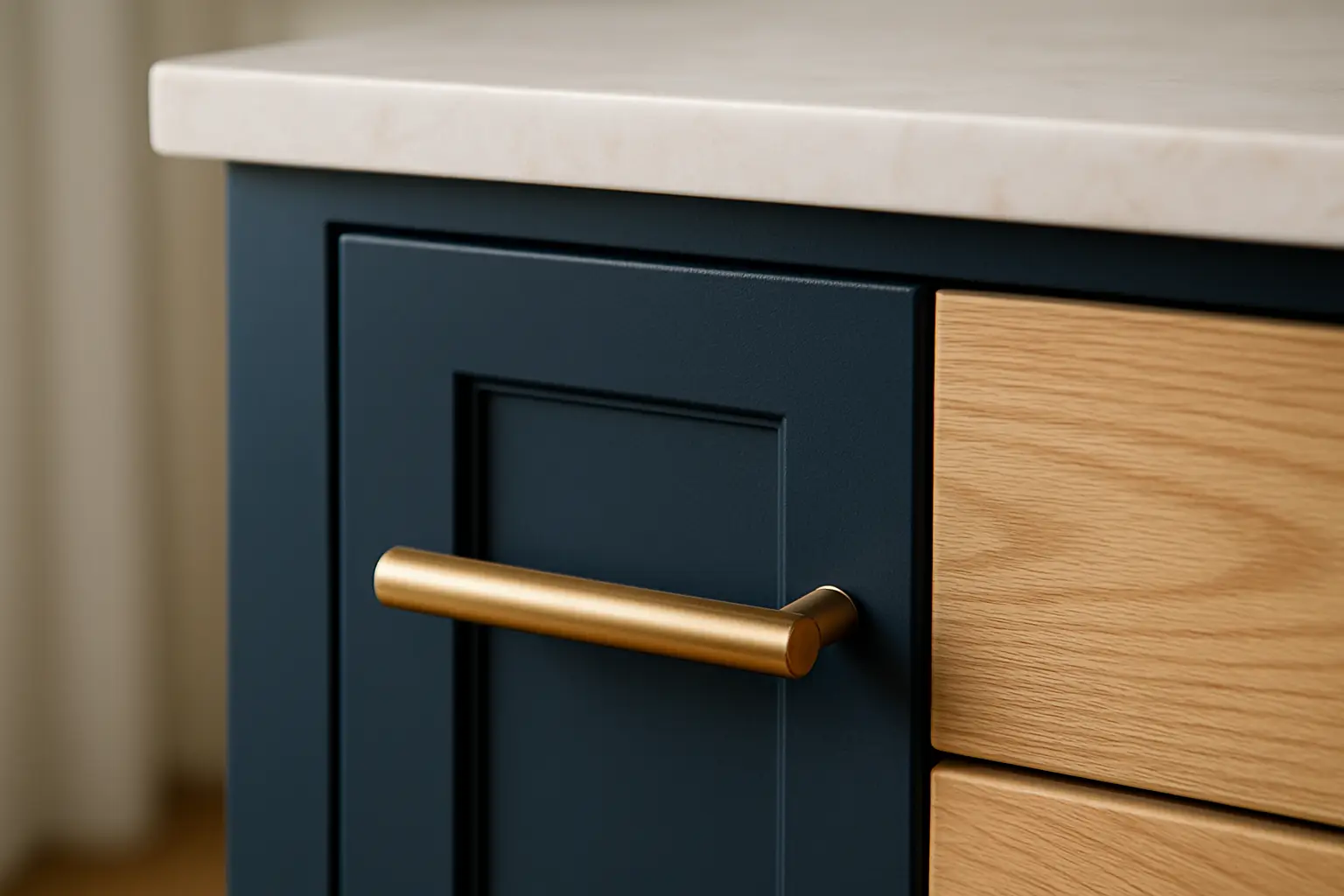
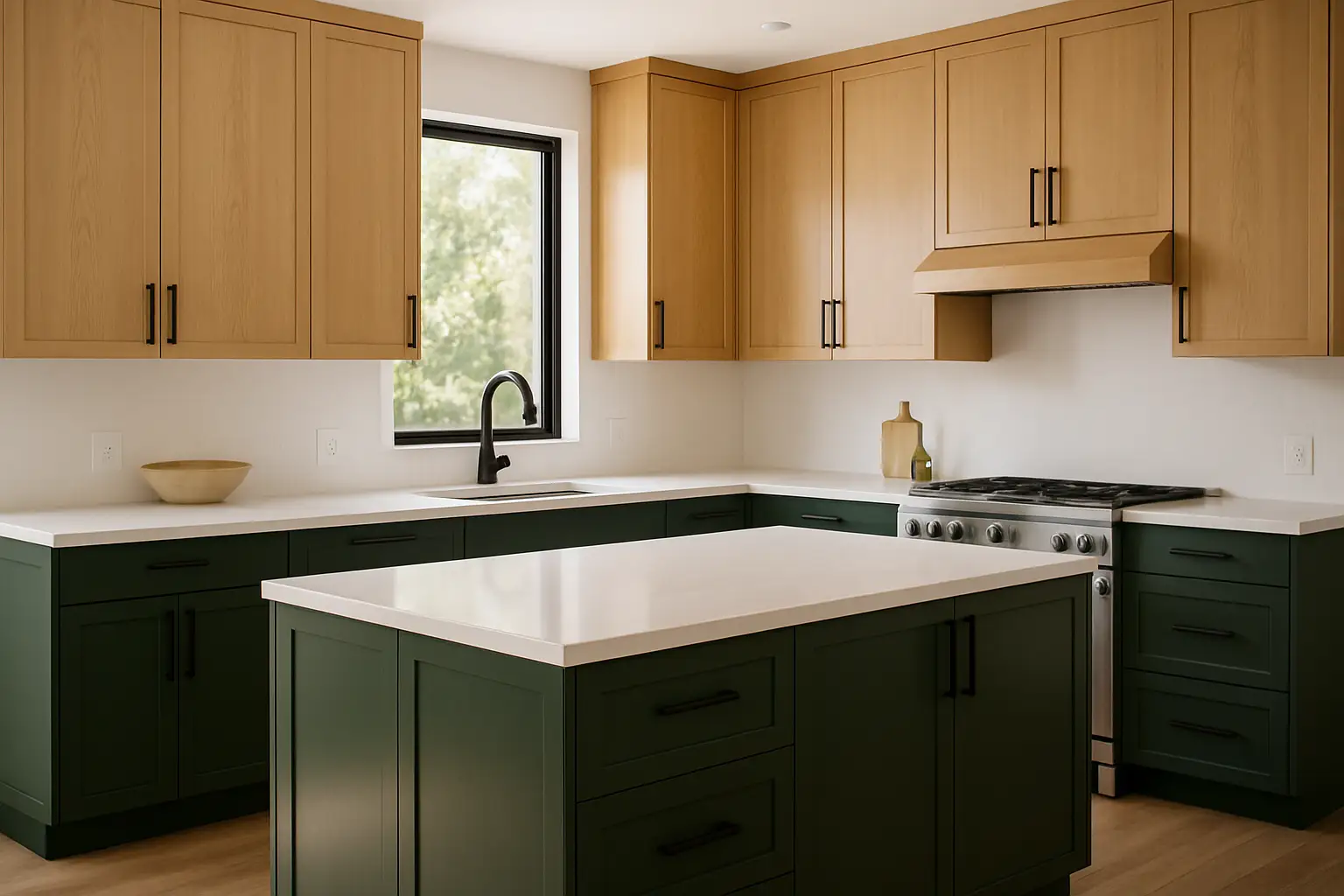
The single-color kitchen is giving way to layered palettes. A typical 2026 request pairs a deep base color, think forest green, muted navy, or clay, on the lower cabinets and island, with warmer wood or a soft off-white on the uppers. It breaks up a large kitchen visually and lets an island read as furniture rather than more cabinetry.
This works because custom and semi-custom cabinets are ordered as separate runs anyway, so mixing door styles or colors adds finish steps but not structural complexity. One caution: matching stain across separate wood species is genuinely hard, since oak and maple absorb color differently. If you want a consistent tone, we recommend choosing one species for all stained elements and using paint for the contrast pieces. Getting the finish samples approved in your own kitchen light, not a showroom, saves regret later.
Storage That Earns Its Space
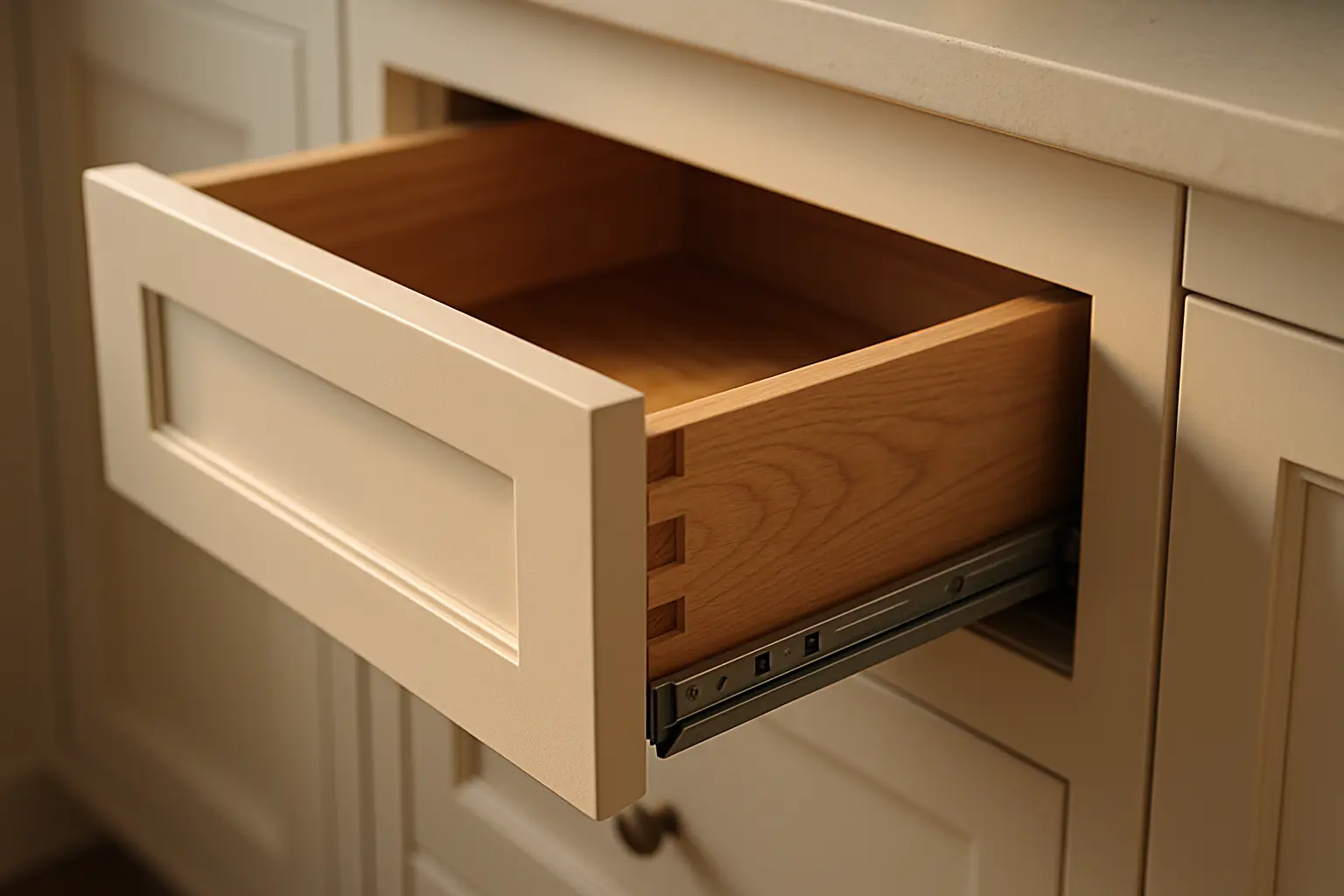
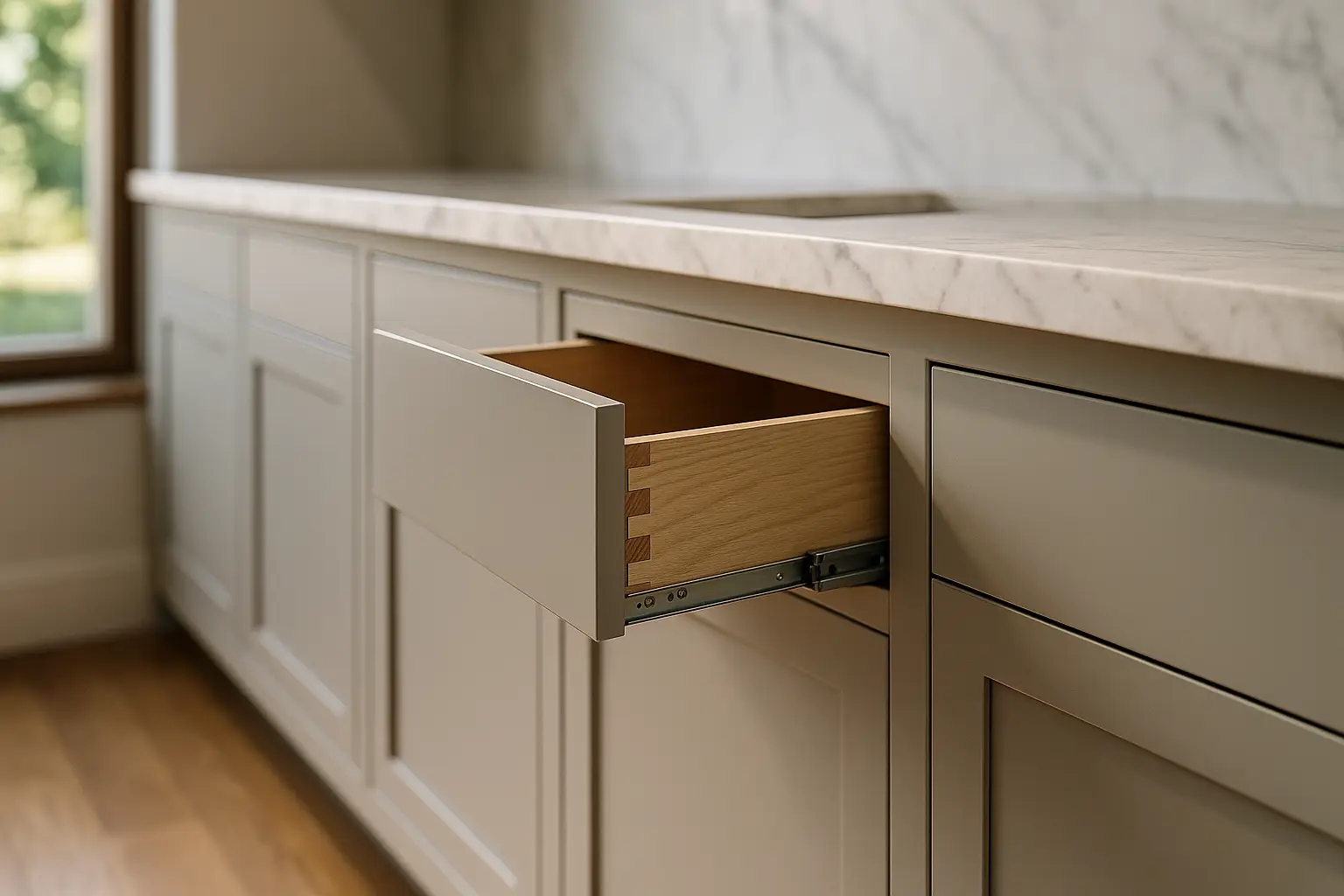
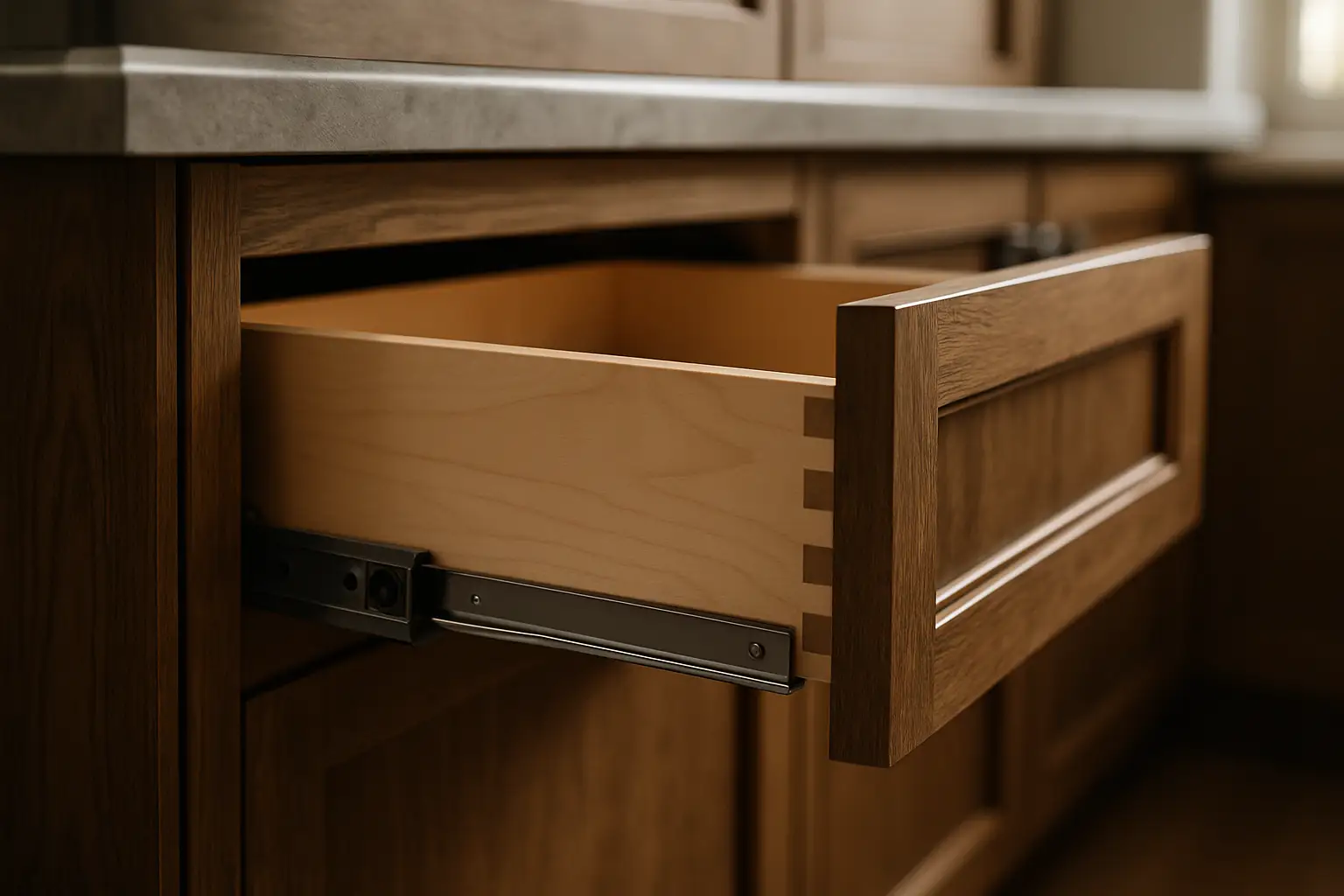
Bay Area kitchens are often compact, especially in older San Francisco flats and San Mateo bungalows, so interior organization matters more than square footage. The features clients now treat as standard rather than upgrades: full-extension, soft-close drawer slides rated for 100 pounds, deep pot-and-pan drawers instead of base cabinets with a single shelf, and pull-out pantry towers that use the full cabinet depth.
Dovetail-jointed drawer boxes in solid maple or Baltic birch are worth specifying by name, because staple-assembled particleboard boxes are still common in budget lines and they loosen over years of heavy use. We are also building more dedicated appliance garages to hide countertop clutter, and tall 90 to 96 inch cabinets that run to the ceiling to reclaim the dead space above standard uppers. In a small kitchen, that top row often adds the equivalent of a whole extra cabinet.
Hardware, Hinges, and the Details That Age Well
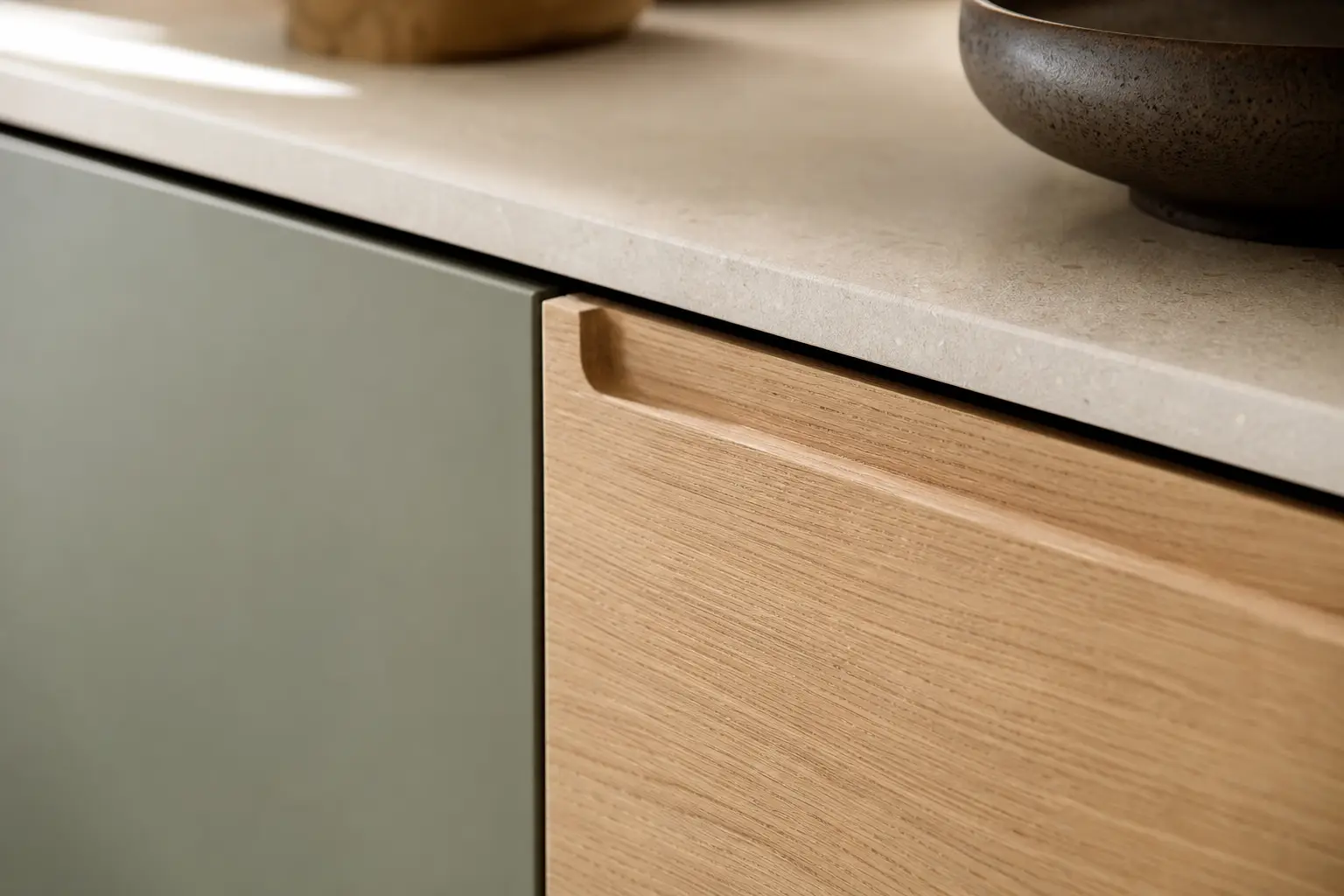
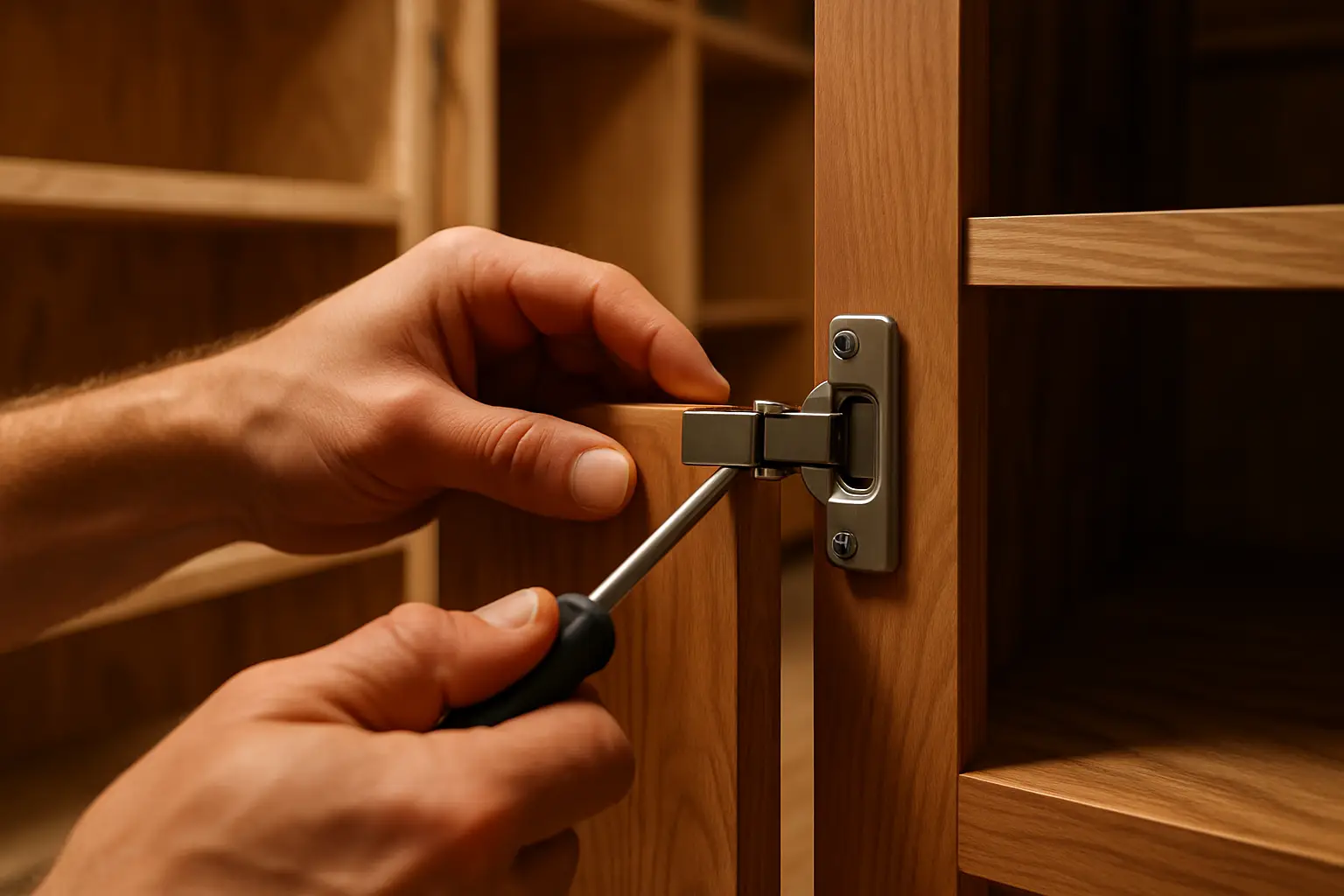
Handleless and low-profile looks are still strong, achieved with edge pulls, finger channels, or a slim continuous rail under the door edge. But we are seeing a return of visible hardware too, in unlacquered brass and matte black, chosen precisely because it develops character over time. Whichever direction you go, the hinge is the part that determines whether a door still closes cleanly in ten years. Six-way adjustable, soft-close European hinges are the baseline we install, since they let you realign a door in seconds as a house settles.
Finish durability is the quiet trend. Conversion varnish and catalyzed finishes resist the grease, steam, and cleaning chemicals of a working kitchen far better than a basic lacquer. When you compare bids, ask what finish system is being sprayed and whether it is oven- or air-cured, because that single line item separates a cabinet that looks fresh in year eight from one that yellows and chips.
Custom and Local Manufacturing Over Flat-Pack
Ready-to-assemble (RTA) cabinets shipped from overseas still have a place for tight budgets and rental turnovers, but more Bay Area homeowners are choosing semi-custom or fully custom builds. The reason is fit. Homes here rarely have square walls or standard ceiling heights, and stock 3-inch increments leave awkward filler strips. Custom sizing lets a run of cabinets land exactly against a window or an out-of-plumb wall.
Local manufacturing also changes the timeline. We build in San Jose and typically deliver in about three weeks, versus the four to ten week waits common with imported semi-custom lines, plus we can inspect and correct a problem panel before it ever reaches your home. For a remodel where the kitchen is offline the whole time, that predictability is often worth more than the sticker difference.
FAQ
Q1: Are white kitchen cabinets going out of style in 2026?
A1: No, but they are no longer the default. White and off-white remain popular, especially on upper cabinets and in smaller kitchens where light matters. The bigger shift is toward two-tone layouts and stained wood, so pure all-white kitchens are simply less dominant than they were five years ago.
Q2: What cabinet material holds up best in the Bay Area climate?
A2: A 3/4-inch plywood box with solid-wood or wood-veneer doors is the most reliable combination for our coastal humidity swings. Plywood resists moisture better than particleboard, and veneered doors move less than wide solid-wood panels. MDF is excellent for painted door centers because it will not telegraph grain, but keep it away from areas that get standing water, like under the sink.
Q3: How much more do custom cabinets cost than RTA?
A3: Custom typically runs meaningfully more than ready-to-assemble, often 30 to 60 percent depending on materials and finish, but the gap narrows against imported semi-custom lines. You are paying for exact sizing, better drawer boxes, a durable sprayed finish, and local quality control. For irregular Bay Area rooms, custom often eliminates filler waste that stock cabinets require anyway.
Q4: What is the lead time for custom cabinets in San Jose?
A4: At American Built Cabinets we manufacture locally and generally deliver in about three weeks after your design and finish are approved. Imported semi-custom orders often take four to ten weeks and offer less room to fix a defective piece before installation.
Q5: Which storage upgrades are actually worth the money?
A5: Full-extension soft-close slides, deep pot-and-pan drawers, and pull-out pantry units give the most daily value. Dovetail drawer boxes in maple or Baltic birch are worth requesting by name because they outlast stapled particleboard. In small kitchens, tall cabinets that run to the ceiling reclaim significant storage for a modest cost.
Q6: Should I match all my cabinet wood to one species?
A6: If you want a consistent stained tone, yes. Different species like oak and maple absorb stain differently and are hard to match. A cleaner approach is to pick one wood for all stained elements and use paint for any contrasting cabinets or island, which gives you a two-tone look without a color mismatch.