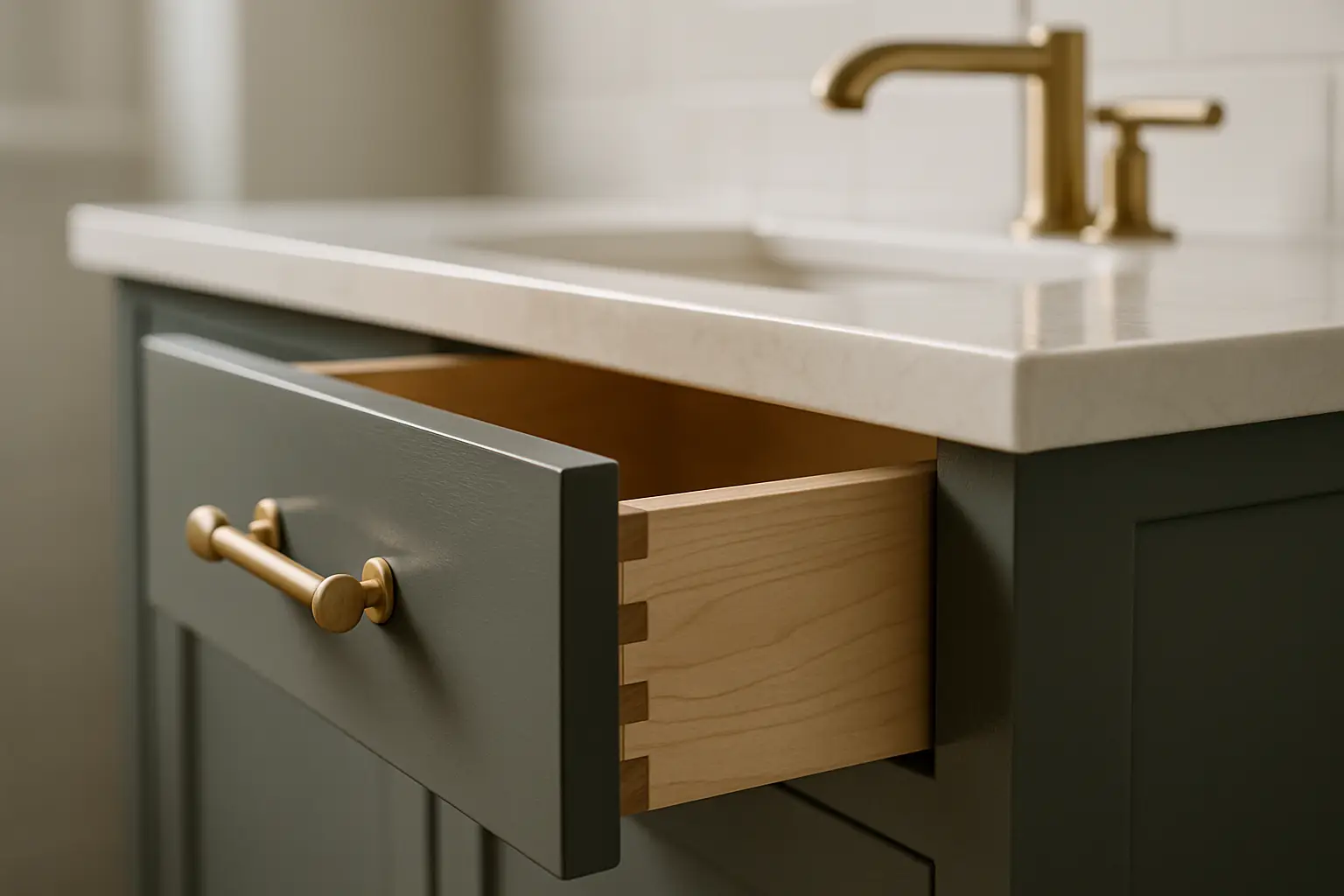
Custom cabinetry has quietly become one of the more technology-driven trades. The romantic image of a lone woodworker at a bench is still real for one-off pieces, but a modern kitchen built to fit an exact Bay Area home now passes through CNC machines, nesting software, and increasingly some form of AI-assisted design and quality checking. None of it removes the craft; it removes the guesswork and the waste. Here is a grounded look at what automation and AI actually do on a cabinet shop floor, what they change for you as a San Jose homeowner or builder, and where a human still has to make the call.
From Bench to Digital File
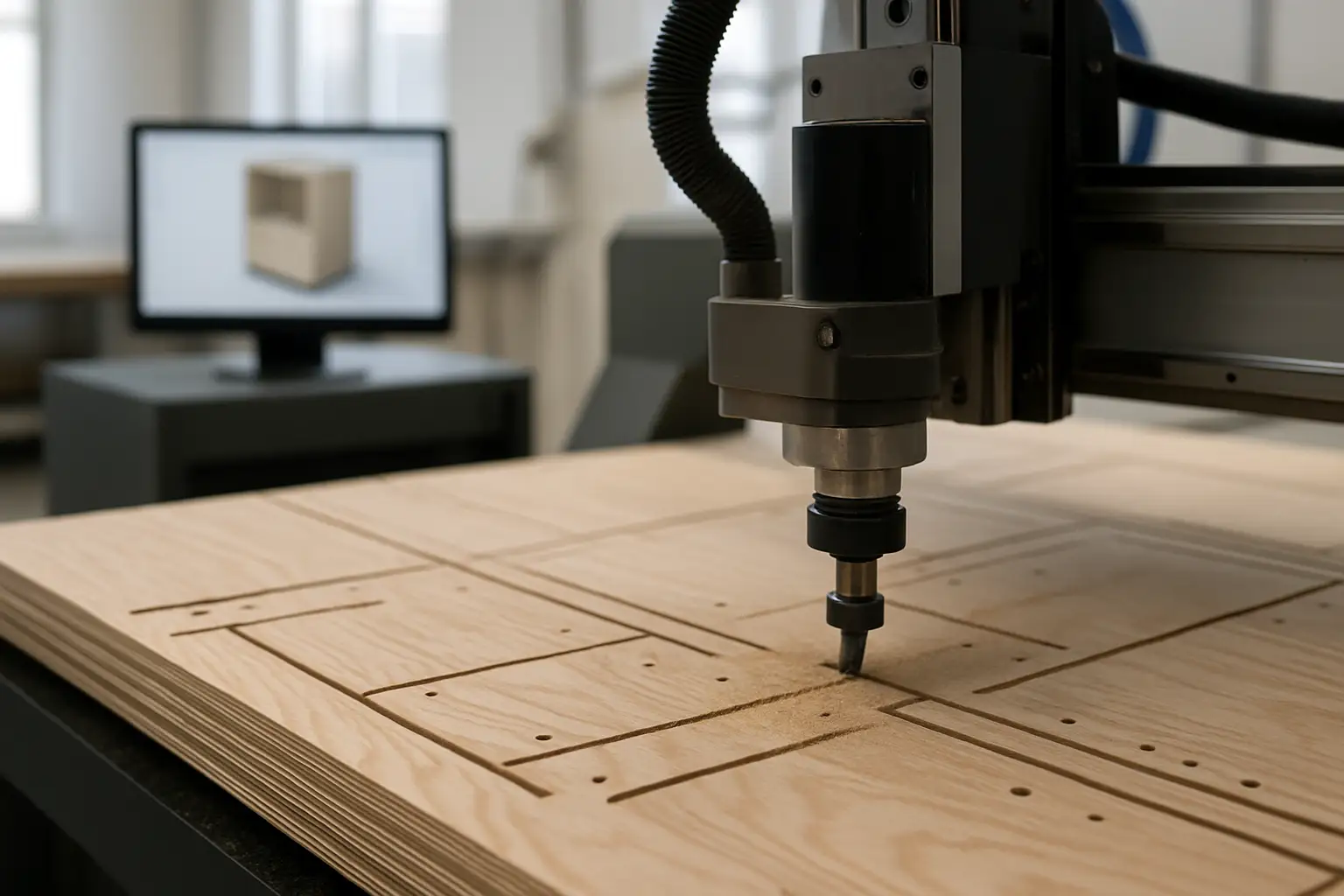
The change that reshaped custom cabinetry was not a single machine; it was the shift to a digital workflow. A modern project starts as a 3D model. That model defines every panel, every hole, every dimension, and it flows directly to the machines that cut and bore the parts. The old chain of hand measurements, paper cut lists, and manual layout, each step a chance for a small error to creep in, gets compressed into a single accurate file. When the file is right, the parts are right, and they are right the same way every time.
This is why automation and true customization go together rather than against each other. A person cutting by hand relies on jigs and standard sizes to stay efficient, which nudges everything toward catalog dimensions. A CNC router does not care whether it is cutting a common 24 inch cabinet or a one-off 43 inch box scribed to your wall; both are just files. The technology made building to your exact room the easy path instead of the expensive exception. For older Bay Area homes with walls that wander and ceilings that vary, that is a meaningful shift.
What the Machines Actually Do
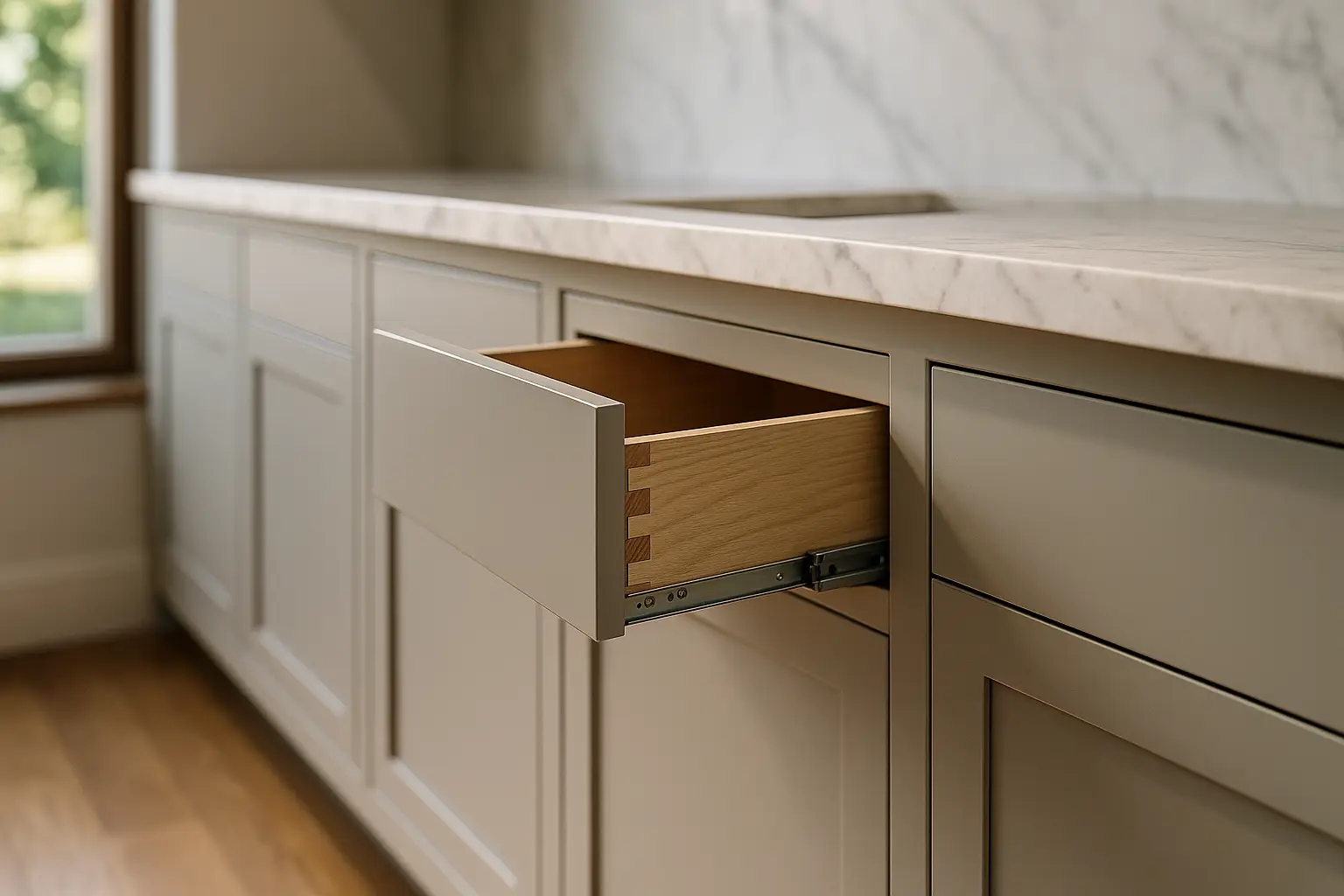
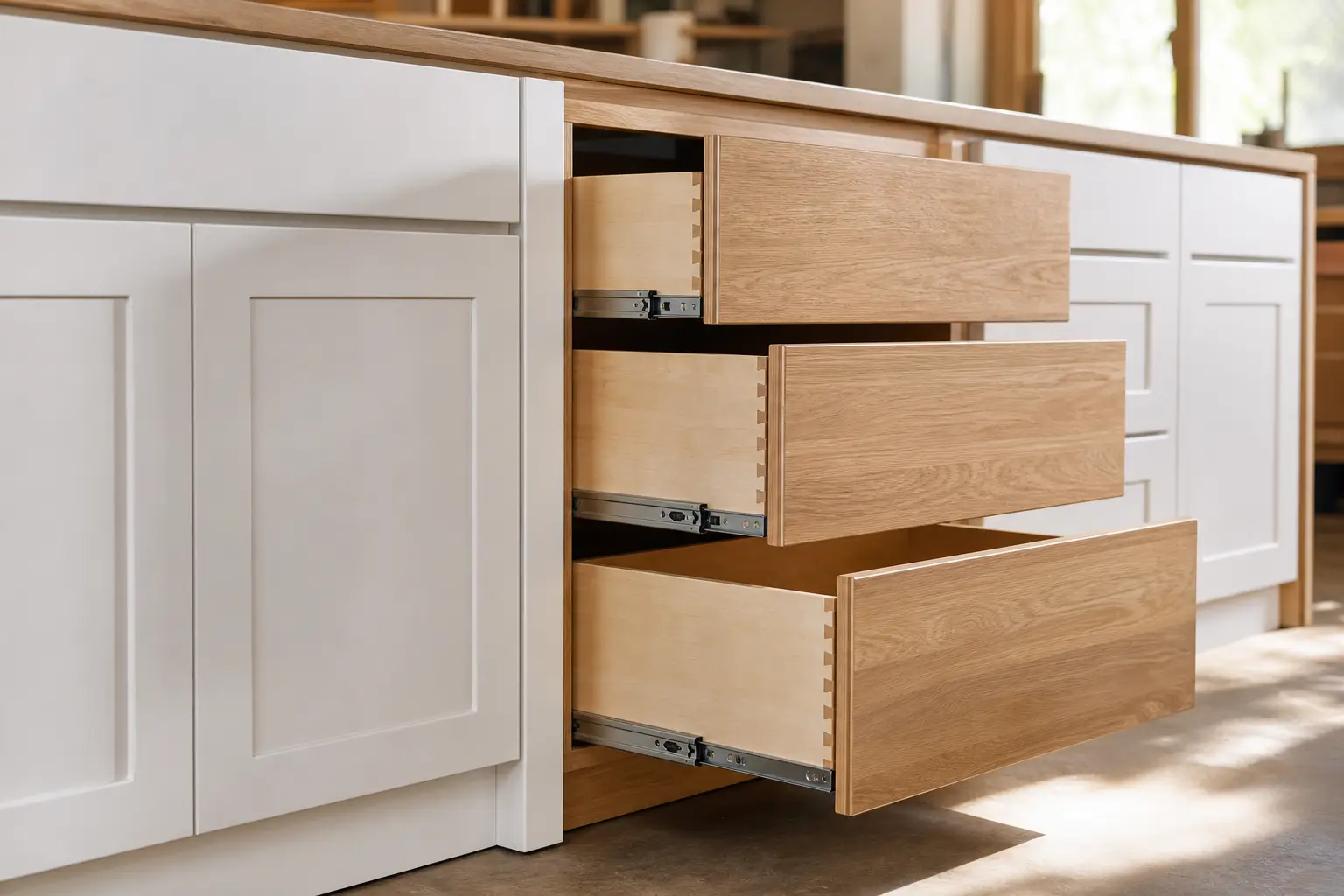
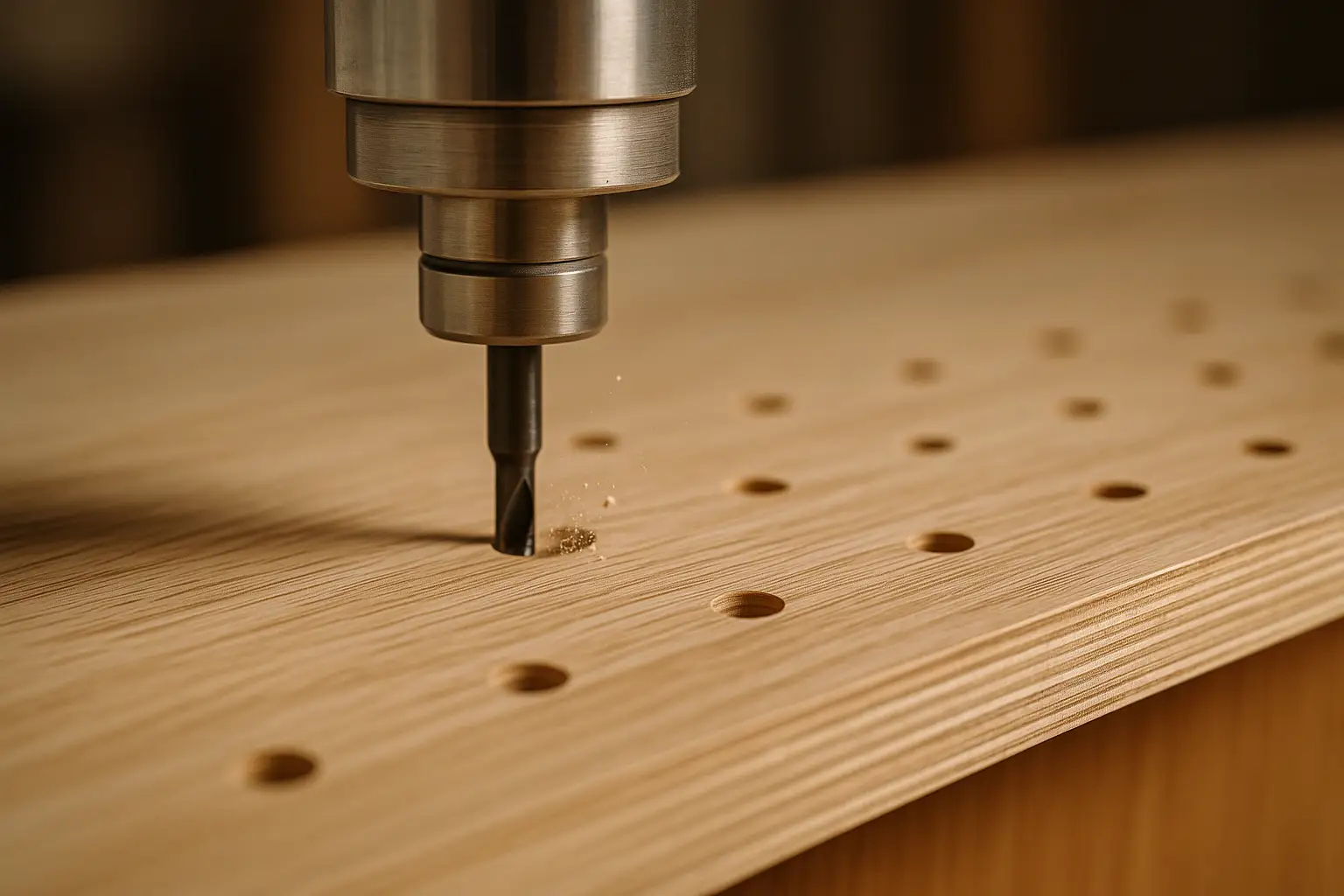
Walk a modern cabinet shop and the automation is concrete, not abstract. A CNC router or a beam saw cuts panels to within about a millimeter and repeats that cut identically across a whole kitchen. Line-boring or the same CNC drills the System 32 hole pattern, the 32 millimeter grid that locates hinges, shelf pins, and drawer slides, so hardware lands in exactly the right place on every box. Edgebanding machines apply and trim edge tape cleanly and consistently, sealing panels against moisture and keeping dimensions exact. Each of these operations used to depend on a steady hand and a sharp eye; now the machine holds the tolerance and the person supervises it.
Software does quieter but equally important work. Nesting software arranges all the parts of a kitchen onto sheet goods to get the most out of each sheet, which reduces waste and cost and means fewer trees for the same kitchen. CAM software translates the 3D design into the toolpaths the machine follows. And in more advanced shops, scanning or machine-vision tools help verify that finished parts match the file and flag a panel that drifted out of spec before it reaches assembly. The result is not a robot kitchen; it is a shop where the repetitive, error-prone steps are handled precisely so the people can focus on judgment and finish.
Where AI Is Genuinely Useful, and Where It Is Hype
It is worth being honest about AI in this trade, because the term gets stretched. The real, useful applications today are mostly assistive. Design tools can generate layout options and photorealistic 3D previews fast, which helps a homeowner see choices and helps a designer iterate. Optimization software, which is a form of applied AI, squeezes better yield out of material and better sequencing out of the machine schedule. Vision systems can learn to spot surface defects or verify dimensions more consistently than a tired human at the end of a shift. These are practical gains: less waste, fewer errors caught late, faster iteration.
What AI does not do, at least not credibly today, is replace the judgment that makes a kitchen good. It does not decide that a painted MDF door is the right call for a client who wants a joint-free finish, or that a particular wall is bowed enough to need a deeper scribe, or when a finish has cured enough to sand. It does not stand behind the warranty. Treat claims of a fully AI-designed, AI-built kitchen with skepticism. The honest version is a human-led process with powerful tools doing the precise, repetitive work underneath, and that version is already delivering real benefits.
The Human Craft Did Not Leave, It Moved
Automation changed where the skill lives, not whether it is needed. The precision that used to come from a master's hand at the saw now comes from the machine, but new judgment moved upstream and down. Upstream, someone has to design the kitchen correctly, choose materials that suit the room and the climate, and turn a client's vague wishes into a buildable model. That is where a lot of the craft now sits, in getting the plan right so the machines execute the right thing.
Downstream, the hands-on skill concentrates in finishing and assembly. Spraying and curing a catalyzed finish evenly, sanding between coats, matching color and sheen across a whole kitchen: that is still human work, and it is where a lot of the visible quality is won or lost. So is final assembly and the on-site reality of making square, precise boxes fit an imperfect house through scribing and shimming. A machine gives you perfect parts; a skilled crew turns perfect parts into a kitchen that fits a real Bay Area home. The best shops pair the two deliberately rather than pretending either alone is enough.
What This Means for Bay Area Buyers
For a homeowner or builder in San Jose, the practical upshot of all this technology is threefold: tighter tolerances, less waste, and shorter lead times. Digital files flowing to calibrated machines mean the boxes arrive square and consistently bored, which makes for a cleaner install and doors that line up. Nesting and optimization keep material efficient. And because errors get caught earlier and parts are cut from files rather than fixtures, remakes are faster and rarer. Building locally with this workflow, our lead time at American Built Cabinets runs about three weeks after design sign-off, and we can remake a single part in days if a jobsite condition changes.
The technology also makes true custom accessible rather than exotic. Because a CNC treats your exact dimensions as just another file, building to your actual walls costs little more in effort than building a standard box, so you are not pushed toward catalog sizes and filler strips. The thing to look for is a shop that pairs modern machinery with real craftsmanship and local accountability: precise parts, skilled finishing, and someone nearby who stands behind the work. That combination, not the machines alone, is what delivers a custom kitchen that fits your Bay Area home and lasts.
FAQ
Q1: Does CNC and automation mean cabinets are no longer really custom?
A1: It means the opposite. A CNC router can cut a one-off 43 inch cabinet to your exact wall dimensions as easily as a standard size, because it works from a digital file, not a fixed jig. Automation makes true custom faster and more repeatable, so you get parts built to your actual room rather than forced into catalog increments.
Q2: How does AI improve cabinet design or manufacturing?
A2: Today it mostly assists rather than replaces. Design software can generate layout options and 3D previews quickly, nesting software optimizes how parts are cut from a sheet to reduce waste, and vision or scanning tools help flag defects and verify dimensions. A human still owns the design intent, the material choices, and the final quality judgment.
Q3: Are machine-made cabinets lower quality than handmade ones?
A3: Not inherently. A CNC cuts and bores more consistently than a person can by hand, which is why machine-cut boxes tend to be squarer and more uniform. Craft still matters in finishing, assembly decisions, and handling real-world site conditions. The best shops combine precise machine work with skilled hands rather than choosing one or the other.
Q4: Does automation make custom cabinets cheaper?
A4: It mostly makes them faster and less wasteful rather than cheap. Better material yield from nesting software and fewer remakes from tighter tolerances control cost, but true custom still involves design time, quality materials, and finishing labor. The bigger payoff for you is shorter lead time and more consistent results, not a bargain price.
Q5: How does technology affect lead time for a Bay Area kitchen?
A5: It shortens it. Digital design files flow straight to the CNC, cutting is optimized and fast, and errors that used to cause remakes get caught earlier. Building locally in San Jose with this workflow, we run about a three-week lead time after design sign-off, and we can remake a single part quickly if a jobsite condition changes.
Q6: Where do humans still matter most in a modern cabinet shop?
A6: In design judgment, material selection, finishing, assembly decisions, and adapting to the imperfect realities of a real home. Machines execute a plan precisely; people decide what the plan should be, how the finish should look and cure, and how to make square cabinets work in an out-of-plumb Bay Area house. The craft moved, it did not disappear.