Sometimes the timeline is the whole problem. A tenant moves out and the unit has to be ready, a kitchen has to be done before a holiday, or a stalled remodel needs cabinets on site before the next trade shows up. If you are searching for the fastest way to get real custom cabinets in San Jose, San Francisco, or on the Peninsula, this is a straight answer about what actually governs speed, how close to three weeks you can realistically get, and where the delays hide that no rush order can fix.
The Real Floor on Speed: Why Three Weeks, Not Three Days
There is a hard limit on how fast a real cabinet can be built, and it is set by physics, not effort. A custom box gets cut from sheet goods, assembled square, and then finished. If that finish is sprayed paint or stain, the coating needs time to flash off, cure, and harden enough to handle without marking. Rushing that step is exactly how you get cabinets that print fingerprints and chip at the edges within a month.
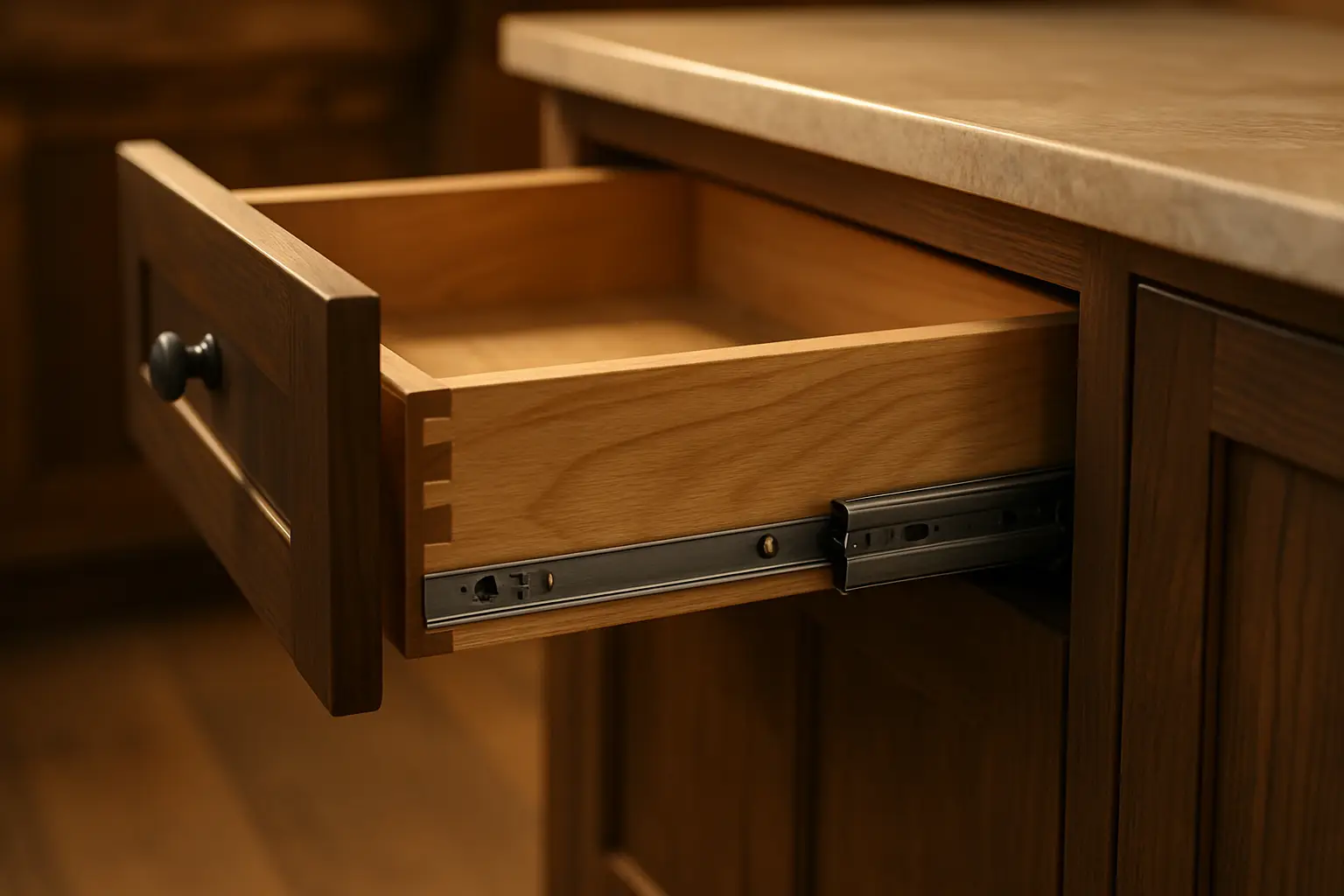
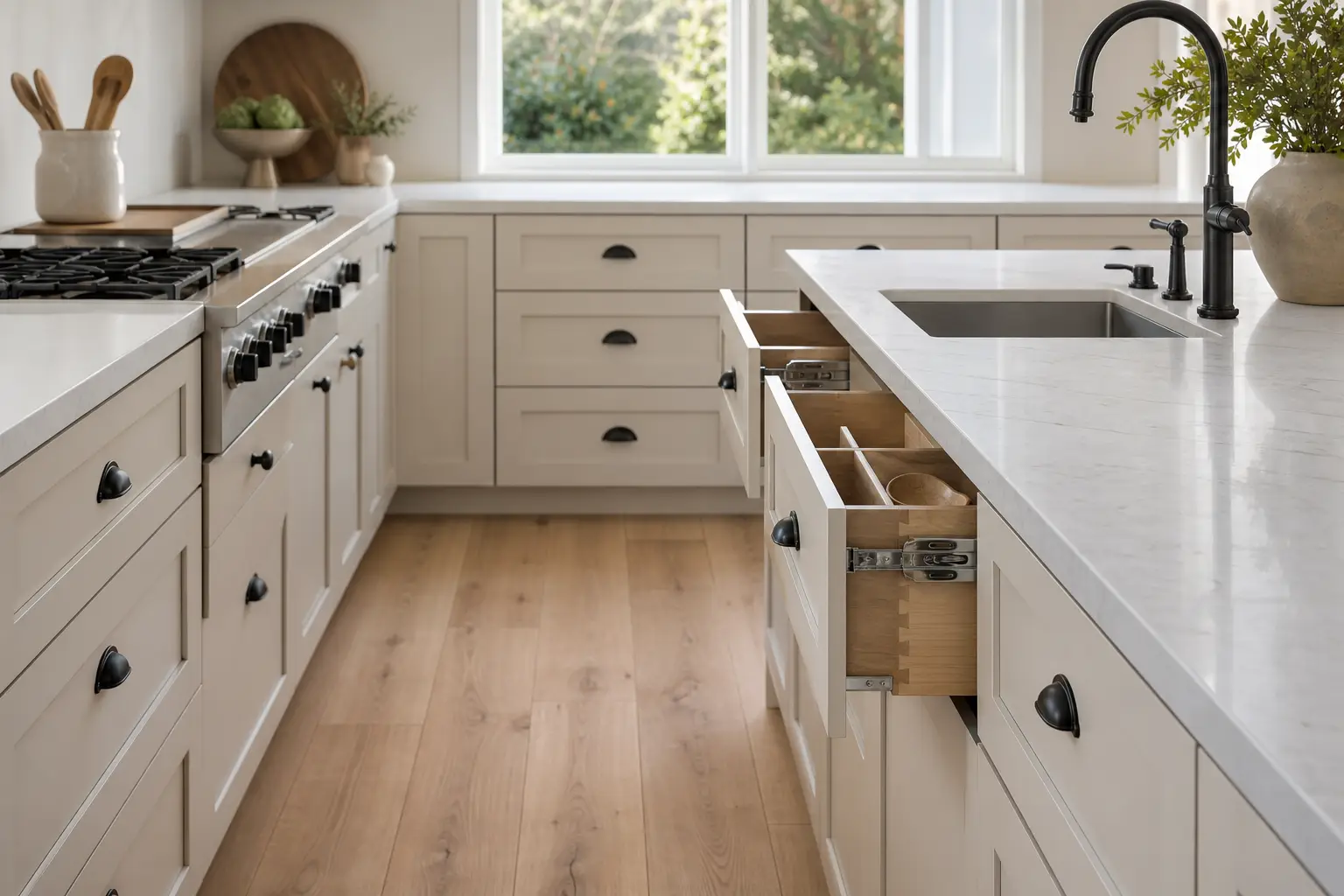
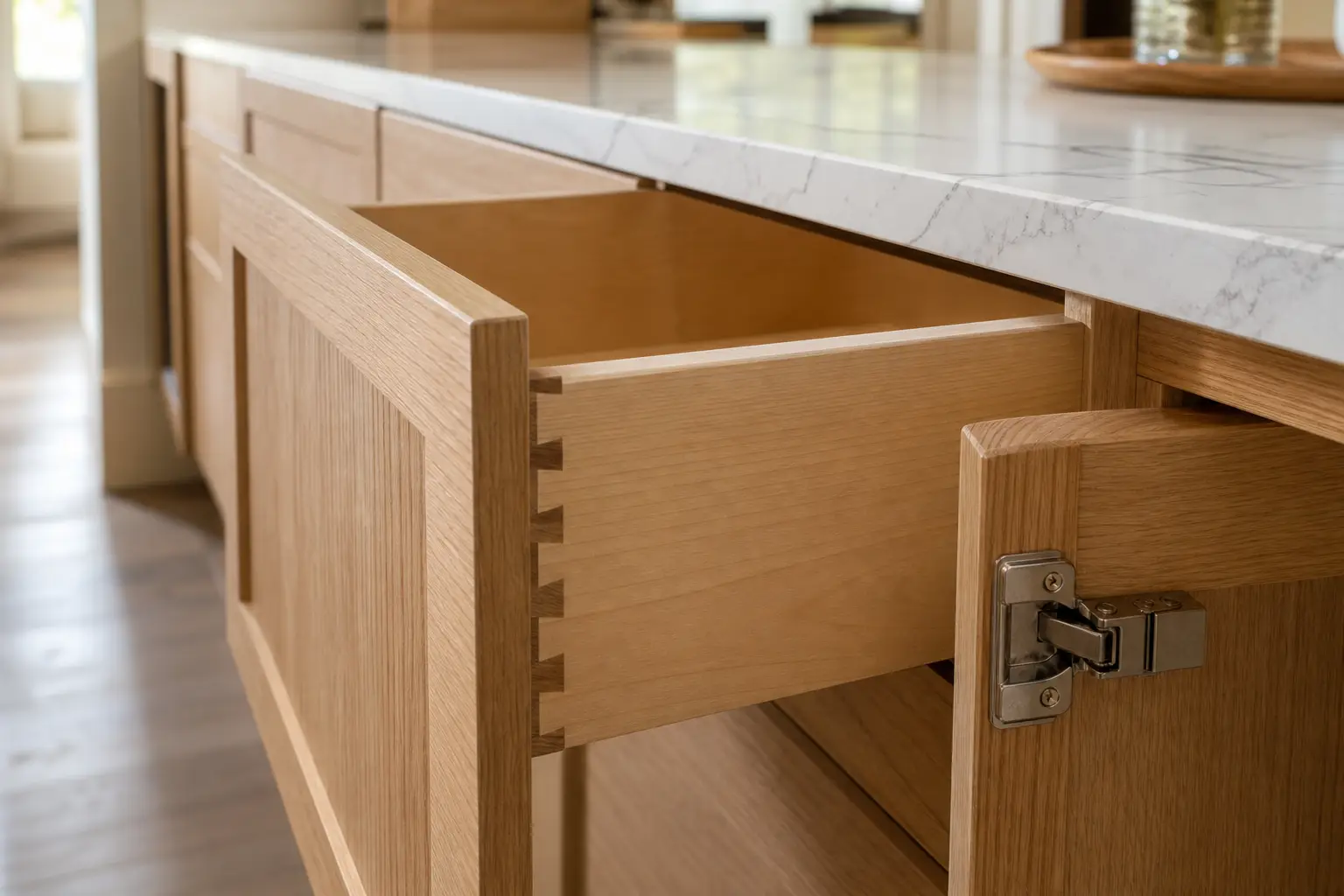
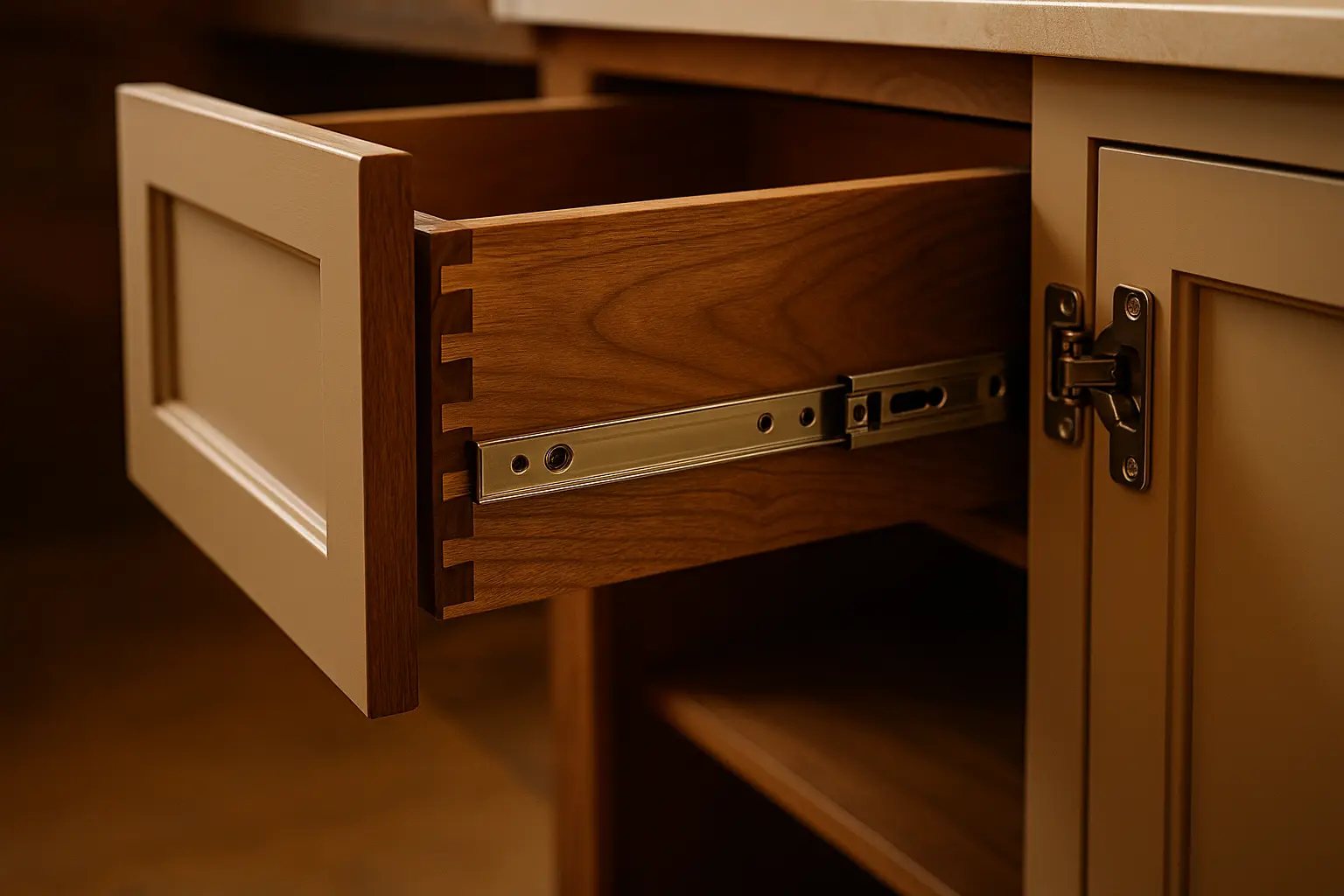
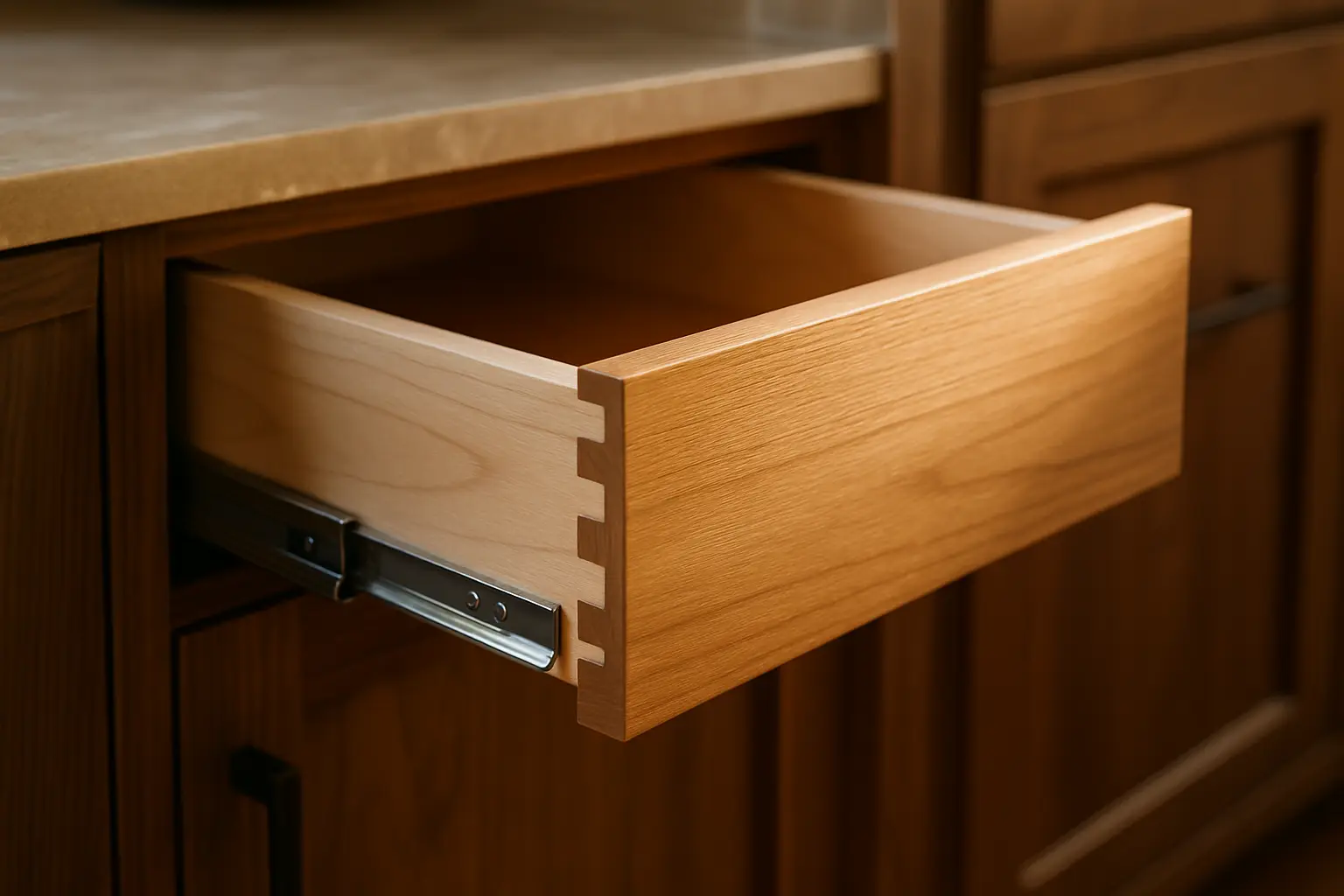
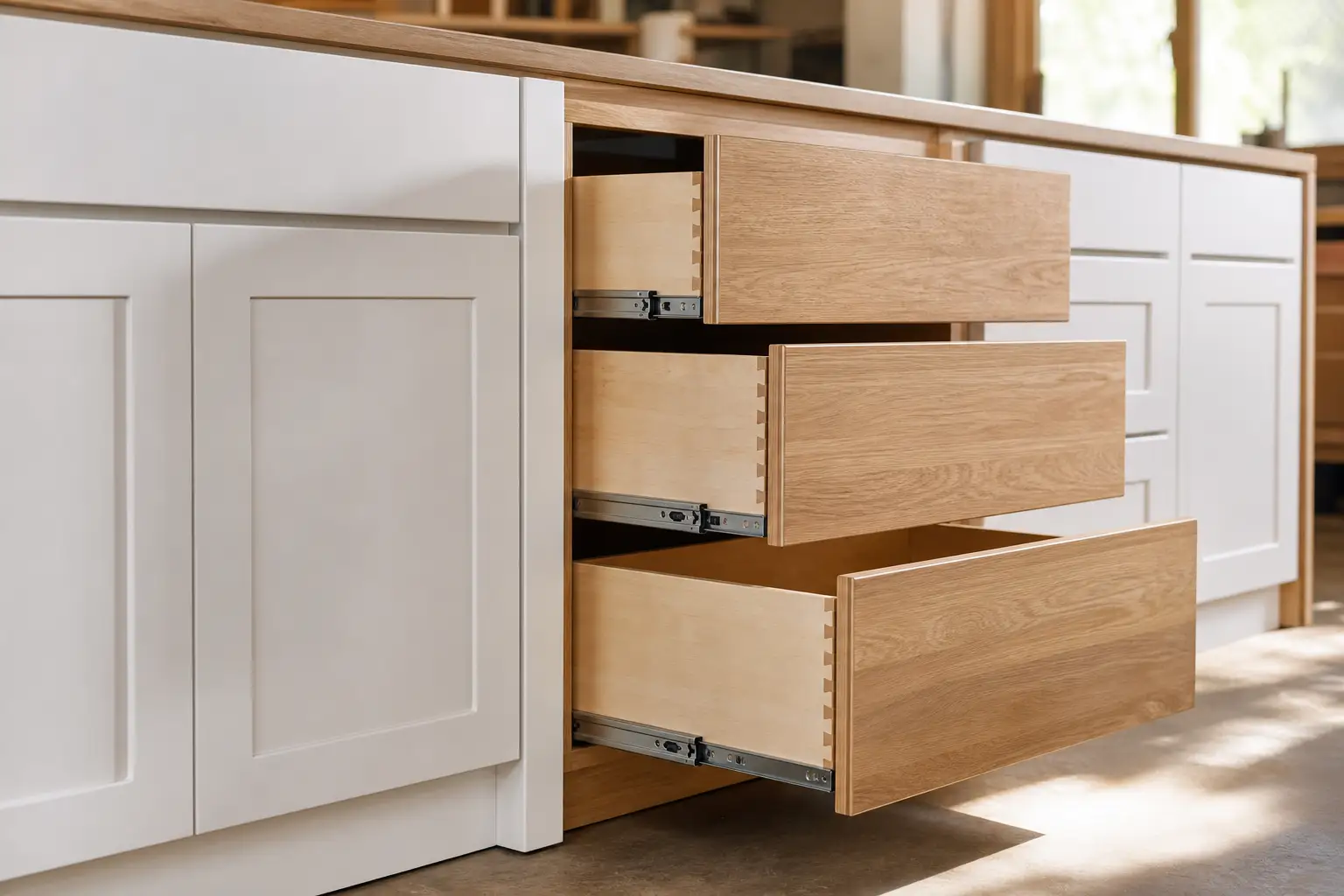
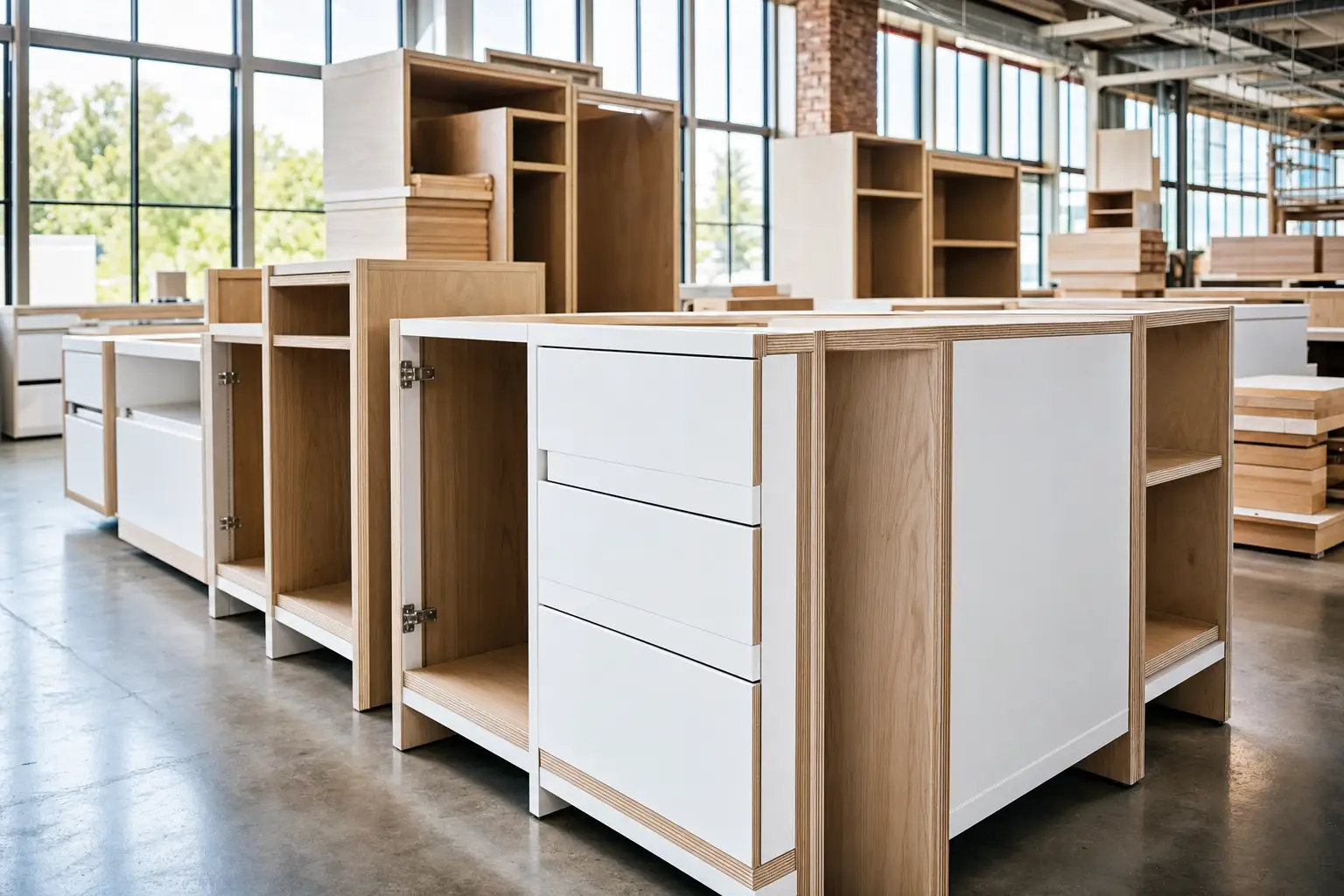
That is why the honest floor for a locally built custom kitchen is roughly three weeks from approved drawings, not a few days. In that window we cut and assemble the 3/4-inch plywood boxes, build and fit the doors and dovetailed drawer boxes, apply and cure the finish, install soft-close hardware, and run quality checks before anything ships. Each stage has a minimum time it simply cannot go below without hurting the result.
The reason three weeks still counts as fast is the comparison. The industry norm for custom and semi-custom cabinets runs eight to sixteen weeks. So the question is rarely whether you can get cabinets in three days, which no serious shop should promise, but whether you can compress a normal multi-month wait into under a month. Local manufacturing is what makes that possible.
What Decides Whether You Land at the Fast End
Two jobs with the same square footage can finish weeks apart, and the difference usually has nothing to do with how hard the shop works. It comes down to how ready the decisions are and how standard the specification is. A kitchen using common cabinet widths, a stocked door style, and an in-house finish moves to the floor almost immediately. A job waiting on a specialty imported panel or a custom color match does not.
Decision readiness is the single biggest factor a customer controls. Production cannot start until sizes, door style, finish color, and hardware are locked and the shop drawings are signed. If you arrive with accurate measurements and firm choices, the clock starts the day drawings are approved. If choices trickle in over two weeks, the build has not slowed down; the start line just kept moving.
Material availability sets the rest. We keep common plywood, MDF, and hardware on hand, so a mainstream spec never waits on a supplier. A rare veneer, a discontinued laminate, or a special-order hinge introduces a lead time we do not control, which is why we identify those items at the design stage and either confirm stock or suggest an in-stock equivalent that hits the same look.
Where Imported and National Lines Quietly Lose Weeks
When a cabinet order takes three months, the extra time is rarely spent building. It is spent in transit and in handoffs. An imported line has to be manufactured overseas, consolidated, loaded, shipped by ocean, cleared through customs, trucked to a regional warehouse, then routed through a dealer before it reaches your driveway. Every one of those steps has its own queue, and queues stack.
National semi-custom brands built domestically are faster than imports but still route through a distributor and a batch production schedule. Your order joins a run, waits its turn, and ships when the batch is done. You are one ticket in a large queue, and you have no visibility into where you sit or leverage to move up.
The costlier problem is what happens when something is wrong. A mismeasured filler or a damaged door on an imported job means sending the part back through the same long chain and waiting again. Local production turns that from a multi-week setback into a same-week fix, because the saw, the finish booth, and the person who built it are all in one San Jose building.
Moving a Deadline: What Truly Speeds a Job, and What Cannot
When a customer needs cabinets faster than normal, the effective levers are almost always upstream of the shop. Come in with a completed measure, a chosen door style, a confirmed finish, and standard sizing, and you have removed more calendar time than any production trick could add. Standardizing the specification, especially for repeat rental or ADU turnovers, lets each new order skip straight to the floor.
A few things genuinely cannot be compressed, and a good shop will tell you so plainly. Finish cure time is real chemistry and does not negotiate. Structural assembly has to be square and set before finishing. Quality inspection is the step that keeps a fast job from becoming a callback, so it stays. Any shop promising to skip these is selling you a future problem, not speed.
For homeowners and builders on a genuine deadline, the practical move is to design early and decide fast, then let local manufacturing do what it does well. Because American Built Cabinets builds in San Jose and controls cutting, finishing, and assembly under one roof, a decisive customer with a standard kitchen can reliably be unloading cabinets in about three weeks, with warranty support that is a phone call away rather than a claim filed through a distant distributor.
FAQ
Q1: What is the fastest I can realistically get custom cabinets in the Bay Area?
A1: For a standard-size kitchen with decisions finalized, about three weeks from approved shop drawings is realistic when the cabinets are manufactured locally. That window covers cutting, assembly, finishing, and cure time. It is not three days, because a painted finish alone needs several days to spray and cure properly, but three weeks is far faster than the eight to sixteen weeks common with imported or national semi-custom lines.
Q2: Can you rush a cabinet order faster than three weeks?
A2: Occasionally, on small jobs or when we already stock the chosen materials, we can shave a few days. What we will not do is skip finish cure time or quality checks, because that is where rushed cabinets fail. The bigger speed lever is usually the customer: coming in with measurements, a locked door style, and color decisions removes far more time than any shop-floor shortcut.
Q3: Why do imported cabinets take so much longer?
A3: Distance and handoffs. Overseas or out-of-state production adds ocean or freight transit, customs and warehouse steps, and a distributor layer between you and the factory. Each handoff adds queue time, and any error means shipping the part back through the same chain. Local manufacturing collapses that into one building, which is why our lead time runs about three weeks instead of months.
Q4: Does choosing a paint or stain finish change the timeline?
A4: Yes, a little. Painted MDF and stained wood both need spray and cure time, and a multi-step stain or glaze adds a day or two over a single-coat paint. Thermofoil and laminate fronts can be quicker because they skip wet finishing. The difference is measured in days, not weeks, so pick the finish you want rather than compromising the look to save a day.
Q5: What slows a fast cabinet order down the most?
A5: Undecided details and slow approvals. A job cannot enter production until sizes, door style, finish, and hardware are locked and shop drawings are signed. Every day a homeowner sits on a color choice or a builder delays sign-off is a day the clock is not running. Special-order hardware or a backordered specialty panel can also add time, which is why we flag those early.
Q6: Can I get custom cabinets fast for a rental or ADU turnover?
A6: Yes, and turnover work is a good fit for a three-week local build. Standard sizes and a durable, simple finish keep production quick, and because we manufacture in San Jose you are not waiting on freight. Builders and property owners doing repeat units often standardize a spec so each turnover order moves straight to the floor.