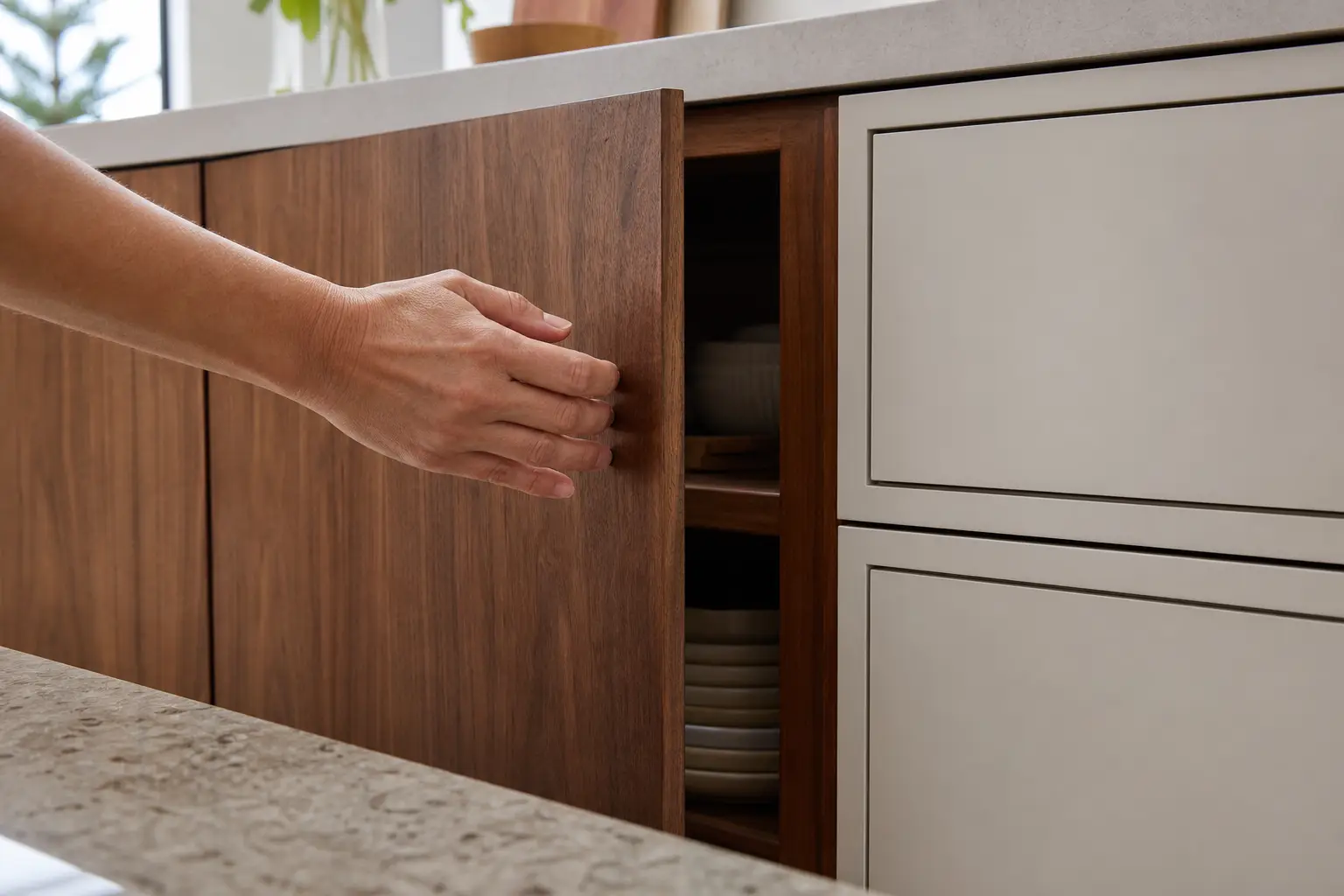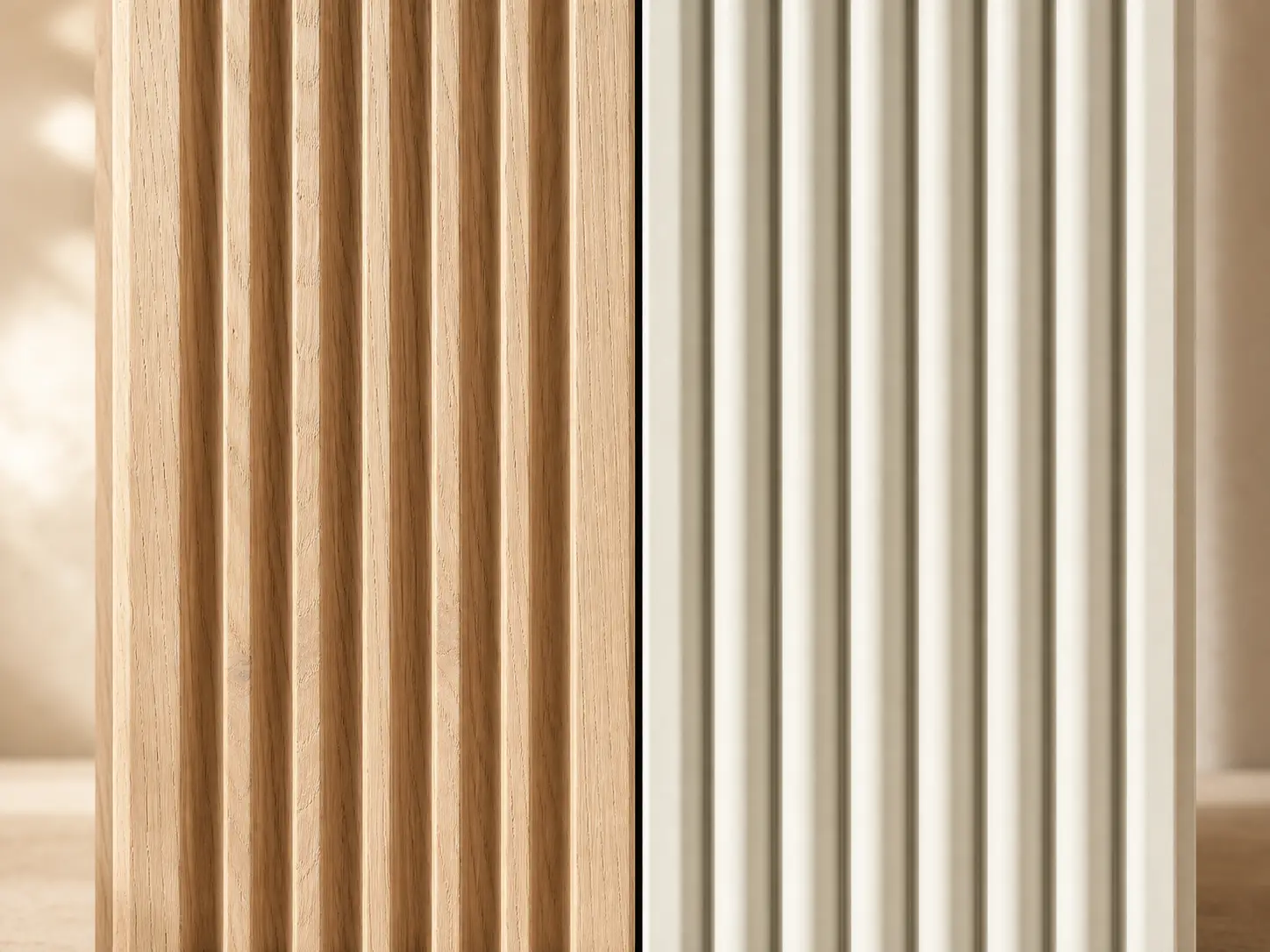
If you are remodeling a kitchen in San Jose or a bathroom in San Francisco, one of the first real decisions you face is how your cabinets get made. The choice between stock, semi-custom, and full custom affects your budget, how long the project takes, and how well the finished room fits the space you actually have. This guide breaks down what each option means in practical terms, where the money goes, and how homeowners across the Bay Area can decide what makes sense for their home.
What "Stock," "Semi-Custom," and "Custom" Actually Mean
These three labels get used loosely, so it helps to define them by how the cabinet is built and sold. Stock cabinets come in fixed sizes, usually in 3-inch width increments (12, 15, 18 inches and so on), and are mass-produced ahead of demand. Many stock lines ship RTA, or ready-to-assemble, meaning you or your installer put the boxes together on site. They are the fastest and cheapest option because nothing is made to order.
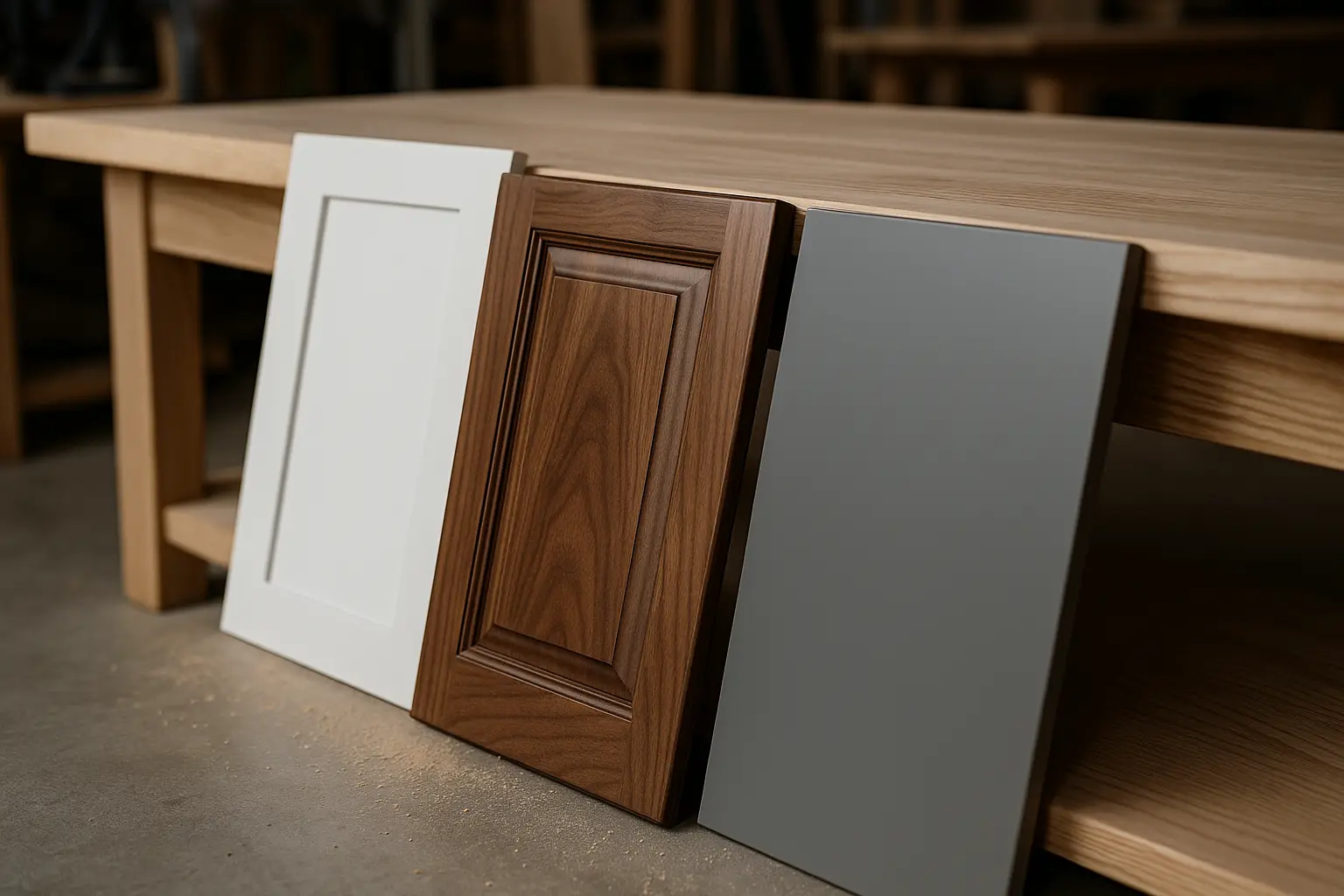
Semi-custom cabinets start from a manufacturer's catalog of door styles and sizes but allow modifications: a cabinet trimmed to an odd width, a different finish, a deeper drawer bank. Full custom means the cabinet is designed and built specifically for your room, with no size restrictions and open choice of materials, joinery, and finish. As a local manufacturer, American Built Cabinets builds to the exact dimensions of your walls, which matters in older Bay Area homes where almost nothing is plumb or square.
Where the Quality Differences Show Up
The visible door style is the easy part to shop. The construction behind it is where stock and custom separate. Budget stock cabinets often use particleboard or thin MDF boxes with stapled joints, and the drawers may run on side-mount rollers that only pull out three-quarters of the way. That construction can work fine for a rental or a light-use space, but it wears faster and does not tolerate moisture well.
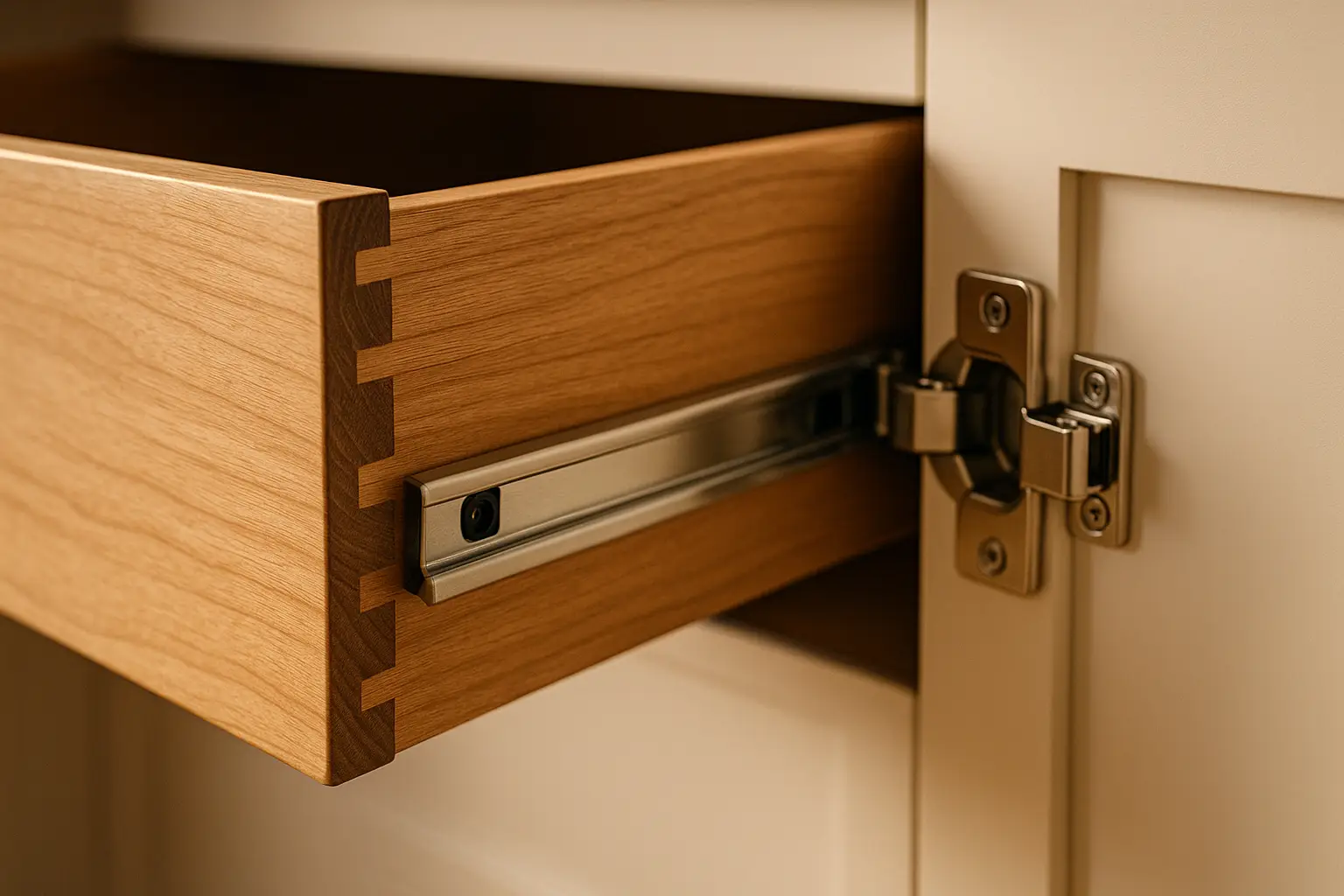
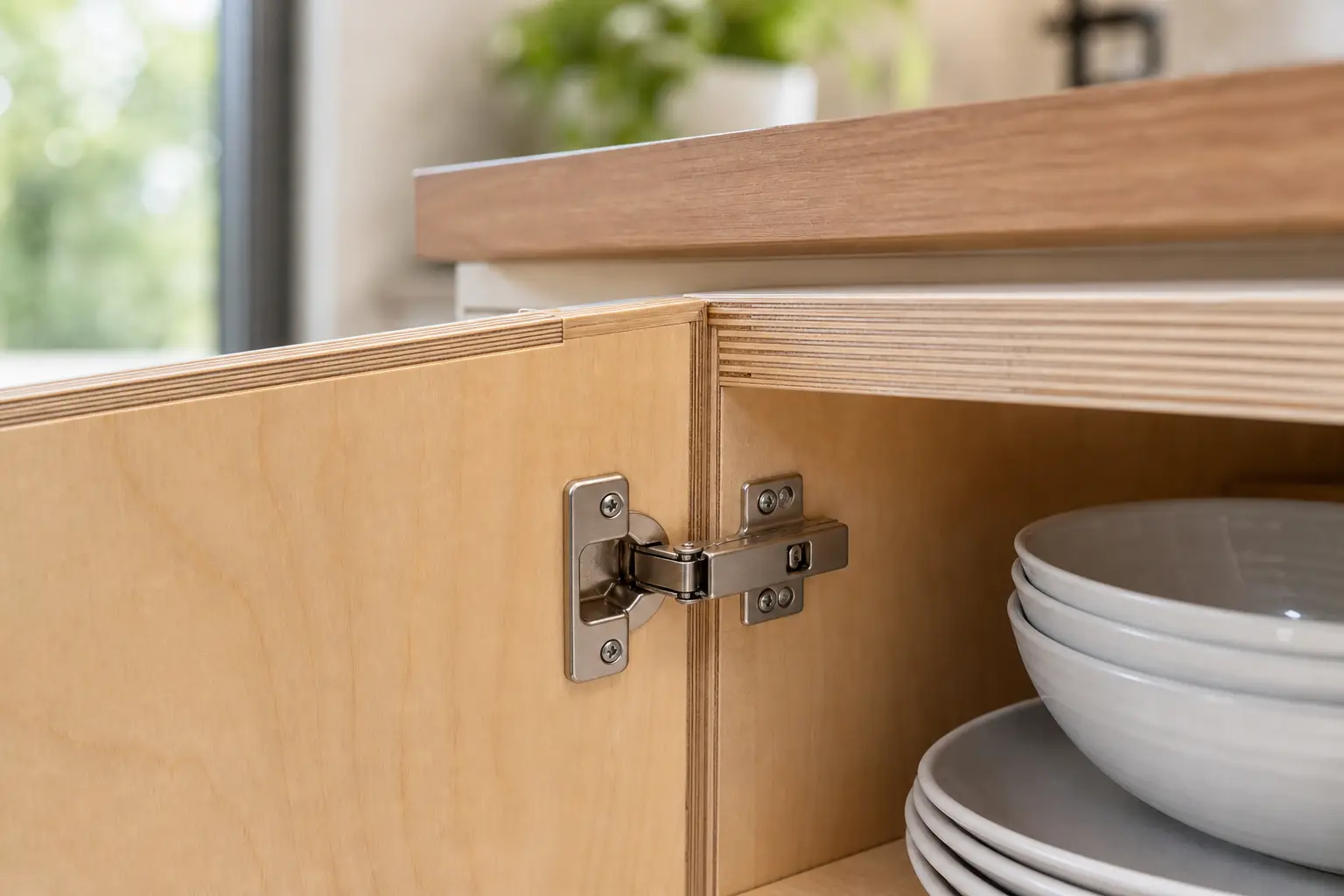
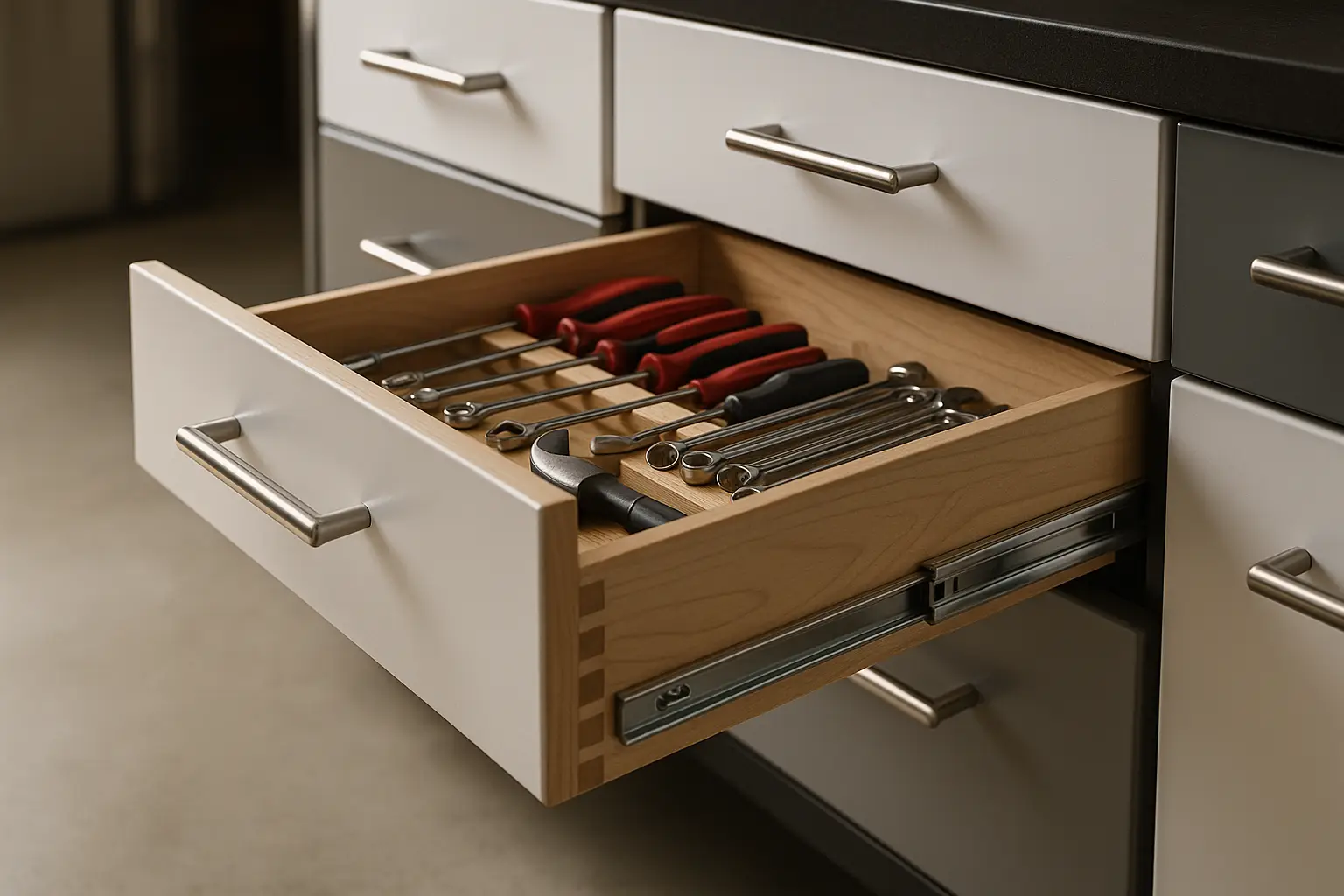
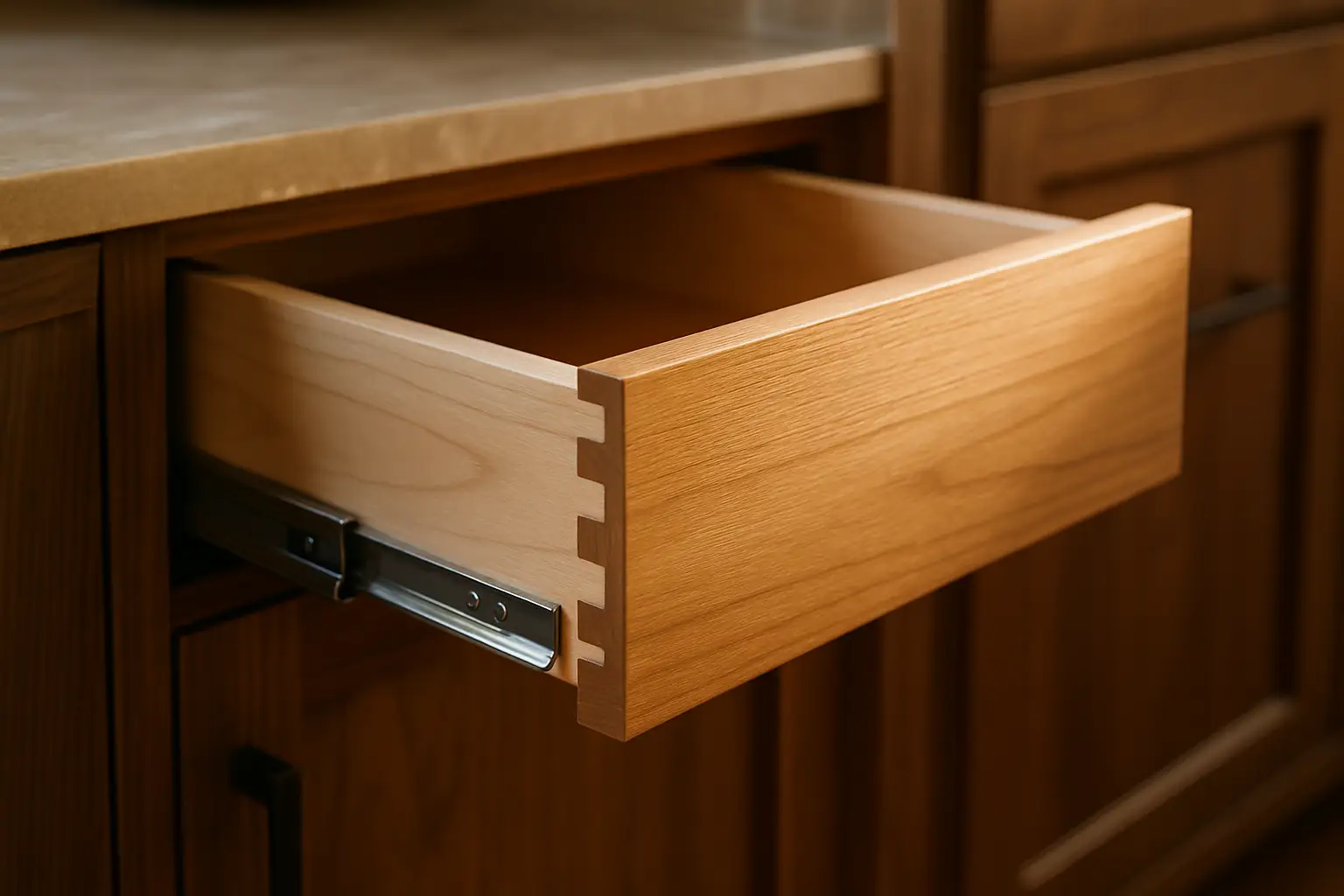
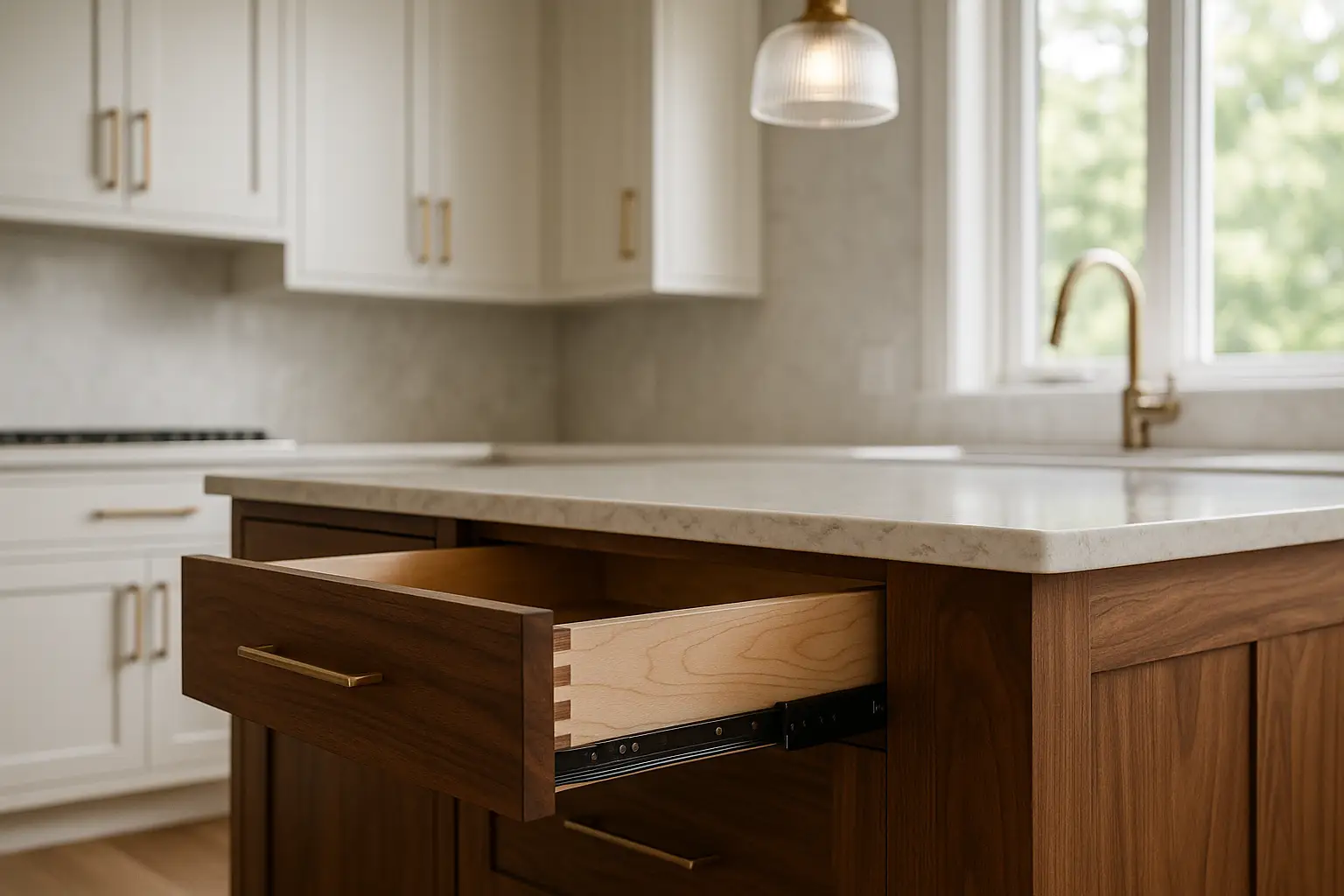
Better cabinets, whether semi-custom or custom, are typically built from 3/4-inch plywood boxes for strength and screw-holding, with solid wood or plywood drawer boxes joined by dovetails. Plywood is sorted into veneer grades set by The Engineered Wood Association, so a higher grade signals fewer voids and a more stable panel. The hardware is where daily life happens: soft-close concealed hinges, full-extension undermount slides so you can reach the back of a deep drawer, and drawers rated to hold real weight. When you order custom, you also control the finish system, from a durable conversion varnish to a hand-applied stain, and you can match sheen and color across an island and perimeter that came from different wood lots.
Cost and Lead Time: The Real Tradeoffs
Stock cabinets win on upfront price and immediate availability. You can buy them off a shelf or with a short order window, which is why they anchor the low end of most kitchen budgets. The catch is fit: stock sizes rarely fill a wall cleanly, so you end up with filler strips and dead corners, and you may lose usable storage to make the layout work.
Custom cabinets cost more per linear foot, but the gap is smaller than people expect once you compare similar construction and hardware. The bigger surprise is lead time. Many homeowners assume custom means waiting three to four months, which is true for a lot of national brands routed through a dealer. Because we manufacture in San Jose, our typical turnaround runs about three weeks, so a custom kitchen does not have to stall your project the way an overseas or backordered semi-custom line can. For builders working on tight schedules across San Mateo and the Peninsula, that local production window is often the deciding factor.
Which Option Fits Your Project
Match the cabinet to the room and how long you plan to stay. For a quick refresh in a secondary bathroom, a laundry room, or a rental unit, quality stock or RTA cabinets are a reasonable call. You accept the fixed sizes in exchange for speed and a lower bill.
For a primary kitchen you cook in every day, a home you intend to keep, or any space with unusual dimensions, angled walls, or a specific storage need, semi-custom or custom pays off. You get the exact box sizes, the interior fittings you actually use, and a finish that holds up to Bay Area humidity swings near the coast. If resale is on your mind, keep in mind that kitchens carry a lot of weight with buyers here, and cabinetry that fits the room and functions well reads as quality in a way that filler panels and rattly drawers do not.
FAQ
Q1: Are custom cabinets always more expensive than stock?
A1: Per linear foot, yes, custom usually costs more than basic stock. But once you compare cabinets with the same plywood construction, dovetail drawers, and soft-close hardware, the gap narrows. Stock savings also shrink when fillers and wasted corner space reduce your usable storage.
Q2: How long do custom cabinets take to make?
A2: National custom brands ordered through a dealer often run three to four months. Because we manufacture locally in San Jose, our typical lead time is about three weeks, which keeps custom competitive with semi-custom on schedule.
Q3: What cabinet box material should I choose?
A3: For most kitchens we recommend 3/4-inch plywood boxes. Plywood holds screws better, resists moisture more effectively than particleboard, and keeps its shape over time. MDF is fine for painted doors because it gives a smooth, seam-free surface, but it is heavier and less water-tolerant for boxes.
Q4: Is RTA the same as stock?
A4: Not exactly. RTA means ready-to-assemble, so the cabinet ships flat and is put together on site. Most RTA lines are stock sizes, so they share the same fit limitations as stock, just with assembly labor moved to you or your installer.
Q5: Do custom cabinets make sense in an older Bay Area home?
A5: Often yes. Many older homes in San Francisco and San Jose have walls that are out of square and ceilings that vary in height. Custom cabinets are built to your actual measurements, so you avoid awkward gaps and get storage that uses the full space.
Q6: What hardware should I insist on regardless of cabinet type?
A6: Look for soft-close concealed hinges and full-extension undermount drawer slides. Full-extension slides let you reach the very back of a drawer, and soft-close prevents slamming that loosens joints over time. These features affect daily use more than almost any other spec.