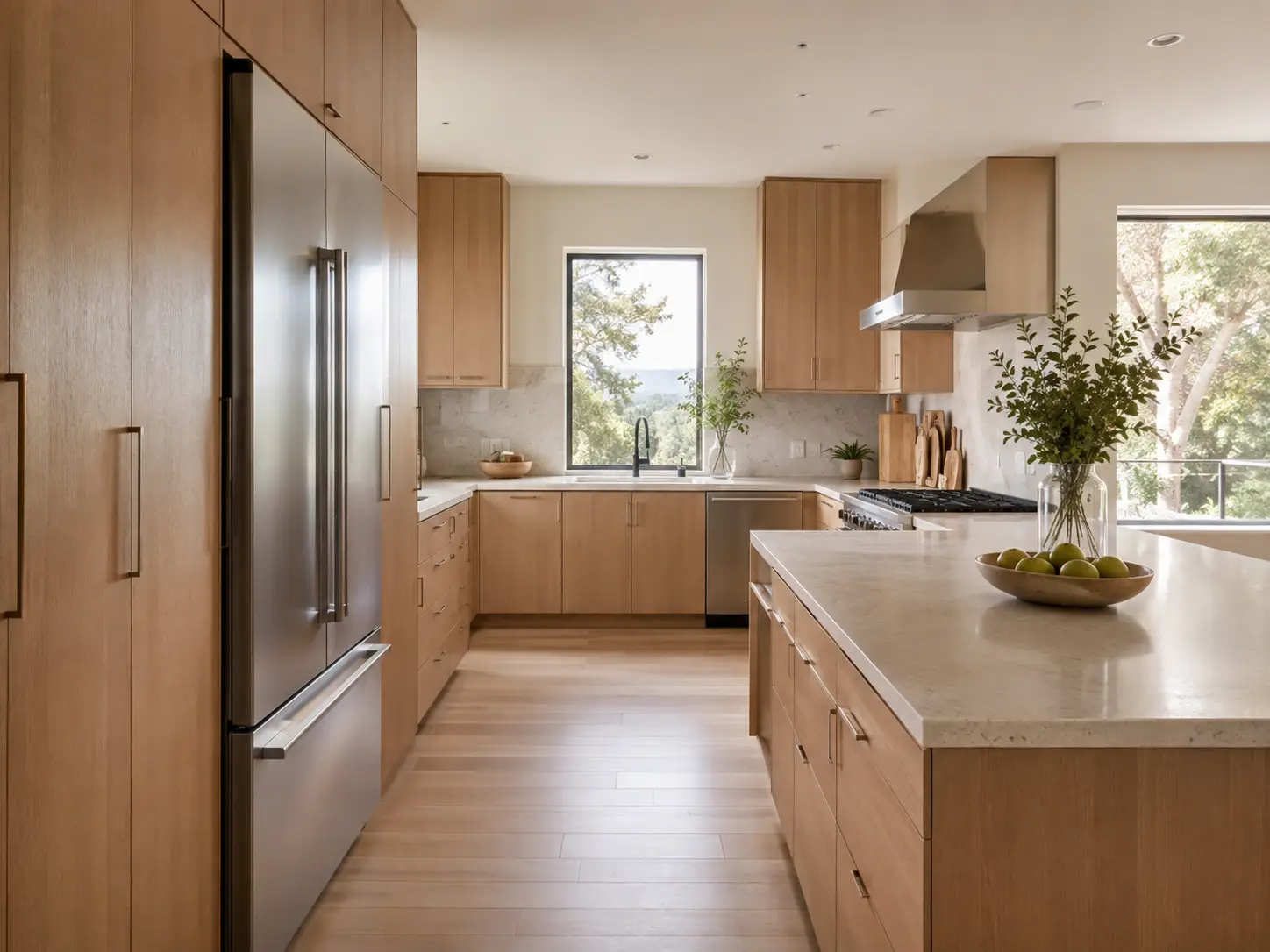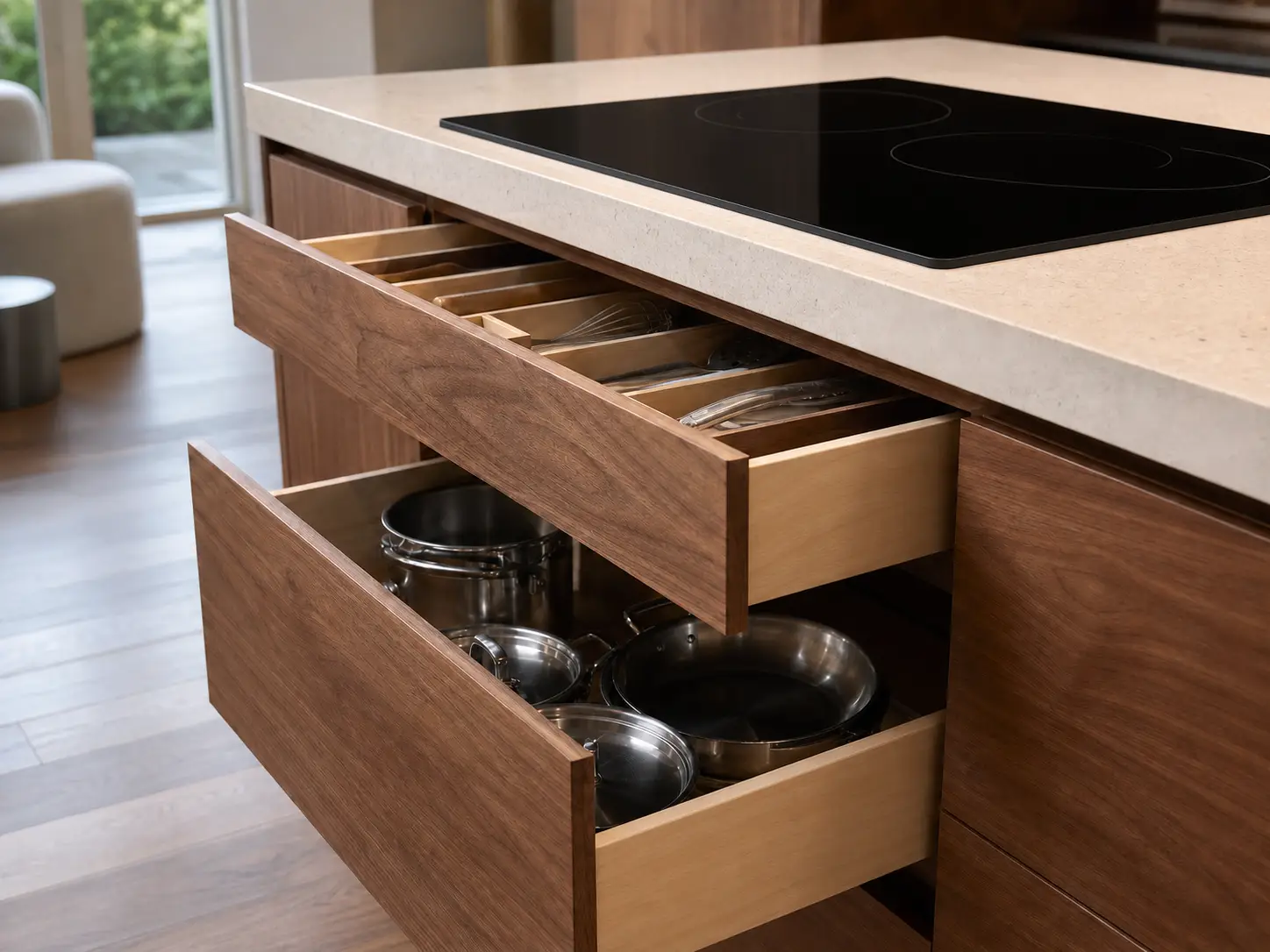
Cabinets are the most expensive fixed element in most kitchen remodels, and the difference between a good manufacturer and a poor one shows up years later in sagging shelves, peeling finish, and drawers that no longer close square. If you are planning a project in San Jose, San Francisco, or anywhere on the Peninsula, this guide walks through what actually separates a quality custom cabinet shop from a box that just resells imported parts. We build locally at American Built Cabinets, so we will be specific about the construction details that matter and the questions worth asking before you sign anything.
Start With How the Box Is Built, Not the Door Style
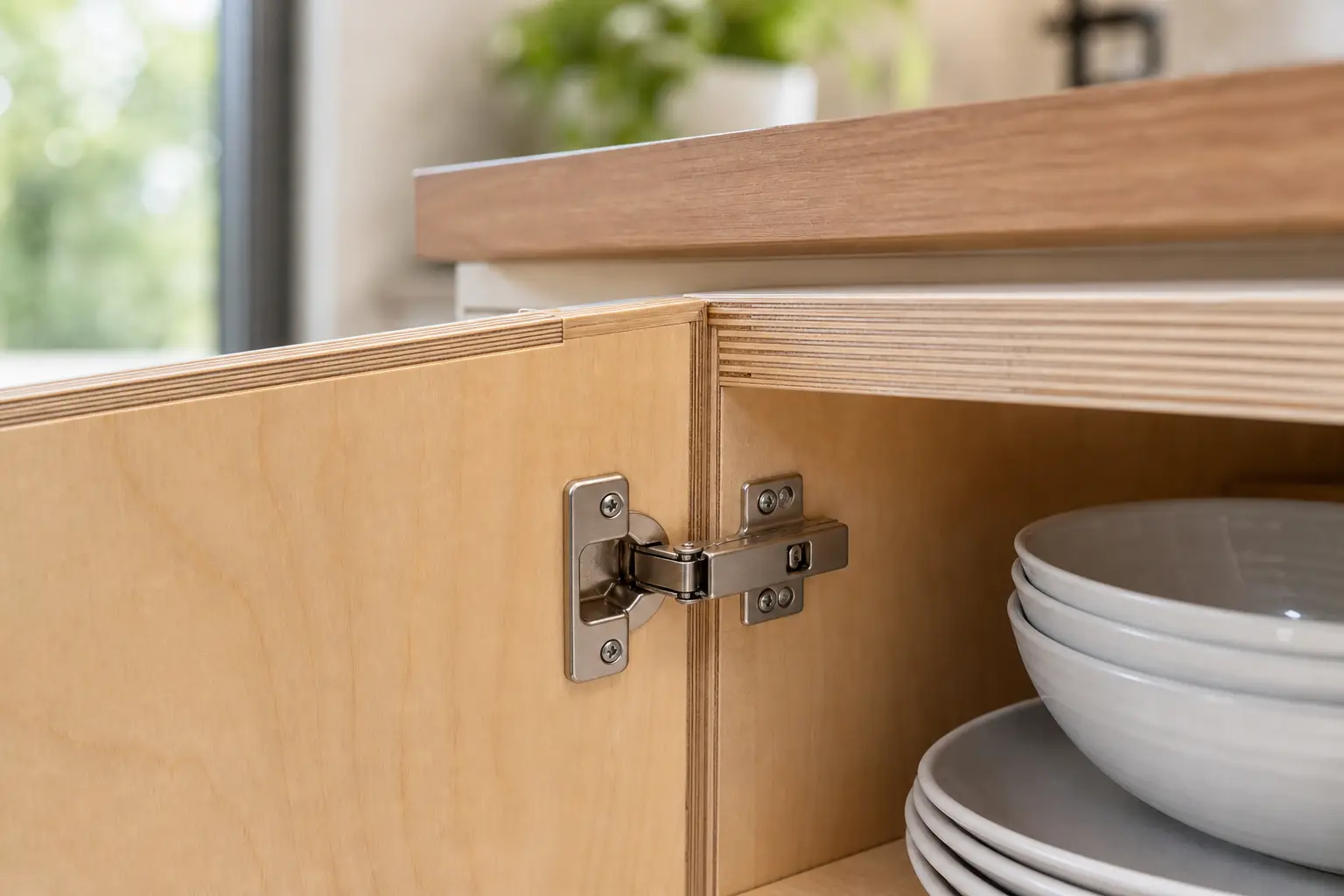
Almost every showroom conversation starts with door styles and colors, but the cabinet box is what determines how long the cabinet lasts. Ask what the boxes are made from. The best answer for most kitchens is 3/4-inch plywood, a panel type covered by engineered-wood grading standards, for the case sides, top, and bottom, because plywood holds screws better than particleboard and shrugs off the occasional dishwasher leak or damp coastal air. Particleboard and MDF have their place, MDF in particular is excellent for painted door panels because it will not telegraph wood grain or crack at the miters, but you do not want a structural cabinet box made from bargain particleboard that swells the first time it gets wet.
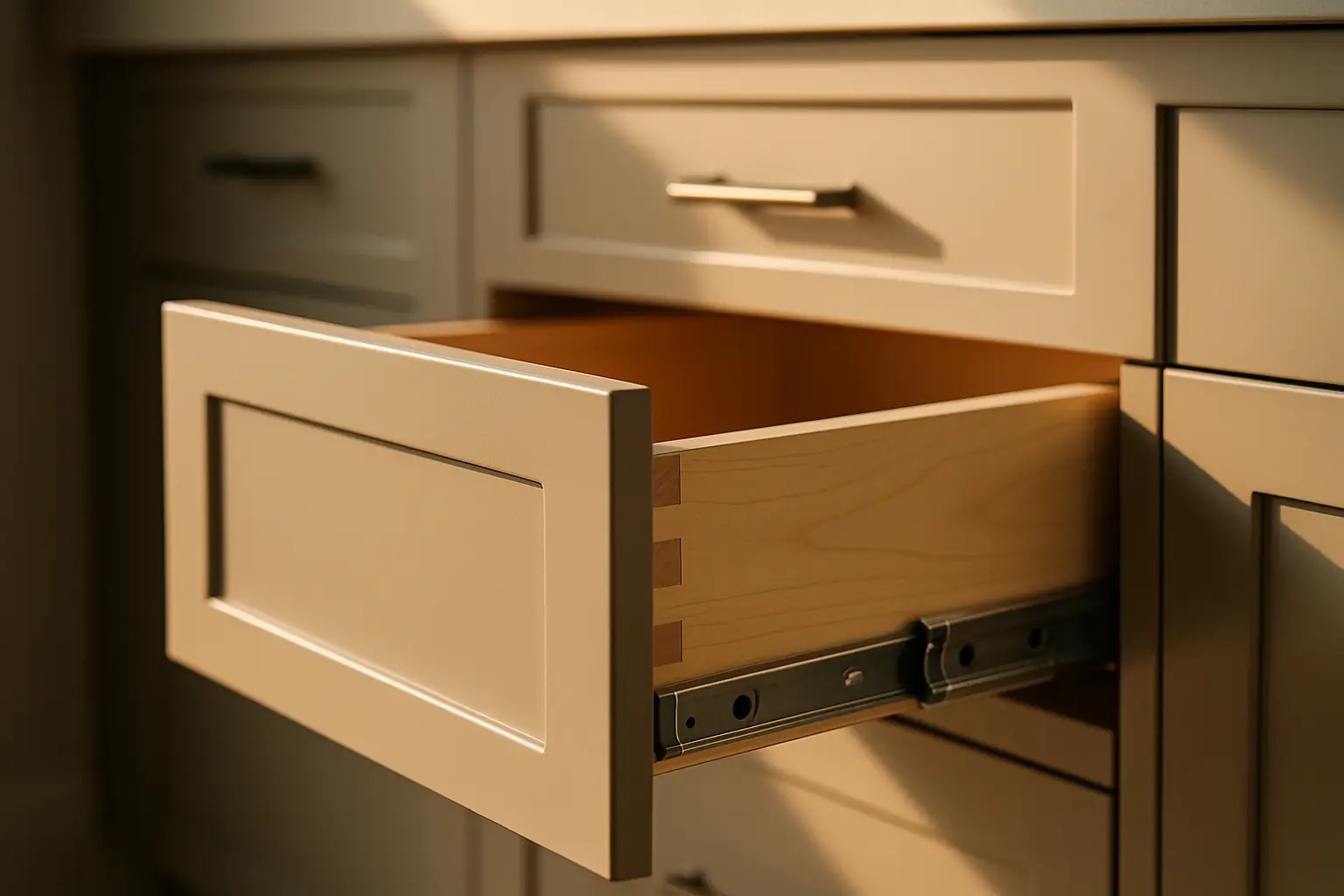
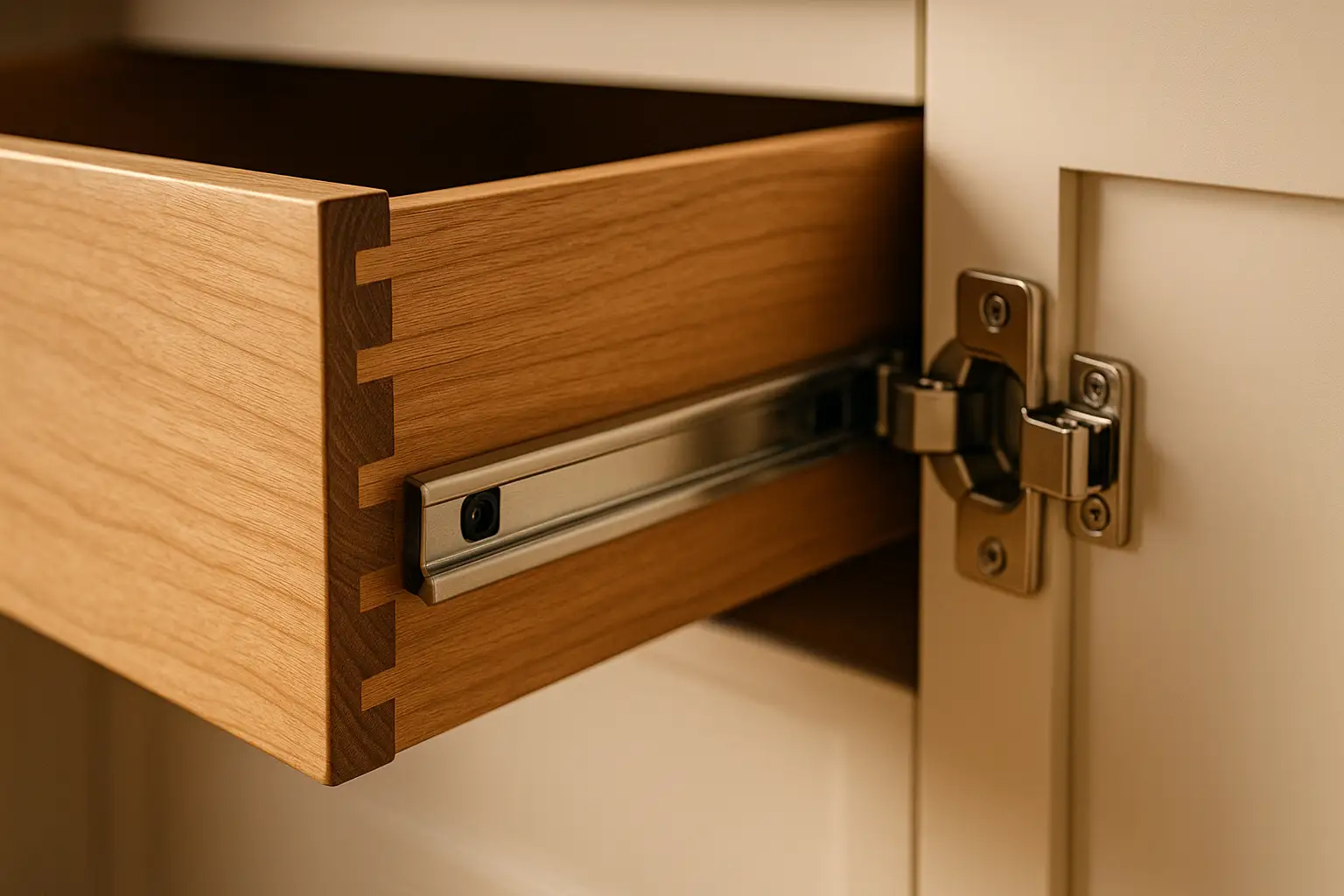
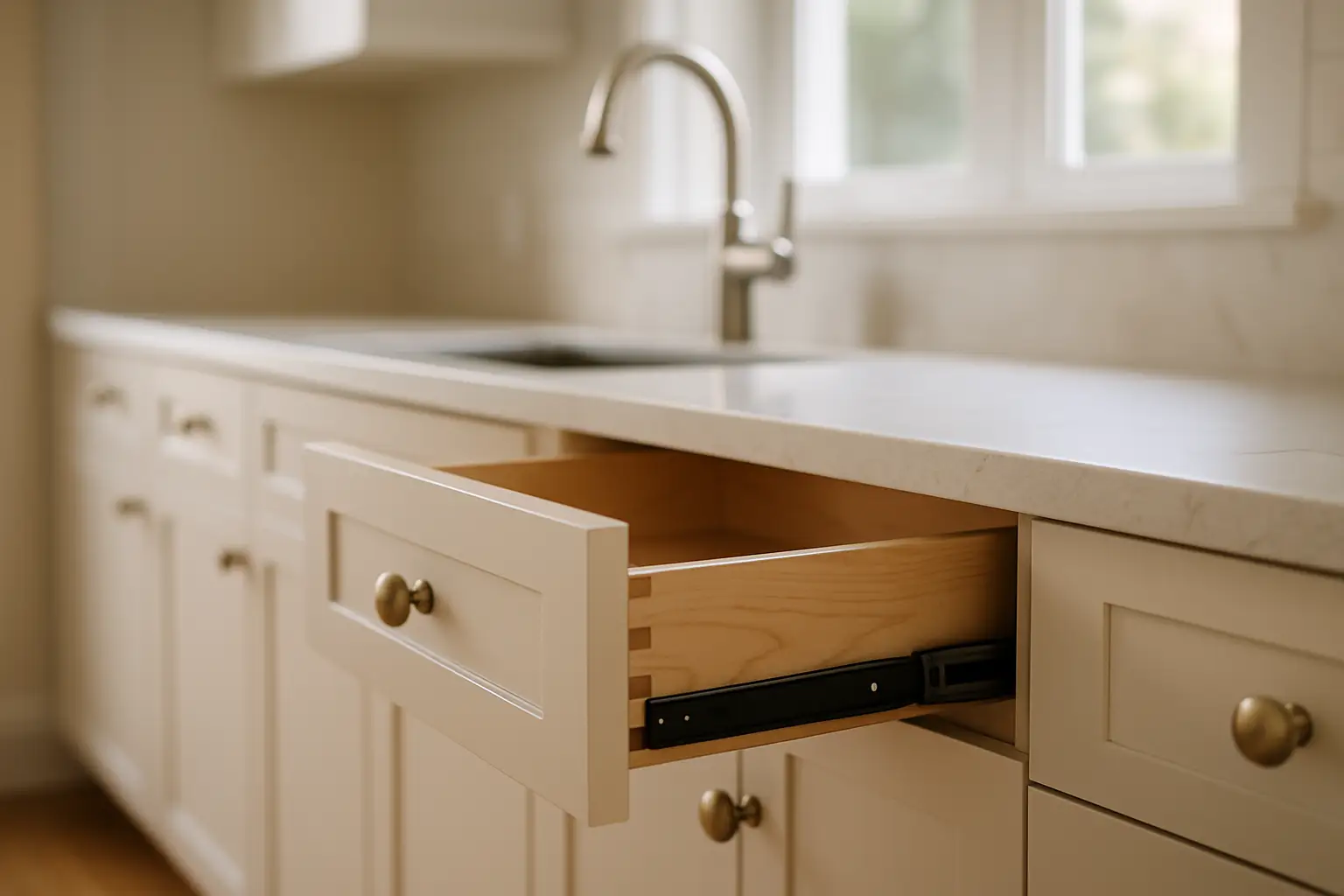
Look at how the joints are assembled. Dado and rabbet joints, where the shelf or panel seats into a routed groove, are far stronger than boxes held together with staples and a bead of glue. For drawers specifically, dovetail joinery in solid hardwood is the benchmark. It is more labor to produce than a stapled butt joint, which is exactly why it signals a shop that is not cutting corners. If a manufacturer is vague about box construction or steers you back to finishes, treat that as a warning.
Understand RTA, Semi-Custom, and True Custom
These three categories get blurred in marketing, so it helps to know what you are actually buying. RTA, or ready-to-assemble, cabinets ship flat-packed and you or your installer put them together. They are the cheapest option and fine for a rental or a garage, but sizes come in fixed increments, usually 3 inches, and you fill the gaps with filler strips. Semi-custom means the manufacturer builds from a catalog of door styles and finishes but can modify some dimensions and add options. True custom means the cabinet is built to your exact opening, your ceiling height, and your specific storage needs, with no filler compromises.
The practical difference matters most in older Bay Area homes, where walls are rarely plumb and ceiling heights vary room to room. A true custom shop can scribe cabinets to a wavy plaster wall or build a 43-inch-wide cabinet when the space calls for it instead of forcing a 42-inch box plus filler. If your layout is straightforward and your budget is tight, semi-custom can be a smart middle ground. Just be clear which one you are being quoted, because the price gap between them is real.
Inspect the Hardware and Finish Specs in Writing
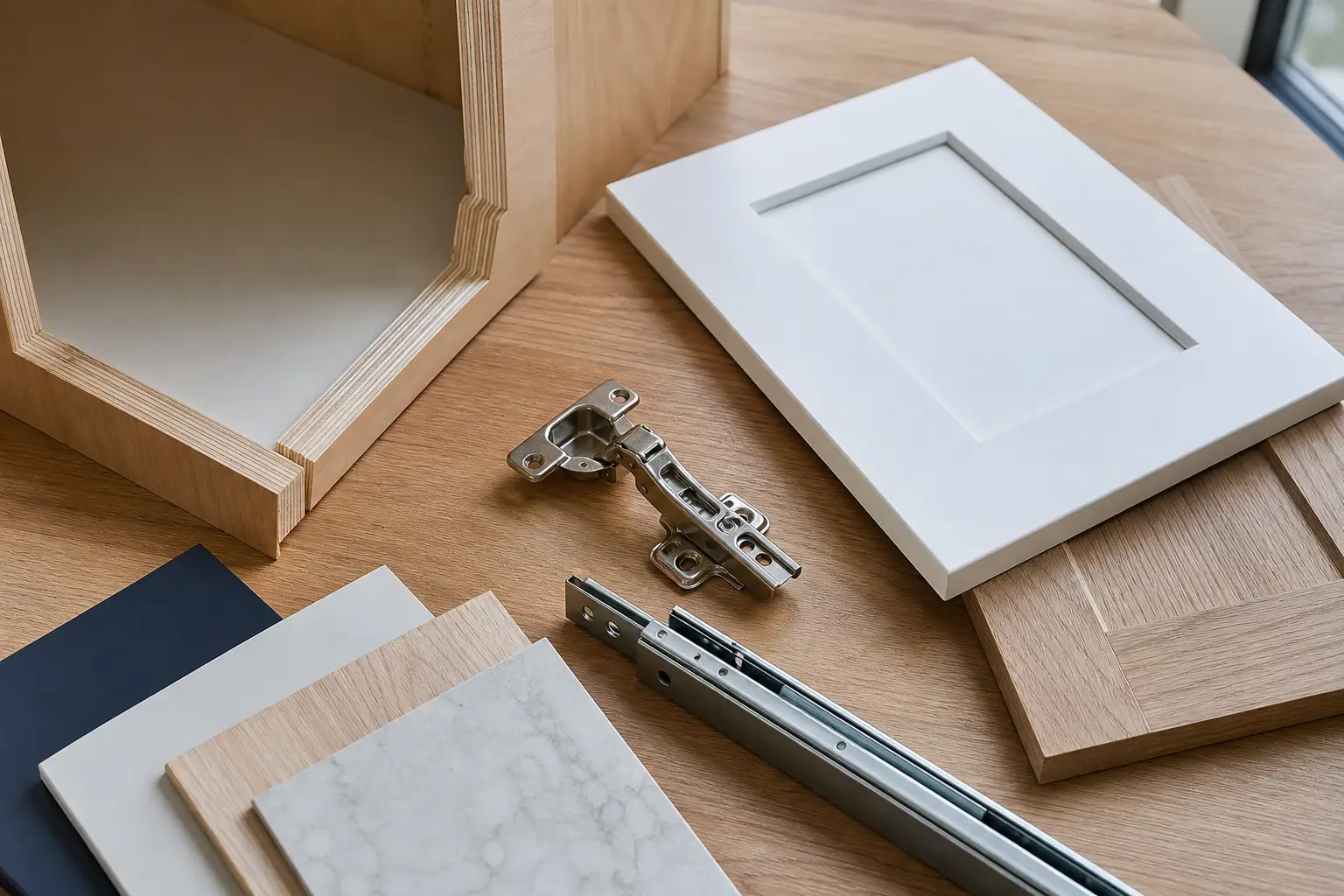
Hardware is where quality quietly hides. Full-extension, soft-close drawer slides rated for 90 to 100 pounds let you reach the back of a deep drawer and stop it from slamming. Cheaper 3/4-extension slides leave the back six inches unusable. For doors, six-way adjustable soft-close hinges from a name-brand maker like Blum or Grass will still be adjustable and quiet a decade from now, while no-name hinges tend to develop play. Get the hardware brands and specs written into your quote, not just described verbally.
Finish is the other detail worth pinning down. A conversion varnish or catalyzed finish, applied and cured in a controlled spray booth, resists moisture, grease, and the daily wiping a kitchen demands far better than a wipe-on finish. Ask how many coats, whether they sand between coats, and how the finish is cured. On painted cabinets, ask specifically how they handle the joint between a solid wood frame and an MDF panel, because that seam is where cheap paint jobs crack first. Building and finishing under one roof, as we do in San Jose, is one reason a shop can control these details instead of hoping a distant factory got it right.
Weigh Lead Time, Local Support, and the Warranty
Imported cabinets often carry lead times of eight to twelve weeks or longer, and if a door arrives damaged or a box is the wrong size, you are waiting weeks for a replacement while your kitchen sits unusable. A local manufacturer can usually turn custom work faster, we run about a three-week lead time, and just as important, we can remake a single part quickly instead of reordering an ocean container. For a remodel where the family is living without a functioning kitchen, that turnaround is not a small thing.
Read the warranty carefully and ask what it actually covers. A meaningful warranty covers the cabinet structure and the hardware for the life of the original owner, and it names who you call. Warranties from overseas brands are often technically valid but practically useless because the labor and freight to honor them fall on you. When the shop that built your cabinets is a short drive away in the Bay Area, warranty support means someone can come look at the problem rather than mailing you a form.
FAQ
Q1: How much do custom cabinets cost compared to stock or semi-custom?
A1: Stock and RTA cabinets are the cheapest, semi-custom lands in the middle, and true custom is the most expensive per linear foot because everything is built to order. The gap narrows once you factor in filler strips, wasted space, and the shorter lifespan of budget boxes. For a typical Bay Area kitchen, get itemized quotes so you are comparing the same construction, not just headline prices.
Q2: What cabinet box material should I ask for?
A2: For structural boxes, 3/4-inch plywood is the best general choice because it holds fasteners well and resists moisture. MDF is excellent for painted door panels because it will not crack or show grain. Avoid low-grade particleboard for the case itself, especially near dishwashers and sinks where leaks happen.
Q3: Why does a local manufacturer have a shorter lead time?
A3: Because the cabinets are built here rather than shipped from overseas, there is no ocean freight or customs delay. We run about a three-week lead time, and if one part is damaged or mismeasured we can remake just that piece in days instead of reordering an entire shipment.
Q4: Are dovetail drawers really worth it?
A4: Yes, for drawers you use daily. Dovetail joinery in solid hardwood interlocks the drawer front and sides so the joint resists the constant pulling force of opening and closing. Stapled butt joints tend to loosen over years of use, especially on heavy drawers holding pots or utensils.
Q5: What should the finish warranty actually cover?
A5: A strong warranty covers both the cabinet structure and the finish against defects, and it should name a local contact who honors it. Ask whether it is transferable, what voids it, and who pays for labor and freight on a repair. Overseas warranties are often valid on paper but costly to actually use.
Q6: Can custom cabinets fit an older home with uneven walls?
A6: That is exactly where custom work earns its cost. A true custom shop scribes cabinets to out-of-plumb walls and builds to your actual ceiling height and openings, which is common in older San Jose, San Francisco, and Peninsula homes. Stock cabinets force you to hide those gaps with filler strips instead.