Ready-to-assemble (RTA) cabinets have grown up. What used to mean flimsy particleboard and cam-lock frustration now includes plywood boxes, soft-close hardware, and clean modern door styles that hold their own next to semi-custom work. For homeowners across San Jose, San Francisco, and San Mateo who want a sharp-looking kitchen without a three-month lead time, RTA is worth a serious look. This guide walks through what actually separates good RTA from bad, where the style options land, and how to plan storage that works for the way you cook.
What RTA Actually Means (and What It Doesn't)
RTA stands for ready-to-assemble: the cabinet ships flat in pieces and gets put together on site or in a shop before install. That is the only thing the term guarantees. It says nothing about quality, which is where a lot of buyers get burned by online-only sellers.
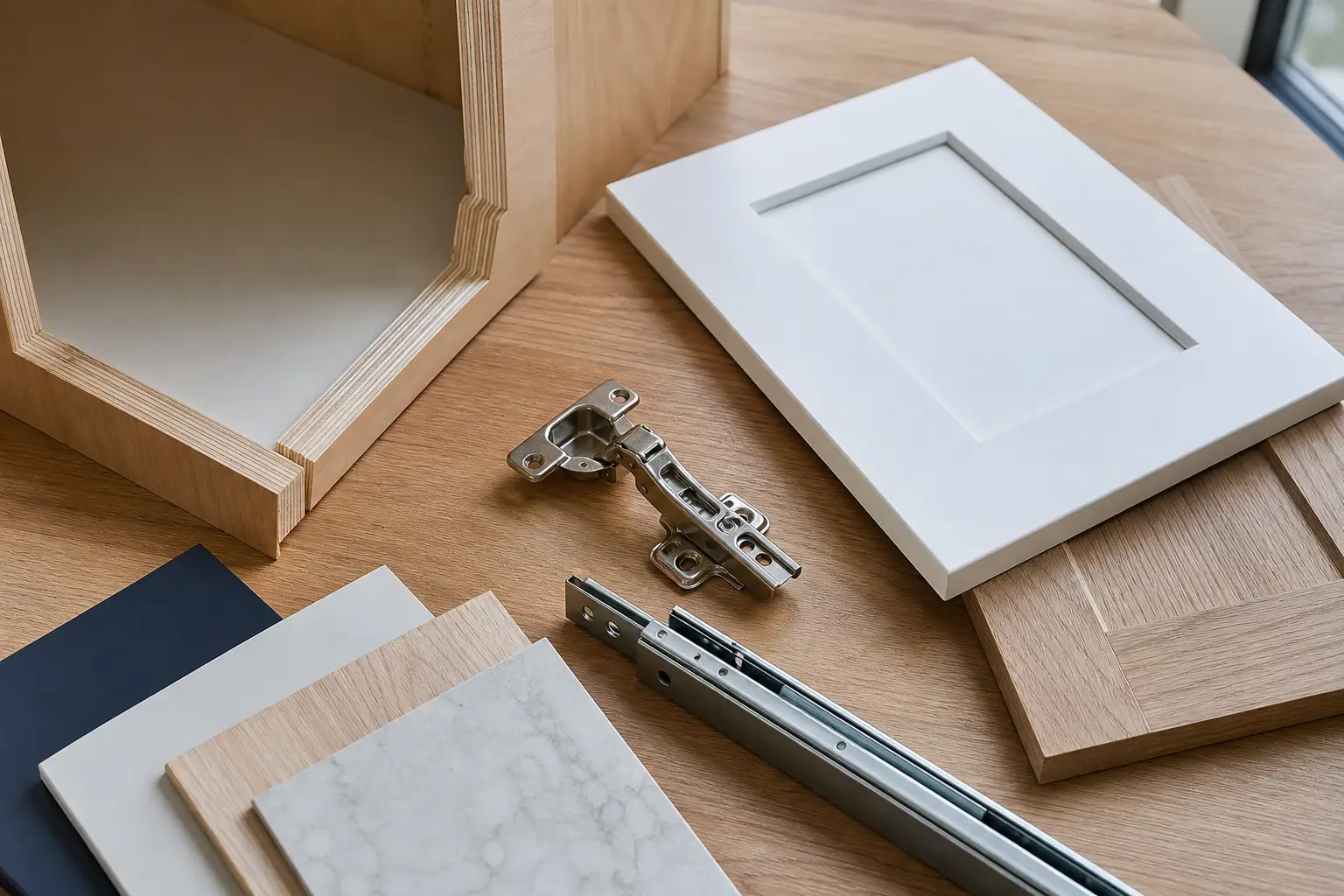
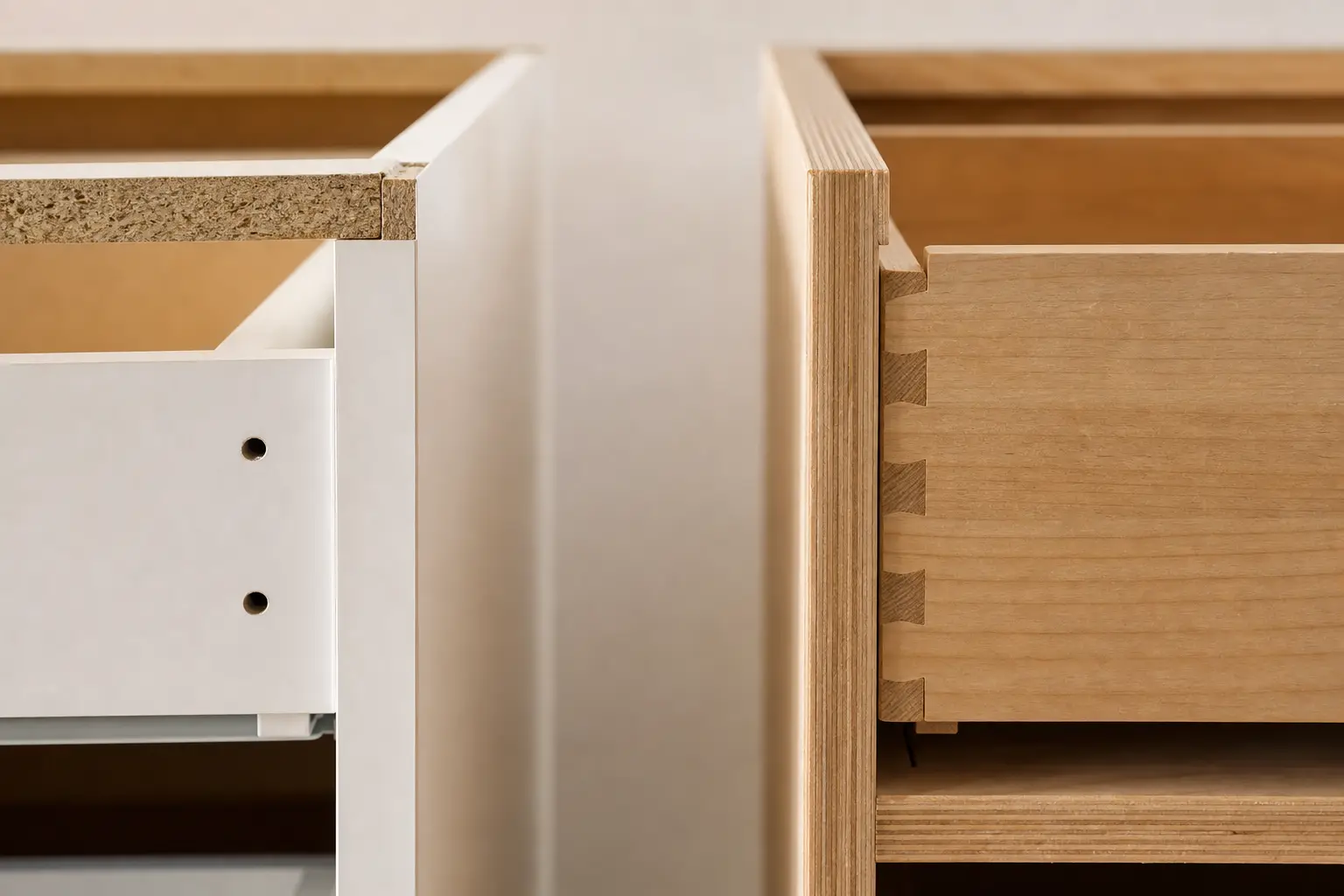
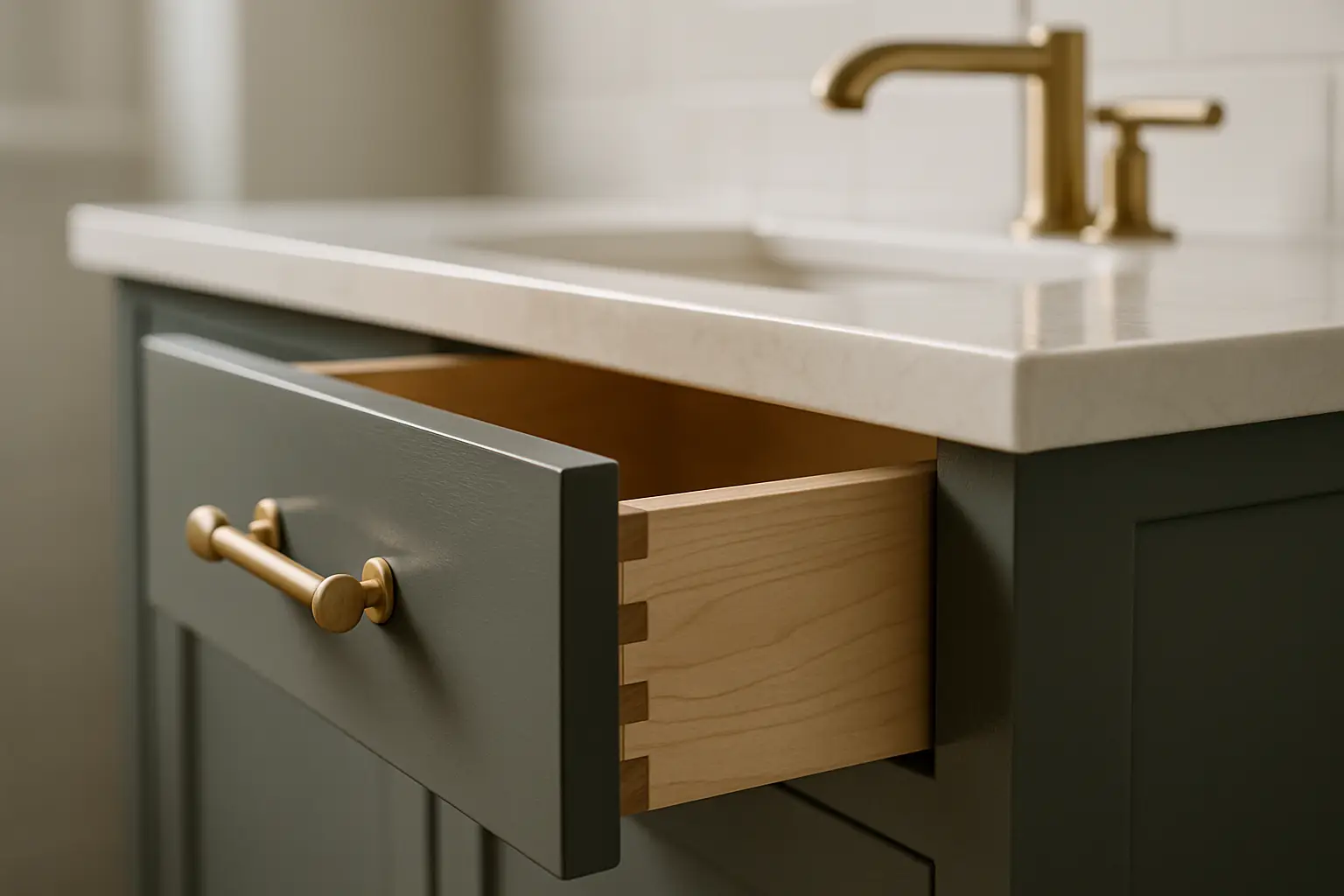
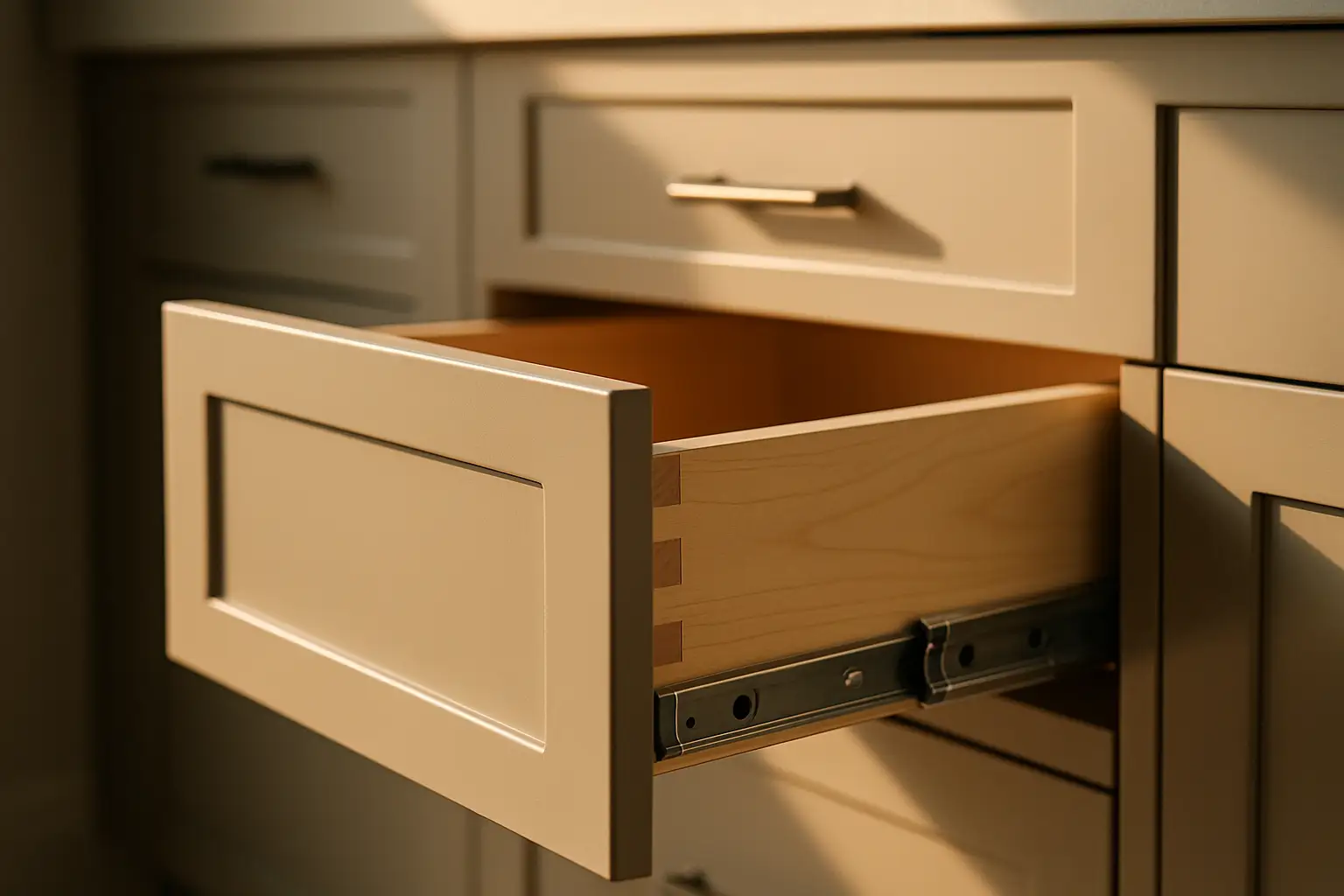
The real spread is in construction. A cheap RTA box uses thin particleboard sides, stapled joints, and a fake wood-grain laminate that chips at the edges. A good one uses 3/4-inch plywood boxes, dovetailed solid-wood drawer bodies, and doors that arrive pre-finished and undamaged. Both get called RTA. The difference shows up in year three, when the sink-base cabinet either stays square or starts sagging from water and weight.
RTA sits between stock and semi-custom. You give up some sizing flexibility (widths usually come in 3-inch increments) and you take on assembly, but you save money and time. For a straightforward layout with standard runs, that tradeoff is often the smart one.
Materials and Hardware That Separate Good from Cheap
Start with the box. Plywood is the material to want for cabinet sides, floors, and shelves because it holds screws, resists moisture, and does not blow out like particleboard when a slide gets overloaded. MDF is fine and even preferred for painted door panels since it takes a smooth, crack-resistant finish, but you do not want it as your structural box in a humid Bay Area kitchen or near a dishwasher.
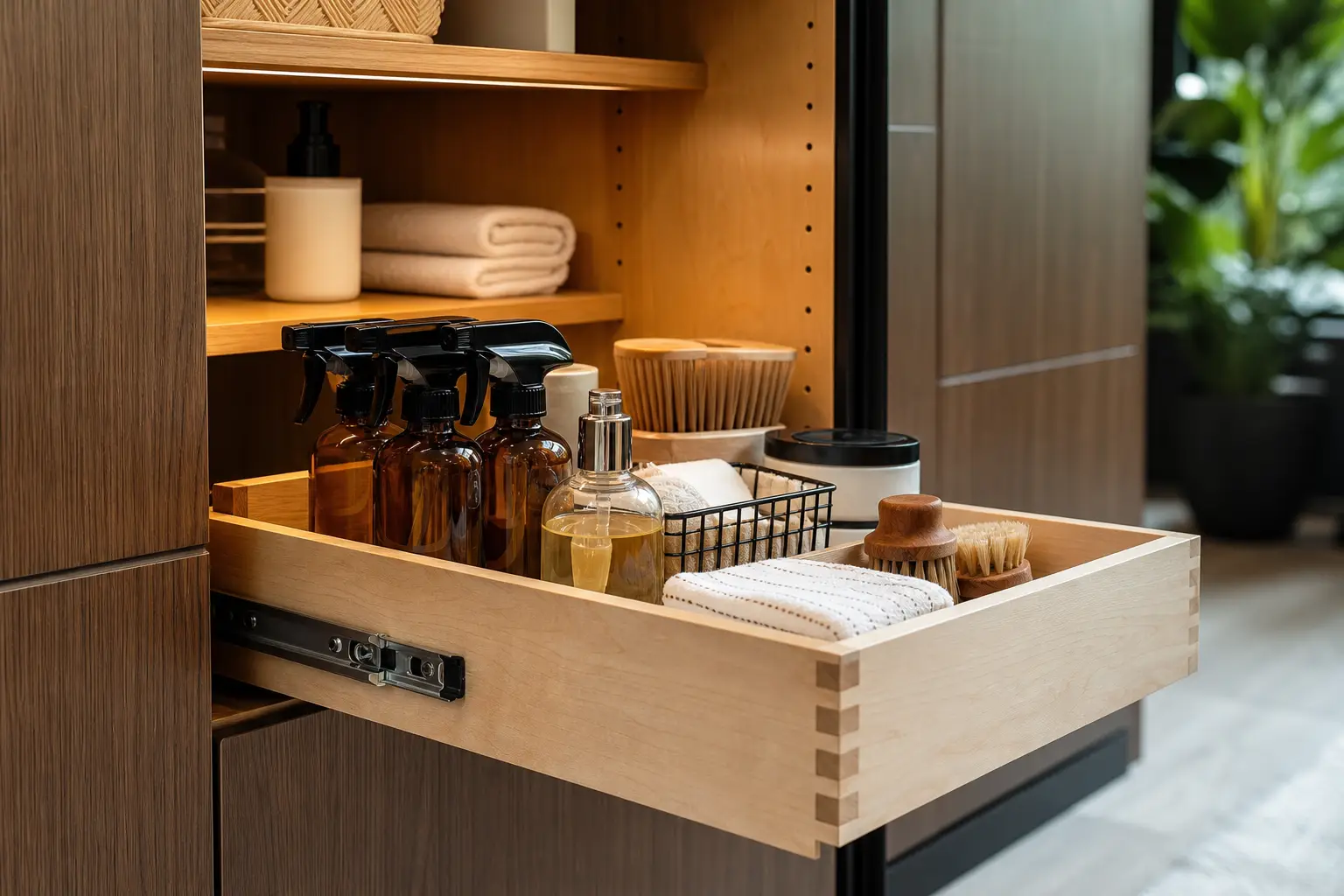
Hardware is where a modern kitchen earns its feel. Look for full-extension, soft-close undermount slides so drawers pull all the way out and close without a slam. Concealed six-way adjustable hinges with soft-close let you dial doors into perfect alignment after install. Dovetailed drawer boxes in solid maple or birch outlast stapled MDF drawers by years. These are not luxury add-ons anymore; on quality RTA they are standard, and if a supplier treats them as upgrades, that tells you something.
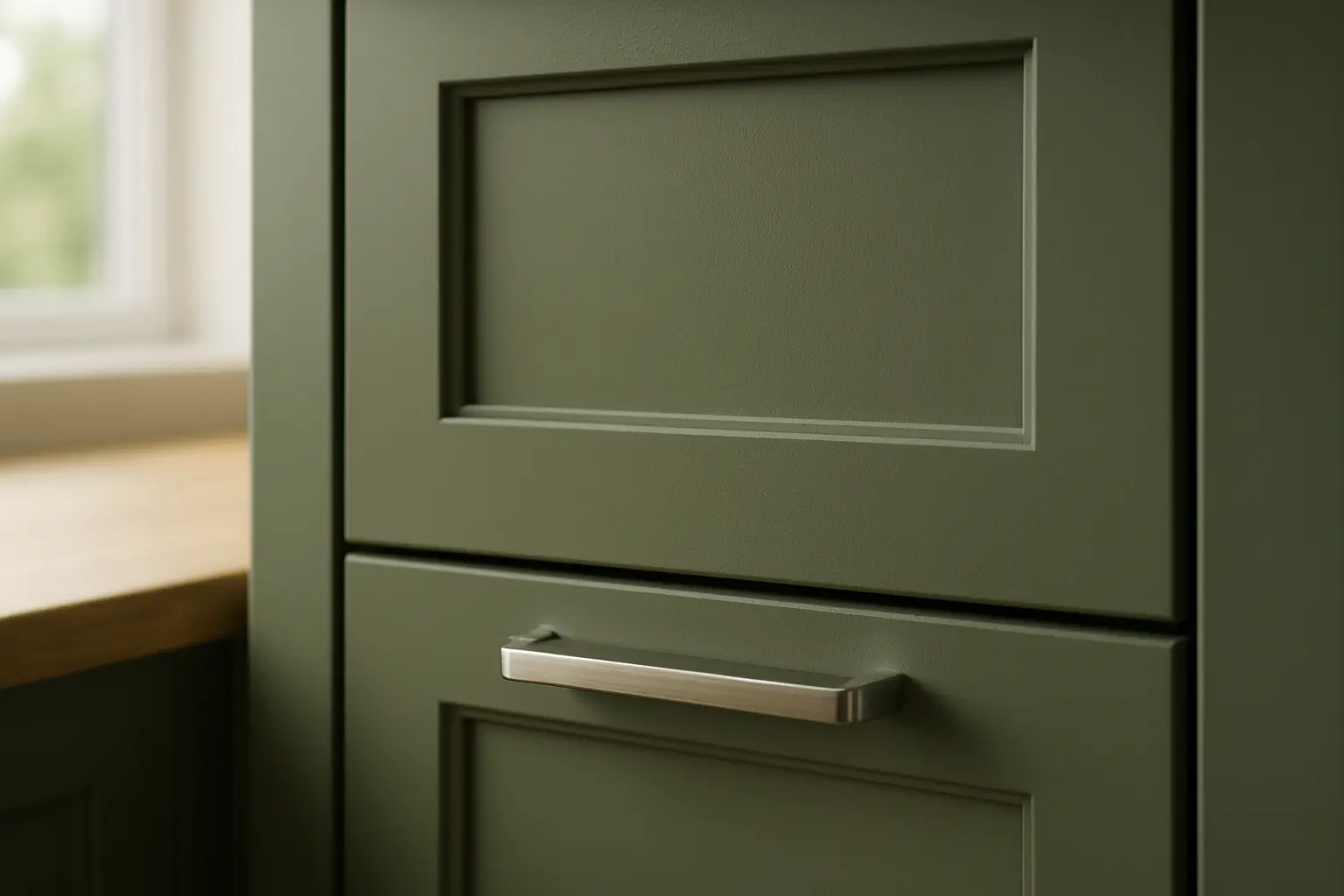
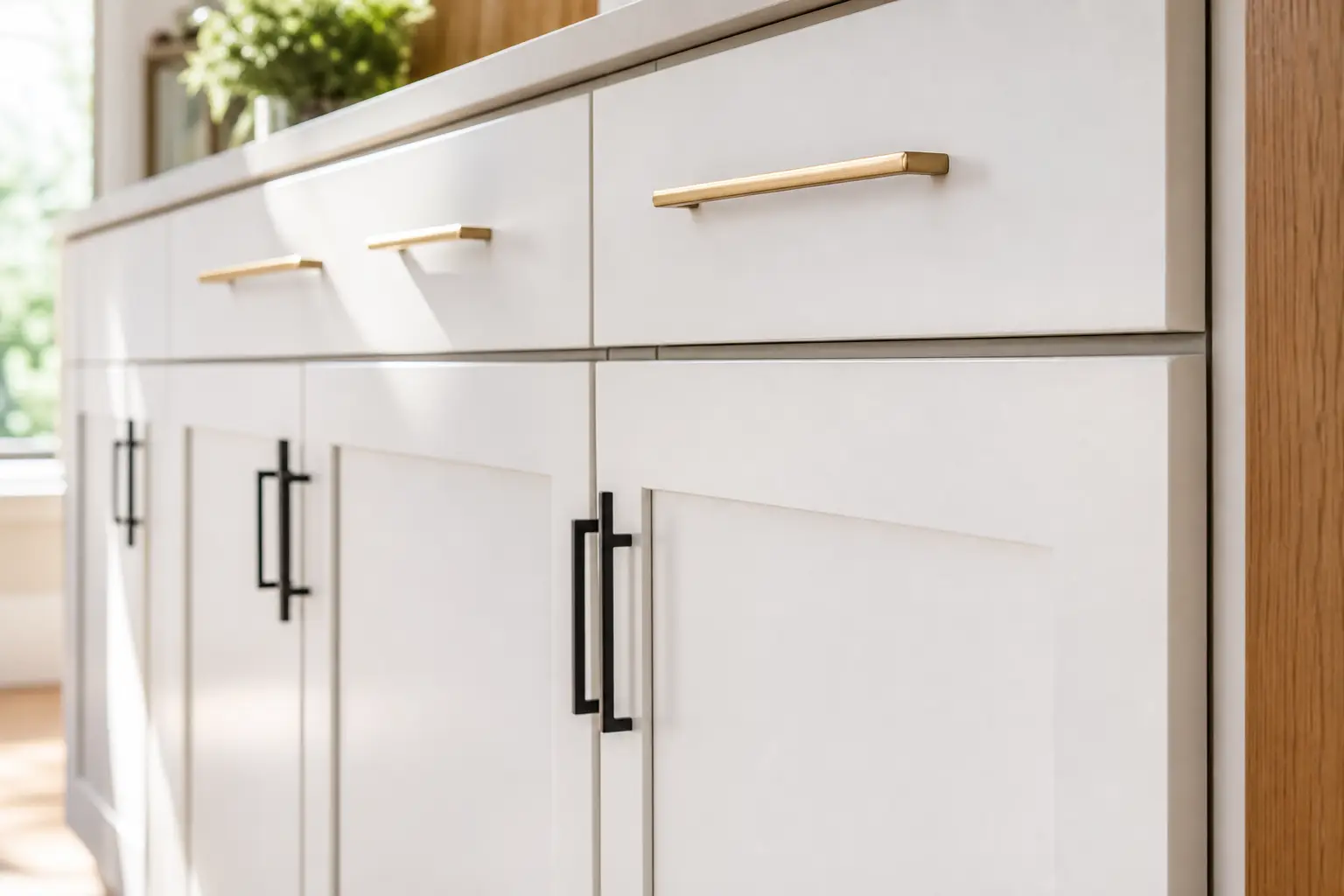
Finish matters for durability, not just looks. A conversion varnish or catalyzed finish resists grease, water, and the daily wipe-down better than a basic lacquer. Slab and shaker doors in matte white, warm greige, and natural rift-cut oak are the modern go-to right now, and flat-panel thermofoil holds up well for high-use family kitchens.
Designing Efficient Storage, Not Just Pretty Boxes
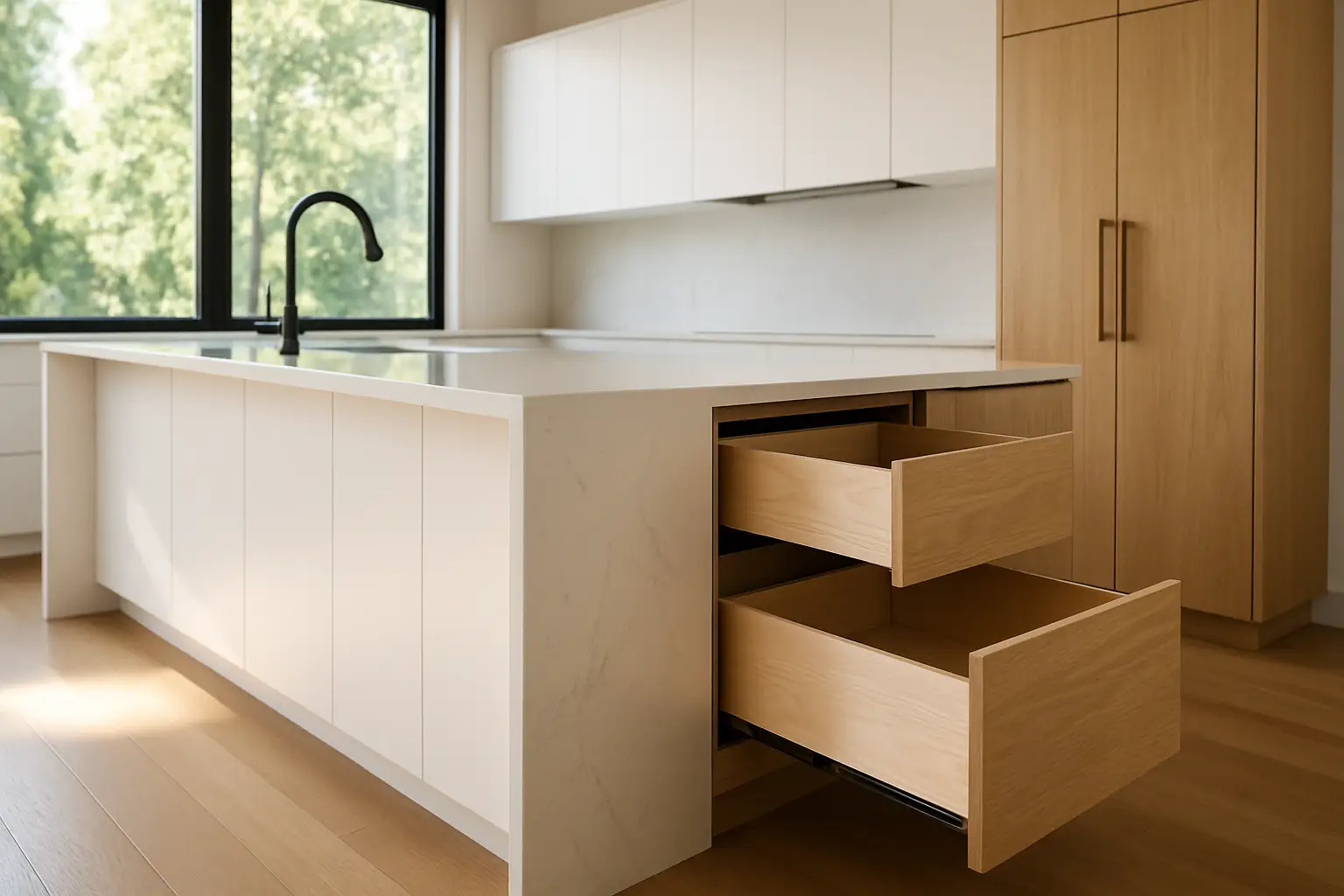
Storage that works starts with drawers over doors for base cabinets. Deep pot-and-pan drawers on full-extension slides beat a low door-and-shelf combo where everything hides in the back. A 30-inch three-drawer base holds more usable, reachable storage than a two-door base with a single rollout.
Think in zones. Put a bank of drawers next to the range for utensils and spices, a tall pantry or pull-out near the fridge, and a dedicated cabinet with vertical dividers for sheet pans and cutting boards. Corner cabinets are the classic dead space; a lazy Susan or a diagonal corner drawer recovers most of it. For upper cabinets, going to 39 or 42 inches tall in a home with 9-foot ceilings adds a full shelf of storage and a cleaner ceiling line.
Modern kitchens also lean on fewer, larger elements: full-height doors, integrated toe-kick drawers, and handleless or edge-pull fronts for a flat look. RTA lines increasingly offer these, so you can get a European-flat aesthetic without ordering fully custom.
RTA vs Semi-Custom vs Custom for Bay Area Homes
Bay Area housing runs the gamut, from 1920s San Francisco flats with quirky angles to newer San Jose builds with predictable layouts. That mix drives the choice. If your kitchen is rectangular with standard-depth appliances, RTA covers it well and gets you installed in a fraction of the time.
Semi-custom opens up more sizes, finishes, and modifications like reduced-depth cabinets or specific widths, at a higher cost and longer lead. Full custom is for the odd walls, the furniture-grade islands, the exact stain match, and the 10-foot single-slab door runs. Many kitchens end up mixing: RTA or semi-custom for the standard perimeter, one custom piece for a tricky corner or a statement island.
Because American Built Cabinets builds locally in San Jose, we can turn quality work around in roughly three weeks and handle warranty support in person rather than through a distant call center. That combination, local build plus short lead time, is often the deciding factor for homeowners and builders working on tight remodel schedules across the Peninsula and South Bay.
Planning, Ordering, and Getting It Installed Right
Good measurements come first. A proper plan accounts for appliance clearances, filler strips at walls and corners, and how doors and drawers open next to each other and around the range and dishwasher. A quarter-inch error at the wall multiplies across a run, so this is not the place to eyeball it.
When you order, confirm what ships assembled versus flat, what hardware is included, and the finish warranty in writing. Assembly of a full kitchen's worth of RTA takes real time and a level workspace; many homeowners have it assembled by the supplier or their contractor rather than doing it themselves. Budget for install: cabinets that are hung out of level or unshimmed will never sit right no matter how good the boxes are.
Finally, order a door sample before committing to a finish. Screens misrepresent whites and grays badly, and undercabinet and daylight both change how a finish reads. Seeing the actual door in your kitchen, next to your counter and floor samples, saves the most common regret.
FAQ
Q1: Are RTA cabinets durable enough for a daily-use kitchen?
A1: Yes, when they are built from 3/4-inch plywood boxes with dovetailed drawers and quality slides and hinges. The weak point is cheap particleboard construction, not the RTA format itself. Focus on materials and hardware rather than the assembly method.
Q2: How much cheaper are RTA cabinets than semi-custom or custom?
A2: RTA typically runs 20 to 40 percent less than comparable semi-custom, mostly by using standard sizes and shipping flat. The savings shrink once you add many modifications or specialty finishes, at which point semi-custom may be the better value.
Q3: How long does it take to get RTA cabinets in the Bay Area?
A3: Quality local RTA can be ready in about three weeks, versus the six to twelve weeks common for semi-custom and longer for full custom. Building in San Jose keeps lead times short and makes any warranty or replacement issue easier to resolve.
Q4: Do I have to assemble RTA cabinets myself?
A4: No. While the format allows DIY assembly, many homeowners have the supplier or their contractor assemble them, especially for a full kitchen. Professional assembly ensures boxes are square, which matters for a clean install.
Q5: What door styles work best for a modern RTA kitchen?
A5: Slab and shaker fronts dominate modern kitchens, in matte white, warm greige, and natural oak. Handleless or edge-pull slab doors give a flat European look, and painted MDF panels resist cracking better than solid wood for smooth painted finishes.
Q6: Can RTA cabinets fit an older San Francisco kitchen with odd walls?
A6: Often partially. Standard RTA covers straight runs well, and filler strips absorb small irregularities. For badly out-of-square walls or unusual dimensions, mixing in a semi-custom or custom piece for the problem area usually gives a better result than forcing everything into stock sizes.