Shaker cabinets have stayed popular for more than a century because the design solves a real problem: a recessed panel door that looks clean, hides fingerprints better than high-gloss, and survives decades of daily use. The modern version keeps the honest five-piece frame but trims the proportions, drops the fussy hardware, and leans into flat matte finishes. At American Built Cabinets in San Jose, we build these doors for kitchens across the Bay Area, from Victorian remodels in San Francisco to new construction in San Mateo, and the questions we hear most are about how to keep the look modern without making it cold.
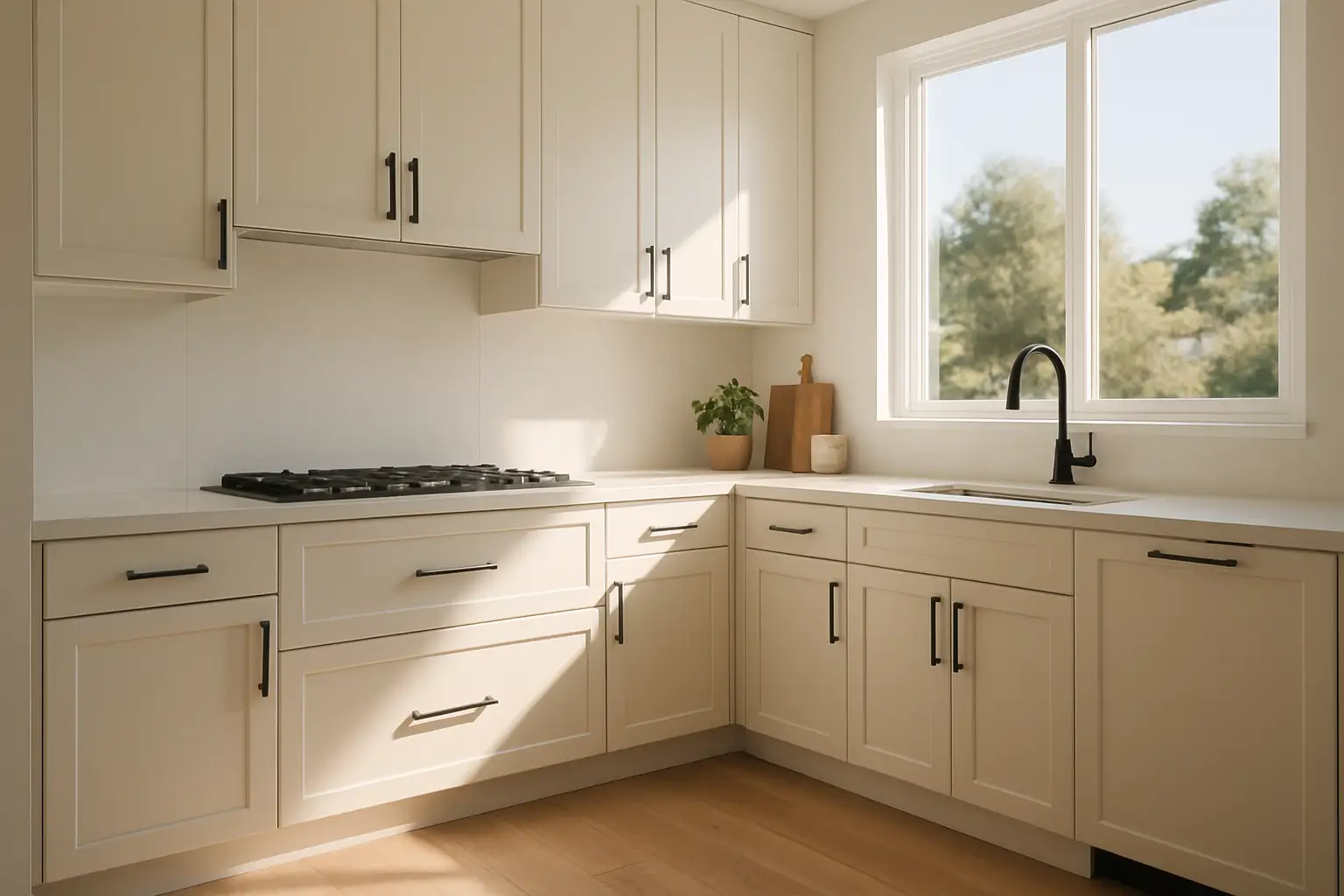
What Makes a Shaker Door "Modern" Instead of Traditional
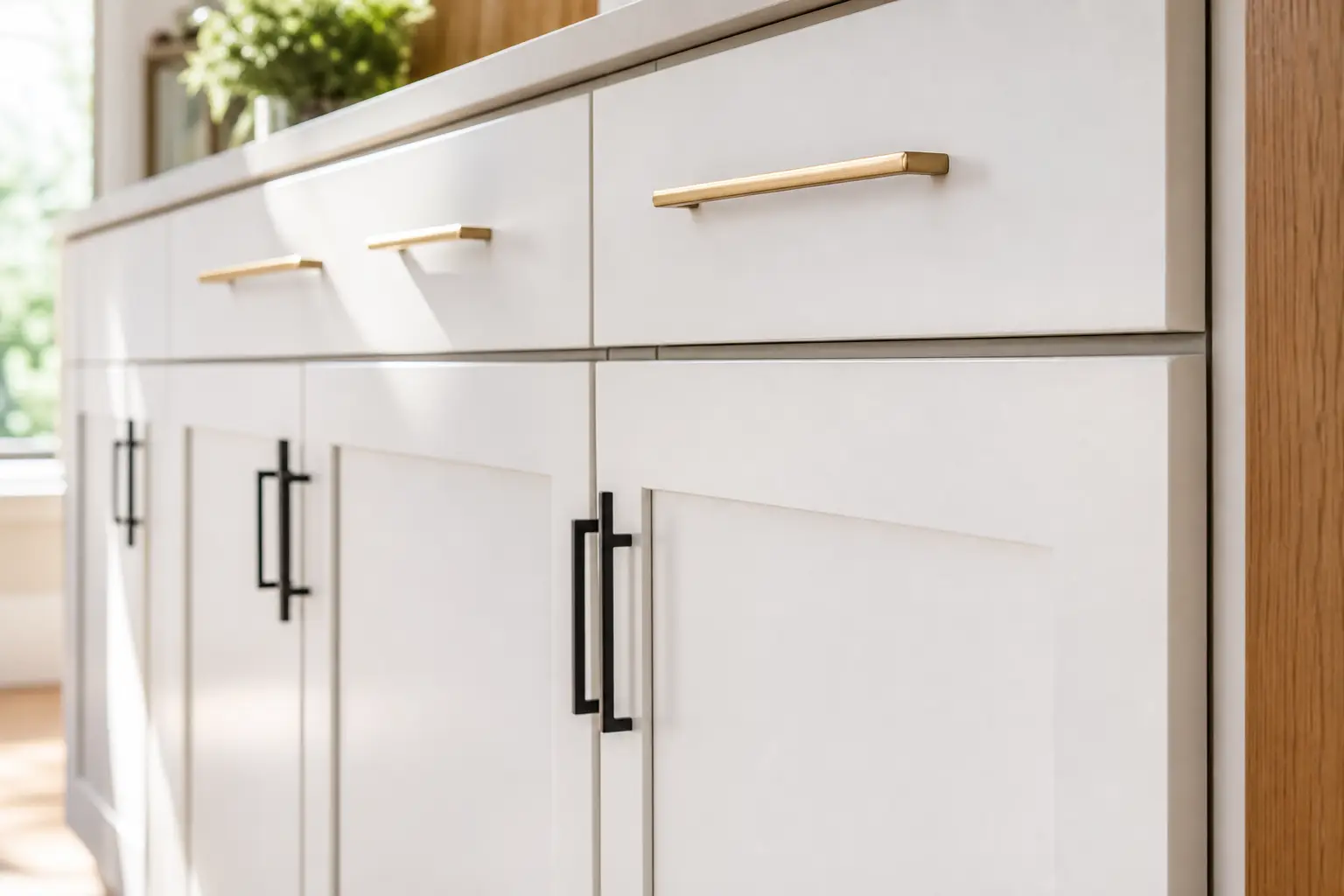
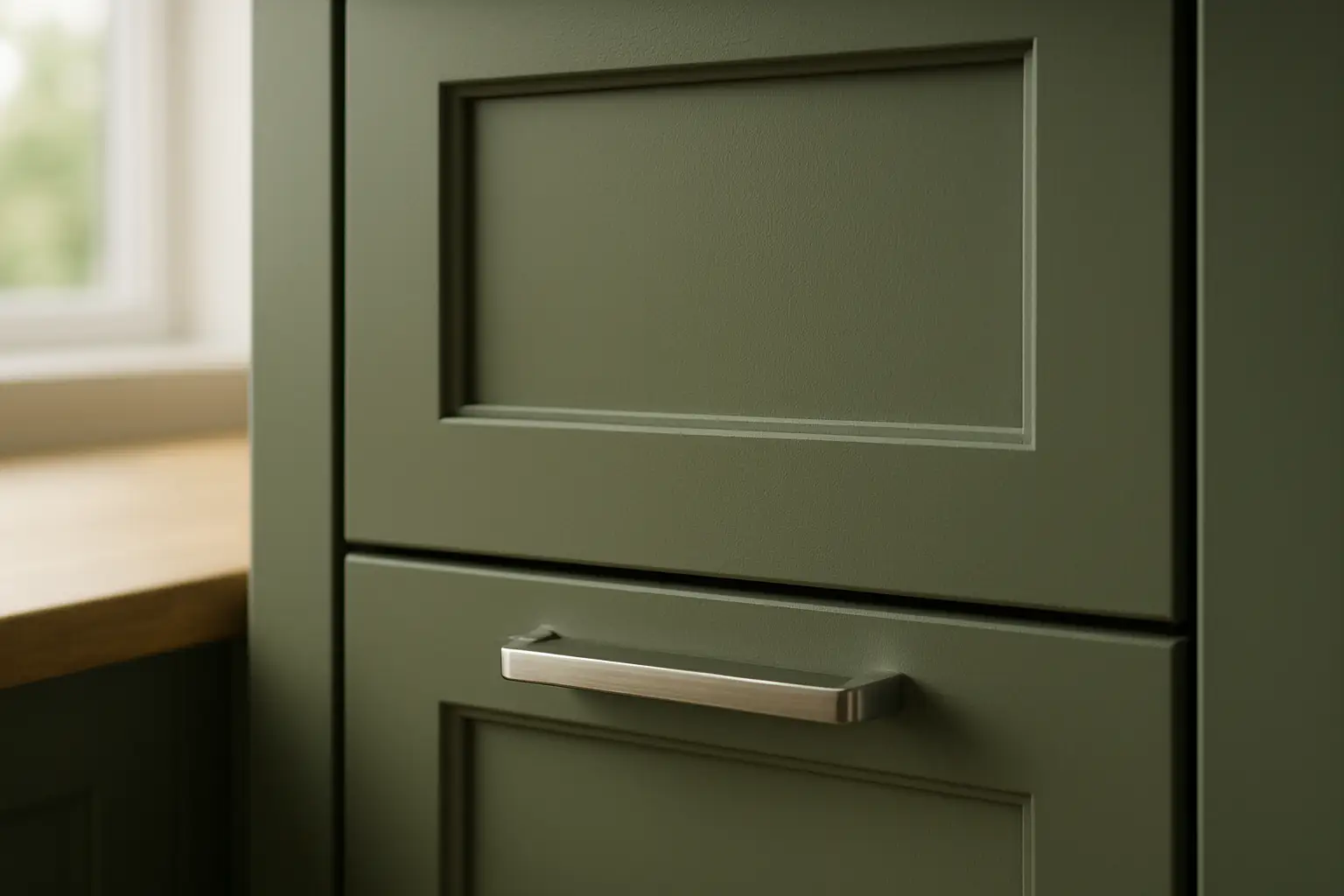
A classic Shaker door has a five-piece construction: two vertical stiles, two horizontal rails, and a flat center panel that floats in a groove. That basic anatomy has not changed. What changes with the modern interpretation is proportion and detail. Traditional Shaker rails and stiles often run 2.5 to 3 inches wide with a slightly stepped inside edge. Modern Shaker narrows those frames to roughly 2 to 2.25 inches and uses a simple square inside profile, which makes the door read cleaner and more geometric.
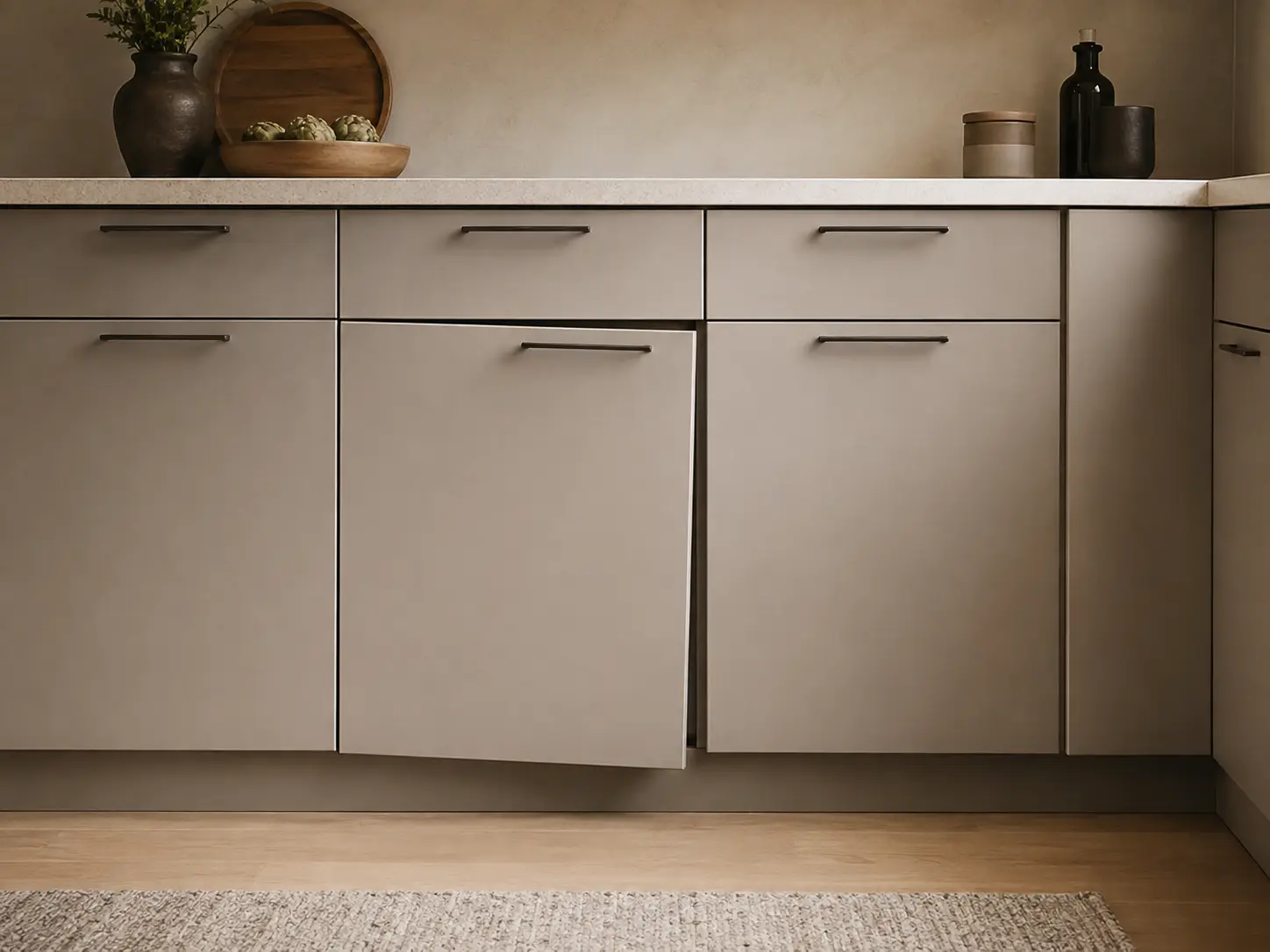
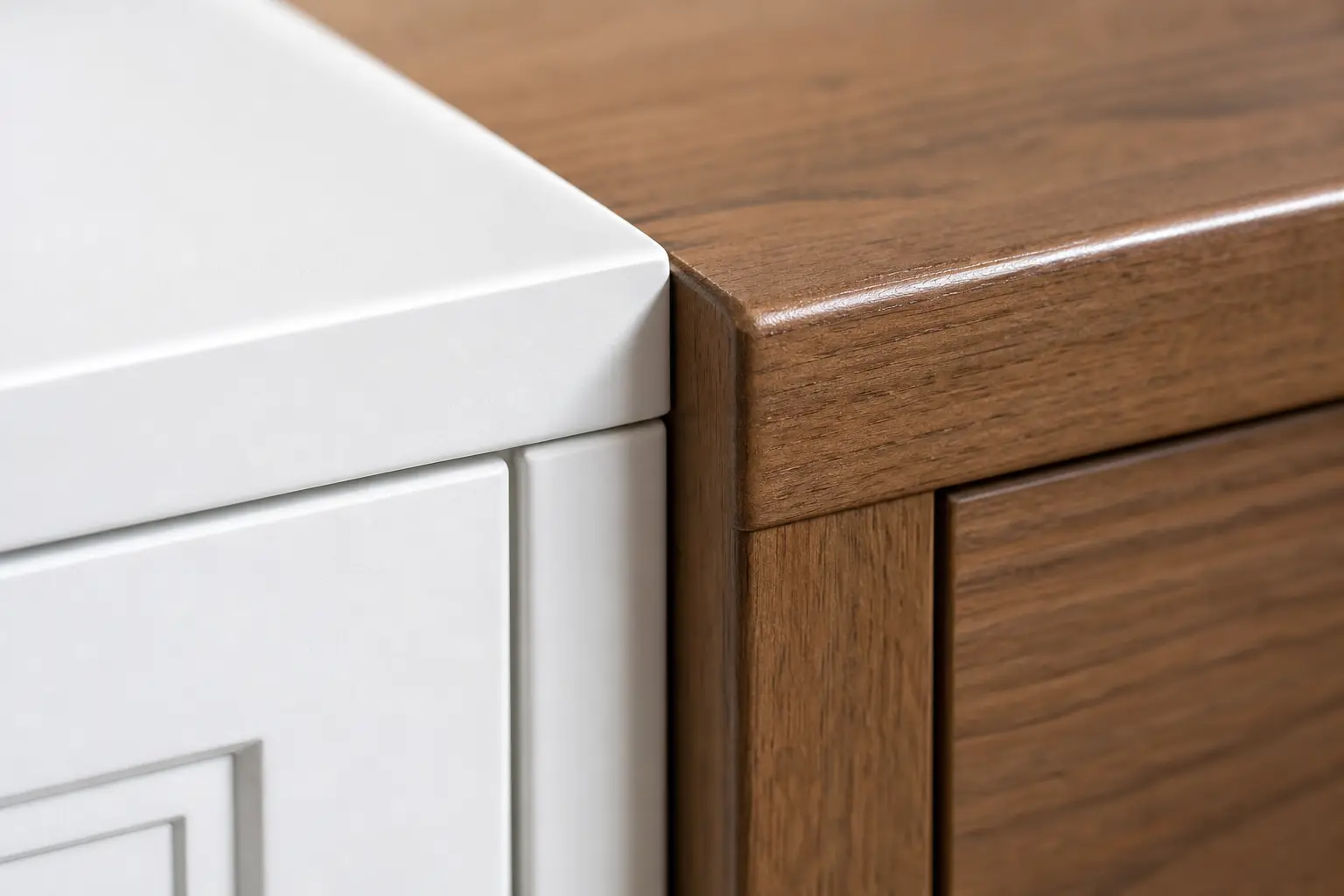
The other big shift is finish and hardware. Where a traditional Shaker kitchen might pair the door with raised-panel crown molding, cup pulls, and a warm honey stain, the modern version usually goes flat: no crown, or a simple flush soffit, with slab drawer fronts mixed in and long tubular pulls or edge pulls instead of knobs. Color moves toward soft whites, warm greiges, deep charcoals, and muted greens rather than heavy wood tones. The door itself is doing less decorative work, so the frame width, the reveal between doors, and the hardware finish carry the design.
Materials That Hold Up in Bay Area Kitchens
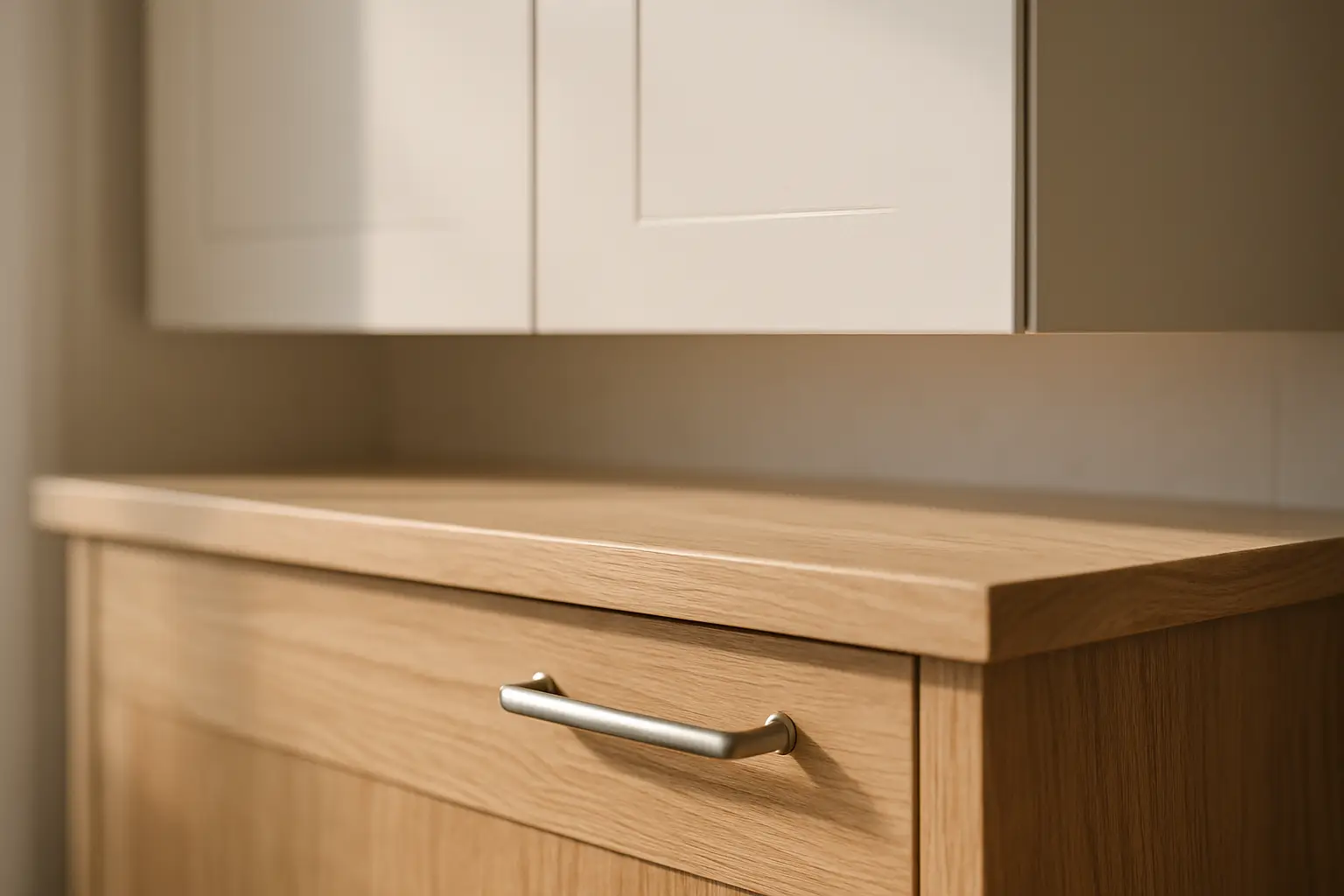
The door style matters less than what it is built from. For painted modern Shaker, we typically build the frame from solid wood, usually paint-grade maple or poplar, and use an MDF center panel. That is not a compromise. MDF has no grain and no seasonal movement, so a painted flat panel stays smooth and does not telegraph grain or crack at the joints the way a solid wood panel can when humidity swings. For a stained or natural wood look, we use solid wood panels with a matching veneer so the grain runs continuously.
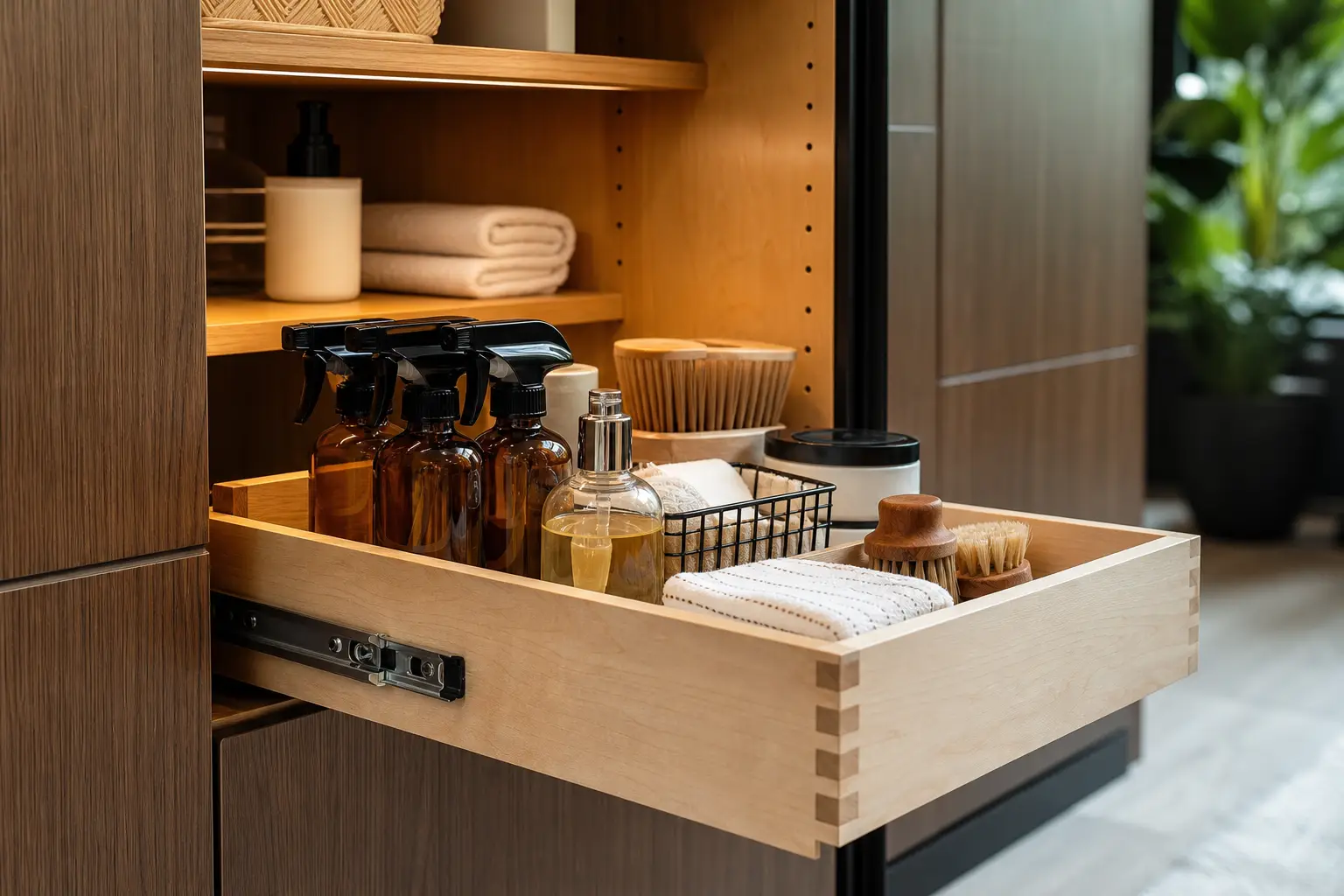
Cabinet boxes are where longevity is won or lost. We build with 3/4 inch plywood boxes rather than particleboard, which matters in coastal and peninsula homes where humidity near the bay is higher than inland. Plywood holds screws better, resists water damage under sinks, and keeps its shape over 20-plus years. Drawer boxes are solid wood with dovetail joinery, not stapled butt joints. Those choices cost more up front, but they are the difference between doors that stay square and doors that sag or delaminate after a few years of San Francisco fog and daily cooking.
Hardware and Function Details Worth Specifying
Modern Shaker looks simple, so the working parts have to be right. Standard on our cabinets are soft-close hinges and full-extension, soft-close drawer slides. Full extension matters because it lets you reach the very back of a deep drawer, which a three-quarter slide cannot. Soft-close is not a luxury anymore; it is the baseline expectation and it protects the door finish from slamming over thousands of cycles.
Beyond the basics, think about how you actually cook. Deep pot drawers under the cooktop beat door cabinets with a single shelf. A pull-out for trash and recycling keeps the bins off the floor. If you are going handleless for the cleanest modern look, you can use a continuous edge pull routed into the top of the drawer front, or specify push-to-open hardware, though we usually recommend a pull on at least the heaviest drawers so they open reliably when your hands are full. These are decisions we walk Bay Area clients through during the design phase, because they are far cheaper to plan than to retrofit.
Custom, Semi-Custom, or RTA: Choosing the Right Build
Ready-to-assemble (RTA) Shaker cabinets are the cheapest path and fine for a rental flip or a tight budget, but you are locked into stock sizes, usually 3-inch increments, and box quality is often particleboard with cam-lock assembly. Semi-custom gives you more door styles, colors, and some modified sizes off a production line. Custom, which is what we build in San Jose, means the cabinets are made to your exact dimensions, finishes, and interior configurations, with no filler panels hiding awkward gaps.
For Bay Area homes, custom often earns its keep because the housing stock is irregular. Older San Francisco and San Jose houses rarely have square walls or standard ceiling heights, and a semi-custom line forces you to fill the difference with dead space. Because we manufacture locally, our lead time runs about three weeks, which is considerably faster than the eight to twelve weeks common with imported semi-custom lines. That speed, plus local warranty support and the ability to visit the shop, is the main reason homeowners and builders choose to build here rather than order from a catalog.
FAQ
Q1: Are modern Shaker cabinets going out of style?
A1: Shaker has been in continuous use since the 1800s and shows no sign of dating the way high-gloss slab or heavily ornate doors do. The modern version's clean frame reads as transitional, so it works with both contemporary and traditional homes. It is one of the safest long-term choices if resale value in the Bay Area is a concern.
Q2: Should I choose MDF or solid wood panels for painted Shaker doors?
A2: For painted finishes, an MDF center panel is often the better choice because it has no grain and does not expand or contract with humidity, so the paint stays smooth and joints do not crack. We build the surrounding frame from solid paint-grade wood for strength. If you want a stained or natural wood look, we use solid wood panels instead so the grain shows through.
Q3: What colors work best for modern Shaker in Bay Area kitchens?
A3: Soft warm whites and off-whites remain the most popular and keep smaller Peninsula kitchens feeling open. Warm greige, deep charcoal, and muted sage or forest greens are strong choices for islands or lower cabinets. Two-tone layouts, such as a white perimeter with a colored island, are common because they add depth without committing the whole room to a dark tone.
Q4: How long does it take to get custom cabinets in the Bay Area?
A4: Because we manufacture in San Jose rather than importing, our typical lead time is about three weeks from finalized design and approved measurements. Imported semi-custom lines often run eight to twelve weeks. Complex projects with special finishes or large kitchens may take slightly longer, and we confirm the timeline before production starts.
Q5: Is handleless modern Shaker practical for a family kitchen?
A5: It can be, but we usually recommend a mix. Routed edge pulls or push-to-open hardware give the cleanest look, but push-to-open can be frustrating on heavy pot drawers when your hands are full. A common compromise is edge pulls or slim tubular pulls on the drawers and a fully handleless look on upper doors.
Q6: Do modern Shaker cabinets cost more than flat slab cabinets?
A6: The two are usually close in price at the custom level. A slab door is simpler to build but shows every imperfection and fingerprint, which can require a more expensive finish. A five-piece Shaker door has more parts but hides wear better. The bigger cost drivers are box material, finish quality, and hardware, not the door profile itself.