A rubbing cabinet door is a symptom, not a diagnosis. Turning the nearest adjustment screw may move the door temporarily, but it can also hide the real issue or create a new gap elsewhere. Start by identifying exactly where contact occurs and whether the problem affects one door, one cabinet, or a larger run.
Find the contact point
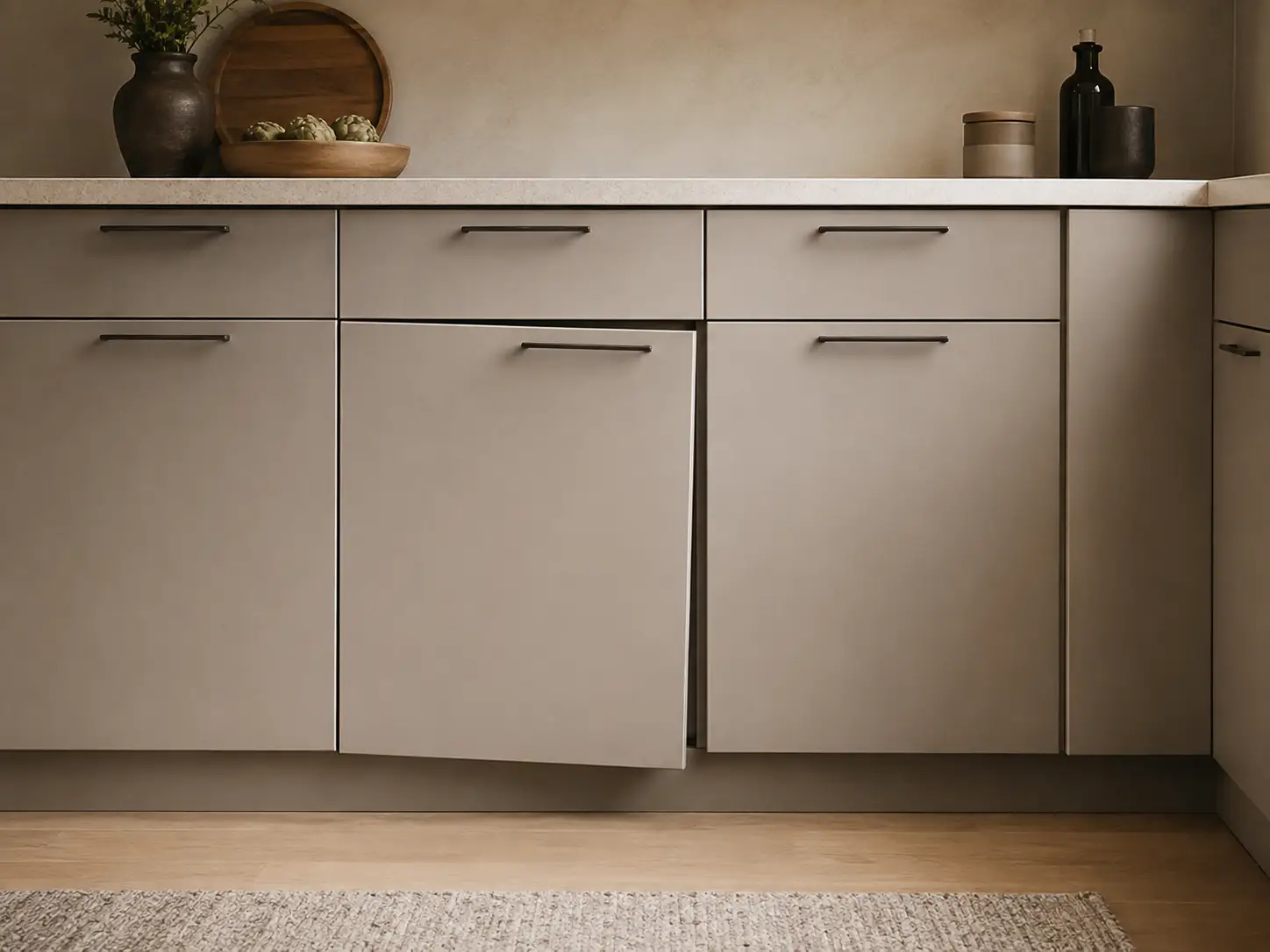
Open and close the door slowly. Look for contact at the top, bottom, handle side, hinge side, or against an adjacent front. A small piece of removable painter’s tape can mark the location without writing on the finish.
Then compare the gaps around the door. Is one reveal narrowing gradually? Does the door sit high or low? Does it rub only when the neighboring door is closed? These observations help separate an alignment issue from a clearance conflict.
Check the cabinet before the hinge
Door alignment depends on the cabinet box and installation. Use appropriate tools to check whether the cabinet is level, plumb, square, and securely fastened according to the project requirements. Also look across the cabinet run for movement at seams or changes near walls and floors.
If several doors changed together, the cause may extend beyond one hinge. Cabinet position, countertop load, wall movement, or site conditions may need review before individual doors are adjusted.
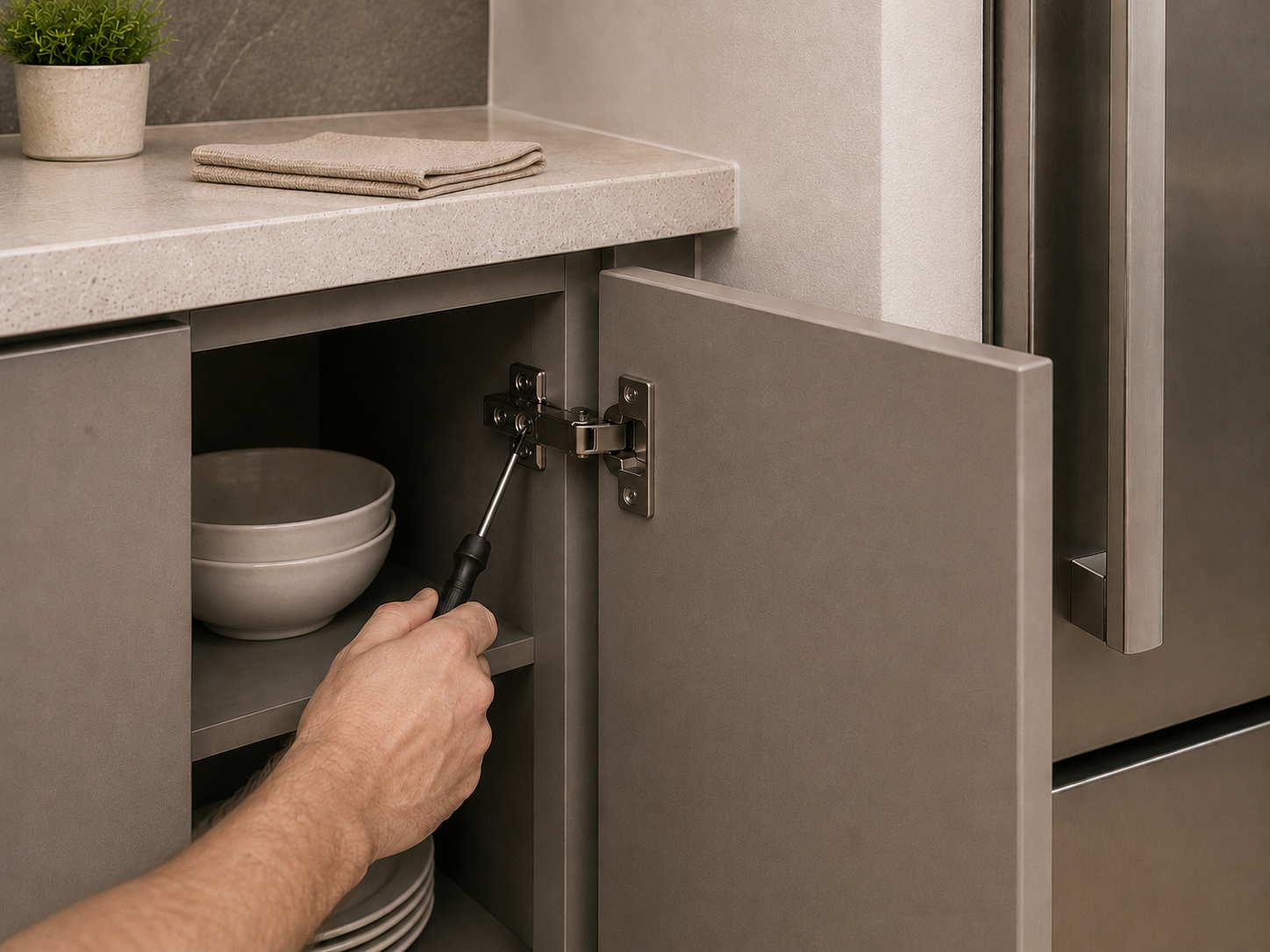
Review hinge attachment and settings
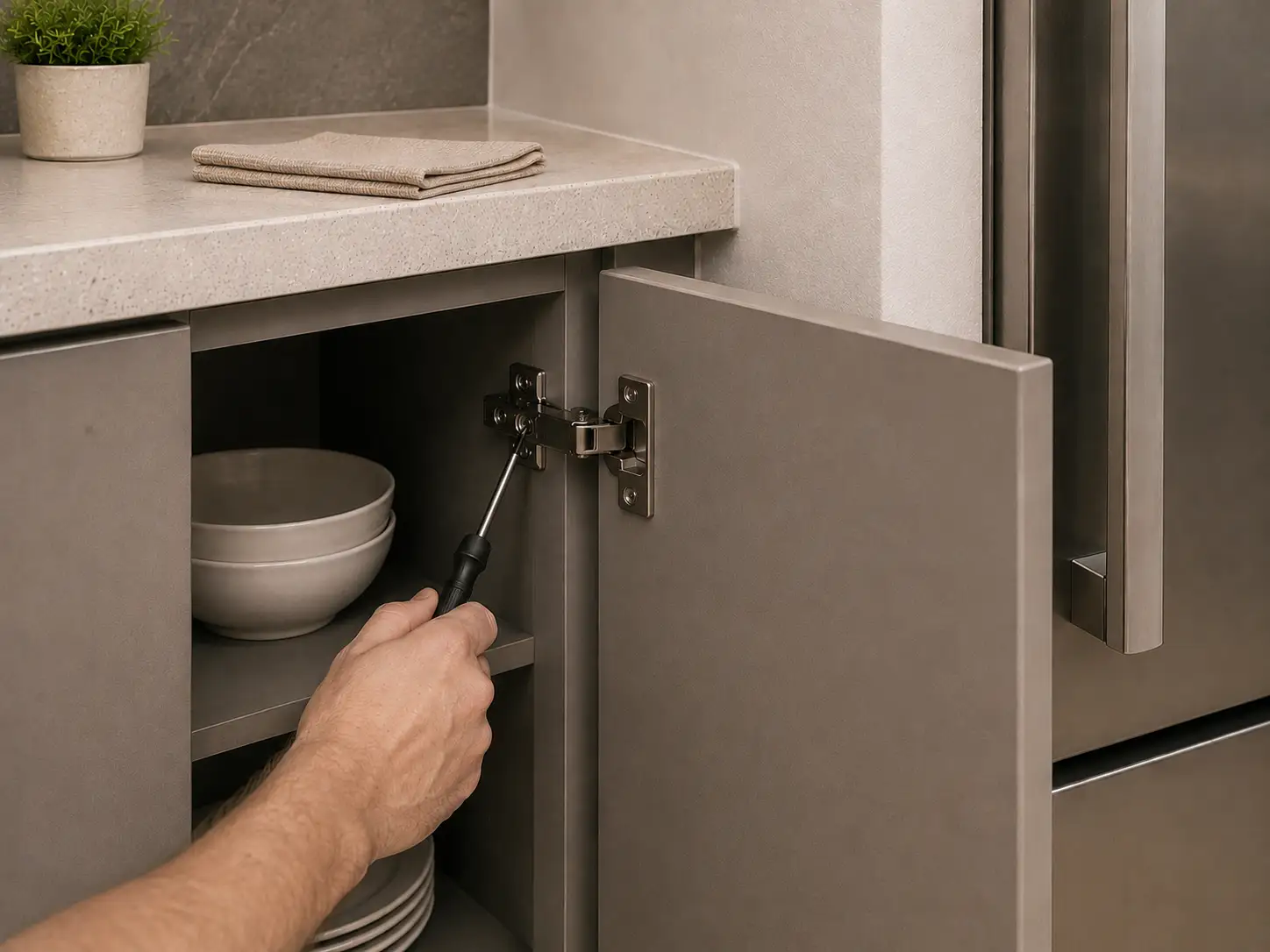
Many concealed hinges allow controlled side-to-side, height, and depth adjustment, but the exact mechanism varies. First confirm that mounting screws and plates are secure and that the hinge is correctly seated. Follow the hardware manufacturer’s instructions rather than assuming every screw has the same function.
Make small changes and test the full door movement after each one. Watch the reveals around the entire front, not only the original rubbing point.
Look for nearby interference
Handles, appliance pulls, walls, fillers, countertop edges, and adjacent doors can limit movement. A door may be aligned correctly and still contact another element because the available swing clearance is too small.
Also check whether shelves, stored items, or internal accessories are pushing against the door. Heavy or uneven loading can affect some components, depending on the cabinet and hardware system.
Consider environmental and site changes
Wood and wood-based components can respond to changing moisture and temperature. Buildings also move over time. The significance varies by material, construction, installation, and environment, so avoid assuming every seasonal change has the same cause.
If rubbing returns after repeated adjustment, appears across multiple cabinets, or is accompanied by movement or finish damage, ask an installer or cabinetry professional to evaluate the broader condition.
Document the final setting
After the issue is resolved, photograph the door gaps and note any hardware or installation findings. This creates a useful reference if the condition changes later.
Identify the source before turning the screw. A careful diagnosis protects the surrounding doors, finish, hardware, and cabinet alignment.
Related guide
FAQ
Q1: Can I adjust a concealed cabinet hinge myself?
A1: Some systems allow routine adjustment, but hinge designs vary. Use the manufacturer’s instructions and stop if the door, finish, or mounting area may be damaged.
Q2: Why did several cabinet doors start rubbing at once?
A2: Multiple affected doors can point to cabinet movement, installation conditions, load, or environmental change rather than a single hinge setting.
Q3: When should I call a professional?
A3: Seek help when the cause is unclear, adjustment does not hold, multiple cabinets are affected, hardware is loose or damaged, or the cabinet box appears out of position.