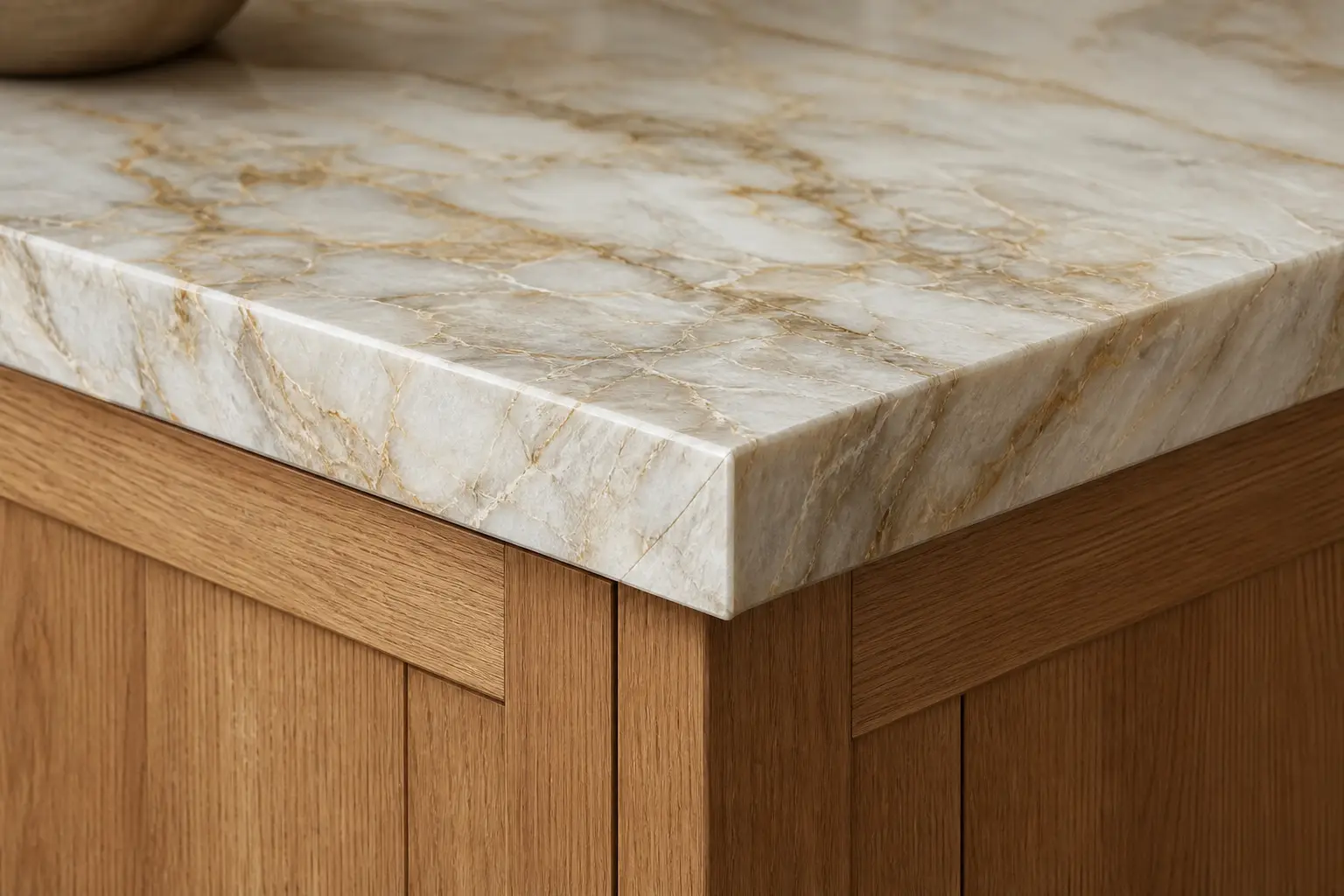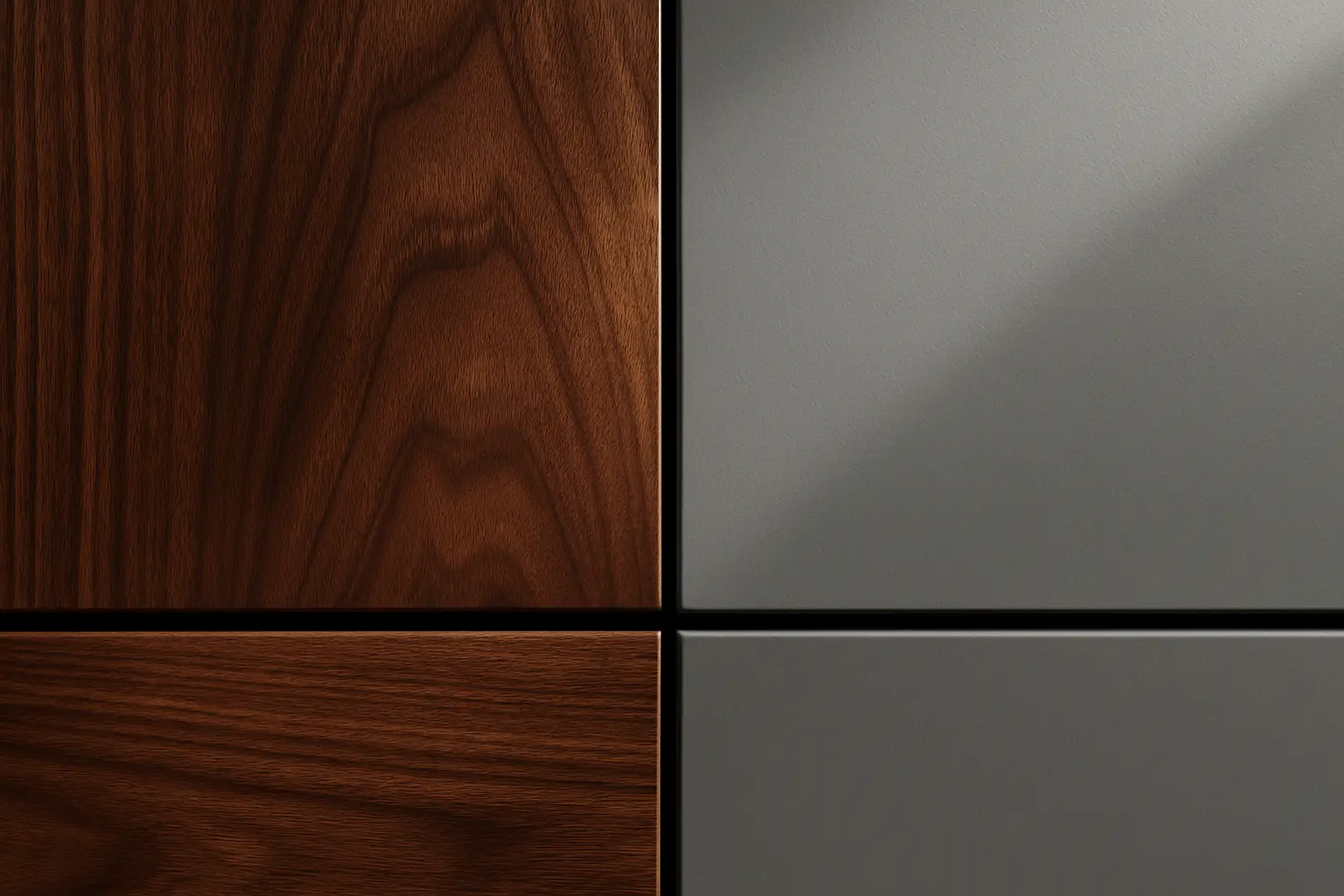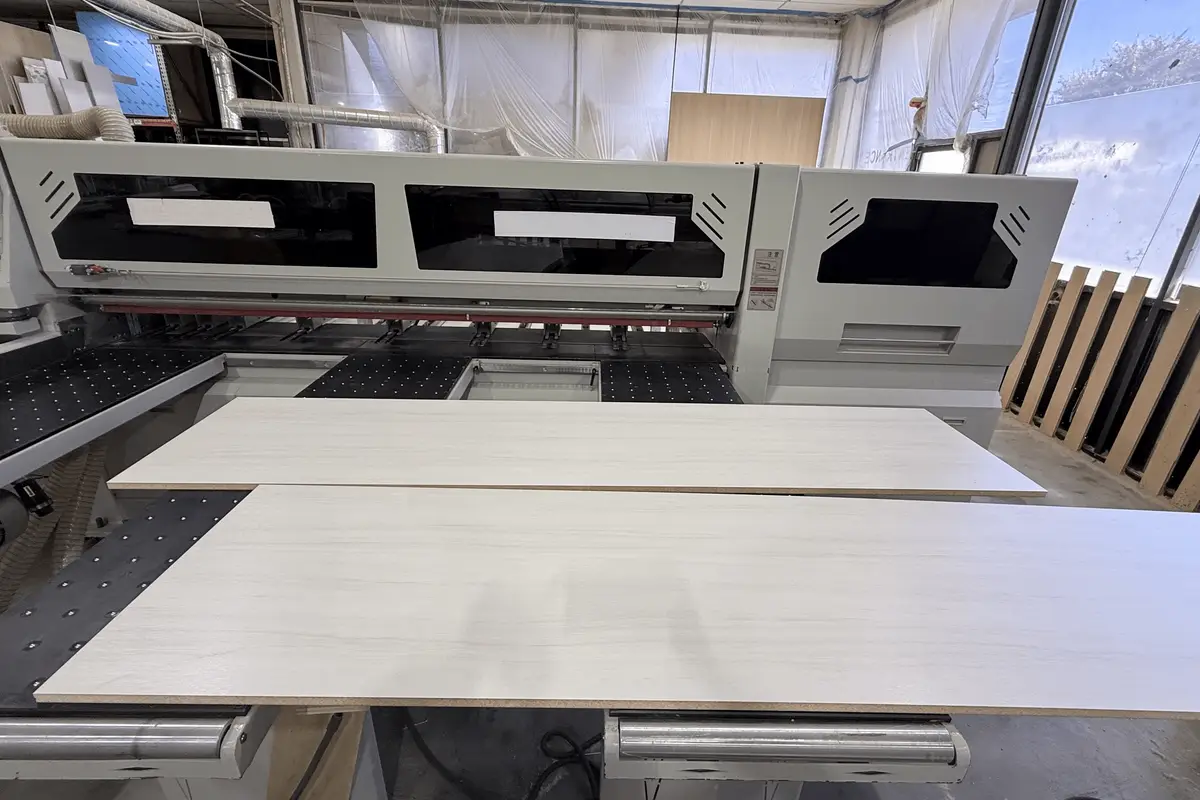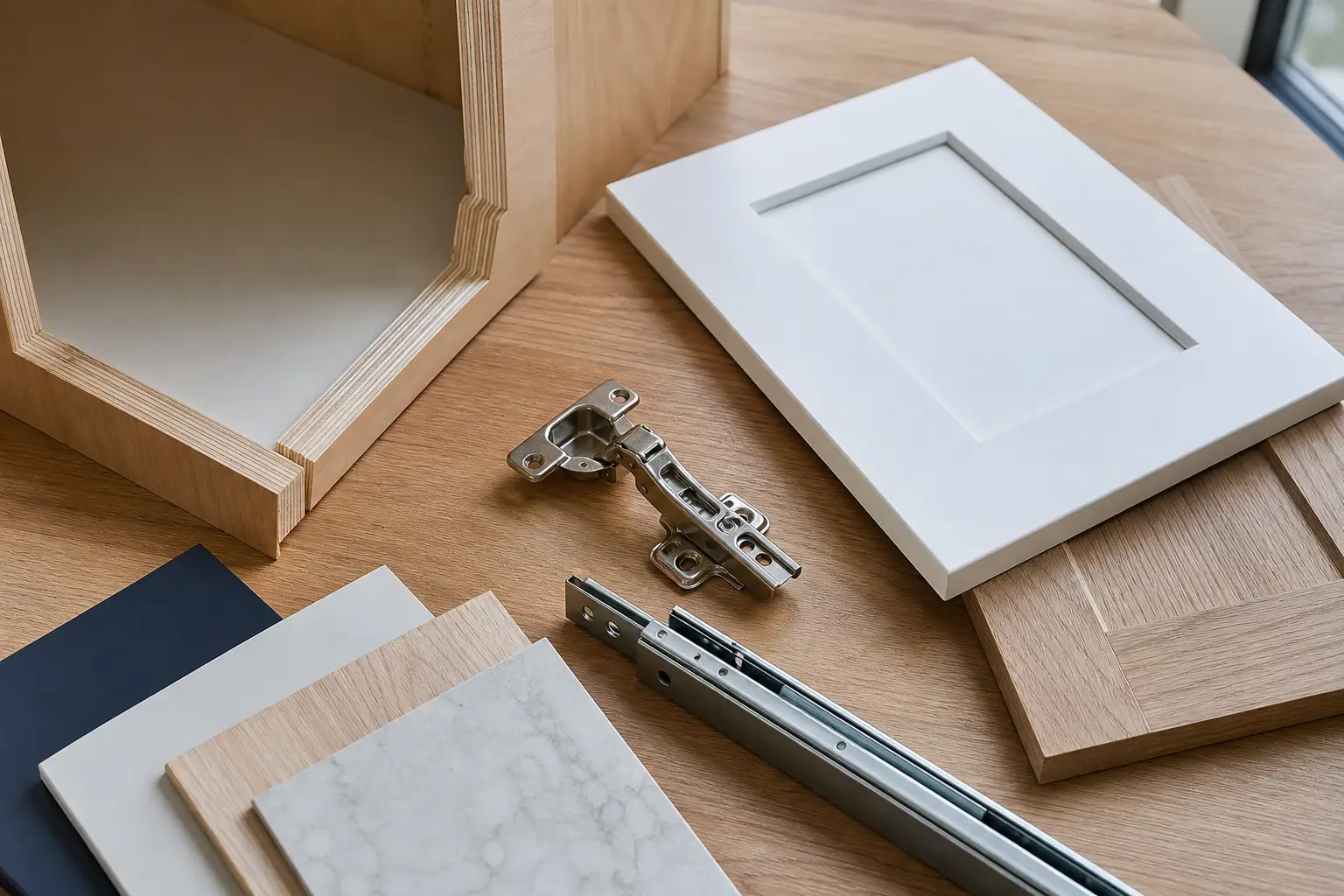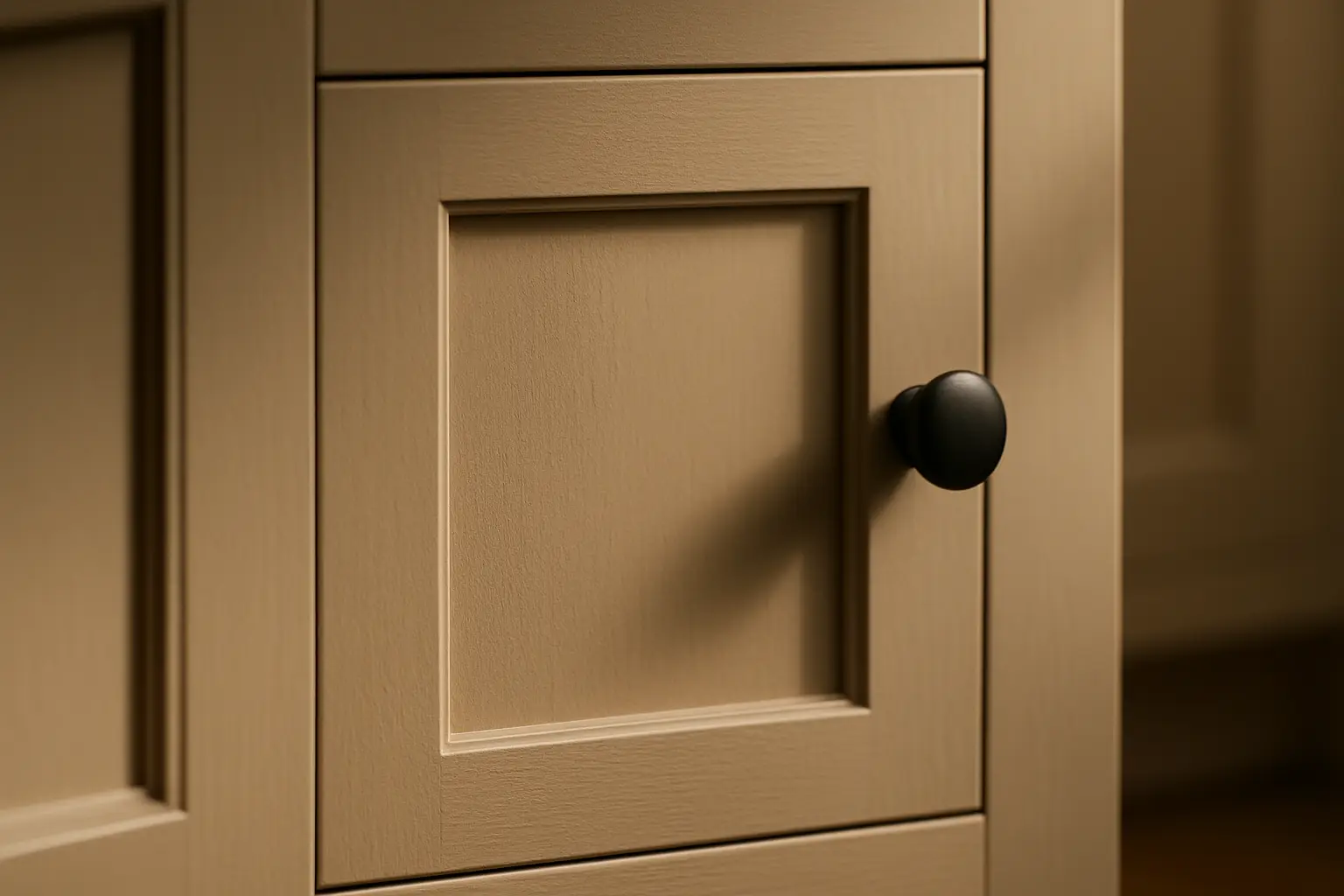
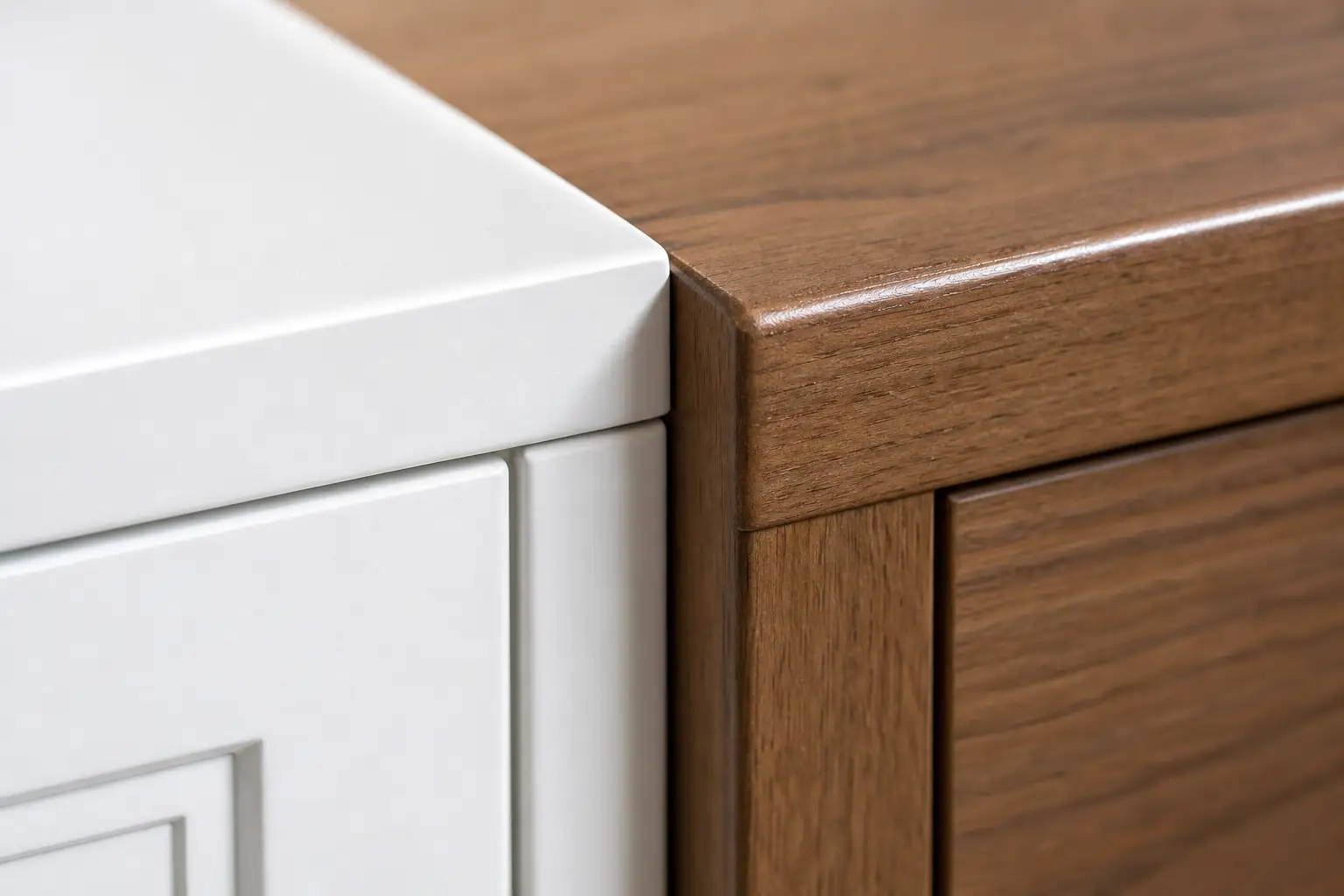
Every finish looks great on install day. The real question is which one still looks great after a decade of Bay Area cooking, cleaning, and sunlight. Longevity is not the same as beauty, and the finish that photographs best is not always the one that survives a busy San Jose or San Francisco kitchen. Paint, laminate, and veneer each age differently, fail in different ways, and repair differently. This is a durability comparison, focused on how long each finish actually lasts and what determines its lifespan, so you can choose with your eyes open.
What Longevity Actually Means for a Cabinet Finish
A finish can fail in several different ways, and lumping them together is where buyers go wrong. There is surface wear, the gradual scuffing, scratching, and dulling from daily use. There is edge failure, where the finish chips, peels, or delaminates at the corners and seams that take the most abuse. There is color change, the yellowing of white paint or the fading of stained wood under sunlight. And there is substrate failure, where moisture or movement in the material underneath telegraphs through and ruins the surface regardless of how good the finish itself is.
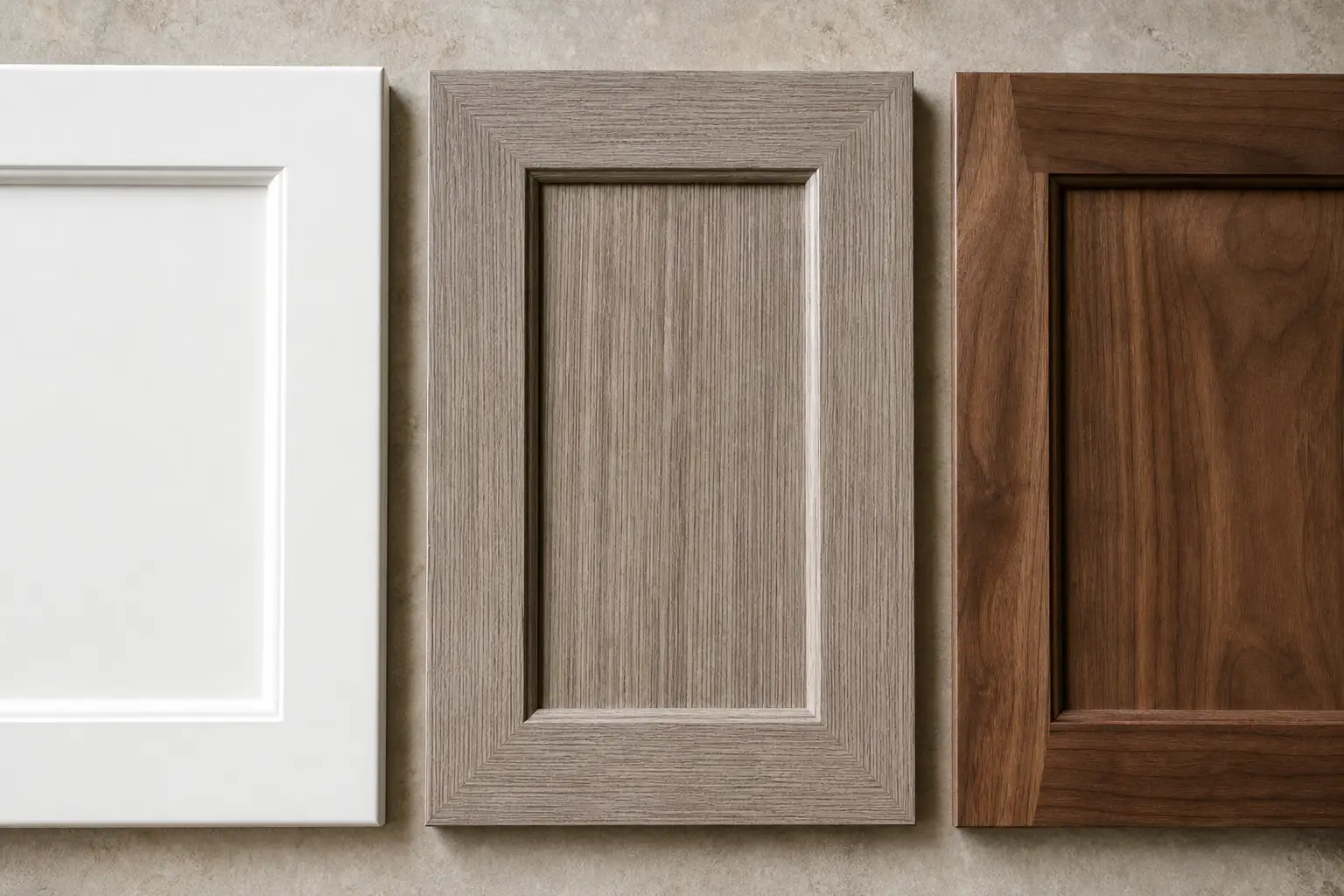
A truly durable finish resists all four, and the honest answer is that no single option wins every category. Laminate shrugs off surface wear and moisture but is hard to repair. Paint resists moisture well and repairs beautifully but can chip at edges. Veneer looks the most authentic and stays dimensionally stable but is the most vulnerable to sunlight and deep scratches. Understanding which failure mode matters most in your kitchen is how you pick the finish that will actually last for you.
Paint: Repairable, and Only as Good as the System
Painted cabinets are the most popular choice in Bay Area kitchens right now, and their longevity depends almost entirely on the paint system and the substrate. A basic latex or standard lacquer over solid wood is the low end: it chips at edges, can yellow on whites within a few years, and shows hairline cracks at the joints of solid wood door frames as the wood expands and contracts through humid winters and dry summers. That is the version that gives painted cabinets a reputation for aging poorly.
The durable version is a different animal. A catalyzed lacquer or conversion varnish, sprayed and cured in a controlled shop, forms a hard, chemically bonded film that resists chipping, cleaning chemicals, and yellowing far better. Paired with an MDF door or center panel rather than solid wood, it avoids joint cracking entirely, because MDF does not move seasonally the way solid wood does. That combination, conversion varnish over MDF, is what we spray for painted work, and it holds up for many years in daily use.
Paint's real advantage is repairability, and that quietly extends its practical lifespan more than any spec sheet. A chip, a scuff, or a scratch on a painted door can be filled, sanded, and resprayed to blend in, something you cannot do with laminate or veneer. Ten years in, a painted kitchen can be refreshed rather than replaced. Because we build in San Jose, we can even rebuild or refinish a single matching door on about a three week lead time, so damage does not force a whole new kitchen.
Laminate: The Toughest Surface, With One Limitation
If pure resistance to daily punishment is the goal, high-pressure laminate is hard to beat. It is built by fusing layers of resin-saturated kraft paper and a printed decorative layer under heat and pressure into a dense, hard sheet, then bonding that to a stable substrate like MDF or plywood. The result laughs off the things that wear other finishes down: surface scratching, moisture, heat from a nearby appliance, and harsh cleaning products. In high-traffic kitchens, rentals, offices, and commercial settings, laminate routinely looks unchanged after 15 to 20 years.
Modern laminate has also shed its dated reputation. Today's high-pressure laminates include deep matte finishes, realistic textured woodgrains that you can feel, and rich solid colors, so the durability no longer comes at the cost of looking cheap. The one place to be careful is the edges. On lower-end laminate the seams and edges can eventually chip or lift if the edgebanding is thin or poorly applied, which is why edge quality is the number to scrutinize. We use durable edgebanding, and on frameless boxes the clean panel-to-panel construction keeps stress off the edges.
Laminate's limitation is repair. Because the color and pattern run only in that thin decorative layer, a deep gouge or a chipped edge cannot be sanded and refinished the way paint can. A badly damaged laminate front usually gets replaced rather than repaired. For most kitchens that trade is worth it, because the surface rarely gets damaged in the first place, but it is the honest tradeoff against paint's repairability.
Veneer: Authentic Wood, Sensitive to Light and Depth
Wood veneer is a thin slice of real wood bonded to a stable substrate, and its whole appeal is authenticity: real grain, real depth, real variation that no printed laminate fully matches. Structurally, veneer is very stable. Because it is bonded to plywood or MDF rather than being solid, it resists the seasonal cracking and warping that solid wood panels can show in a climate with real humidity swings. The wood itself, protected by a good topcoat, can look excellent for many years.
The durability limits are specific. First is sunlight. Natural wood veneer fades and shifts color under strong California sun, so cabinets beside large windows need a UV-resistant topcoat, and even then some mellowing over a decade is natural for real wood. Second is depth of damage: a shallow scratch in the topcoat can often be addressed, but a scratch or chip that reaches into the thin veneer itself is very hard to repair invisibly, because you cannot sand into a slice of wood that may be under a millimeter thick. Third is moisture at the edges, where an unsealed or worn edge can let water lift the veneer, which is why edge sealing and topcoat quality determine how long a veneer front survives near sinks and dishwashers.
Choose the veneer thickness and topcoat deliberately and veneer rewards you with a look the other finishes cannot fully replicate, aging like real wood because it is real wood. Choose them carelessly and it becomes the finish most likely to show its years first. That variance is why veneer belongs with a shop that controls the topcoat and the edge work rather than a line that cuts corners on both.
How to Pick for a Finish That Actually Lasts
Match the finish to the failure mode that will hit your kitchen hardest. If your kitchen takes heavy daily abuse, sits in a rental or commercial space, or you simply never want to think about maintenance, high-pressure laminate over a stable substrate is the longevity leader and the lowest-fuss choice. If you want the popular painted look and value the ability to refresh and repair over the years, a conversion-varnish finish over MDF is the durable, gracefully aging pick, and it is the one you can keep looking new indefinitely. If authentic wood is non-negotiable, veneer lasts well as long as you protect it from direct sun with a UV topcoat and keep the edges sealed.
The substrate and the shop matter as much as the finish name. A great finish over a poor substrate fails from underneath, and a great material with a rushed topcoat or thin edgebanding fails at the surface and the seams. Because American Built Cabinets manufactures in our own San Jose shop, we control the substrate, the finish system, the edge quality, and the topcoat together, which is what makes any of these three finishes reach its full lifespan. And when something does eventually get damaged, local production means a repair or a matching replacement door on about a three week lead time, rather than a nationwide parts hunt. The longest-lasting finish, in the end, is the one built and finished correctly for how you actually use the kitchen.
FAQ
Q1: Which cabinet finish lasts the longest overall?
A1: For raw resistance to wear, moisture, and daily abuse, high-pressure laminate typically lasts the longest without visible change, often 15 to 20 years or more. A quality conversion-varnish painted finish is close behind and ages more gracefully because it can be touched up. Veneer lasts a long time structurally but its topcoat and color are the limiting factors, especially under sunlight.
Q2: Does painted cabinet finish chip and yellow over time?
A2: It can, depending on the paint system. A cheap latex or basic lacquer finish is prone to chipping at edges and yellowing on white cabinets after several years. A catalyzed or conversion varnish finish, which is what a quality shop sprays, is far more durable and resists yellowing. Painted MDF doors also avoid the joint cracking that painted solid wood can show as it expands and contracts.
Q3: Is laminate outdated, or is it still a good choice?
A3: Modern high-pressure laminate is not the plastic look of decades past. Today's laminates include convincing matte woodgrains, textured surfaces, and solid colors, and they are among the most durable finishes made. For longevity, heat resistance, and low maintenance, laminate is one of the smartest choices, especially in high-traffic and rental or commercial kitchens.
Q4: How does veneer hold up compared to solid wood?
A4: The wood veneer itself is real wood, so it looks authentic, but its durability depends on the topcoat protecting it and its thickness. Veneer resists the seasonal cracking that solid wood panels can show, since it is bonded to a stable substrate. Its main vulnerabilities are sun fading, moisture at unsealed edges, and the fact that deep scratches into the veneer are hard to repair invisibly.
Q5: Does Bay Area sunlight and humidity affect finish lifespan?
A5: Yes, meaningfully. Strong California sunlight fades natural wood veneer and can shift the color of stained finishes over years, so cabinets near large windows need UV-conscious topcoats. Humidity swings stress solid wood and painted solid wood joints, which is why stable substrates like MDF and quality plywood, plus a durable topcoat, extend finish life in local kitchens.
Q6: Which finish is easiest to repair years later?
A6: Painted finishes are the most repairable. A chip or scuff on a painted door can often be filled, sanded, and resprayed to blend, and because we manufacture in San Jose we can rebuild or refinish a matching door on about a three week lead time. Laminate and veneer are harder to spot-repair, so a badly damaged door usually means replacing the whole front.