The best way to judge a cabinet manufacturer is not to read the brochure. It is to ask a handful of pointed questions and listen to how confidently, and how specifically, they answer. A shop that builds well can tell you exactly how the box goes together, where it is made, and what happens if something fails in year three. This guide gives you seven questions worth asking any cabinet company in San Jose, San Francisco, or on the Peninsula, and explains what a good answer sounds like so you can tell substance from sales talk.
Before You Compare Prices, Compare Construction
Two quotes that look similar on paper can describe very different cabinets, so the first two questions get underneath the door style to the parts that decide how long the cabinets last.
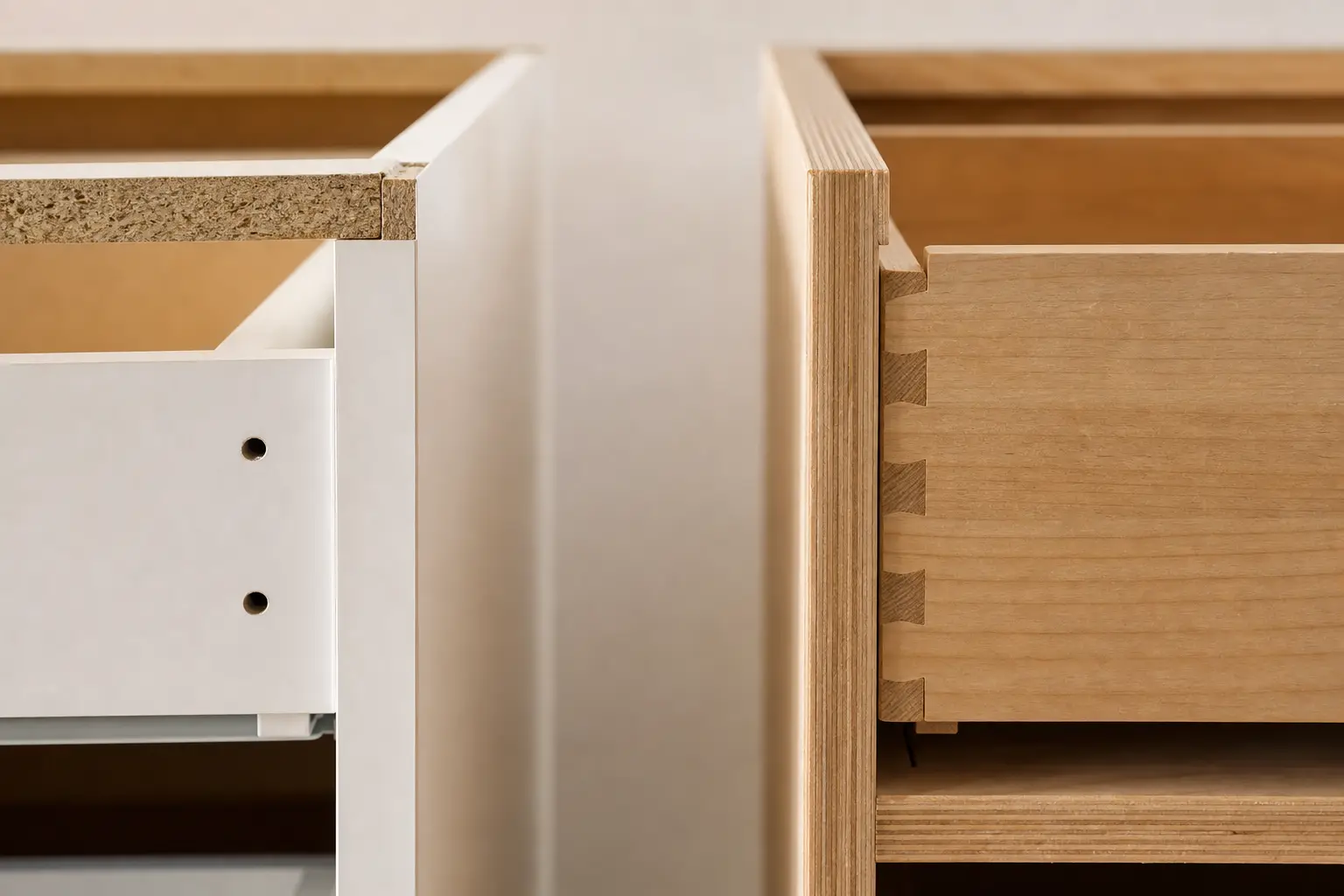
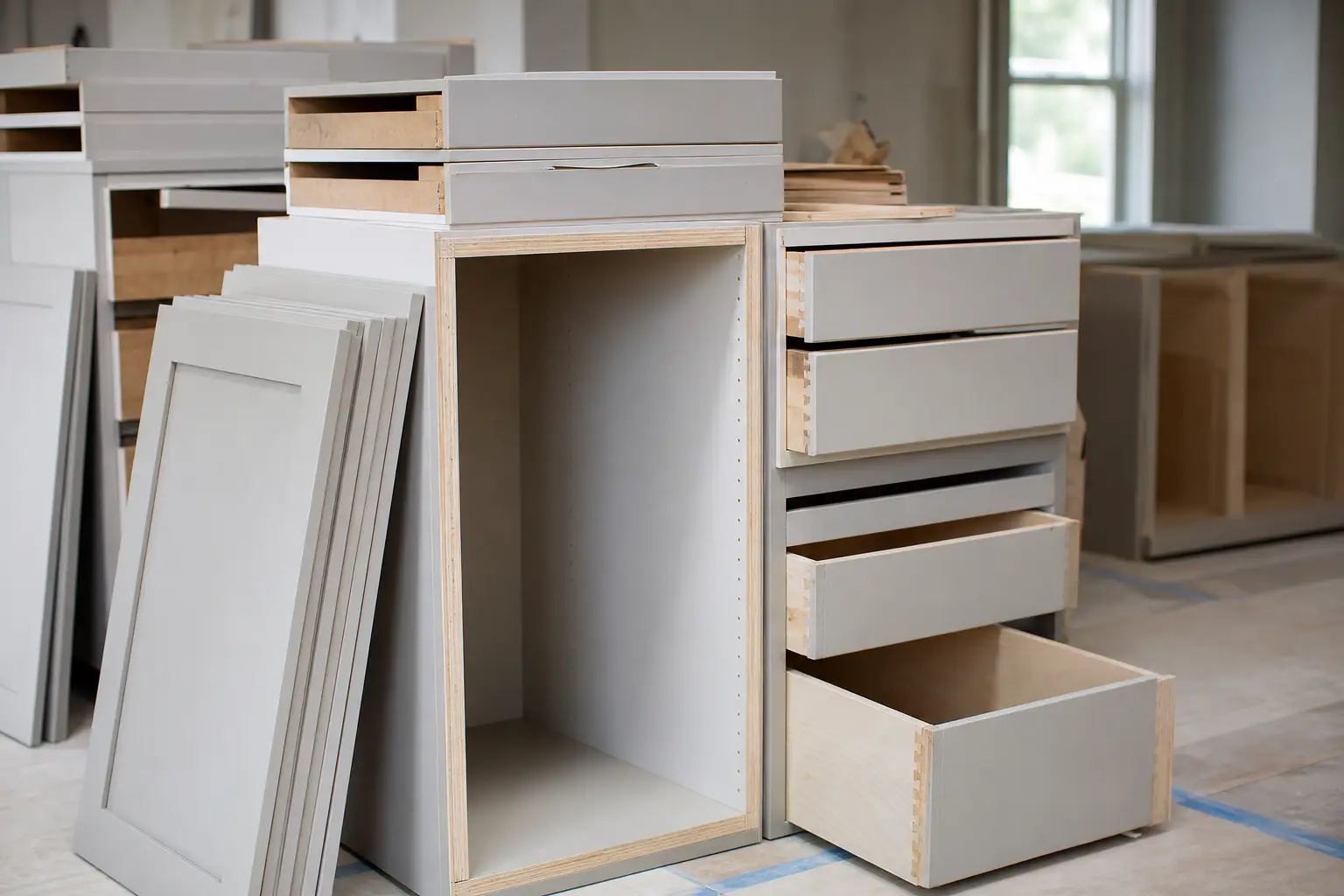
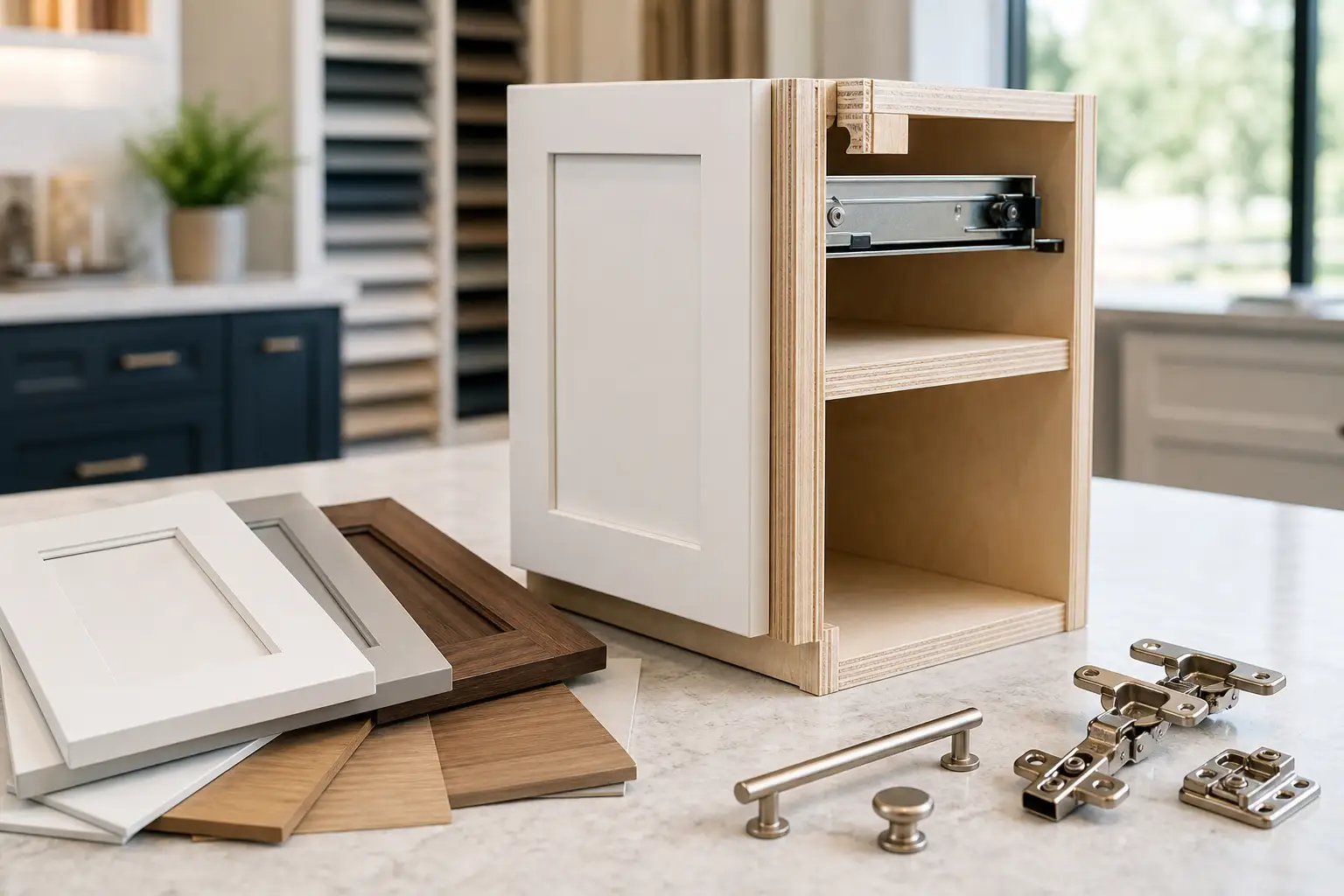
Question one: how is the box built? You want the panel material and thickness named. A cabinet made from 3/4-inch furniture-grade plywood with a solid back stays square under a heavy stone counter and resists the moisture swings common in Bay Area kitchens. One built from 1/2-inch particleboard can sag and swell. The showroom door hides all of this, so ask, and ask to see a cutaway or sample if they have one. It is also worth asking whether their cabinets are built to an independent benchmark like the ANSI/KCMA A161.1 standard, which tests boxes, doors, drawers, and finishes for durability.
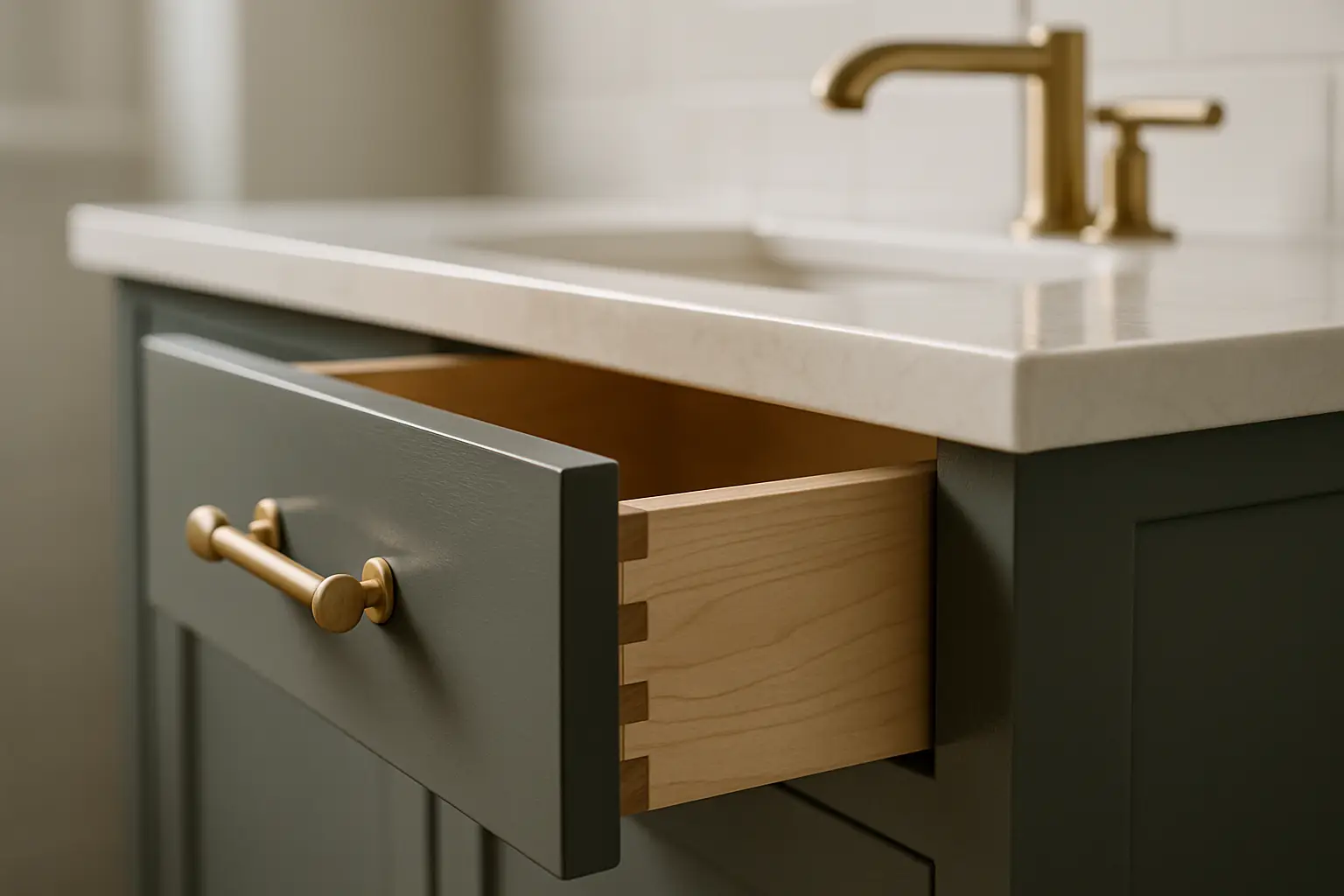
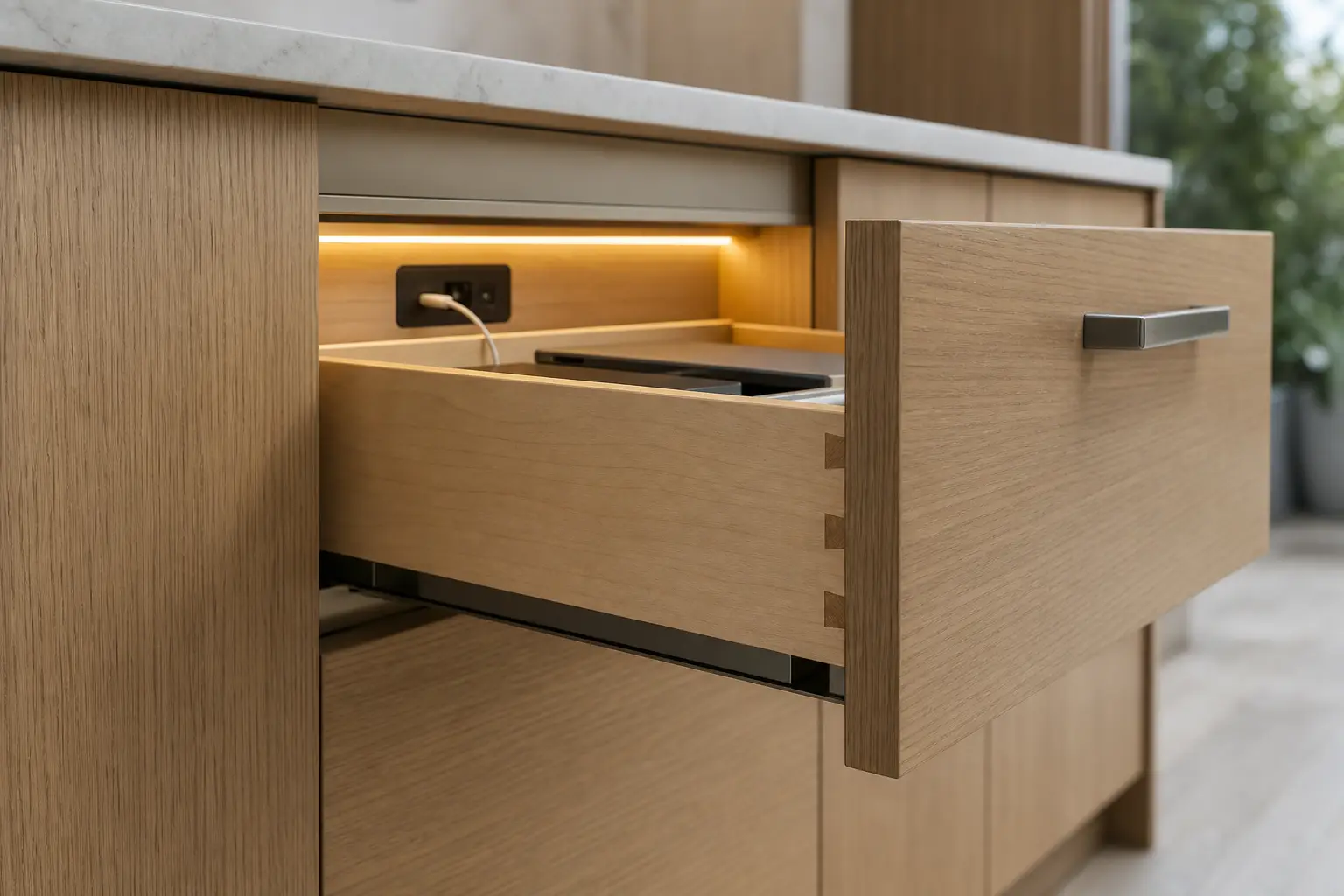
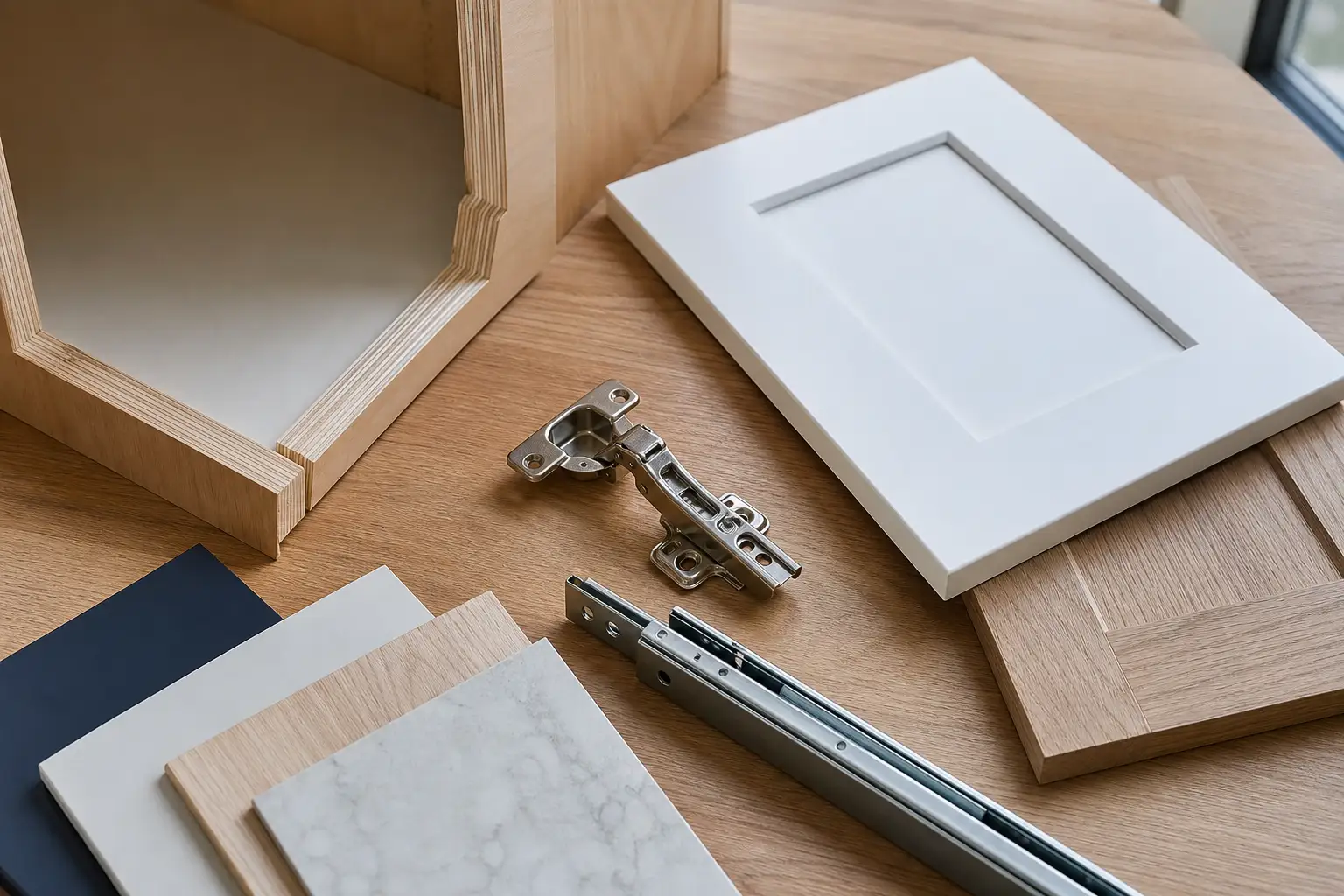
Question two: what hardware comes standard? Hinges and slides are what you operate thousands of times a year, and they are the first thing to reveal a cheap build. A strong answer names soft-close, full-extension undermount drawer slides and six-way adjustable soft-close hinges from a recognizable brand, with load ratings. A weak answer is a shrug or an unbranded clip hinge. If good hardware is an upcharge rather than standard, factor that into the real price.
Nail Down What "Custom" Means at This Shop
The word custom is used loosely, so the next two questions pin down how much you can actually change and who is doing the building.
Question three: what can I really modify? Ask whether you can specify exact cabinet dimensions, interior fittings, door style, and finish, or whether you are choosing from a fixed menu of sizes and options. True custom means the cabinets are built to your room, which matters in older San Francisco and Peninsula homes where walls are rarely plumb. Semi-custom means adapting the room to stock sizes with fillers. Neither is wrong, but you should know which one you are buying.
Question four: where are the cabinets made? A manufacturer can name the facility and often let you see it. A reseller talks in brand names and gets vague about production. This is not a trivial distinction. When the people who cut, finish, and assemble your cabinets are in one local building, quality control is direct and a mistake is a same-week fix rather than a claim shipped back through a distributor. Ask if you can tour the shop, and note how they react.
Get the Finish and the Warranty in Writing
Two of the most expensive problems, a finish that fails and a defect nobody wants to own, are avoidable if you ask about them before signing.
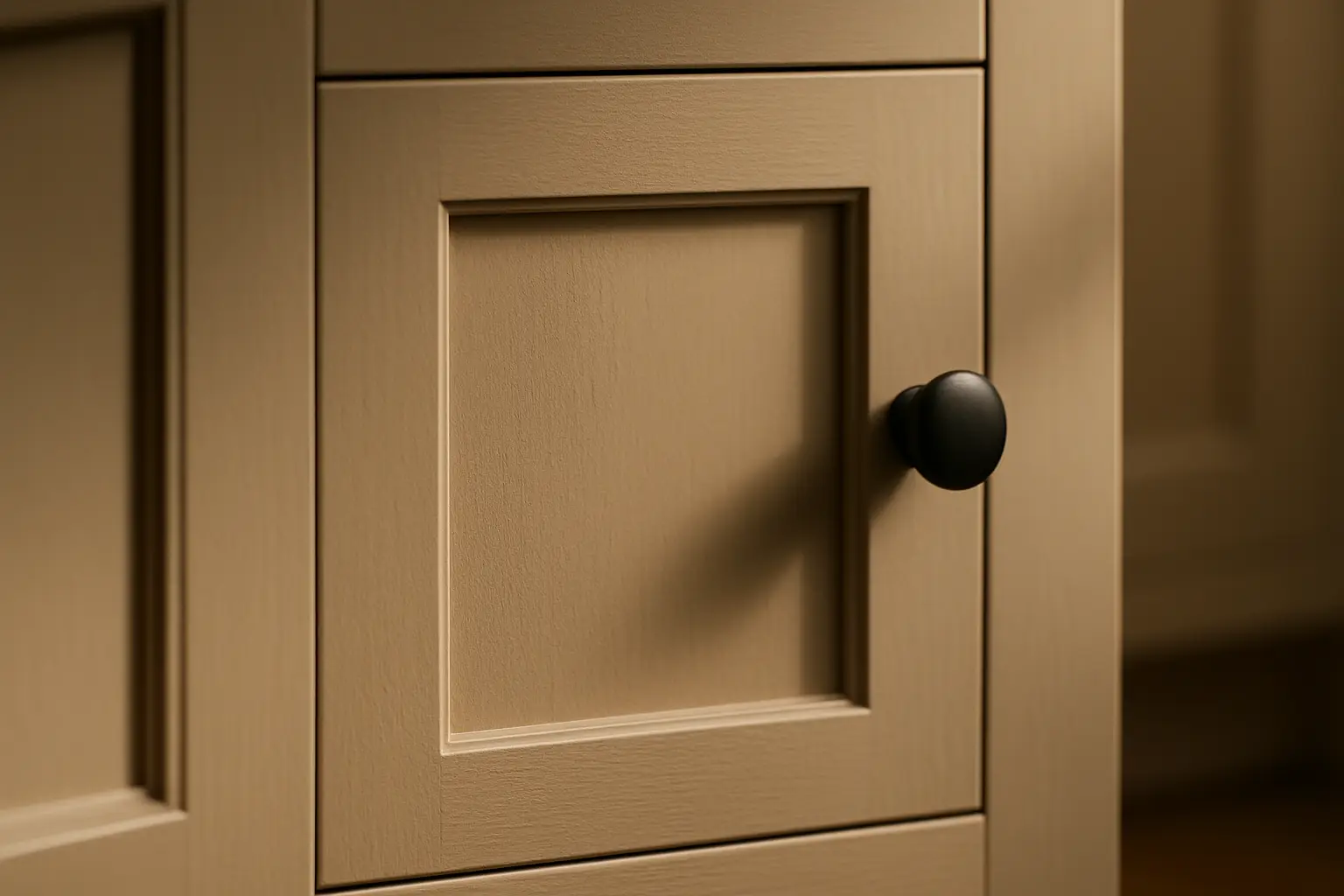
Question five: how is the finish applied and cured? Finish quality is process, not luck. Ask whether painted doors are sprayed and cured in a controlled booth, what finish goes on MDF versus solid wood or veneer, and how they match colors. A properly sprayed and cured painted MDF door gives a smooth, joint-free surface that resists chipping; a rushed or hand-brushed finish shows every flaw within months.
Question six: what exactly does the warranty cover, and who honors it? Get the term in years and the covered parts in writing: box, doors, drawer boxes, hardware. A clear multi-year warranty backed by a local team beats vague lifetime language riddled with exclusions. The practical test is simple. Ask what happens when a slide fails in year three, who you call, and how fast the repair happens. A local manufacturer usually answers without hesitation.
Understand the Timeline and Who Stands Behind the Job
The last question ties speed and accountability together, because a fast quote means nothing if the follow-through is not there.
Question seven: what is the lead time, and who handles problems after install? A confident manufacturer gives a real range tied to drawing approval. Locally built custom cabinets run about three weeks from sign-off, while imported and national semi-custom lines commonly stretch to eight to sixteen weeks because of freight, customs, and distributor queues. Ask what specifically could add time to your job, whether that is a special-order hardware item or a slow approval on your end.
Then ask who owns the relationship after installation. With a local manufacturer, the same company that built the cabinets handles warranty and service directly. With an imported or dealer-sold line, a problem often routes through layers between you and whoever actually made the part. When you have answers to all seven questions and they are specific rather than smooth, you are dealing with a builder, not just a seller, which is the standard we hold ourselves to at American Built Cabinets.
FAQ
Q1: What is the single most important question to ask a cabinet manufacturer?
A1: Ask how the box itself is built, specifically the panel material and thickness. A cabinet built from 3/4-inch furniture-grade plywood behaves very differently over time than one from 1/2-inch particleboard, and the door style you see on the showroom floor tells you nothing about it. If they answer clearly and can show you a cutaway or sample, that is a strong sign.
Q2: How can I tell if a company actually manufactures cabinets or just resells them?
A2: Ask directly where the cabinets are made and whether you can see the shop. A true manufacturer can name the facility, describe their finishing process, and often let you tour it. A reseller will speak in brand names and deflect on production details. It matters because a manufacturer controls quality and can fix problems fast, while a reseller routes issues through a distributor.
Q3: What should the warranty actually cover?
A3: A meaningful cabinet warranty covers the box, doors, drawer boxes, and hardware against defects for a stated number of years, and names who performs repairs. Vague lifetime language with heavy exclusions is worth less than a clear multi-year warranty backed by a local team. Ask who you call when a hinge fails and how the repair happens.
Q4: Is it worth asking about hardware brands specifically?
A4: Yes. Hardware is what you touch every day and the first thing to fail on a cheap cabinet. Ask what hinges and drawer slides come standard, whether they are soft-close, and whether they are named brands with adjustment and load ratings. Full-extension undermount slides and six-way adjustable soft-close hinges signal a serious build; unbranded two-way clip hinges signal cost-cutting.
Q5: How long should a straight answer on lead time take?
A5: A confident manufacturer can give you a real range on the spot, tied to when your drawings are approved. Locally built custom cabinets run about three weeks from sign-off, while imported and national semi-custom lines commonly run eight to sixteen weeks. Be wary of a vague answer, and ask what specifically could add time to your job.
Q6: Should I ask to see the finish process?
A6: If you can, yes. How a finish is applied and cured determines how it holds up to daily use, humidity, and cleaning. Ask whether painted doors are sprayed and cured in a controlled booth, what the finish is on MDF versus solid wood, and how they handle color matching. A shop proud of its finishing will happily explain the steps.