Search for a cabinet maker in San Jose and you get a mix of true local manufacturers, showrooms that resell imported boxes under a house label, and general contractors who subcontract the cabinetry out. They are not the same thing, and the differences show up in your lead time, your ability to get a problem fixed, and how well the finished kitchen fits your specific South Bay home. This guide is about sorting real local manufacturers from resellers, and the questions that reveal which one you are actually talking to. We build in San Jose ourselves, so we will be direct about what matters.
Know Who You Are Actually Buying From
The first thing to sort out in San Jose is not price or door style. It is whether the company in front of you actually manufactures cabinets or just sells them. There are three common models. A true manufacturer owns a local shop and builds your cabinets from raw panels and hardware. A reseller or dealer takes your measurements, places an order with a factory somewhere else, and delivers those boxes under their own name. And some general contractors simply subcontract the cabinetry to whichever shop is available. Each can produce a working kitchen, but your experience, especially when something goes wrong, depends heavily on which one you hired.
The reason this matters is control. When the company that designed your kitchen also cut, assembled, and finished it, there is one accountable party for the whole job. When those steps are split across a dealer here and a factory overseas, responsibility gets diffuse, and problems bounce between parties while your kitchen sits unfinished. Before you get deep into finishes and hardware, get clear on who is holding the saw. It changes how you read everything else.
The Shop Visit Tells You More Than the Showroom
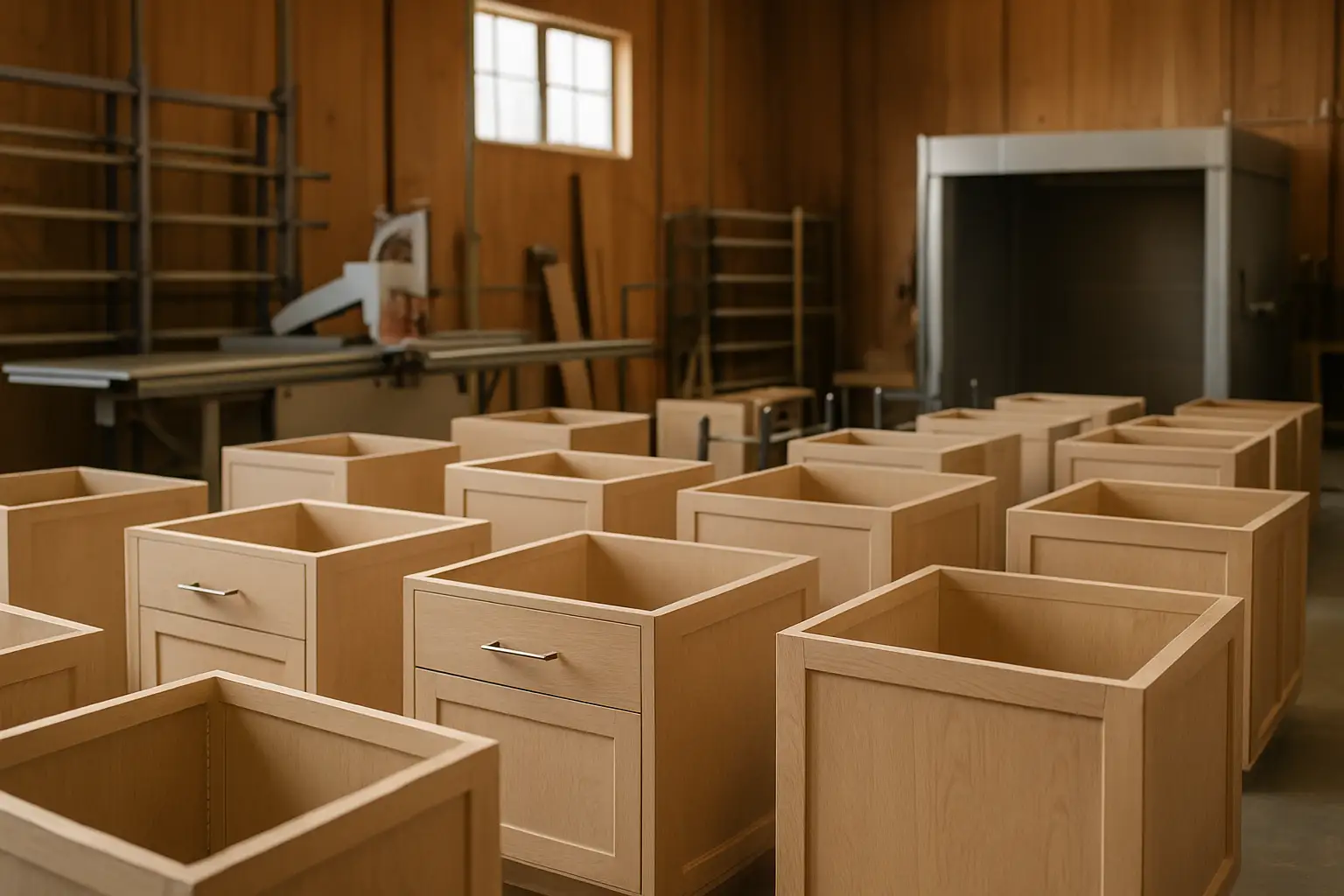
A showroom is a sales environment; it tells you what a company wants to sell, not how they build. The single most useful thing you can do is ask to see the shop where your cabinets will be made. A real San Jose manufacturer will have a facility you can walk: a panel saw or CNC router, a line-boring station, an assembly area with squaring fixtures, a dust collection system, and a spray booth for finishing. They should be comfortable showing it to you, because the shop is the proof.
If the answer is evasive, that the shop is elsewhere, that they cannot arrange a visit, that the cabinets come from a partner factory, you are likely talking to a reseller. That is not automatically disqualifying, but it should change your questions and your expectations on lead time and problem-solving. When you do get the tour, look at consistency: are the boxes coming off the line square and uniform, are the edges cleanly banded, is the finishing area controlled and clean. Those observations tell you more about the cabinets you will receive than any brochure.
Construction Details That Separate Good Shops
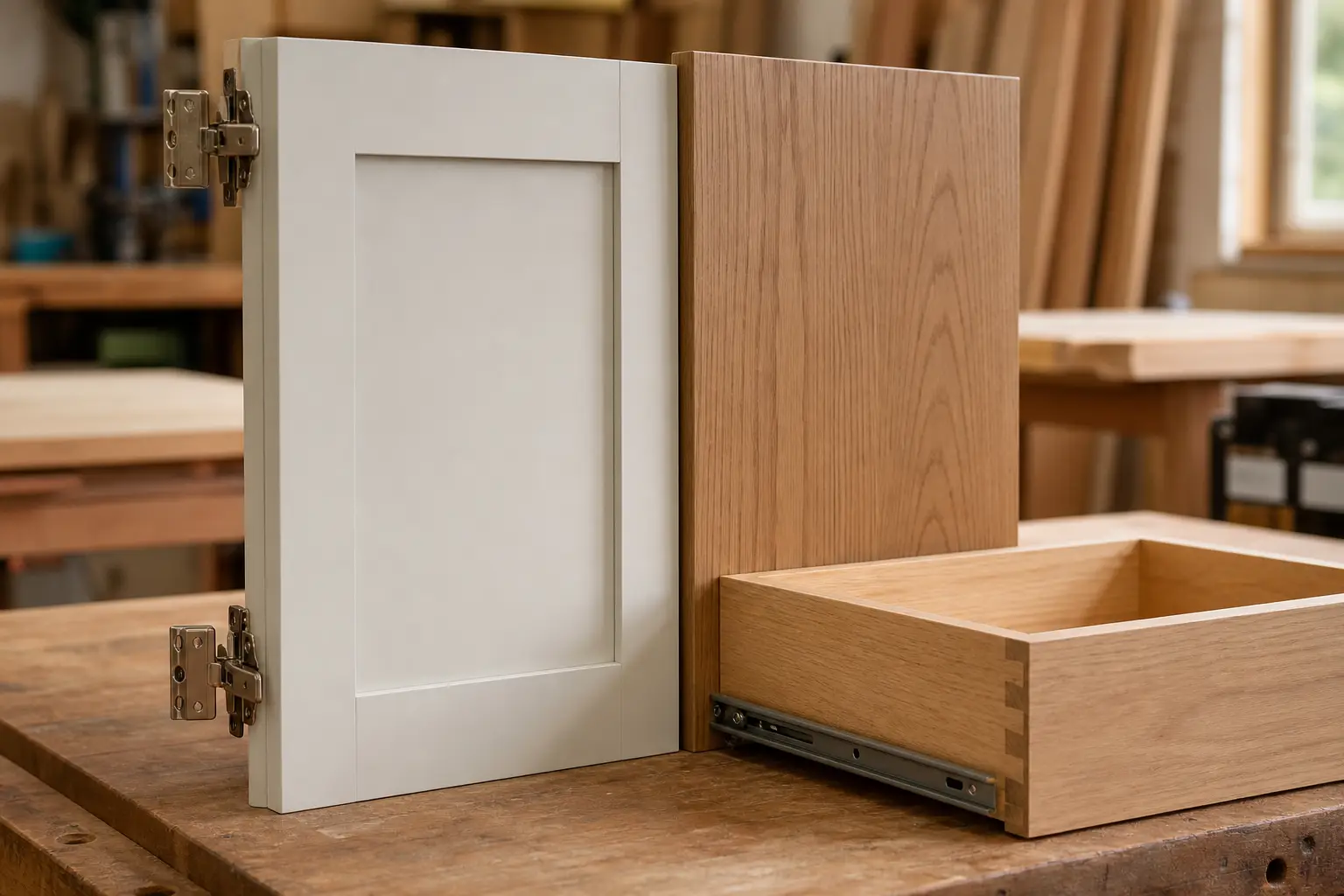
Once you know a shop actually builds, look at how they build. Ask what the cabinet boxes are made of. For most South Bay kitchens the best structural answer is 3/4 inch plywood for the case sides, top, and bottom, because plywood holds fasteners well and tolerates the occasional leak or damp air better than bargain particleboard. MDF has a proper role too, especially for painted door panels, where it stays smooth and will not telegraph grain or crack at the joints. The point is to hear a specific, confident answer rather than a shrug back toward finishes.
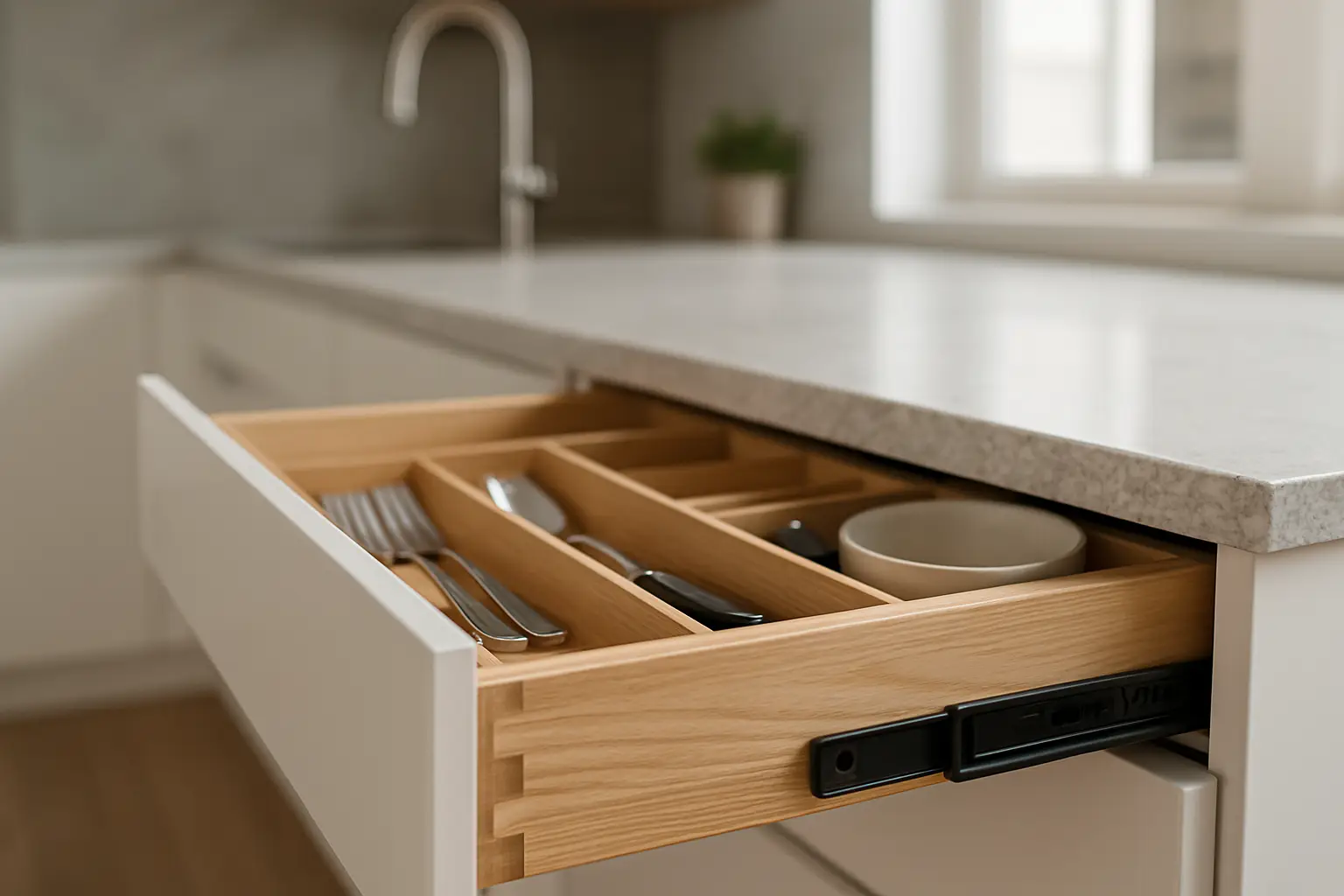
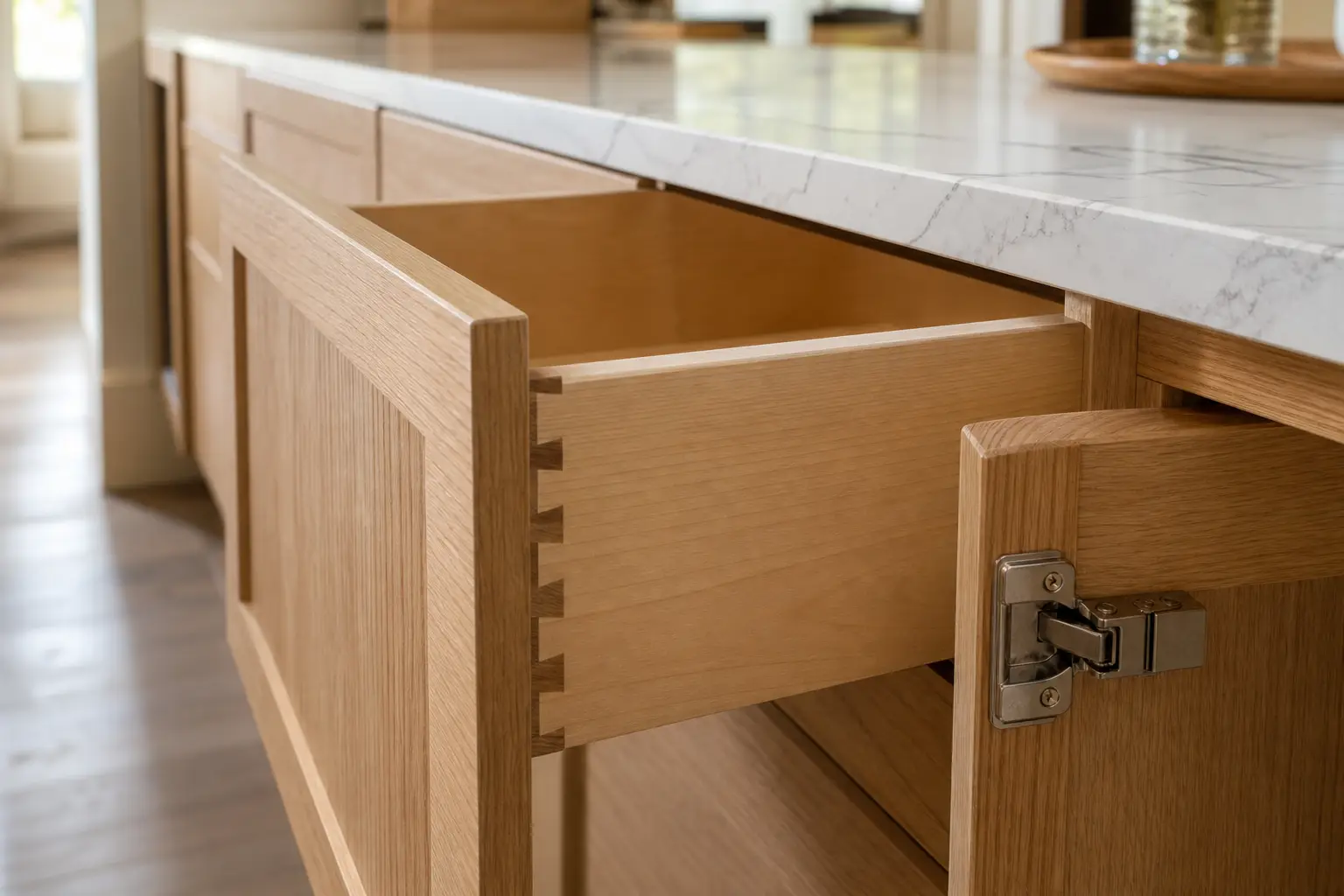
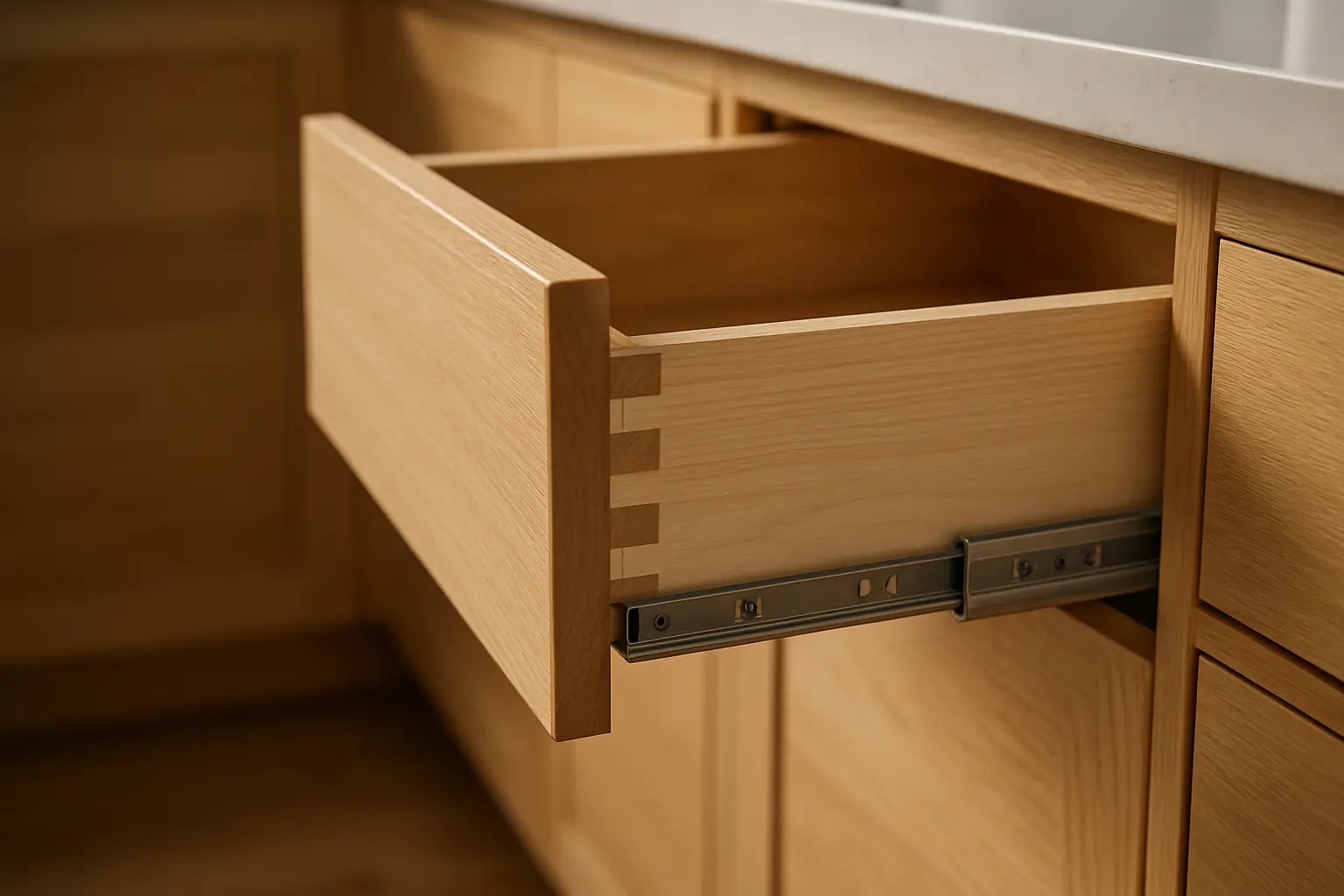
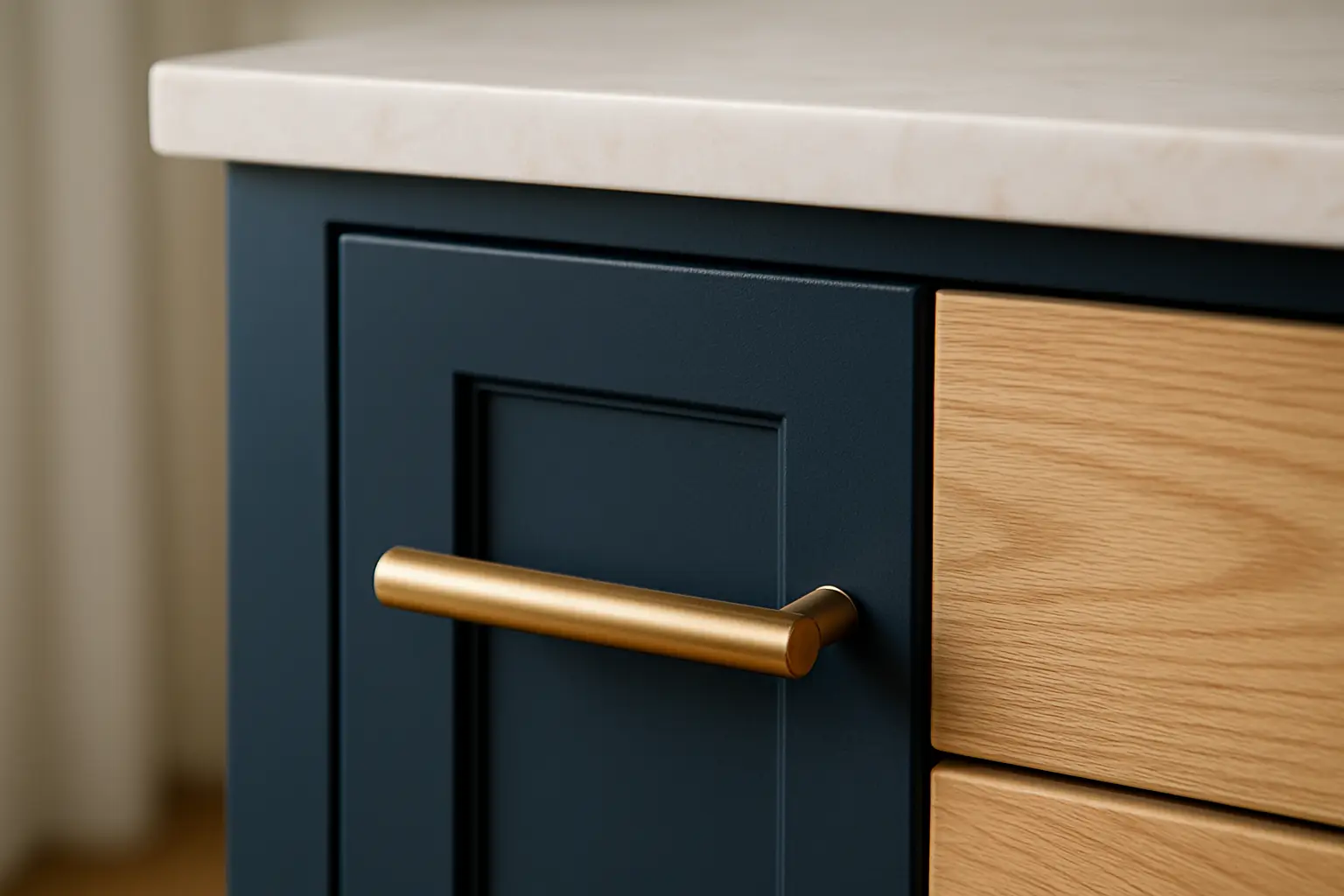
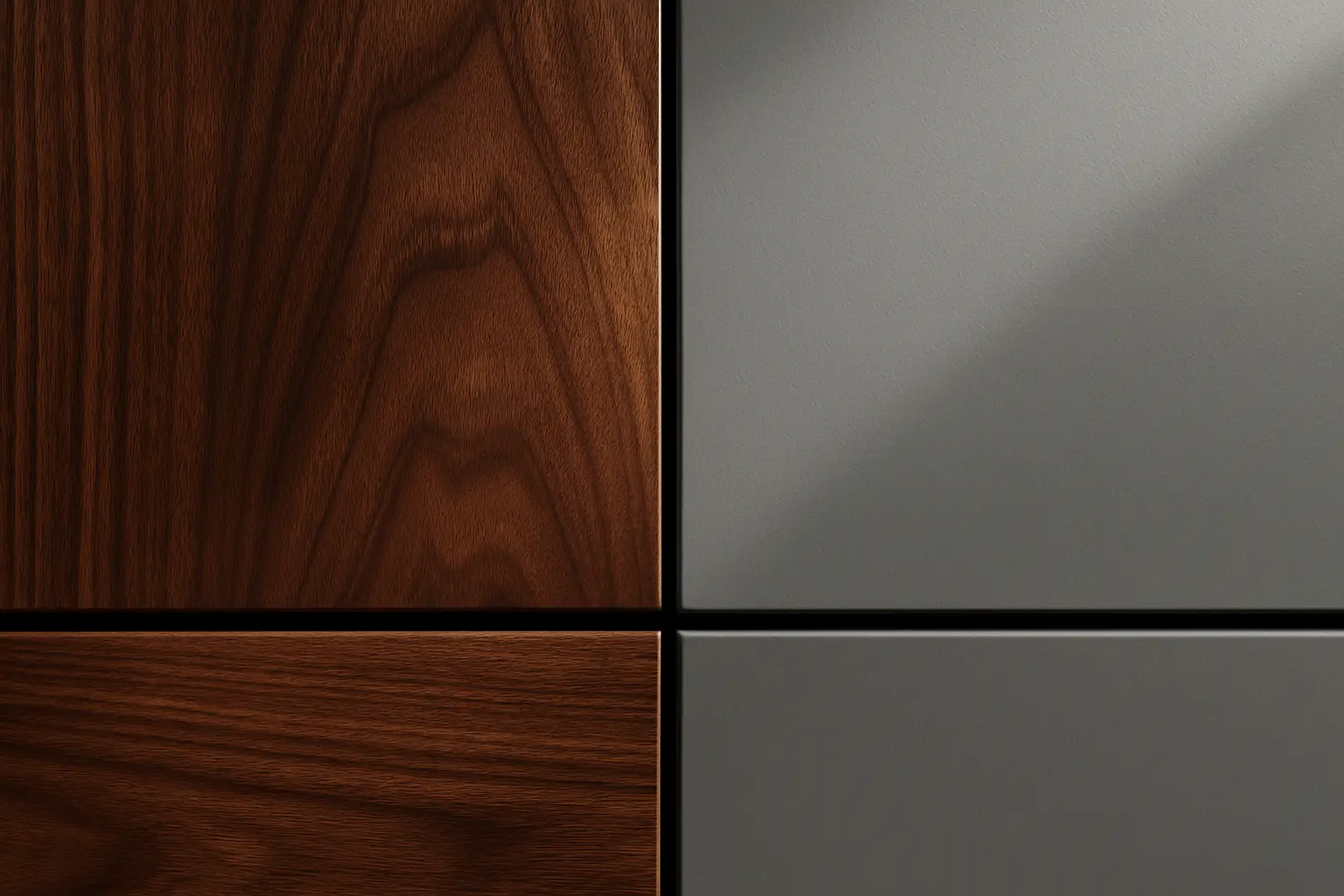
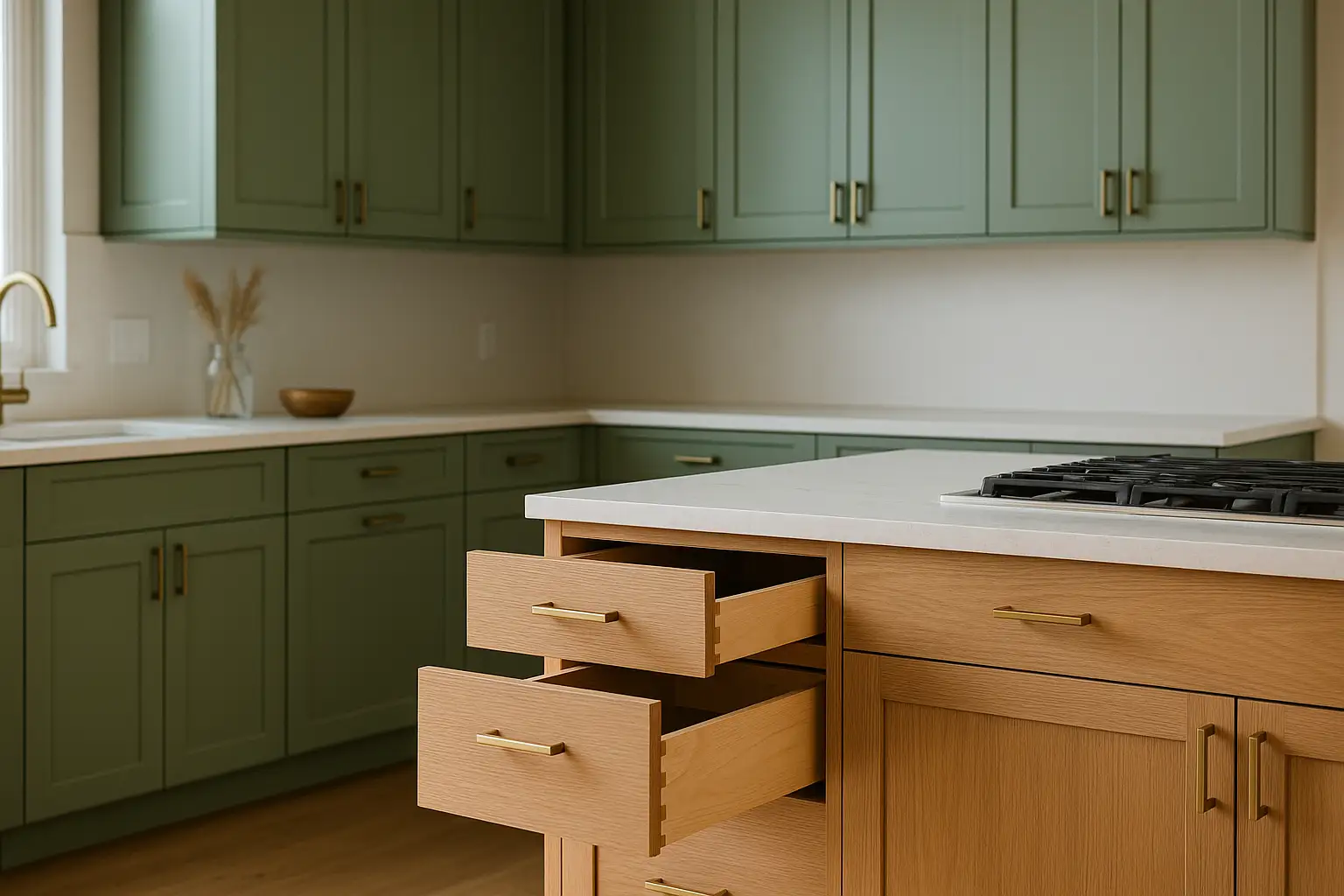
Then push on the details that predict longevity. Dado and rabbet joinery locates and locks panels far better than staples and glue. Dovetailed solid hardwood drawer boxes resist the constant pull of daily use. Full-extension, soft-close slides rated around 90 to 100 pounds let you reach the back of a deep drawer, where cheaper three-quarter-extension slides waste the last several inches. Six-way adjustable soft-close hinges from a name brand such as Blum or Grass stay quiet and adjustable a decade in. And for finish, a catalyzed or conversion varnish sprayed and cured in a controlled booth stands up to kitchen wear far better than a wipe-on coat. Get the box material, hardware brands, and finish specs written into the quote.
Lead Time and Fit Are Local Advantages
Two things a San Jose manufacturer can offer that an overseas supply chain cannot are speed and precise fit. On speed: building locally to order, our lead time runs about three weeks after design and materials are set. Imported and national semi-custom lines commonly run eight to twelve weeks or longer, and if one door arrives damaged or a box is mismeasured, you wait again while a replacement crosses an ocean. A local shop can remake a single part in days. For a family living without a functioning kitchen, that turnaround is not a minor convenience.
On fit: many San Jose, Willow Glen, and Peninsula homes have walls that are not plumb, ceilings that vary room to room, and openings that do not match catalog increments. A true custom shop field-measures, scribes cabinets to the actual walls, and builds the exact size the space needs, a 43 inch cabinet instead of a 42 plus a filler strip. That precision comes from making the cabinets nearby and to your real dimensions, which a fixed overseas catalog cannot replicate. When your home is older or unusual, local custom is not a luxury; it is what makes the kitchen fit.
Warranty and Accountability After Install
The last thing to weigh is what happens after the cabinets are hung. A meaningful warranty covers both the cabinet structure and the hardware, names who honors it, and spells out what voids it and who pays for labor. Ask whether it is transferable and how a claim actually works. Warranties attached to overseas brands are frequently valid on paper but painful in practice, because the freight and labor to make them good fall on you, and the responsible factory is unreachable.
This is where buying from a local manufacturer pays off quietly for years. When the people who built your cabinets are a short drive away, as they are with American Built Cabinets in San Jose, warranty support means someone can come look at the problem rather than mailing you a form. They stand behind their own work because their name is on it and their shop is around the corner. Sort out who actually builds, see the shop, pin the construction and finish specs in writing, and confirm the warranty and the person behind it. Do that, and you will end up with a manufacturer whose cabinets fit your home and whose support you can actually reach.
FAQ
Q1: How do I tell a real San Jose manufacturer from a reseller?
A1: Ask where the cabinets are physically built and whether you can visit the shop. A true manufacturer has a local facility with saws, a CNC or line-boring machine, an assembly area, and a finishing booth, and they will show it to you. A reseller takes your measurements, orders boxes from a factory elsewhere, and applies their own label. The shop visit is the fastest way to know which one you have.
Q2: Is a local manufacturer more expensive than ordering online or big-box?
A2: Per linear foot, true custom usually costs more than stock or online RTA. The gap narrows once you count wasted space from fixed sizes, filler strips, shorter box lifespan, and the cost and delay of fixing problems remotely. For a South Bay kitchen you plan to keep, local custom often wins on total value even when the headline number is higher.
Q3: What lead time should I expect from a San Jose custom shop?
A3: A local manufacturer building to order typically runs a few weeks. We run about three weeks after the design and materials are finalized. Imported or national semi-custom lines commonly run eight to twelve weeks or more, and a single damaged or mismeasured part can add weeks more while a replacement ships.
Q4: What questions should I ask before signing with a cabinet maker?
A4: Ask where they build, what the boxes are made of, what hinge and slide brands they use, how the finish is applied and cured, what the warranty covers and who honors it, and their real lead time. Get the box material, hardware brands, and finish specs written into the quote, not just described. Vague answers to construction questions are a warning sign.
Q5: Can a San Jose manufacturer match cabinets to an older or unusual home?
A5: That is where local custom earns its cost. Many South Bay and Peninsula homes have out-of-plumb walls, varied ceiling heights, and non-standard openings. A true custom shop field-measures, scribes cabinets to the actual walls, and builds exact sizes instead of forcing catalog boxes plus filler. Resellers working from fixed catalogs cannot do this as cleanly.
Q6: Why does buying from a local manufacturer make warranty support easier?
A6: Because the people who built your cabinets are a short drive away and stand behind their own work. If a hinge fails or a finish flaws, they can come look at it rather than routing you through a distributor and an overseas factory. Local warranties tend to be practical to use, while imported ones are often valid on paper but costly and slow to actually claim.