Luxury in a kitchen is not about the shiniest slab door you can find on a showroom floor. It is about how the cabinets are built, what they are built from, and whether they still close quietly and sit flat five winters from now. At American Built Cabinets in San Jose, we build for homes across the Bay Area, from San Francisco flats with old settling floors to new San Mateo builds, and the material choices below are the ones that hold up in this climate and justify the money you spend.
Cabinet Boxes: Why Plywood Still Wins for 2026
The box is the part nobody sees and the part that decides how long your kitchen lasts. For 2026 the honest luxury choice is still 3/4 inch furniture-grade plywood, ideally with a hardwood veneer face and a stable multi-ply core. Plywood holds screws better than particleboard, resists sagging on wide sink runs, and shrugs off the occasional dishwasher leak or a damp under-sink cabinet in a fog-belt San Francisco home.
MDF has a real place, and it is not a downgrade when used correctly. For painted door panels and shaker frames, MDF is actually superior to solid wood because it will not telegraph seasonal expansion cracks through the paint. The problem is when a company uses MDF or particleboard for the entire cabinet carcass to hit a price point, then calls it custom. Ask directly what the box, the shelves, and the back panel are made from. A luxury cabinet in 2026 should have plywood sides and bottoms, a plywood or solid back at least 1/2 inch thick, and no stapled cardboard backing. Because MDF and particleboard are composite-wood products, they should also meet the EPA's TSCA Title VI formaldehyde emission standards, which limit how much formaldehyde the panels can off-gas indoors, so it is worth asking any manufacturer to confirm compliance.
Door Fronts: Solid Wood, Veneer, and the Painted-Finish Debate
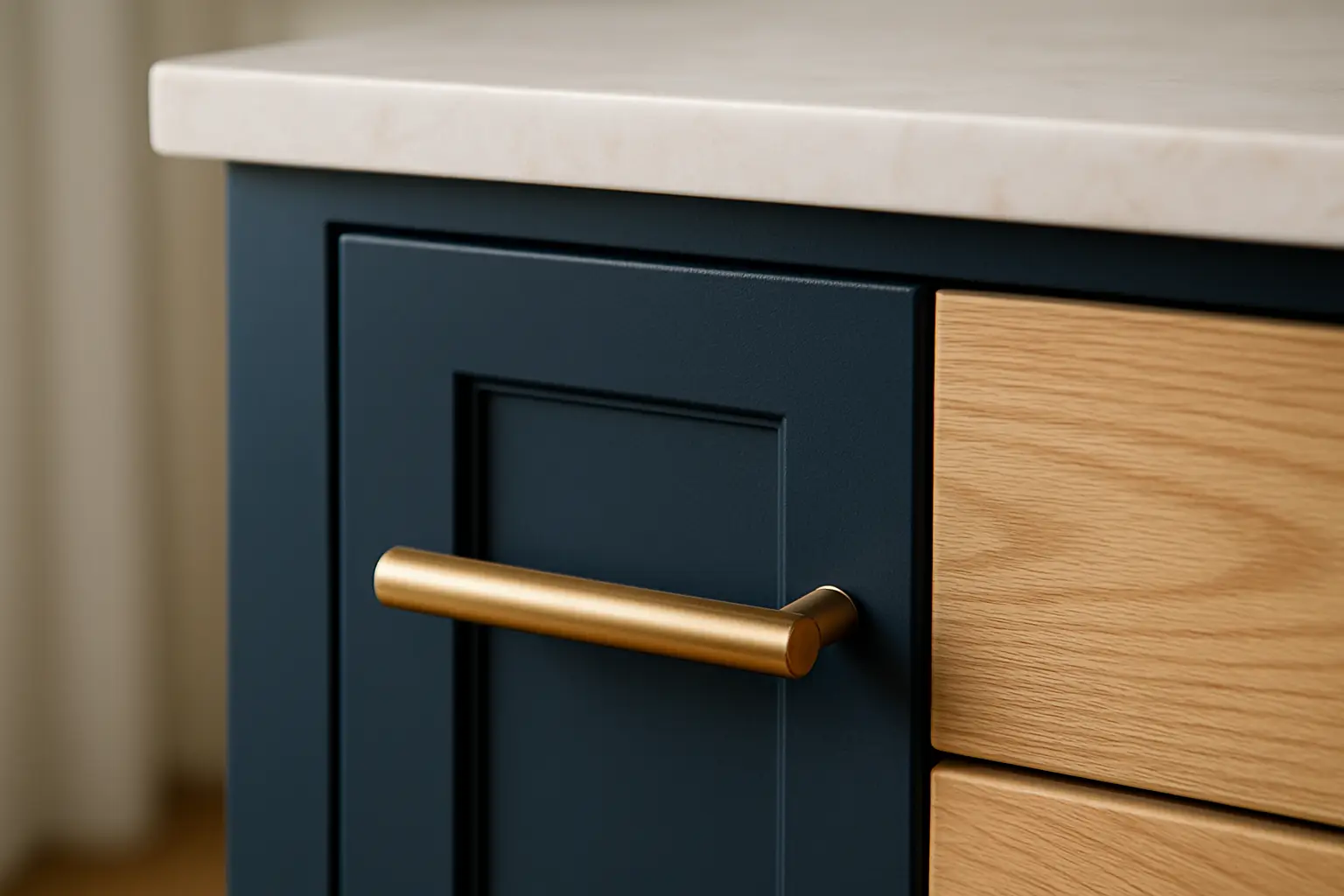
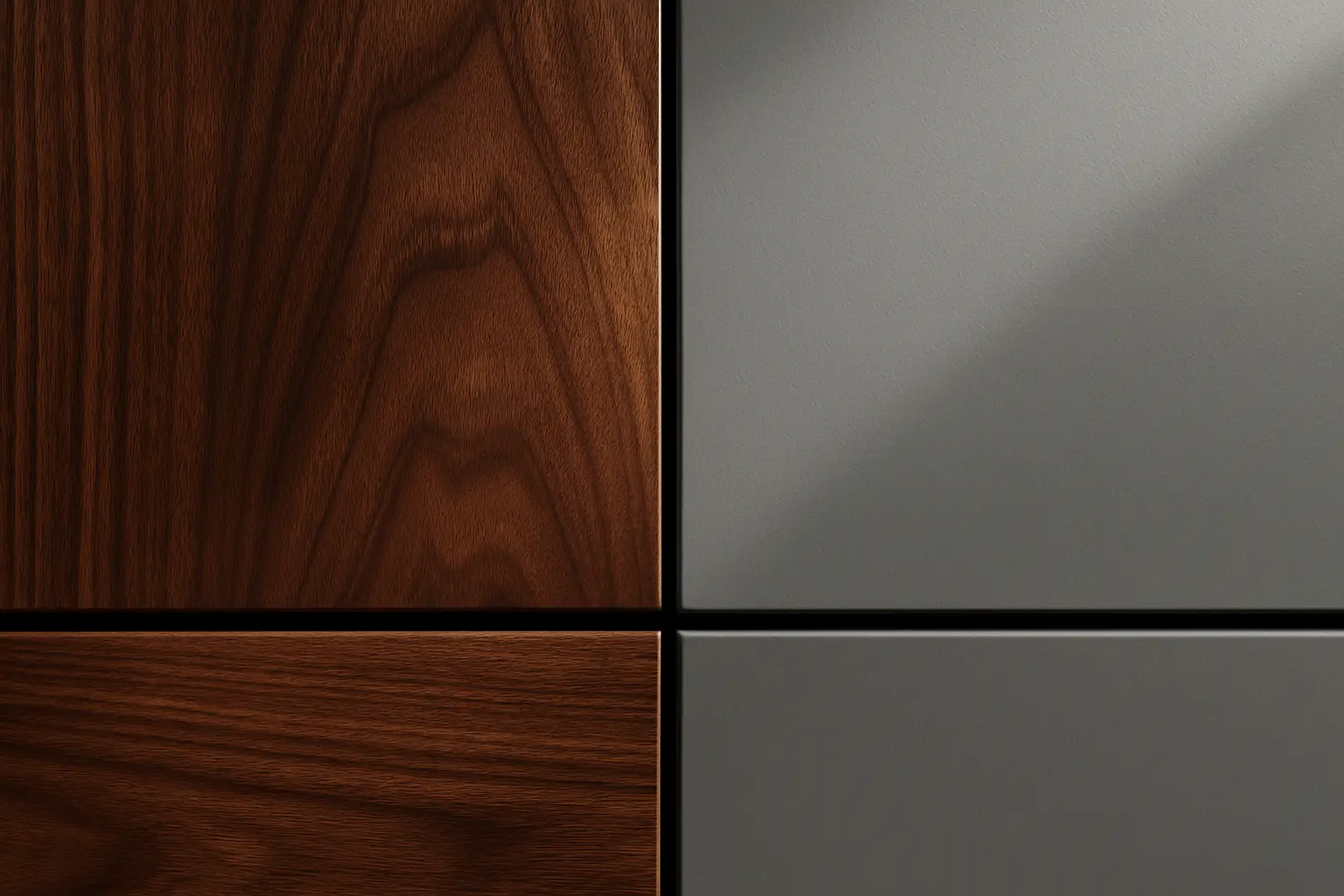
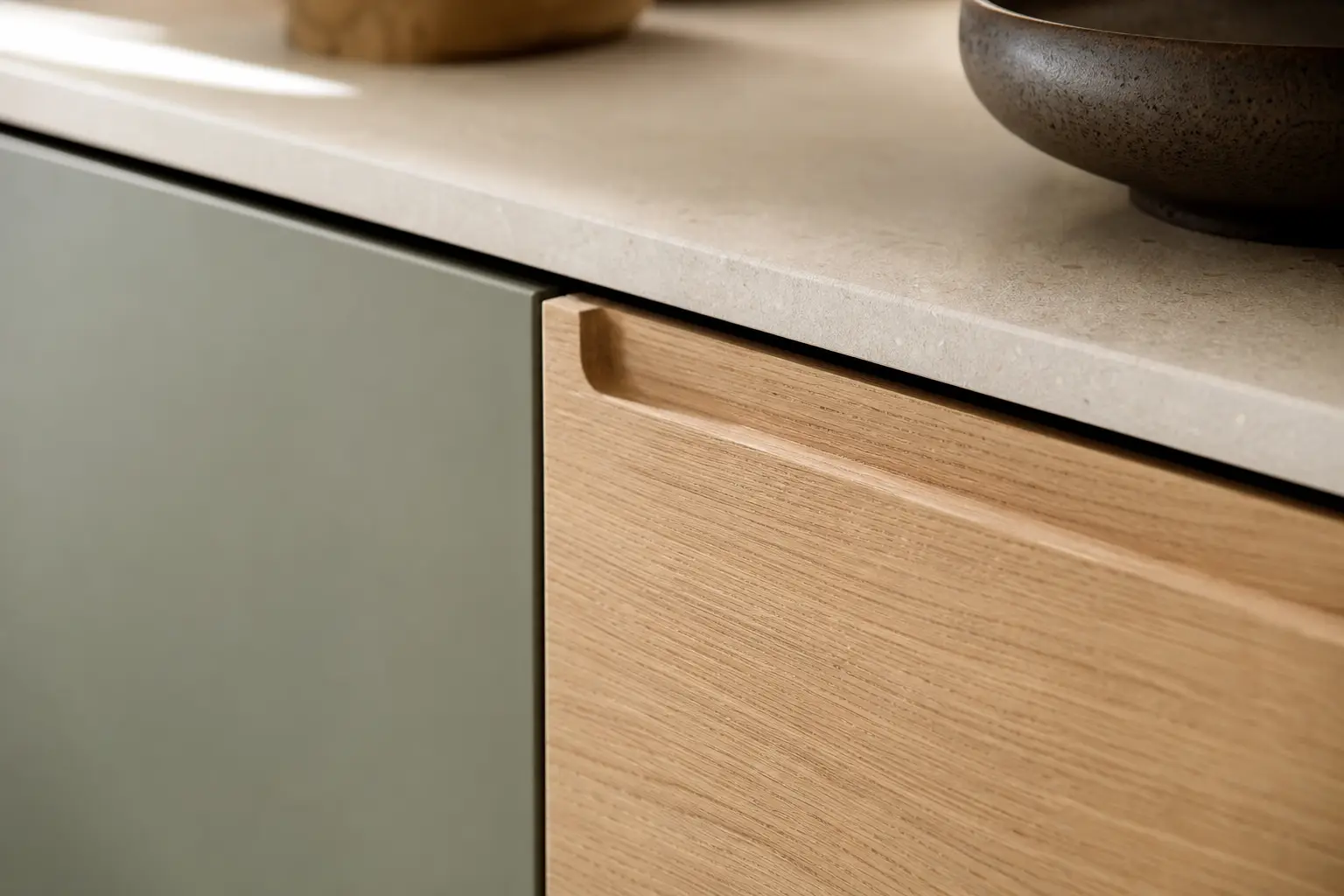
Door and drawer fronts are where material choice becomes visible and personal. Solid hardwoods like white oak, walnut, and maple lead the Bay Area right now, and they work beautifully for stained and natural finishes where you want the grain to be the whole story. Rift-cut white oak in particular has stayed popular because its straight, quiet grain reads modern without going cold.
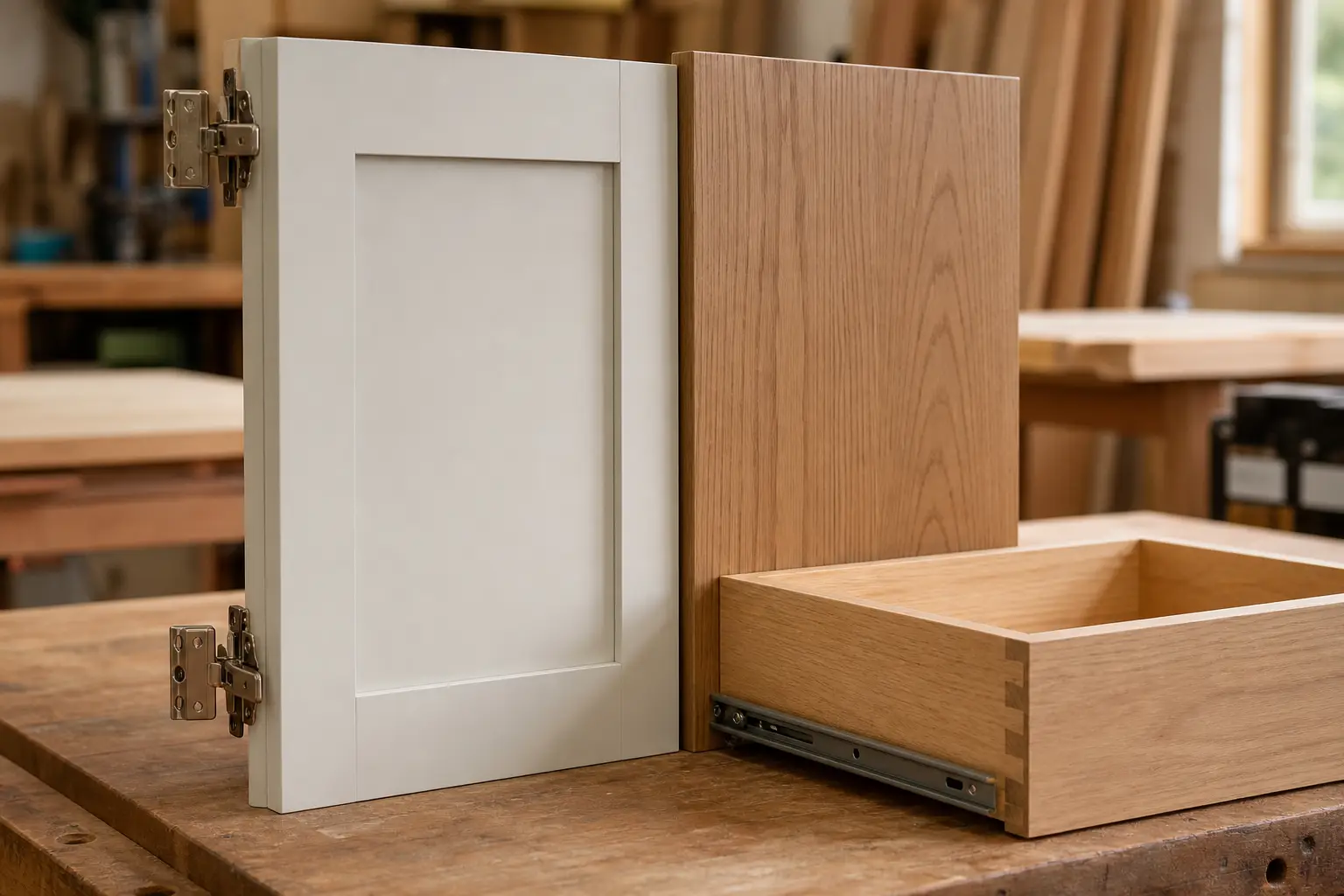
For painted doors, a five-piece door with an MDF center panel is the smarter build. It stays flat and the paint film does not crack along the panel seams when indoor humidity swings. If you love the look of exotic or figured wood but want stability on tall pantry doors, veneer over an engineered core is legitimate and often better behaved than a wide solid slab. The finish matters as much as the substrate: a conversion varnish or catalyzed finish resists grease and cleaning chemicals far better than a simple lacquer, which is why we spray and cure finishes in-house rather than shipping raw doors that get sealed on site.
Hardware and Joinery: The Details That Separate Custom from the Rest
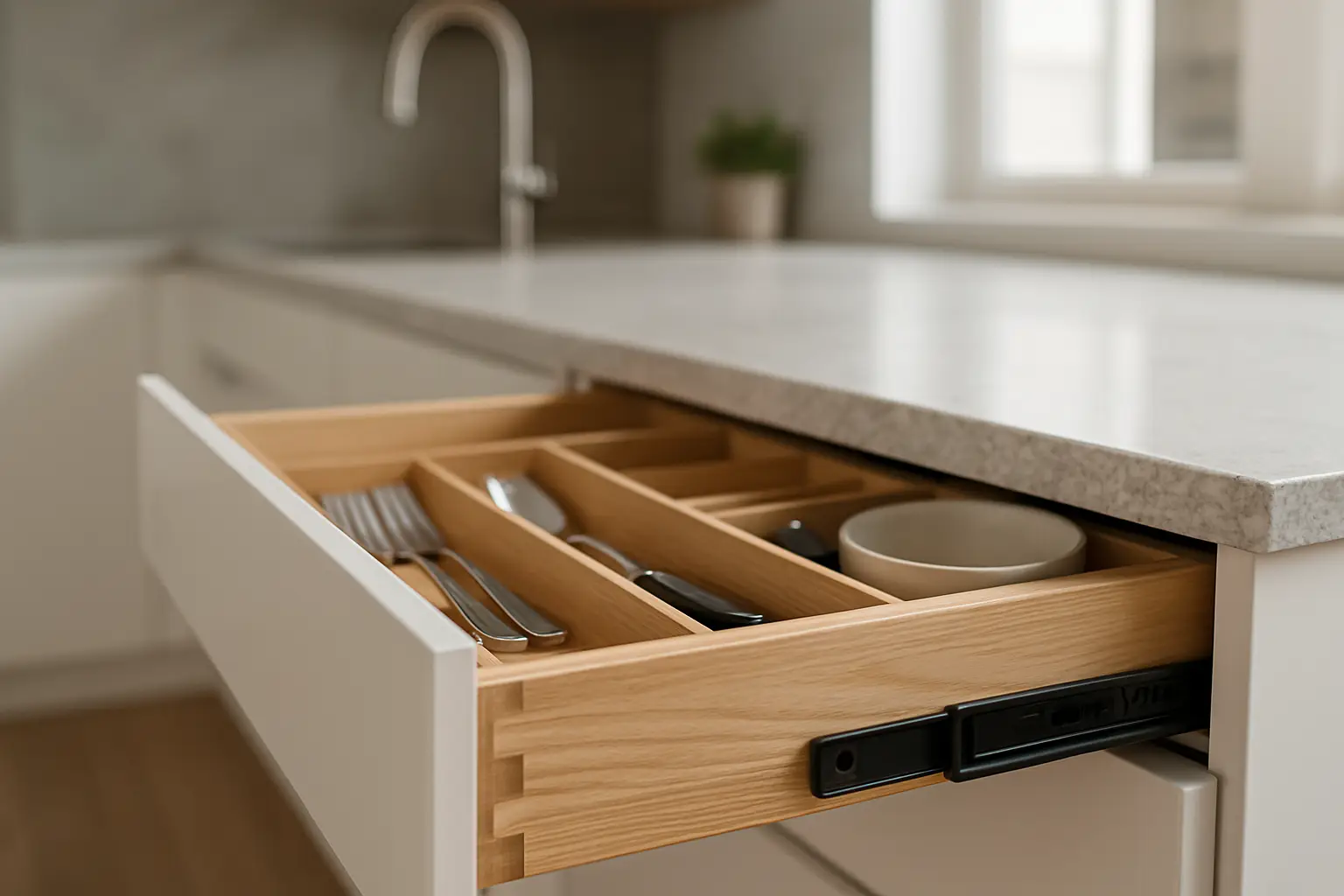
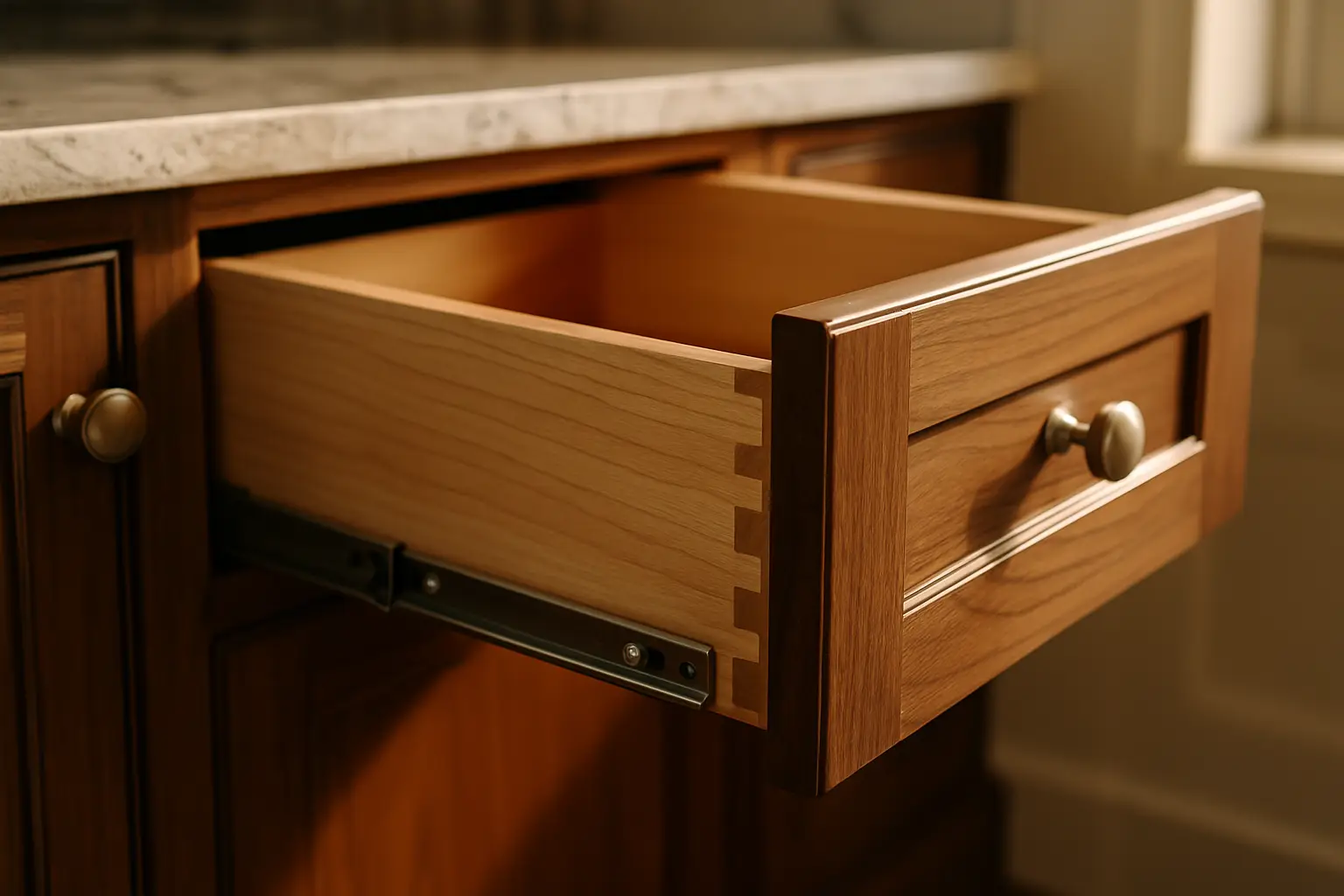
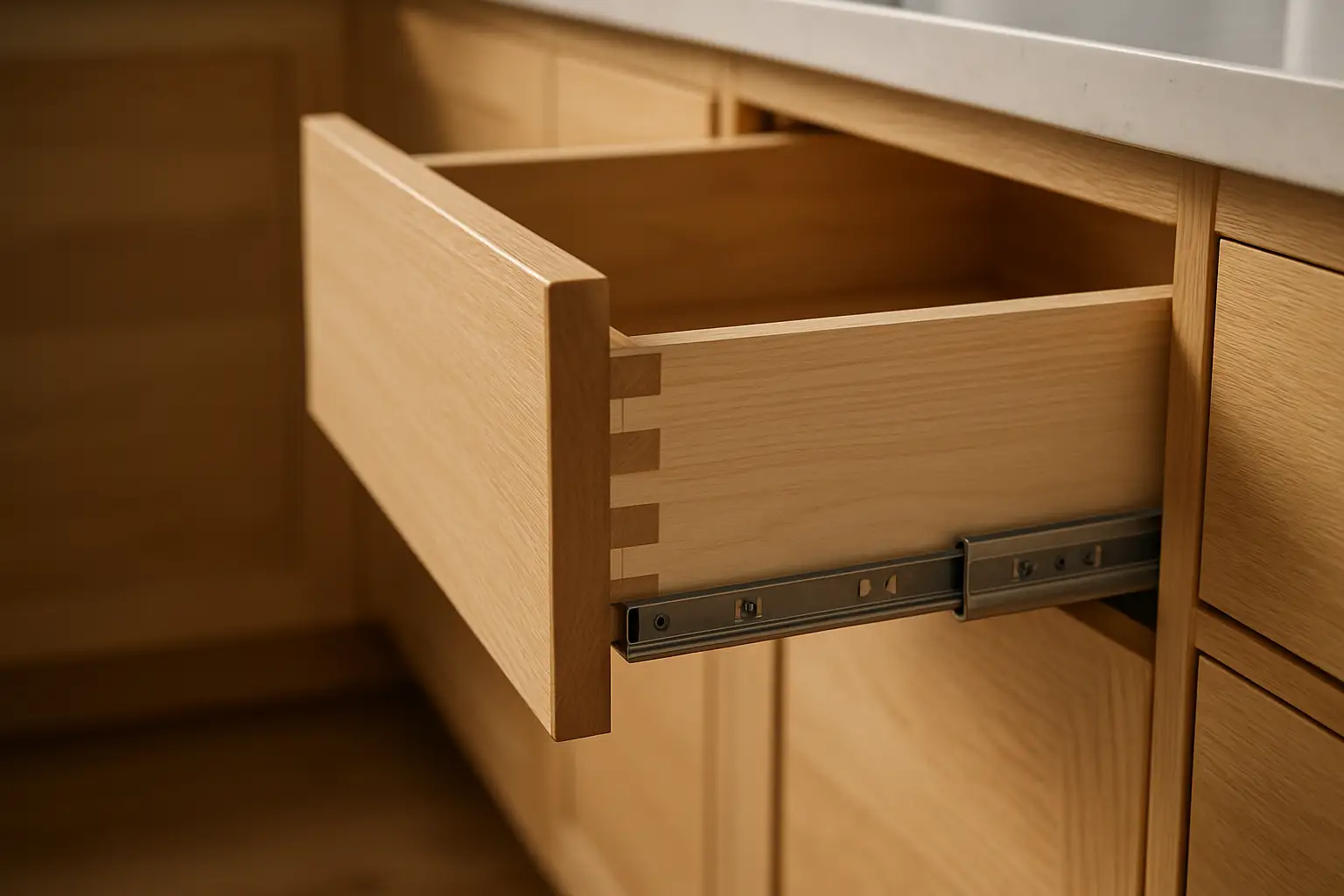
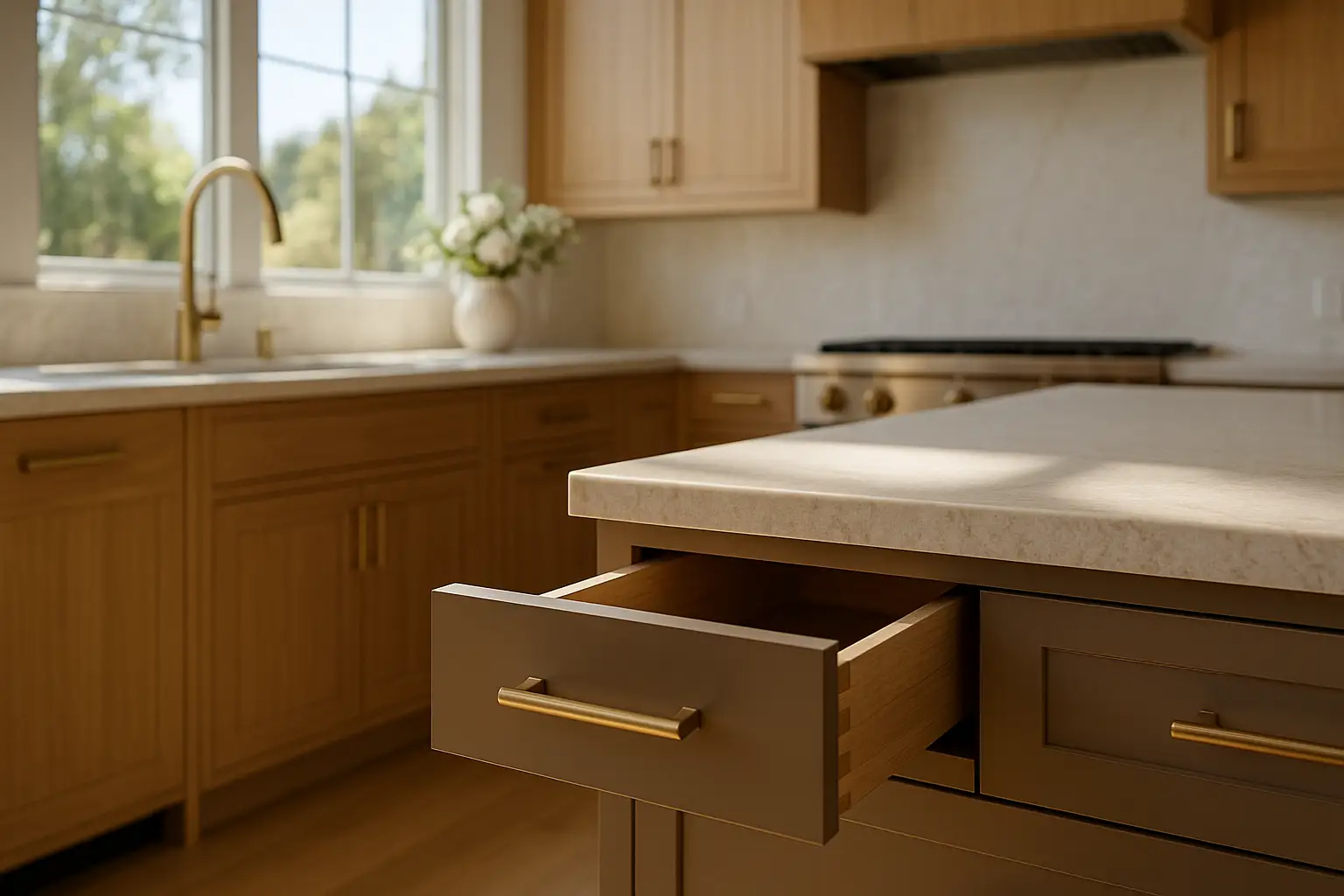
You can put the same door on two kitchens and have one feel like a rental and the other feel like a $60,000 kitchen. The difference is hardware and joinery. For 2026, the baseline for luxury is dovetailed solid-wood drawer boxes, full-extension undermount soft-close slides rated around 90 to 100 pounds, and concealed soft-close hinges with six-way adjustment so doors can be tuned as a house settles.
Skip the epoxy-coated side-mount slides you see in stock cabinets. Undermount slides hide the hardware, let the drawer box show its dovetails, and carry more weight for deep pot drawers. On the organization side, the upgrades worth paying for are the ones you use daily: a well-built pull-out trash cabinet, drawer-in-drawer inserts for utensils, and interior pull-outs in blind corners. These are also where RTA and flat-pack cabinets fall short, since their hardware and cam-lock joinery are built for shipping and assembly speed, not for decades of daily pulling.
Matching the Material to the Bay Area Home
Bay Area homes are not one climate or one style. A coastal San Francisco kitchen with morning fog and no air conditioning benefits from stable engineered cores and catalyzed finishes that handle humidity. A warmer inland San Jose or Silicon Valley home can lean harder into solid-wood fronts without as much worry about movement. Older homes with out-of-square walls and settled floors are exactly why fully custom scribe fillers and adjustable hinges matter more here than in a builder-grade tract house.
This is also where the build path matters. RTA cabinets ship fast and cost the least, but you inherit whatever core and hardware the factory chose. Semi-custom lets you pick sizes, finishes, and some modifications. True custom lets us match a specific slab of walnut, adjust a cabinet depth by an inch to clear a duct, and finish everything to the same batch of color. That level of control, along with the short lead times we can hold by building locally in San Jose, is the real advantage when a remodel timeline is tight.
FAQ
Q1: Is plywood really better than MDF for cabinet boxes?
A1: For the structural box, yes. Plywood holds screws and undermount slide hardware better, resists water damage under sinks, and stays flatter on wide spans. MDF is excellent for painted door panels because it will not crack along seams, so the best kitchens use both materials where each performs best.
Q2: What cabinet materials hold up best in a foggy San Francisco kitchen?
A2: Homes near the coast with high humidity and no air conditioning do best with engineered cores for door panels and a catalyzed or conversion varnish finish. These resist moisture-driven movement and are easier to keep clean. Solid-wood slab doors can be used but need finishes and construction that account for seasonal expansion.
Q3: Are solid wood doors worth the extra cost in 2026?
A3: For stained and natural finishes where the grain is the feature, solid wood like white oak or walnut is absolutely worth it. For painted finishes, a five-piece door with an MDF center panel is actually the better choice because it stays flat and the paint will not crack. Match the material to the finish, not to a blanket rule.
Q4: What should I ask a fabricator before signing a custom cabinet contract?
A4: Get the specifics in writing: the material and thickness of the box, shelves, and back panel; the drawer box construction; the slide and hinge brand and weight rating; and the finish type. Ask whether finishing happens in-house or on site, since a cured factory finish is far more durable. If a quote says custom but cannot name these details, treat it as semi-custom or stock at a custom price.
Q5: How much do custom cabinets cost compared to semi-custom or RTA?
A5: As a rough guide, RTA and flat-pack lines are the cheapest, semi-custom sits in the middle, and true custom carries the highest material and labor cost per linear foot. What you pay more for with custom is exact fit in out-of-square rooms, better cores and hardware, and a finish tuned to one batch of color. For a kitchen you plan to keep 15 years or more, the durability usually justifies the premium.
Q6: Is RTA cabinetry ever a good choice for a luxury kitchen?
A6: RTA is fine for a rental unit, garage, or tight budget, but it is not a luxury solution. The cores, hardware, and cam-lock joinery are engineered for flat-pack shipping and quick assembly, not decades of heavy daily use. For a kitchen you plan to keep, semi-custom or full custom pays off in durability and fit.