A cabinet maker is not a store that sells boxes. It is a shop that designs, builds, finishes, and often installs cabinetry to fit a specific room, which is a different service than picking a line off a showroom wall. For homeowners in San Jose, San Francisco, and San Mateo, understanding what a real cabinet maker does, and how to tell a good one from a middleman, changes both the result and the budget. This guide walks through the services a maker provides, how custom, semi-custom, and stock differ from the maker's bench, and how to vet a Bay Area shop before you commit.
What a Cabinet Maker Actually Does
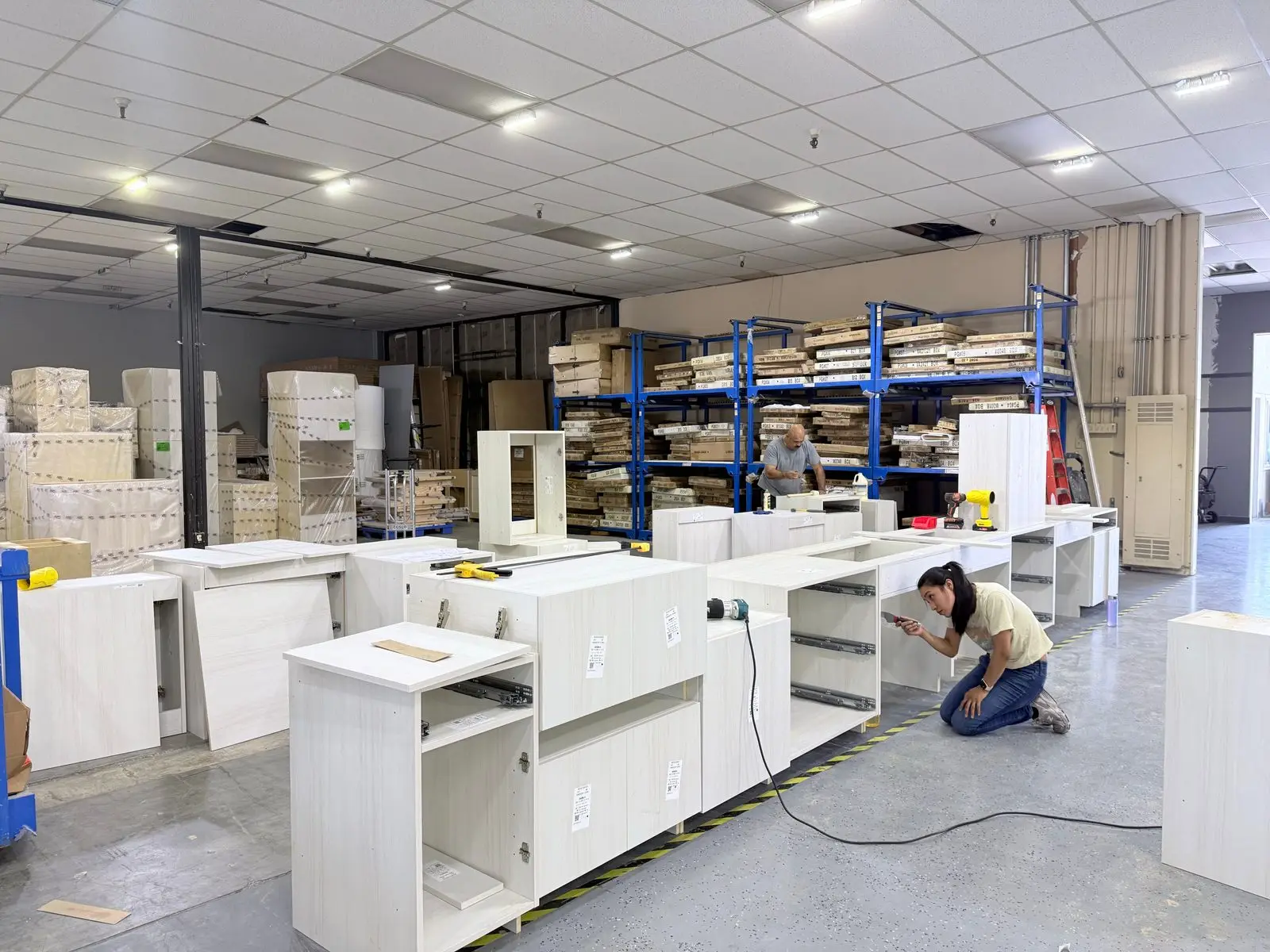
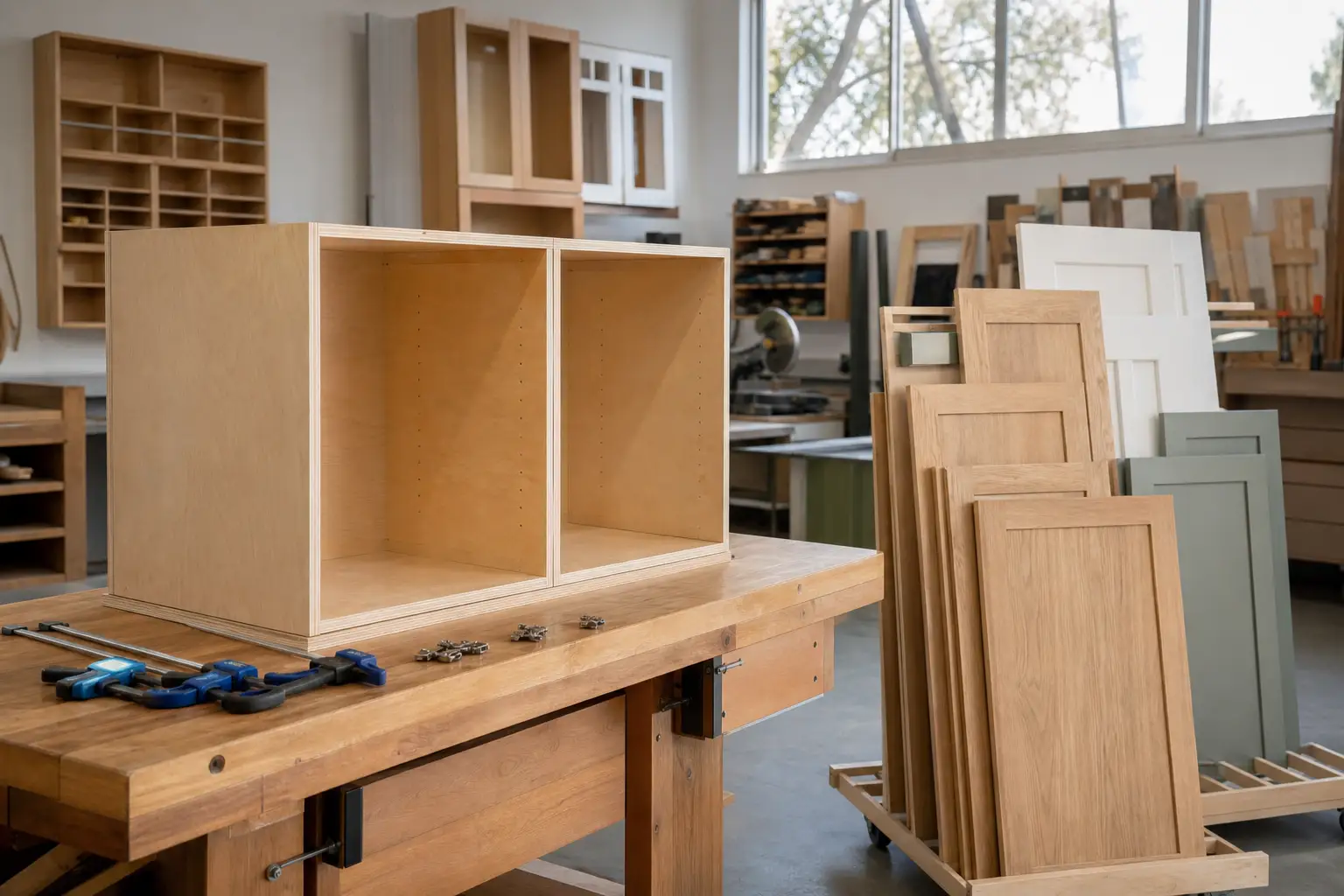
The phrase cabinet maker covers a full chain of work that a retail counter does not touch. It starts with design and measurement, translating a room and a wish list into a plan that accounts for appliances, plumbing, clearances, and the quirks of the actual walls. From there the shop produces shop drawings, the detailed plans that specify every box, dimension, and interior fitting before a single panel is cut. Then comes fabrication: cutting plywood and MDF, building and joining boxes, machining doors, and boring for hardware.
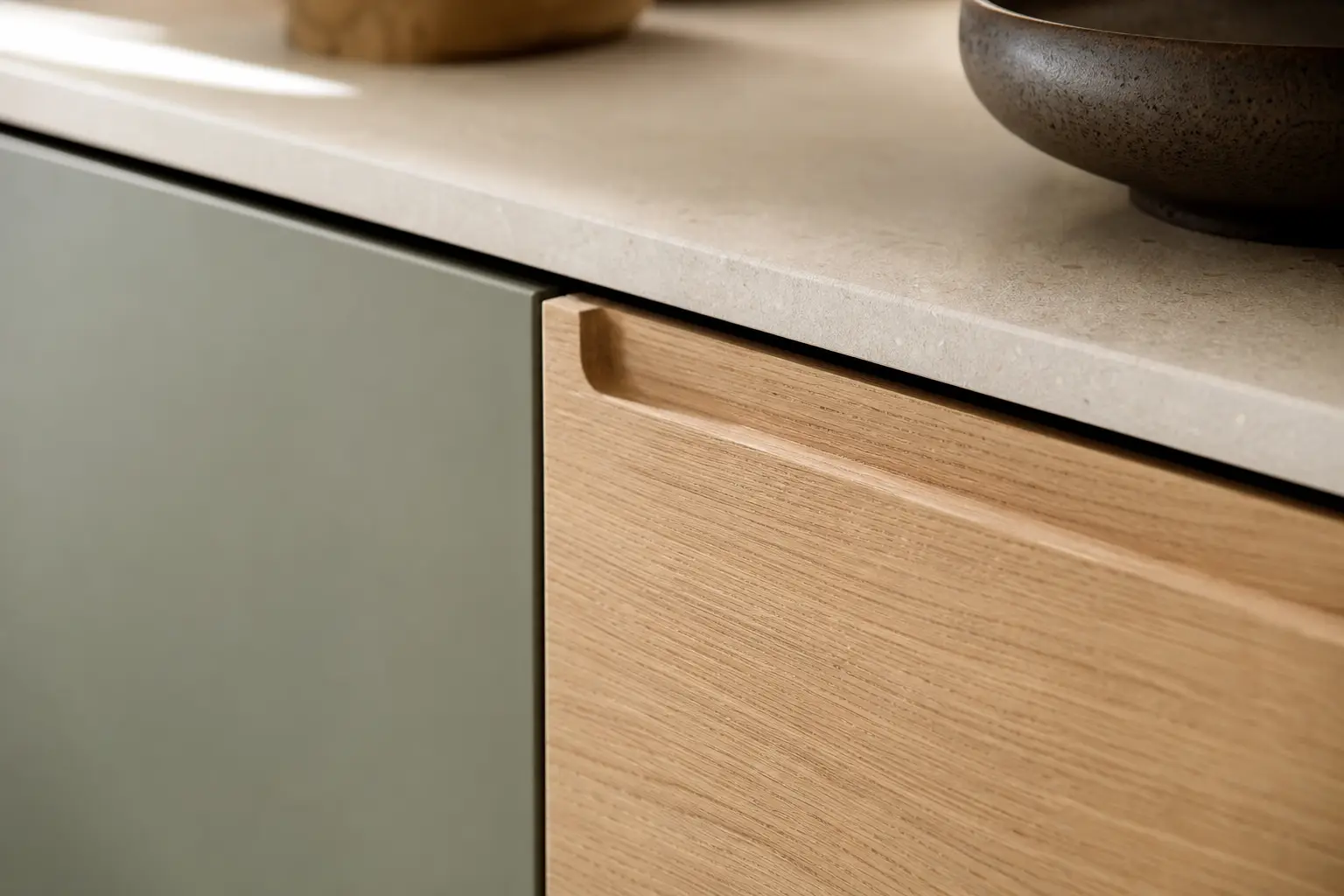
Finishing is where a maker earns a lot of its keep. Painting, staining, and clear-coating happen in-house under controlled conditions, which is how the color stays consistent across a run and how a specified custom color or a match to existing cabinetry becomes possible. Many makers also handle or closely coordinate installation, closing the loop so the people who built the cabinets are responsible for how they hang. That end-to-end ownership is the practical difference between a maker and a store that resells someone else's boxes.
The Core Services, and Why Each Matters
Design and shop drawings protect you from expensive surprises. A careful maker catches the wall that is not plumb, the window casing that fights an upper cabinet, and the dishwasher that needs a filler for its door swing, all on paper before anything is built. In older San Francisco and Peninsula homes, this stage is where a good maker separates from a catalog seller, because stock sizing assumes conditions those houses rarely have.
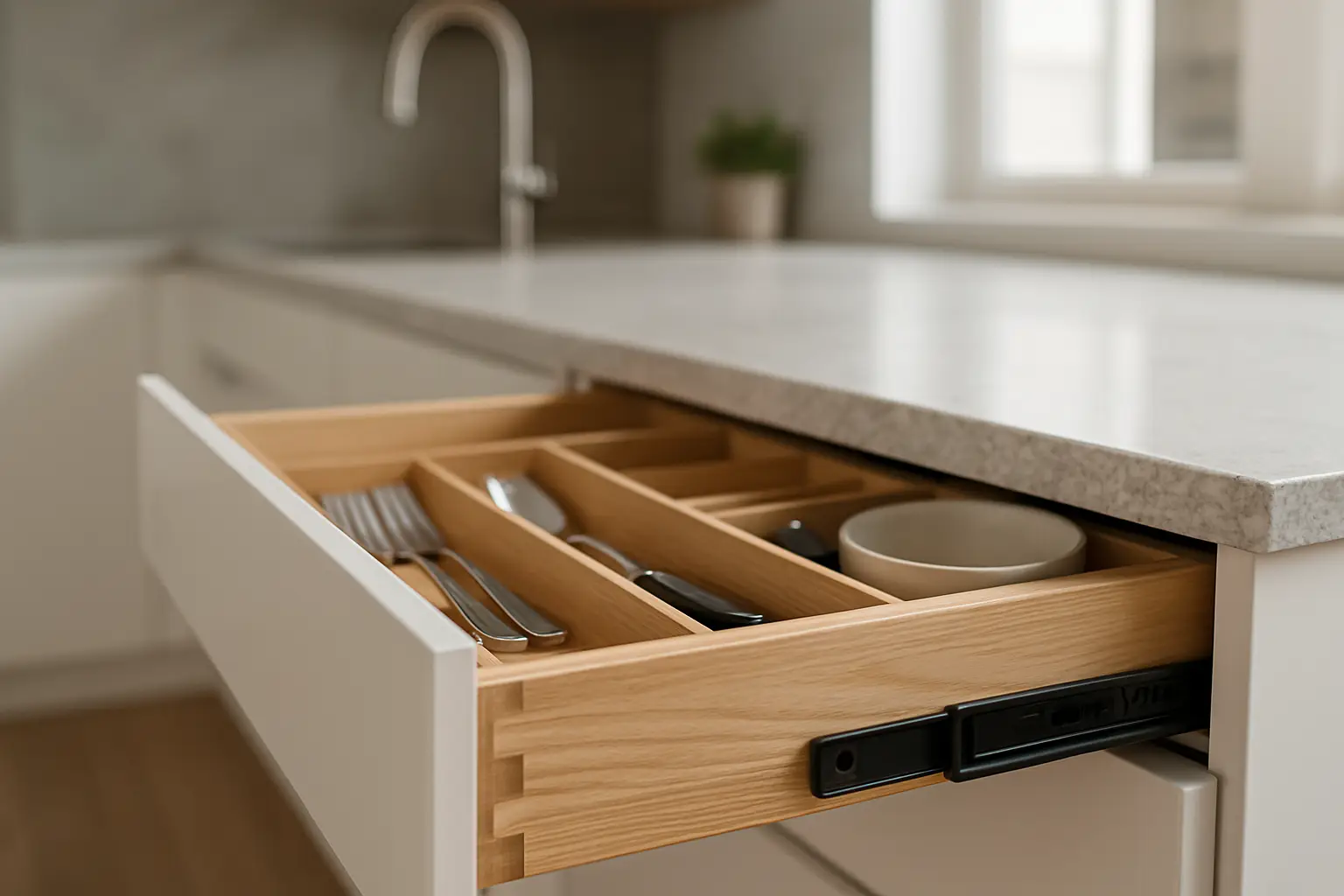
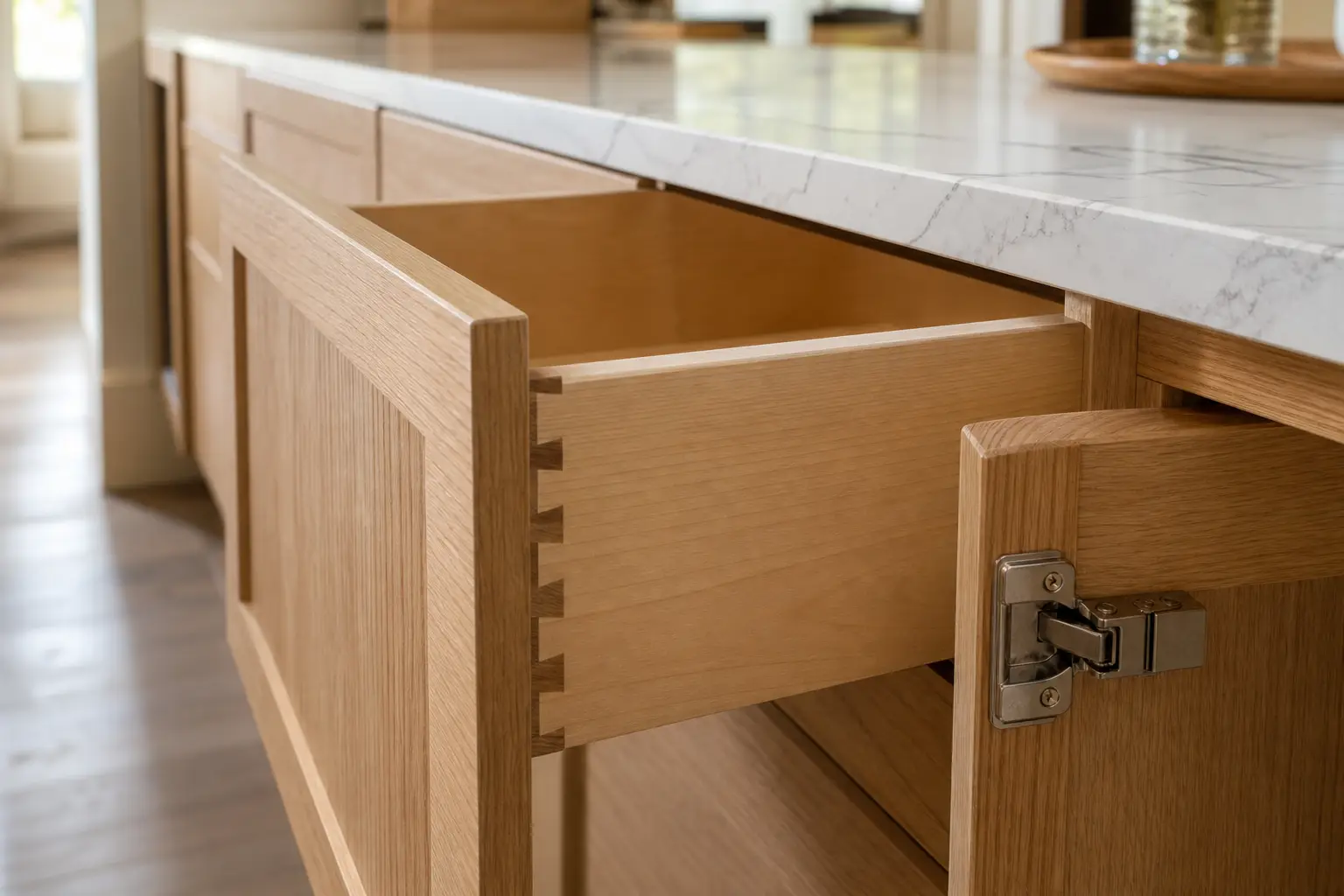
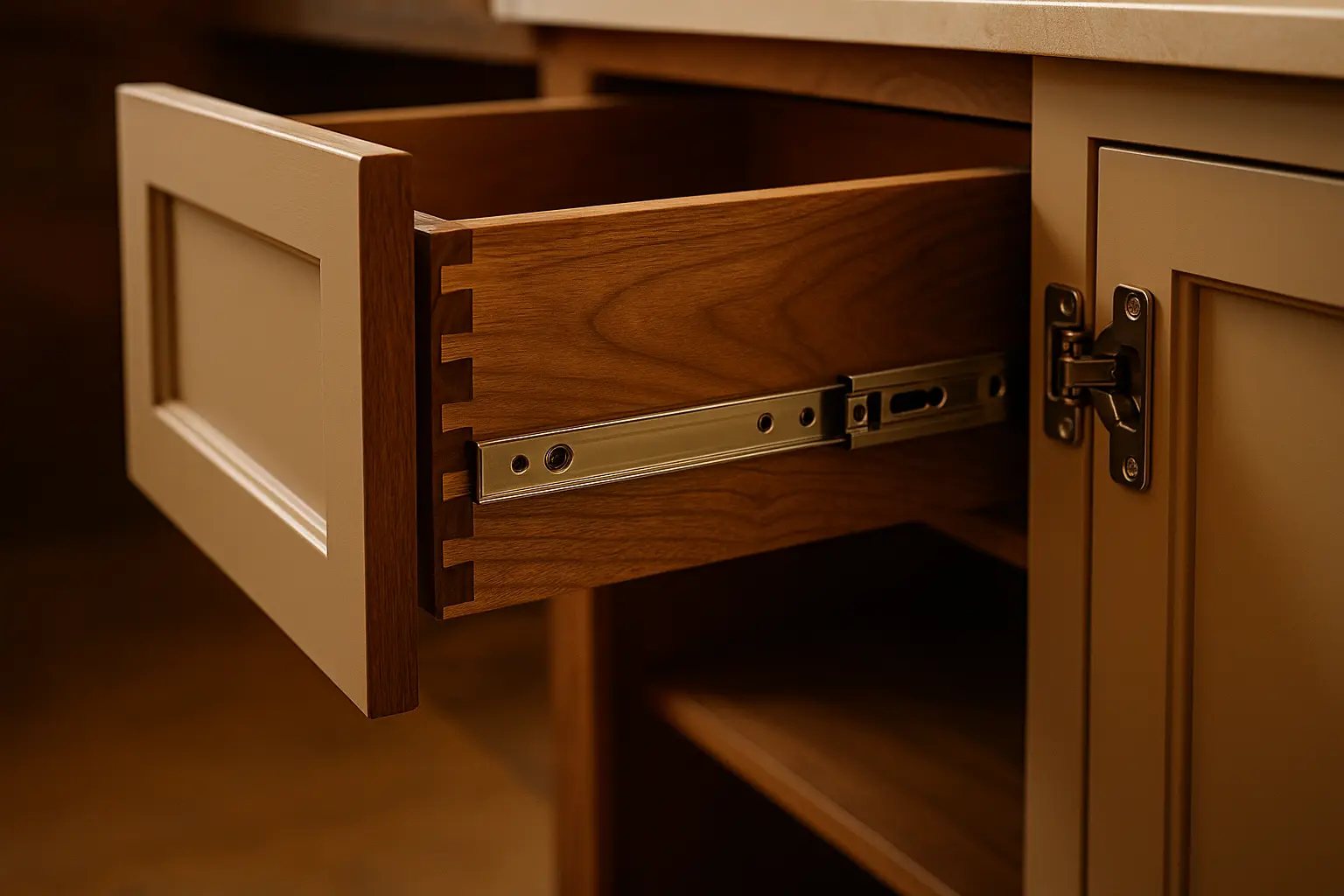
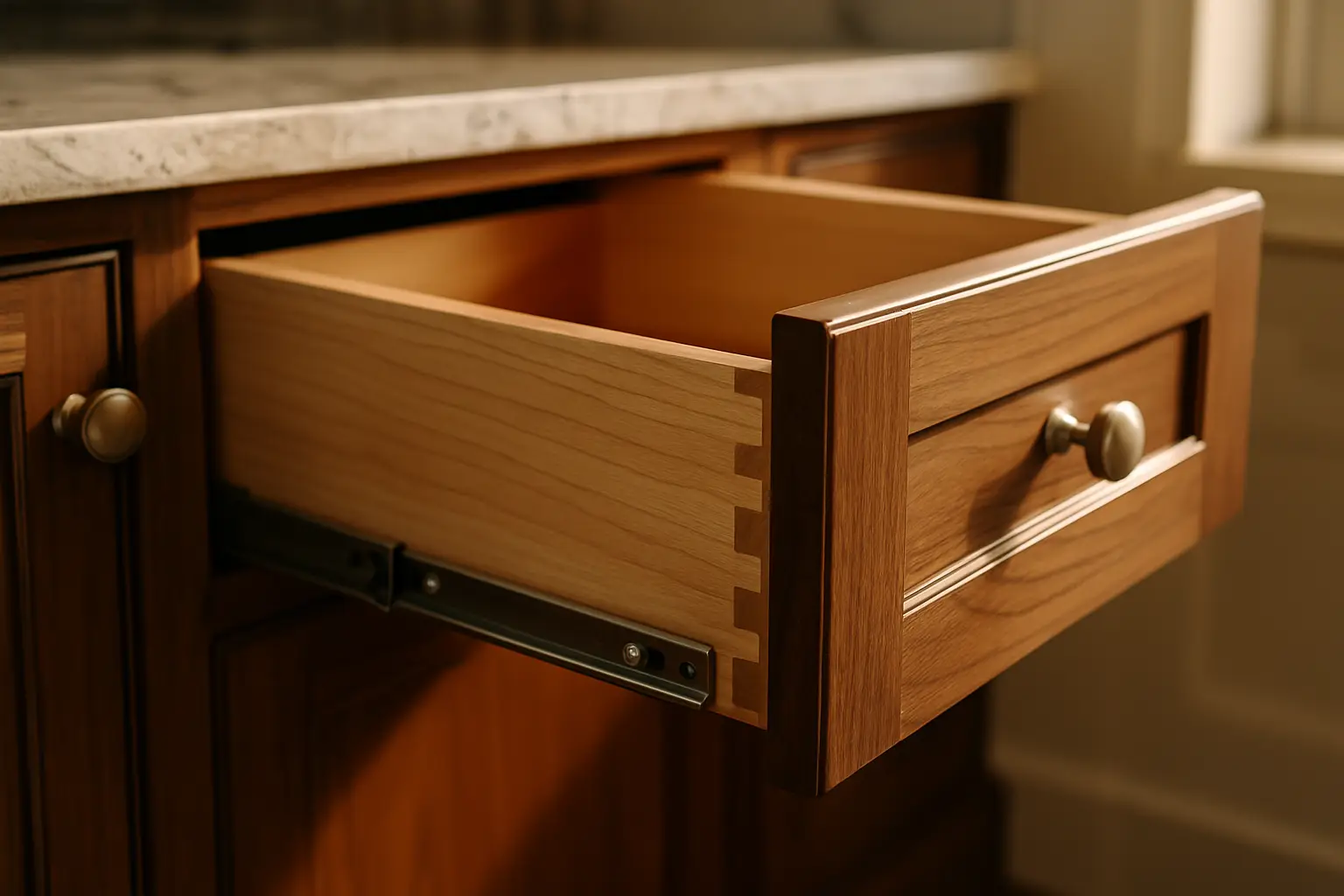
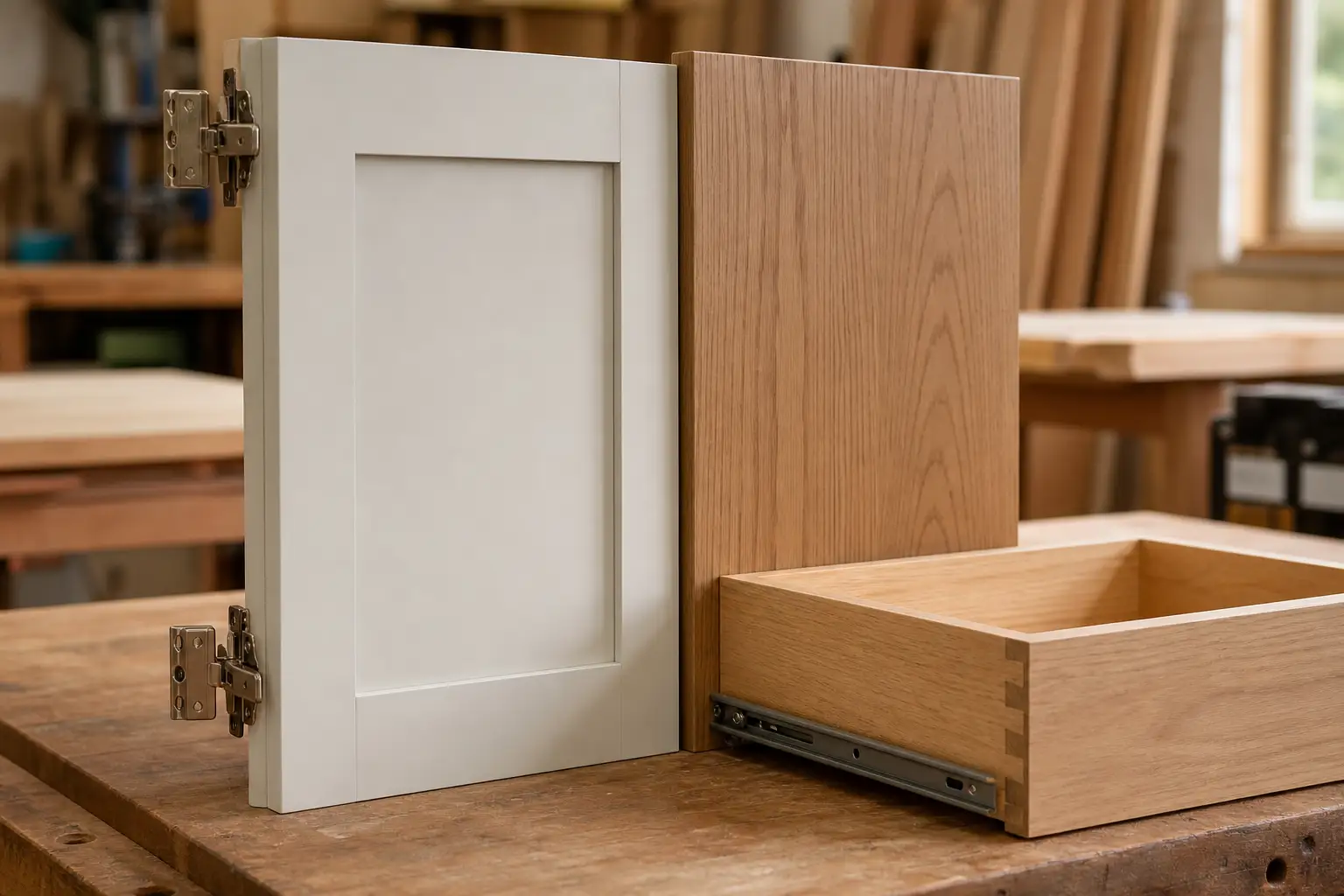
Custom fabrication is the reason to hire a maker at all. Instead of forcing a room into 3-inch stock increments, the shop builds to the exact wall, uses 3/4-inch furniture-grade plywood for boxes, dovetailed solid maple or Baltic birch for drawers, and full-extension soft-close hardware throughout. In-house finishing then delivers a look a catalog cannot, whether that is a precise paint color, a specific stain on white oak or walnut, or matched panels that make an island and its range hood read as one designed element. Installation, when the maker provides it, keeps a single team accountable for reveals, alignment, and the fit against imperfect walls.
Custom, Semi-Custom, and Stock From the Bench
From a maker's point of view, these tiers are tools, not a status ladder. Stock and ready-to-assemble cabinets come in fixed sizes and ship from a factory; a maker generally does not build these, and they suit tight budgets and simple, standard layouts where filler strips are acceptable. Semi-custom is where a lot of maker work lives: a set of proven sizes, door styles, and finishes with genuine flexibility in dimensions and interiors, built to a higher construction standard than stock without the cost of one-off engineering on every box.
Full custom is the maker's home ground. Any dimension, any interior fitting, any finish, engineered to a room with non-standard ceilings, angled walls, or a designer specification. It costs the most and is worth it when the project demands it. A trustworthy shop tells you honestly when semi-custom will serve you just as well, rather than defaulting to the most expensive tier. The value of a maker is partly the range and partly the judgment about which tier fits your kitchen and your budget.
How to Vet a Bay Area Cabinet Maker
Start with construction specifics, because a real maker answers them without flinching. Ask what the boxes are made of, and listen for 3/4-inch plywood rather than particleboard. Ask about the drawer boxes, and expect dovetailed solid wood, not stapled. Ask about slides and hinges, and expect full-extension undermount soft-close and six-way adjustable hinges. Ask to open and close a sample drawer and door; quality has a feel that a spec sheet cannot fully convey. Then ask where the cabinets are actually built, since a shop that manufactures locally controls quality and schedule in a way a reseller cannot.
Finally, weigh the whole service, not just the price. A maker that measures, builds, finishes, and coordinates installation under one roof gives you a single point of accountability and, because American Built Cabinets runs its own shop in San Jose, a lead time of roughly three weeks instead of the long waits tied to national lines. Ask how warranty claims are handled; with a local maker, a sticky drawer or a finish issue is a direct call to the people who built the cabinets, which is exactly the kind of after-sale relationship a distant supplier chain cannot match.
FAQ
Q1: What is the difference between a cabinet maker and a cabinet retailer?
A1: A retailer sells cabinets built by someone else, usually a national factory, and passes your order down a chain. A cabinet maker designs and manufactures the cabinets themselves. That means real control over sizing, materials, and finish, and one party accountable for the result rather than a dealer pointing at a factory.
Q2: Do cabinet makers only build fully custom, or also semi-custom?
A2: Most established makers do both. Fully custom means any size, any interior, any finish, engineered to the room. Semi-custom works from a set of proven sizes and styles with real flexibility, which keeps cost and lead time down. A good shop steers you to the right tier for your project rather than upselling by default.
Q3: Can a cabinet maker match existing cabinets or a specific color?
A3: Yes, this is a core reason to use one. Because finishing happens in-house, a maker can match a paint color, a stain, or an existing door profile, and produce matching panels for islands, end panels, and appliance fronts. That in-house control is what a catalog-bound retailer cannot promise.
Q4: How much do cabinet maker services cost compared to stock cabinets?
A4: Custom work costs more than big-box stock, but the gap narrows once fit and durability are counted. Semi-custom from a local maker often lands close to mid-tier stock while delivering plywood boxes, dovetail drawers, and exact sizing. The right question is total value over the life of the kitchen, not just the sticker.
Q5: Do cabinet makers handle installation too?
A5: Many do, and it is worth choosing one that can. When the shop that built the cabinets also coordinates installation, one team owns the fit, so a tight reveal or an out-of-square wall is their problem to solve, not a gap between supplier and installer where blame gets traded.
Q6: How long does a cabinet maker take in the Bay Area?
A6: It depends on scope, but local manufacturing keeps it tight. Because we build in San Jose, production runs about three weeks from approved shop drawings and finish selections, well short of the 6 to 10 weeks common with national lines. Design and measurement happen before that clock starts.