If you are pricing out a kitchen remodel around San Jose or the Peninsula, you have probably run into the terms semi-custom and custom cabinets and wondered where the real line sits. The short version: it comes down to how much you can change (sizes, materials, finishes) and how the boxes are built and finished. This guide breaks down what actually differs between the two, where each one makes sense, and how the choice plays out in a Bay Area home with its odd wall angles, older layouts, and hillside foundations.
The Three Tiers: RTA, Semi-Custom, and Custom
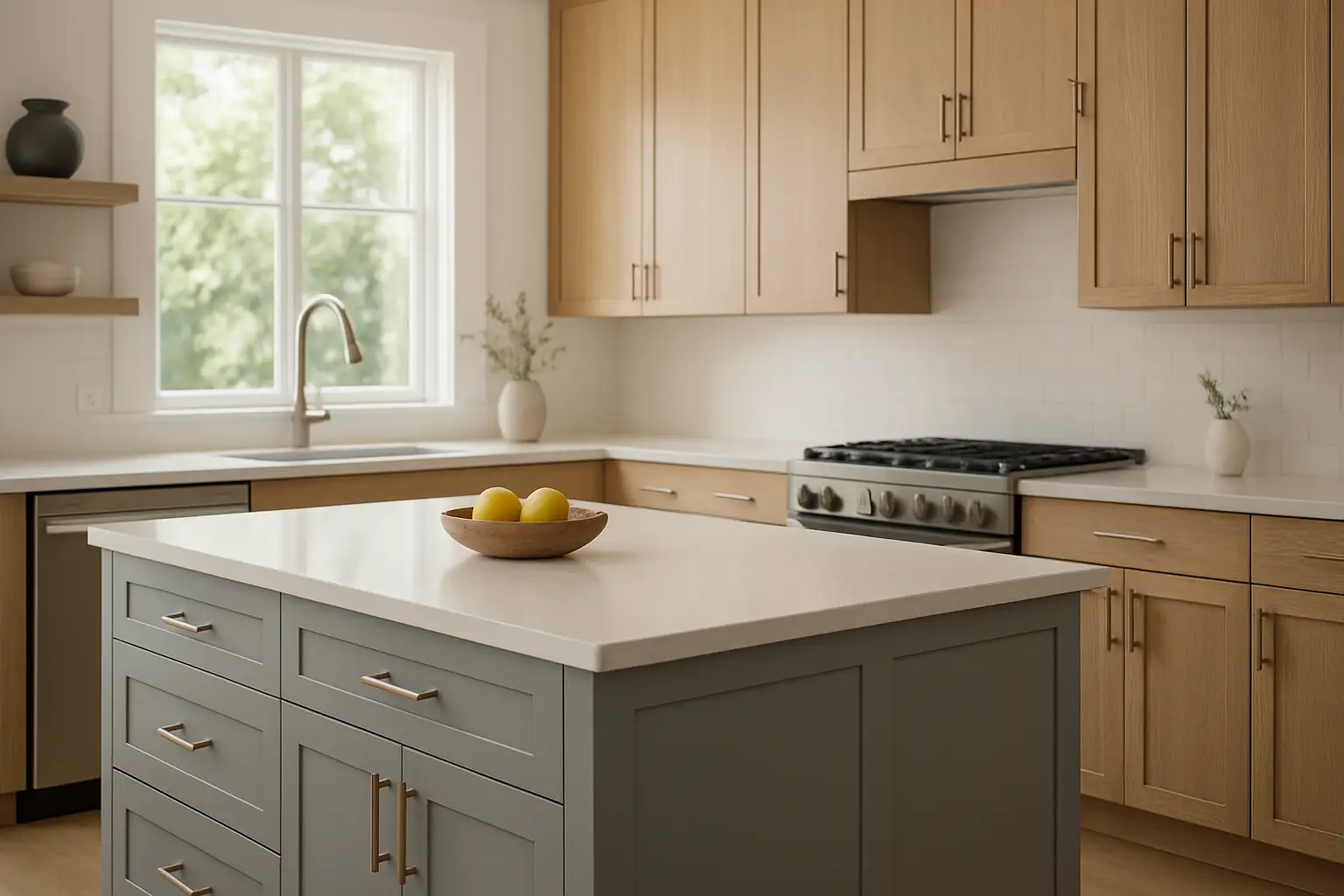
Cabinets generally fall into three buckets. Ready-to-assemble (RTA) cabinets ship flat in boxes and you or your installer put them together. They come in fixed sizes, usually in 3-inch increments, and finish choices are limited. Semi-custom cabinets start from a manufacturer's standard door styles and box sizes but allow modifications: you can often adjust depth, add pull-outs, pick from a wider finish palette, and choose upgraded hardware. Custom cabinets are built to your exact specifications, with no fixed size grid, any wood species or finish the shop can source, and construction details decided project by project.
The practical distinction is flexibility versus predictability. Semi-custom gives you a menu with substitutions. Custom gives you a blank sheet. A semi-custom cabinet might come in 30, 33, and 36 inches wide, and if your wall measures 34 inches you get a filler strip. A custom cabinet is simply built at 34 inches. That difference sounds small until you are working with a 1920s San Francisco kitchen where almost nothing is square or standard.
Where the Build Quality Actually Diverges
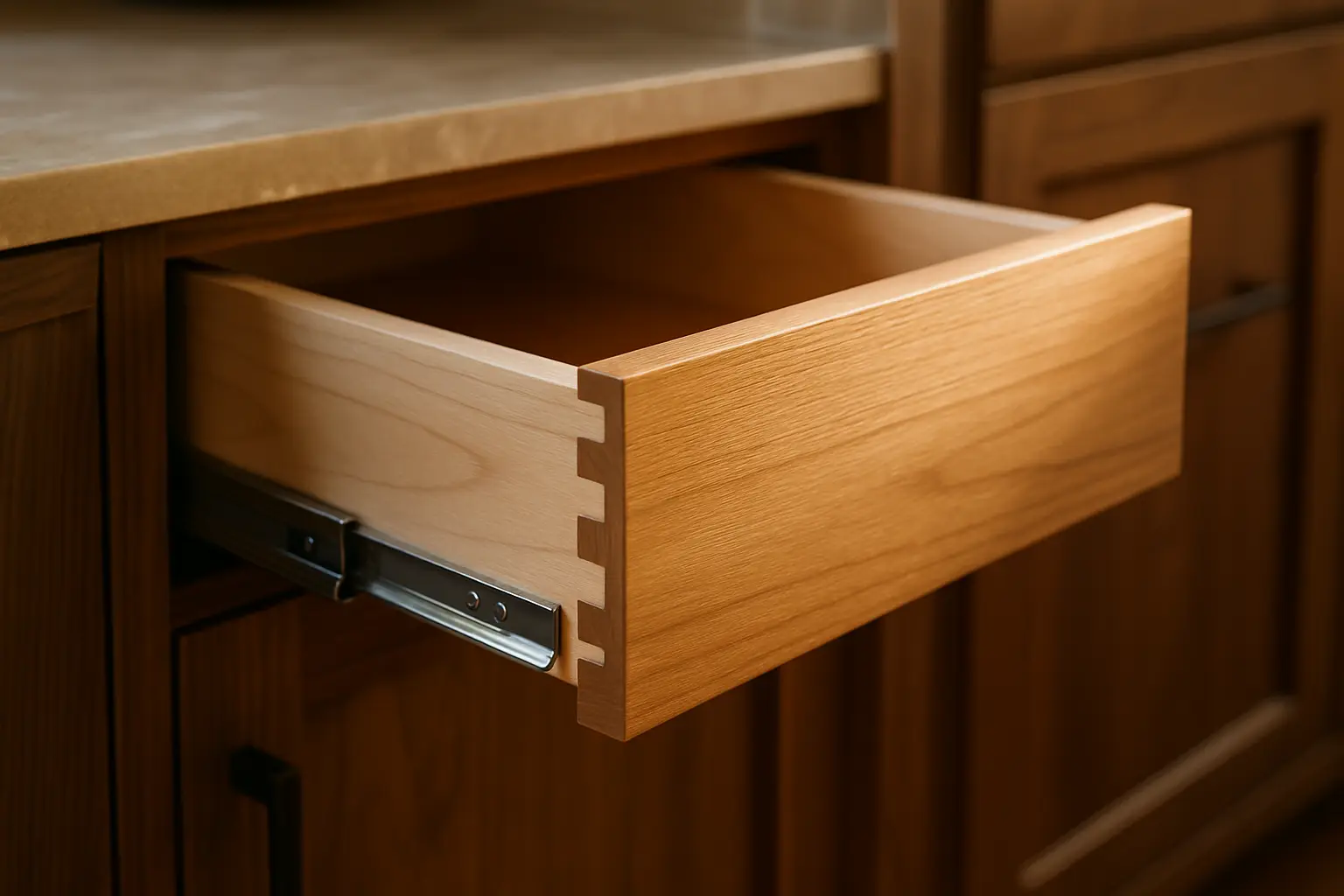
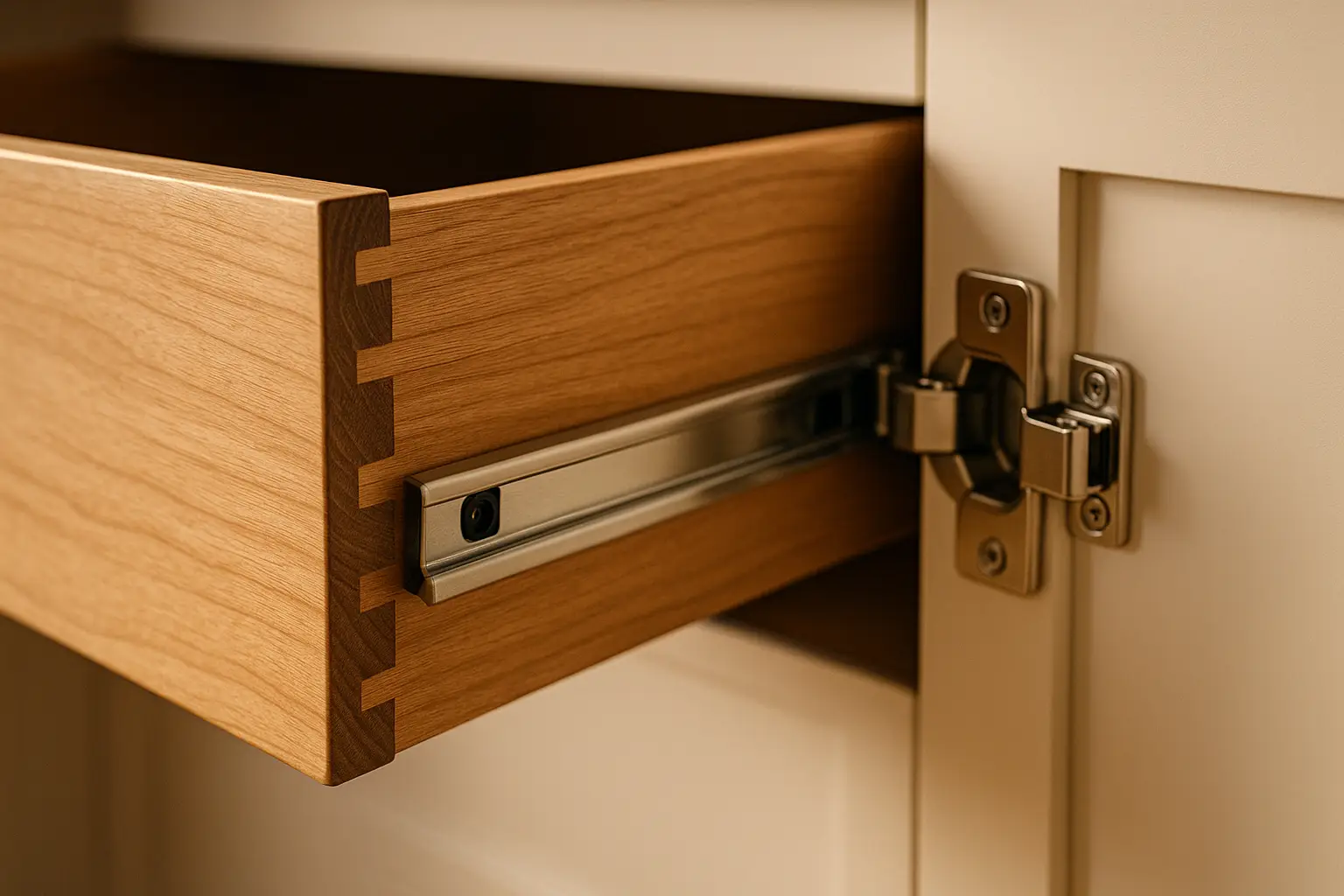
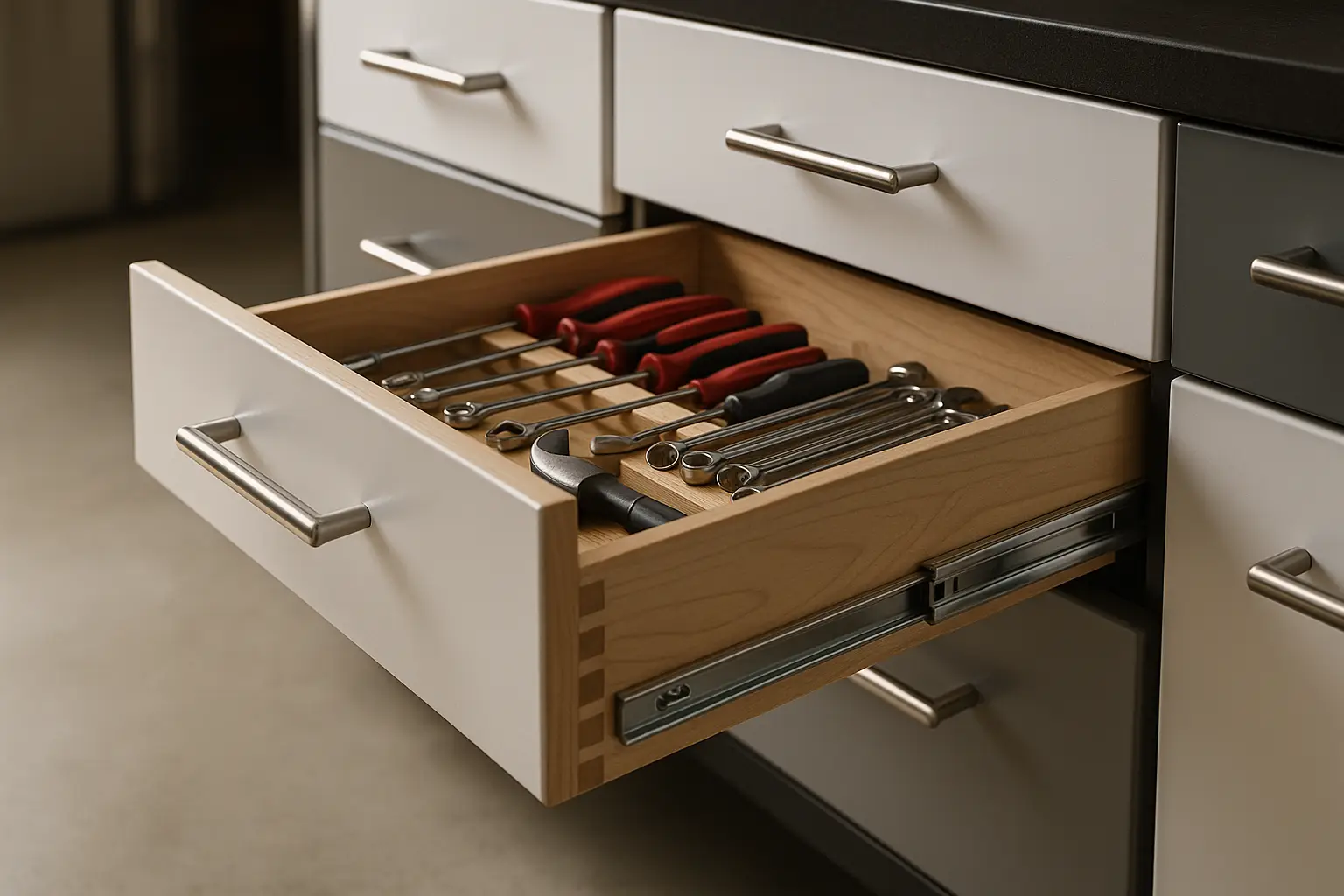
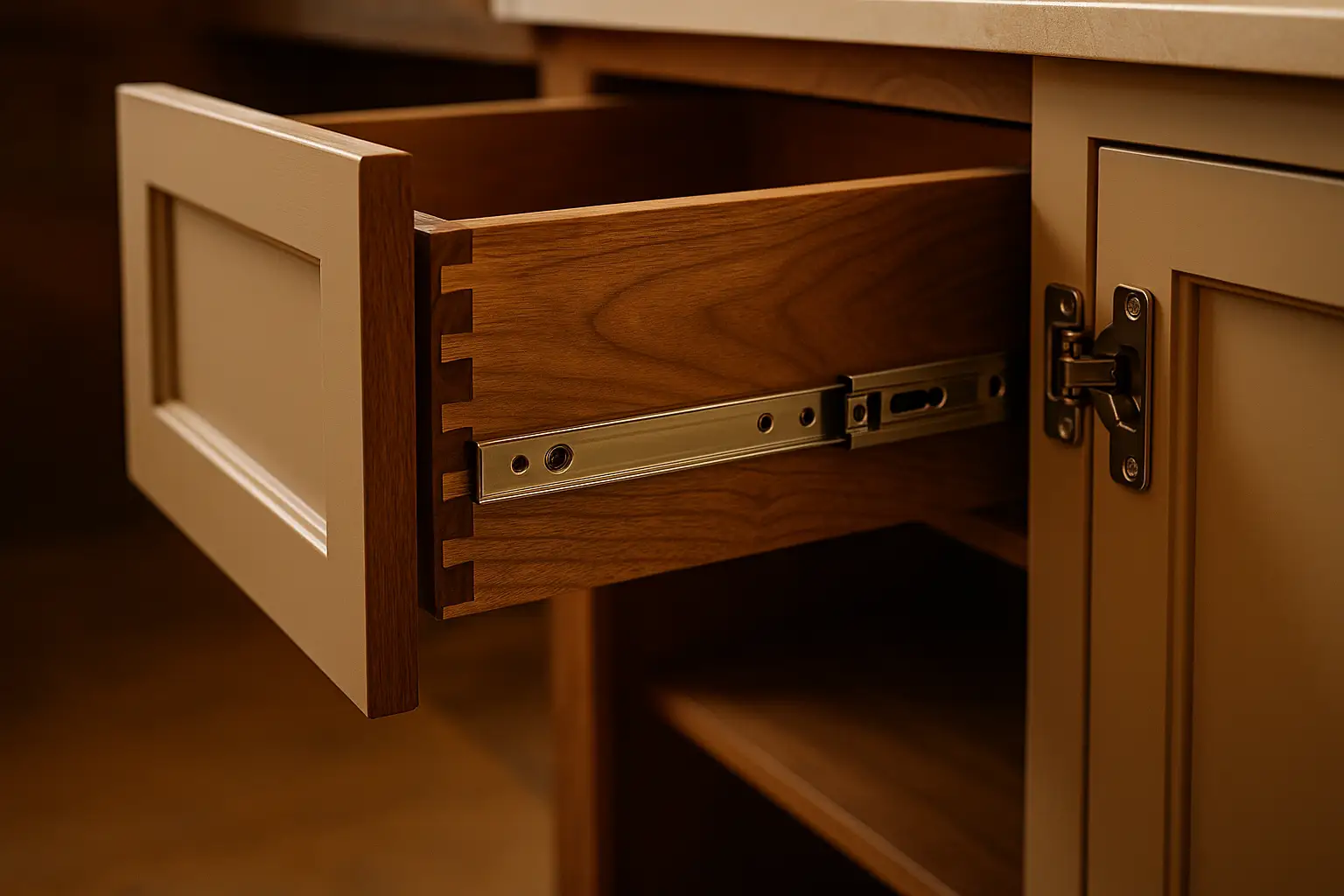
People assume custom always means better construction, but that is not automatically true. Plenty of semi-custom lines use solid plywood boxes, dovetailed solid-wood drawer boxes, full-extension soft-close slides, and concealed hinges rated for 100,000 cycles. The materials can be genuinely good. What changes is your ability to specify. With custom work you decide whether the box is 3/4-inch plywood or MDF, whether shelves are adjustable on 32mm boring or fixed, and how the face frame and joinery are handled.
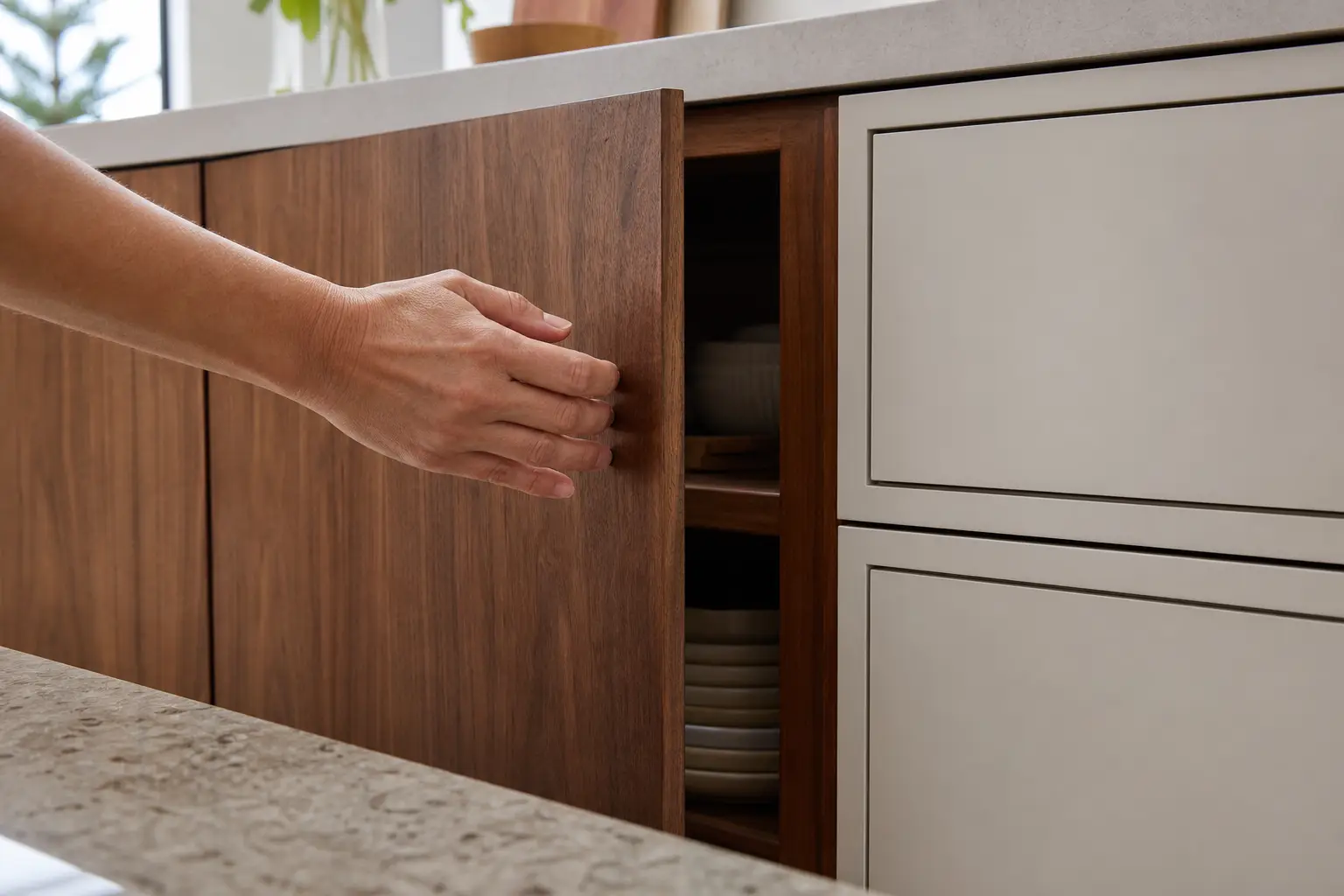
Semi-custom often locks certain things: interior finish color, toe-kick height, or the way corners are managed. If those defaults suit you, there is no reason to pay more. The moment you need a 15-inch-deep cabinet to clear a radiator, a full-height pantry sized to an awkward alcove, or matched grain across a long run of doors, custom is where those requests stop being upcharges and start being standard practice. We build locally in San Jose partly so those one-off requests do not add weeks to the schedule.
Finishes, Materials, and Matching Real Rooms
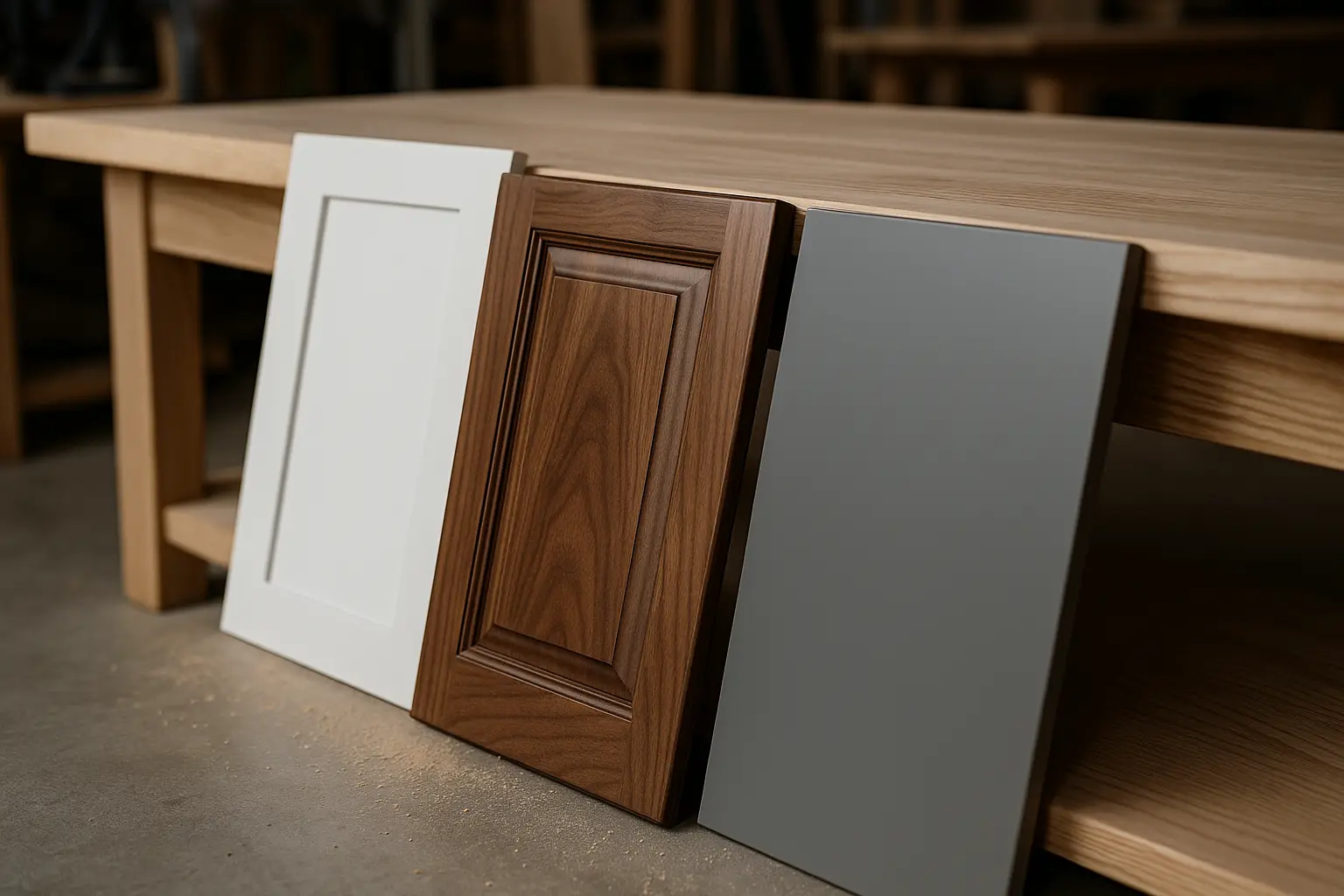
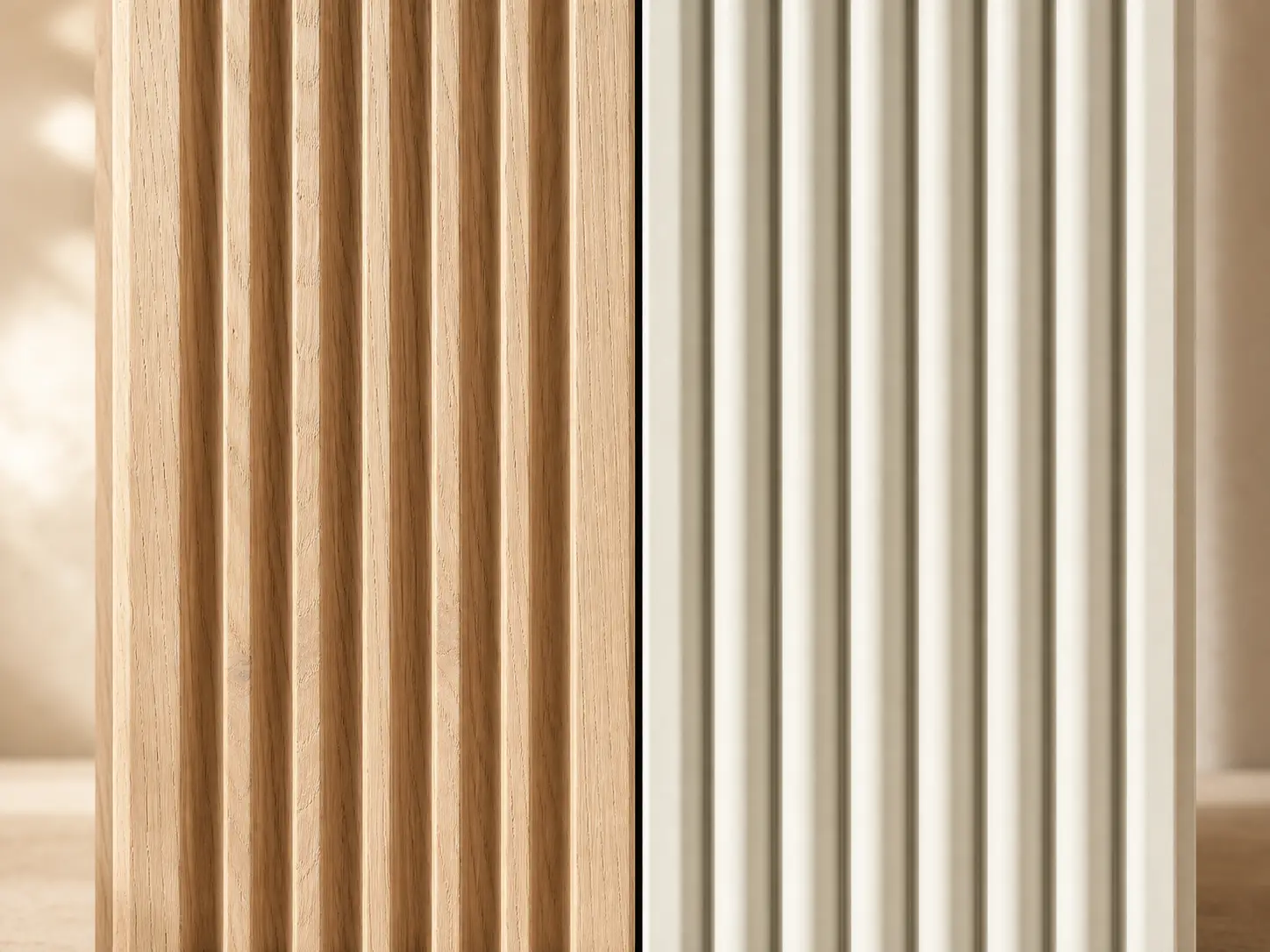
Finish options are one of the clearest dividing lines. Semi-custom catalogs typically offer a set of stains and painted colors, sometimes 30 to 60 choices, applied in a controlled factory line. That consistency is a real advantage: every door in the batch matches. Custom shops can match a specific paint color, replicate an heirloom stain, or run a specialty finish like a rubbed-through glaze, but you should expect a sample and sign-off step.
Wood species follows the same pattern. Semi-custom lines usually stock maple, oak, cherry, and paint-grade options. Custom lets you specify walnut, rift-cut white oak, vertical-grain fir, or whatever the design calls for, and it lets you control how the grain reads across a wall. For open Bay Area floor plans where the kitchen flows into a living space, that grain and color control often matters more than homeowners expect, because the cabinetry becomes furniture you see from the couch.
Cost, Lead Time, and Making the Call
Semi-custom generally costs less than full custom, and that gap widens as you add modifications. Once you are stacking on depth changes, custom sizing, and upgraded interiors, a heavily modified semi-custom kitchen can approach custom pricing without the full flexibility, which is worth checking before you commit. Lead times vary by shop and by how much is being changed. Stock and RTA can be quick; national semi-custom lines often run 6 to 10 weeks; custom depends entirely on the manufacturer's queue.
Because American Built Cabinets manufactures in San Jose rather than shipping from out of state, our typical lead time runs around three weeks, which surprises people who assume custom always means waiting months. A good rule: choose semi-custom when your layout is close to standard and you like the catalog options, and choose custom when your space is irregular, your finish is specific, or the cabinetry has to integrate with existing millwork. For many Peninsula and South Bay remodels, the deciding factor ends up being the room itself, not the budget.
FAQ
Q1: Are semi-custom cabinets lower quality than custom?
A1: Not necessarily. Many semi-custom lines use plywood boxes, dovetailed drawers, and soft-close hardware that match custom construction. The difference is flexibility in sizing, materials, and finish, not automatically the build quality. Always ask what the box, drawer box, and hardware are actually made of before comparing.
Q2: When is custom worth the extra cost?
A2: Custom pays off when your kitchen has non-standard dimensions, awkward alcoves, or existing millwork you need to match, or when you want a specific wood species, grain layout, or paint color. If you find yourself adding many modifications to a semi-custom order, the price can approach custom anyway, so it is worth pricing both.
Q3: How much longer does custom take to build?
A3: It depends on the shop, not the category. Some custom shops quote several months, but because we manufacture locally in San Jose, our lead time is typically around three weeks. National semi-custom lines often run 6 to 10 weeks once shipping is included.
Q4: Can semi-custom cabinets be modified at all?
A4: Yes, that is what separates them from stock or RTA. You can usually adjust depth, add pull-outs and organizers, upgrade hinges and slides, and pick from a wider finish range. What you generally cannot do is set a fully arbitrary width or specify unusual construction details, which is where custom takes over.
Q5: What hardware should I expect on quality cabinets?
A5: Look for concealed soft-close hinges, full-extension soft-close drawer slides, and solid-wood dovetailed drawer boxes rather than stapled particleboard. These are available in better semi-custom and standard on quality custom work. Hardware is one of the easiest ways to judge whether a cabinet will hold up over decades of daily use.
Q6: Do older Bay Area homes need custom cabinets?
A6: Often, but not always. Homes in San Francisco and older parts of San Jose frequently have out-of-square walls, unusual ceiling heights, and tight footprints that fillers cannot hide gracefully. If your layout is close to standard, semi-custom may fit fine; if it is irregular, custom sizing usually gives a cleaner result.