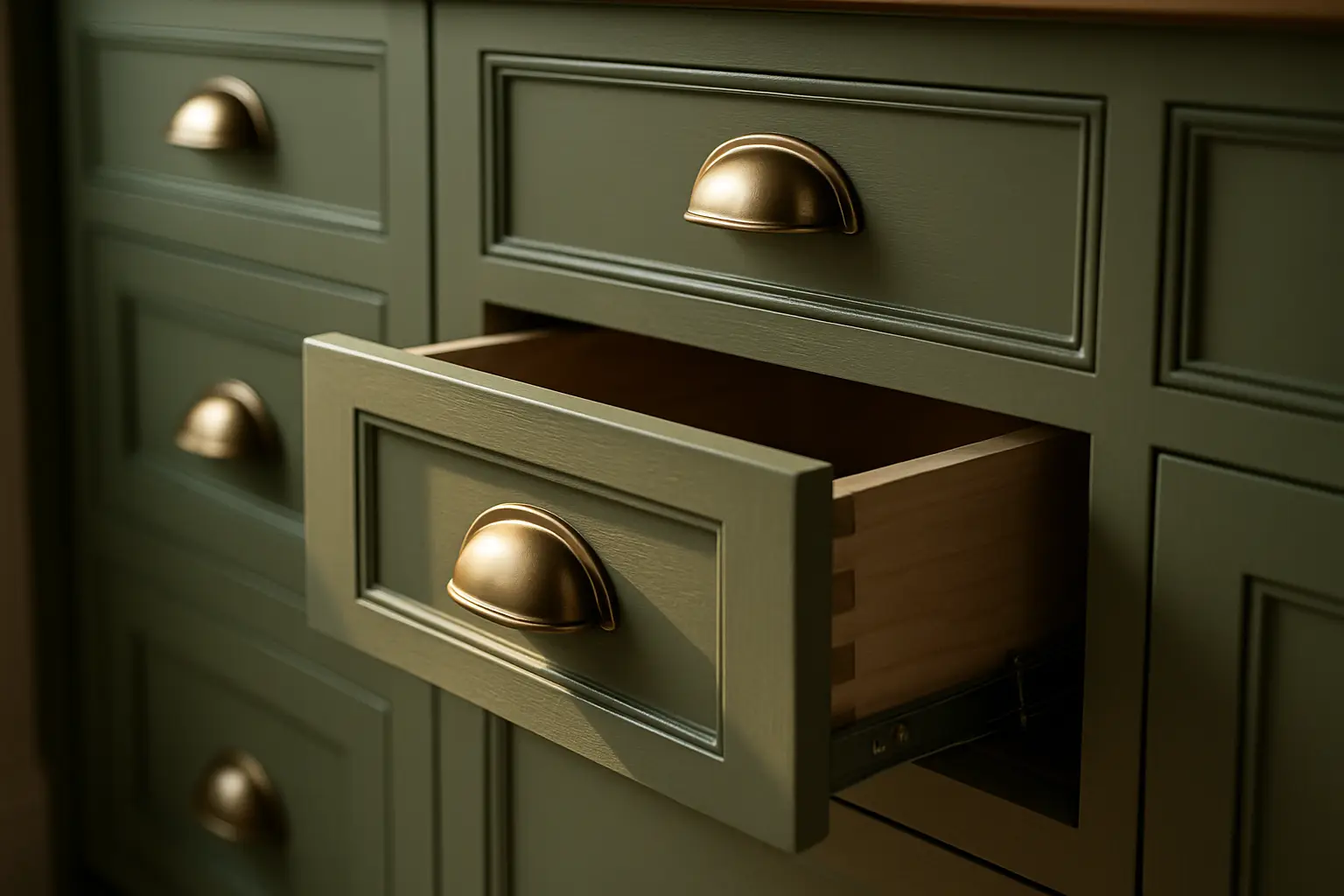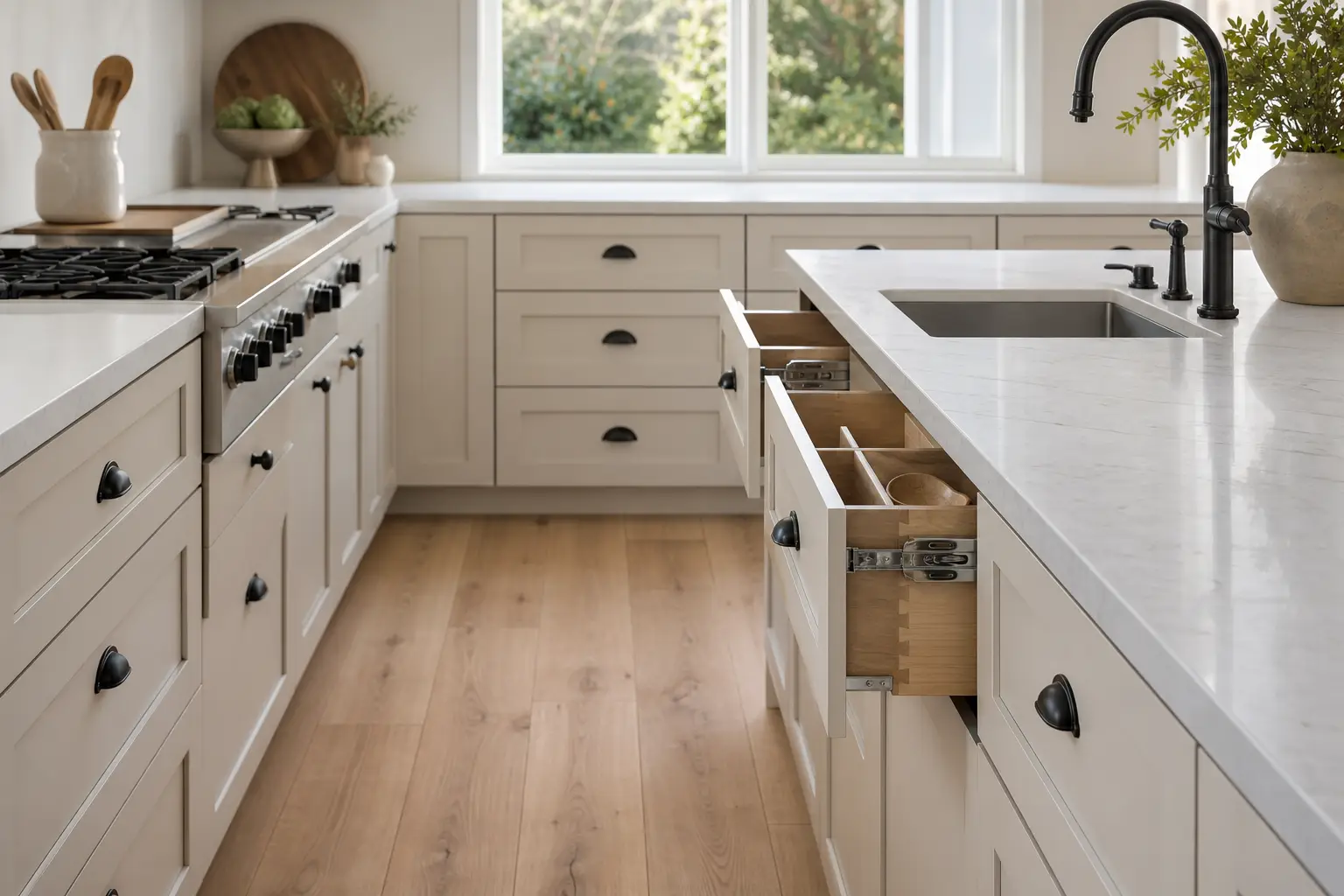
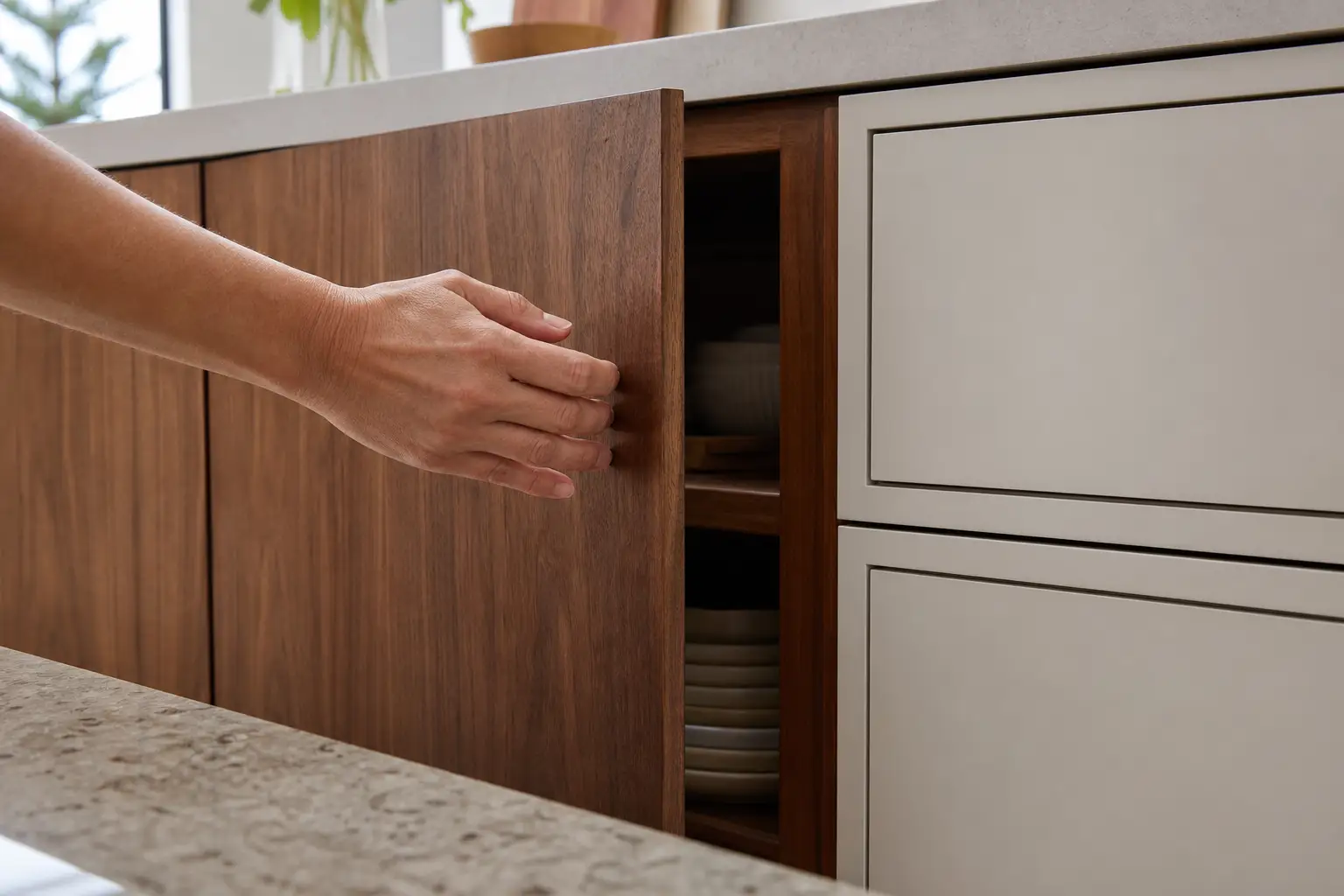
Once you know that frameless cabinets give you more usable space, the next question is harder: does that automatically make framed cabinets the wrong choice for your kitchen? It doesn't. Face-frame construction still wins in specific situations, and picking between the two is really a decision about your home's style, your budget, and how you want the doors to sit. This guide walks Bay Area homeowners in San Jose, San Francisco, and San Mateo through the actual decision, not just the definitions, so you can commit to one path with your eyes open.
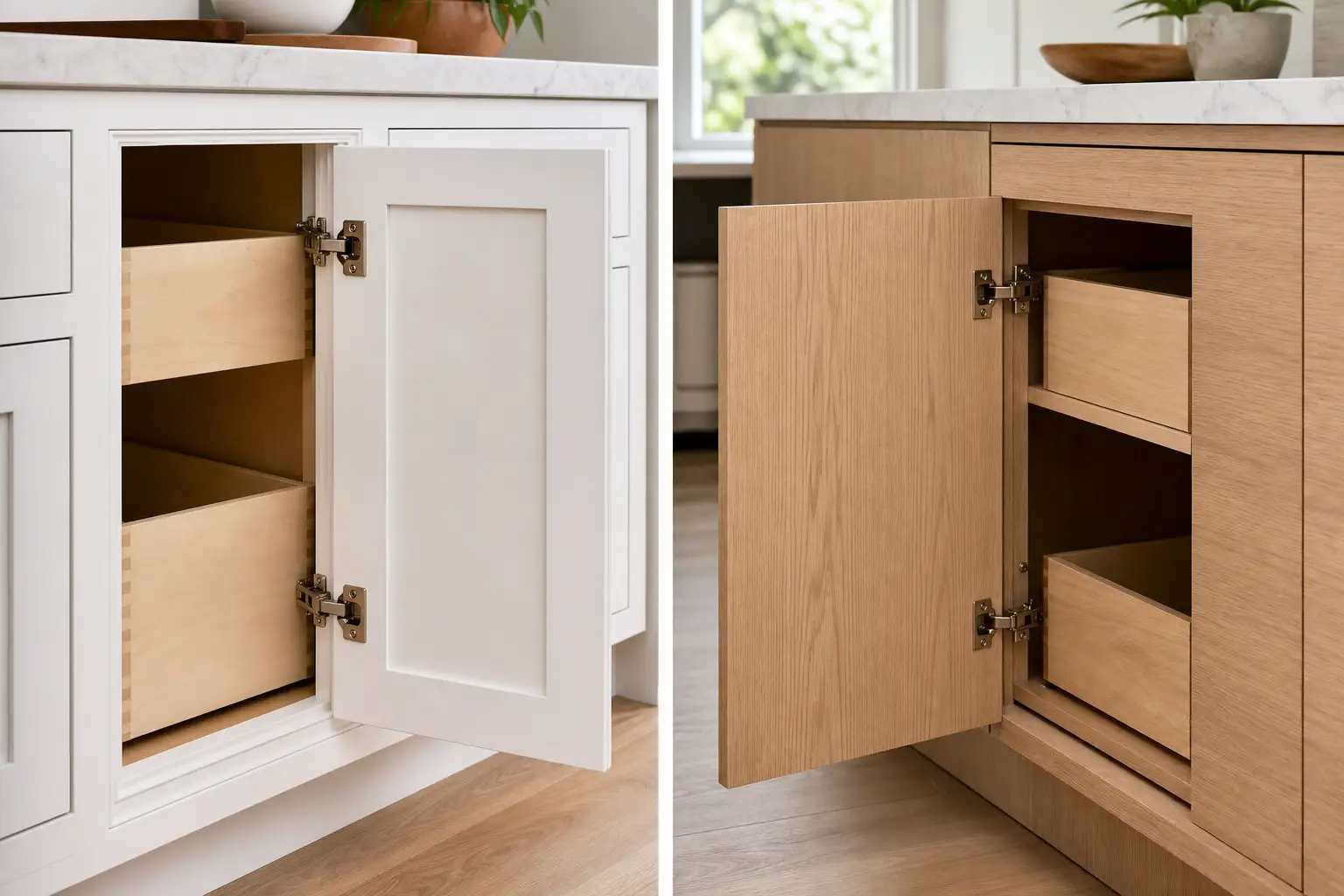
The Real Difference Comes Down to the Front of the Box
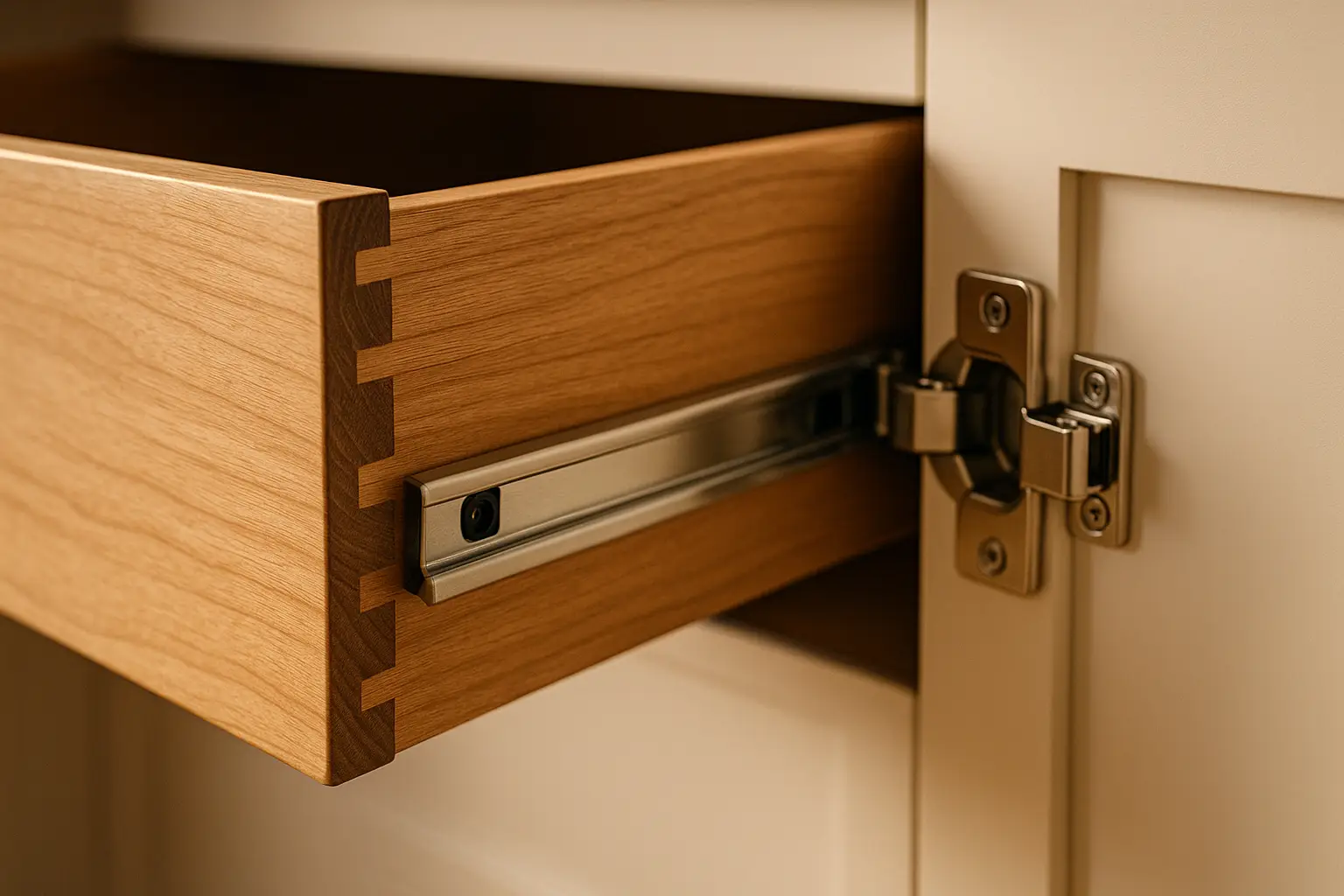
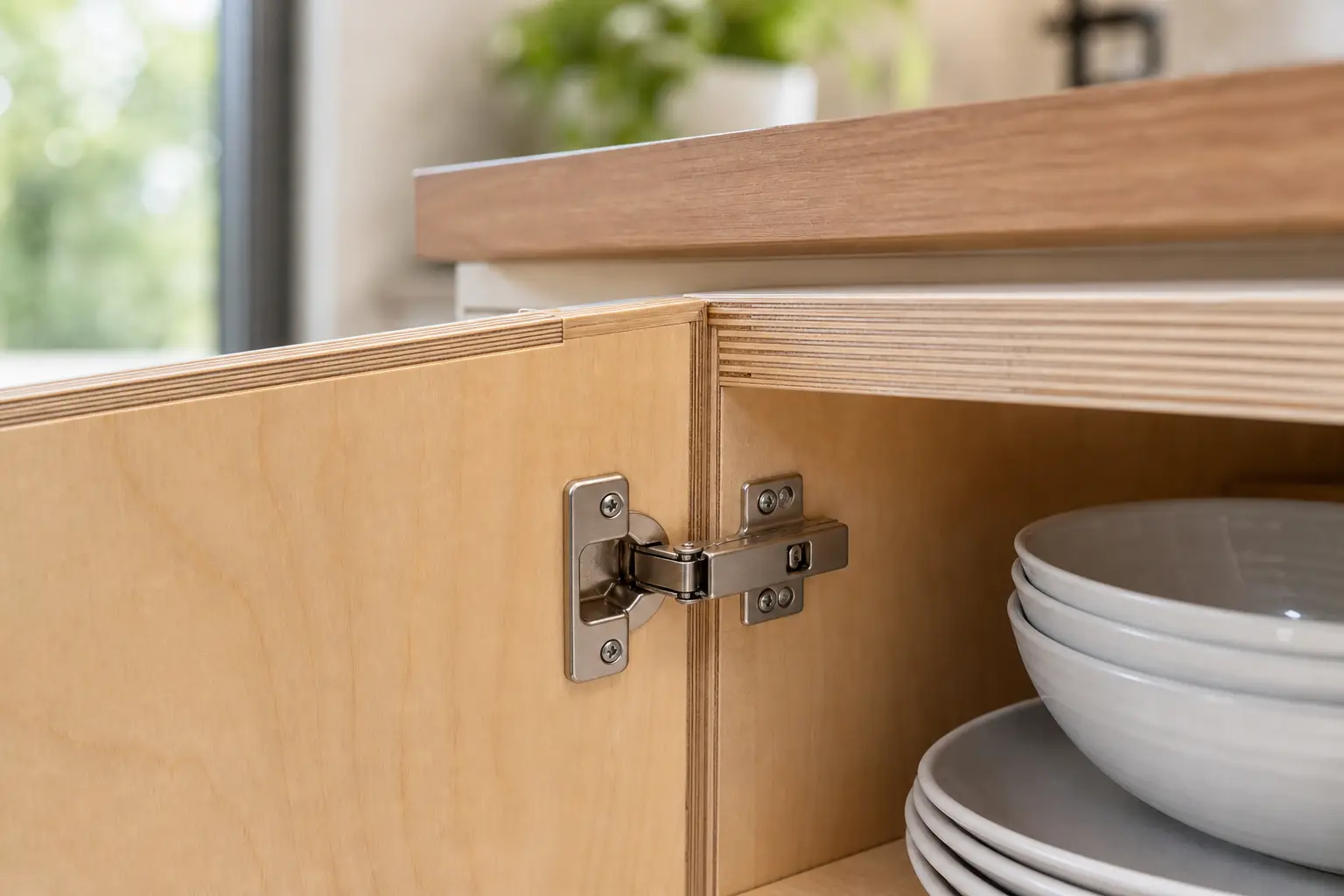
Every cabinet is a box. The question is what covers the front edge of that box and how the door attaches to it. A framed cabinet, also called face-frame construction, has a flat wood frame roughly 1.5 inches wide fastened to the front. The frame stiffens the box and gives the door something to close against. A frameless cabinet skips the frame, so the door mounts straight to the 3/4-inch side panels with cup hinges.
That single structural choice cascades into everything you notice day to day: how wide the openings are, how the doors sit, which hardware fits, and which door styles are even possible. It is not a small detail dressed up as a big one. If you understand the front of the box, you understand the whole decision.
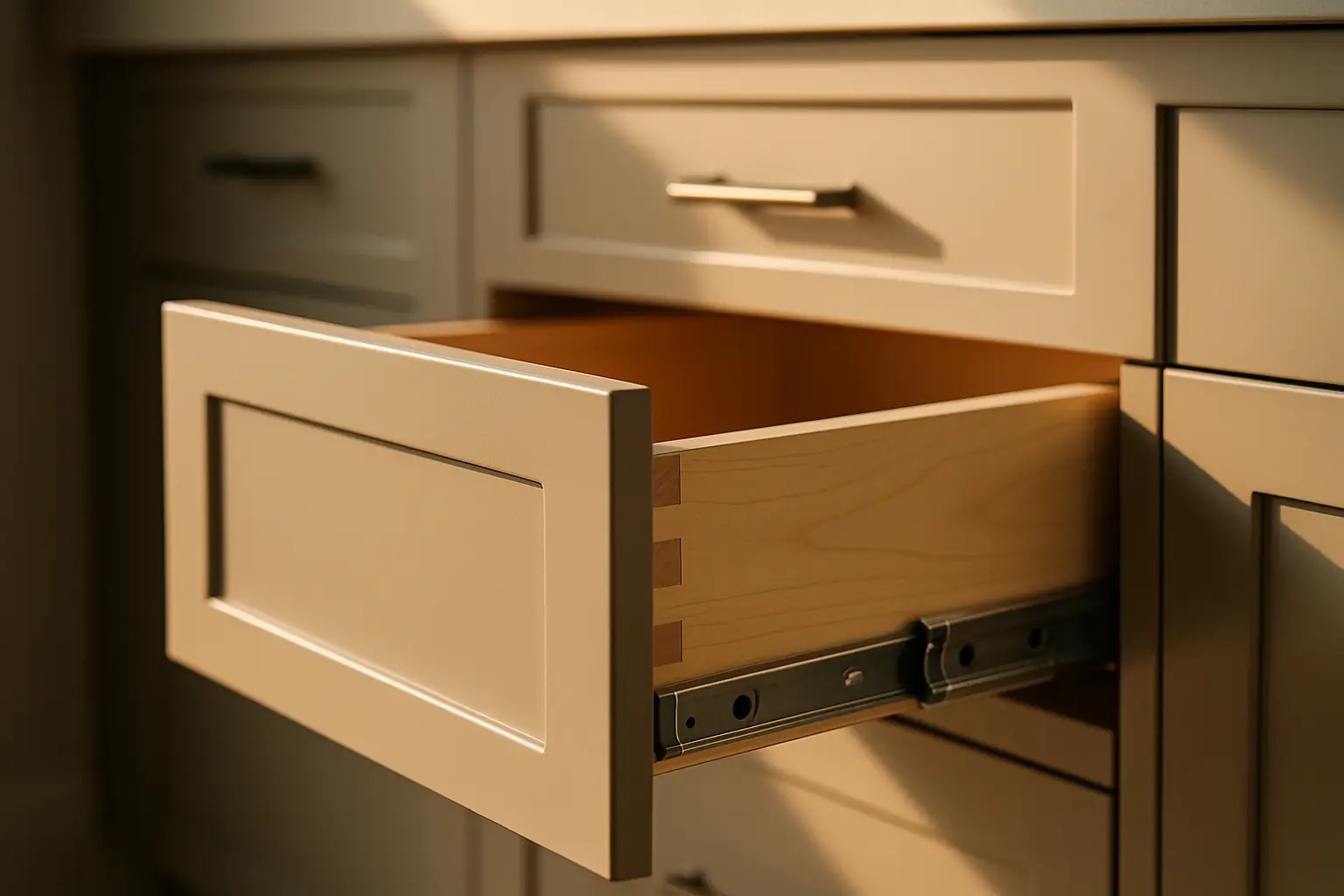
Neither is a budget grade or a premium grade on its own. American Built Cabinets builds both at a high standard in our San Jose shop, from furniture-grade plywood boxes with dovetailed drawers. The label tells you the geometry, not the quality.
Where Framed Cabinets Still Win
Framed construction earns its place for one big reason: it is the only way to get true inset doors. Inset means the door sits flush inside the frame opening rather than resting on top of the box. That flush, furniture-like look is the heart of classic and traditional kitchens, and no frameless cabinet can produce it. If you are restoring the character of an older Bay Area home or want a timeless, built-in-furniture feel, framed is the honest path.
Face-frame boxes are also a little more forgiving during installation. The frame gives the installer material to scribe against a wall that is not plumb, which is common in the older housing stock across San Francisco and the Peninsula. And the frame adds rigidity, so a framed box tolerates thinner side panels without racking, though we do not build to that shortcut.
The tradeoffs are real. The frame narrows each opening, drawer boxes are a bit smaller, and reaching the back corners takes more effort. For a period kitchen or a homeowner who values the inset look above raw capacity, those are easy tradeoffs to accept.
Where Frameless Pulls Ahead
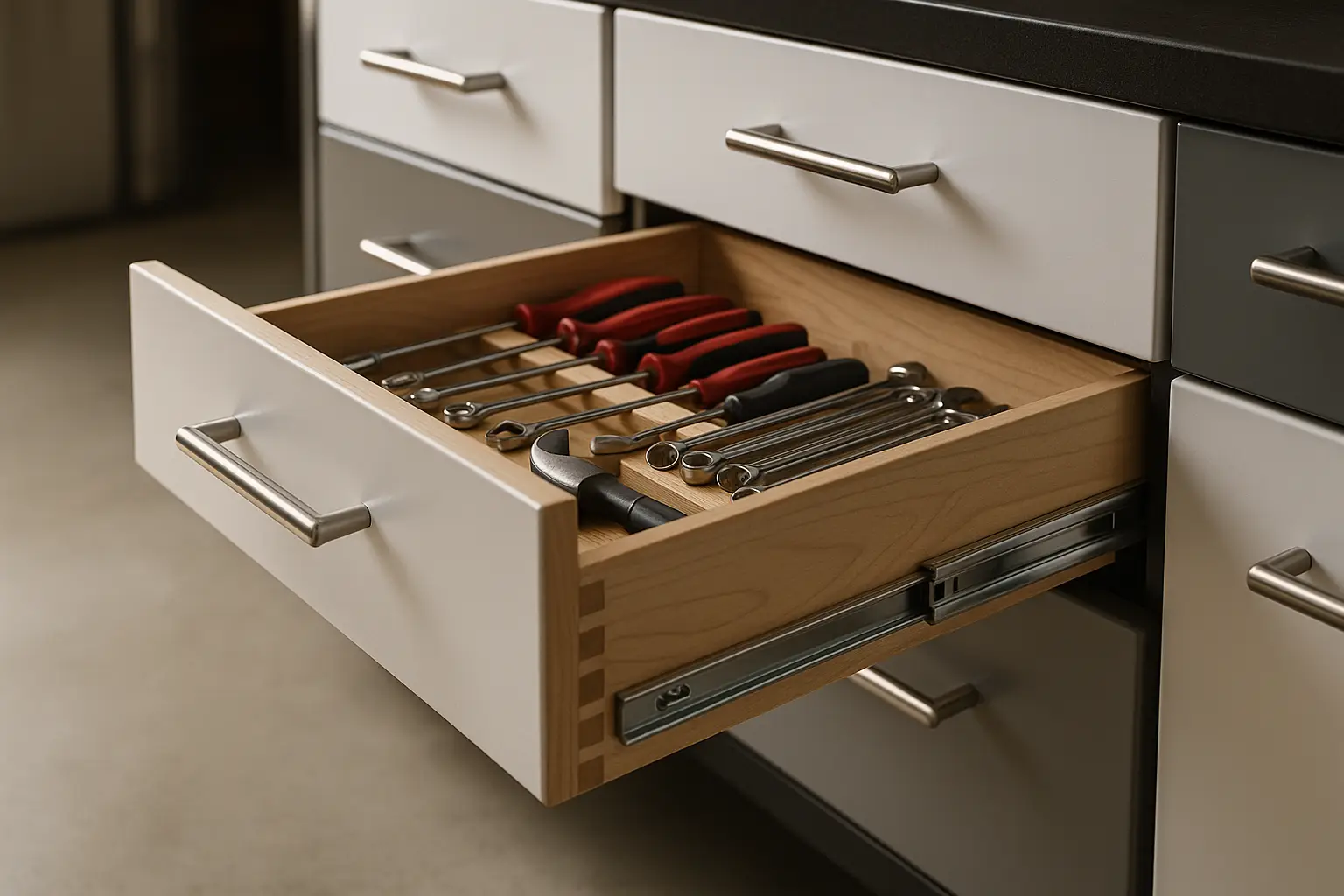
Frameless is the shorter path to a clean, modern kitchen and to maximum interior space. With no frame narrowing the opening, drawers and pull-outs use nearly the full width of the box, and you gain a few inches of usable room across a typical run. Full-overlay doors sit close together with only a narrow reveal, so slab and flat-panel fronts read as a continuous surface. That is the look driving most contemporary Bay Area remodels.
Modern hardware also favors frameless. Soft-close cup hinges and full-extension undermount slides were largely designed around frameless boxes, and interior systems like blind-corner organizers and deep pull-out pantries fit the wider opening better. If your priorities are storage capacity, a crisp architectural look, and the latest organizational hardware, frameless is usually the answer.
What you give up is the inset option and a slightly harder installation in a rough room. The tight reveals that make frameless look sharp also mean any misalignment shows, so professional hanging matters more.
A Simple Way to Decide
Start with the look, because that narrows the field fastest. If you want flush inset doors or a classic period kitchen, choose framed and stop there. If you want a clean contemporary run with slab or full-overlay Shaker doors, lean frameless. Most Bay Area remodels going in today land on frameless for that reason, but a meaningful share of character homes are better served by framed.
Then check your priorities. Rank storage capacity, budget, door style, and wall condition. If squeezing every inch of interior space matters most, frameless wins. If the flush inset look or a forgiving fit in an old kitchen matters most, framed wins. Budget rarely decides it, because the door style and finish move the price more than the frame does.
Finally, remember you can mix. It is common to run frameless base and wall cabinets for capacity while using a framed, inset piece as a furniture-style island or hutch. When you build custom, the room does not force the choice on you, and our team will walk you through which construction fits each part of the plan before anything is cut.
FAQ
Q1: Is framed or frameless better for an older Bay Area home?
A1: It depends on the look you want, not the age of the house. Framed cabinets suit a classic or period style and are the only way to get true inset doors, which read as traditional. Frameless suits a clean, contemporary remodel. Both can be built to fit the out-of-square walls common in older San Francisco and Peninsula homes when they are custom made.
Q2: Do framed cabinets cost less than frameless?
A2: Not reliably. The face frame adds material and labor, so a basic framed box is not automatically cheaper. Price is driven more by the door style, finish, and box material than by framed versus frameless construction. Inset framed doors, which need precise fitting, are usually the most expensive option of all.
Q3: How much storage do you lose with framed cabinets?
A3: The face frame is typically 1.5 inches wide, so it narrows the opening on each cabinet. On a run of base cabinets that adds up to a few inches of drawer width and slightly harder access to back corners. If maximizing every inch of interior space is your top priority, frameless has the edge.
Q4: Can I get inset doors with frameless cabinets?
A4: No. True inset doors sit flush inside the cabinet opening, and that requires a face frame for the door to close against. If you love the flush, furniture-like inset look, you need framed construction. Frameless cabinets use full-overlay doors that sit on top of the box with a narrow reveal between them.
Q5: Which style hides out-of-level walls better?
A5: Framed cabinets are slightly more forgiving because the face frame gives you a bit of material to scribe and trim against a wavy wall. Frameless doors show tight, even reveals, so any misalignment is more visible. A skilled installer can hang either one cleanly, but framed can be quicker to fit in a rough old kitchen.
Q6: How long does a custom order take in the Bay Area, framed or frameless?
A6: Both run about three weeks in our San Jose shop once the design and finishes are locked in. Construction style has little effect on lead time. Inset framed doors can add a few days because they need extra fitting, and we confirm the exact schedule when your final drawings are approved.