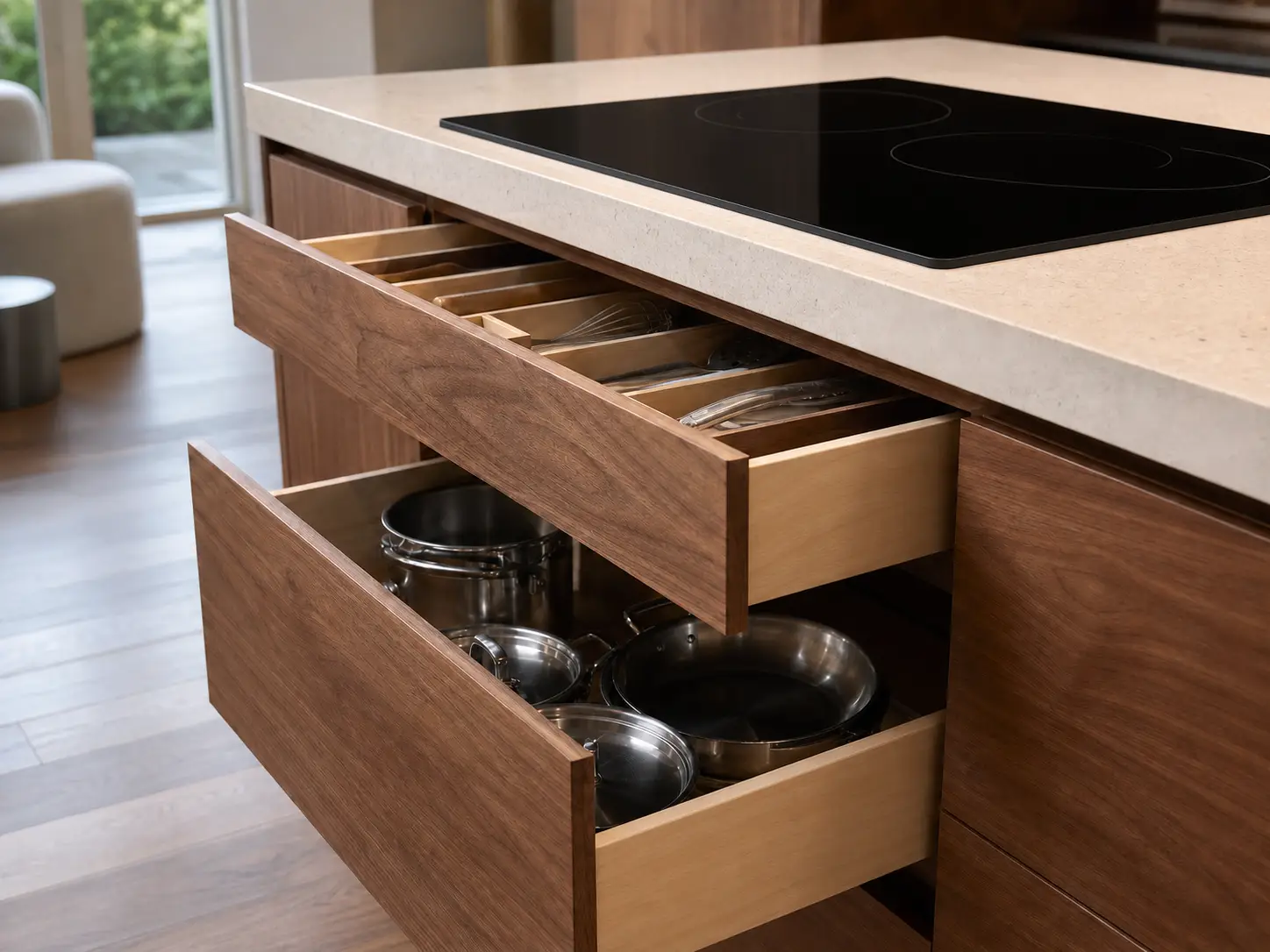
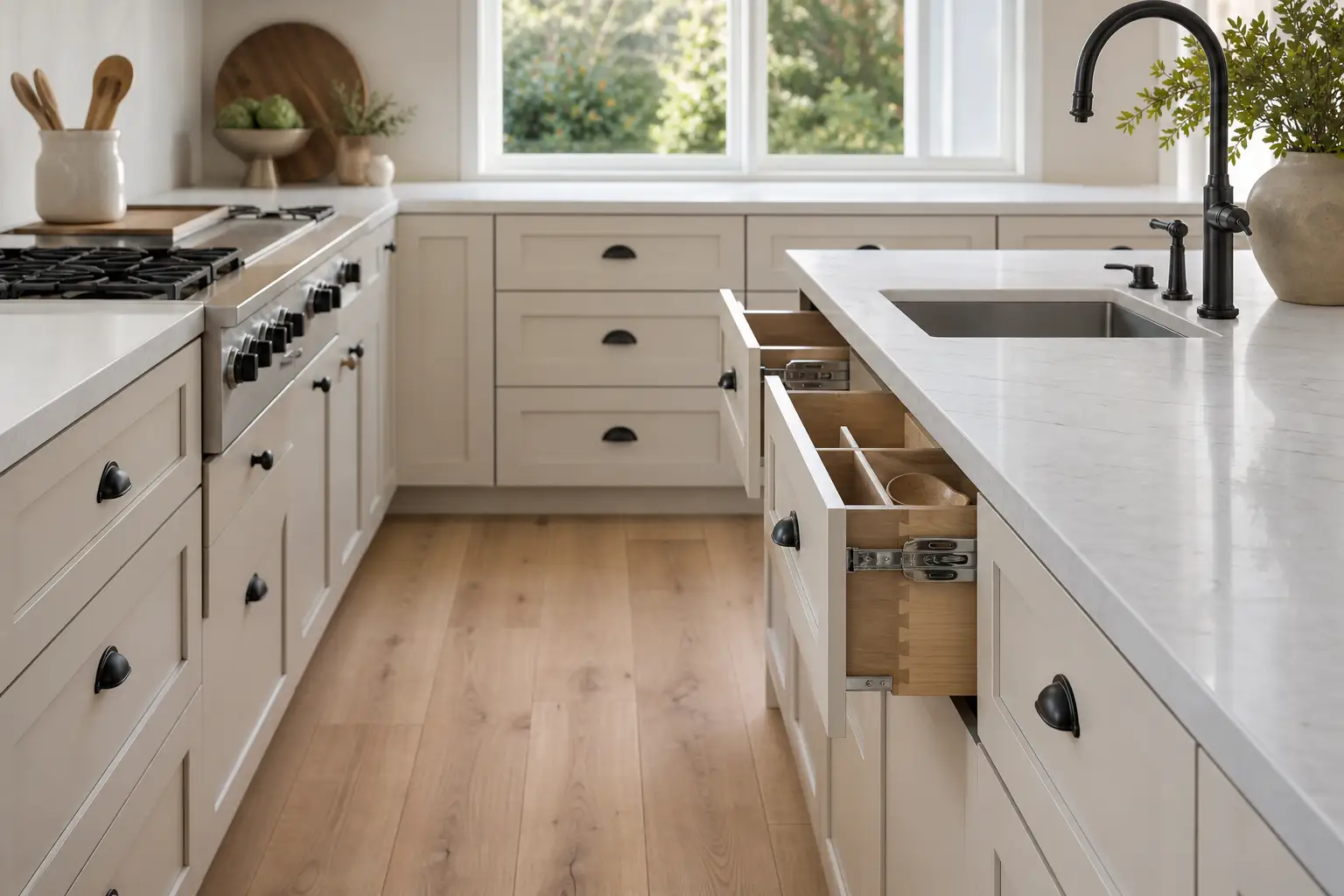
When homeowners and builders in San Jose, San Francisco, and San Mateo ask how long custom cabinets take, they are usually surprised by two things: how much of the timeline happens before any wood gets cut, and how wide the range is depending on who builds them. Imported and national semi-custom lines can run two to four months. A local shop like ours turns most projects in about three weeks of production. This article walks through what actually happens at each stage, why the numbers vary so much, and what you can do to keep a cabinet project on schedule.
The Timeline Has Two Halves, and Most People Only Count One
Ask "how long do custom cabinets take" and the honest answer starts with a clarification: from what point? The manufacturing clock and the project clock are different things. The project clock starts the day you decide to remodel and includes design, measuring, and every material decision. The manufacturing clock starts only once that design is finalized and the order is released to the shop. Confusion between the two is why people quote timelines from three weeks to four months and all sound right.
The design half is variable because it depends on decisions, not machinery. Layout, door style, finish color, and hardware all have to be settled, and that can take a few days or a few weeks depending on how ready the homeowner is. The manufacturing half is more predictable, because it is a physical process with known stages. Understanding both halves lets you plan realistically instead of being surprised near the end of a remodel when cabinets turn out to be the long pole.
Before Anything Gets Cut: Design and Measurement
Nothing goes into production until the design is locked and the space is measured accurately. This front-end work protects the whole project, because a cabinet built to a wrong dimension is a cabinet rebuilt. The stage covers the layout, confirming cabinet placement, appliance sizes, and clearances; the material and finish selection, choosing box material, door style, paint or stain, and hardware; and the field measurement, capturing exact wall dimensions, out-of-plumb conditions, and utility locations.
This stage matters more in the Bay Area than in newer housing markets because so much of the stock is old. San Francisco Victorians and Peninsula homes from the mid-century rarely have plumb walls or square corners, so measurements have to account for real conditions, not nominal ones. Getting this right up front is exactly what lets a custom shop build cabinets that fit a crooked room, but it means the measuring and design phase deserves care rather than a rush. Most projects settle this half in one to three weeks, and the pace is set by how quickly the homeowner or builder makes final calls.
Inside the Shop: What the Three Weeks Actually Buy
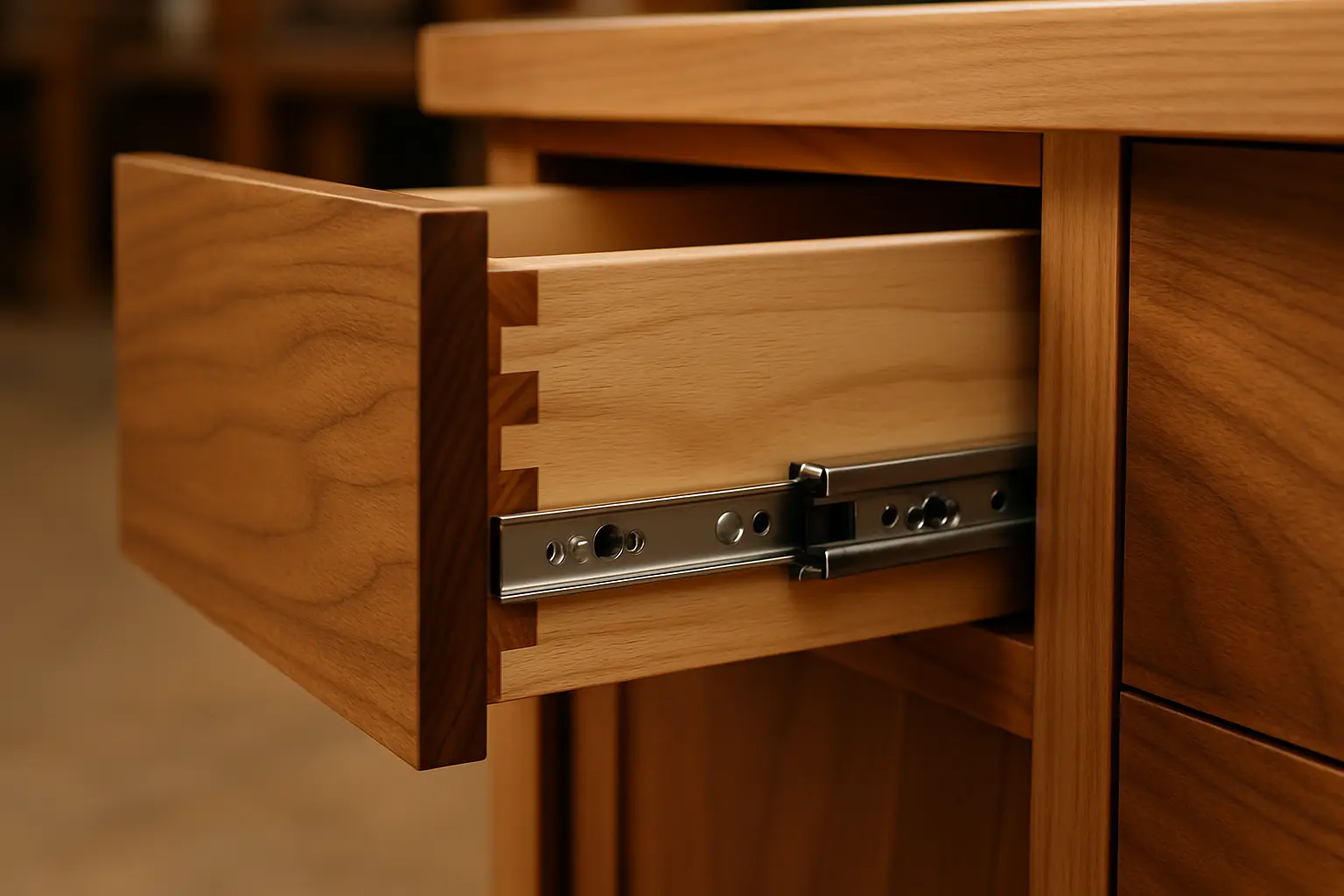
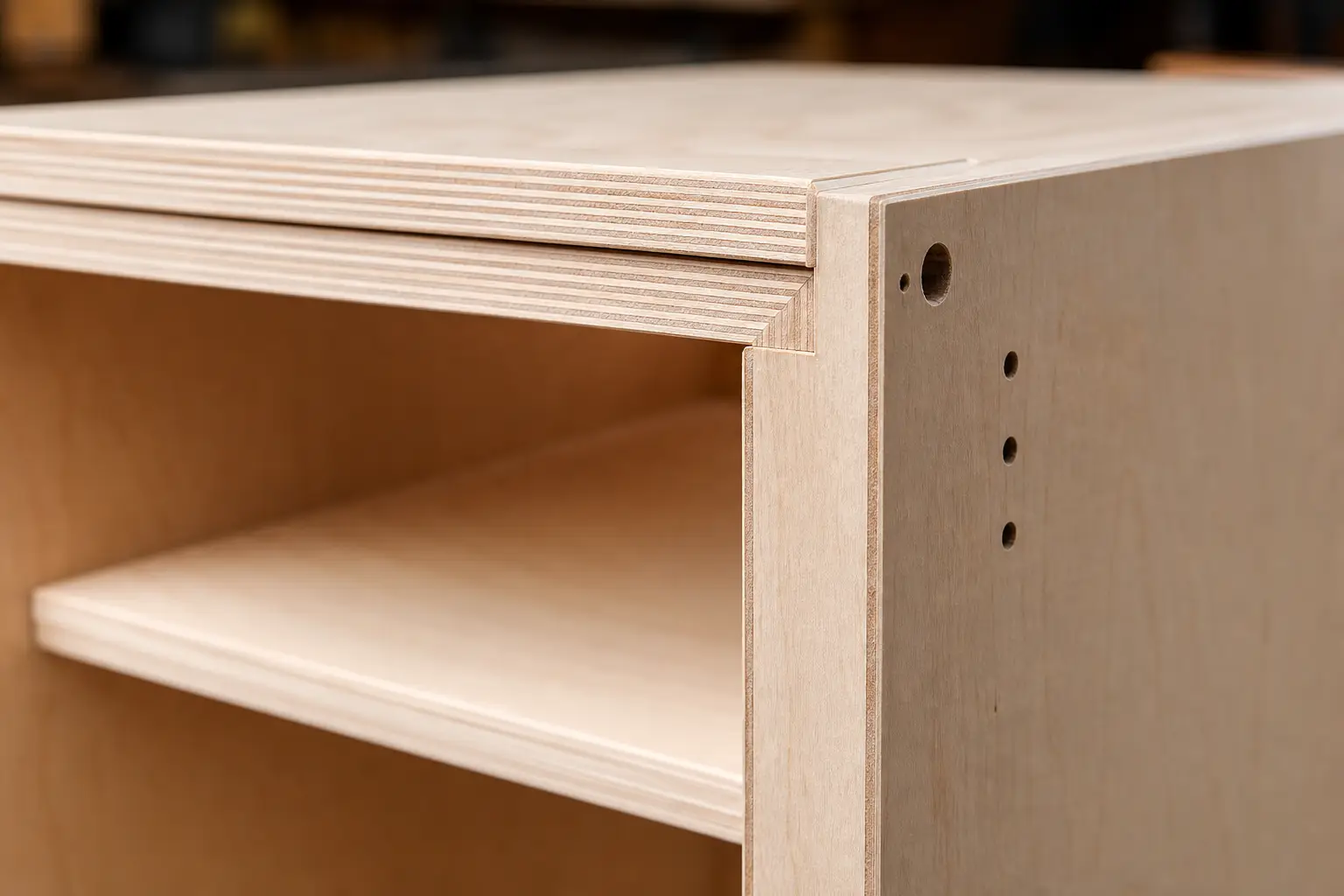
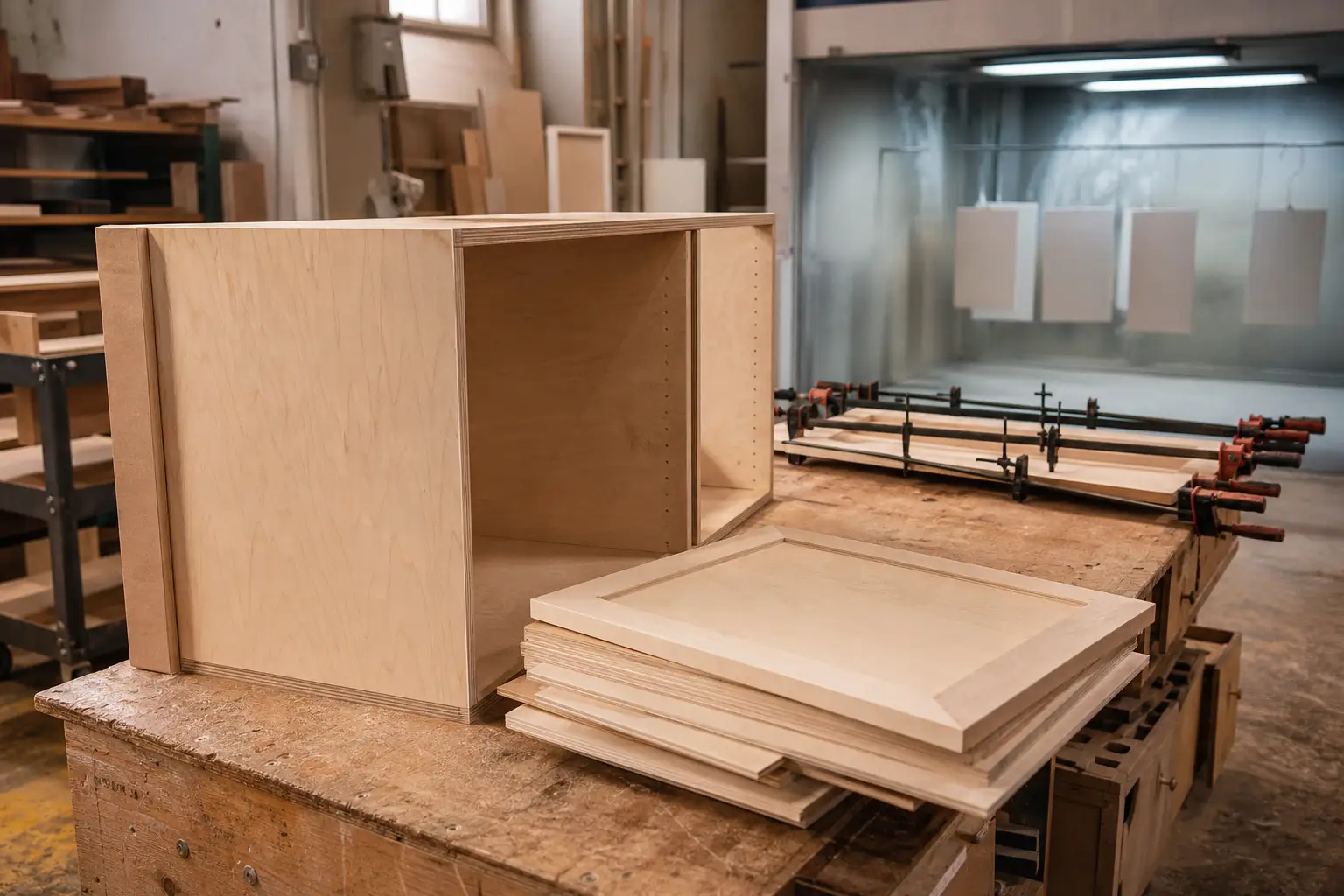
Once the design is released, the manufacturing clock starts, and for us that clock runs about three weeks. That window is not one long task; it is a sequence of stages, each with its own real duration. First comes material preparation and cutting, where furniture-grade plywood cases and door components are cut to the exact dimensions from the approved plan. Then box assembly, where the cases are joined, backs and hanging rails installed, and everything squared. Doors and drawer boxes are built in parallel, including dovetailed maple or Baltic birch drawer boxes.
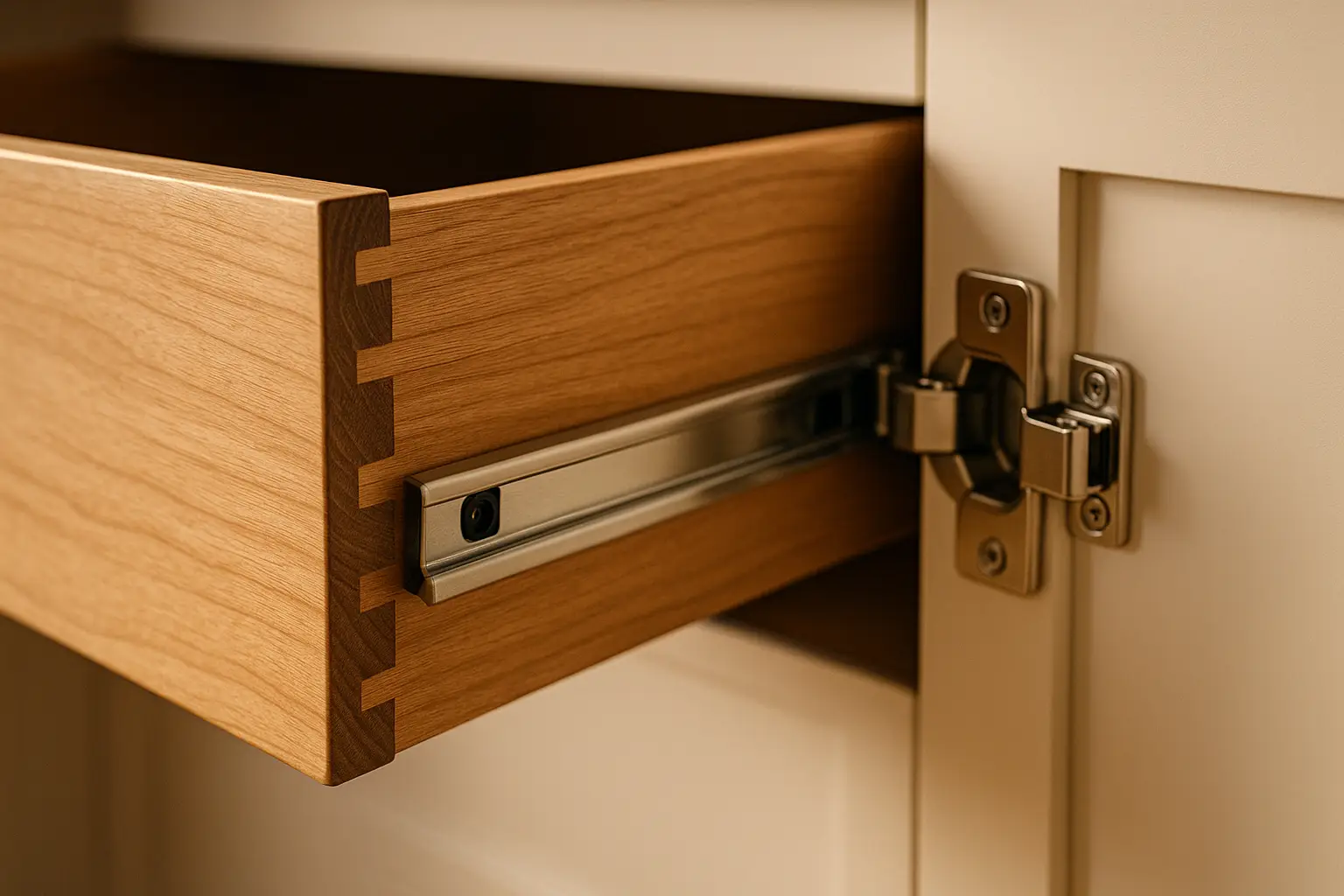
Then comes finishing, which is usually the longest single stage for quality cabinets. Paint and stain are applied, cured, and often built up in multiple coats with sanding between them. This is the part that cannot be safely rushed. A finish that is not given time to cure properly will chip, peel, or fail early, and it is one of the most common reasons cheap or hurried cabinets look tired within a couple of years. Finally, hardware installation and quality control: soft-close hinges and full-extension undermount slides are fitted and adjusted, doors are aligned, and every box is checked before it leaves. The three weeks buys a sequence that respects the finish curing and the inspection, not a corner-cutting sprint.
Why Local Production Is So Much Faster Than Imported
The gap between a local three week build and a two-to-four-month imported timeline is not about how fast anyone works. It is about the pipeline. National semi-custom and imported cabinet lines produce in large factory batches on a fixed schedule, so your order waits for a production slot, then ships a long distance, and often sits in regional distribution before it reaches your project. Every one of those steps adds weeks, and none of them involve building your cabinets any better.
Manufacturing locally removes the entire shipping and warehousing tail. American Built Cabinets cuts, assembles, finishes, and delivers within the same region, so the only time that passes is the time it takes to actually build the cabinets. Local production has two more schedule benefits beyond raw speed. Revisions are faster, because a correction is handled in the same shop rather than reordered from a distant factory. And staged delivery is realistic, so on a larger or multi-unit project we can time releases to the construction schedule instead of delivering everything at once. For builders on a tight sequence, that predictability is often worth more than the speed itself.
Keeping Your Project on Schedule
Most cabinet delays are not manufacturing delays. They are decision delays. The pattern is consistent: a project stalls because the finish color is not chosen, or the layout changes after material is cut, or field dimensions come in late or wrong. The manufacturing stage is the predictable part; the human decisions around it are what slip. So the single most useful thing a homeowner or builder can do is finalize choices early and completely, then avoid changing them once production begins.
Concretely, that means locking the door style, finish, and hardware before releasing the order, providing accurate field measurements, and resisting mid-build changes, which force parts to be rebuilt and reset the clock. Remember too that installation and countertops sit downstream of cabinet delivery. Countertop templating happens after cabinets are set, so the stone timeline stacks on top of the cabinet timeline, and planning for it up front prevents a scramble at the end. With decisions locked and measurements clean, local production holds reliably in the three week range, and the whole project stays on the schedule you planned around instead of drifting.
FAQ
Q1: How long does it take to build custom cabinets from start to finish?
A1: Plan for the full timeline in two parts. Design, measurement, and material selection typically take one to three weeks depending on how quickly decisions are made. Actual manufacturing in our local San Jose shop then runs about three weeks. So from a finalized design, most projects are built in roughly three weeks, with the earlier design phase on top of that.
Q2: Why do imported cabinets take so much longer than local ones?
A2: Distance and batching. Imported and national semi-custom cabinets are produced in large factory runs on a fixed schedule, then shipped long distances and often held in distribution before reaching you. That pipeline commonly adds up to two to four months. A local shop cuts, assembles, finishes, and delivers in the same region, which removes the shipping and warehousing delay entirely.
Q3: What is the slowest part of building custom cabinets?
A3: For quality cabinets, finishing is usually the longest single production stage. Paint and stain need proper application, curing, and often multiple coats with sanding between them, and rushing it produces a finish that fails early. Design decisions can also stall a project, so the slowest part overall is frequently the customer's material and layout choices rather than the shop work.
Q4: Can custom cabinets be built faster than three weeks?
A4: Sometimes, but there are limits worth respecting. Box construction can move quickly, but finish curing and quality control take real time and cannot be safely compressed much. We can stage and prioritize a phase of a larger project, but a rushed finish is the most common cause of early cabinet problems, so we hold to the schedule that produces a durable result.
Q5: Does a custom cabinet timeline include installation?
A5: No, the roughly three week production window is manufacturing only. Installation is a separate step scheduled after delivery and usually takes one to a few days for a typical kitchen, depending on size and complexity. On a remodel, cabinet install also has to coordinate with countertop templating, which happens after cabinets are set.
Q6: How can I keep my cabinet project on schedule?
A6: Make decisions early and completely. The most common delays come from unfinalized layouts, late finish selections, and changes after production starts. Confirm your door style, finish, hardware, and dimensions before releasing the order, provide accurate field measurements, and avoid mid-build changes. With decisions locked, local production stays reliably in the three week range.