
A lot of Bay Area showrooms say "custom" and "local," but the cabinets themselves may have been cut, assembled, and finished thousands of miles away, then trucked in and stickered with a local brand. That distinction matters for lead times, fit, and who answers the phone when a hinge fails in year three. This guide shows you how to separate a real in-house manufacturer from a reseller, using questions and details you can actually verify before you sign anything in San Jose, San Francisco, or on the Peninsula.

Why "Custom" and "Local" Get Used Loosely
There is no rule stopping a dealer from calling imported, semi-custom boxes "custom cabinetry made for Bay Area homes." Plenty of companies buy pre-built RTA (ready-to-assemble) cabinets from overseas or out-of-state factories, assemble them in a warehouse, and market the result as local craftsmanship. The cabinets are fine for some budgets, but you are paying custom prices for catalog sizing.
The practical difference comes down to who controls the cut list. A true manufacturer takes your field measurements and builds boxes to those exact dimensions, including odd fillers, deep drawers, and non-standard heights. A reseller works from fixed increments, usually 3-inch jumps, and fills the gaps with trim. When someone tells you a 34.5-inch base is impossible or adds weeks, that is often a sign the boxes are coming from a distant factory, not a shop across town.
Questions That Separate Makers From Resellers
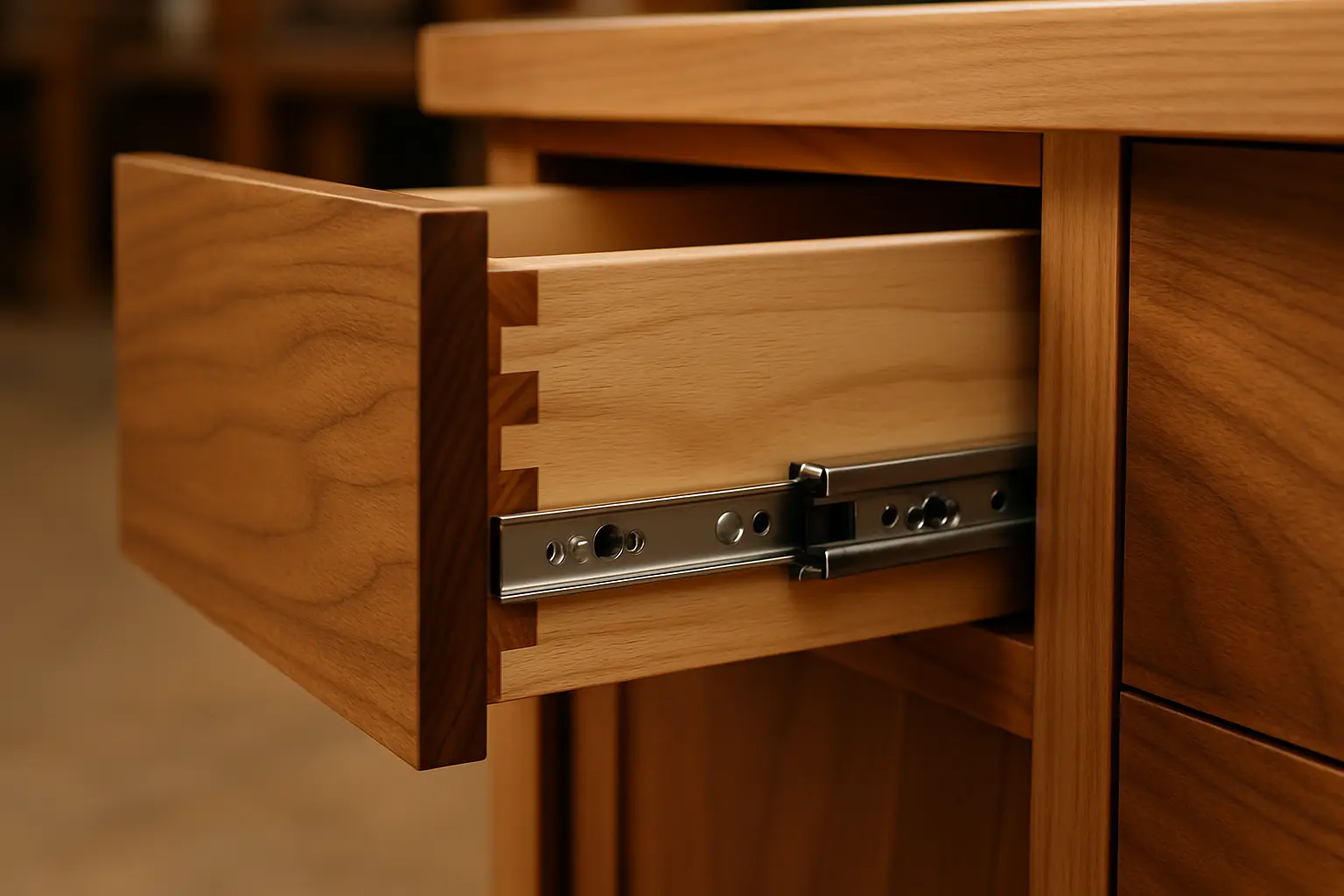
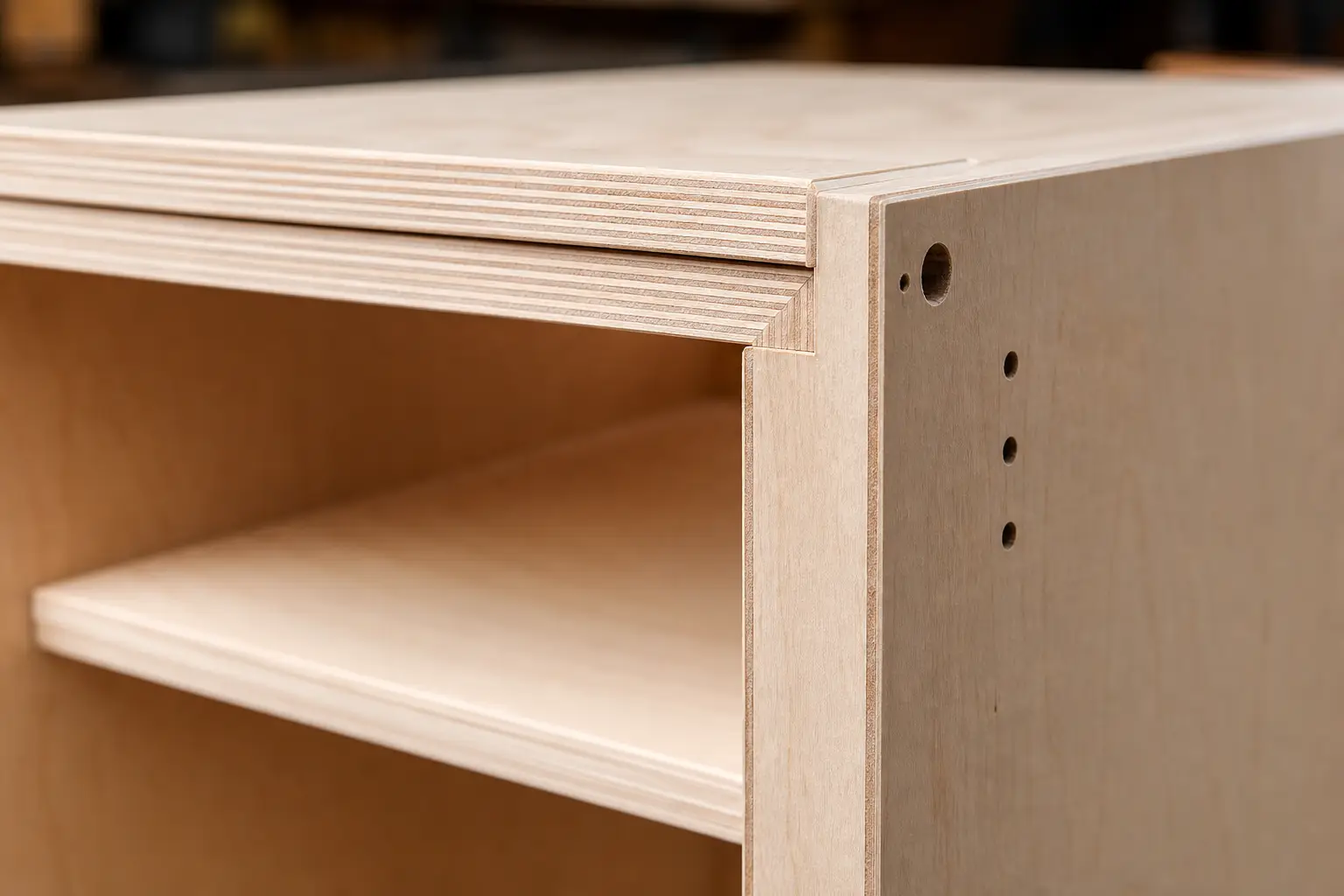
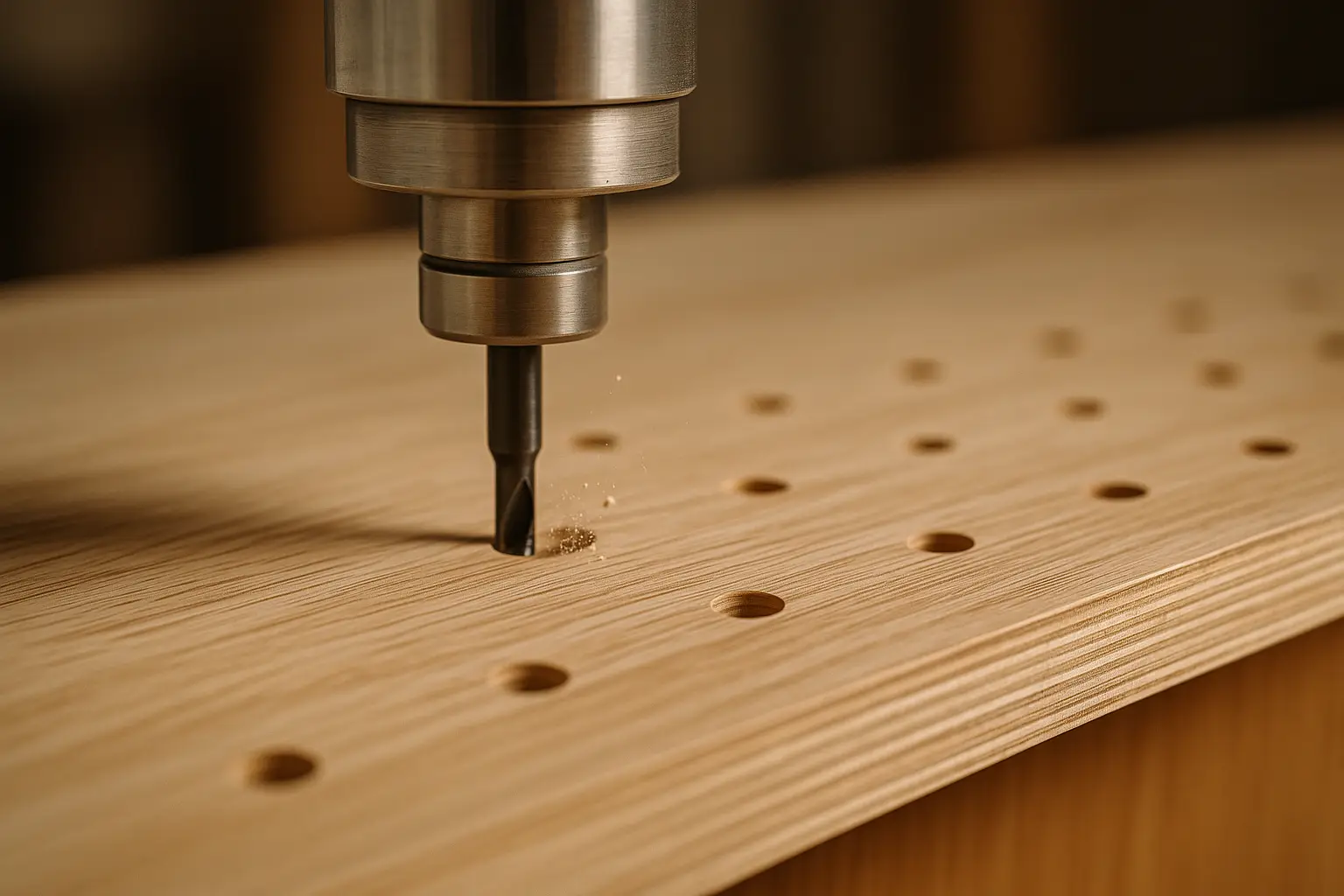
Ask where the plywood is cut and who runs the CNC. A real shop can tell you the species and grade of their panels, ideally plywood graded to recognized engineered-wood standards, whether they use 3/4-inch prefinished maple or birch plywood for boxes, and whether drawer boxes are solid maple with dovetail joints or stapled particleboard. Vague answers about "premium materials" usually mean they do not touch the raw stock.
Then ask about lead time and change orders. Local manufacturing tends to run around three weeks for a typical kitchen because the material, machining, and finishing all happen under one roof. If quoted timelines stretch to 8 to 12 weeks, that often reflects ocean freight or a distant factory queue. Also ask what happens if a cabinet arrives with a scratched door or a misdrilled hinge cup. A shop that builds locally, like American Built Cabinets, can remake a single door in days. A reseller has to reorder and wait for the next container.
Physical Tells You Can Inspect in the Showroom
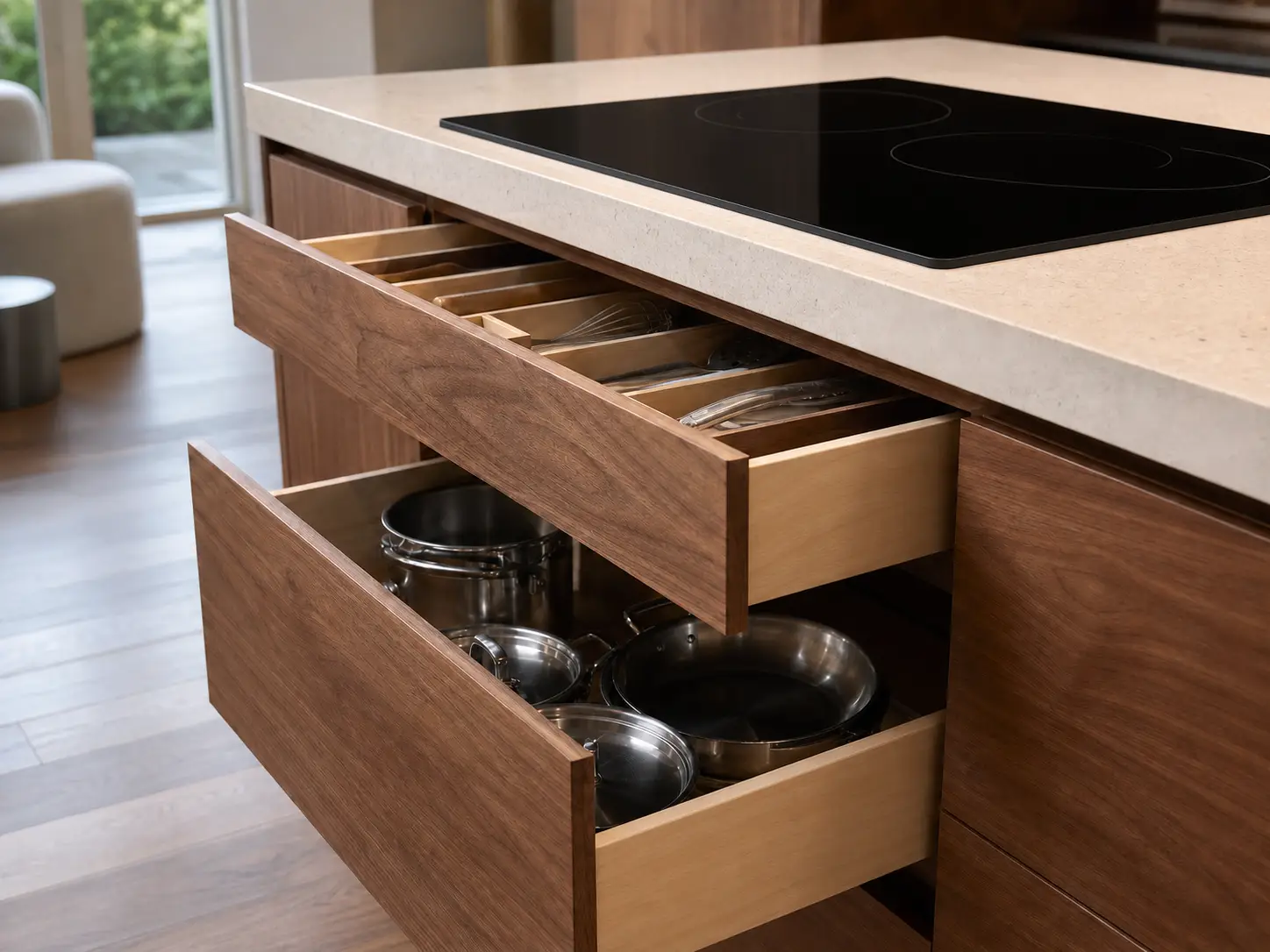
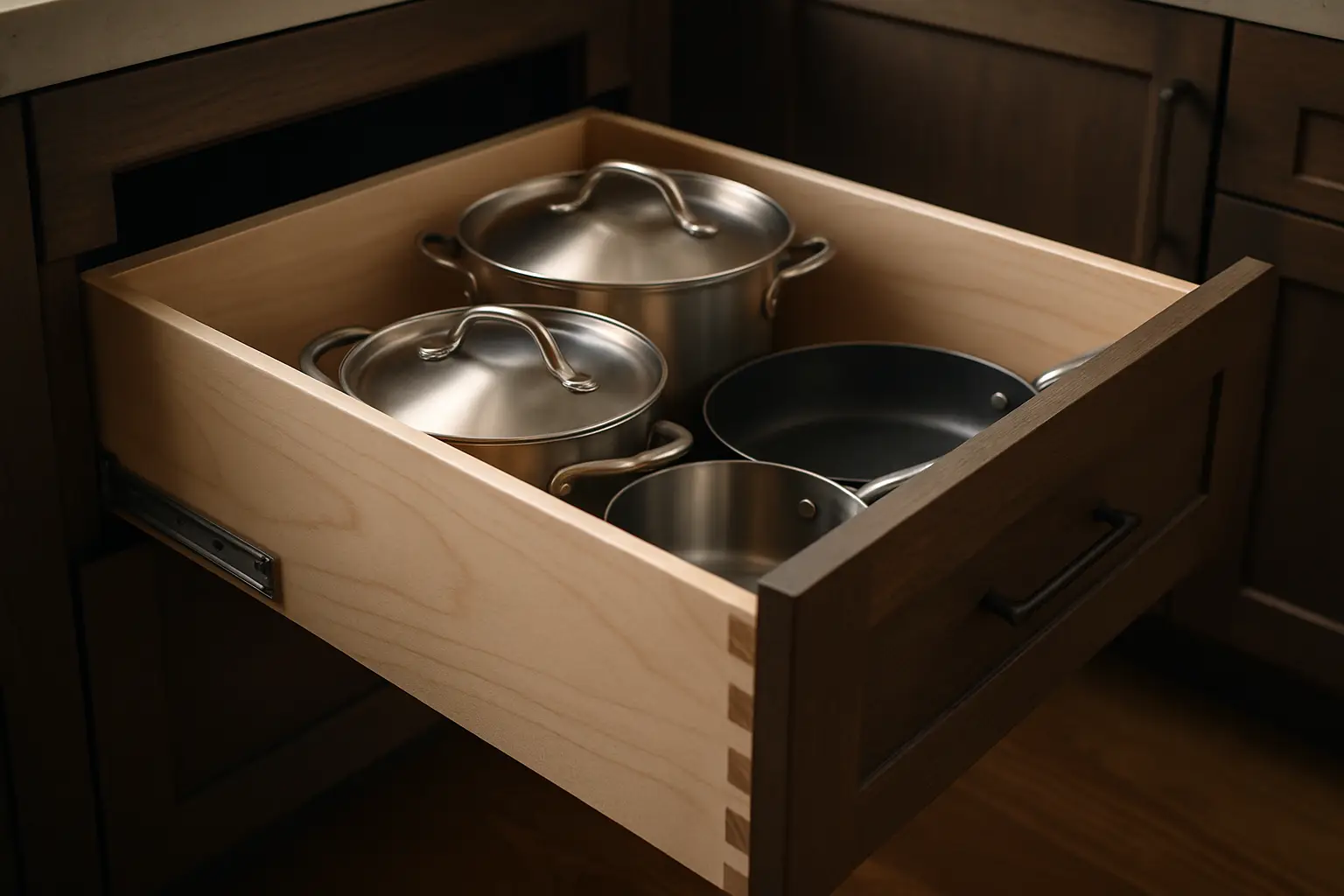
Open a drawer and pull it fully out. Full-extension, soft-close undermount slides and a dovetailed solid-wood drawer box are signs of real cabinet-grade construction, though good imports have these too, so keep looking. Check the back panel: a 1/2-inch or thicker captured back set into a groove points to better manufacturing than a thin 1/8-inch panel stapled to the outside.
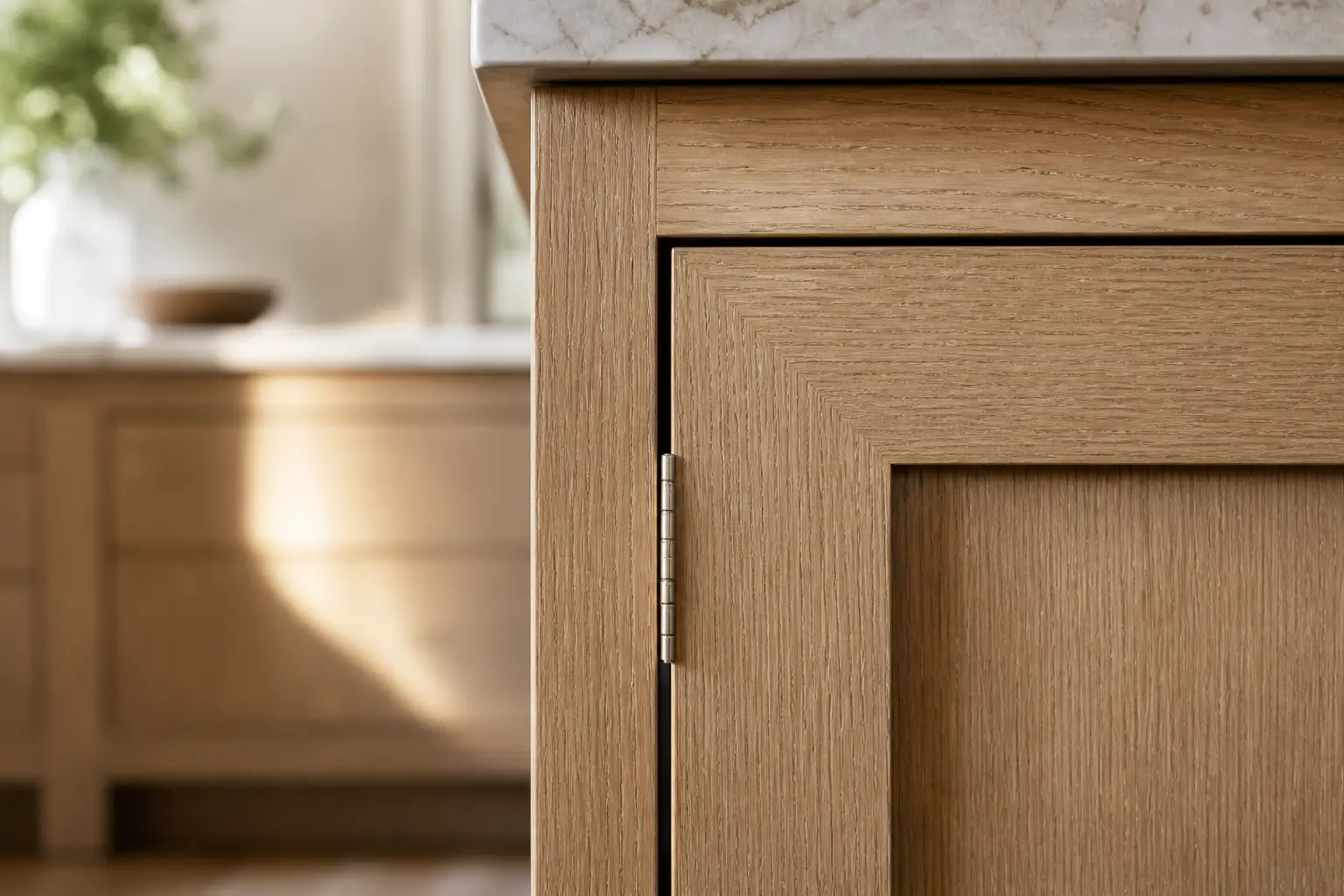
Look at the finish edges and the inside of the box. Locally sprayed conversion varnish or catalyzed finishes show consistent sheen and clean corners with no drips. Ask to see an unfinished sample or a shop photo of your actual door style being sprayed. Check hinge cups and shelf-pin holes for clean, chip-free drilling, which indicates a well-maintained CNC rather than hand drilling. None of these details alone prove local origin, but together they tell you whether you are looking at a controlled process or a boxed product.
Paperwork, Addresses, and the Warranty Test
Ask for the manufacturing address, not the showroom address, and see if it is a real production facility in the South Bay or Peninsula. A genuine maker will often let you tour the shop or at least show recent build photos with your job's materials. Resellers usually route you back to a sales floor.
The warranty is the clearest test. When the company builds in-house, the warranty is backed by the people who made the box, and a repair means a quick remake from stock they already have. When the product is imported, warranty claims depend on whether that overseas line still runs the same door profile and finish, which frequently changes year to year. Read the warranty for who performs the repair and how replacement parts are sourced. That single clause tells you more about origin than any marketing page.
FAQ
Q1: Does locally made actually cost more than imported cabinets?
A1: Not always. Imported semi-custom lines carry freight, import fees, and dealer markup, so the gap is smaller than people expect. A local maker also saves you money on trim workarounds because boxes are built to your exact dimensions instead of standard 3-inch increments. Compare full quotes including installation and filler pieces, not just box prices.
Q2: How long should a custom kitchen take if it is truly built in the Bay Area?
A2: Roughly three weeks for a standard kitchen is realistic when material, machining, and finishing happen in one local shop. Complex projects with specialty finishes or large volume can run longer. If you are quoted 8 to 12 weeks for a normal kitchen, ask whether the boxes are coming from overseas or an out-of-state factory.
Q3: What construction details signal real cabinet-grade quality?
A3: Look for 3/4-inch plywood boxes, solid maple dovetailed drawer boxes, full-extension soft-close undermount slides, and a captured back panel set into a groove rather than stapled on. A sprayed catalyzed or conversion varnish finish with clean corners is another good sign. These do not prove local origin by themselves, but they separate serious construction from budget RTA.
Q4: Can I tour the actual manufacturing facility?
A4: A real manufacturer will usually let you visit the shop or share current photos of your materials being cut and finished. If a company only offers a showroom and gives vague answers about where boxes are made, that often means the product is assembled or imported rather than built in-house. Ask for the production address, not just the sales office.
Q5: Is plywood or MDF better for cabinet boxes?
A5: Plywood is lighter, holds screws better, and resists moisture, which matters for sink bases and Bay Area humidity swings. MDF is flat, stable, and excellent for painted door panels because it takes finish without grain telegraphing. Many good kitchens use plywood boxes with MDF or solid-wood doors, so the right answer depends on where the part is used.
Q6: Why does the warranty tell me whether cabinets are made locally?
A6: A local maker backs the warranty with the same shop that built your cabinets, so a damaged door is remade from in-stock material in days. Imported product depends on whether the overseas line still runs your exact profile and finish, which changes over time. Read who performs the repair and how parts are sourced; that clause reveals the real origin.