Installers get blamed for a lot of problems that were actually born in the factory. A door that will not sit flush, a run of cabinets that refuses to line up, a countertop with an uneven overhang: those failures usually trace back to how the boxes were cut and assembled, not just how they were hung. In Bay Area homes, where original walls are rarely plumb and floors slope, precise manufacturing is what makes a clean install possible in the first place. This is a look at how tolerances set at the machine translate into what you see on your kitchen wall.
Precision Starts at the Panel Saw
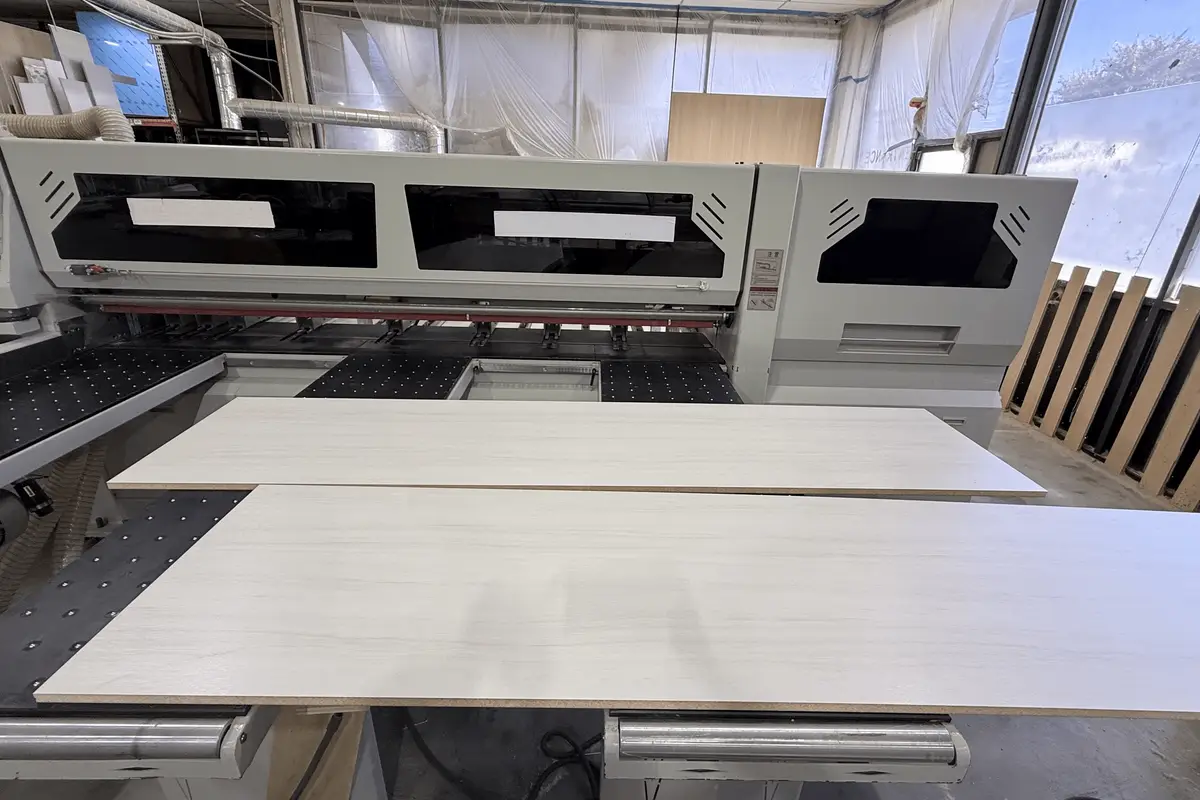
Every cabinet is only as accurate as the first cut. If the side, top, and bottom panels come off the saw or CNC even a couple of millimeters out of spec, that error compounds as the box goes together and then repeats across every cabinet in the run. A calibrated panel saw or a well-maintained CNC router holds cuts to within about a millimeter, and it makes the same cut identically the hundredth time as the first. That repeatability is the whole point. A kitchen is not one cabinet; it is fifteen or twenty boxes that all have to align into a continuous, level run.
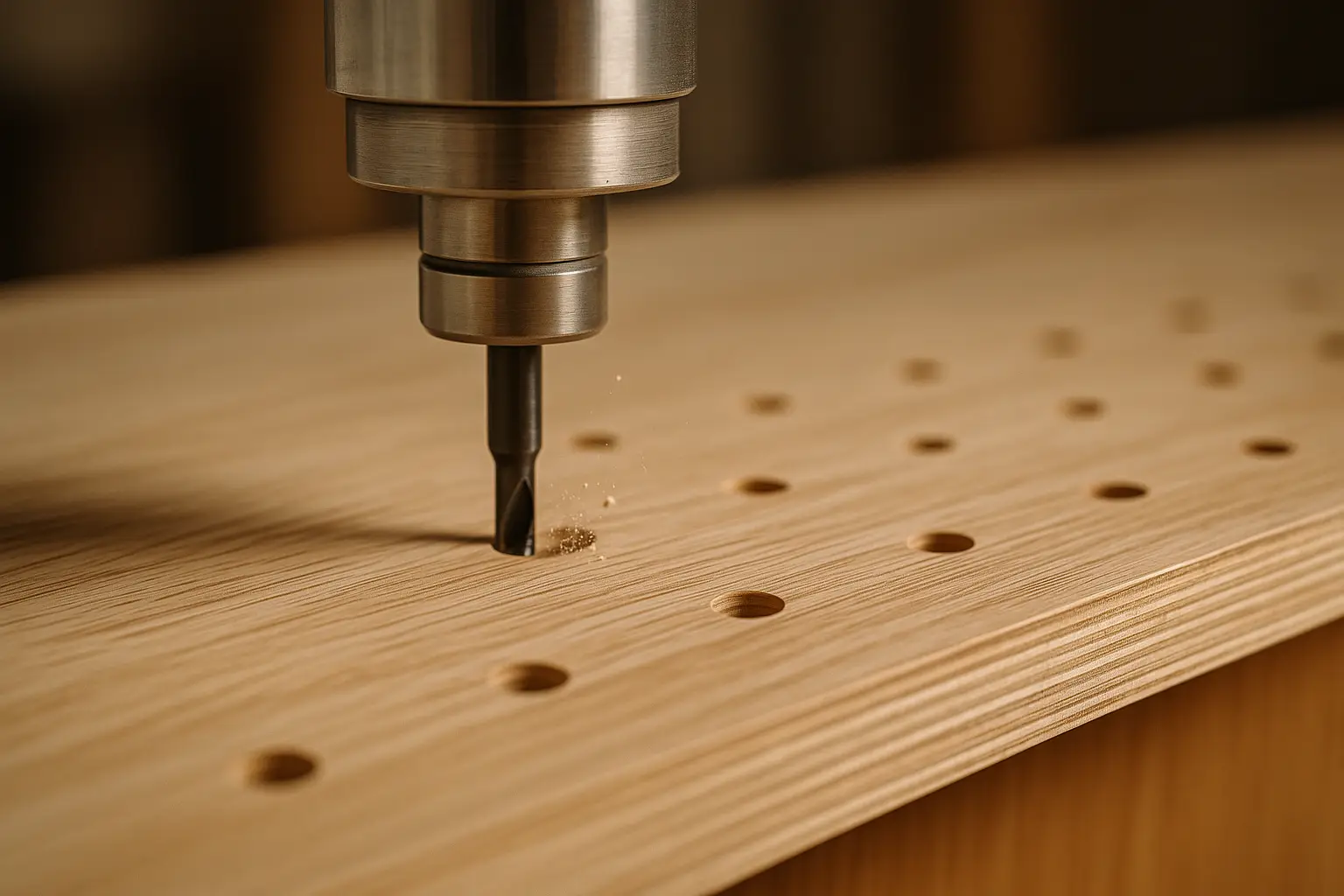
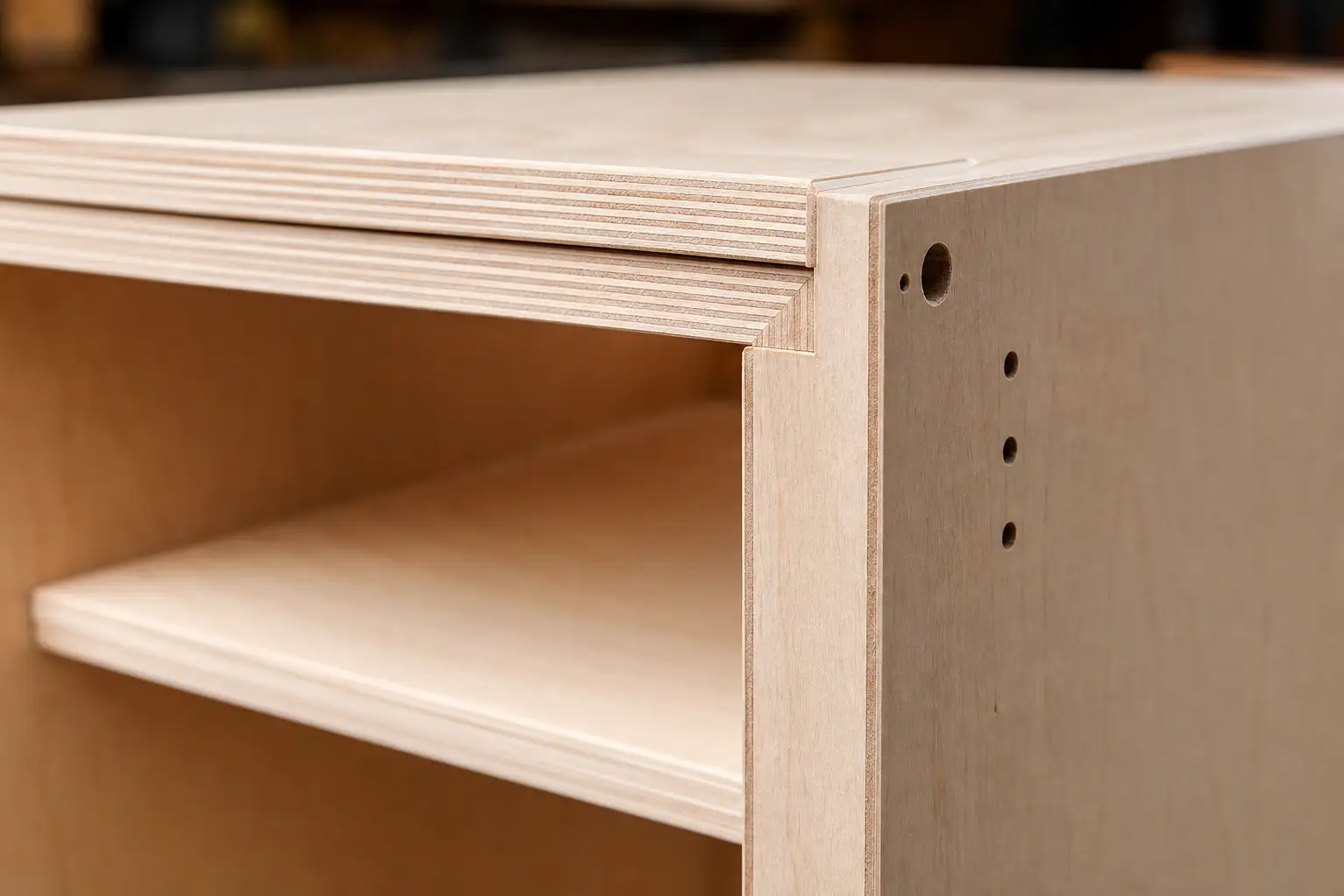
Boring the hardware holes is just as critical. Most modern shops use a System 32 pattern, a grid of holes spaced 32 millimeters apart that locates hinges, shelf pins, and drawer slides. When that pattern is drilled accurately on a line-boring machine or CNC, hinges mount in exactly the right spot and doors hang at a consistent height with room to adjust. When the boring drifts, the installer fights every door. Precision at these two operations, cutting and boring, is what determines whether the install goes smoothly or turns into a day of shimming and cursing.
Square Boxes Give the Installer Something True to Work From
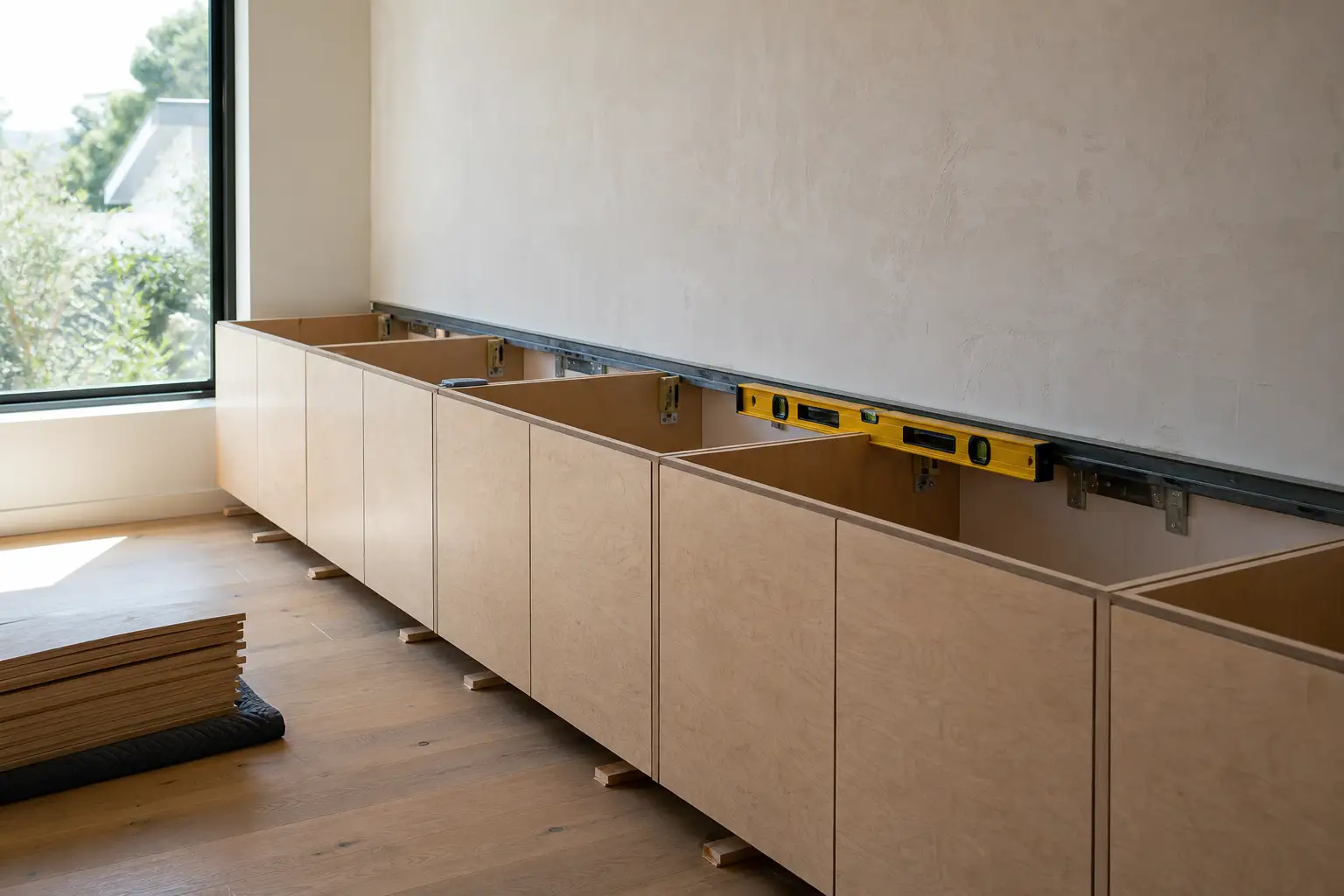
Bay Area housing stock is not friendly to cabinets. Plaster walls in older San Francisco flats bow. Peninsula floors settle and slope. Corners are rarely a true 90 degrees. The way you deal with all of that on site is by scribing and shimming: trimming a cabinet edge to follow a wavy wall, and packing shims behind and beneath boxes to bring them level and plumb. But every one of those corrections depends on the cabinet itself being square and dimensionally correct to begin with.
Think of the box as the installer's ruler. If the ruler is accurate, they can measure and correct for the crooked room around it. If the ruler is itself bent, a box that is racked or a face that is out of square, there is no good reference and the errors multiply. This is why a manufacturer's tolerances matter even more in old homes, not less. The rougher the site conditions, the more the installer needs perfectly built parts to fight back against them. A square, precisely sized box is what lets a skilled crew make a crooked room look intentional.
How Joinery and Assembly Hold the Tolerance
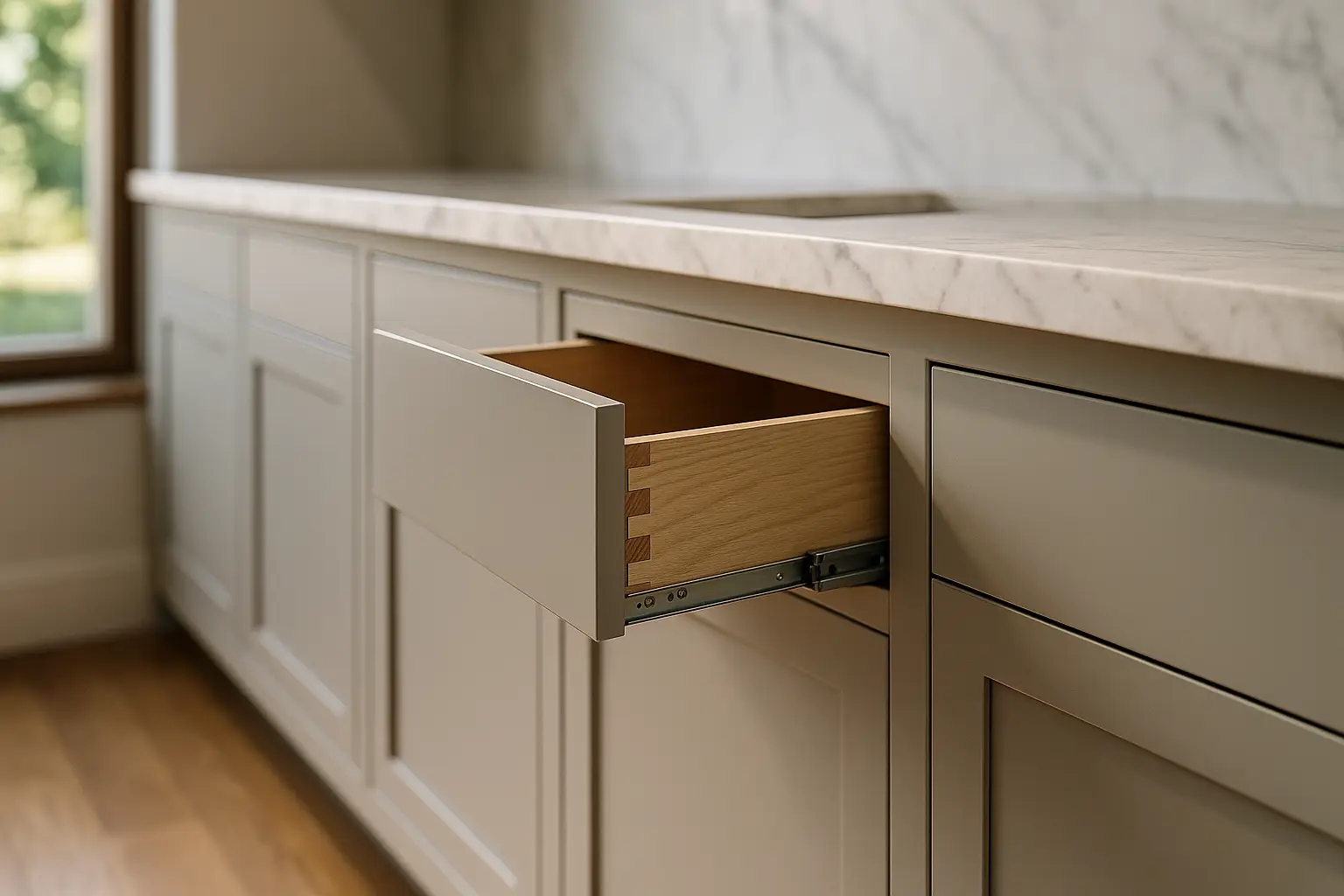
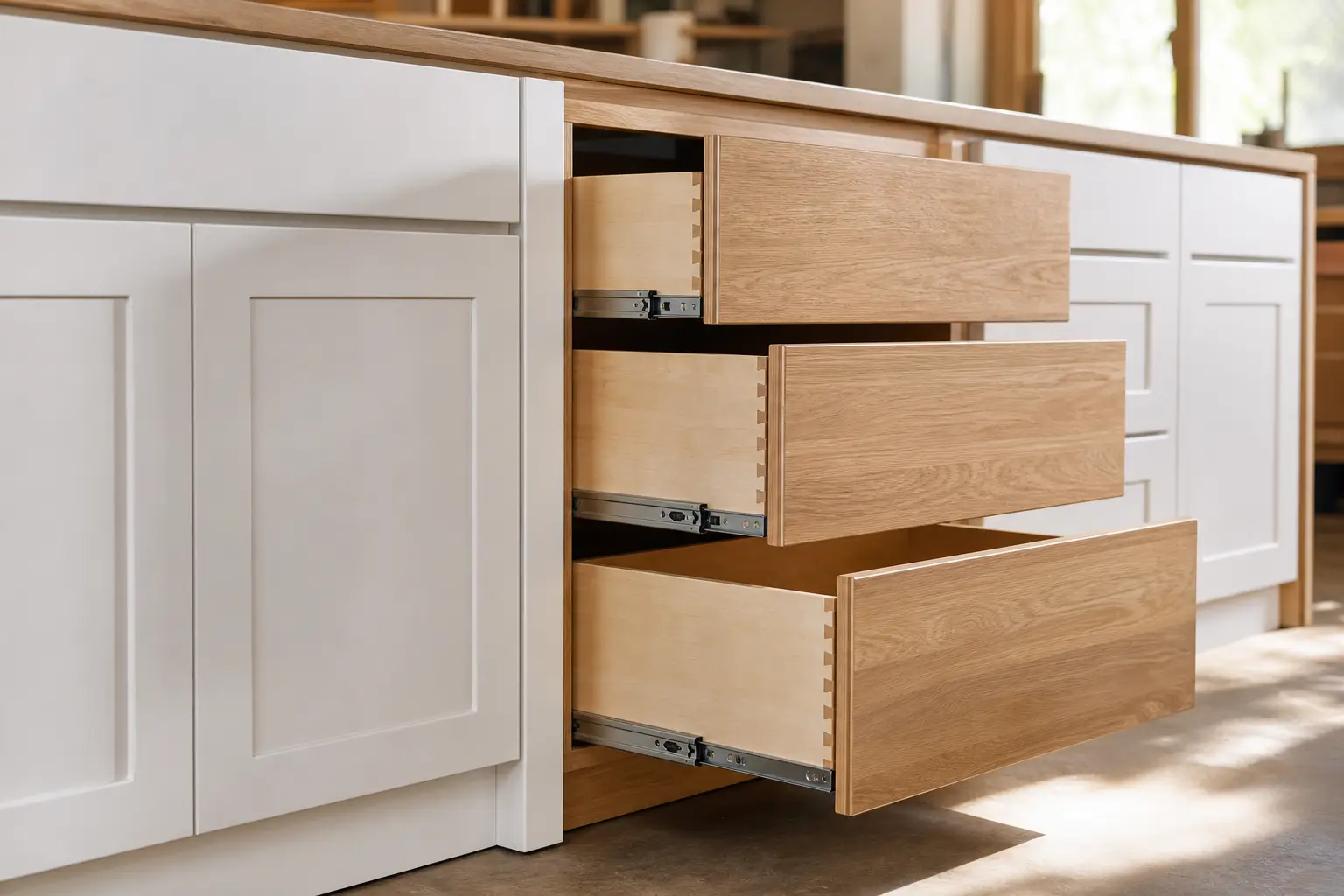
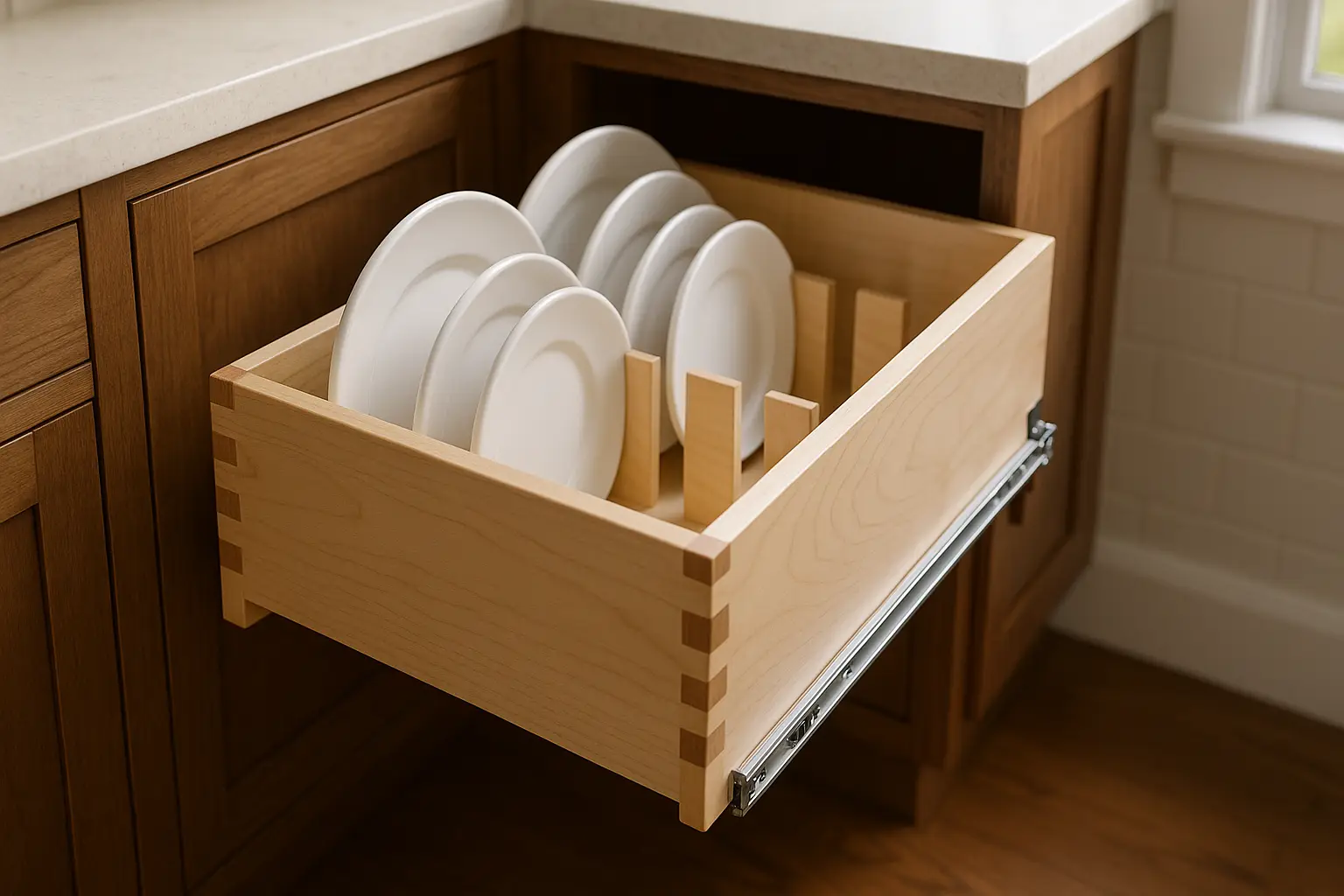
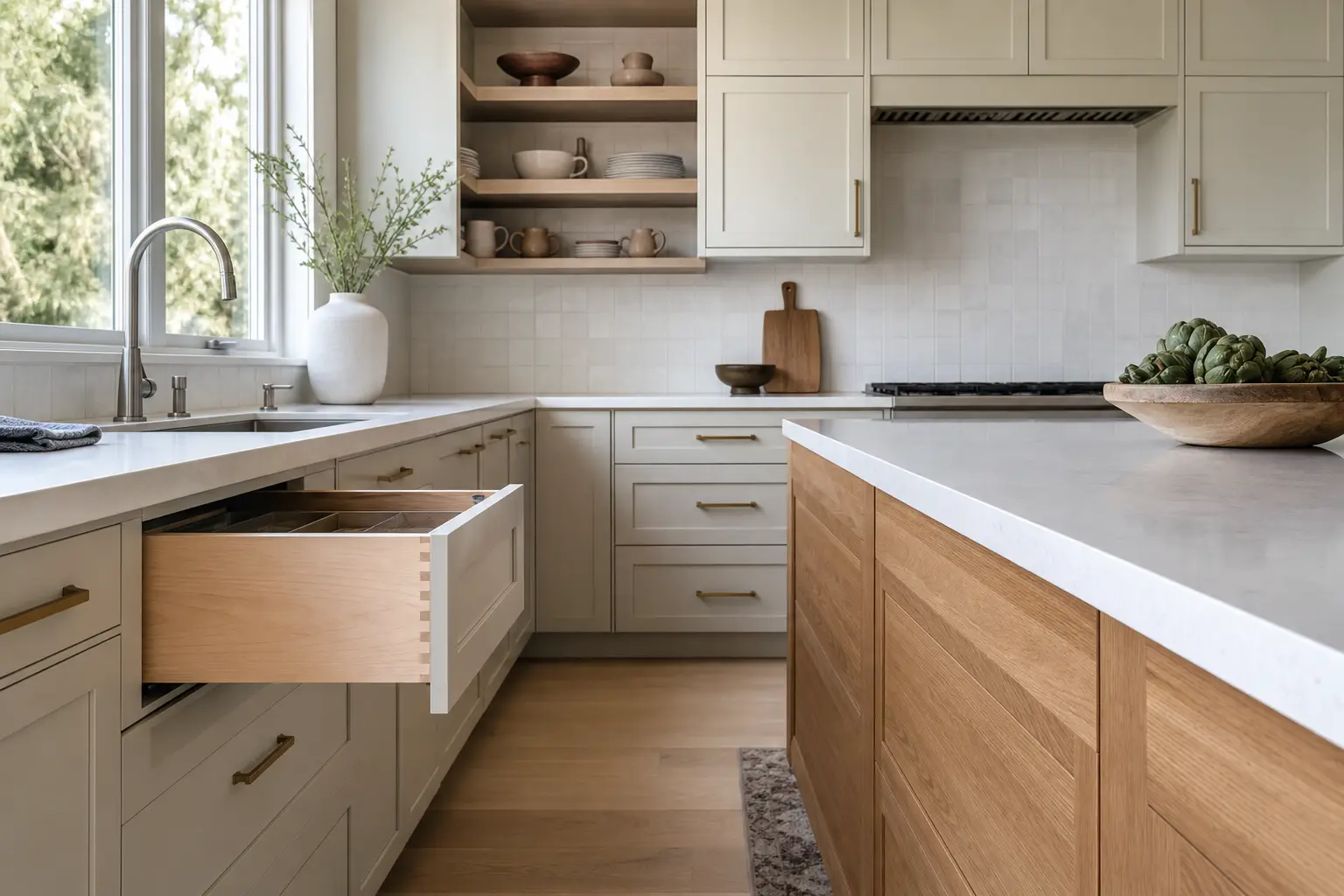
Cutting parts accurately is step one; keeping them accurate through assembly is step two. Boxes held together with just staples and glue can drift out of square as they are fastened and can rack later under load. Dado and rabbet joints, where each panel seats into a groove routed into the mating piece, mechanically locate the parts and lock the box into square before a single fastener goes in. Assembling in a squaring fixture or clamp table while the glue sets holds that geometry until it is permanent.
Two more details keep the box true for the long haul. A full, captured back panel, set into a groove rather than tacked to the rear edge, braces the box against racking. On frameless cabinets, a steel hanging rail does the same job while giving the installer a strong, level point to fasten into the wall. Edgebanding applied cleanly and trimmed flush keeps panel dimensions exact and protects the edges from moisture, which matters in coastal and Peninsula humidity. These are not glamorous features, but they are the difference between cabinets that stay tight for decades and boxes that loosen and sag.
Where Imported Cabinets Lose the Thread
A lot of cabinetry sold in the Bay Area is cut and assembled in a distant factory, flat-packed or crated, and shipped across an ocean before anyone local sees it. Two problems follow. First, quality control lives far from your jobsite. If a batch drifts out of tolerance or a run of doors is bored slightly off, no one catches it until the installer is standing in your kitchen with parts that will not line up. Second, the fix is slow. A single mismeasured or damaged part means reordering from overseas and waiting weeks while the kitchen sits half done.
There is also the matter of matching real field conditions. Cabinets built to nominal catalog sizes assume a room that does not exist in most older Bay Area homes. When the space calls for a 43 inch cabinet and the catalog only offers 42 plus filler, you lose usable space and gain an awkward strip of trim. Precision manufacturing is not only about tight tolerances on standard parts; it is about building the exact part the room needs, which a fixed overseas catalog cannot do.
Local Manufacturing Closes the Loop
American Built Cabinets builds in San Jose, and the biggest practical benefit is a short loop between measuring, making, and installing. We can field-verify a tricky space before cutting, template around an existing element, and cut to the actual dimensions of your walls rather than to a catalog approximation. Our tolerances are held on calibrated equipment in-house, so the boxes that reach your kitchen are square, consistently bored, and sized to the plan. When a jobsite condition changes or a part needs adjusting, we remake just that piece in days, not an ocean container in months.
That control is why our roughly three-week lead time comes with fewer surprises at install. The same shop that cut the panels answers the phone when the installer has a question, and warranty support is a local matter rather than a claim routed through a distributor. For homeowners and builders across San Jose, San Francisco, and the Peninsula, manufacturing precision is not an abstract spec. It is the reason the doors line up, the reveals stay even, and the finished kitchen looks like it belongs to the room.
FAQ
Q1: What tolerance should a cabinet box be built to?
A1: Quality shops cut and bore to within about a millimeter, and often tighter on critical dimensions. On a frameless kitchen the reveals between doors are only about an eighth of an inch, so a box that is off by two or three millimeters shows up as visibly uneven gaps. The tighter the manufacturing tolerance, the more consistent the finished look and the faster the install.
Q2: If my walls are crooked, why does box precision even matter?
A2: Because you scribe cabinets to crooked walls, but you cannot scribe away a box that is out of square with itself. Precise, square boxes give the installer a true reference to work from. They shim and scribe the gap between a square cabinet and a wavy wall, which is straightforward. Correcting a racked or mismeasured box on site is not, and it usually shows in the doors.
Q3: How does a manufacturer keep boxes square during assembly?
A3: It starts with accurate panel cutting on a calibrated saw or CNC, then dado and rabbet joints that locate each panel in a routed groove, and clamping in squaring fixtures while the glue and fasteners set. A solid back panel or a steel hanging rail keeps the box from racking afterward. Consistent System 32 hole boring lets hardware and shelves land in the same place every time.
Q4: Does building cabinets locally actually improve install quality?
A4: It helps in practical ways. Local manufacturing lets the shop template tricky spaces, remake a mismeasured part in days instead of weeks, and send the same team's work to a nearby jobsite without ocean freight handling. If something is off, it gets corrected quickly rather than becoming a long delay while the kitchen sits unusable.
Q5: What install problems come from poor manufacturing rather than the installer?
A5: Doors that will not adjust flush, drawer fronts with uneven reveals, face frames or boxes that are out of square, mismatched panel sizes in a run, and finish that chips at the edges. An experienced installer can hide small errors, but consistent misalignment across a whole kitchen almost always points back to how the parts were made.
Q6: How long does precise custom cabinetry take to get in the Bay Area?
A6: We manufacture in San Jose and run about a three-week lead time after design and materials are confirmed. Building locally means we can verify field measurements, cut to tight tolerances, and remake a single part fast if a jobsite condition changes, without the long waits common on imported cabinetry.