Almost every cabinet decision starts with the same question: what should the cabinets actually be made of? In Bay Area kitchens we build with three core materials, and each one shows up in a different part of the cabinet for a good reason. Plywood carries the box, MDF takes paint better than anything else, and solid wood earns its place on doors and face frames where grain and strength both matter. This guide breaks down where each material wins, where it fails, and how we combine them in a single custom cabinet so you pay for performance, not marketing.
Three Materials, Three Different Jobs
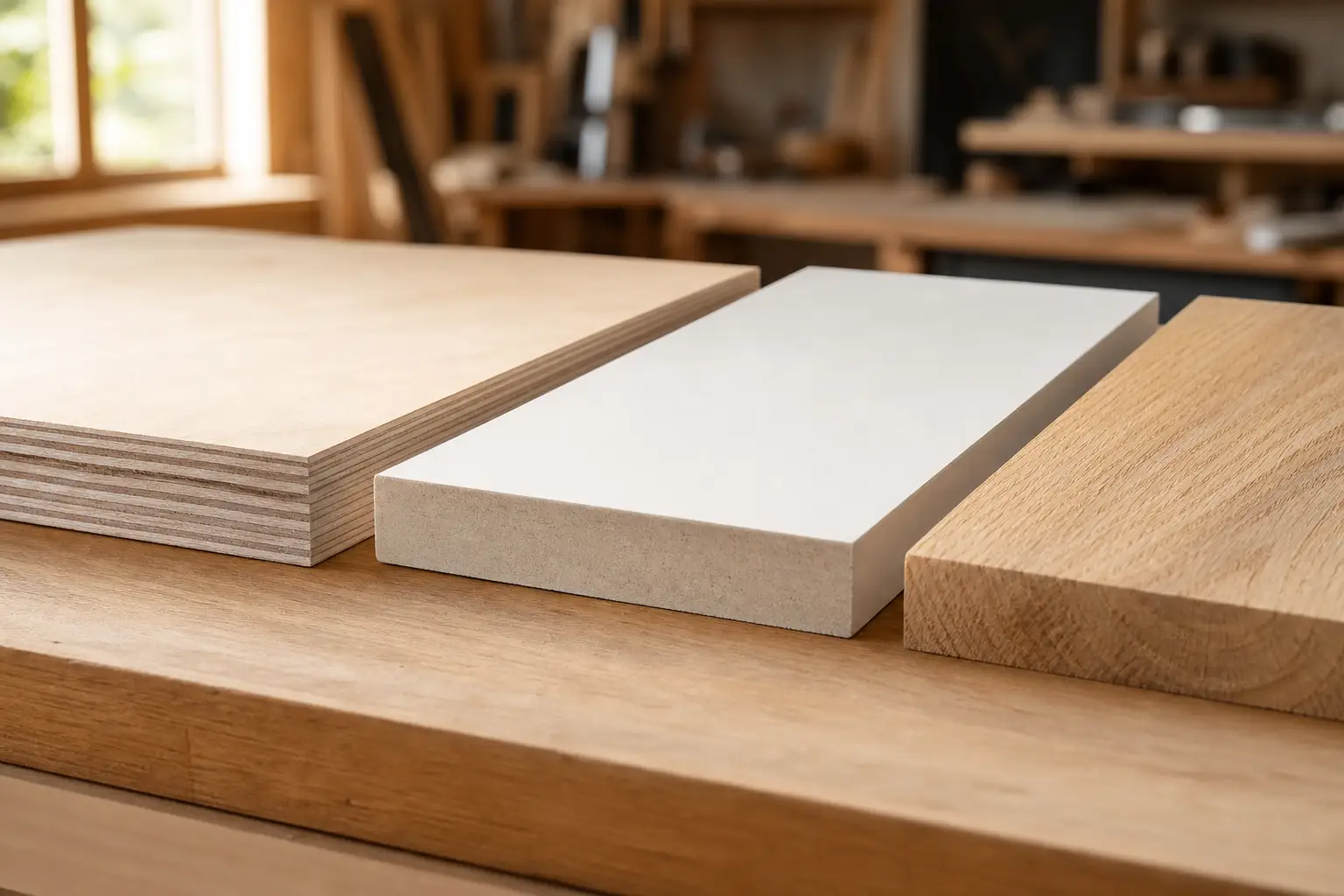
The mistake most buyers make is treating cabinet material as a single choice, as if a cabinet were carved from one block. It is not. A cabinet is an assembly of parts that each face different stresses. The box carries weight and needs to stay square. The doors get opened thousands of times and need a clean finish. The drawer boxes take shifting loads. No single material is best at all three, so the honest answer to "MDF or plywood or solid wood" is usually "all three, in the right places."
Plywood is built from thin wood layers glued with alternating grain direction. That cross-banding is what gives it strength in every direction and keeps it flat. MDF, medium-density fiberboard, is wood fiber compressed with resin into a dense, grainless panel that mills cleanly and paints like glass. Solid wood is exactly what it sounds like, milled boards of maple, oak, cherry, or walnut, prized for grain and refinishability but subject to seasonal movement. Once you see what each one does well, the decisions get simple.
Plywood: The Right Choice for the Box
For the cabinet case, the sides, bottom, top rails, and shelves, we build almost exclusively with 3/4-inch furniture-grade plywood. The reasons are practical. Plywood is strong for its weight, so a wall cabinet full of dishes hangs safely without sagging. It holds screws and joinery far better than particleboard, so hinges and slides stay tight over years of use. And it tolerates moisture better than MDF or particleboard, which matters under a sink or near a dishwasher where the occasional leak happens.
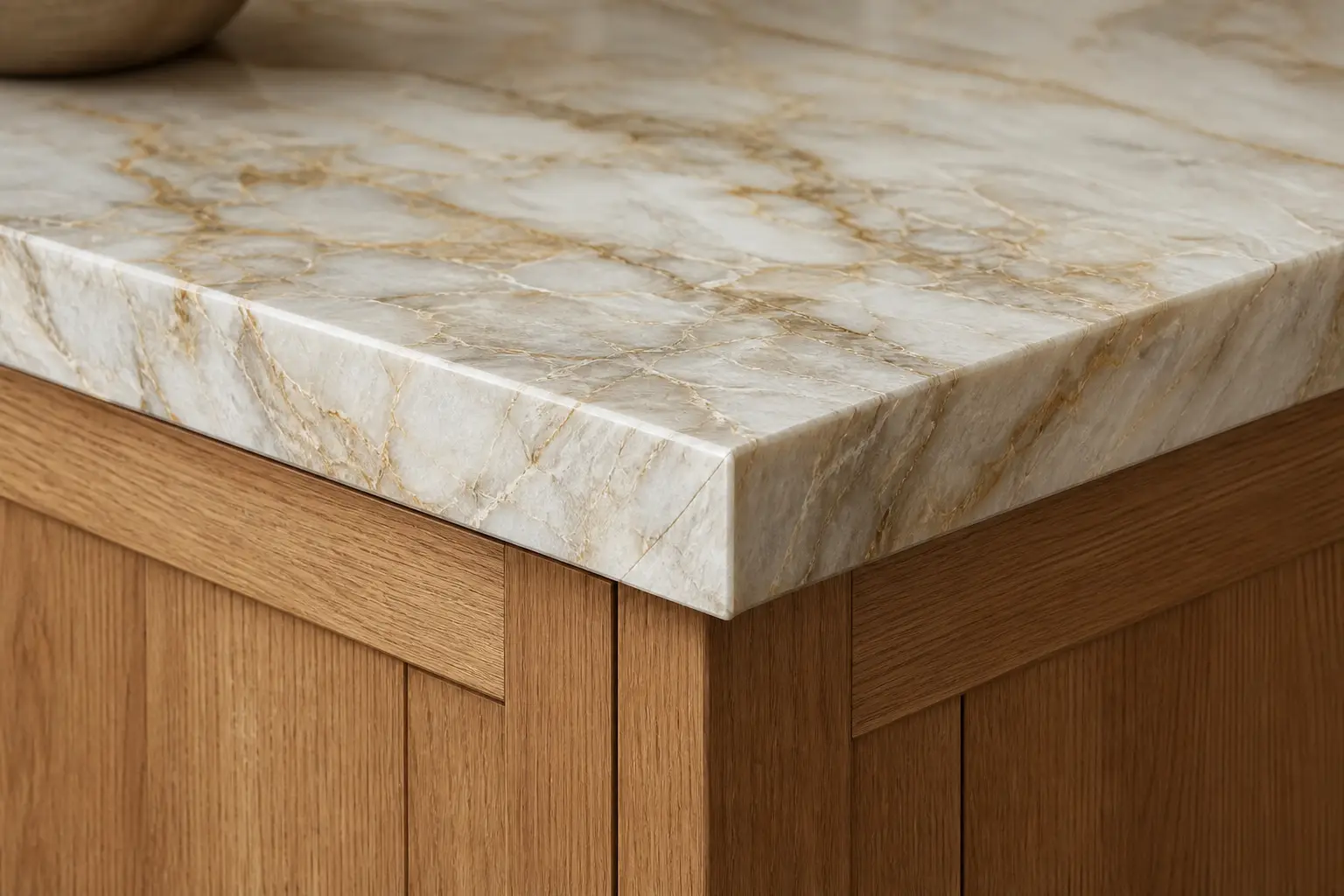
Not all plywood is equal, and this is where cheap cabinets cut corners. Construction-grade plywood has voids inside the plies and rough face veneers. Furniture-grade material like Baltic birch or cabinet-grade maple ply has more layers, minimal voids, and consistent faces, so the edges look clean and the panel stays rigid. A frameless box especially depends on panel quality, because there is no face frame to keep it square. Built right, a plywood box stays tight and true under a slab of quartz for decades.
The one place plywood loses is a fully painted flat surface. Plywood has grain and visible edge plies, so a painted plywood door needs edge banding and can telegraph grain through the finish over time. That is exactly the job MDF was made for.
MDF: Unbeatable for a Painted Finish
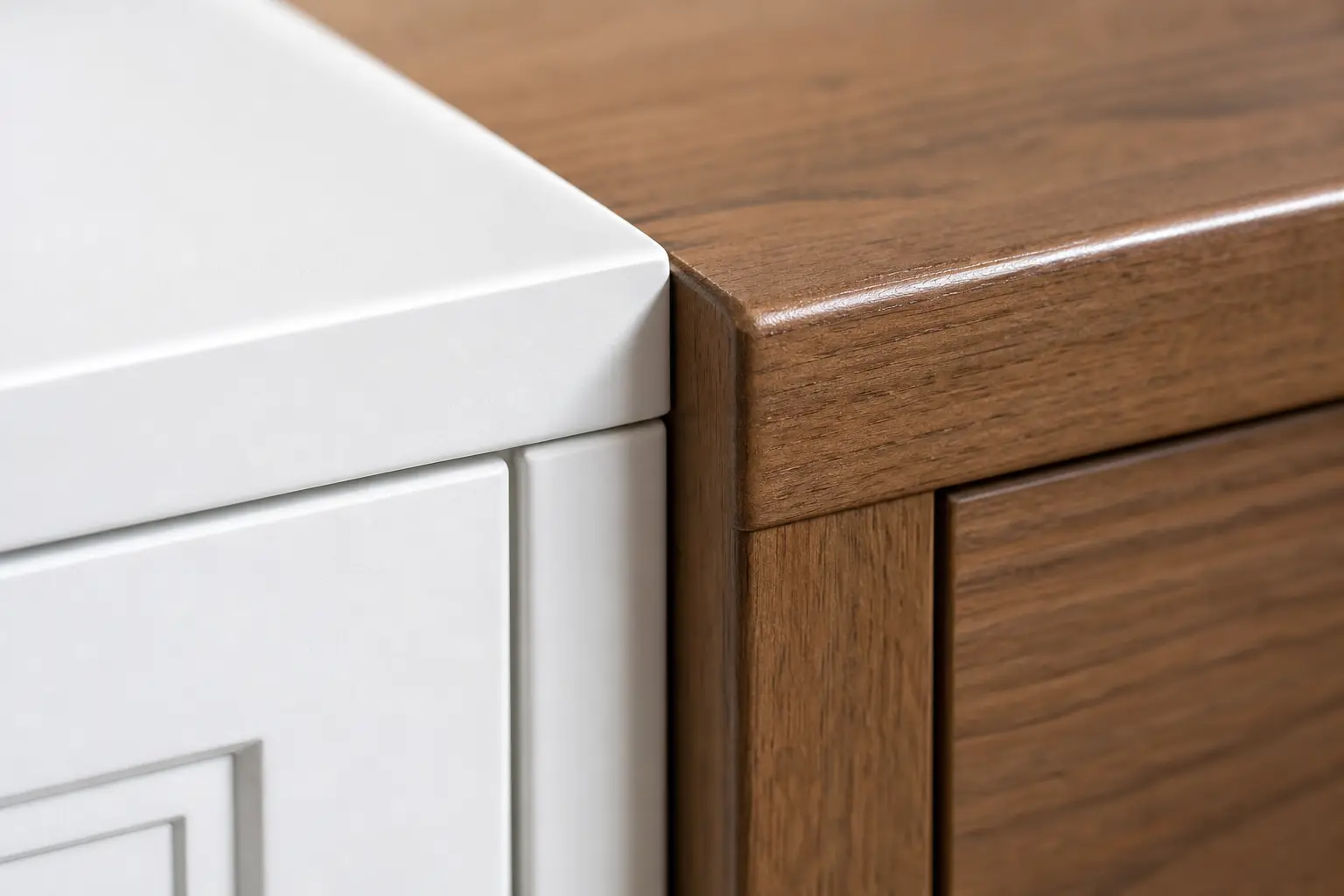
If you want a smooth, joint-free painted door in a color like white, greige, or a deep navy, MDF is the best material there is. Because it has no grain and no seams, paint lays down flat and even, with none of the grain telegraphing or joint cracking that can appear on painted solid wood over time. Solid wood doors are built from separate rails and stiles glued together, and those glue joints can show hairline cracks as the wood moves with humidity. A one-piece MDF door panel simply has no joints to crack.
MDF machines beautifully too, so routed profiles, Shaker rails, and beaded details come out crisp and consistent. That is why so many painted Shaker and flat-panel doors in Bay Area remodels use an MDF center panel, and often an MDF frame as well. It is dense and dimensionally stable, meaning it does not swell and shrink across seasons the way a wide solid board can.
The tradeoffs are real and worth knowing. MDF is heavy, so large doors need good hinges. It has no structural strength across a span, so it is wrong for shelves or boxes. And its edges are vulnerable if the finish is broken and water sits on raw fiber, which is why we seal edges and keep MDF away from constant standing moisture. Used where it belongs, on painted doors and panels, it outperforms everything else.
Solid Wood: Where Grain and Strength Both Matter
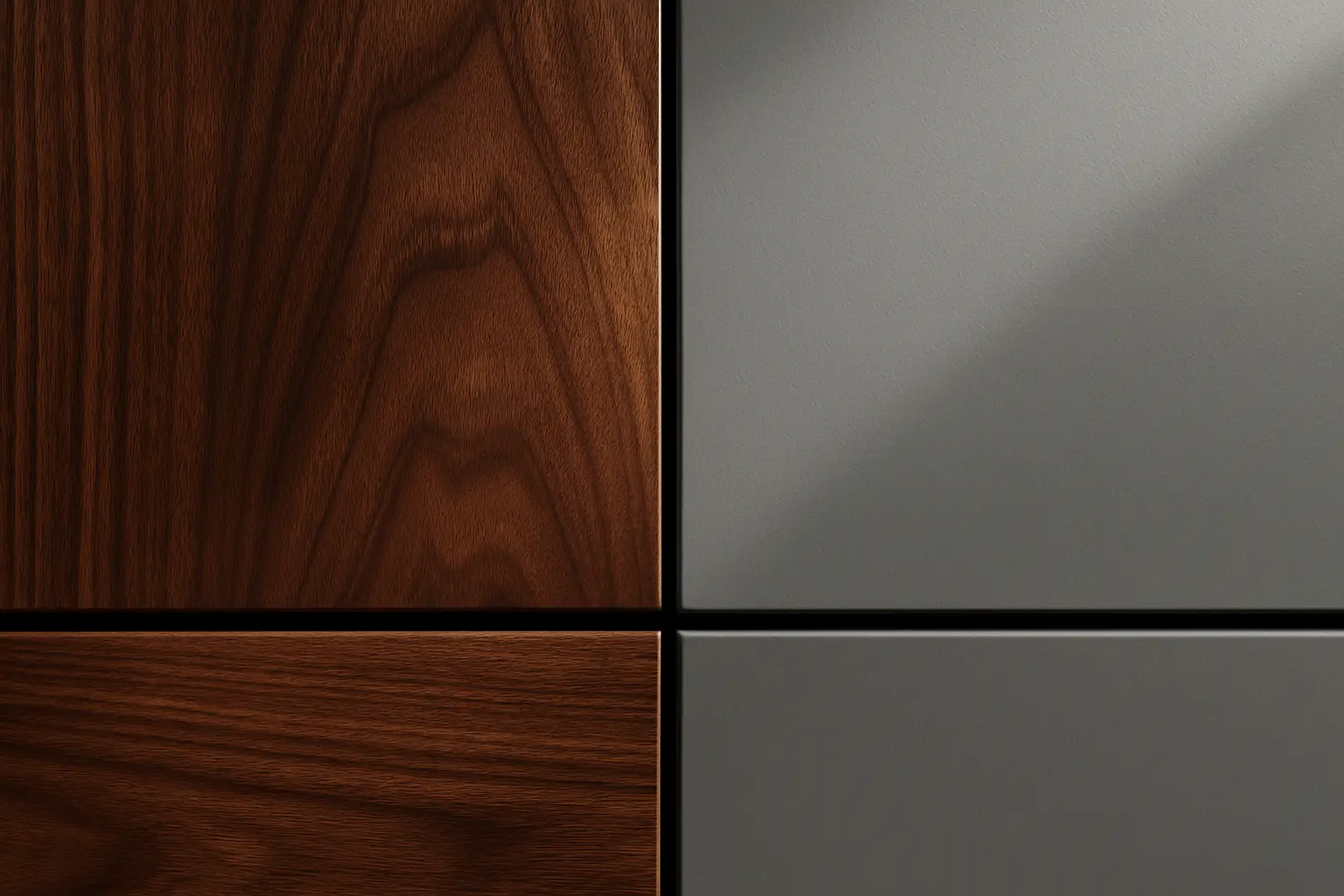
Solid wood earns its keep on the parts you see and touch and on the parts that take mechanical stress. For a natural, stained look with visible grain, like white oak, walnut, cherry, or maple, solid wood on the door frames is the real thing, not a printed imitation. It can be sanded and refinished years later, which laminate and thermofoil cannot. And it has excellent screw-holding strength, which is why face frames and drawer boxes are classic solid wood applications.
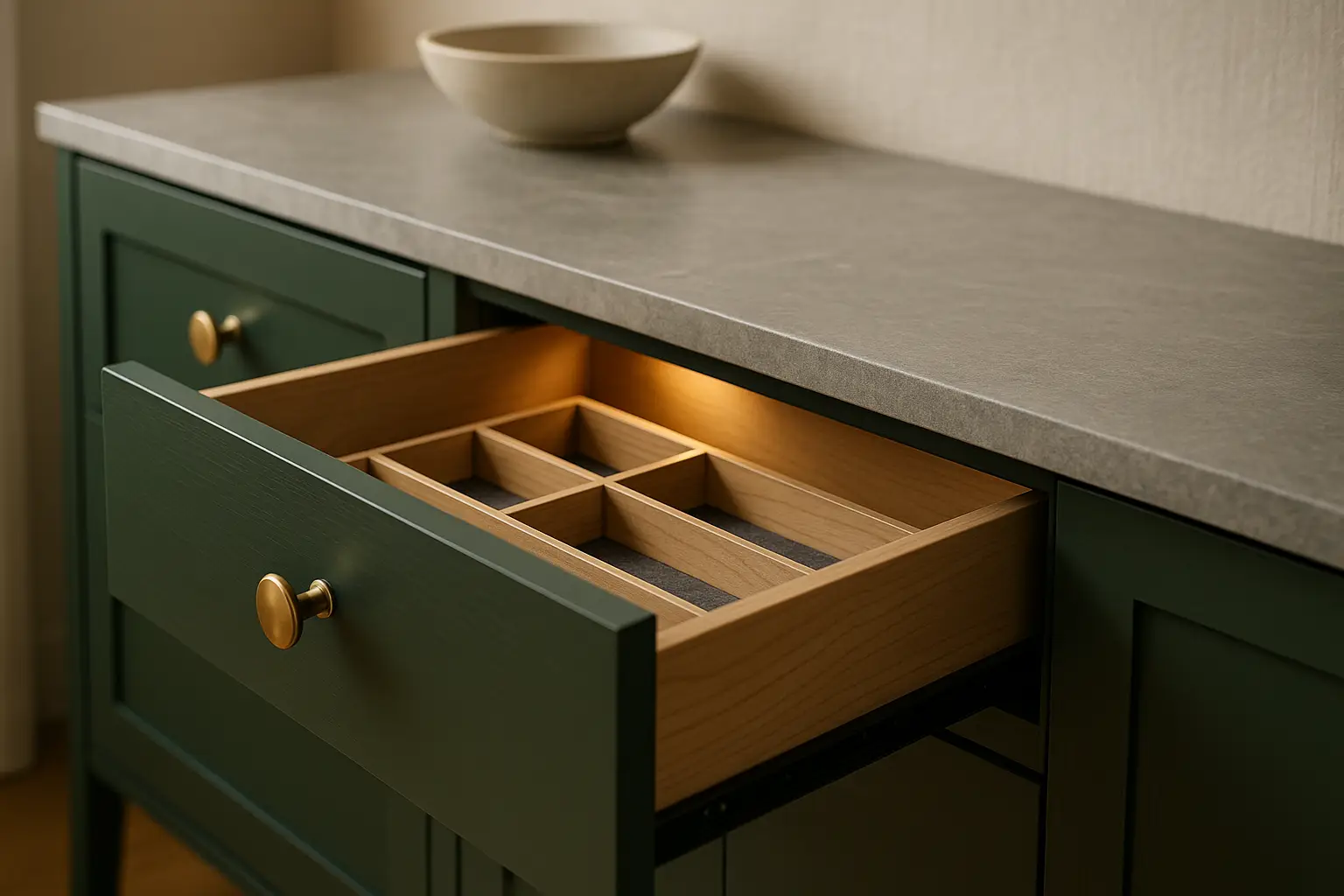
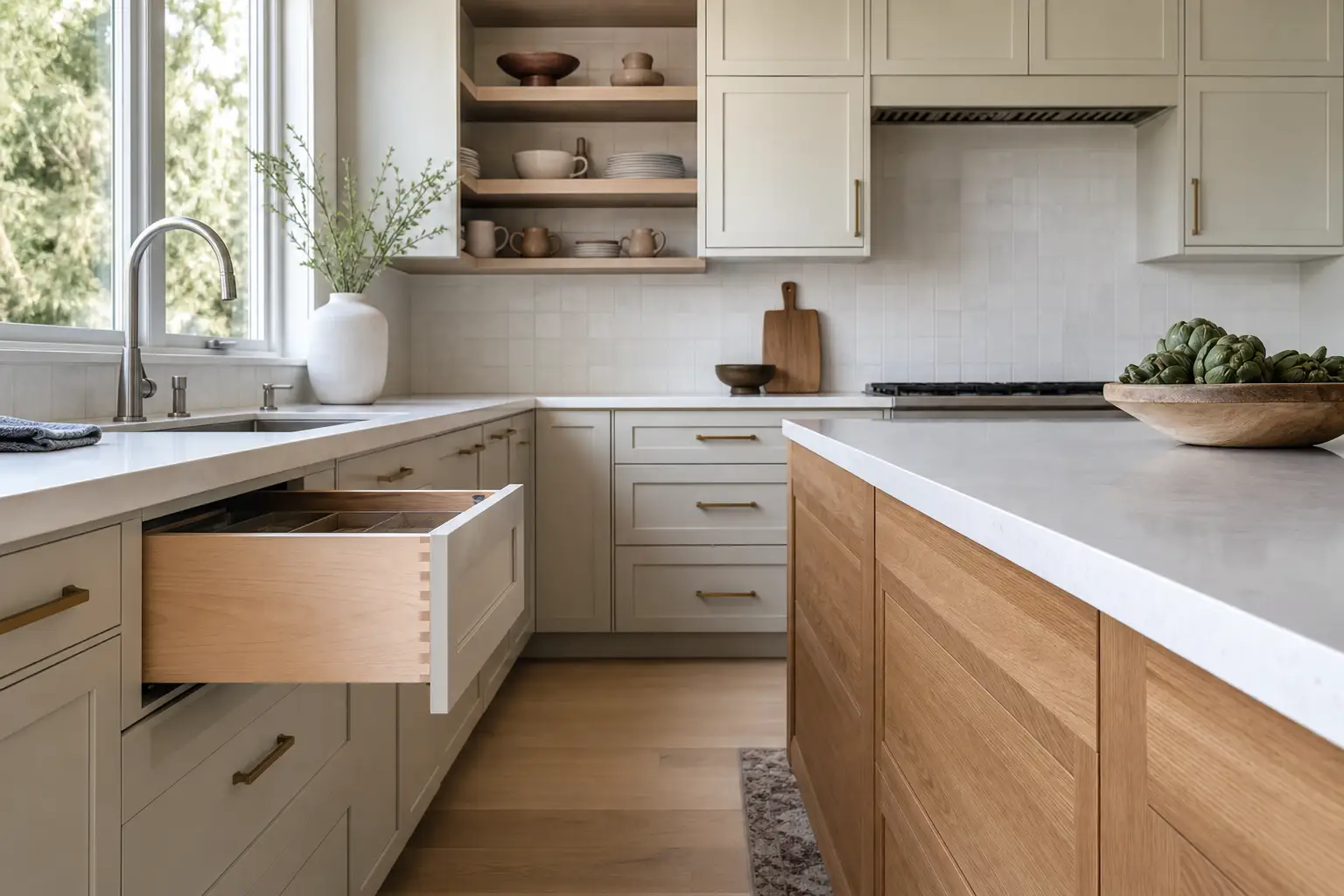
We build dovetailed drawer boxes from solid maple or Baltic birch precisely because they take shifting loads without loosening. A dovetail joint in solid maple, riding on full-extension undermount slides, holds a drawer full of pots for the life of the kitchen. That is a job where solid wood clearly beats engineered panels.
Where solid wood struggles is large flat expanses. A wide solid wood panel expands and contracts with humidity, and Bay Area kitchens see enough seasonal swing to cause problems: doors that stick in a wet winter, painted joints that crack, panels that cup. That is why quality cabinet doors float a panel inside a frame rather than gluing up one rigid slab, and why full solid wood boxes are a poor value compared to plywood. Use solid wood for grain, refinishability, and strength; do not ask it to be a stable flat panel.
How We Combine Them in One Custom Cabinet
Because American Built Cabinets manufactures locally in San Jose, we are not locked into a stock supplier's single material spec. A typical custom cabinet we build uses furniture-grade plywood for the case, so the box stays square and strong. For painted fronts, we use MDF doors and panels for that flawless, joint-free finish. For stained or natural-wood fronts, we switch to solid wood frames with matched wood-veneer flat panels, giving the grain look with far better stability than a solid glued panel. Drawer boxes are dovetailed maple or Baltic birch on soft-close undermount slides.
That mix is the whole argument for custom over stock. Off-the-shelf lines often push one material to hit a price, whether that is a particleboard box to look cheap or an all-solid-wood pitch that sounds premium but warps. Matching each material to its job gets you a cabinet that is strong where it needs strength, smooth where it needs finish, and stable across seasons. It also means when you compare quotes, you should be asking what each part is made of, not just what the door style is. The material breakdown, box, door, panel, and drawer, tells you far more about how the kitchen will hold up than the finish color ever will.
FAQ
Q1: Is plywood or MDF better for kitchen cabinets?
A1: They are better at different jobs. Plywood is the stronger, lighter, more moisture-tolerant choice for cabinet boxes, so it belongs on sides, bottoms, and shelves. MDF has no grain and no seams, so it takes a painted finish more smoothly, which makes it the better choice for painted doors and center panels. A well-built custom cabinet usually uses both.
Q2: Are solid wood cabinets worth the extra cost?
A2: For doors, face frames, and drawer boxes, often yes. Solid wood like maple, white oak, or walnut gives you real grain, easy refinishing, and excellent screw-holding strength. For full cabinet boxes it is usually a poor value, because large solid wood panels expand, contract, and can warp with Bay Area humidity swings, while plywood stays flat.
Q3: Do MDF doors hold up in a humid kitchen?
A3: Quality MDF holds up well as long as the finish is intact and the material is not sitting in standing water. It is dense and stable, so painted MDF doors resist the seasonal cracking you sometimes see at the joints of solid wood painted doors. The weak point is raw or damaged edges near a dishwasher or sink, which is why sealed edges and a durable finish matter.
Q4: What is furniture-grade plywood and why does it cost more?
A4: Furniture-grade plywood uses more internal plies, fewer voids, and better face veneers than construction plywood. Baltic birch and cabinet-grade maple ply have thin, consistent layers that hold screws firmly and give a clean edge. That extra material and quality control is what keeps a cabinet box square and rigid under a heavy stone countertop for decades.
Q5: Which material is best if I want a natural wood look instead of paint?
A5: Solid wood or a real wood veneer over plywood. For a visible grain like white oak or walnut, we use solid wood on the door frames and a matched veneer on flat panels and cabinet sides. Straight solid wood everywhere is not ideal, because wide solid panels move seasonally, while veneered plywood gives the same look with far better stability.
Q6: Do you mix materials in one custom cabinet?
A6: Almost always, and that is the point of building custom. A typical American Built Cabinets box uses furniture-grade plywood for the case, MDF for smooth painted door panels or solid wood for stained fronts, and dovetailed maple or Baltic birch for the drawer boxes. Matching each material to its job is how you get strength, a clean finish, and long life without overpaying.