Dining rooms in the Bay Area tend to do double duty. In a San Jose Eichler the dining space flows straight into the living room, while a San Francisco flat might squeeze a full table into a converted parlor. In both cases, the right cabinetry turns a cramped or awkward corner into real storage: serveware you actually reach for, table linens that stay pressed, and a surface for pouring wine or setting down platters. This guide covers the cabinet types that work in local homes, the materials and hardware worth paying for, and how custom manufacturing changes what fits.
Cabinet Types That Fit Real Dining Rooms
The buffet, or sideboard, is still the workhorse. A standard run sits 36 inches tall and 18 to 24 inches deep, giving you a landing surface for serving and closed storage below. In smaller SF and San Mateo dining nooks, we often drop the depth to 15 or 16 inches so the piece does not eat into walking clearance around the table.
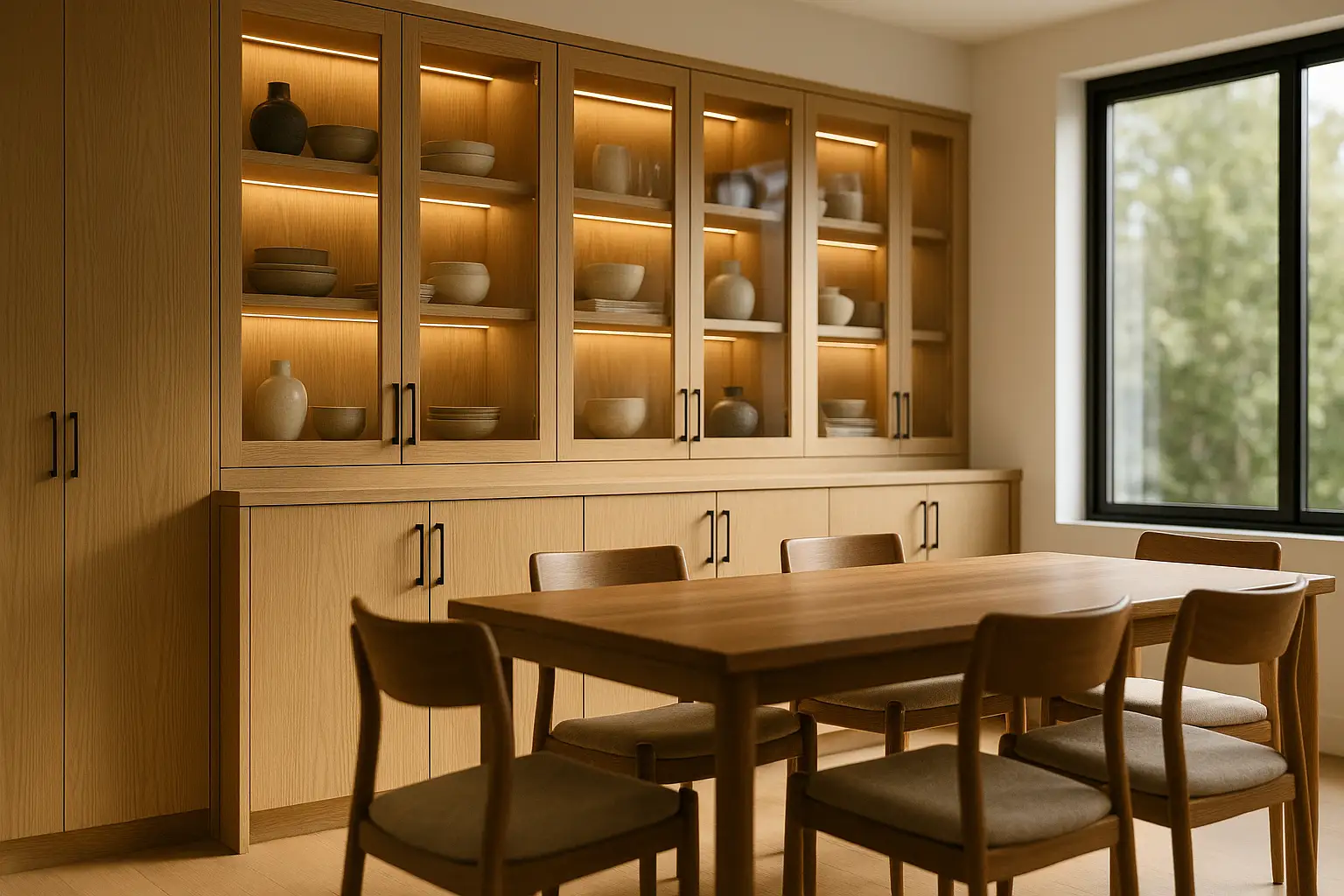
Above or beside the buffet, a china display cabinet with glass fronts handles the pieces you want visible. Glass-front uppers with interior LED strips read as modern when you skip the muntins and use a single clear pane. For homes short on floor space, a full-height built-in that runs wall to wall and floor to ceiling is usually the smarter move. It gives you a mix of closed base cabinets, open shelving at eye level, and tall pantry-style columns, all reading as one clean architectural wall rather than a collection of furniture.
Materials and Finishes for a Modern Look
For dining cabinets we build boxes from 3/4-inch plywood rather than particleboard. Plywood holds screws and hardware better over decades of opening and closing, and it shrugs off the humidity swings you get in homes near the coast or the bay. MDF has one legitimate use here: painted slab or Shaker doors, where its grain-free surface takes a sprayed finish without the telegraphing you sometimes see on solid wood panels.
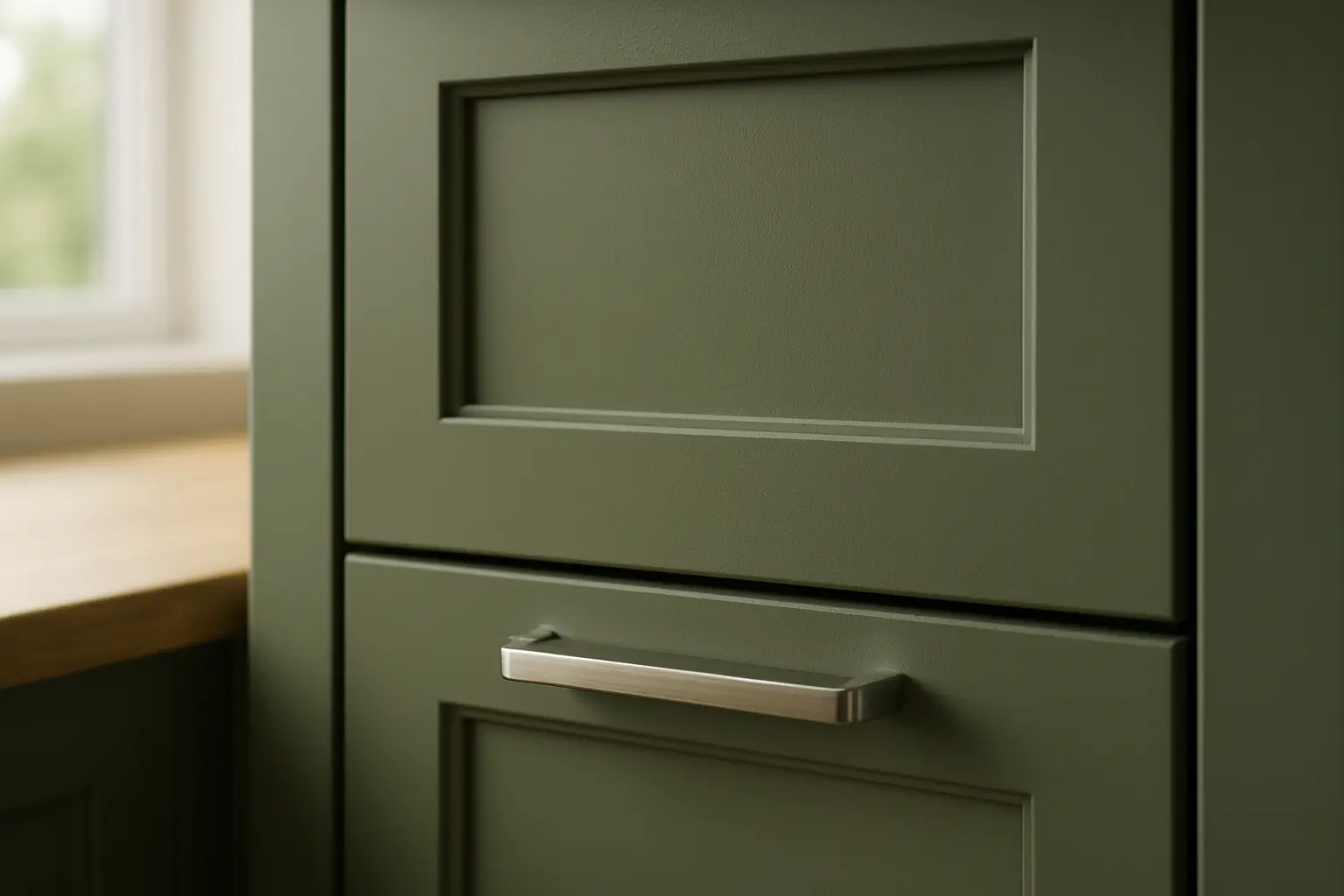
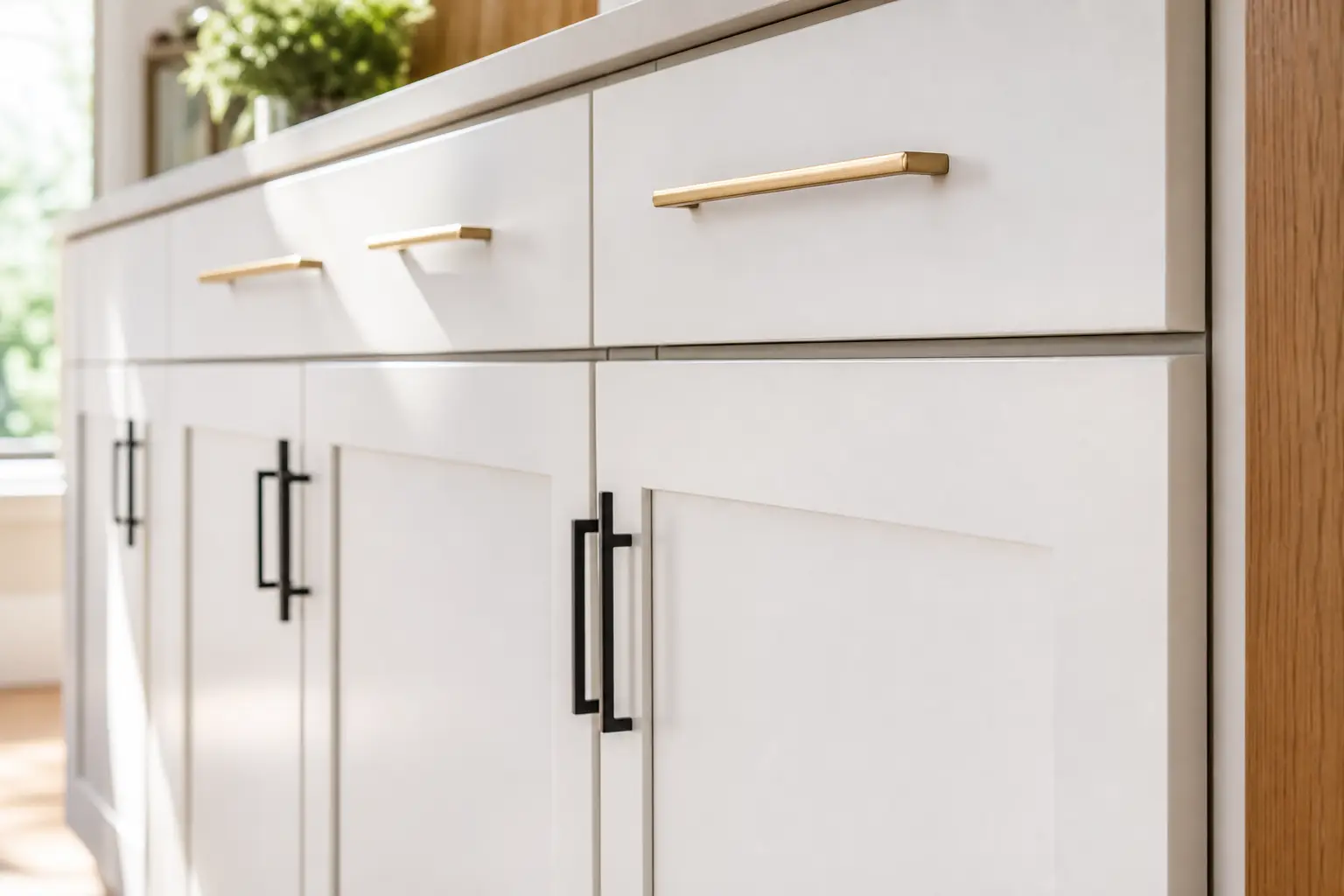
Finish drives the whole mood. A flat or matte painted door in warm white, greige, or a deep muted green suits most Bay Area interiors, from Victorian to mid-century. If you want warmth, rift-cut white oak with a natural or lightly stained finish is the current favorite, and it pairs cleanly with quartz or honed stone tops. American Built Cabinets sprays and cures finishes in-shop, which gives a more durable and even coat than site-applied paint. For contrast, some clients do a painted base with a natural wood open-shelf section above.
Hardware and Interior Fittings Worth the Money
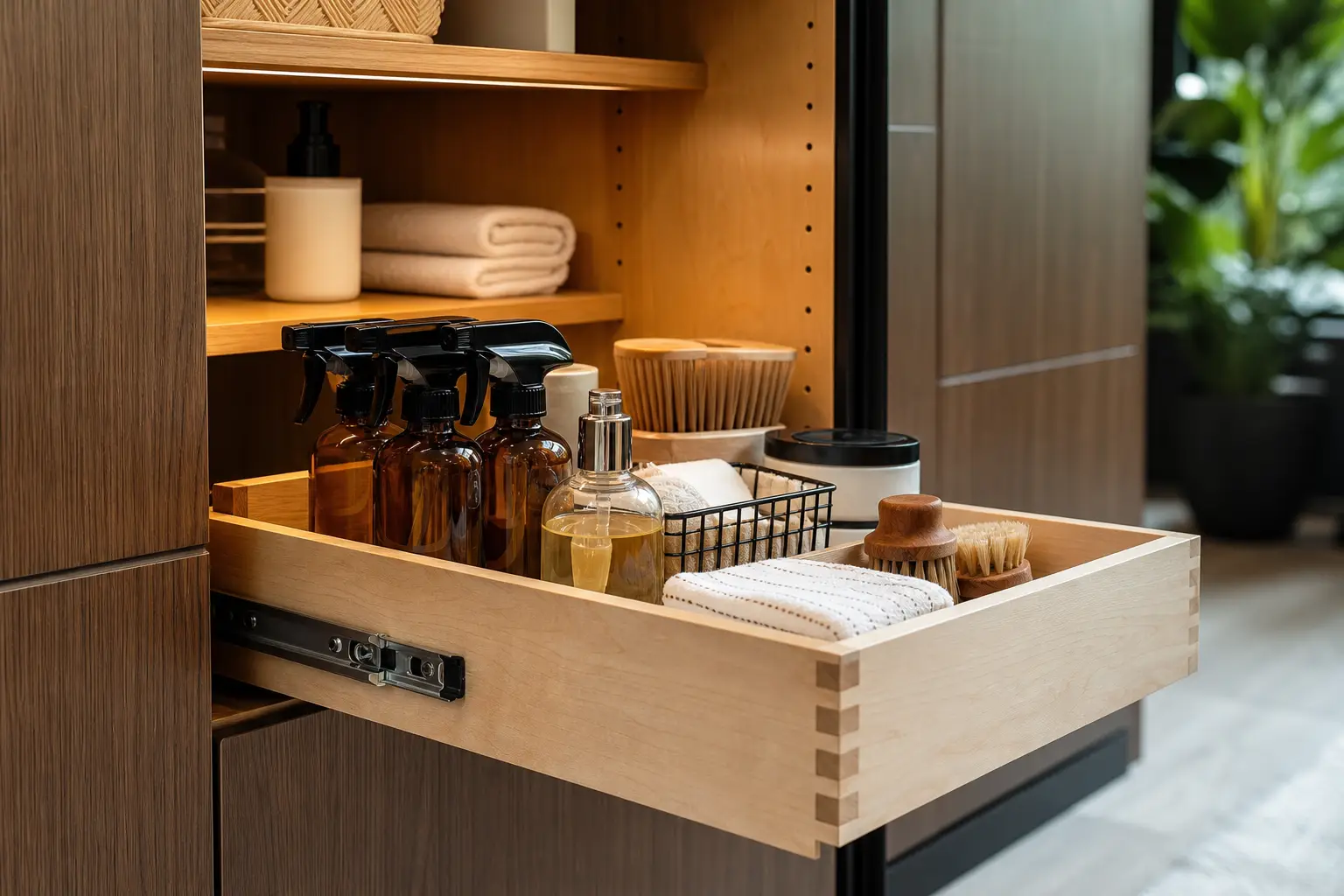
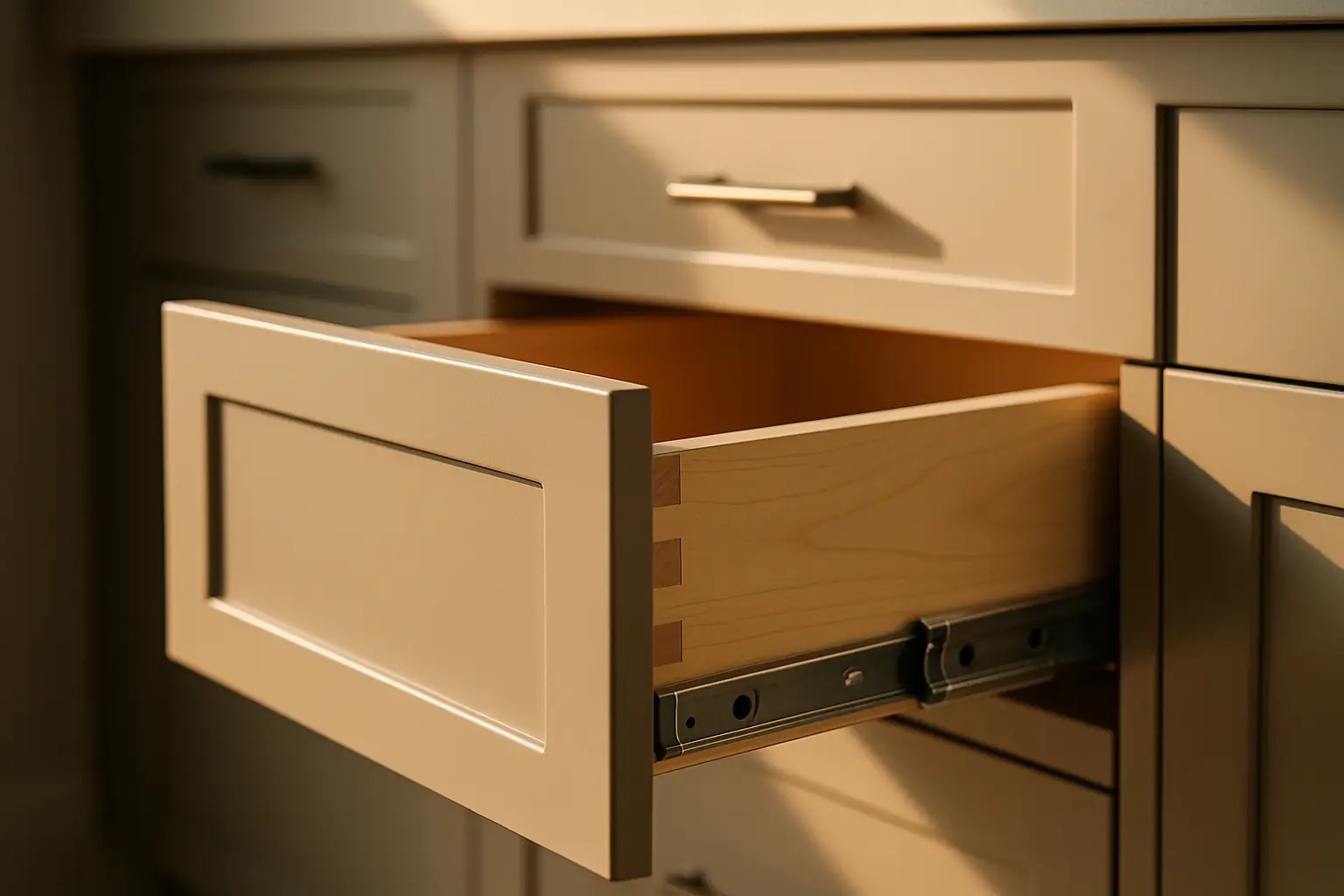
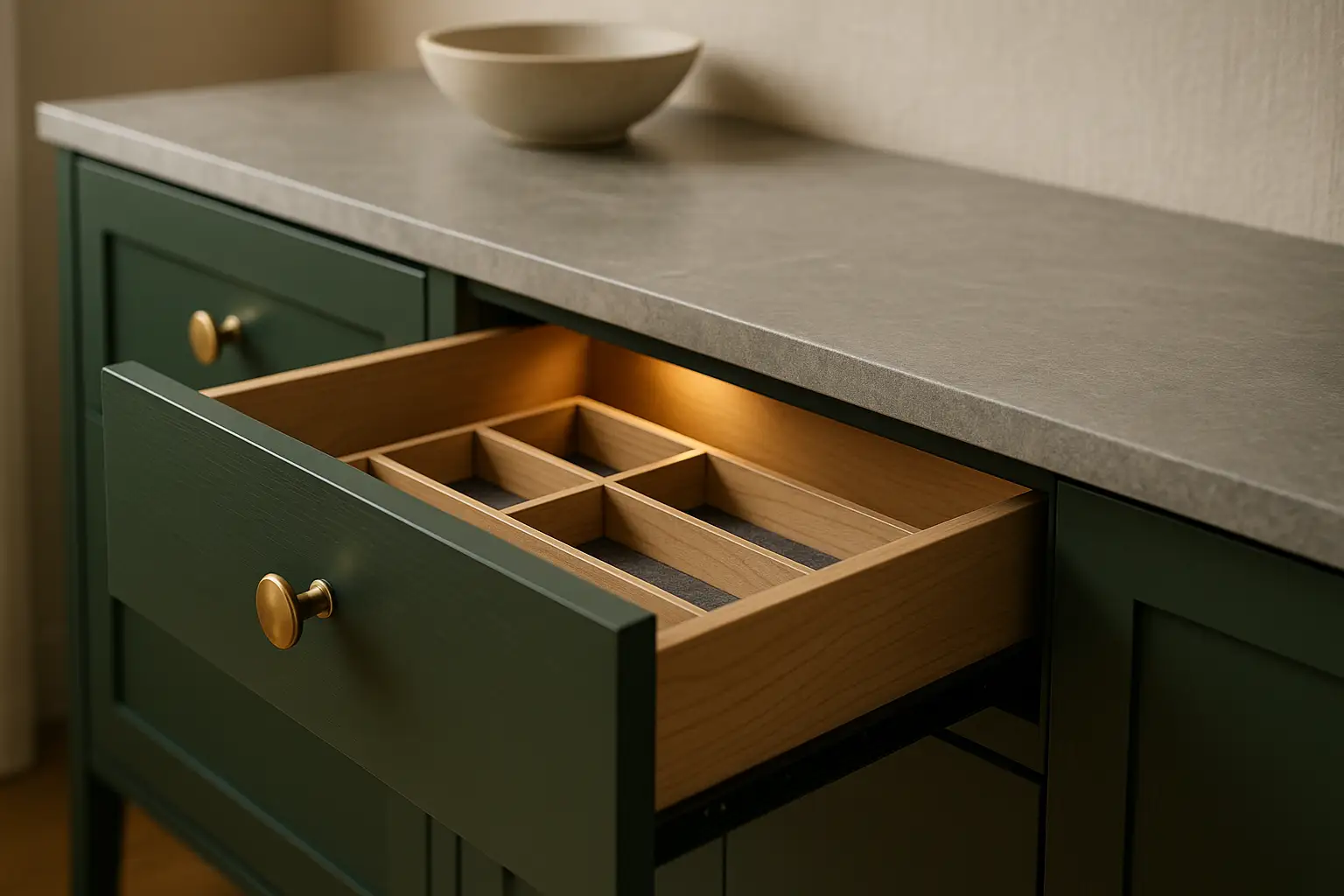
Dining storage is where good hardware quietly earns its keep. Full-extension soft-close drawer slides let you pull a deep drawer all the way out to reach the platter at the back, and the soft-close stops the slam when someone shuts it with a hip full of dishes. Dovetailed solid-wood drawer boxes handle the weight of stacked china and flatware without racking.
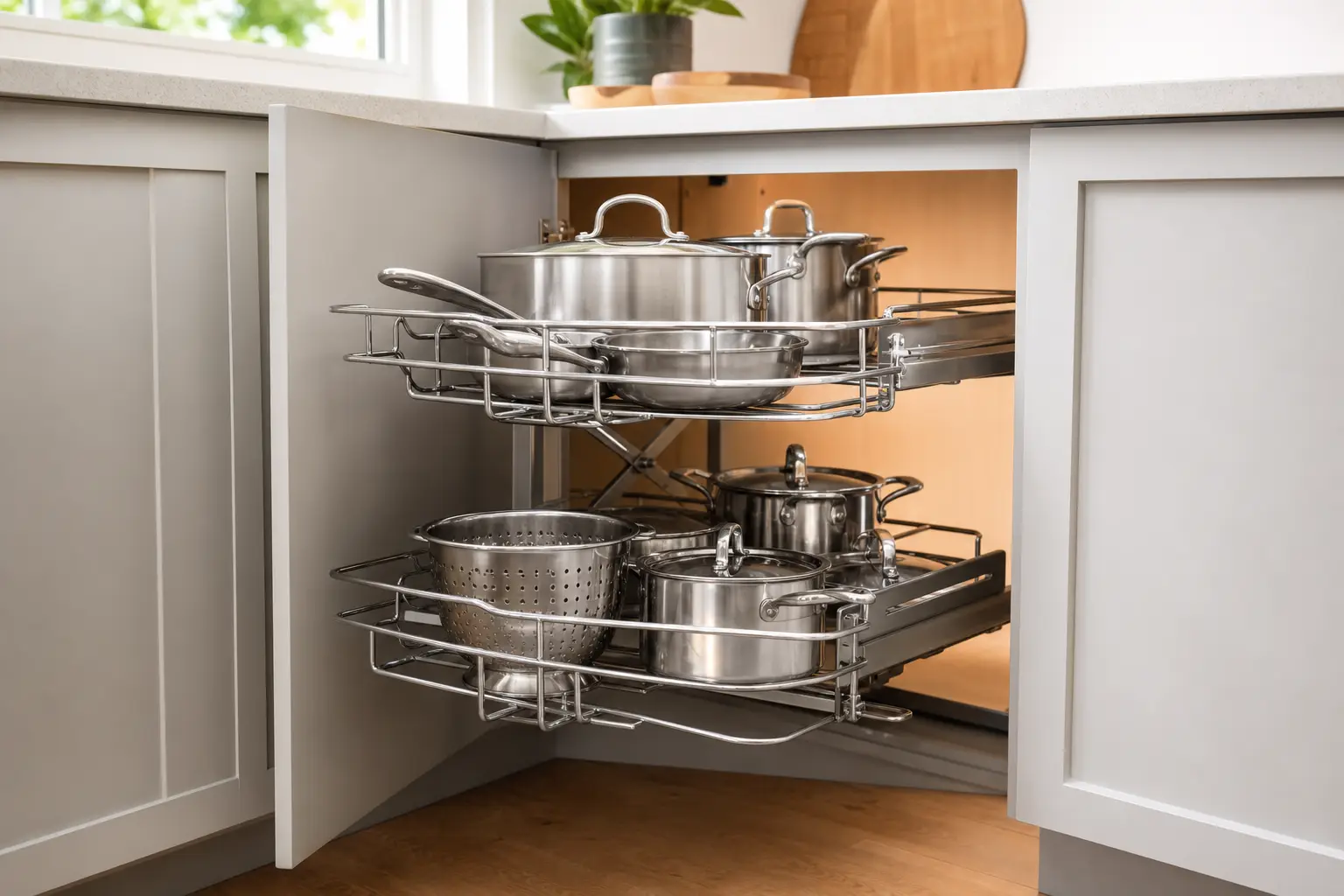
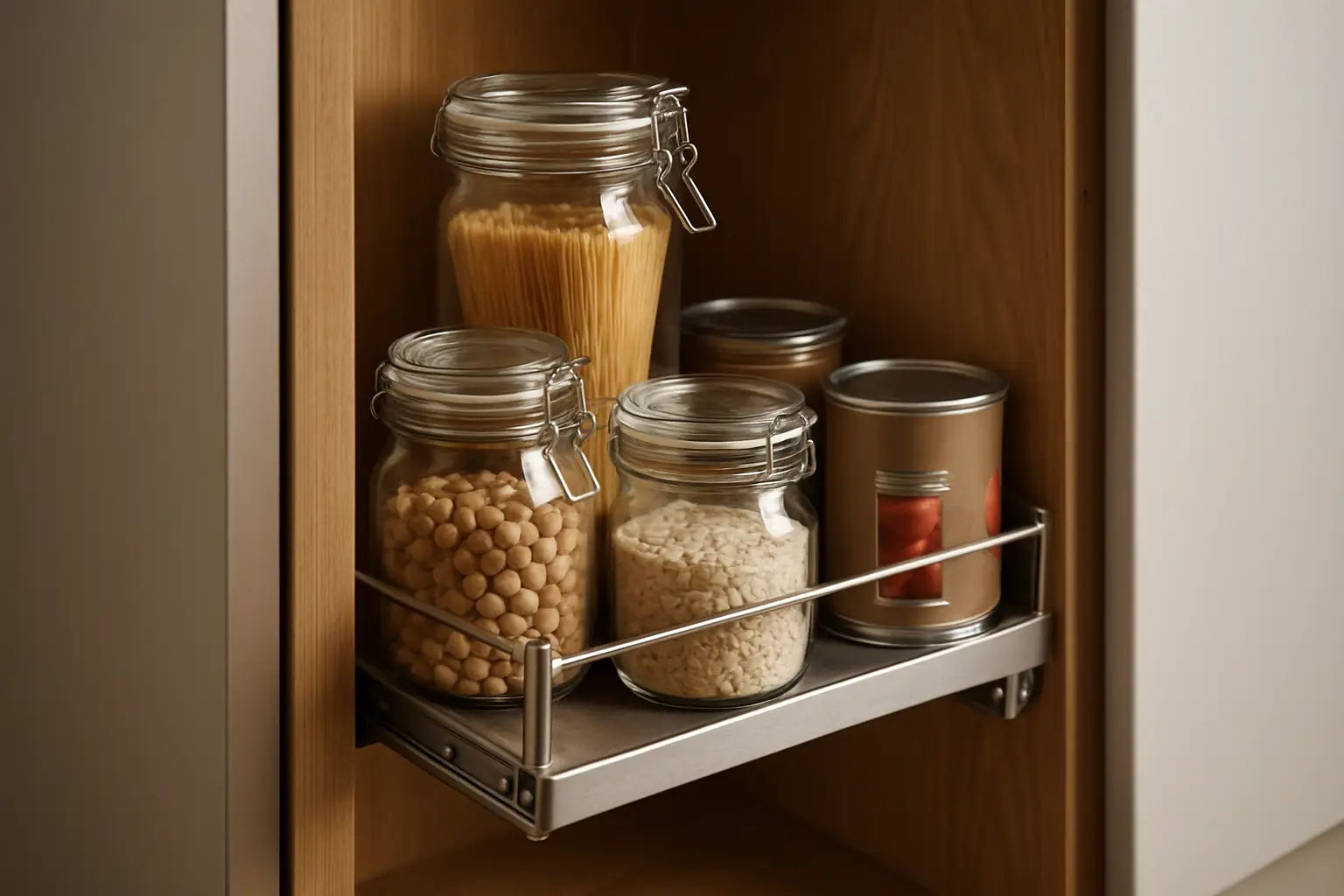
Inside, a few fittings solve specific dining problems. A felt-lined or adjustable divider drawer keeps sterling and everyday flatware from rattling. Vertical dividers store trays, cutting boards, and chargers on edge instead of in a leaning stack. Pull-out shelves behind cabinet doors turn a deep base into usable space rather than a black hole. For glass-front display sections, adjustable shelves on metal pins let you reconfigure as your collection changes, and low-voltage LED lighting on a dimmer makes the whole piece feel finished at dinner.
Custom vs Semi-Custom vs RTA for Local Homes
RTA (ready-to-assemble) cabinets are the cheapest path and fine for a garage or a rental, but they come in fixed sizes in 3-inch increments, which almost never matches an older Bay Area dining wall. You end up with filler strips and wasted space. Semi-custom expands your door styles, finishes, and a handful of modifications, and it works when your room is close to standard.
True custom is where an odd dining space actually gets solved. A bay window wall, a sloped Eichler ceiling, a chimney breast that juts into the room: we build to the exact dimensions and scribe the piece to the wall so there are no gaps. Because we manufacture in San Jose, our custom lead time runs around three weeks, which is far faster than the eight to twelve weeks common for custom lines routed through a national factory. That local production also means we handle quality control ourselves and stand behind the warranty directly, without a middleman.
FAQ
Q1: How much space do I need between a dining buffet and the table?
A1: Leave at least 36 inches of clearance so chairs can pull out and people can walk behind seated diners. In tighter San Francisco and San Mateo dining rooms, we often reduce cabinet depth to 15 or 16 inches to protect that walkway while keeping full storage.
Q2: What is the best cabinet height for a dining room buffet?
A2: Standard is 36 inches, which matches kitchen counter height and gives a comfortable serving surface. If you plan to display art or a mirror above it, a lower 32 to 34 inch buffet can look more balanced in a formal dining room.
Q3: Should I match my dining cabinets to my kitchen cabinets?
A3: You do not have to match them exactly, and in open floor plans a deliberate contrast often works better. Many Bay Area clients keep a shared finish family, such as the same white oak or a related paint tone, then vary the door style so the dining piece reads as furniture rather than an extension of the kitchen.
Q4: Are glass-front display cabinets still in style?
A4: Yes, when they are done cleanly. Skip heavy muntins and small panes in favor of a single clear or reeded glass panel, add interior LED lighting on a dimmer, and the piece reads modern. It is the ornate leaded-glass look that dates a room.
Q5: How long does a custom dining cabinet take to build?
A5: Because we manufacture locally in San Jose, our custom lead time is about three weeks from approved design and measurements. National custom lines routed through distant factories typically run eight to twelve weeks, so local production is a real time advantage for Bay Area projects.
Q6: Is plywood really worth it over particleboard for dining cabinets?
A6: For anything you intend to keep, yes. Plywood boxes hold hinge and slide screws more securely over years of use and resist moisture better, which matters in homes near the coast or the bay. We reserve MDF for painted door panels, where its smooth grain-free surface actually improves the finish.