Storage is the first thing to run short in a busy kitchen, and the pantry is where that pressure shows up most. Whether you cook every night in a San Jose townhome or you are remodeling a compact San Francisco flat, the right pantry cabinet does more than hold cans and cereal. It sets how easily you find things, how much counter clutter you avoid, and how well the kitchen holds up over a decade of daily use. At American Built Cabinets we build pantry cabinetry locally, so we see firsthand what works in real Bay Area kitchens, from tight galley layouts on the Peninsula to open floor plans in newer South Bay construction.
Pantry Cabinet Styles That Fit Real Bay Area Floor Plans
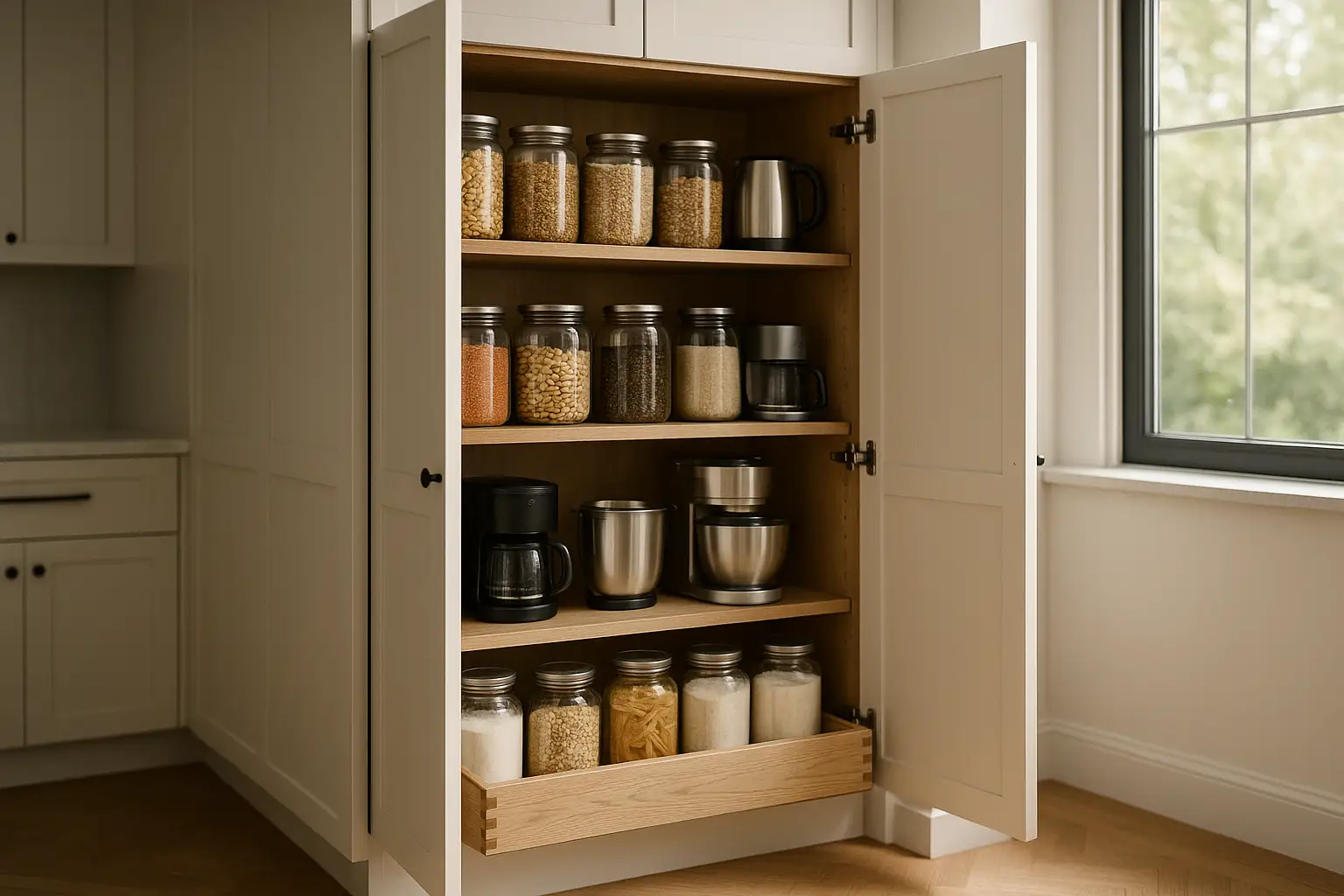
There is no single "pantry cabinet" because Bay Area homes vary so much. A 1920s bungalow near downtown San Jose might have a shallow 12-inch nook, while a newer San Mateo build leaves a full 24-inch by 84-inch tower waiting to be filled. The most common configurations we build are the tall single-column pantry (usually 18 to 24 inches wide, 84 to 96 inches tall), the double-door utility pantry that swallows small appliances, and the base pantry with roll-outs for homes where ceiling-height cabinets would feel heavy.
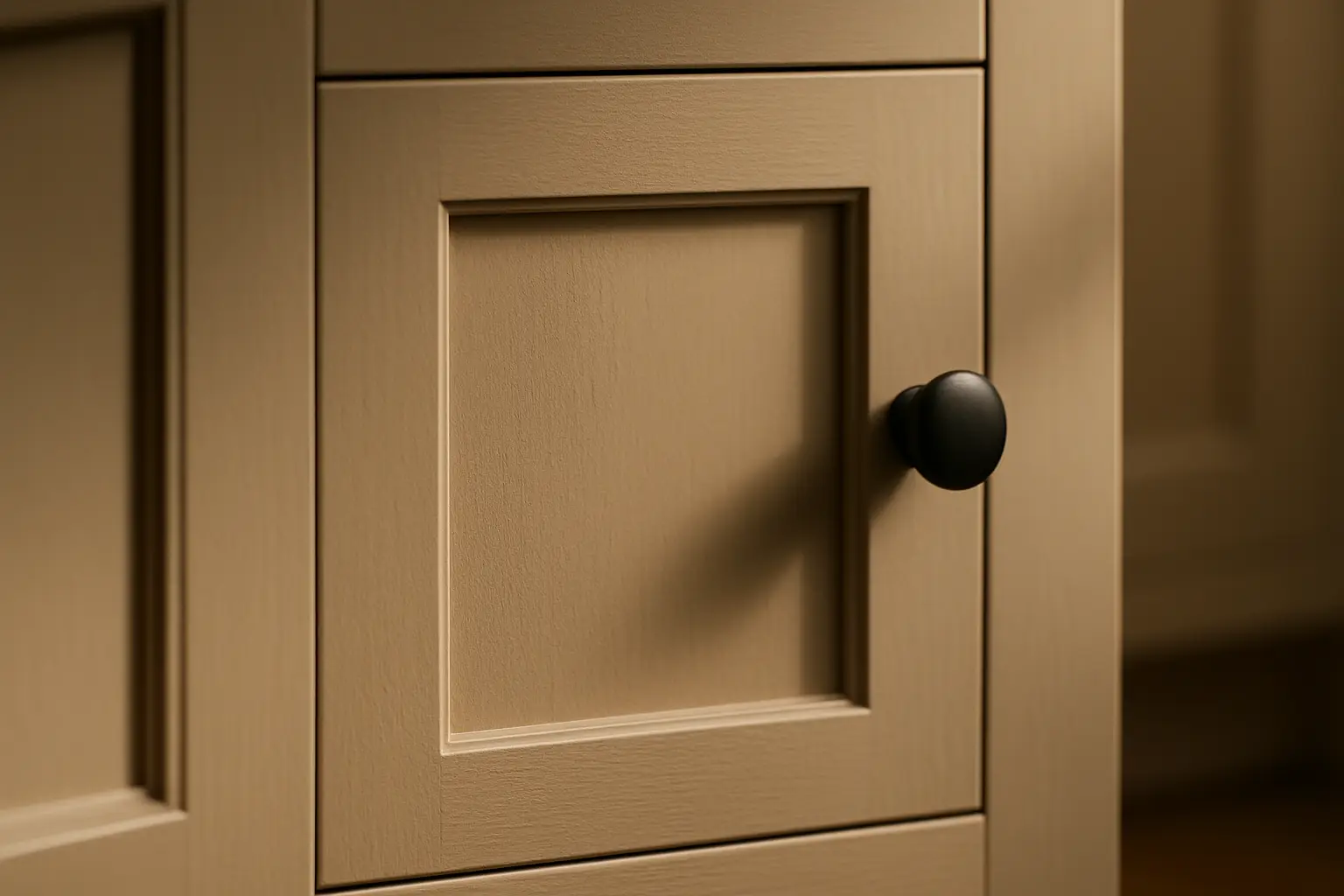
For smaller kitchens, a corner pantry with a rotating or pull-out mechanism reclaims space that usually goes dead. In open-concept remodels, we often build a pantry wall that reads as furniture: flat-panel doors, integrated toe kicks, and pulls that match the rest of the run so the pantry disappears into the design instead of announcing itself. The style you choose should follow your ceiling height and door swing clearance first, then aesthetics.
Interior Hardware: Where a Pantry Earns Its Keep
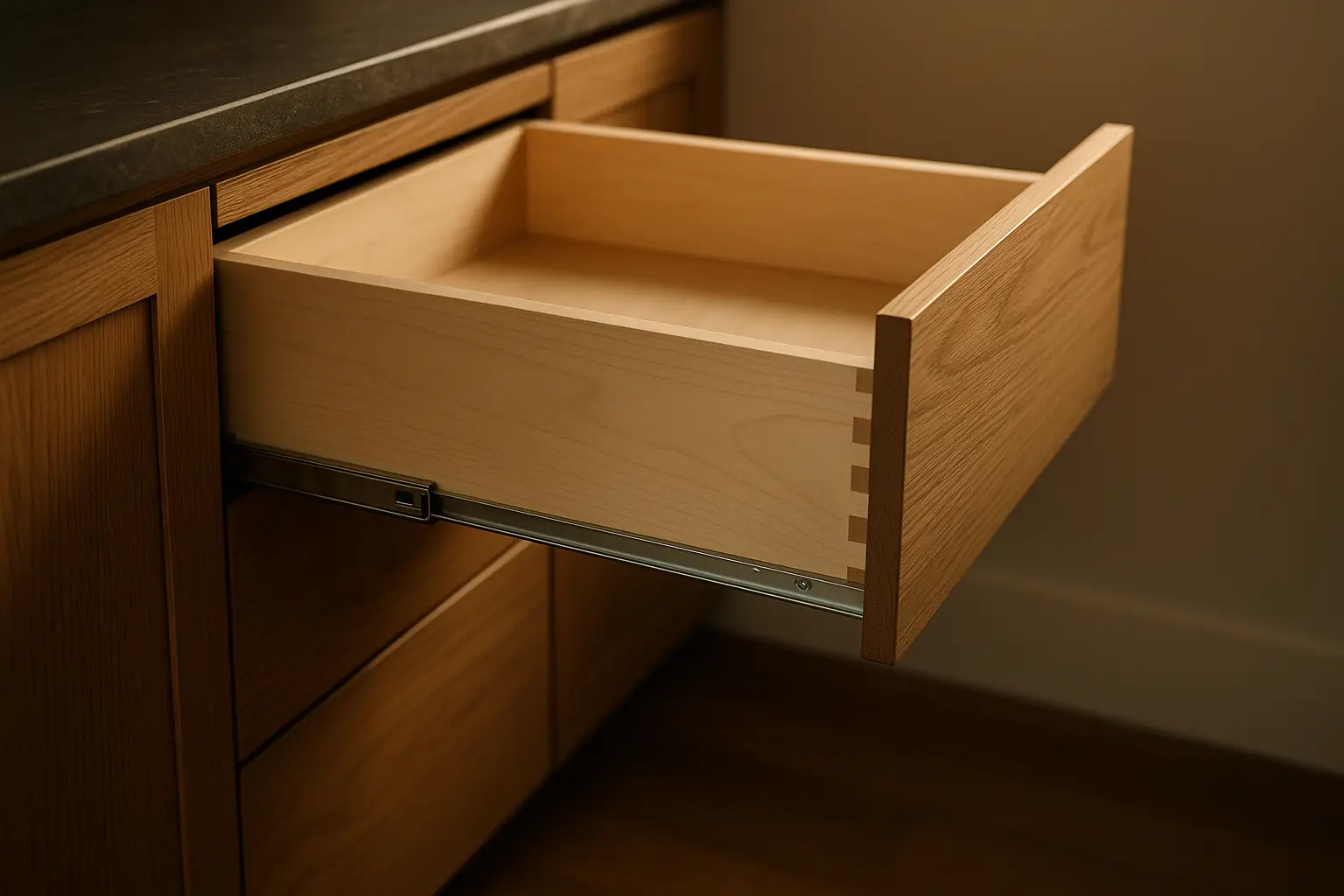
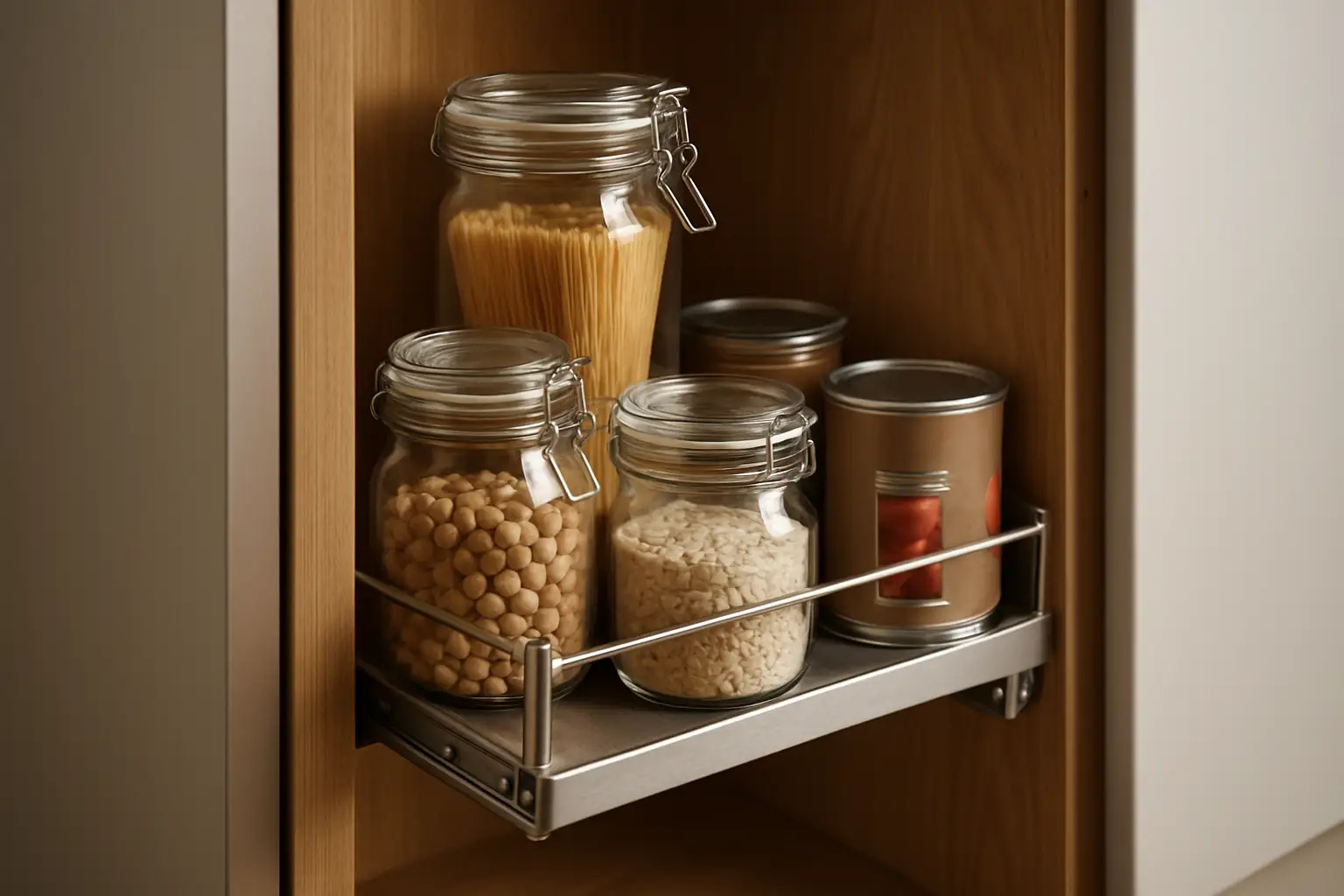
A tall cabinet with five fixed shelves wastes most of its depth, because anything pushed to the back gets forgotten. The upgrades that actually change daily life are mechanical. Full-extension pull-out shelves on ball-bearing slides let you reach the very back of a 24-inch-deep cabinet without kneeling and digging. Rated slides carry 75 to 100 pounds, which matters when a shelf is loaded with canned goods and small appliances.
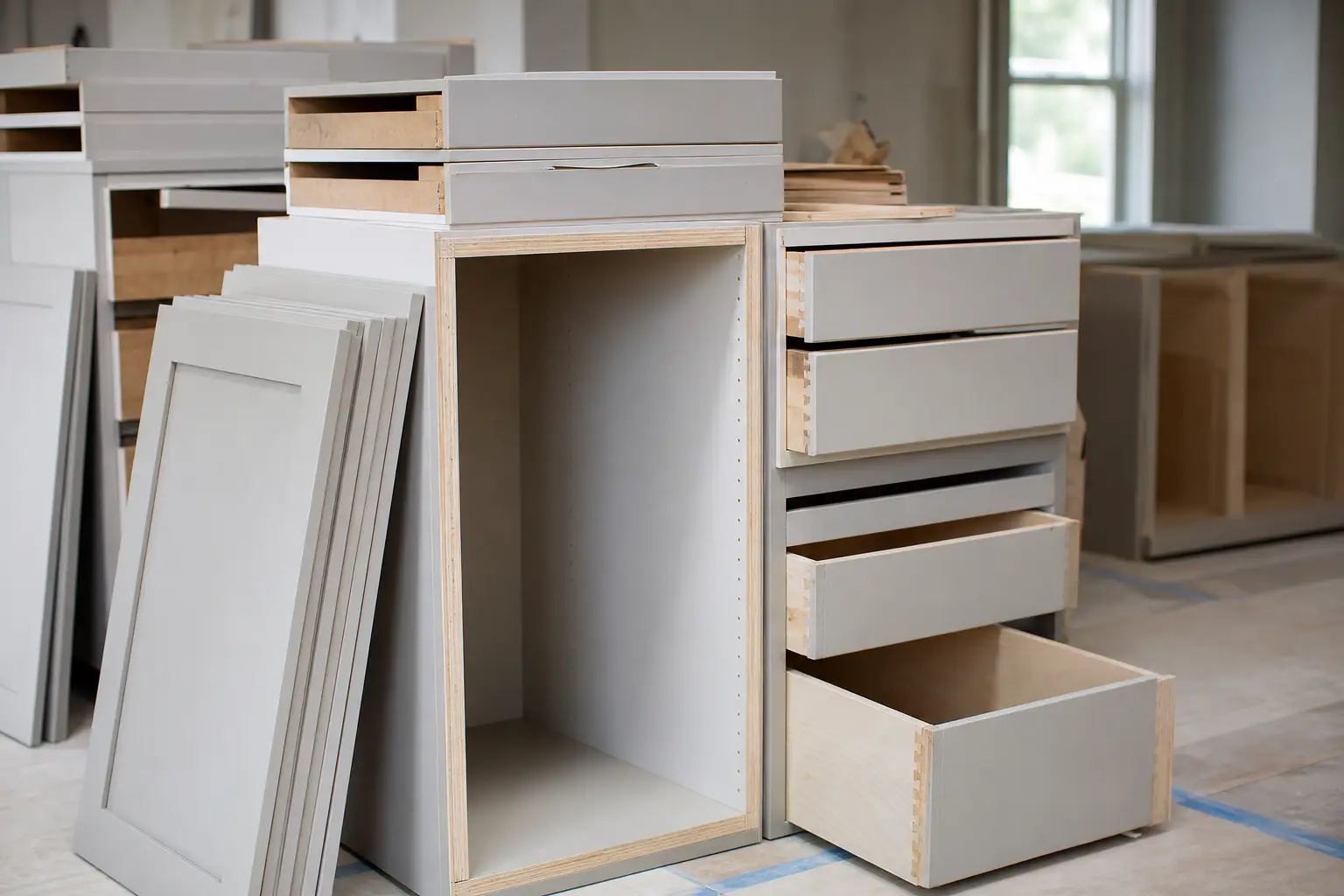
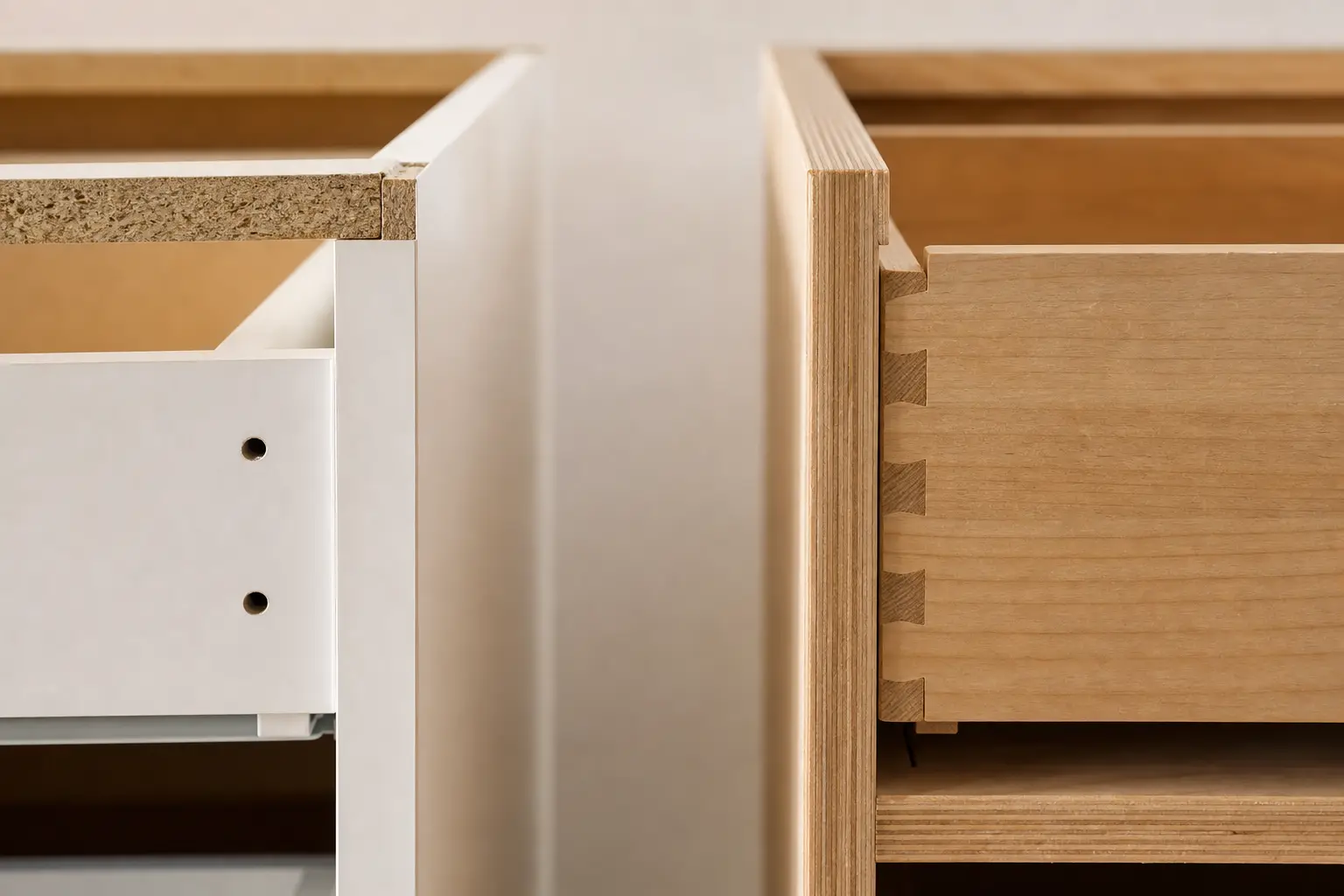
Soft-close hinges keep tall doors from slamming, and they hold up far better than the cheap self-closing hinges found on many RTA units. For narrow gaps, a pull-out pantry column, sometimes called a chef's pantry, uses a heavy-duty frame with adjustable baskets that rolls out on both sides. We also build door-mounted spice racks and dovetail drawer boxes for the lower portion of a pantry, since solid-wood dovetail construction handles the weight of stacked jars and bottles better than stapled particleboard boxes.
Materials and Finishes That Survive Bay Area Kitchens
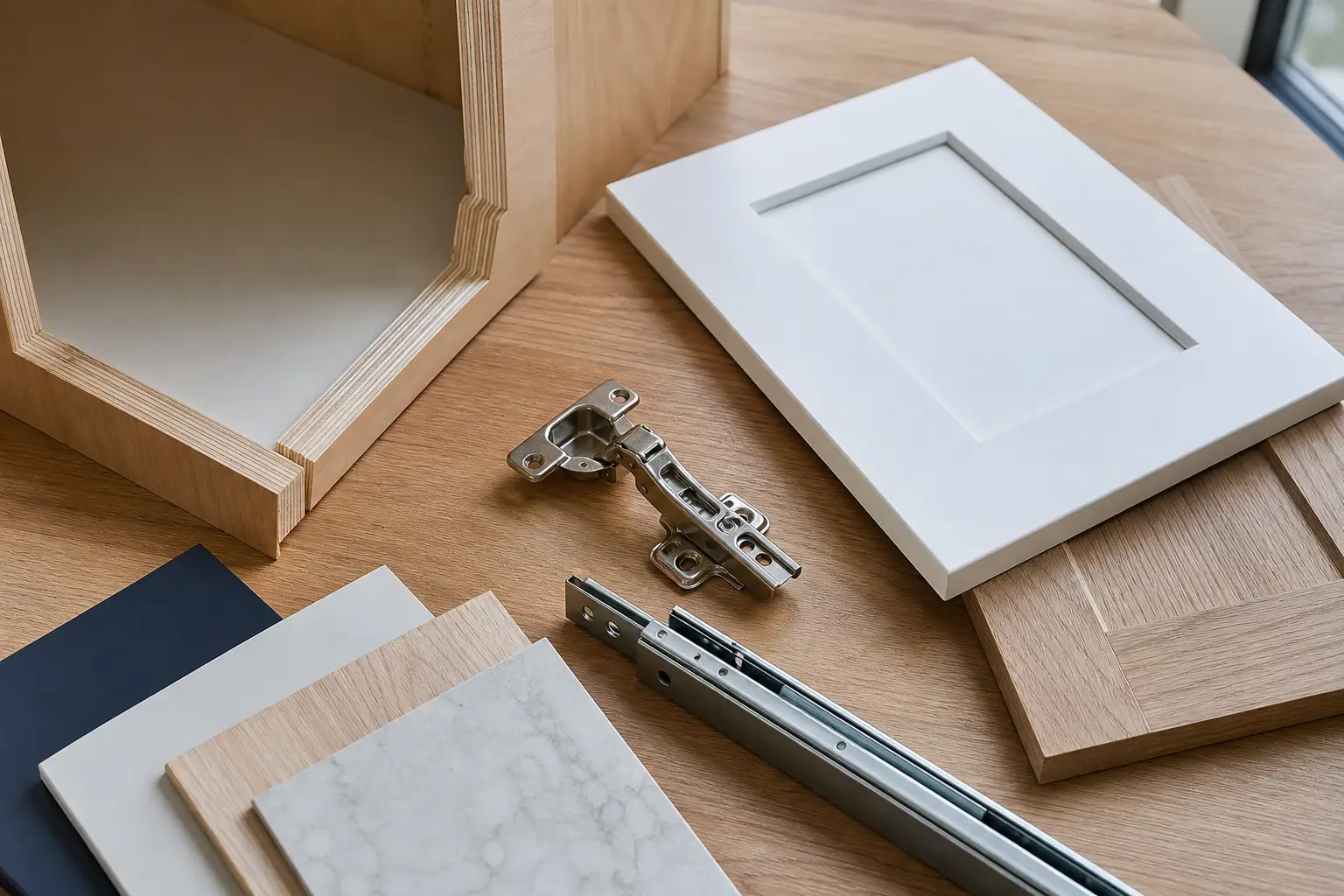
Coastal and bay-influenced humidity is milder here than in many parts of the country, but kitchens still see steam, spills, and temperature swings. For pantry boxes we recommend 3/4-inch plywood over particleboard for the carcass, because plywood resists sagging under load and holds screws and slide hardware far more securely over time. Shelves that span more than 32 inches should be plywood or reinforced to prevent the slow bow you see in older cabinets.
MDF earns its place on door panels and painted surfaces because it takes a smooth, crack-resistant painted finish that solid wood cannot match at the panel seams. If you want a natural wood look, we use solid wood for face frames and doors with a plywood interior. For finishes, a catalyzed or conversion varnish gives a durable, wipeable surface that stands up to fingerprints near a pantry door that gets opened dozens of times a day. Matte and satin sheens hide smudges better than high gloss, which is why they dominate current Bay Area kitchen requests.
Custom vs Semi-Custom vs RTA for Pantry Storage
Ready-to-assemble pantries are the cheapest path and can work in a rental or a quick refresh, but you are locked into stock widths, and the interiors are rarely optimized. Semi-custom gives you a range of sizes and a few interior upgrades without full customization, which fits many standard remodels. Full custom matters most for pantries specifically, because pantry openings so rarely land on a stock dimension: a leftover 19-inch run, a knee wall that cuts into the top, or a spot where the cabinetry has to meet trim without a gap.
Because we manufacture in San Jose rather than ordering from a distant factory, we can size a pantry to the wall instead of forcing a stock box to fit and hiding the mismatch behind filler. That local control also means our own team handles quality checks before delivery, and warranty issues get resolved by the people who built the cabinet instead of a phone tree three time zones away.
FAQ
Q1: How much do pull-out roll-out shelves add to a pantry's price?
A1: A single full-extension roll-out on ball-bearing slides typically adds $70 to $130 per shelf over a plain fixed shelf, depending on the slide's load rating and whether the box is dovetailed hardwood or plywood. Building them in during manufacturing is cheaper than retrofitting later, since a finished cabinet has to be drilled and shimmed for slide mounts after the fact.
Q2: What hinge and slide hardware do you use in tall pantries?
A2: We standardize on Blum and Grass soft-close hinges and Blum or Hettich full-extension slides rated 75 to 100 pounds. Tall pantry doors get three to four hinges each so they stay aligned and don't sag after years of daily use. All of it is serviceable and replaceable rather than riveted in place.
Q3: How do you fit a pantry to a crooked wall without visible filler strips?
A3: We add a scribe stile, an oversized edge on the face frame, that we hand-plane on site to follow a wall that is out of plumb. Paired with adjustable levelers hidden in the toe kick, this closes gaps up to roughly 3/4 inch cleanly, so the cabinet reads as built-in instead of dropped in with a separate filler piece.
Q4: When during a kitchen remodel does the pantry get installed?
A4: Tall pantry towers usually go in after flooring and rough plumbing and electrical, and before adjacent upper cabinets, so we can scribe and level the tall unit first and align everything else to it. Base pantries that support a countertop are set before the counter templating so the fabricator measures off the finished cabinet.
Q5: Is plywood really worth it over particleboard for a heavy pantry?
A5: For anything holding canned goods or small appliances, yes. A 3/4-inch plywood shelf spanning 30 inches deflects far less under a 60-pound load than particleboard of the same thickness, and it grips slide and hinge screws without stripping. Particleboard also swells permanently if it ever meets a leak, which is a common failure point in older pantries.
Q6: Can a pantry hold a microwave or other plugged-in appliances?
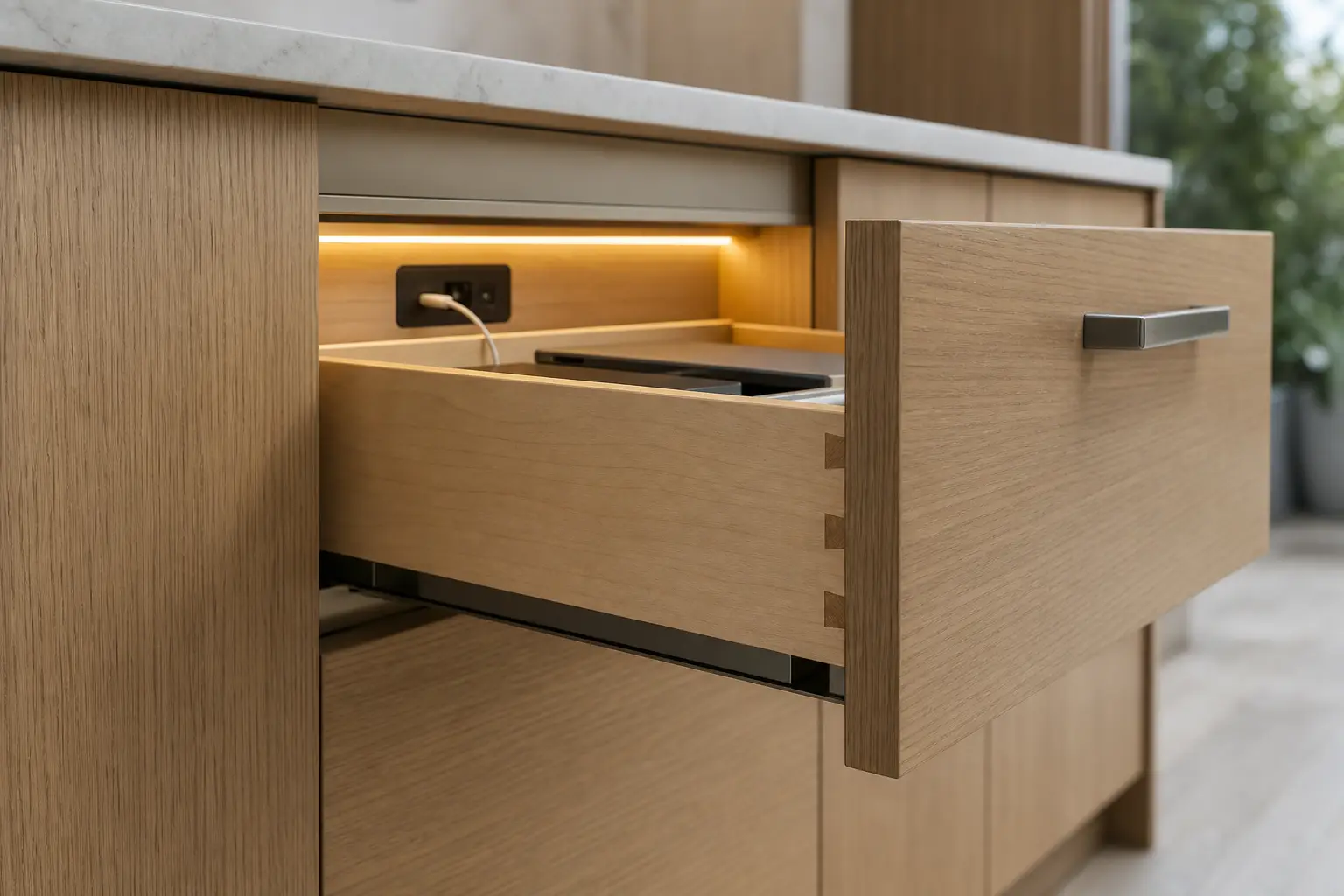
A6: Yes. We build a dedicated appliance shelf on 100-pound slides with about 15 to 18 inches of vertical clearance, and we can cut in a rear outlet notch so a microwave or coffee maker stays plugged in as the shelf rolls out. Just plan the electrical location with your contractor before the cabinet is built.