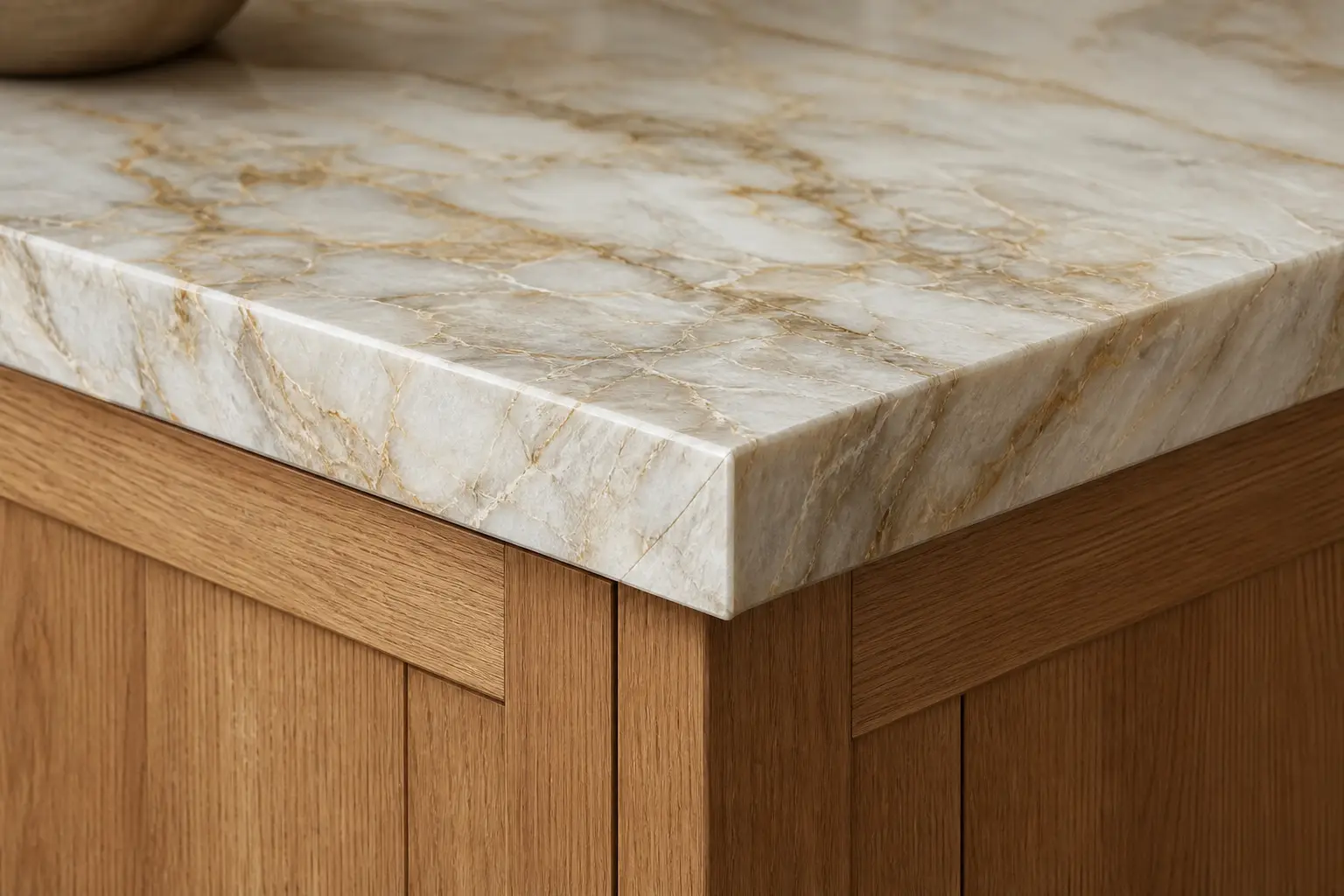
The phrase smart cabinets used to mean a charging drawer and little else. In the kitchens we are building across San Jose, San Francisco, and the Peninsula this year, it means something more useful: cabinetry engineered around how people actually cook, charge devices, hide clutter, and reach the things they use every day. Most of these features are not gadgets. They are thoughtful mechanical and electrical details built into the box during manufacturing. Here is what Bay Area homeowners are specifying in 2026, and which upgrades are worth the money.
What Smart Actually Means in a 2026 Kitchen
Strip away the marketing and smart cabinetry falls into two groups. The first is mechanical intelligence: drawers and pull-outs engineered to use every inch of the box, hardware that opens with a touch, and organizers that keep the interior from becoming a pile. The second is integrated electronics: outlets and USB-C hidden inside cabinets, motion-activated lighting, and touch-latch openers for handleless fronts. Both get built into the cabinet during manufacturing, not bolted on afterward.
That distinction matters when you set a budget. The mechanical features do the heavy lifting on daily usability and cost far less than most people assume, because they are joinery and slides rather than wiring. The electronic features are the ones worth planning carefully, since they need power routed to the right place before drywall goes up. In a Bay Area remodel where you are already opening walls, the marginal cost of running a circuit to a charging drawer is small. Retrofitting one later is not.
The Interior Systems People Reach For Every Day
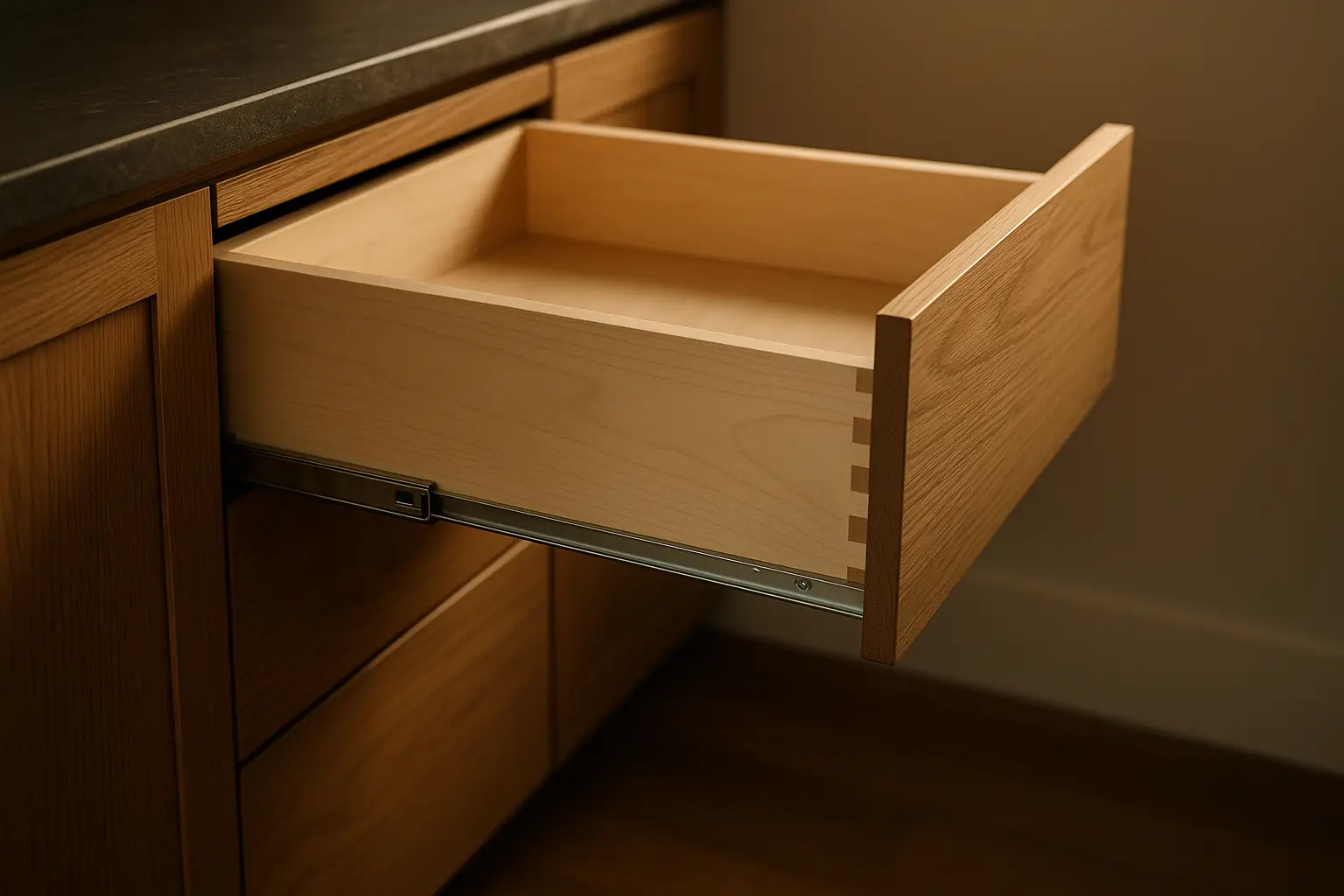
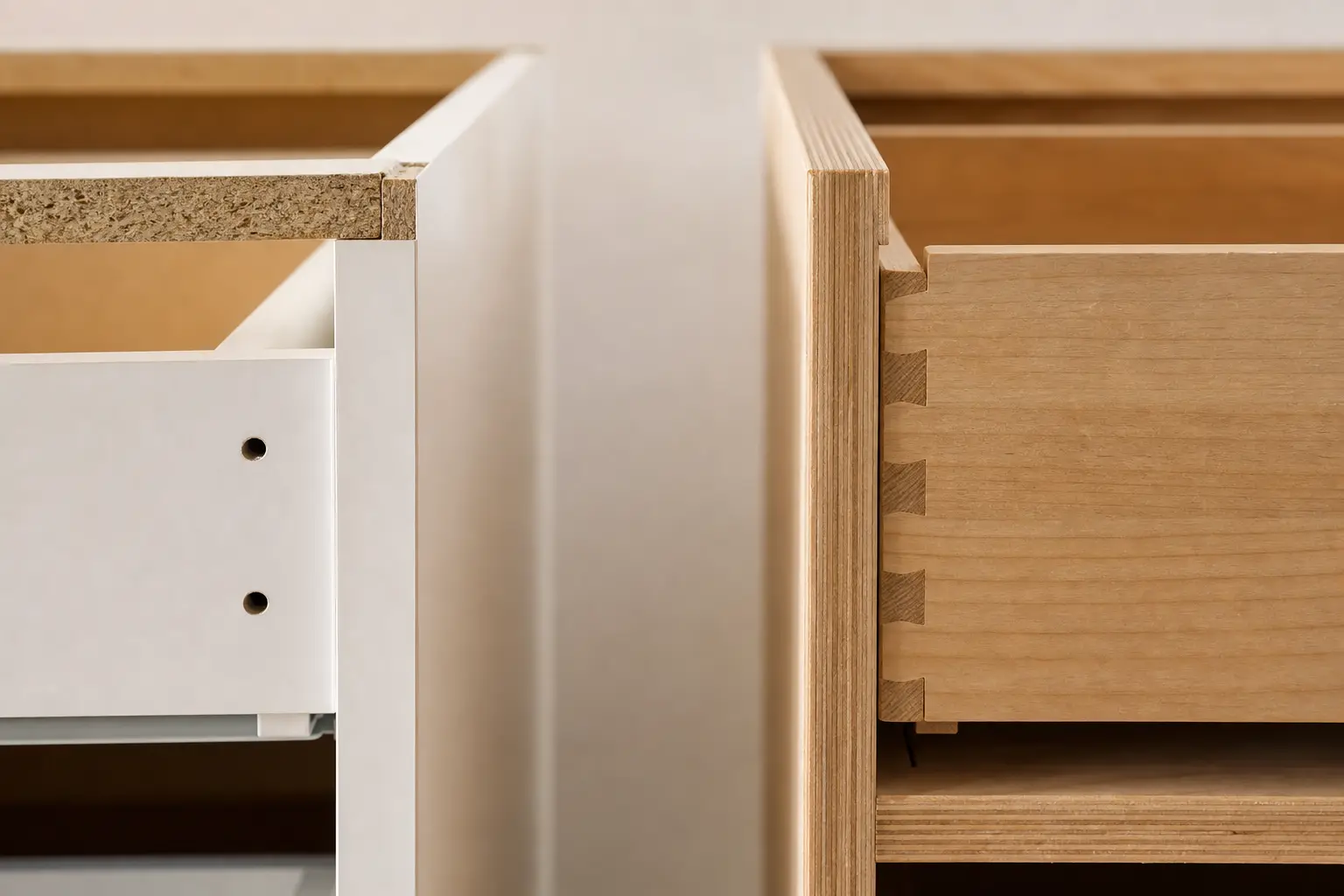
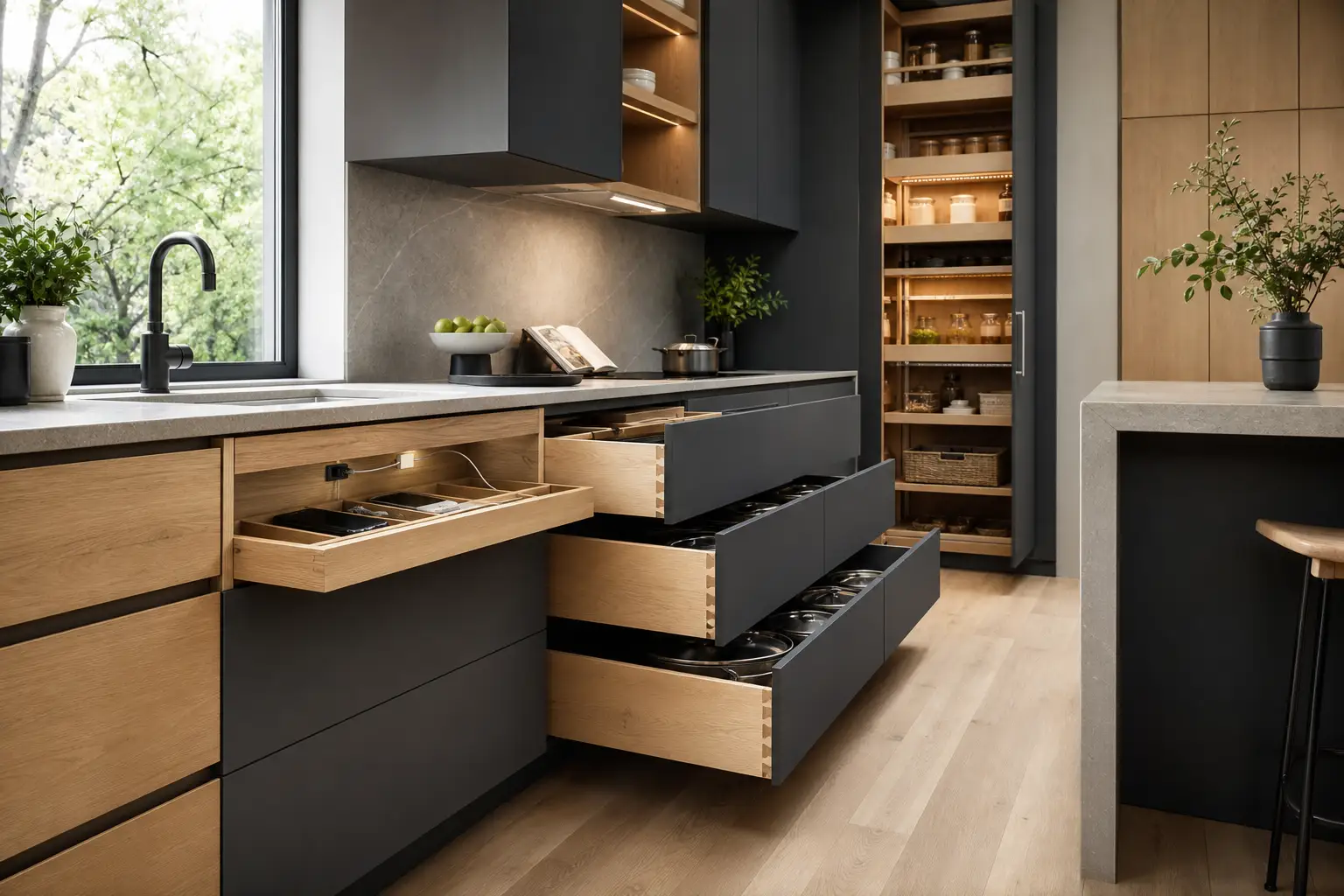
The single most requested upgrade is not electronic at all. It is deep drawer banks replacing lower door-and-shelf cabinets. A base cabinet with three or four deep drawers on full-extension, soft-close slides puts pots, lids, and small appliances in front of you instead of buried at the back of a dark shelf. We build those drawer boxes from dovetailed solid maple or Baltic birch so they hold heavy loads without the joints loosening over years of use.
Around those drawers, a few organizers earn their keep. A full-height pull-out pantry with adjustable wire or wood shelves turns a narrow 12 to 18 inch cabinet into serious storage. A dual-bin pull-out under the sink handles trash and recycling and hides both behind a single front. Blind-corner units with a swing-out or slide-out tray recover the dead space every L-shaped kitchen has. Peg systems inside deep drawers keep stacks of plates from sliding. None of these need power, and they are the features clients thank us for a year later.
Charging Drawers, Hidden Outlets, and the Docking Cabinet
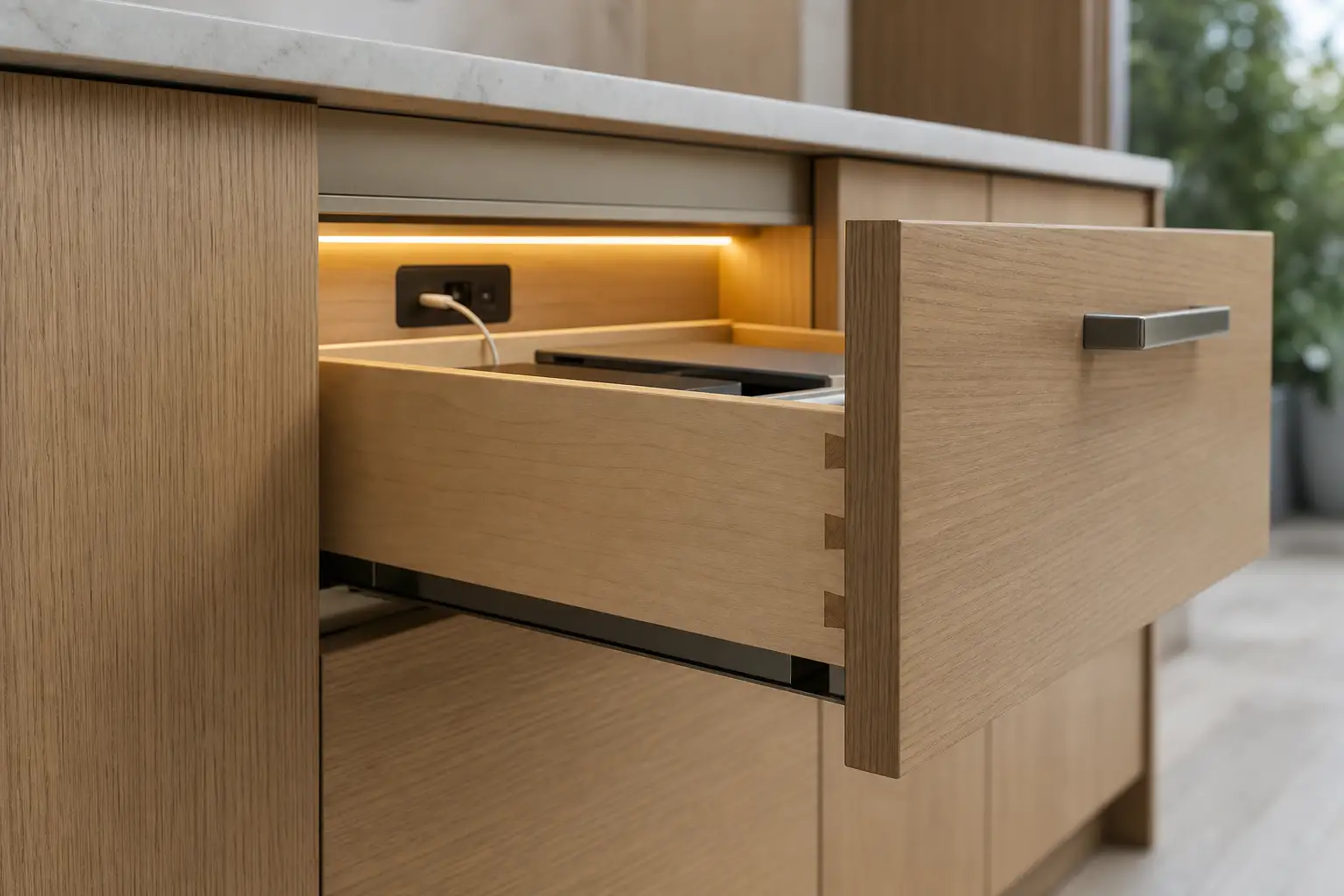
Countertops disappear under phones, tablets, and their cables. The fix that has become nearly standard in our 2026 kitchens is a charging drawer: a drawer near the main prep zone fitted with a rear outlet or a USB-C and USB-A module, wired to a dedicated kitchen circuit and ventilated so heat escapes. Devices charge out of sight, the counter stays clear, and there is no forest of cables by the toaster.
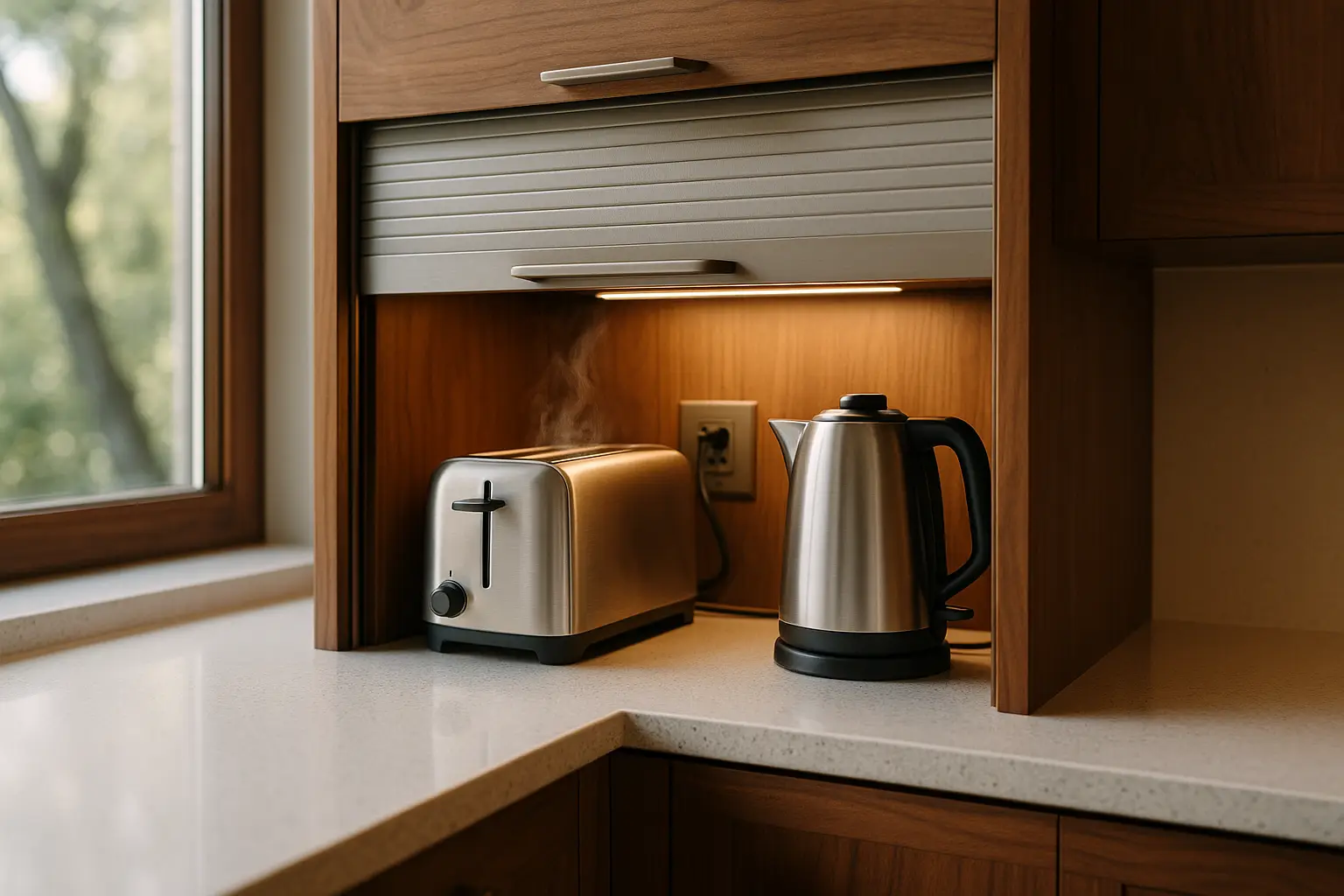
Beyond the charging drawer, homeowners are asking for outlets hidden inside upper cabinets to power a permanently docked coffee grinder or stand mixer, and pop-up or under-cabinet outlet strips that keep the backsplash clean. A dedicated appliance garage with a lift-up or pocket door hides the coffee setup entirely and keeps its cord plugged in behind the door. All of this gets planned during design so the electrician knows exactly where to land each box before the cabinets arrive.
Lighting and Touch-Latch Fronts
Integrated lighting has moved from a luxury add-on to a common request, largely because LED strips got small, cool, and cheap. Under-cabinet LED lighting on a dimmer removes the shadow you cast on your own cutting board when the ceiling light is behind you. Inside deep drawers and pantry pull-outs, motion-activated LED strips light the interior the moment you open them, which is genuinely useful in a corner cabinet. We size the driver and plan the wiring so the light is even and the color temperature matches across the kitchen, usually a warm-neutral around 2700 to 3000 Kelvin.
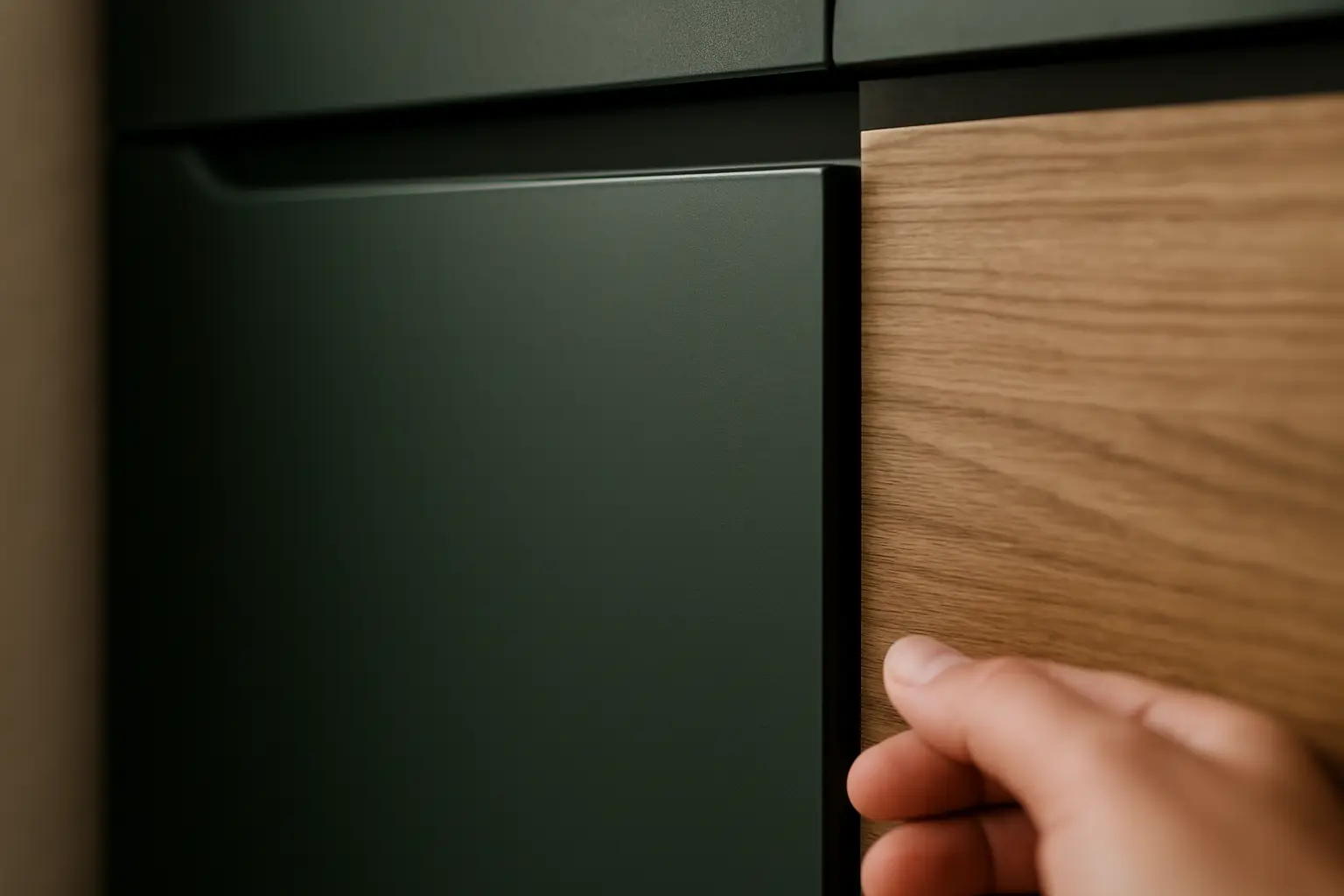
Touch-latch and push-to-open hardware pairs with the handleless slab fronts trending in Bay Area contemporary homes. A light press on the door face releases an electric or mechanical latch, so you get clean, pull-free cabinetry. The electric version needs power and gives a soft powered open; the mechanical version needs nothing and works by spring pressure. We often mix them, using mechanical push-to-open on lower drawers and reserving powered openers for a few showpiece uppers, which keeps the wiring simple.
Building It Right Means Building It Local
Every feature here depends on the box being manufactured to tight tolerances. A charging drawer only works if the drawer runs true and the ventilation cutout is clean. Touch-latch fronts only look right if the reveals between doors are consistent to about an eighth of an inch, because any misalignment shows immediately on a handleless design. Integrated lighting only looks intentional if the channels are routed accurately and the wiring is concealed. Those are manufacturing details, and they are hard to guarantee when the boxes are built in a distant factory and the electronics are an afterthought.
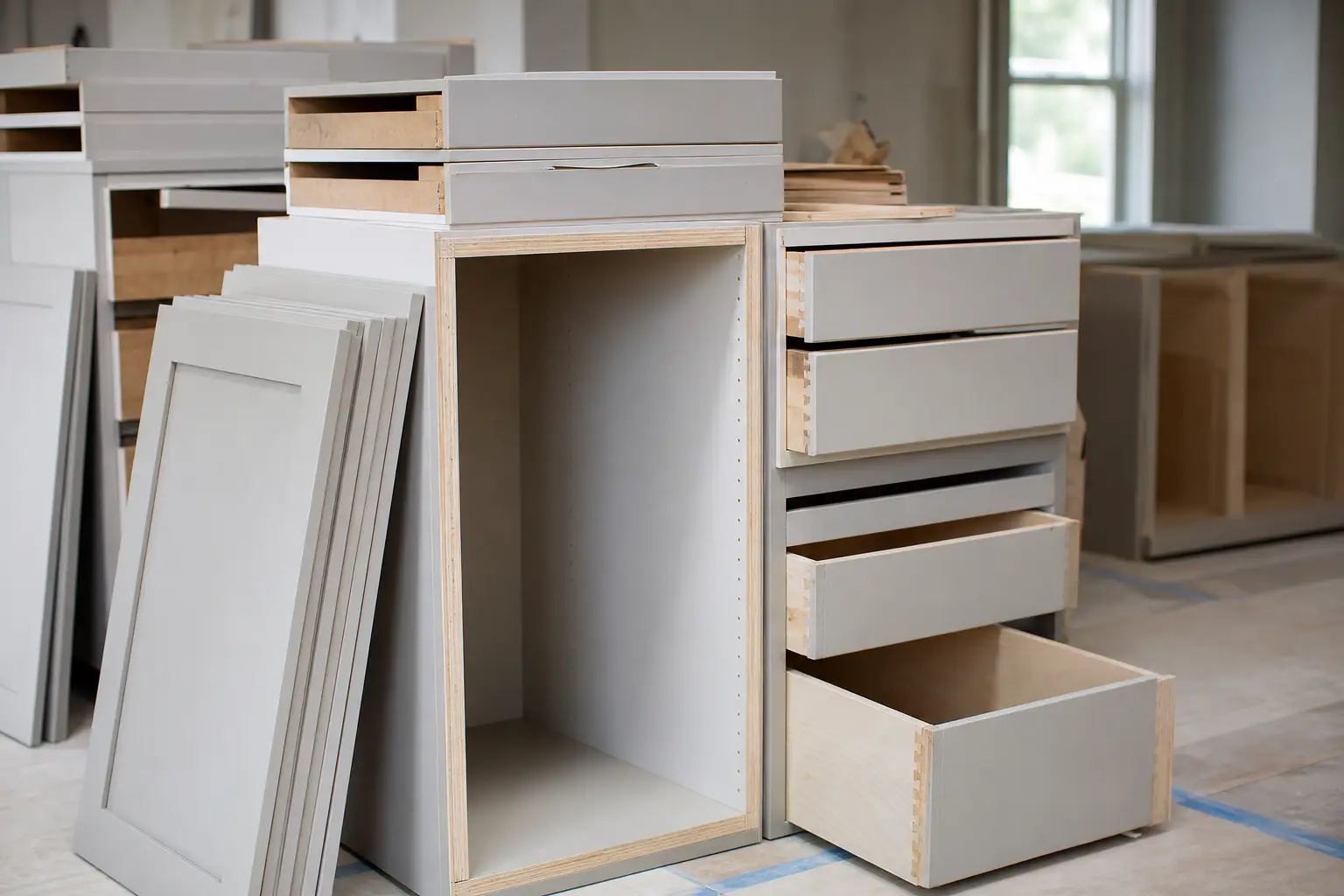
American Built Cabinets builds and preps all of this in our San Jose shop, which lets us coordinate the joinery, the hardware, and the electrical cutouts as one job. Our lead time on a custom smart kitchen runs about three weeks after design sign-off, and because we are local, adjustments and warranty support happen with a phone call rather than a claim routed overseas. For Peninsula and South Bay homeowners planning a kitchen that has to work for the next couple of decades, that control over the build is the real smart feature.
FAQ
Q1: Do motorized and touch-latch cabinets need an electrician?
A1: Some do and some do not. Electric touch-latch openers and lit interiors need a nearby power source, so we coordinate outlet or hardwire locations during design. Mechanical push-to-open hardware and battery-powered LED strips need no wiring at all, which keeps them easy to add in a remodel where running new circuits is a hassle.
Q2: Are charging drawers safe to leave devices in all day?
A2: Yes, when built correctly. We use drawers with a rear-mounted outlet or USB-C module wired to a standard 20-amp kitchen circuit, and we ventilate the drawer so heat does not build up. The devices sit out of sight while charging, which also keeps counters clear. We do not recommend charging in a fully sealed drawer with no airflow.
Q3: Which smart cabinet feature gives the best return for the money?
A3: For most homeowners it is deep drawer banks with full-extension soft-close slides instead of lower doors, plus a well-designed pull-out for trash and recycling. Those two changes improve daily use more than any lit interior or motorized door, and they cost less than people expect because they are mechanical, not electronic.
Q4: Can these features be added to frameless or Shaker cabinets?
A4: Both. The construction style, frameless or face-frame, and the door style, slab or Shaker, are separate from the interior systems. We fit charging drawers, pull-outs, and integrated lighting into frameless boxes for a modern look and into full-overlay Shaker runs for a transitional one. Frameless does give slightly more interior width for pull-outs.
Q5: How much do integrated lighting and touch-latch openers add to a kitchen budget?
A5: As a rough guide, LED interior and under-cabinet lighting runs a few hundred dollars per zone including the driver, and electric touch-latch hardware adds a modest amount per opening over standard soft-close hinges. The cost scales with how many cabinets you outfit, so most clients pick a few high-use zones rather than wiring the whole kitchen.
Q6: How long does a custom smart kitchen take to build in the Bay Area?
A6: Because we manufacture in San Jose, a custom kitchen with these features runs about a three-week lead time after the design and materials are finalized. Building locally lets us coordinate the electrical prep, hardware, and interior fittings in-house rather than waiting on separate overseas shipments.