Most cabinet guides define the three tiers and leave you to figure out which one is yours. This one works the other way around. Starting from real situations, a rental turnover, a tight budget in a standard kitchen, a forever home with crooked 1920s walls, a builder doing volume, it matches each to the tier that actually makes sense. If you are choosing cabinets in San Jose, San Francisco, or on the Peninsula, the goal here is a decision, not just definitions.
A Fast Read on the Three Tiers
You only need a working definition of each before matching it to your situation. Stock cabinets come in fixed sizes, usually in 3-inch increments, from a limited menu of styles and finishes, and are the least expensive and fastest to get. Semi-custom starts from a catalog too but offers more sizes, door styles, finishes, and often better hardware, with some modifications available. Custom cabinets are built to your exact dimensions and specifications, with your choice of materials, finish, interior fittings, and hardware.
The tiers are not just price steps; they represent how much the cabinets bend to your room versus how much your room bends to them. Stock asks the room to accommodate fixed sizes with filler strips. Custom asks nothing of the room, because it is measured to fit. That single idea drives most of the right answers below.
Match the Tier to Your Situation
The rental or flip. You want durability and easy cleaning at the lowest sensible cost. A tenant will not notice a dovetail drawer box, and you should not pay for one. Stock cabinets in standard sizes with a wipeable finish are usually the call. If you want a noticeably better feel without custom pricing, a simple semi-custom spec with soft-close hardware is a reasonable step up, especially for a unit you plan to hold.
The budget remodel in a standard kitchen. If your layout uses common runs and the walls are reasonably true, stock or semi-custom can look great for the money. Put the savings into a good countertop and hardware you touch daily. There is little reason to pay for full custom when the room already fits standard sizes cleanly.
The forever home with irregular walls. Older Bay Area houses, Victorians in San Francisco, mid-century homes on the Peninsula, rarely offer plumb walls or standard ceilings. Here custom earns its price. Cabinets built to the real dimensions run wall to wall without gappy fillers, take full-height uppers to an odd ceiling, and turn awkward corners into usable storage. This is the situation where stock looks bought and custom looks built.
The builder or multi-unit project. Volume work rewards a repeatable spec. Semi-custom or a standardized custom program lets you lock one specification and reorder it per unit, balancing cost, quality, and a predictable lead time. Local manufacturing helps most here, because a three-week turnaround per order keeps a phased project moving.
Where the Money Actually Goes at Each Tier
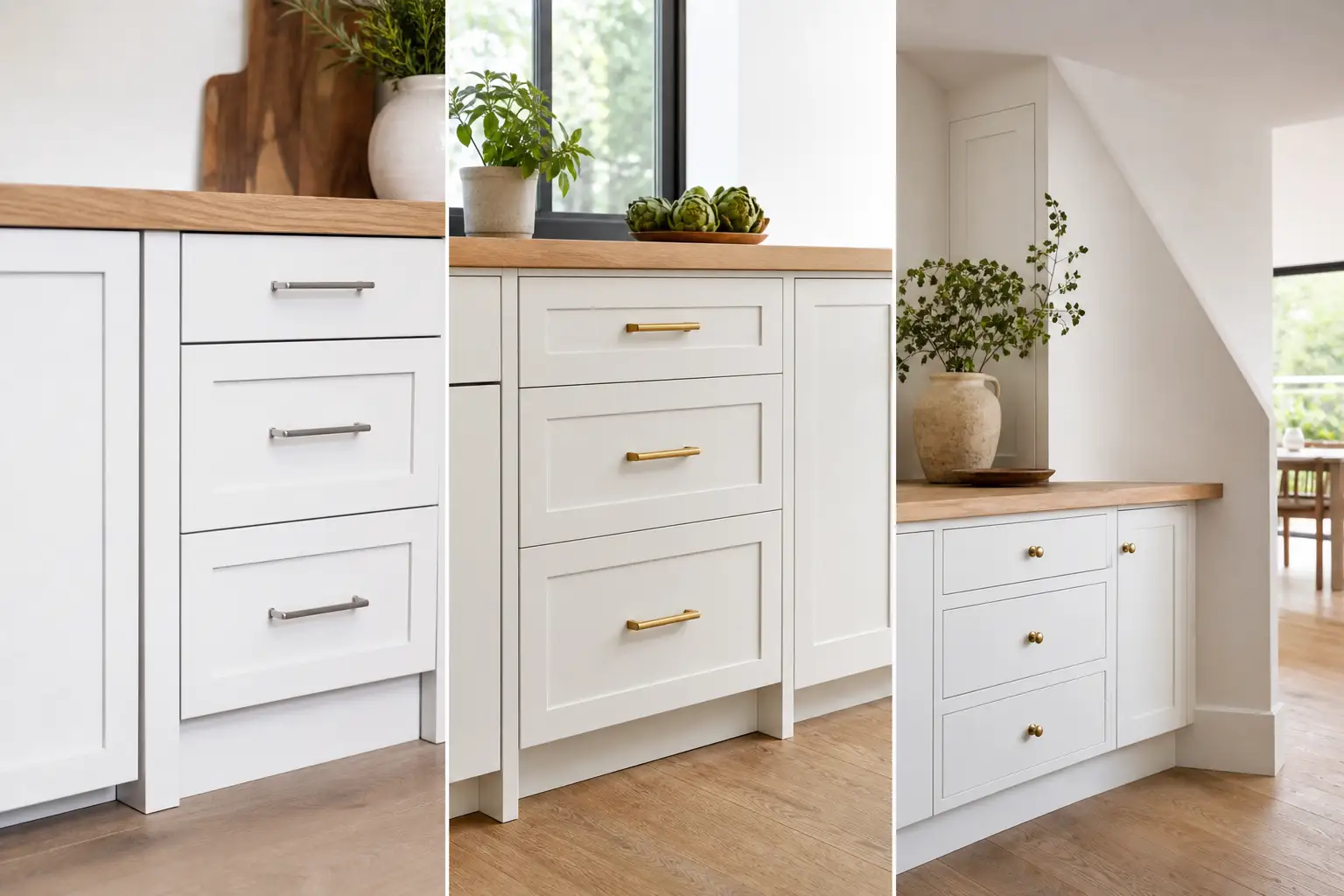
Paying more should buy something real, and it does. At the stock tier, your dollars go to a standardized box, often thinner engineered panels and basic hardware, produced in volume. The value is a low price and quick availability, with the tradeoff showing up in limited sizes and shorter hardware life.
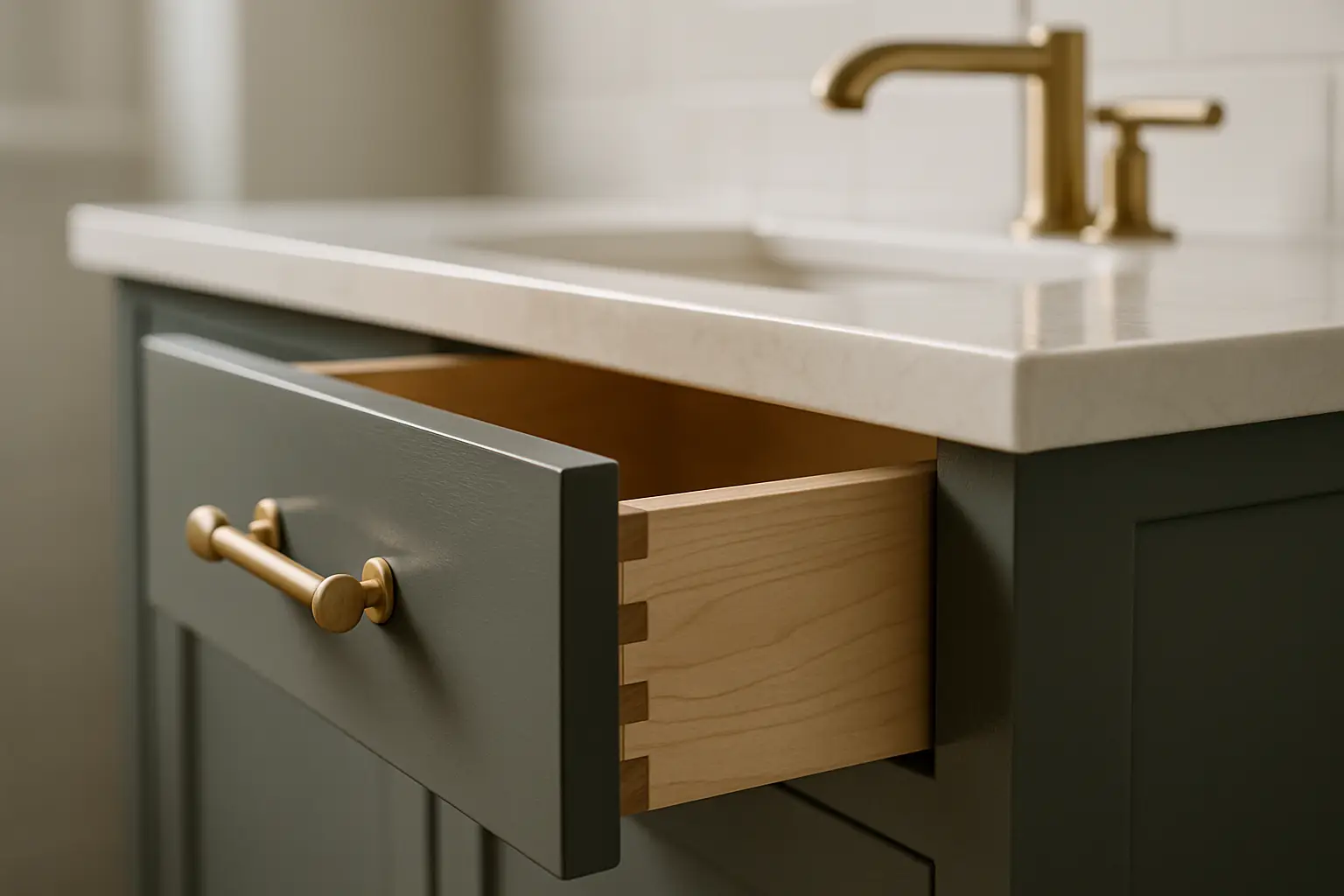
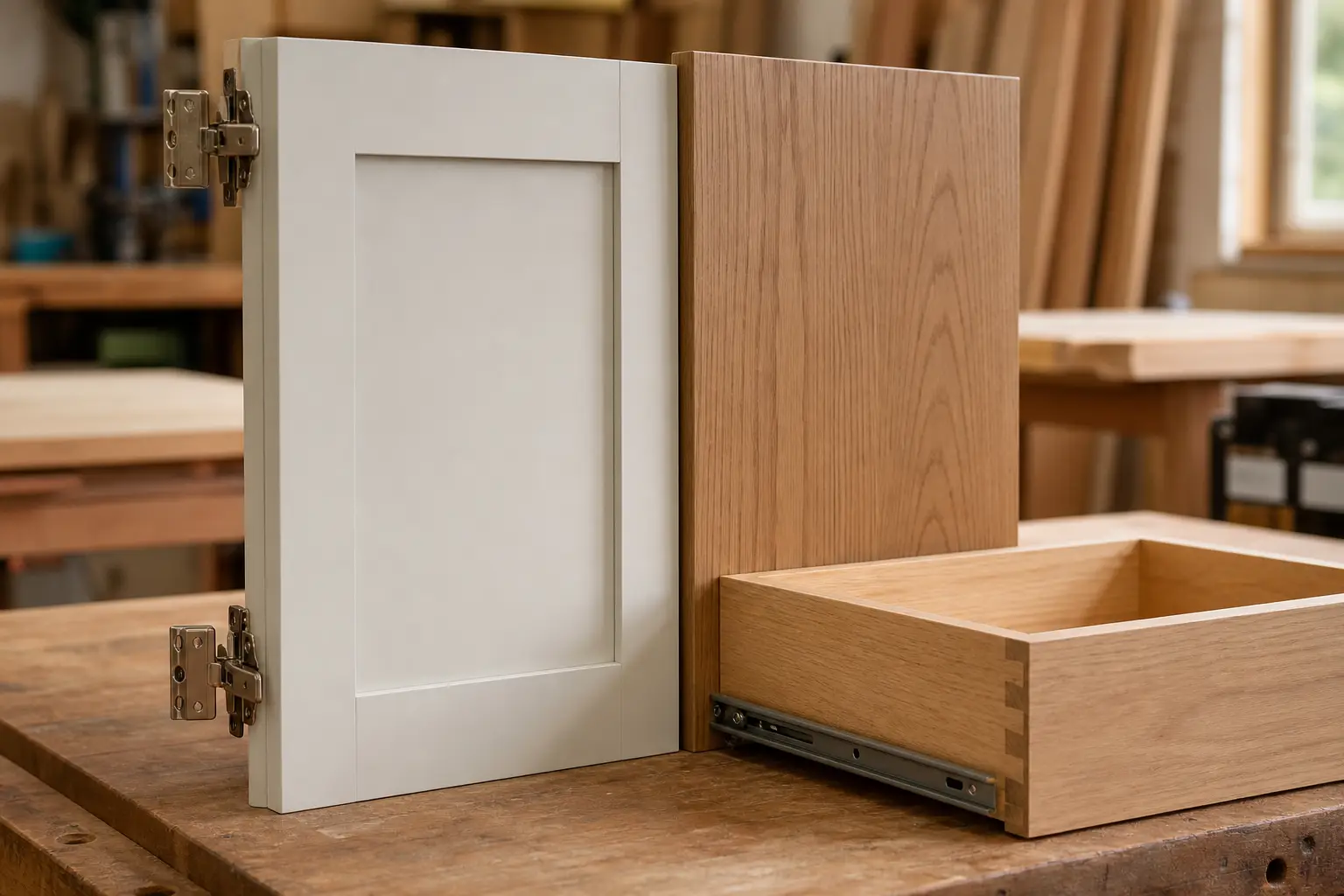
Step up to semi-custom and the money buys a broader menu and usually sturdier boxes and named-brand soft-close hardware. You are still working within a catalog, so you pay for more choices rather than unlimited ones. Move to custom and the spend goes into fit and materials you select: 3/4-inch furniture-grade plywood boxes, dovetailed drawer boxes, your exact finish, specialty interior fittings, and a shop that controls quality directly. The premium is real, but so is what it delivers in usable space and longevity.
The Bay Area Wrinkle: Old Walls, Small Kitchens, Long Import Waits
Three local realities push the decision in specific directions. First, the housing stock is old and irregular in much of San Francisco and the Peninsula, which raises the value of a true custom fit. Second, many Bay Area kitchens are compact, so squeezing usable inches out of every run matters more than in a large suburban kitchen, and custom sizing recovers space that fillers would waste.
Third, and often overlooked, is lead time. The instinct is to assume custom takes longest, but that depends on where it is built. Imported and national semi-custom lines commonly run eight to sixteen weeks once freight, customs, and distributor queues are counted. Our custom cabinets, manufactured by American Built Cabinets in San Jose, run about three weeks from approved drawings. So a locally built custom kitchen can reach your home before an imported semi-custom order, which flips the usual speed assumption on its head.
A Simple Way to Decide
If the room is standard and the budget is tight, start with stock and spend elsewhere. If you want better quality and more choices but the layout is close to normal, semi-custom is a solid middle. If the walls are irregular, the kitchen is small enough that every inch counts, or you want exact materials and finishes for a home you plan to keep, custom is worth it, and locally built custom removes the long lead time that usually makes people hesitate.
One more practical note: whatever tier you choose, let a single manufacturer build the whole kitchen when you can. Consistent door styles, finishes, and reveals across every cabinet do more for the finished look than any one upgrade, and they are hardest to guarantee when you combine lines from different sources.
FAQ
Q1: Which cabinet tier is best for a rental or flip?
A1: Stock or a simple semi-custom spec usually wins for rentals and flips. You want durable, standard sizes, a finish that cleans up easily, and a low cost per unit, not bespoke detailing a tenant will not notice. If the layout is standard, stock cabinets keep the budget down; if you want better hardware and a nicer finish without full custom pricing, semi-custom is the step up.
Q2: Do I need custom cabinets for an older Bay Area home?
A2: Often yes, because older San Francisco and Peninsula homes rarely have plumb walls, square corners, or standard ceiling heights. Stock and semi-custom cabinets come in fixed sizes and fill the gaps with filler strips, which can look awkward in an irregular room. Custom cabinets are built to the actual dimensions, so they fit tightly and use the full wall without wasted space.
Q3: Is semi-custom a good middle ground, or a compromise?
A3: It is a genuine middle ground for many kitchens. Semi-custom offers a wider menu of sizes, door styles, and finishes than stock, usually with better hardware, at a price below full custom. It works well when your layout is close to standard and you want quality without paying to customize every dimension. It falls short when the room is irregular or you want an exact size or specialty material.
Q4: How much do the tiers differ in lead time?
A4: Stock is fastest since it is often on a shelf or a short order. Semi-custom and custom both take longer to build, but local manufacturing changes the math: our custom cabinets run about three weeks from approved drawings, while imported semi-custom lines commonly run eight to sixteen weeks. So a locally built custom kitchen can actually arrive sooner than an imported semi-custom one.
Q5: Where does the extra money go when I pay for custom?
A5: Into fit, materials, and control. Custom pricing buys exact dimensions, your choice of panel material like 3/4-inch plywood, specific finishes, interior fittings, and hardware, plus a shop that manages quality directly. You are paying for cabinets built to your room rather than a room adapted to stock boxes, which shows up in usable space and how the kitchen looks and lasts.
Q6: Can I mix tiers in one kitchen to save money?
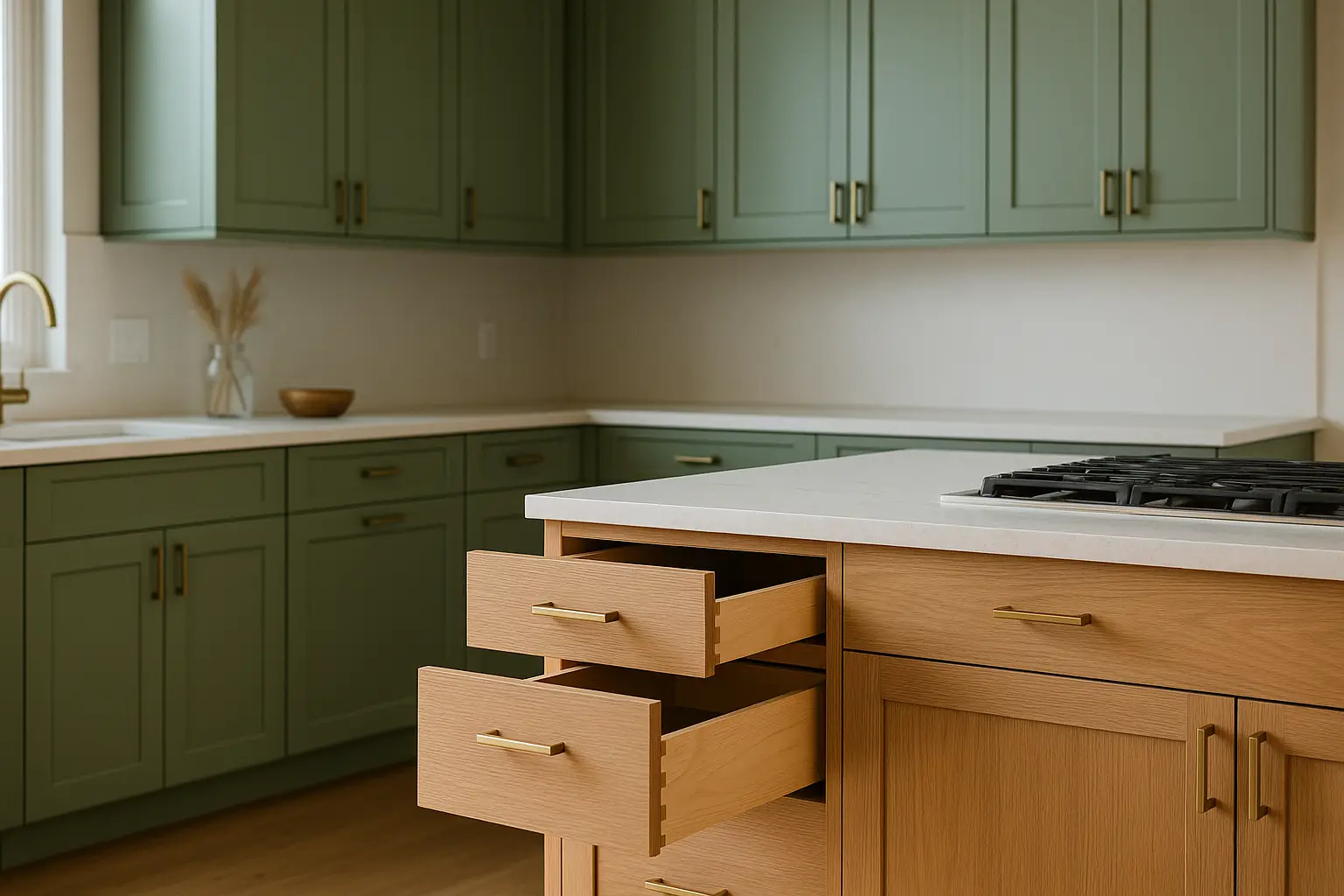
A6: Sometimes, though it takes care to look intentional. Some homeowners use custom for a focal island or an odd wall and standard sizes elsewhere. The risk is mismatched door styles, finishes, and reveals between tiers, so matching those details matters. A single manufacturer building the whole kitchen usually gives a more cohesive result than combining lines from different sources.