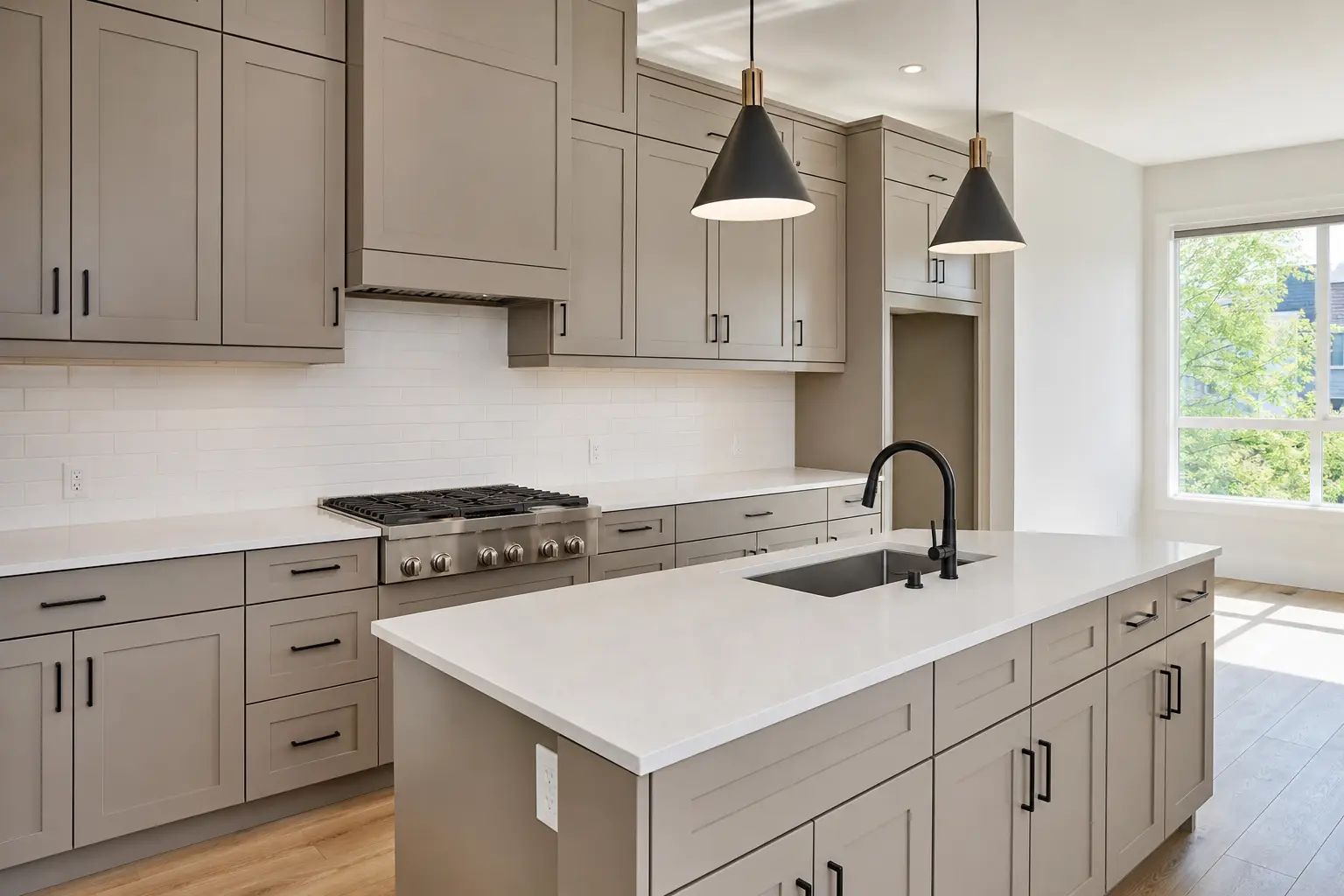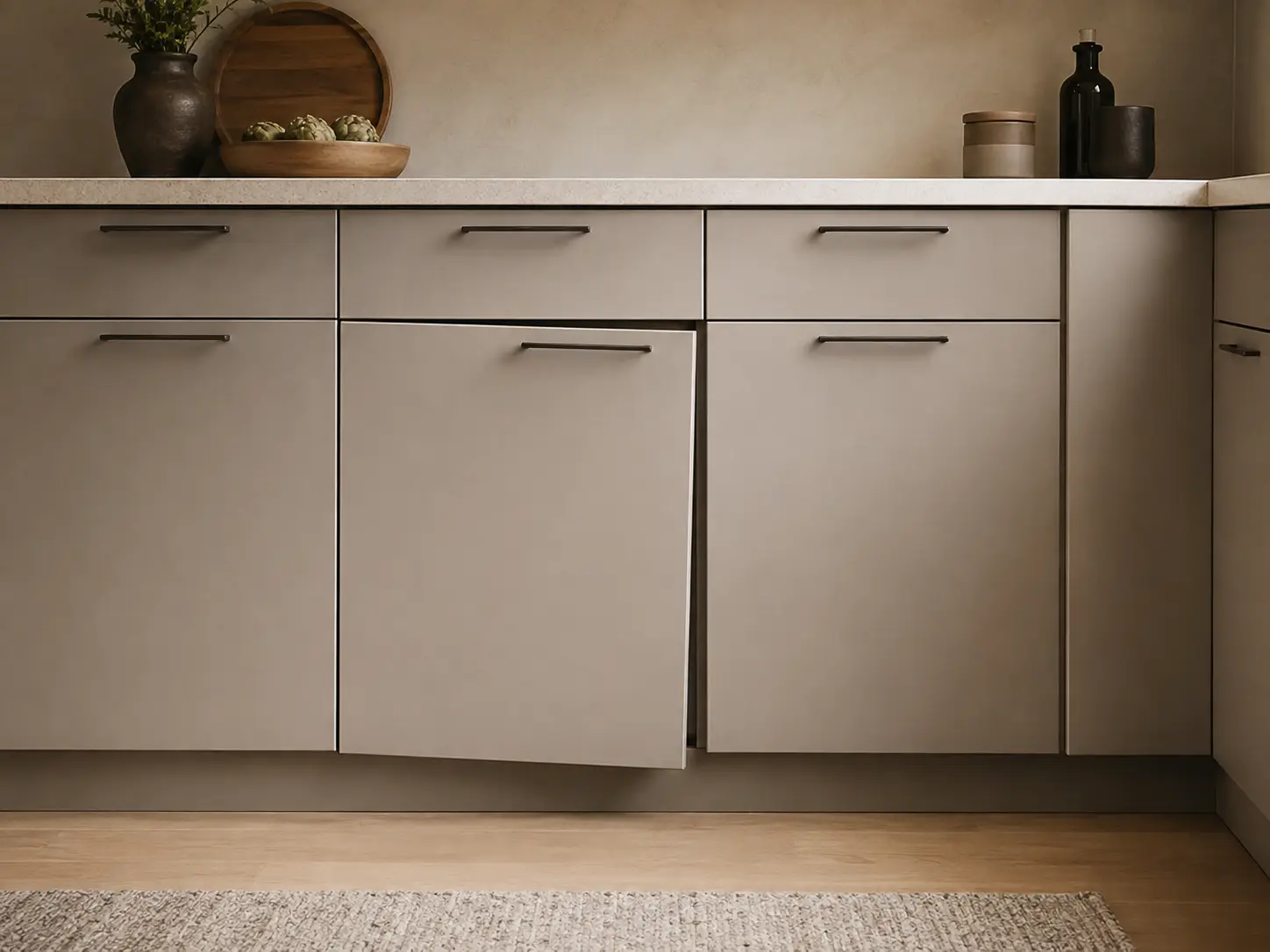
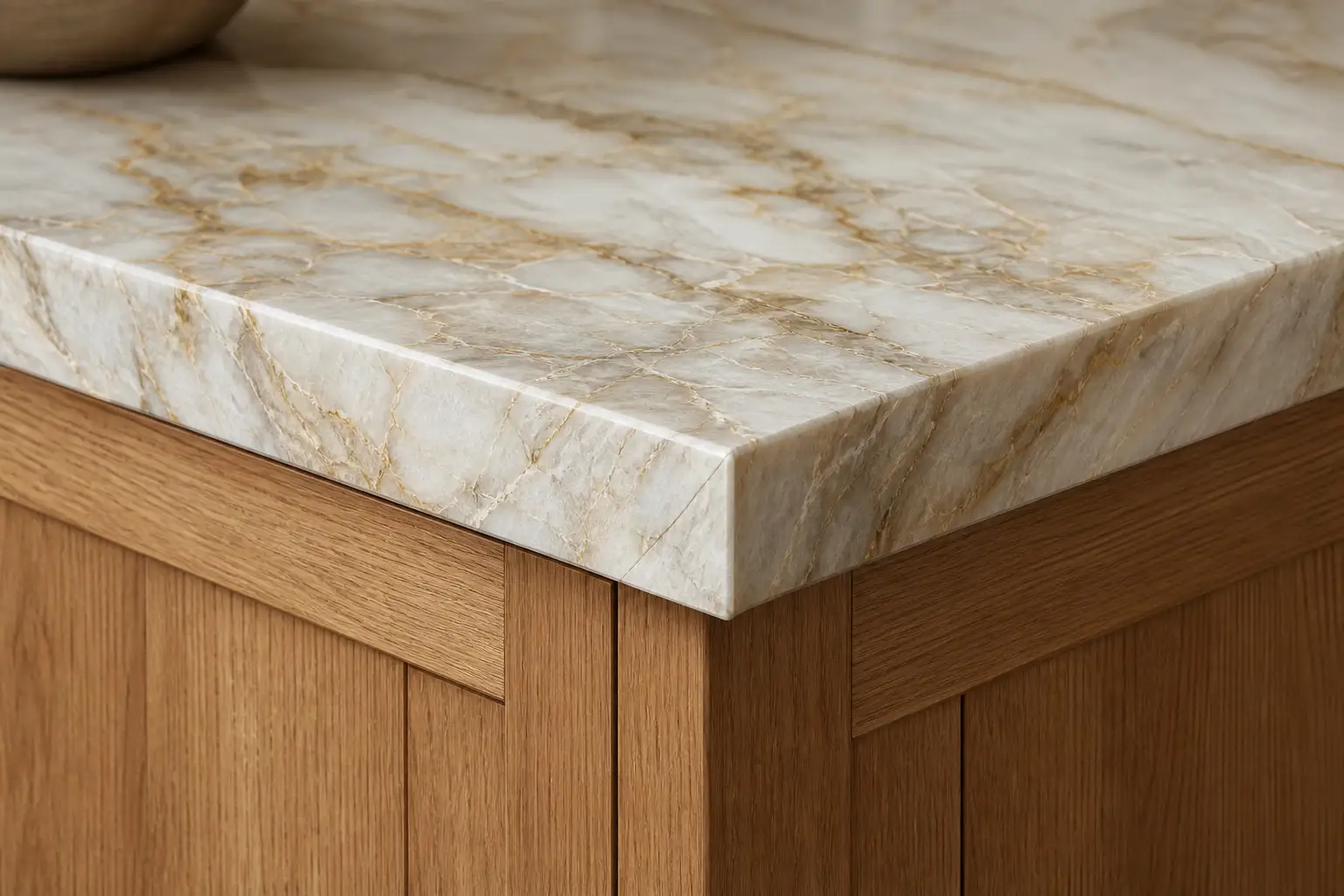
Taj Mahal quartzite has become the counter people ask for by name. It has the soft, warm, marble-like movement everyone wants without the fragility that scares them away from actual marble, and it pairs beautifully with the white oak, walnut, and painted cabinetry we build for Bay Area kitchens. But quartzite is widely misunderstood, and the name gets used loosely in the stone trade. Here is what Taj Mahal actually is, how it behaves in a working kitchen, how to pair it with cabinetry, and what to verify before you fall for a slab in a San Jose, San Francisco, or San Mateo showroom.
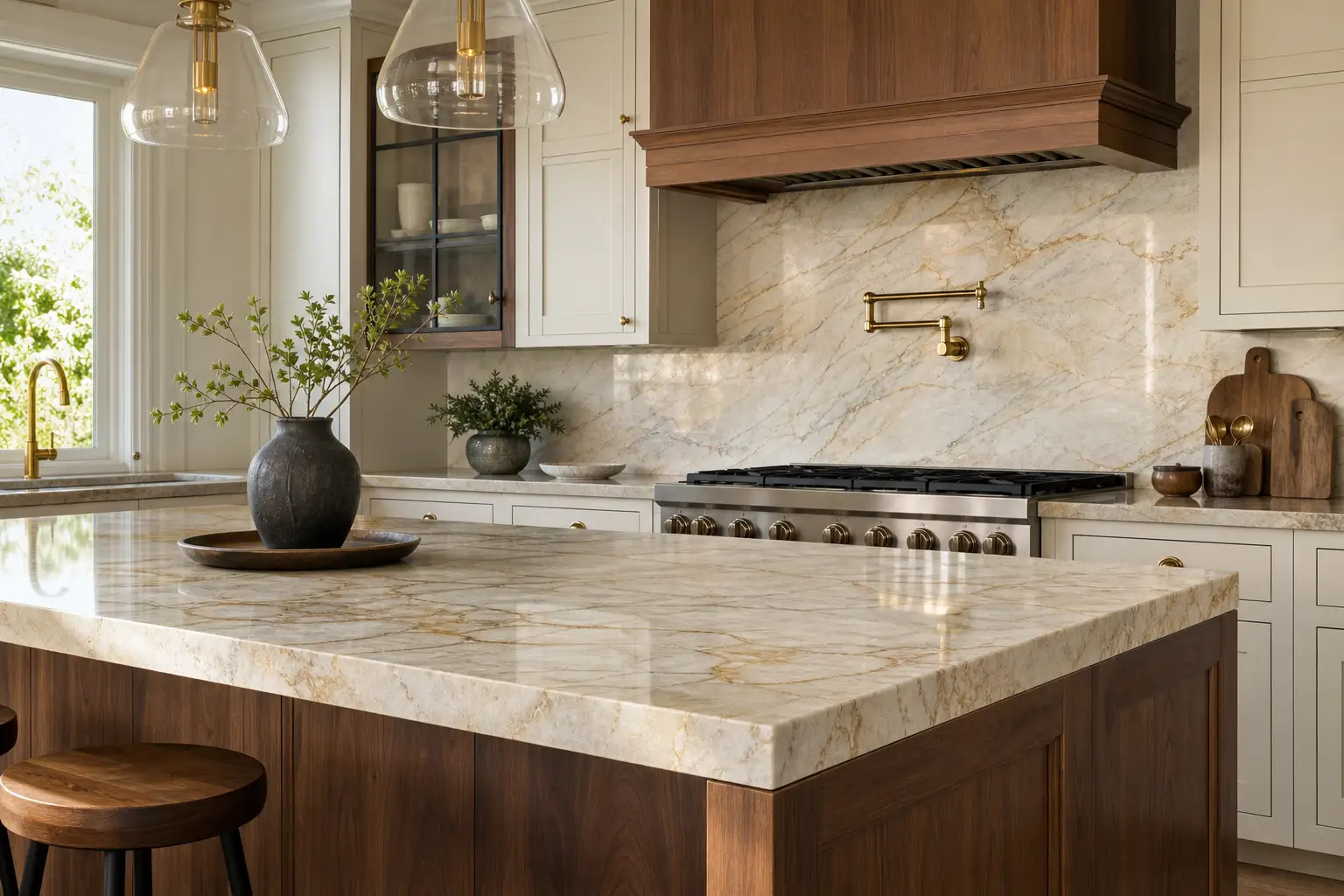
What Taj Mahal Quartzite Actually Is
Quartzite starts as sandstone. Over geologic time, heat and pressure recrystallize the quartz grains into a dense, hard stone, and that is what gives quartzite its durability. Taj Mahal is a specific quartzite quarried in Brazil, known for a warm background that ranges from soft cream to pale gold, with gentle, watery veining rather than the sharp gray veins of Carrara marble. The overall effect is calm and warm, which is why it works so well in transitional and modern-organic kitchens.
The important distinction is that quartzite is not the same as quartz, and it is not marble, even though it can look like both. Quartz counters are manufactured from ground stone bound with resin, so they are consistent and nonporous but read as engineered up close. Marble is genuinely soft and reacts chemically with acids. Taj Mahal sits in a sweet spot: the natural depth and one-of-a-kind movement of quarried stone, with hardness in the range of granite and none of marble's acid sensitivity.
How It Performs in a Working Kitchen
The two properties homeowners care about most are etching and scratching, and this is where Taj Mahal earns its reputation. Etching is the dull spot marble gets when lemon juice, wine, or vinegar hits the polished surface and chemically reacts with the calcite. Quartzite is silica-based, so acids do not etch it the way they attack marble. That single difference removes the biggest daily anxiety people have about light-colored natural stone. Scratching is also rarely an issue because the stone is harder than a steel knife blade, though you should still cut on a board to protect your knives.
The honest caveat is porosity. Like most natural stone, quartzite can absorb liquid if a spill is left to sit, which can leave a stain, especially with oil or deeply pigmented liquids. The management is straightforward: a quality penetrating sealer at installation, wiping up spills within a reasonable window, and resealing roughly once a year depending on how hard the kitchen works. It is also heat-tolerant, though we still recommend trivets under very hot pans as a matter of habit. Treated this way, it holds its look for decades.
Pairing Taj Mahal With Cabinetry
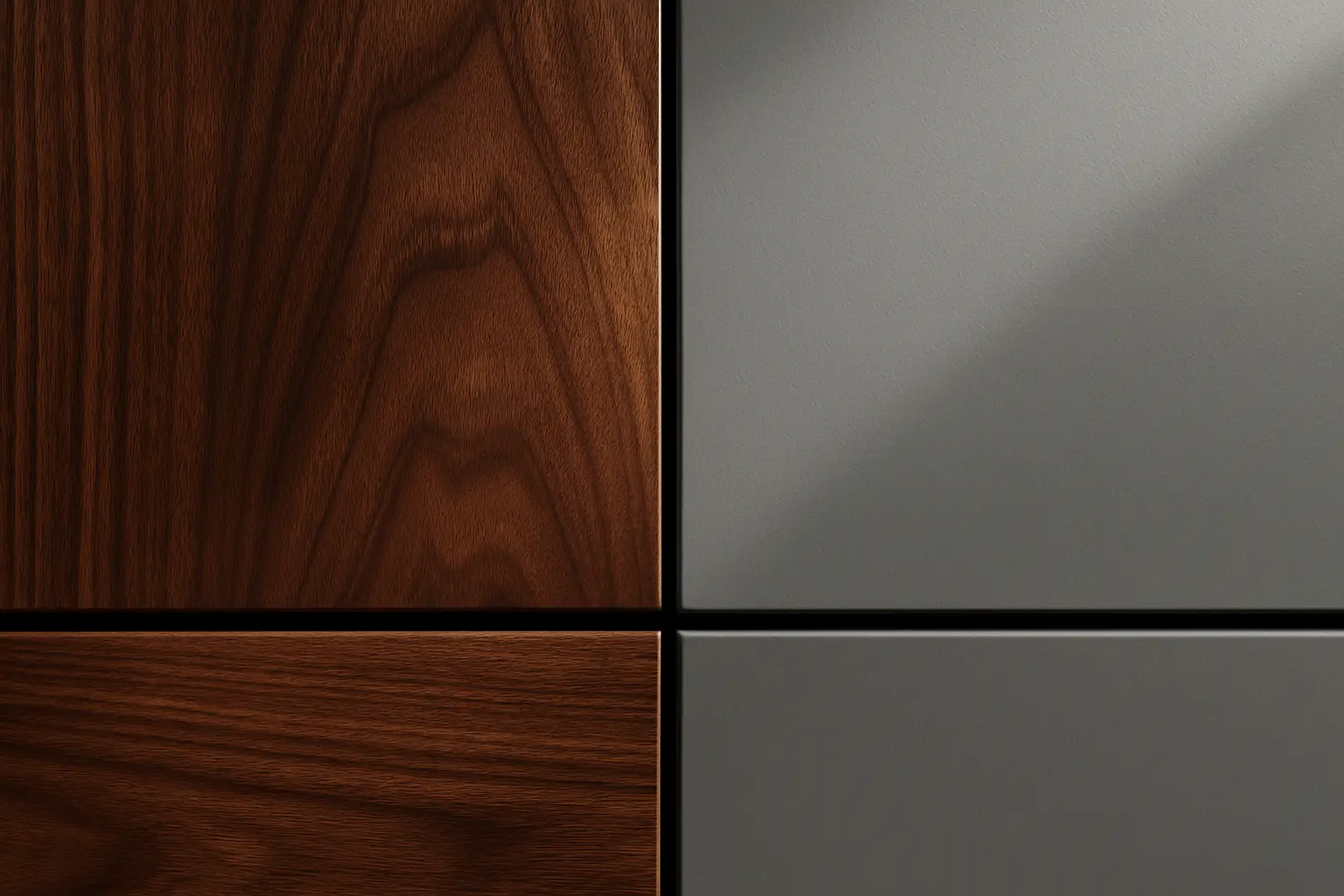
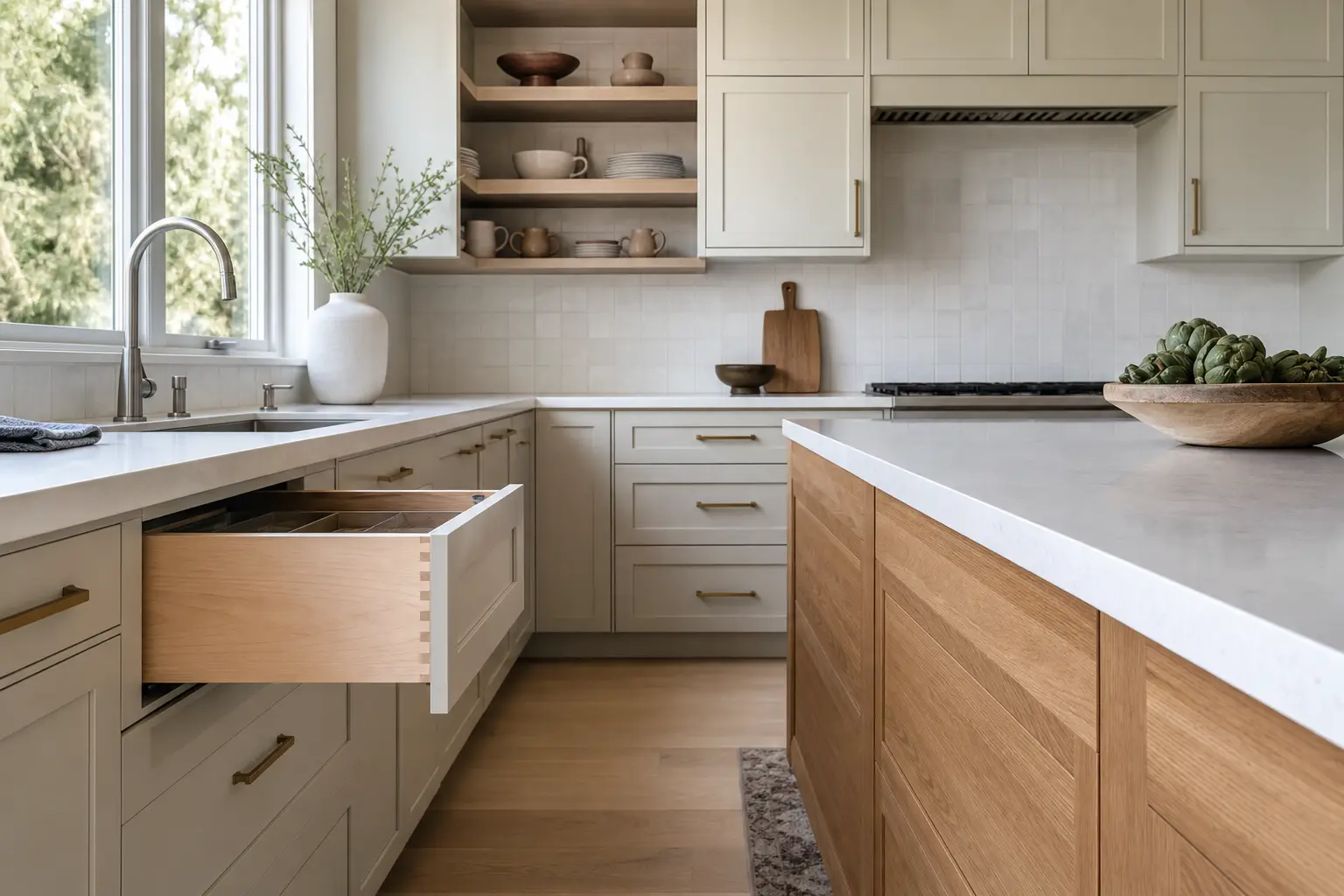
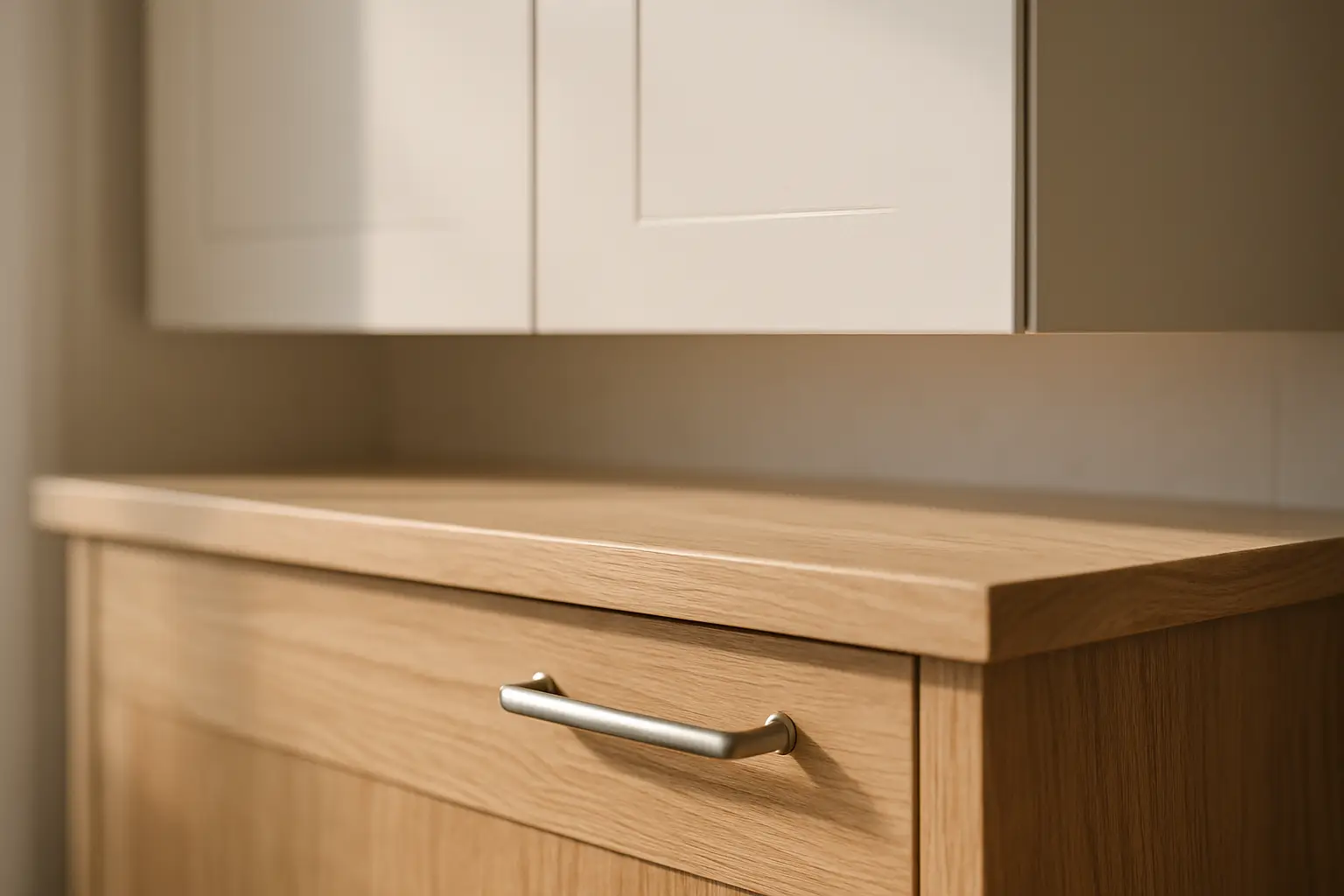
The counter and the cabinets have to speak to each other, and Taj Mahal's warmth points the palette in a clear direction. Its cream and gold undertones flatter natural wood beautifully, which is why it is one of the most requested counters for kitchens with white oak or walnut fronts. In a two-tone layout, a wood island under a Taj Mahal counter, with warm-white painted perimeter cabinets carrying the stone across the room, is a combination that looks considered rather than matched.
It also does something useful with deeper cabinet colors. Against navy, a warm sage green, or a soft charcoal, the light stone lifts the room and keeps a dark palette from feeling heavy, while the stone's warmth stops the pairing from going cold. The color to be careful with is cool gray cabinetry, which can fight the stone's golden cast and make both look slightly off. Because American Built Cabinets sprays our own finishes in San Jose, we can dial a painted door toward the exact warmth that sits well next to a specific slab, rather than hoping a stock color lands close.
What to Verify Before You Buy the Slab
The one piece of due diligence worth doing is confirming you are actually getting quartzite. Because the name Taj Mahal carries a premium, the trade sometimes applies it to softer dolomitic stones that resemble it but behave more like marble, etching and scratching more readily. If the acid resistance is part of why you want it, this matters. Ask the slab yard directly whether the material is true quartzite, and buy from a reputable supplier who can tell you.
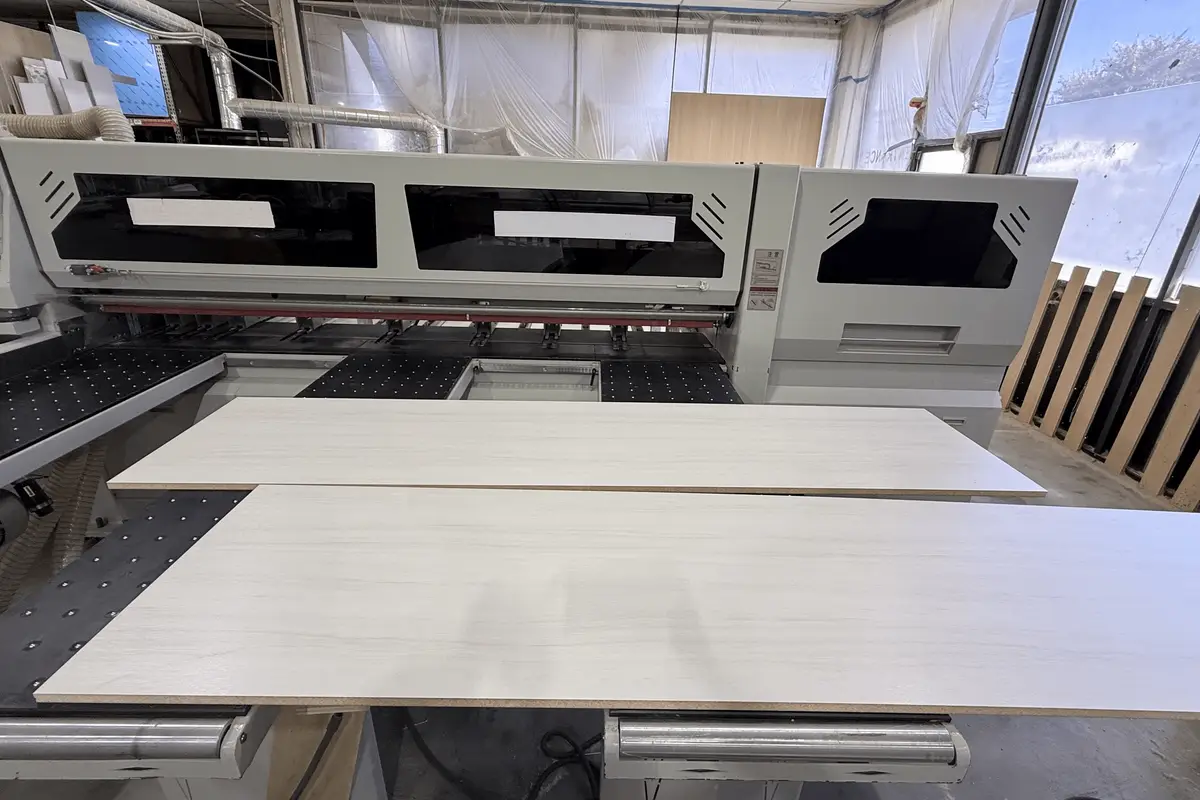
Beyond the material question, choose your actual slabs in person and view the full bundle. Natural stone varies from slab to slab, and Taj Mahal ranges from nearly white to distinctly golden with more or less veining, so the sample chip in a binder will not tell you what your kitchen gets. Lay out how the veining will run across the island and seams before fabrication. This is also the right moment to finalize cabinetry, so the finishes and the stone are chosen together. Because we build custom in about three weeks locally, we can sequence the cabinet color and wood selection around the slab you actually bought, which is how the finished kitchen ends up looking intentional.
FAQ
Q1: Is Taj Mahal quartzite the same as quartz or marble?
A1: No, all three are different. Marble is quarried natural stone that is soft and etches easily with acids. Quartz is an engineered material made from ground stone and resin. Taj Mahal is a natural quartzite, a quarried stone that formed from sandstone under heat and pressure, giving it hardness closer to granite with a look closer to marble.
Q2: Does Taj Mahal quartzite stain or etch?
A2: True quartzite is very hard and resists scratching, and unlike marble it does not etch from acids like lemon or wine because it is silica-based, not calcite-based. It is porous, though, so it can absorb a stain if a spill sits. A good penetrating sealer and wiping up spills promptly keeps it looking right. Reseal roughly once a year depending on use.
Q3: How do I know I'm getting real quartzite and not a soft dolomite?
A3: Some slabs sold as Taj Mahal are actually softer dolomitic stones that etch like marble. Ask the supplier to confirm it is true quartzite, and if it matters to you, a simple test is whether a steel knife scratches it or whether a drop of acid dulls the polish on an offcut. Buying from a reputable slab yard and asking directly is the practical safeguard.
Q4: What cabinet colors go best with Taj Mahal quartzite?
A4: Its warm cream and gold tones flatter natural white oak, walnut, and warm-white painted cabinets, and it is a popular counter for two-tone kitchens with a wood island. It also grounds deeper colors like navy and warm greens beautifully. Cool gray cabinets can clash with its warmth, so we usually steer clients toward warm-leaning palettes.
Q5: Is Taj Mahal quartzite a good choice for a busy family kitchen?
A5: Yes, with realistic care. It is hard, heat-tolerant, and does not etch, which makes it more forgiving than marble in daily use. The main habits are using a cutting board to protect your knives and the finish, wiping spills reasonably promptly, and keeping it sealed. For most families it holds up far better than its delicate looks suggest.
Q6: Can you design and build cabinets to match a specific quartzite slab?
A6: Yes. Because we manufacture custom cabinets in San Jose and spray our own finishes, we can tune door colors and wood selections to a slab you have chosen, with a lead time of about three weeks after design is finalized. Matching cabinetry to the actual stone, rather than a generic sample, is one advantage of building locally.