The finish is the part of a cabinet you actually touch, see, and clean every day, and it is where a lot of buyers get confused. Paint, stain, lacquer, laminate, and veneer are not five versions of the same thing. Some are coatings applied over a substrate, some are the substrate surface itself, and each behaves differently under the humidity, sunlight, and daily wear of a Bay Area kitchen. Understanding what separates them helps you choose a look that lasts and match the right finish to the right room. Here is a straight comparison of the five finishes we work with most in our San Jose shop, and where each one belongs.
Paint: Smooth Color That Hides the Grain
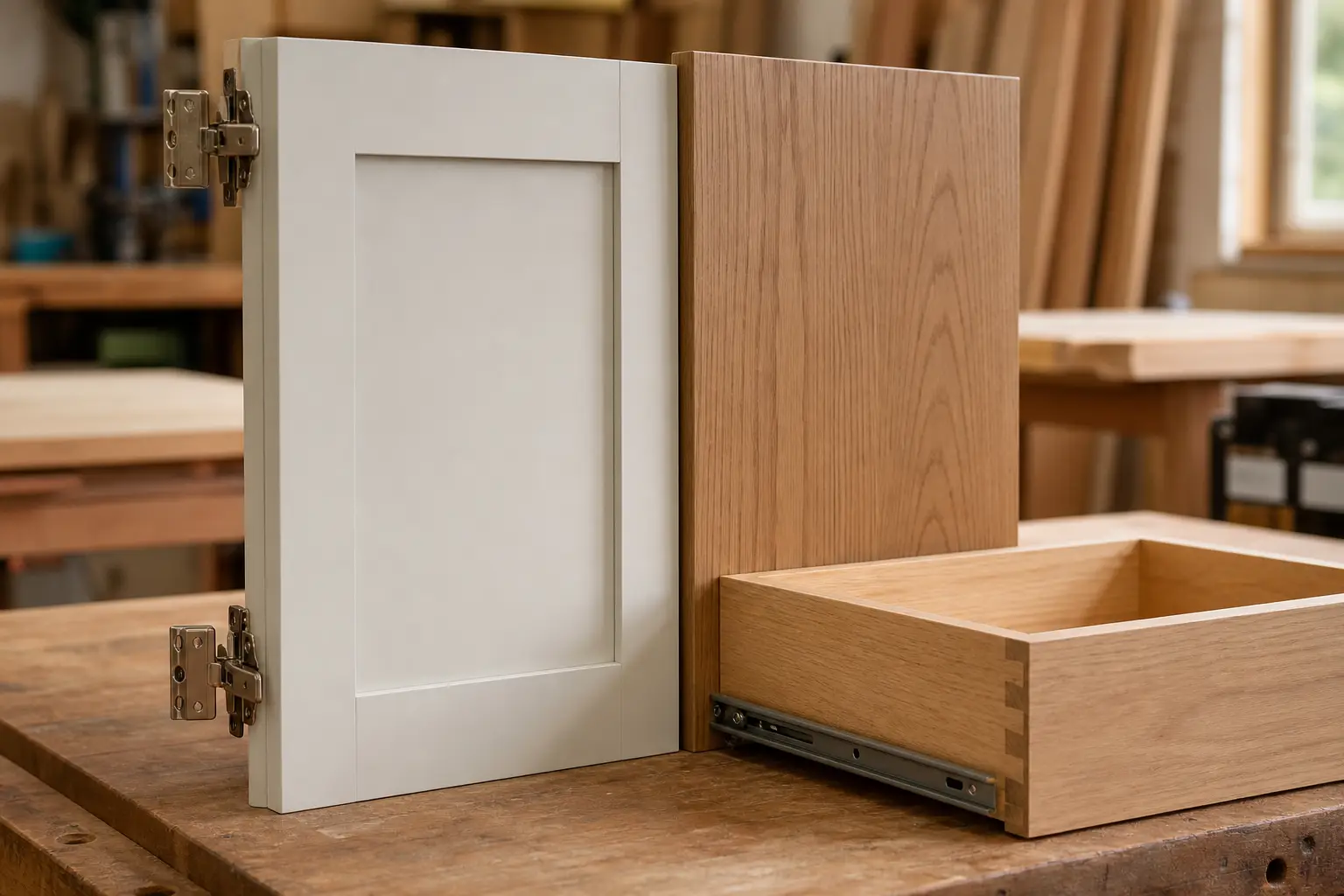
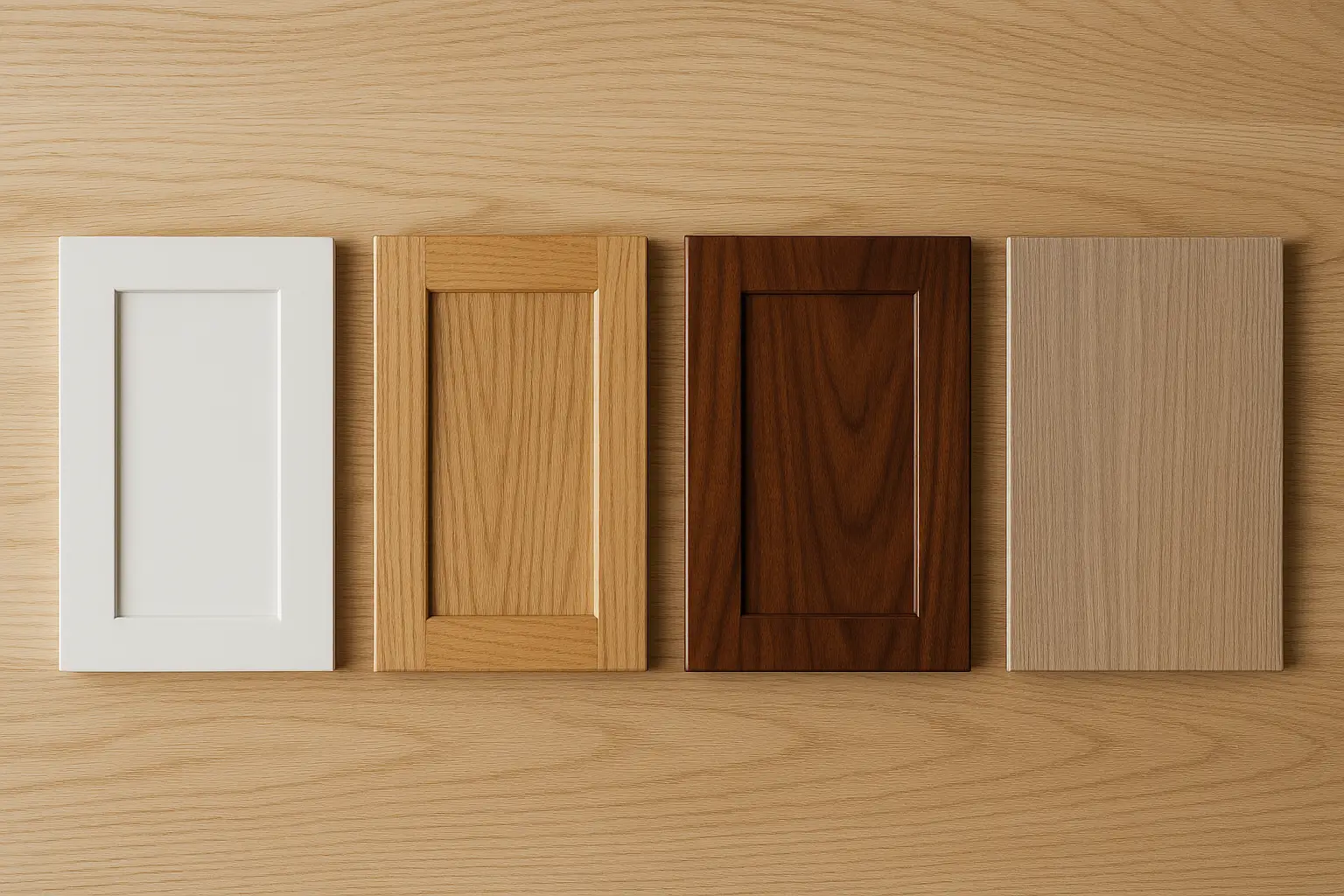
Paint is a pigmented coating that sits on top of the substrate and delivers uniform, opaque color. It is the finish behind the crisp white, soft gray, and deep navy kitchens that fill Bay Area remodels. Paint reads best on a smooth, grain-free surface, which is why we favor MDF for painted doors and fronts. MDF has no wood grain to telegraph through the color and no open joints on a five-piece door, so a painted MDF Shaker or slab door looks clean and continuous. Painted solid wood is possible, but the grain and the joints can show over time as the wood moves.
The strength of paint is design freedom and repairability. You get essentially any color, a consistent sheen from matte to satin, and a surface that can be touched up or resprayed years later. The tradeoffs are worth knowing. Painted MDF can hairline-crack at joints as a house expands and contracts, and light-colored paints can yellow slightly over many years, particularly near ovens or in low-light corners. A quality finish system and careful surface prep, which is where in-house finishing earns its value, keep both issues to a minimum.
Stain: Letting the Wood Speak
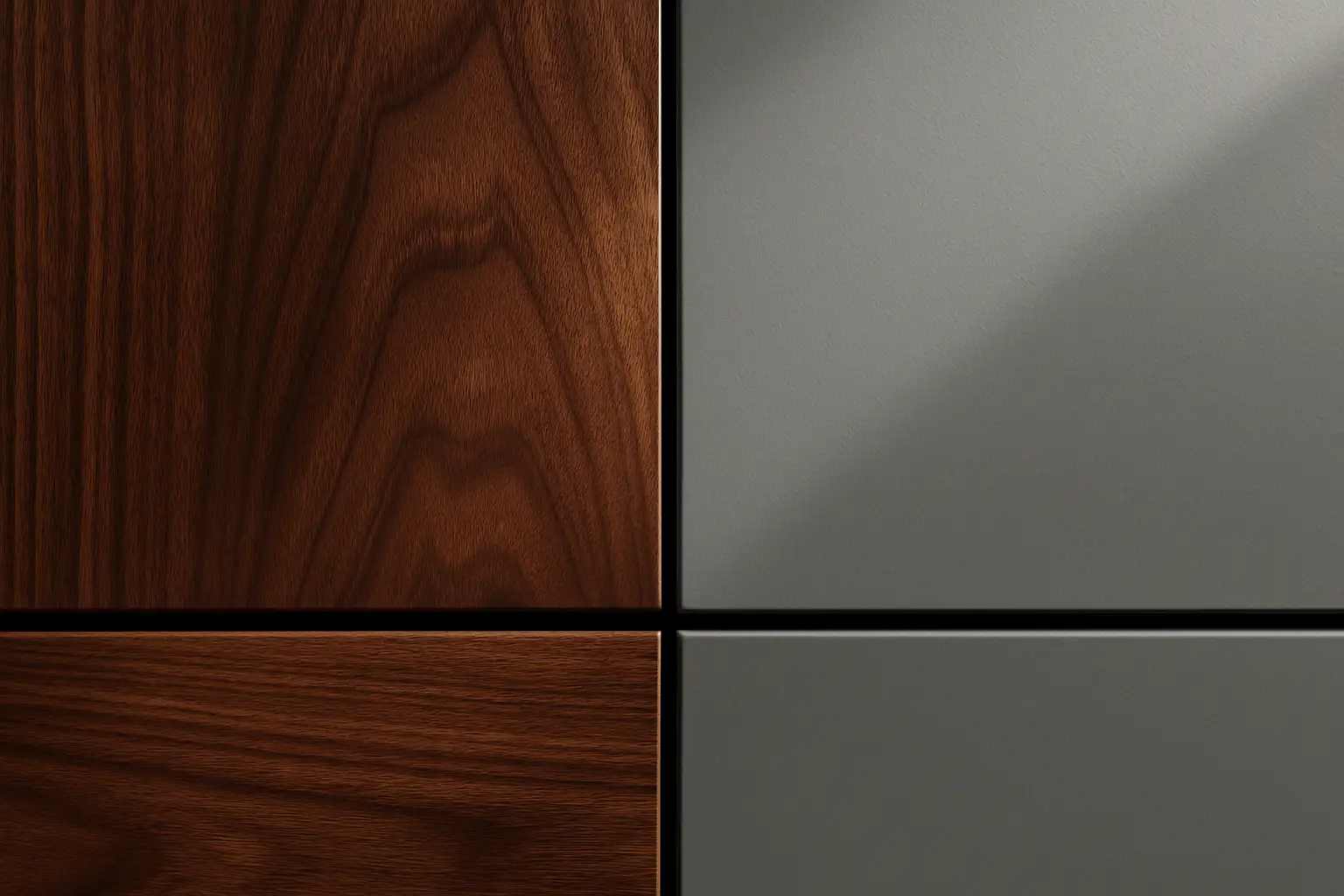
Stain is a penetrating color that soaks into wood rather than covering it, so the grain stays visible. It is the finish for anyone who wants to see the material: the ray fleck of white oak, the chocolate depth of walnut, the warmth of cherry or maple. Because stain enhances grain instead of hiding it, it only makes sense on real wood or wood veneer, never on MDF, which has no grain to reveal.
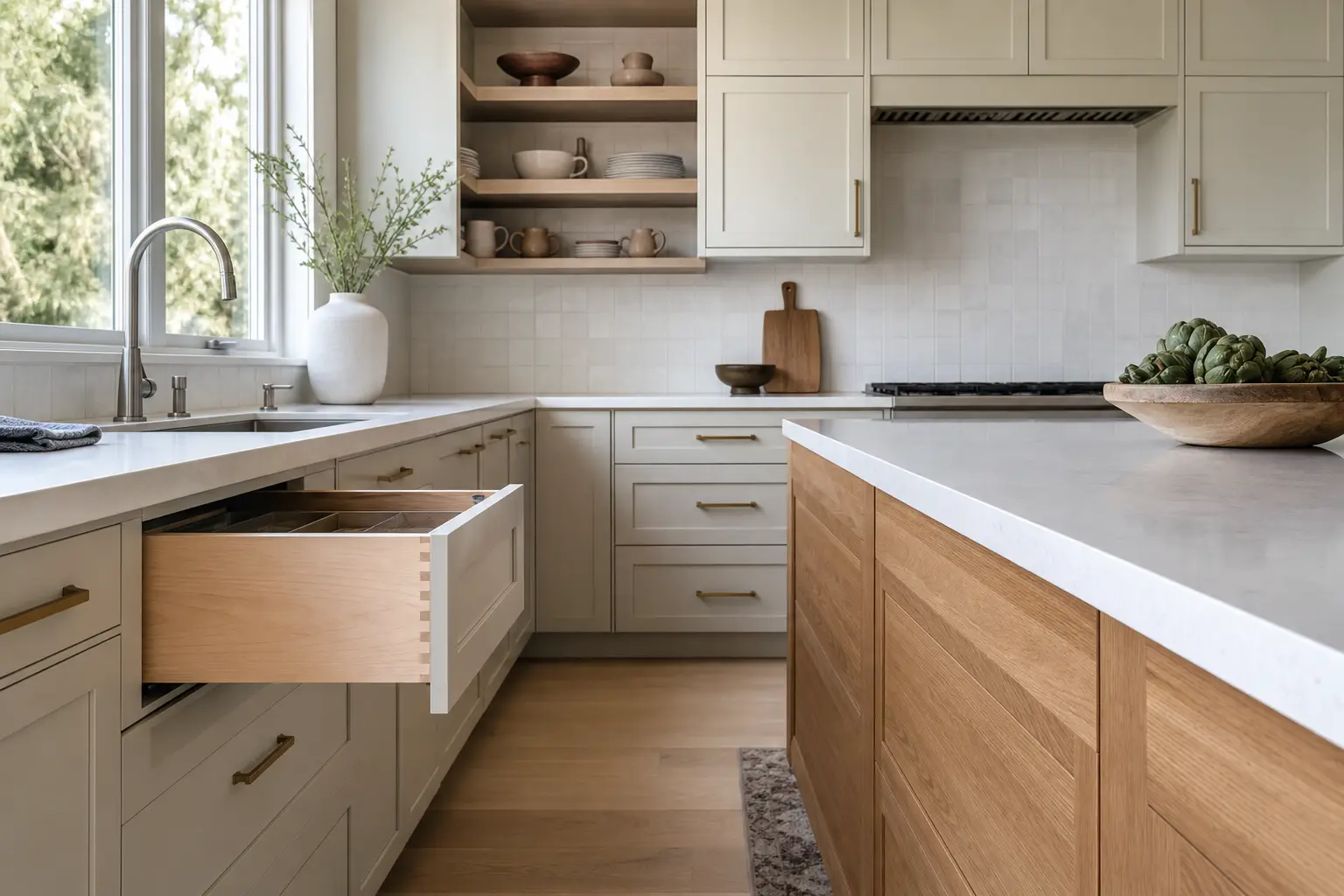
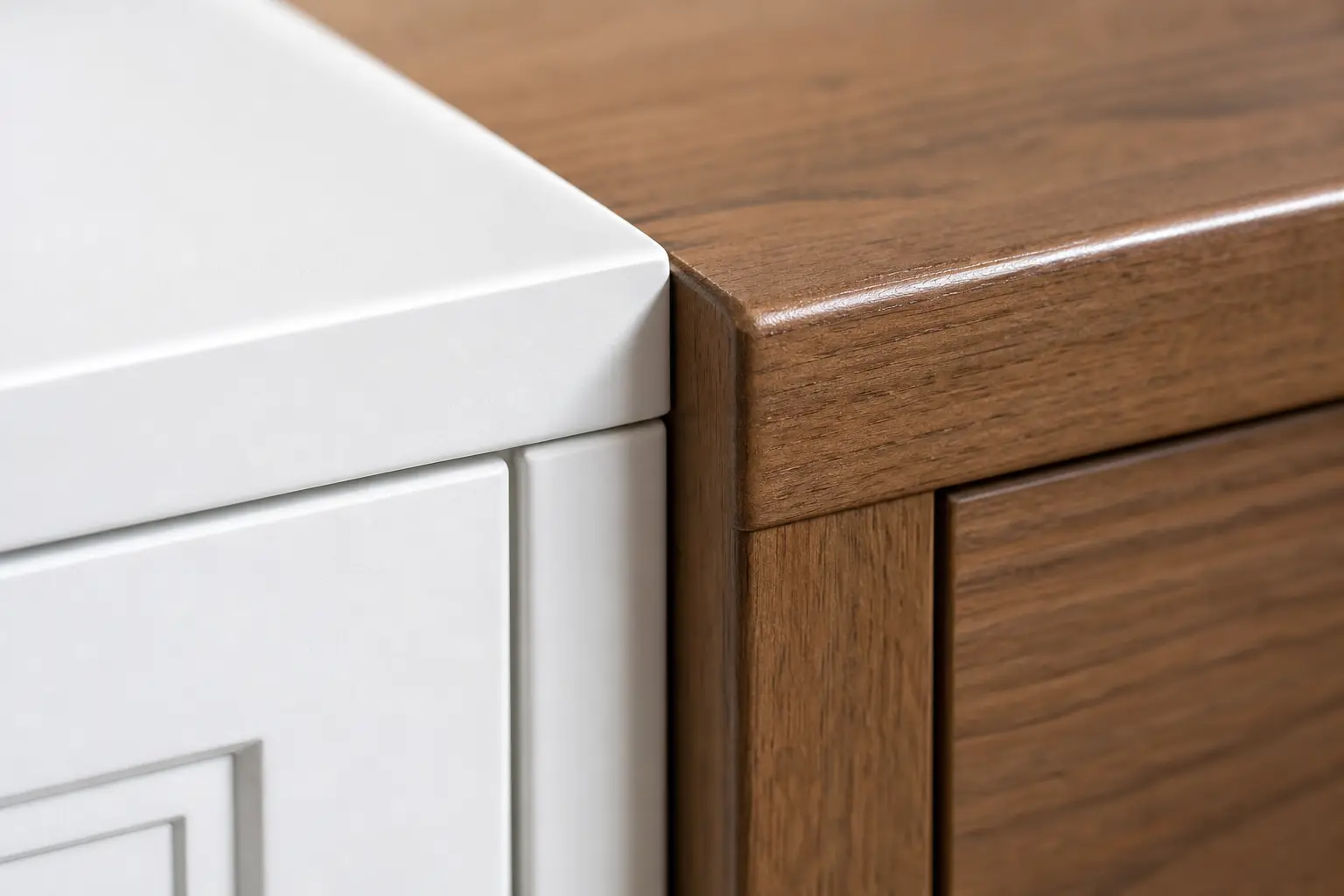
Stain has practical advantages beyond looks. It hides minor scuffs and everyday wear better than a solid paint, since a small scratch disappears into the grain pattern rather than showing as a bright mark. It ages gracefully. The tradeoff is that natural wood varies, so no two stained doors are identical, and the same stain color lands differently on oak versus maple because each species absorbs it at its own rate. Wood also moves seasonally, which is normal and part of the material's character. For the mixed-material kitchens common across the Peninsula, stained or veneered perimeter cabinets paired with a painted island is a combination that has held up as a design direction for good reason.
Lacquer: The Sprayed Topcoat That Ties It Together
Lacquer causes the most confusion because people use the word for two different ideas. Strictly, lacquer is a fast-drying, sprayable finish system, and it can be clear or pigmented. A clear lacquer goes over stained wood to protect it and set the sheen. A pigmented lacquer carries color and protection in a single hard film, which is how many high-end European-style painted cabinets get their glass-smooth look. The key point is that lacquer describes the coating technology and application, not the color itself.
What matters for a buyer is the type of lacquer and how it is applied. A catalyzed or conversion lacquer chemically cures into a hard, durable film that resists moisture, cleaning chemicals, and daily handling far better than a basic air-dry finish. Sprayed in a controlled shop and cured properly, it produces the furniture-grade smoothness that distinguishes a well-made painted or stained cabinet from a mass-produced one. This is squarely where in-house finishing shows up in the final product: consistent film build, even sheen, and a surface with no brush marks or orange peel. When we talk about a smooth painted or clear-coated finish, a quality lacquer system is usually what is doing the work underneath.
Laminate and Veneer: Two Surfaces People Constantly Confuse
Laminate and veneer both come as a surface layer bonded to a substrate, which is why they get lumped together, but they are fundamentally different materials. Veneer is a thin slice of real wood adhered to a plywood or MDF core. It looks, finishes, and ages like solid wood, complete with genuine grain, and it lets you get a book-matched walnut or rift white oak look across large door fronts without the cost, weight, or seasonal movement of thick solid stock. Veneer takes stain and clear lacquer just like solid wood because it is wood.
Laminate is a manufactured surface. High-pressure laminate (HPL) bonds printed decorative paper and resin under heat and pressure into a tough sheet, while thermally fused laminate (TFL) and melamine fuse a similar surface directly to a panel. Both come in wood-look patterns and solid colors, and both resist moisture, scratches, and cleaning chemicals very well, which makes them excellent for hardworking spaces, laundry rooms, garages, and high-traffic family kitchens. The tradeoff is that laminate is a repeating printed pattern rather than unique natural grain, and a damaged laminate surface cannot be sanded and refinished the way wood veneer can. Thermofoil, a vinyl film vacuum-formed over MDF, is a related wipeable option that gives a smooth, joint-free painted look for less, though sustained heat near ovens and dishwashers can loosen it over years. Matching the finish to the room is the whole game: veneer and stain for the showpiece kitchen, paint and lacquer for smooth color, and laminate where water and wear are relentless. Because American Built Cabinets finishes in-house in San Jose and keeps your original spec on file, we can match and extend any of these finishes long after install, on our usual roughly three-week timeline.
FAQ
Q1: What is the difference between paint and lacquer on cabinets?
A1: Paint refers to the pigmented coating that gives color, while lacquer describes a type of fast-drying, sprayable topcoat and finish system that can be clear or pigmented. A cabinet can be painted and then have a clear protective coat, or it can have a pigmented lacquer that provides both color and protection in one hard, smooth film.
Q2: Which cabinet finish is the most durable?
A2: A catalyzed or conversion lacquer and a high-pressure laminate are among the most durable everyday surfaces, resisting moisture, scratches, and cleaning chemicals well. Painted MDF with a quality topcoat is durable and repairable. The best finish depends on the location: laminate excels near water, while a fine sprayed lacquer gives a smoother furniture-grade look.
Q3: Is stain or paint better for Bay Area kitchens?
A3: Neither is universally better. Stain shows off natural wood grain and hides minor scuffs, which suits white oak and walnut kitchens. Paint gives a smooth, uniform color and pairs best with MDF for a joint-free surface. Many Bay Area kitchens now mix the two, with painted islands and stained or veneered perimeter cabinets.
Q4: What is the difference between laminate and veneer?
A4: Veneer is a thin layer of real wood bonded to a substrate, so it looks and finishes like solid wood with natural grain. Laminate is a printed or solid synthetic surface, either high-pressure or thermally fused, that mimics wood or a solid color and resists moisture and wear. Veneer is natural, laminate is manufactured.
Q5: Do painted cabinets crack or yellow over time?
A5: Painted MDF can develop hairline cracks at joints as a home expands and contracts through seasonal temperature swings, though a stable substrate and good prep minimize this. White paints can yellow slightly over many years, especially in low light or near heat. Choosing a quality finish system and the right substrate reduces both risks.
Q6: Can you match an existing cabinet finish?
A6: Because we finish in-house in San Jose, we can color-match paint and stain closely and keep records of your original run for future service or additions. Exact matching of an aged finish is harder since color shifts with light exposure over time, but a local shop with your original spec gets far closer than a distant factory working from a code.