Ask any Bay Area general contractor what slows a project down, and cabinets land near the top of the list. Not the installation itself, but everything upstream: mismatched sizes across units, finishes that vary lot to lot, hardware that changes without notice, and lead times nobody can promise. More builders working across San Jose, San Francisco, and the Peninsula are solving this the same way, by standardizing their cabinet specifications and buying against a fixed spec from one local manufacturer. Here is what standardizing actually means, why it saves money and schedule, and how we support it in our San Jose shop.
The Real Cost of Unspecified Cabinets
On a single custom home, loose cabinet specifications are annoying. On a multi-unit building or a run of townhomes, they are expensive. When cabinets are re-decided project by project, or worse, unit by unit, small inconsistencies pile into real money. A hinge brand substitution here, a slightly different white there, a drawer box that switches from dovetail to stapled between phases. Each variance is a potential callback, a punch-list item, or a buyer complaint after move-in.
The schedule cost is worse than the material cost. Cabinets sit on the critical path near the end of construction, so a delay or a wrong size stalls countertops, backsplash, and final inspection behind it. Builders who have been burned by a national semi-custom line arriving late, or arriving with three units in a slightly different finish, learn to treat the cabinet package as something to nail down early and hard. Standardizing the spec is how they do it.
What a Standard Cabinet Spec Actually Locks Down
A useful cabinet standard is written and specific. It is not "white Shaker cabinets." It defines the parts that determine cost, quality, and consistency, so any unit built to it comes out the same. Standardizing internally is easier when there is an industry benchmark to anchor to, such as the ANSI/KCMA A161.1 standard for cabinet performance and durability. In practice, a builder-grade standard spec covers a handful of core decisions.
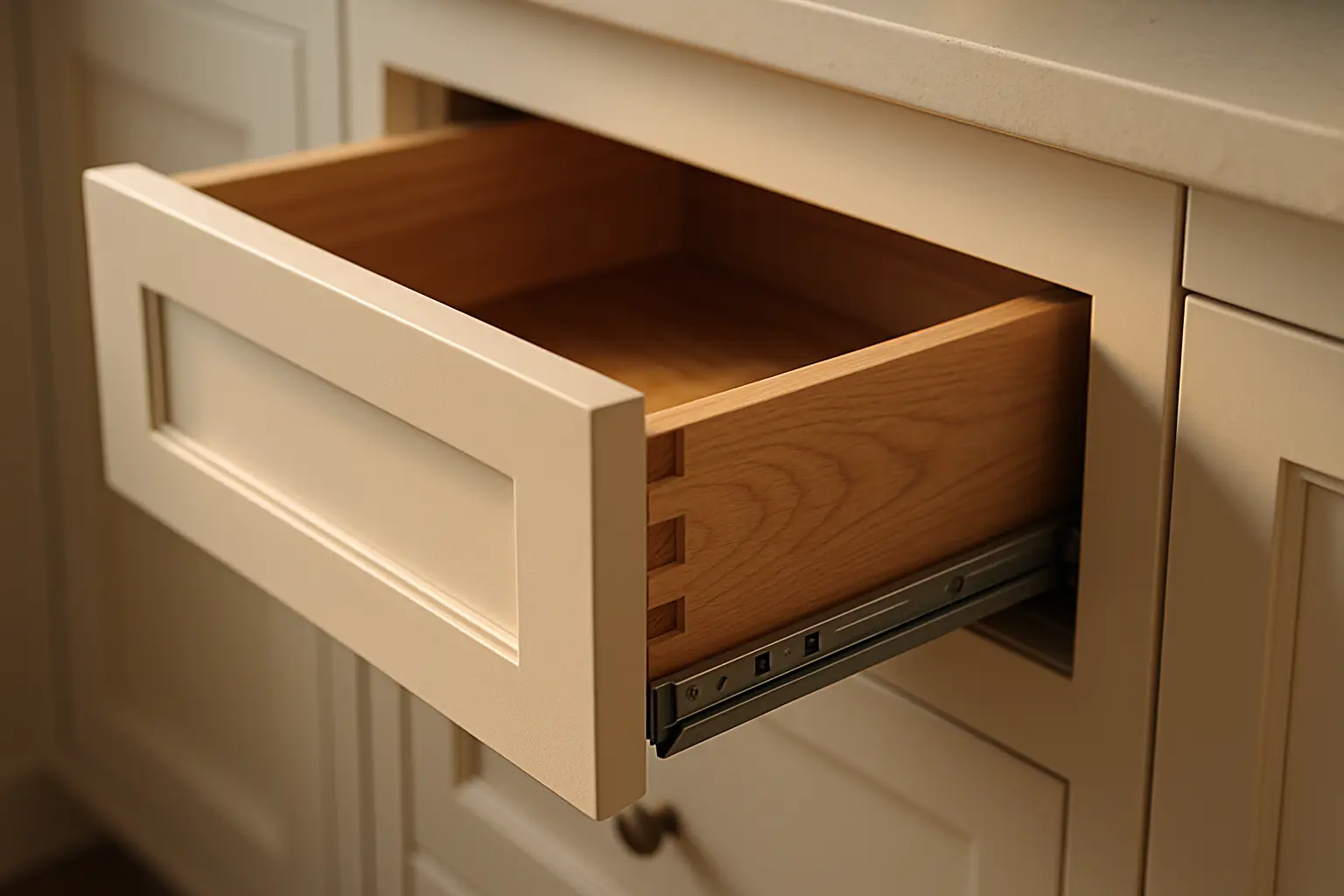
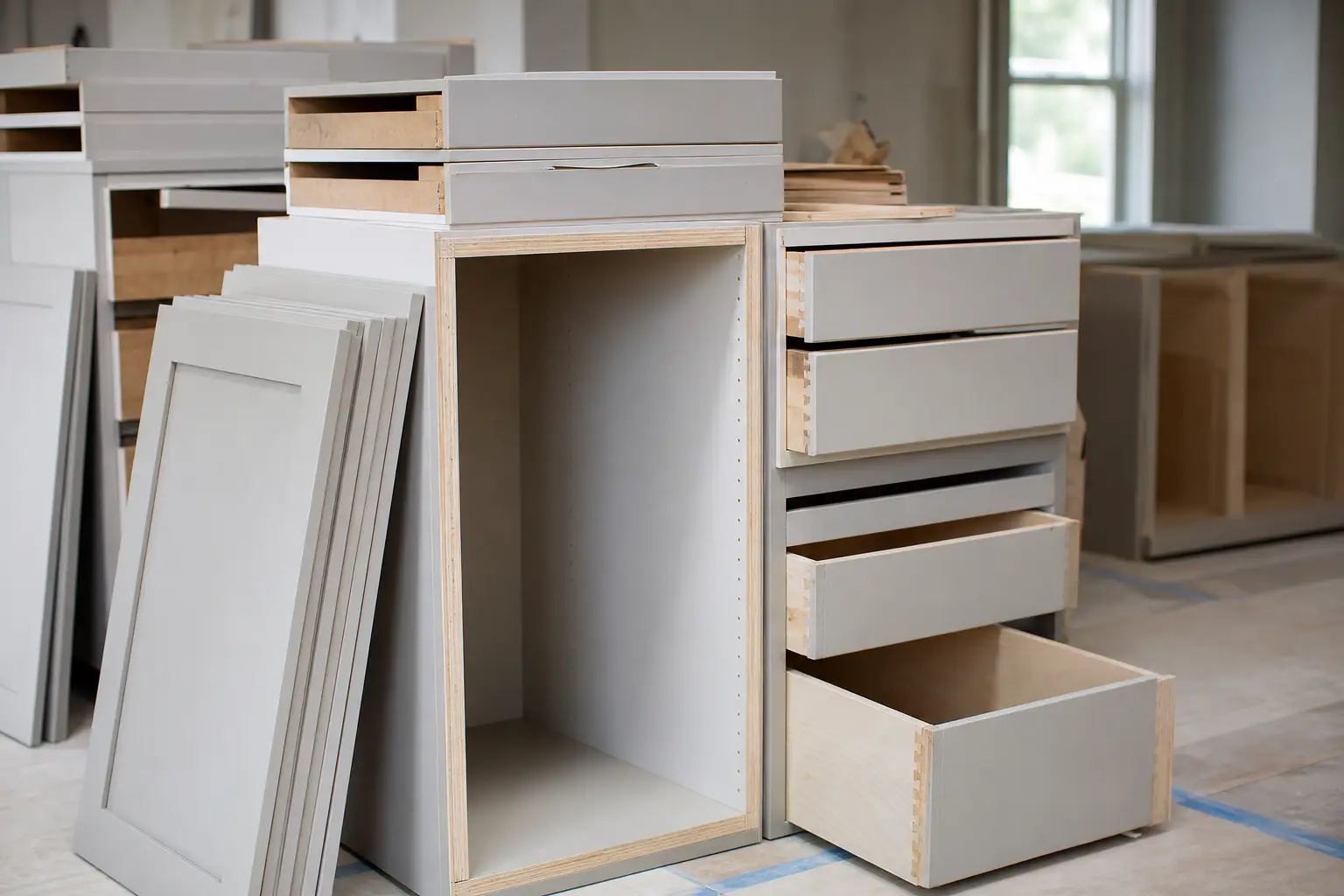
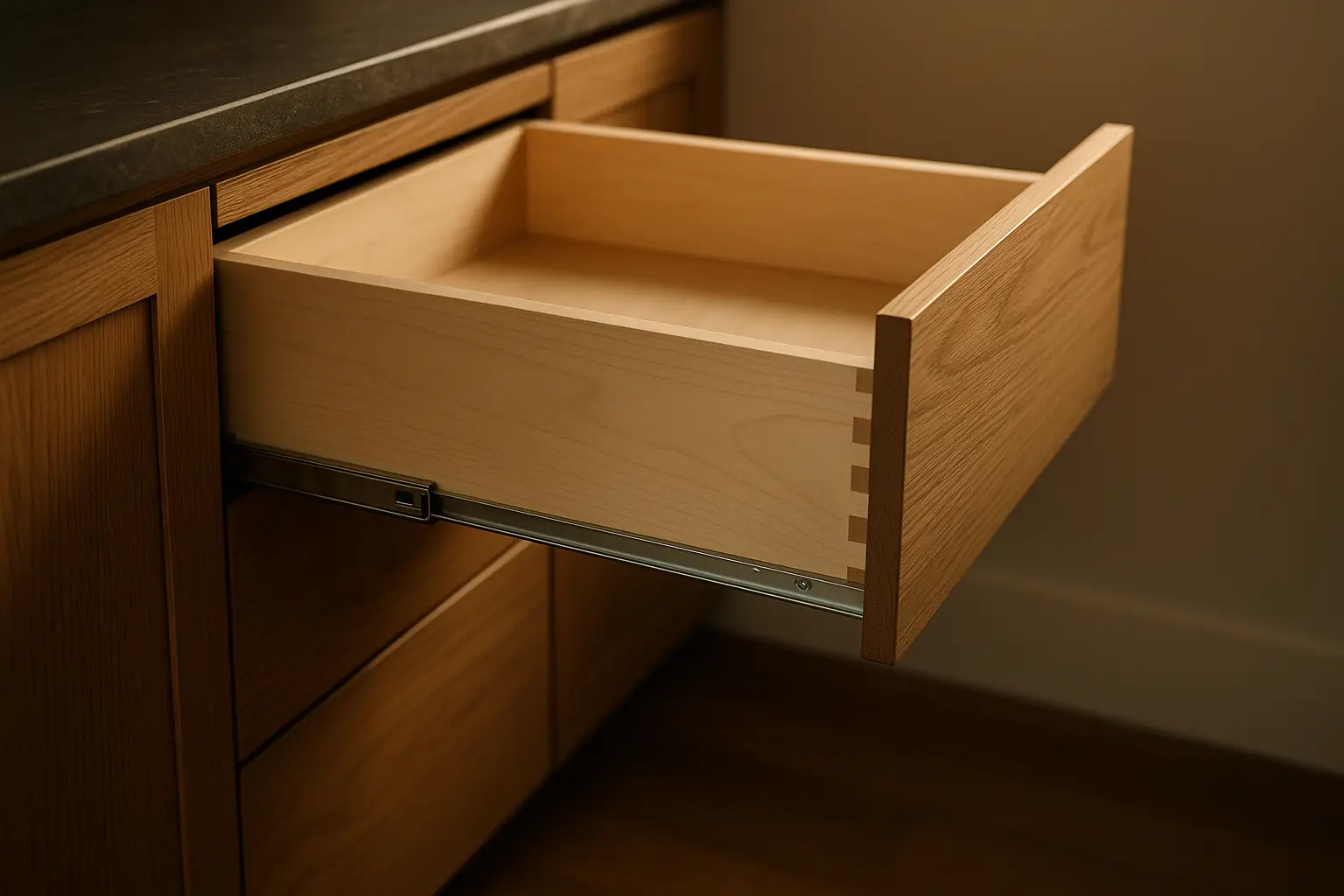
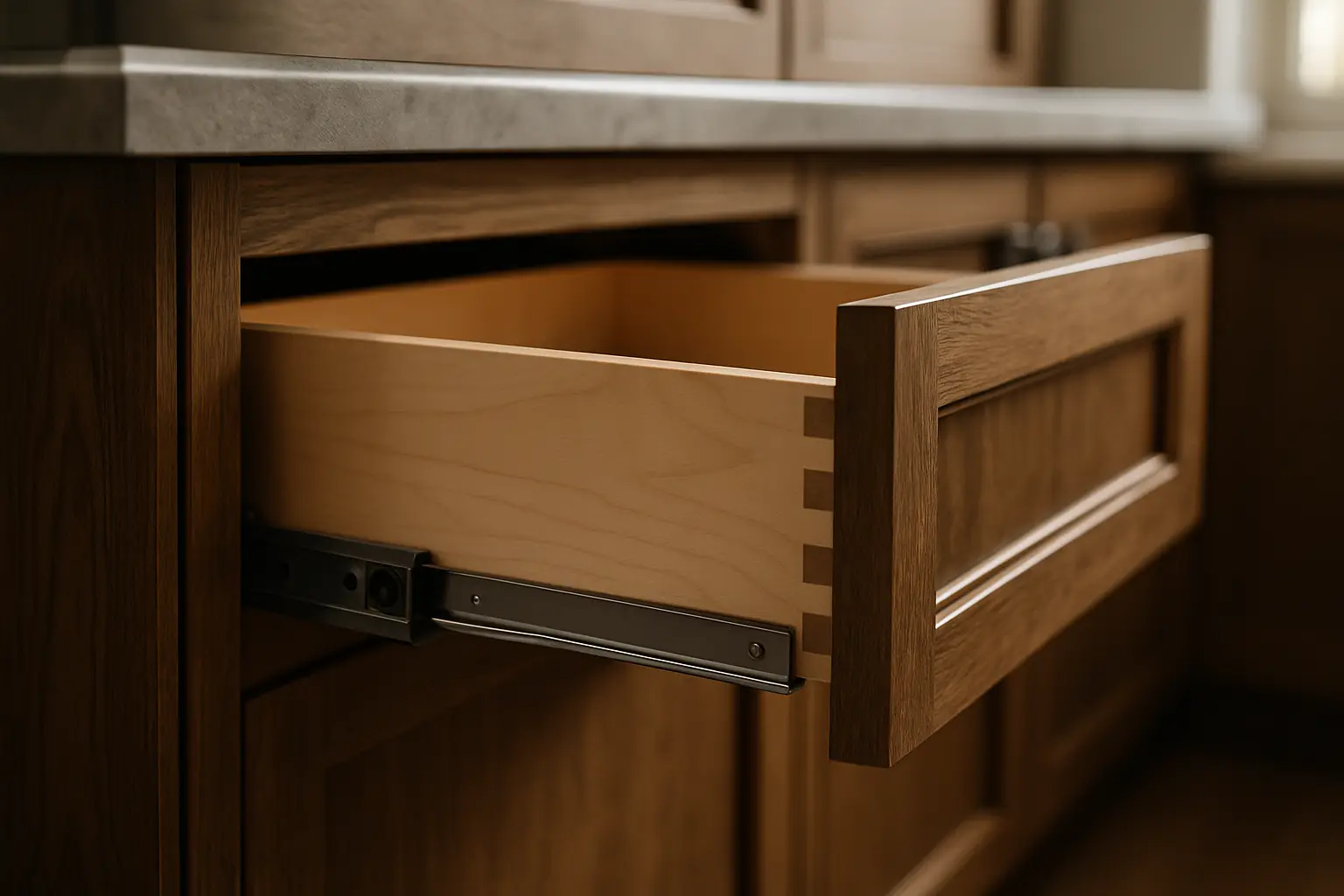
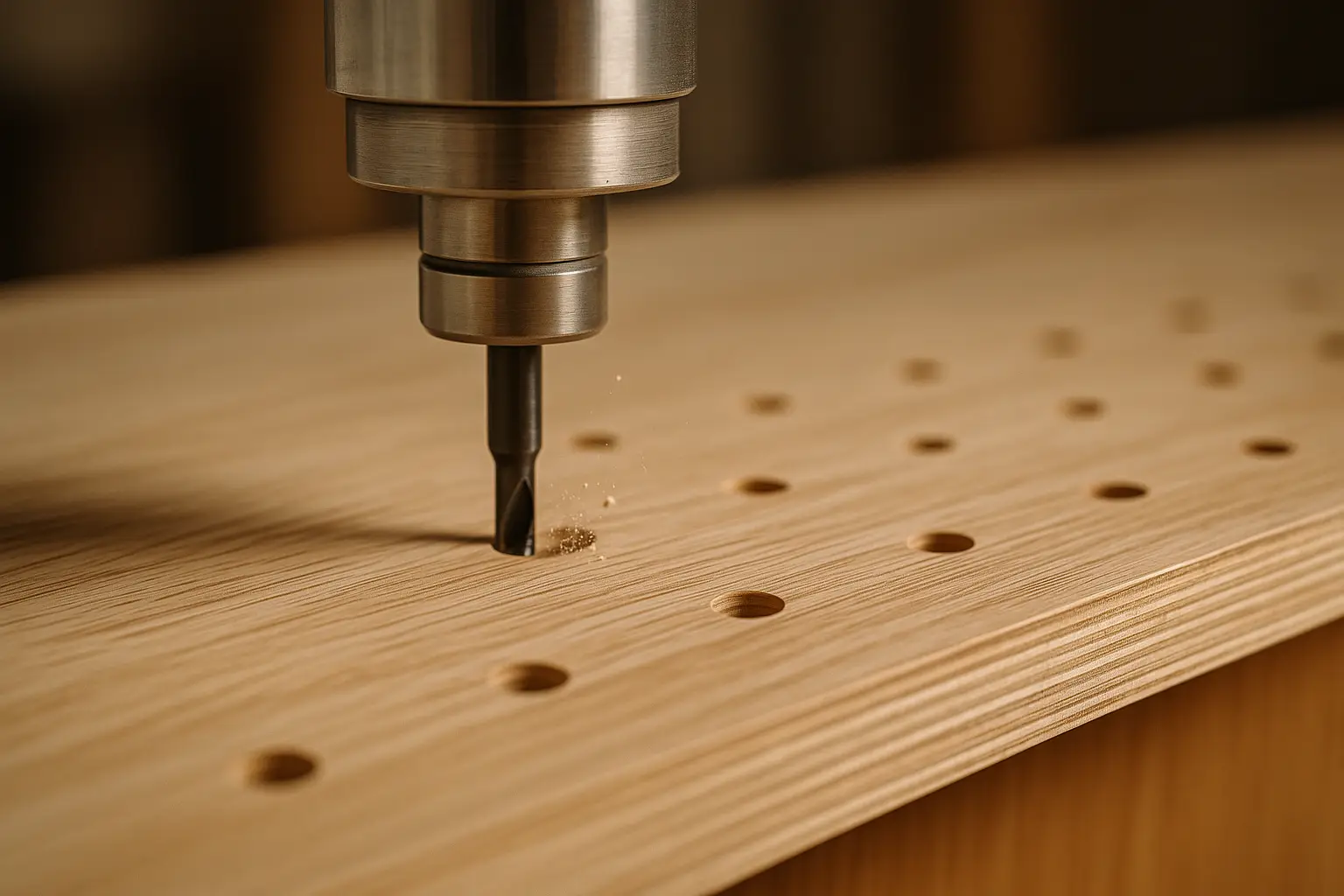
Box construction comes first: material and thickness, for example 3/4-inch furniture-grade plywood cases, and joinery method. Then the door: style such as full-overlay Shaker or flat-panel, and material such as painted MDF or solid wood frames with veneered panels. The finish system is its own line: paint versus stain versus thermofoil, sheen, and the number of coats, because that is what makes unit twelve match unit one. Hardware is spelled out by brand and model, not just "soft-close," so the hinges and full-extension undermount slides are identical everywhere. Finally, the standard names dimensional conventions, toe-kick height, standard cabinet depths, filler strategy, so field conditions are handled the same way each time.
With those locked, the only thing that changes per unit is layout and exact dimensions. Everything that drives quality and buyer perception stays fixed.
Consistency Without Killing Choice
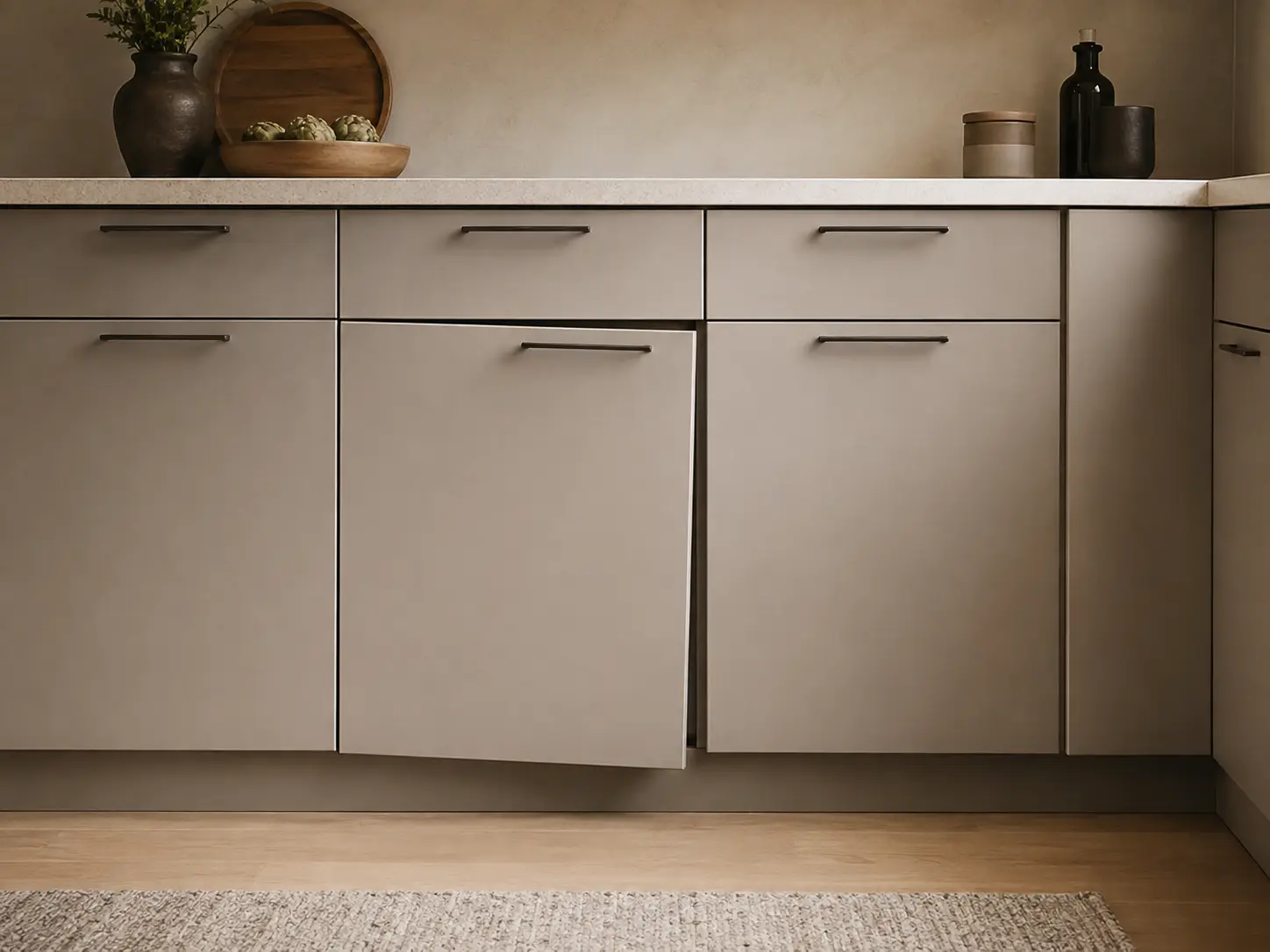
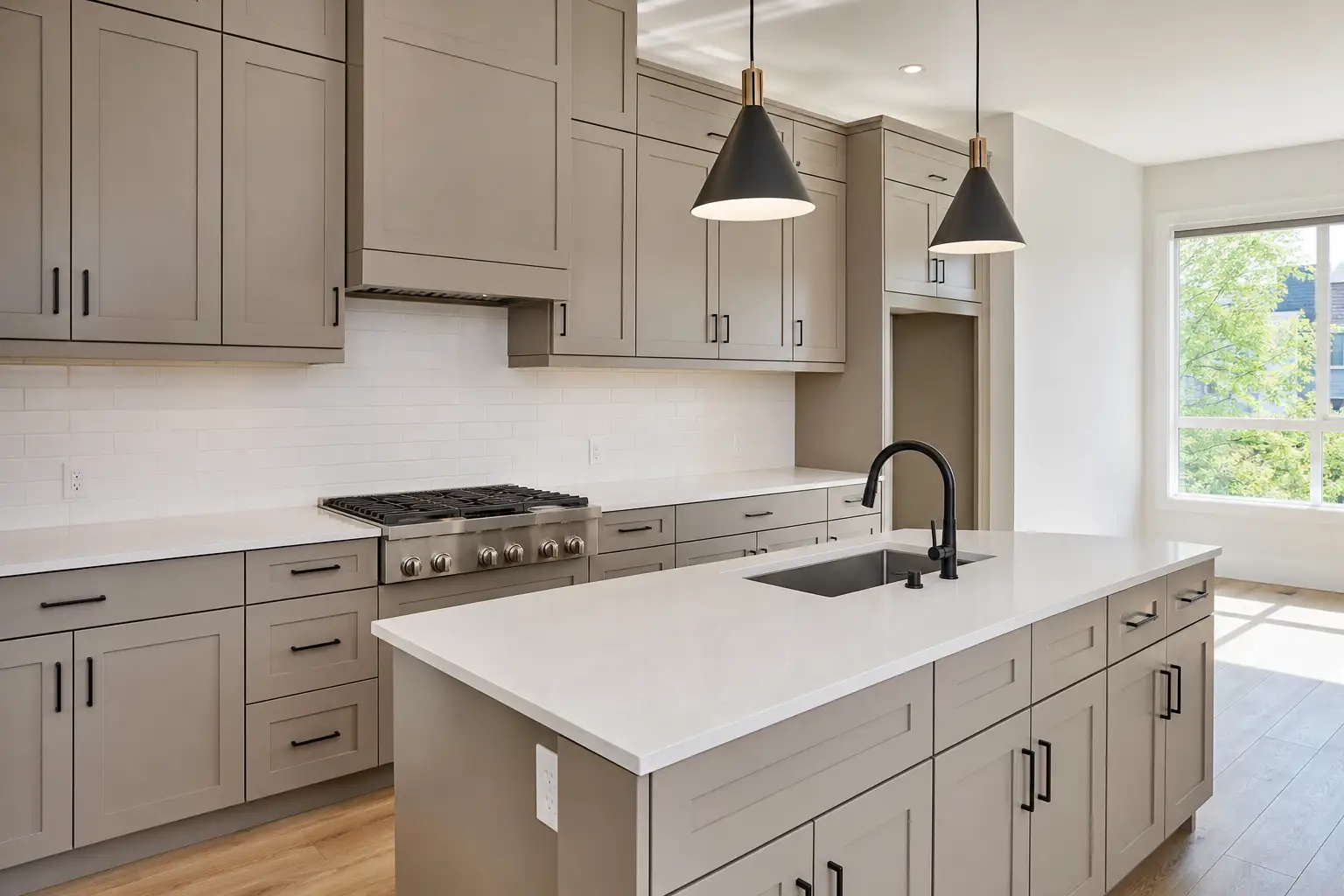
The fear builders raise is that standardizing means every kitchen looks the same, which reads as cheap to buyers. It does not have to. The trick is to standardize construction and components while offering a small, curated menu of finish packages. A builder might define one plywood-and-MDF construction standard, one hardware package, and one set of dimensional rules, then let buyers choose among two or three approved color schemes: a warm white, a greige, a two-tone with a wood-veneer island.
That gives the sales team something to offer and buyers a sense of choice, while the shop still builds against a single construction spec. The variety lives on the surface, in door color and countertop pairing. The predictability lives underneath, in the box, the joinery, the hardware, and the lead time. Both matter, and standardizing lets a builder have both instead of trading one for the other.
Why Local Manufacturing Makes Standardizing Work
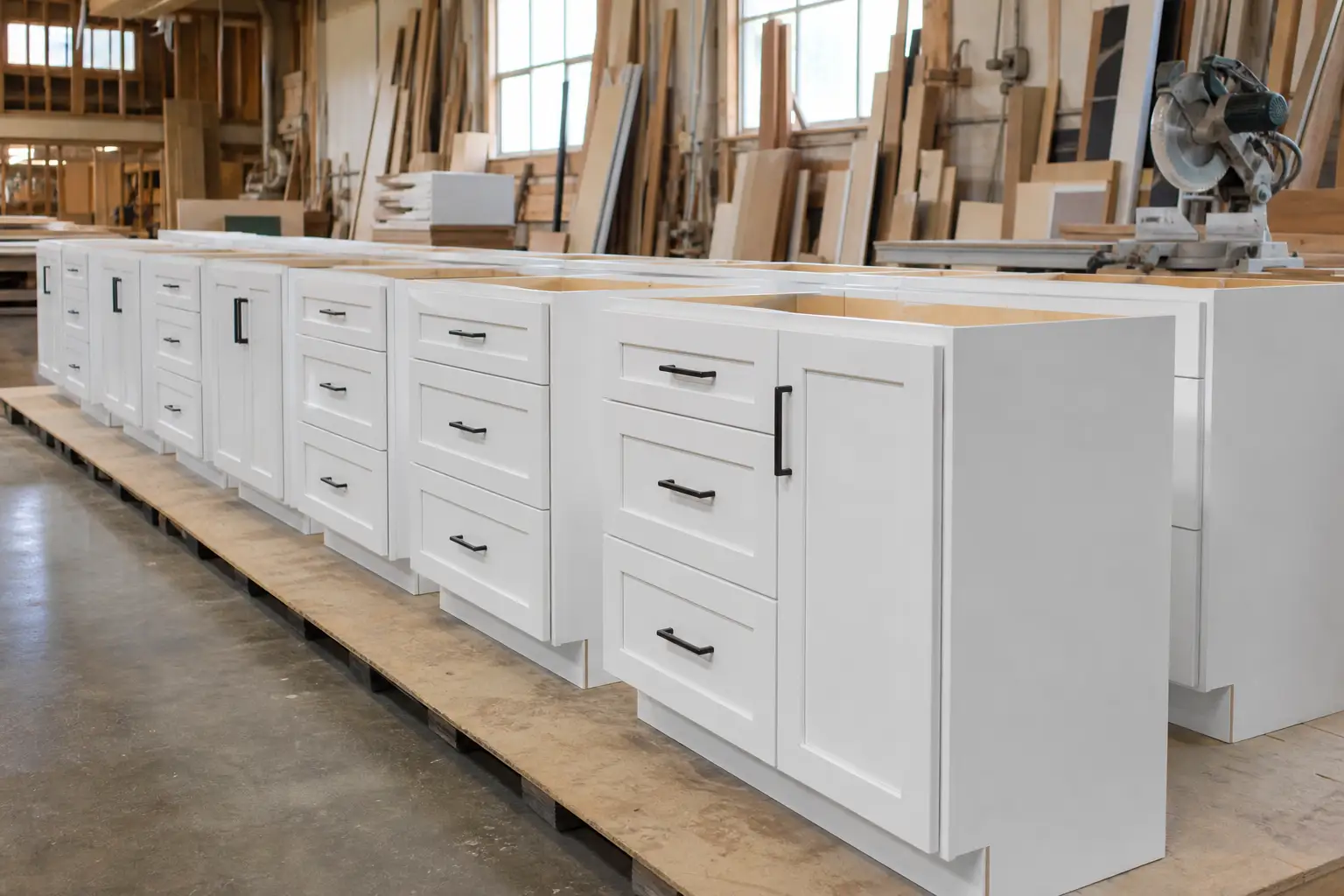
A standard spec is only as good as the shop executing it. This is where buying from a local manufacturer beats a distributed national supply chain. When American Built Cabinets builds every unit for a project in our San Jose shop, our own team runs quality control on each box against the same written spec, so the finish on the last unit matches the first. Matched finishes across a multi-unit job are genuinely hard to guarantee when cabinets come from a distant factory in separate lots; they are routine when one local team paints them all.
Local production also makes staged delivery realistic. Our typical lead time runs about three weeks per release once a unit's field dimensions are confirmed. With the core spec already approved, a builder only needs to send final measurements to release the next phase, and we can time deliveries to the construction schedule rather than dumping the whole order at once. That keeps cabinets off a crowded jobsite until each unit is ready for them. And because production is local, revisions and warranty questions go to a phone call with the people who built the cabinet, not a claims process routed through a distributor.
Getting Started With a Standard Spec
Builders who standardize well tend to do it in one working session and then reuse it for years. The process is straightforward: sit down with the manufacturer, define the construction and finish standard once, document it, and agree on the finish packages you will offer buyers. From there, each project reuses the approved spec, and only the per-unit dimensions and the buyer's finish choice change.
The payoff shows up across the whole book of work. Estimating gets faster because per-unit cabinet cost is predictable. Ordering gets cleaner because the components never change. The punch list shrinks because there are no surprise substitutions. And multi-unit and ADU projects, which are a growing share of Bay Area work, become far easier to run when every kitchen is built to one spec, delivered on a schedule, and backed by a single warranty contact. Standardizing does not remove flexibility. It moves flexibility to where it helps, sizing and finish choice, and removes it from where it only causes problems.
FAQ
Q1: What does it mean to standardize cabinet specifications?
A1: It means defining a fixed, written spec for construction and finish, then reusing it across units and projects. A standard spec locks in box material, joinery, door style, finish system, and hardware brand and model, so every kitchen is built to the same requirements instead of being re-decided each time. Sizes and layouts still vary per unit; the underlying quality and components do not.
Q2: Does standardizing cabinets mean every unit looks identical?
A2: No. Standardizing the spec is about construction and components, not forcing one look. A builder can offer two or three finish packages within the same standard, so buyers still choose a color scheme, while the box, hardware, and lead time stay consistent. You get variety on the surface and predictability underneath.
Q3: How does a standard cabinet spec save money on a project?
A3: It cuts change orders, punch-list callbacks, and pricing surprises. When every kitchen uses the same components and dimensions, ordering is faster, mistakes drop, and per-unit pricing is predictable across the whole job. Volume against a single spec also lets a local manufacturer plan production, which keeps unit costs and lead times stable.
Q4: Is a standard spec compatible with custom sizing for odd layouts?
A4: Yes, and that is the advantage of a local custom shop over stock lines. The construction and finish stay standard while dimensions are built to each unit, which matters in older Bay Area buildings where no two walls are plumb. You keep the consistency of a spec without being boxed in by stock cabinet sizes.
Q5: How far ahead should builders lock cabinet specs?
A5: Lock the core spec at the design stage, well before rough-in. Our typical production lead time runs about three weeks per release once a unit's sizes are confirmed, so with a standard spec already approved, you only need final field dimensions to release each phase. Approving the spec early is what makes staged, phase-by-phase delivery reliable.
Q6: Can one manufacturer handle a multi-unit or ADU project on a standard spec?
A6: That is exactly where standardizing pays off. Manufacturing every unit locally to one spec means consistent quality control, matched finishes across all units, staged delivery timed to your schedule, and warranty support through one point of contact rather than several distributors. It removes the coordination overhead of mixing suppliers.