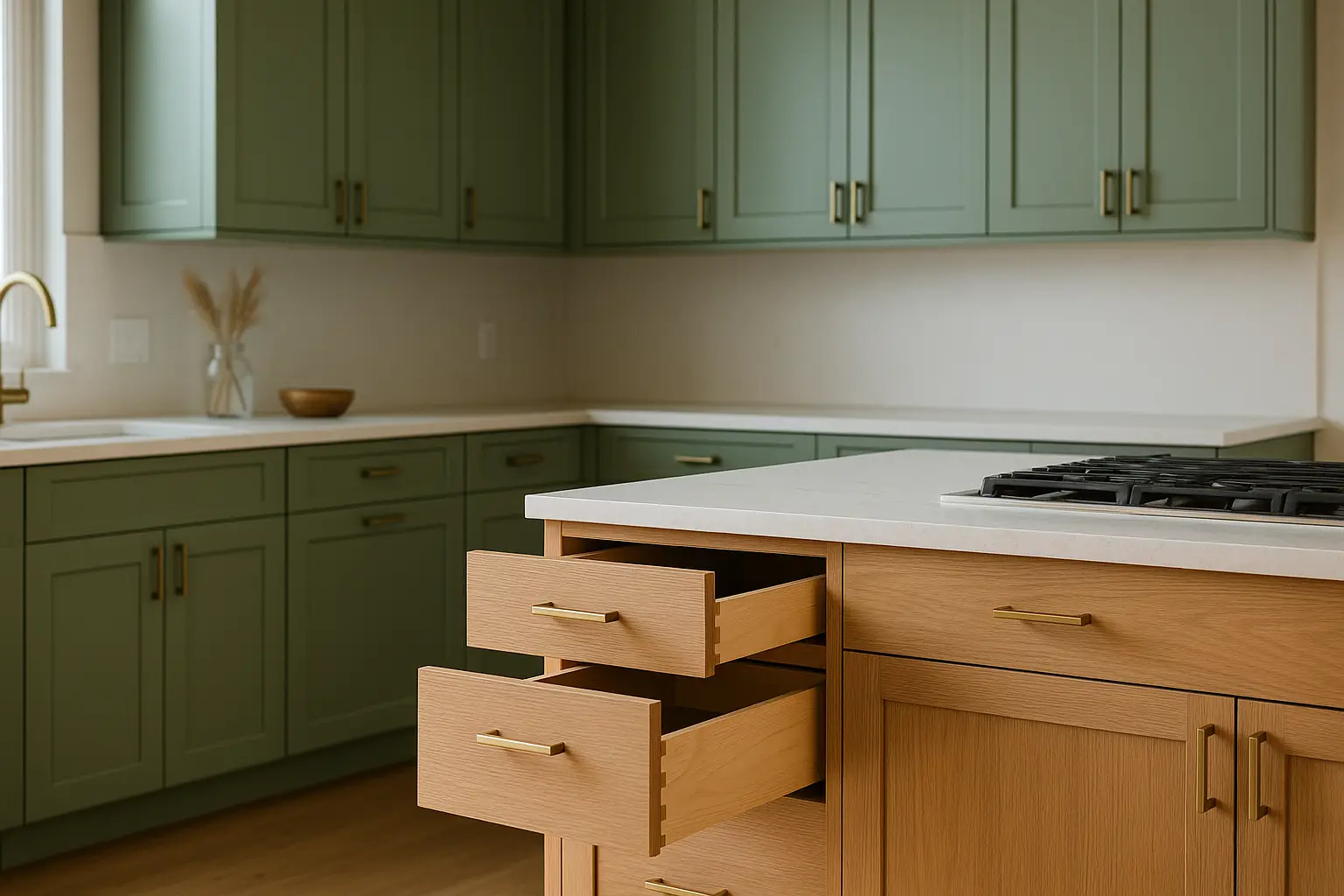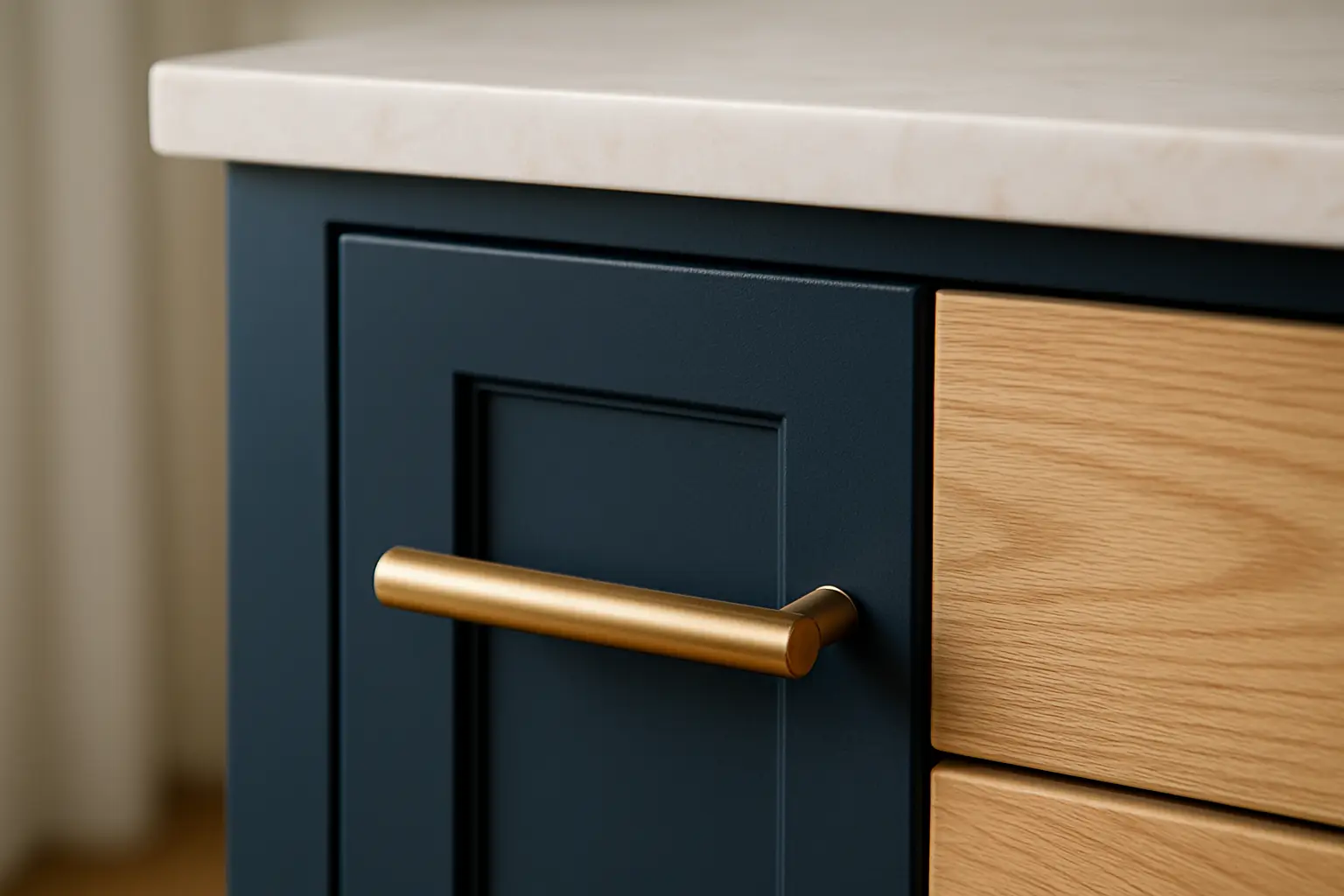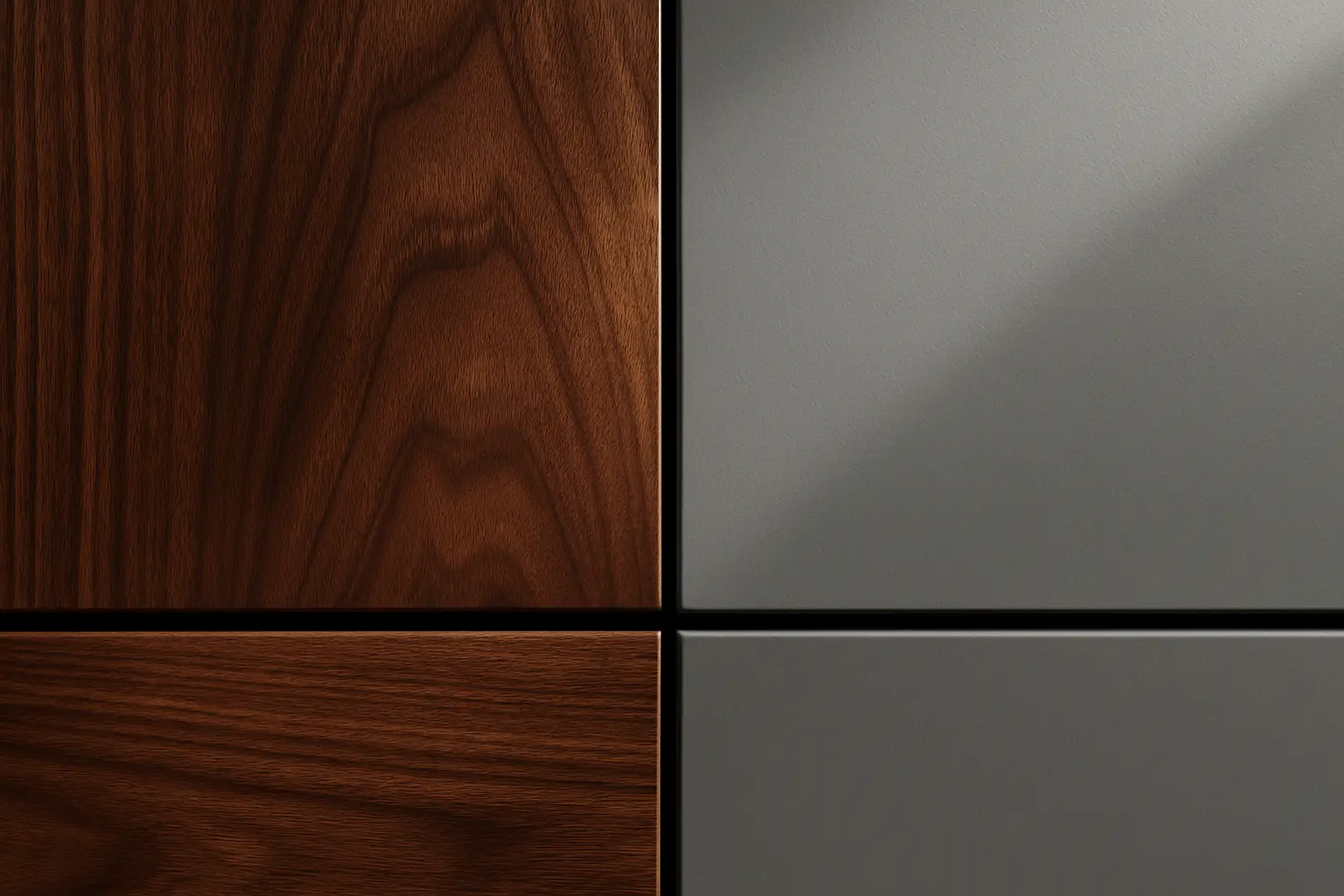
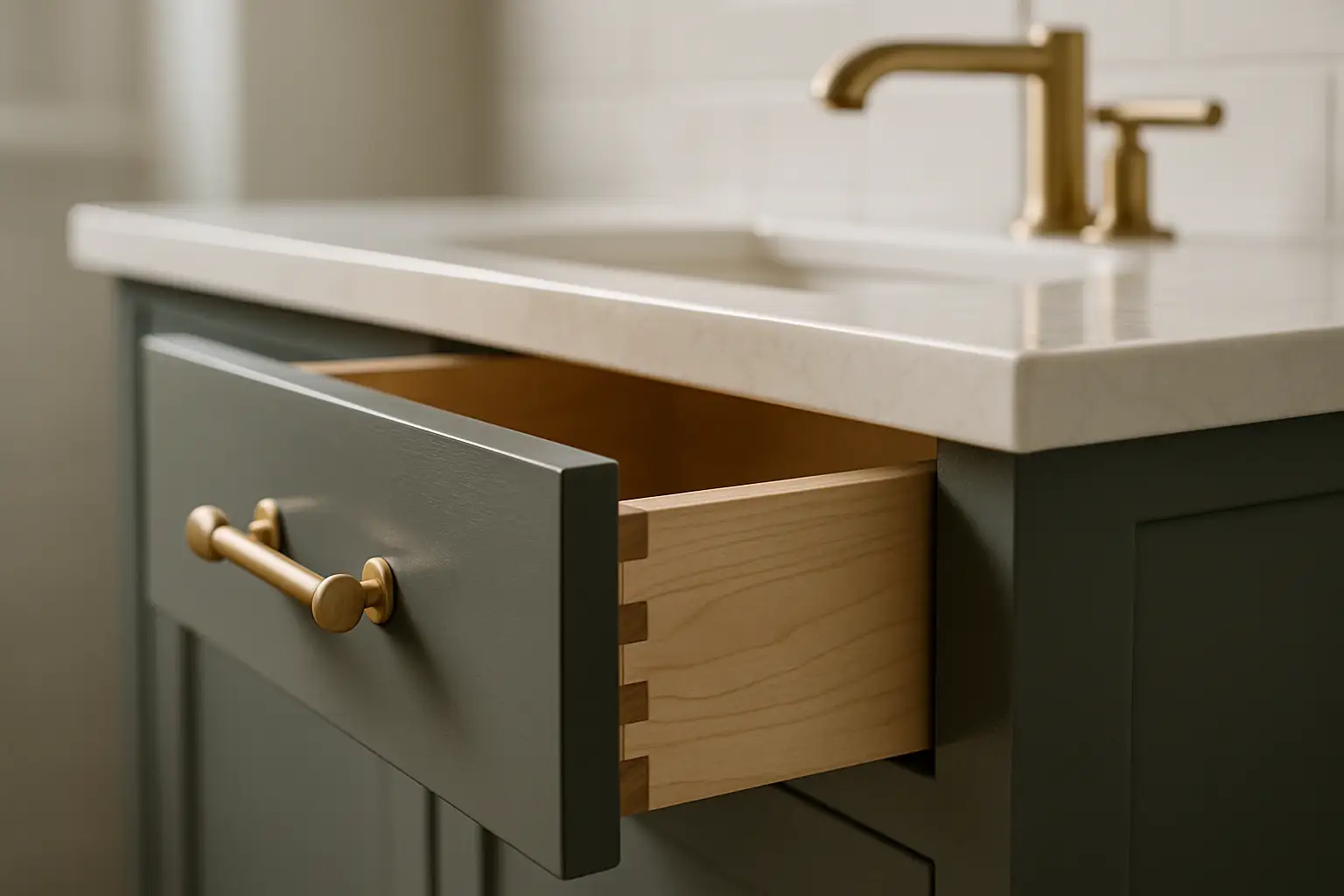
A bathroom is the hardest room in the house on cabinetry. It swings between humid and dry every day, water sits on countertops, and the vanity has to hold plumbing while still giving you usable storage. Choosing cabinets here is a different problem than choosing them for a kitchen, and the wrong materials fail fast. This guide covers what actually holds up in Bay Area bathrooms, from powder rooms in San Francisco flats to primary suites in San Jose and San Mateo, and how to plan a vanity that works as hard as it looks.
Why Bathrooms Punish Cabinets
The bathroom is the most demanding humidity environment in a home. A hot shower can push relative humidity to the ceiling in minutes, then the room dries out for hours. That constant swing is what destroys cheap cabinetry. Particleboard boxes swell at the edges, veneers lift, and unsealed MDF wicks up water at the base until the corners crumble. None of that shows on day one, which is why bathroom cabinets are where cutting material corners costs you the most.
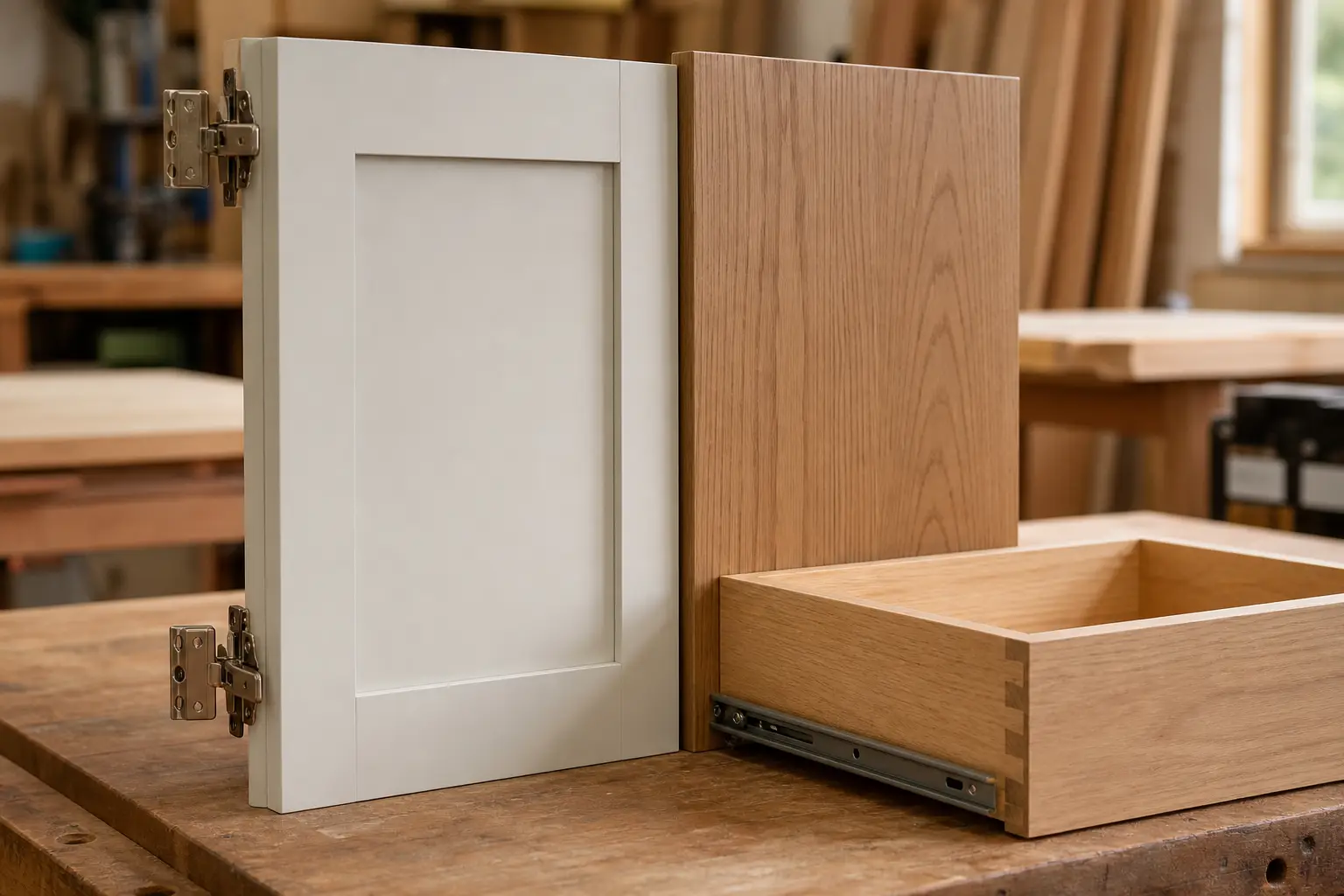
The fix is not exotic. It is the right substrate and a finish that seals every surface. American Built Cabinets builds vanity boxes from furniture-grade plywood, which holds its shape through humidity cycles far better than particleboard. Painted doors use solid wood frames around an MDF panel, and every edge, including the sink cut-out, gets sealed so water has nowhere to enter. That combination is what separates a vanity that looks new in ten years from one that swells in two.
Planning the Vanity Around the Plumbing
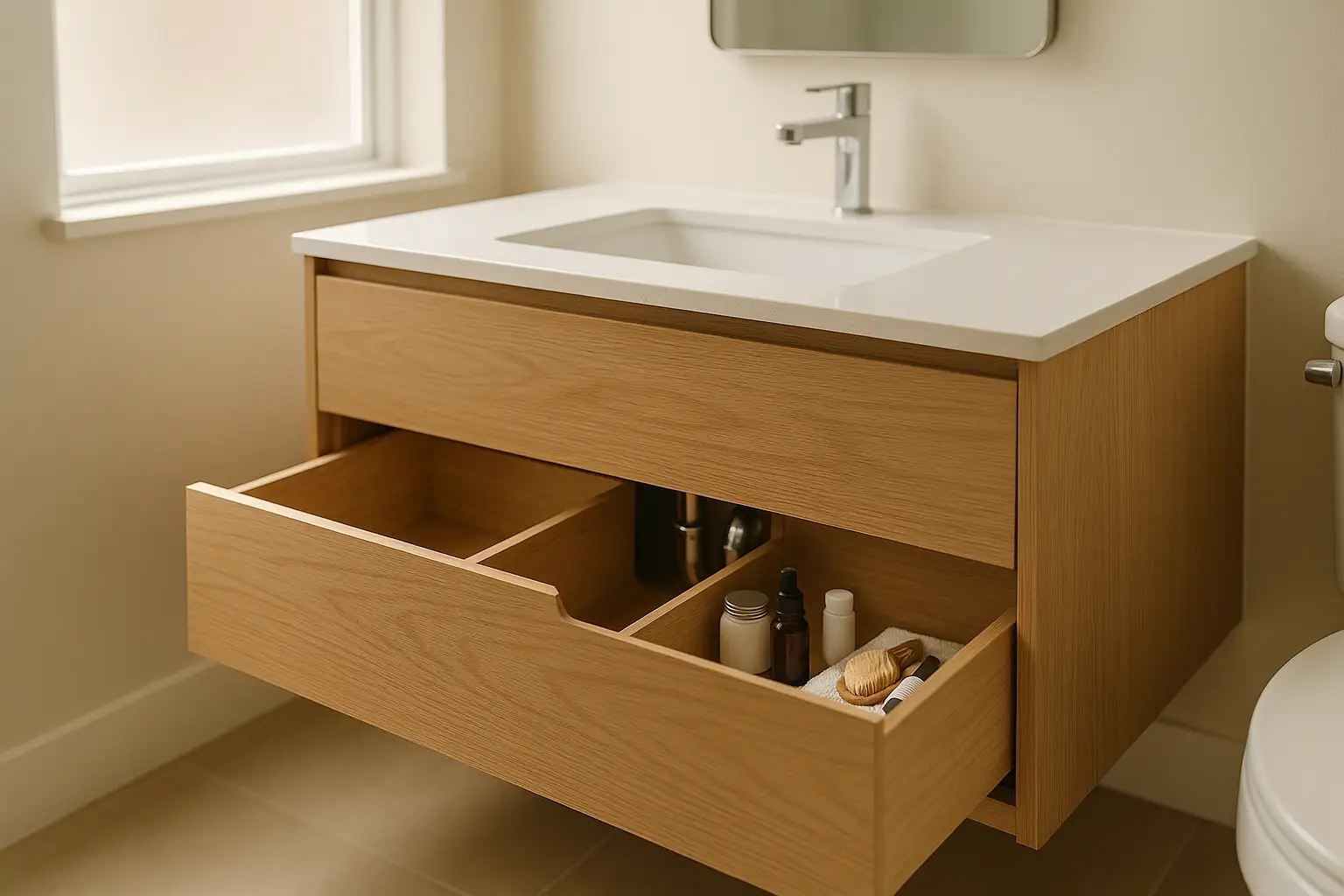
The single biggest layout challenge in a vanity is the plumbing. The drain and supply lines eat into the cabinet interior, which is why so many stock vanities waste the space under the sink. Custom construction lets you plan around it. Drawers can be built with a U-shaped notch that wraps the P-trap, turning dead space into usable storage for toiletries. A false drawer front at the top can hide a tilt-out tray for sponges by the basin.
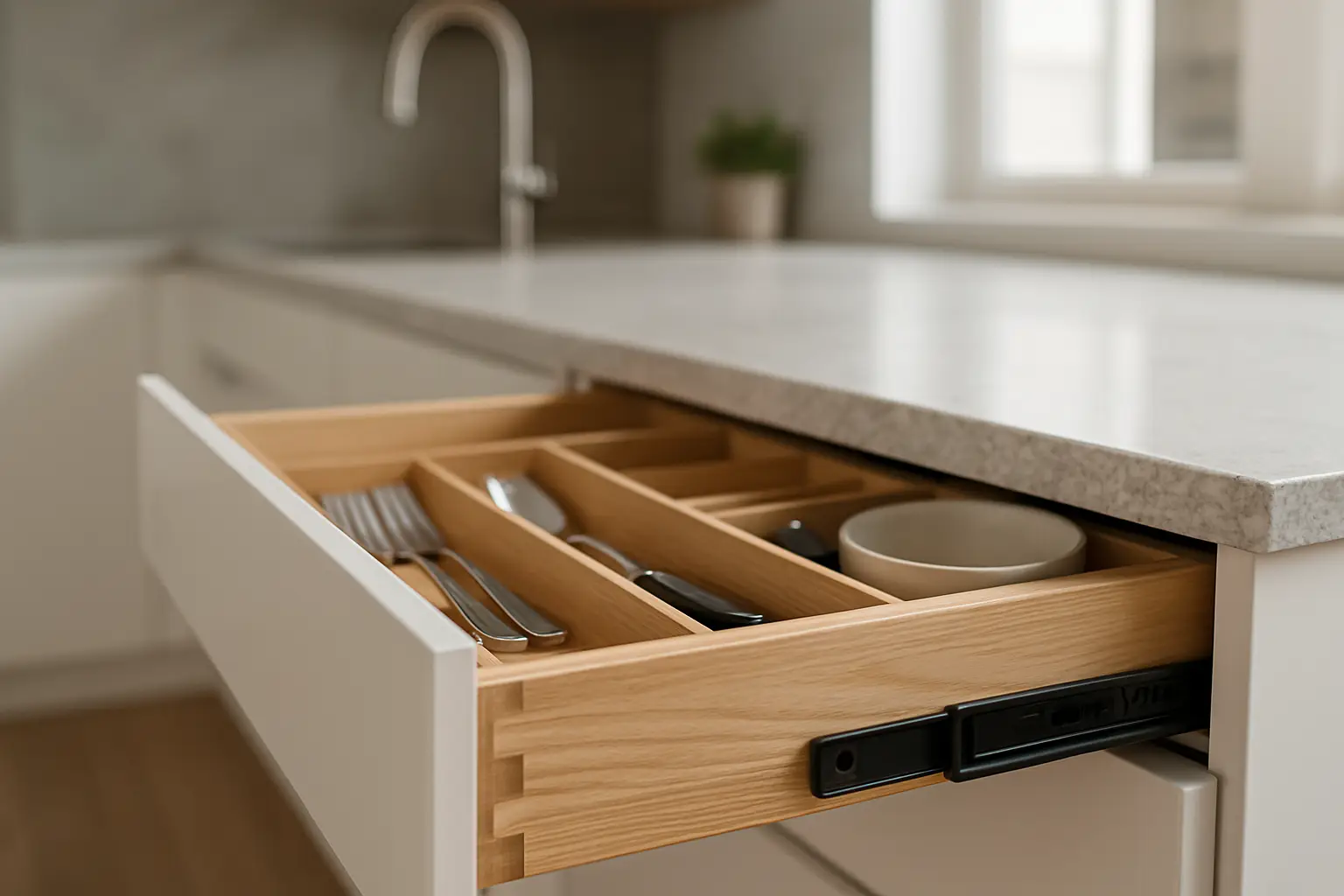
Think in zones. A bank of full-extension drawers on one side stores everything small, from cosmetics to hair tools, with power routed to an interior outlet so a dryer or electric toothbrush charges out of sight. A door cabinet on the other side takes tall bottles and cleaning supplies. Getting this split right is worth more day to day than any finish decision, because it determines whether the vanity is genuinely useful or just a box with a sink on top.
Floating, Freestanding, or Furniture Style
Bathroom vanities come in three broad forms, and the room usually points to one. A wall-mounted floating vanity leaves the floor visible underneath, which makes a compact San Francisco bathroom read as larger and simplifies mopping. It needs solid in-wall blocking to carry the weight, so it is easiest to specify during a remodel while the wall is open. A floating vanity pairs naturally with a modern, frameless look and slab or flat-panel fronts.
A freestanding, furniture-style vanity sits on the floor on legs or a toe kick and can feel more traditional, especially with a framed, inset door and a stone top. For a primary suite where you want a piece that anchors the room, this is often the better choice. The third form is the built-in run, where the vanity extends into linen storage or a makeup counter as one continuous unit. That continuity is where custom cabinetry pays off, because stock vanities come in fixed widths that rarely fill a wall cleanly.
Finishes and Hardware That Survive Daily Use
Finish choice in a bathroom is about durability first and style second, though you do not have to sacrifice either. A quality painted finish or conversion varnish resists moisture and cleans up easily, which matters near a sink that sees toothpaste and hand soap every day. Thermofoil and laminate fronts are also strong performers in a bathroom because their surfaces are effectively waterproof, and modern versions look far better than the plastic-looking laminates of the past. For a natural look, a well-sealed wood veneer in white oak or walnut brings warmth without the upkeep of an open-grain finish.
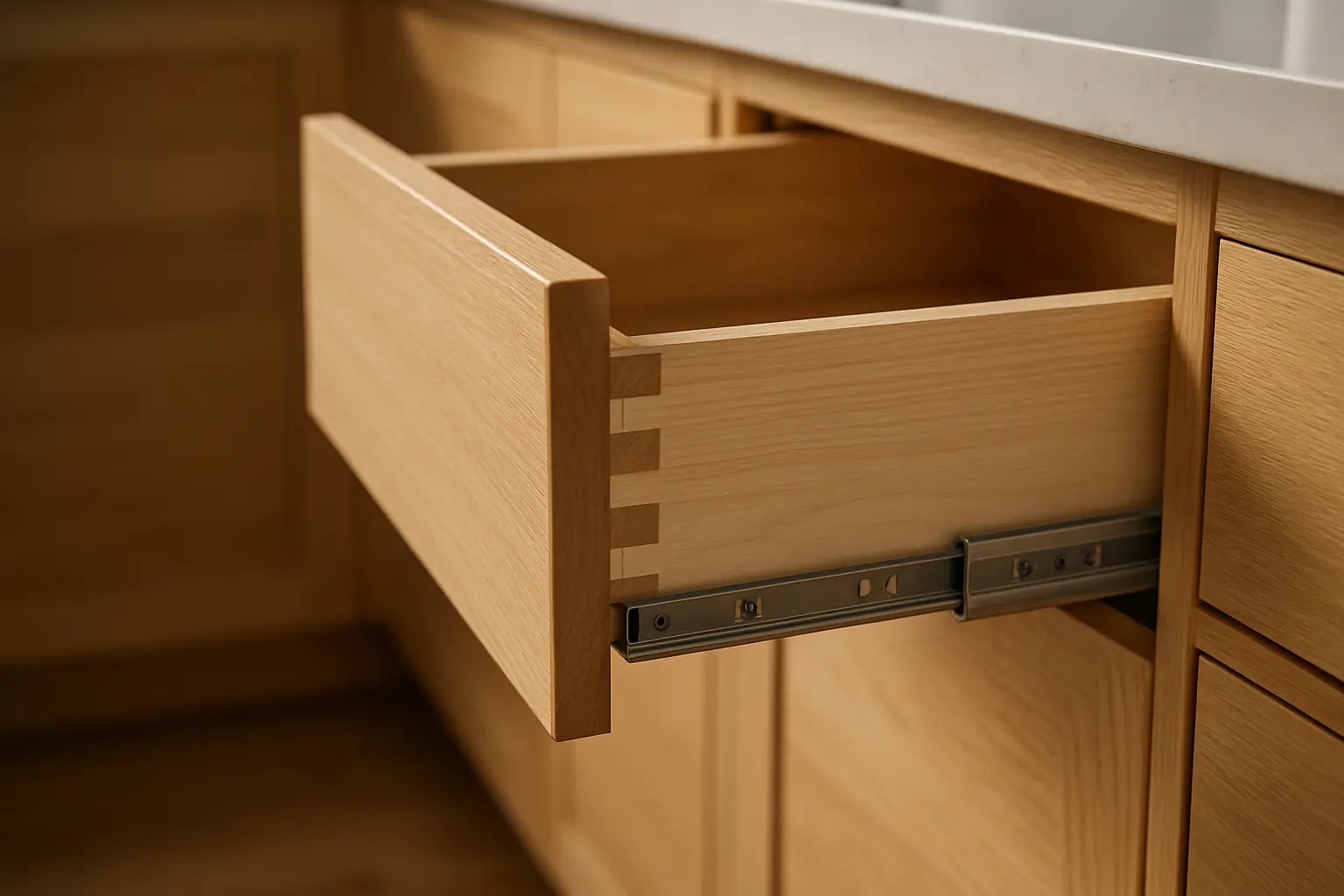
Hardware deserves the same attention it gets in a kitchen. Soft-close hinges keep doors from being slammed against a damp frame, which protects the finish over time. Full-extension, soft-close undermount slides let drawers pull all the way out so nothing gets lost at the back, and they handle the weight of a loaded drawer without sagging. Pick handles and knobs in a finish rated for wet environments, since cheaper plating can pit and corrode in a steamy room. These are small parts you touch every single day, so quality here is felt immediately.
FAQ
Q1: What is the best material for a bathroom vanity in a humid room?
A1: Furniture-grade plywood is the best box material for bathrooms because it resists the swelling and delamination that particleboard suffers when it meets moisture. For painted doors we use solid wood frames with an MDF center panel, sealed on all edges. A quality paint or conversion varnish finish is what keeps water out over the years.
Q2: How tall should a bathroom vanity be?
A2: Standard vanity height is 32 inches, but comfort-height or kitchen-height vanities at 34 to 36 inches have become the norm for adults because they save your back. In a children's bathroom the shorter 30 to 32 inch height still makes sense. Because we build custom, we set the height to the people using the room.
Q3: Should a bathroom vanity have drawers or doors?
A3: A mix works best. Drawers give you far better access to small items and can be notched around the plumbing to reclaim space under the sink. Doors are useful for storing tall bottles and cleaning supplies. A common layout is a bank of drawers on one side and a door cabinet under the basin.
Q4: Do floating vanities work in Bay Area bathrooms?
A4: Yes, and they are popular in contemporary remodels. A wall-mounted floating vanity makes a small bathroom feel larger, simplifies floor cleaning, and suits a modern look. It does need solid blocking in the wall to carry the load, so it is easiest to plan during a remodel when the wall is open.
Q5: How do I keep a bathroom cabinet from getting water damage?
A5: Specify a plywood box, a fully sealed finish on every edge including the interior cut-outs, and soft-close hinges so doors are not slammed against damp frames. Wipe standing water off the counter and around the faucet base, and make sure the countertop overhangs slightly so drips fall clear of the cabinet face.
Q6: How long does a custom bathroom vanity take in the Bay Area?
A6: Our typical lead time is about three weeks from our San Jose shop once the design, sink cut-out, and finish are confirmed. Because we manufacture locally, we can match a vanity to an unusual wall dimension or an existing kitchen finish, and revisions are handled directly rather than through a distributor.