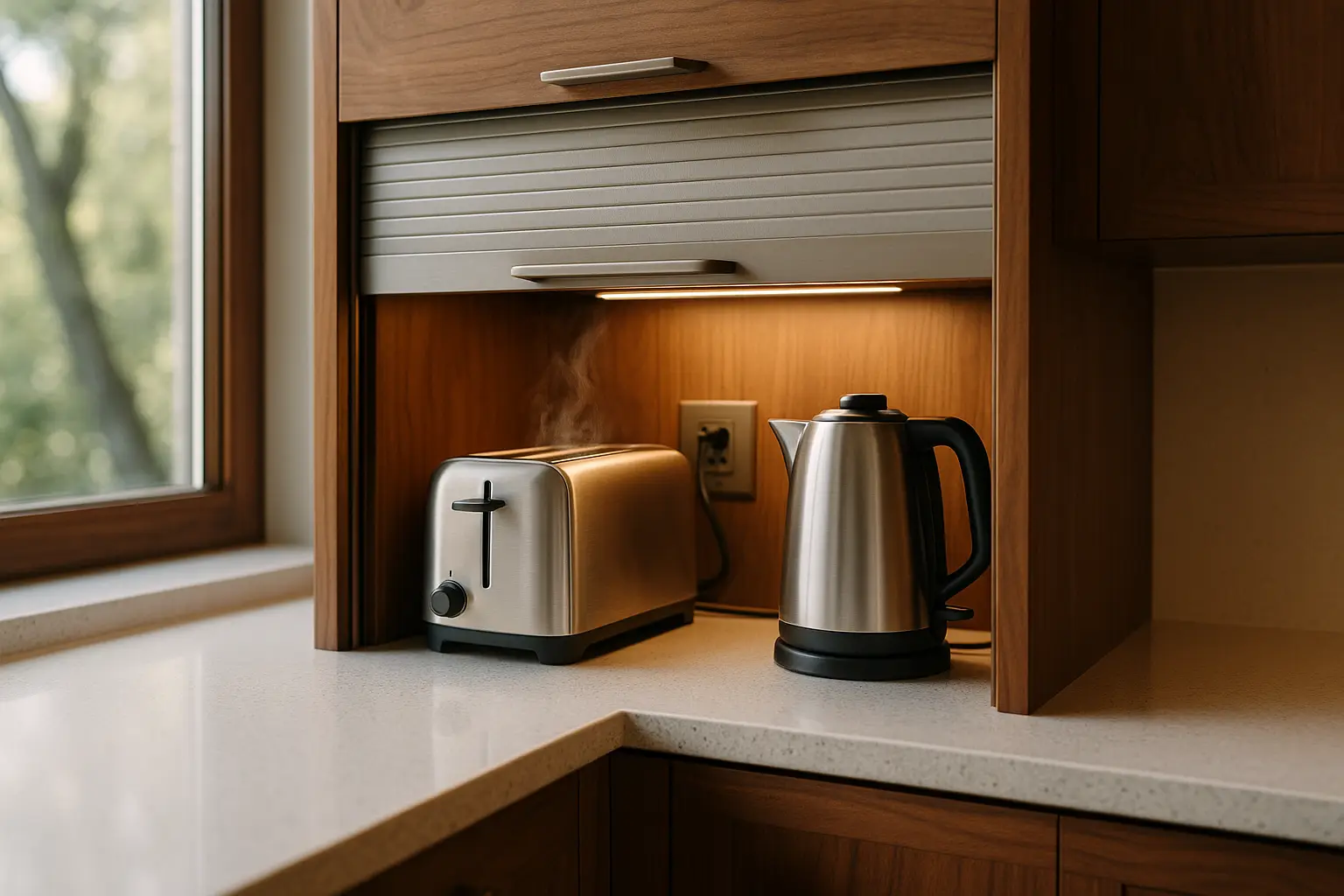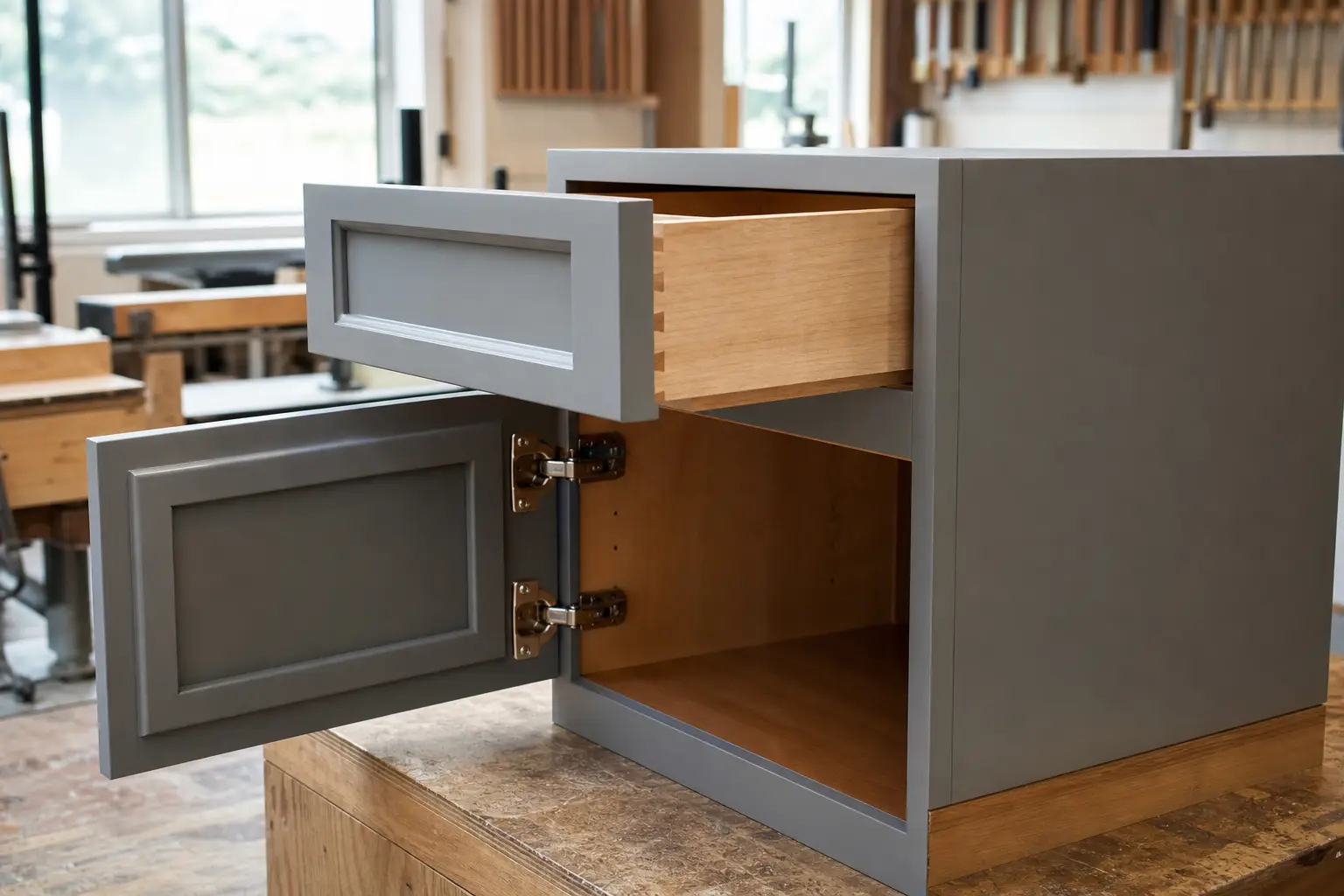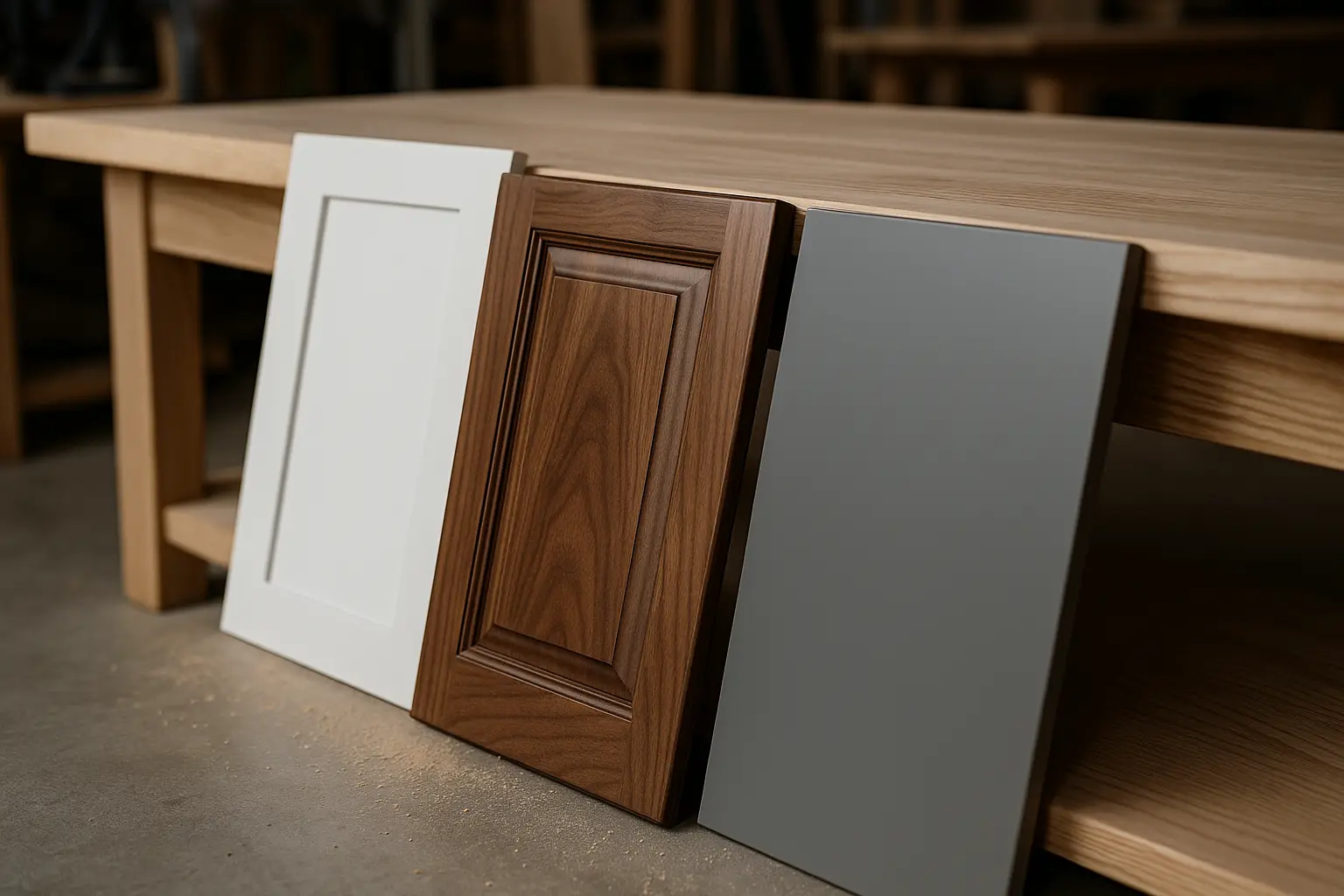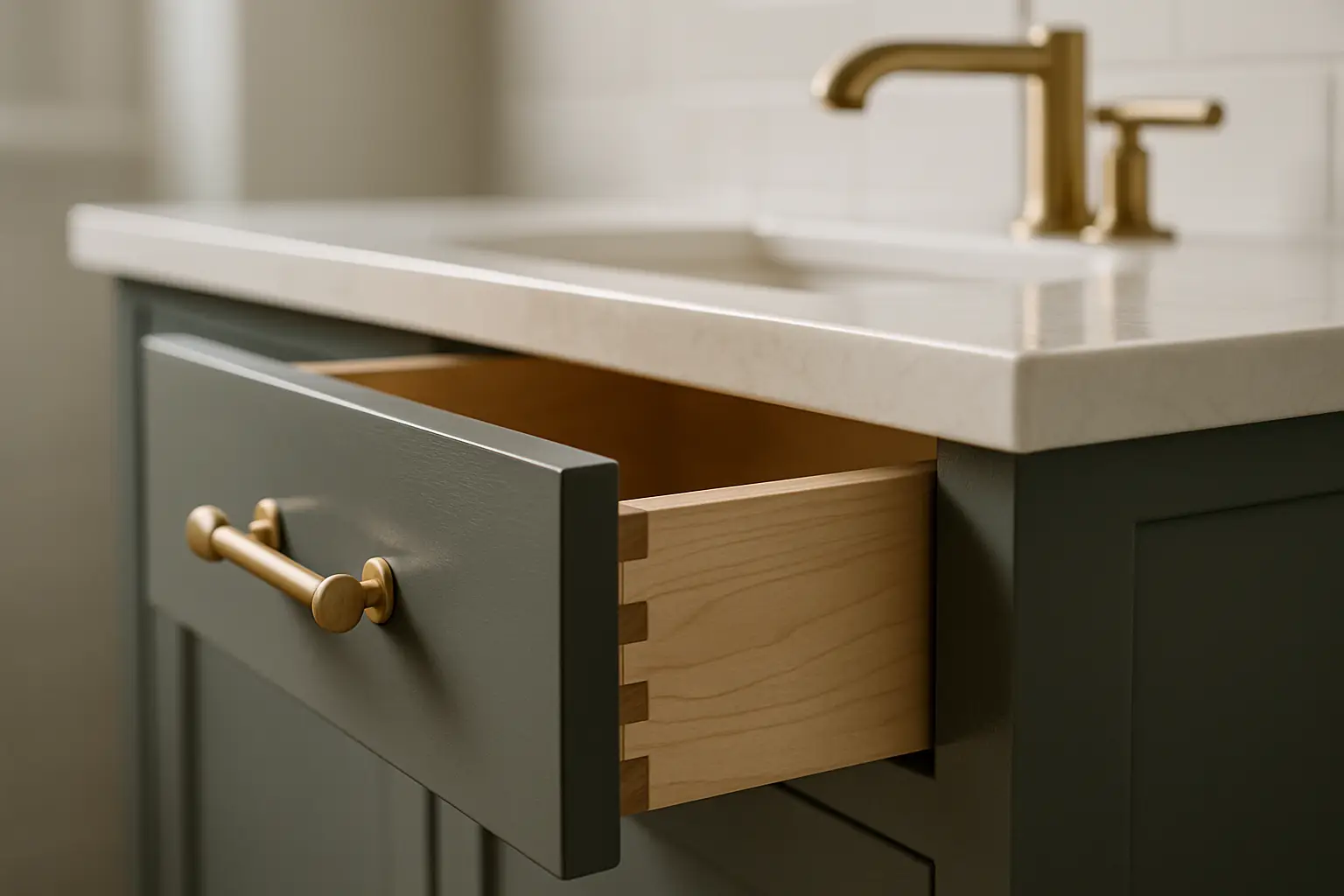
Handleless, matte, dark-colored kitchens look stunning in photos and then betray you the moment someone touches a door. Fingerprints, palm smudges, and the faint haze of daily cooking show up on flat slab fronts more than on any other style, which is exactly why anti-fingerprint PET has become one of the most useful materials in modern cabinetry. It gives you the deep matte slab look that Bay Area homeowners keep asking for, without the maintenance headache. Here is what PET actually is, how the anti-fingerprint version works, where it fits, and how it compares to the alternatives we build in San Jose, San Francisco, and San Mateo.
The Problem PET Solves
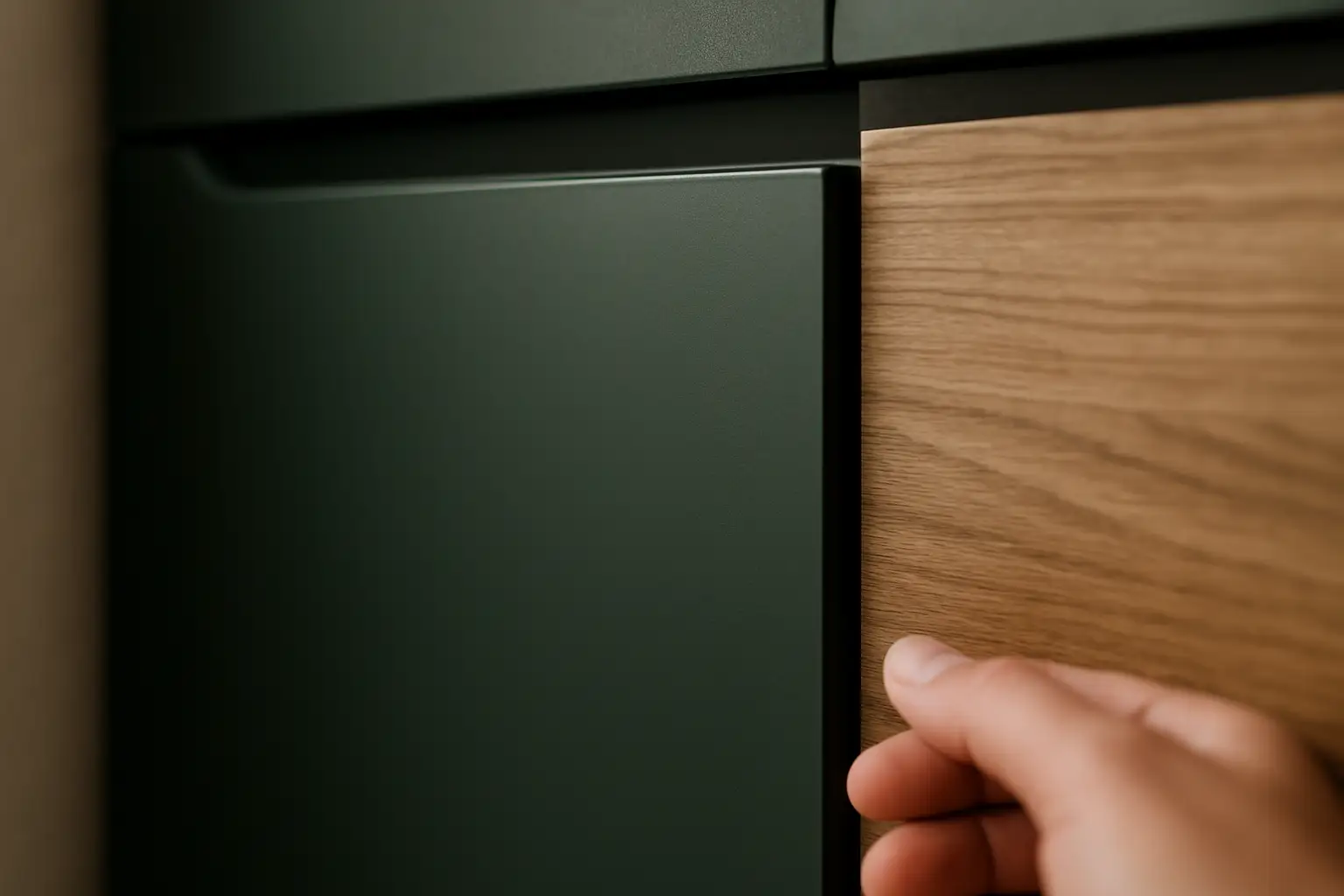
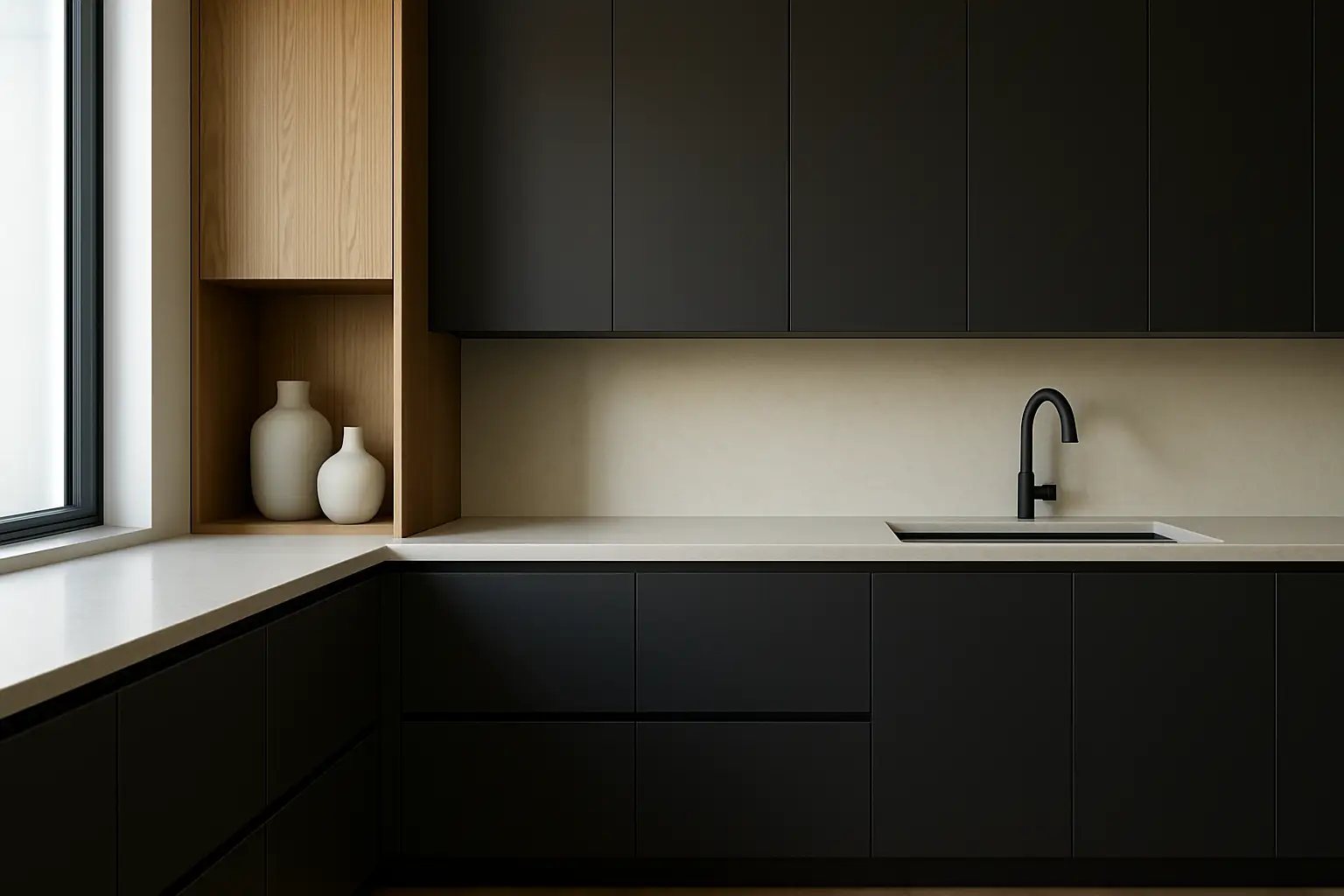
The modern kitchen people want right now is flat, minimal, and often dark: handleless slab doors in charcoal, deep green, navy, or matte black, with integrated finger pulls and no visible hardware. It is a clean, architectural look. It is also the single hardest surface to keep looking clean, because a flat slab front, especially a dark one, shows every fingerprint, palm smudge, and cooking haze. The very thing that makes the style beautiful, the uninterrupted surface, is what makes smudges so obvious.
Anti-fingerprint PET exists to close that gap. It delivers the exact deep matte slab appearance the style depends on while actively resisting the marks that ruin it. For a family kitchen where hands are constantly on the doors, that is not a minor convenience. It is the difference between a kitchen that looks like the showroom and one that looks smudged an hour after you clean it.
What PET Is and How the Anti-Fingerprint Layer Works
PET, short for polyethylene terephthalate, is a durable polymer film thermally laminated onto an MDF door core under heat and pressure. The film wraps the face and edges into a seamless, consistent surface with no visible joints, which is what makes it well suited to a clean slab front. MDF is the ideal core because it is dense, stable, and flat, giving the film a perfect substrate with no grain to telegraph through.
The anti-fingerprint property is a matter of surface physics. Fingerprints are visible because skin oil leaves a glossy residue, and against a glossy or semi-gloss background that shiny film stands out. Anti-fingerprint PET uses a micro-textured matte surface that scatters light rather than reflecting it cleanly, so the oil residue no longer contrasts against a mirror-like backdrop. The print effectively disappears into the texture, and what little remains wipes off with a damp cloth. The finish also has a pleasant soft-touch feel that reinforces the premium, tactile quality of a modern kitchen.
Where It Fits, and Where It Does Not
PET is at its best on flat slab doors and drawer fronts, which is precisely where fingerprints are worst and where the seamless laminated surface shines. It is a natural fit for handleless designs with integrated J-pulls or channel pulls, for dark and moody color schemes, and for two-tone kitchens where you want a low-maintenance matte contrast against wood or stone. In frameless, full-overlay construction, the continuous PET fronts read as one calm plane, which is the whole point of the look.
Where PET is less suited is any style that depends on visible grain or a routed, dimensional door profile like a Shaker or raised panel. Those looks call for painted MDF, or solid wood and veneer, where the material itself is part of the design. PET is a slab material, so we recommend it when the goal is a flat, modern front, and we point clients toward paint or wood when they want traditional detailing. Matching the material to the door style is how you avoid a finish that fights the design.
PET Versus the Alternatives
It helps to place PET against the finishes it competes with. Painted MDF is a beautiful, repairable, and classic finish, and it is what we reach for on Shaker and detailed doors, but on a flat slab it shows fingerprints more, and its edges can chip under years of hard use. Older thermofoil built the same wrapped-slab idea but used a PVC film that could yellow or delaminate with heat over time, especially near ovens. Modern PET is the evolution of that concept, with better heat and moisture stability and, in the anti-fingerprint grade, far better smudge resistance.
Against high-gloss acrylic, which chases a mirror finish, anti-fingerprint matte PET is the opposite philosophy and, for most families, the more livable one, since gloss magnifies every mark. The one honest limitation is repairability: a laminated film cannot be sanded and refinished like paint, so a deep gouge means replacing the front rather than spot-fixing it. Because American Built Cabinets keeps custom production in San Jose, remaking a single door or drawer front to match is a straightforward local job, not an overseas reorder, and the full kitchen still runs on our roughly three week lead time. For homeowners who want the modern matte slab look without babysitting it, anti-fingerprint PET has quietly become the standard we recommend.
FAQ
Q1: What exactly is a PET cabinet door?
A1: PET stands for polyethylene terephthalate, a durable polymer film that is thermally laminated onto an MDF door core under heat and pressure. It gives a tough, consistent, seamless surface across the face of a slab door. The anti-fingerprint version uses a specially textured matte film engineered so skin oils and smudges do not show or wipe away easily.
Q2: How does the anti-fingerprint finish actually work?
A2: The matte surface is micro-textured so it scatters light instead of reflecting it in a way that reveals oil residue. Fingerprints show on glossy surfaces because skin oil leaves a shiny film against a shiny background. On an anti-fingerprint matte PET, the texture breaks up that contrast, so prints are far less visible and wipe off cleanly with a damp cloth.
Q3: Is PET durable enough for a busy kitchen?
A3: Yes. PET is scratch-resistant, moisture-resistant, and holds its color well against the fading that some finishes suffer near sunny windows. It resists the everyday knocks and cleaning that a family kitchen delivers. It is not indestructible, so we do not recommend dragging metal across it, but for daily use it is one of the lower-maintenance slab options available.
Q4: How does anti-fingerprint PET compare to painted or thermofoil doors?
A4: Painted MDF gives a repairable, classic finish but shows wear and can chip on edges. Older thermofoil could delaminate with heat over time. Modern anti-fingerprint PET offers a more consistent matte slab surface, better smudge resistance than paint, and improved heat and moisture stability over legacy thermofoil. For a flat, modern slab look specifically, PET is often the better performer.
Q5: Can PET doors be repaired if damaged?
A5: A PET surface is a laminated film, so a deep gouge cannot be spot-refinished the way painted wood can be sanded and resprayed. The practical answer is that individual doors and drawer fronts can be replaced. Because we build custom locally, matching and remaking a single damaged front is straightforward rather than a special order.
Q6: How long does it take to get anti-fingerprint PET cabinets in the Bay Area?
A6: Because we manufacture in San Jose, custom cabinets with anti-fingerprint PET fronts typically take about three weeks after design and color selection are finalized. Building locally also means color and edge details are handled in-house, and replacing a front later is a quick local job rather than an overseas reorder.