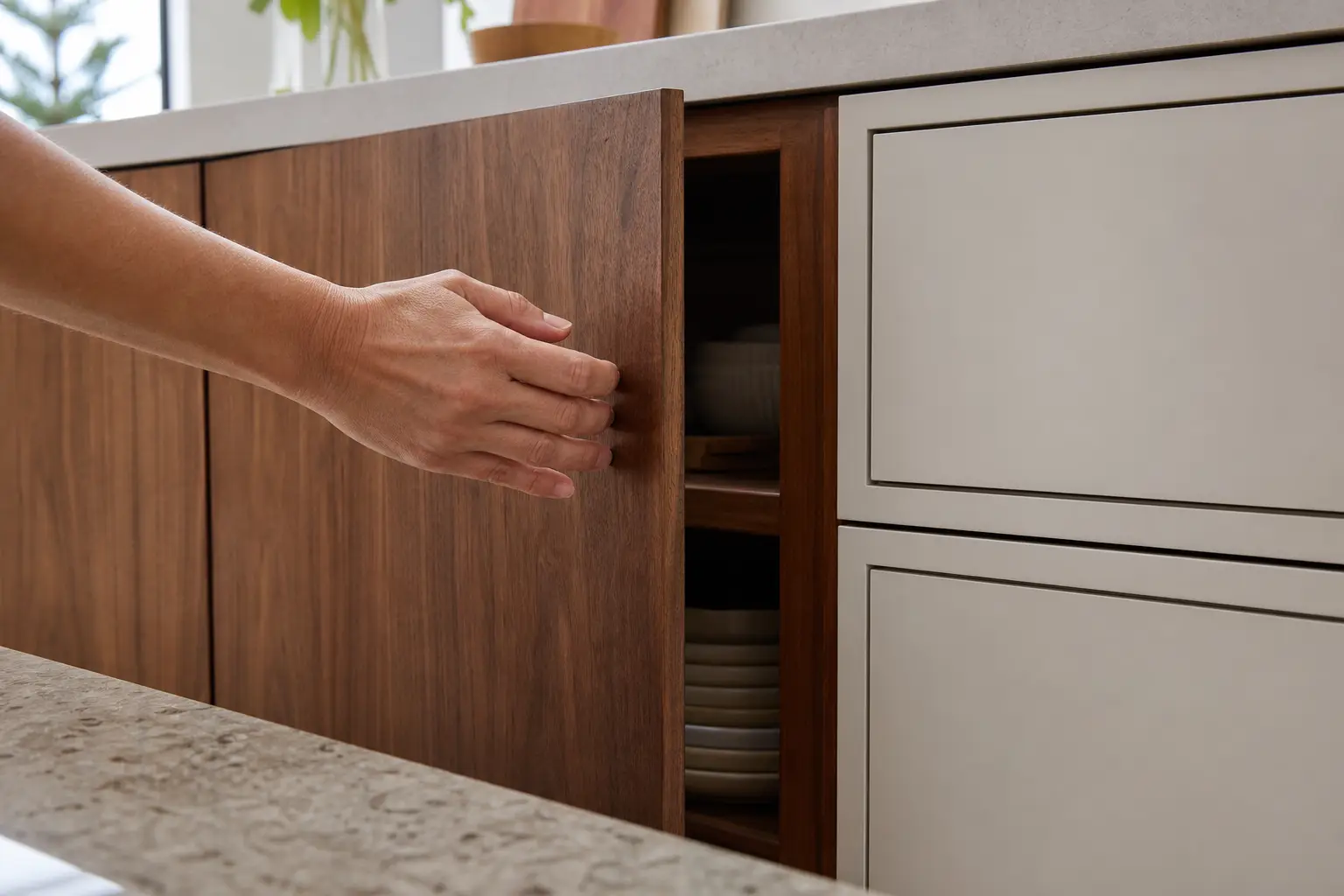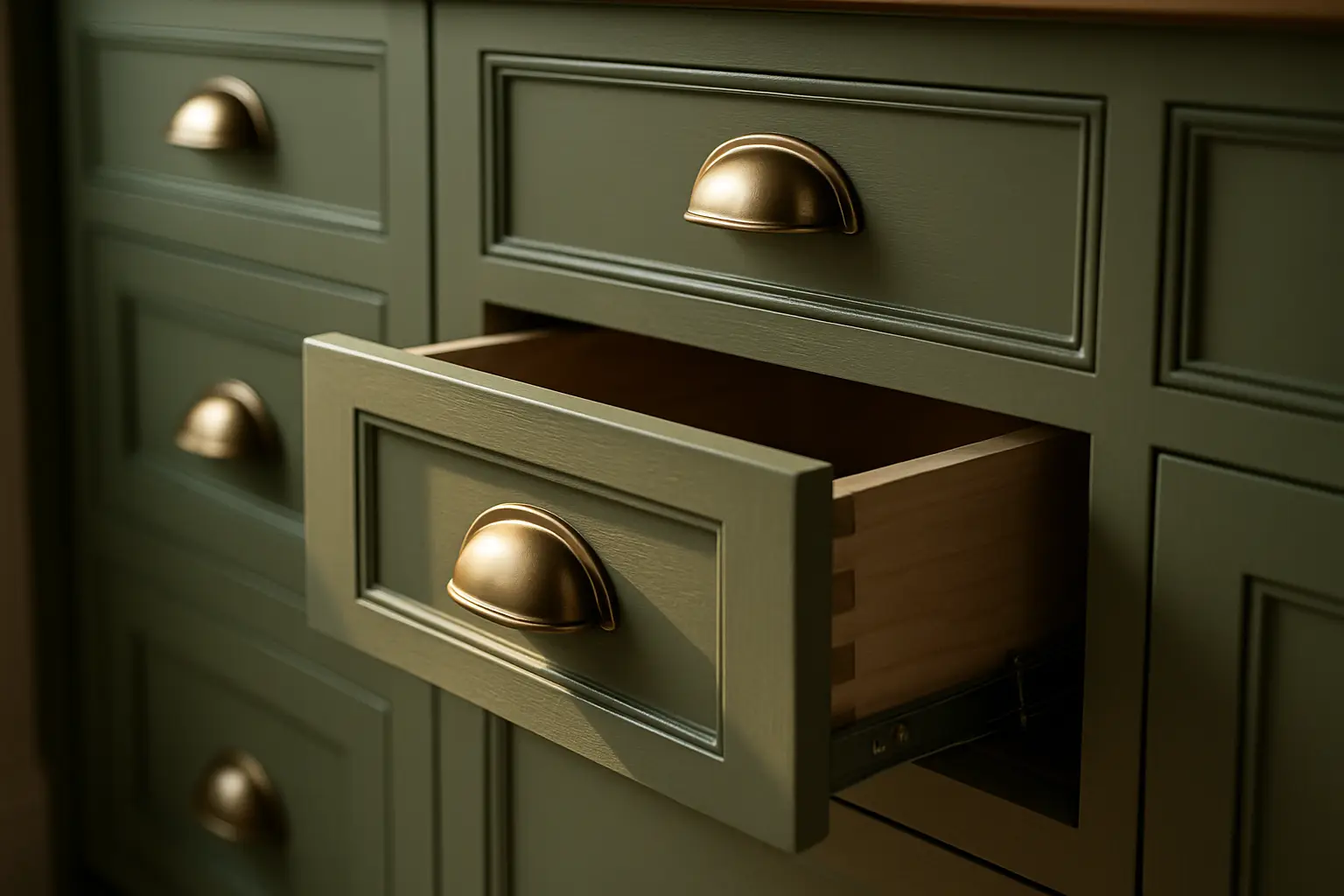
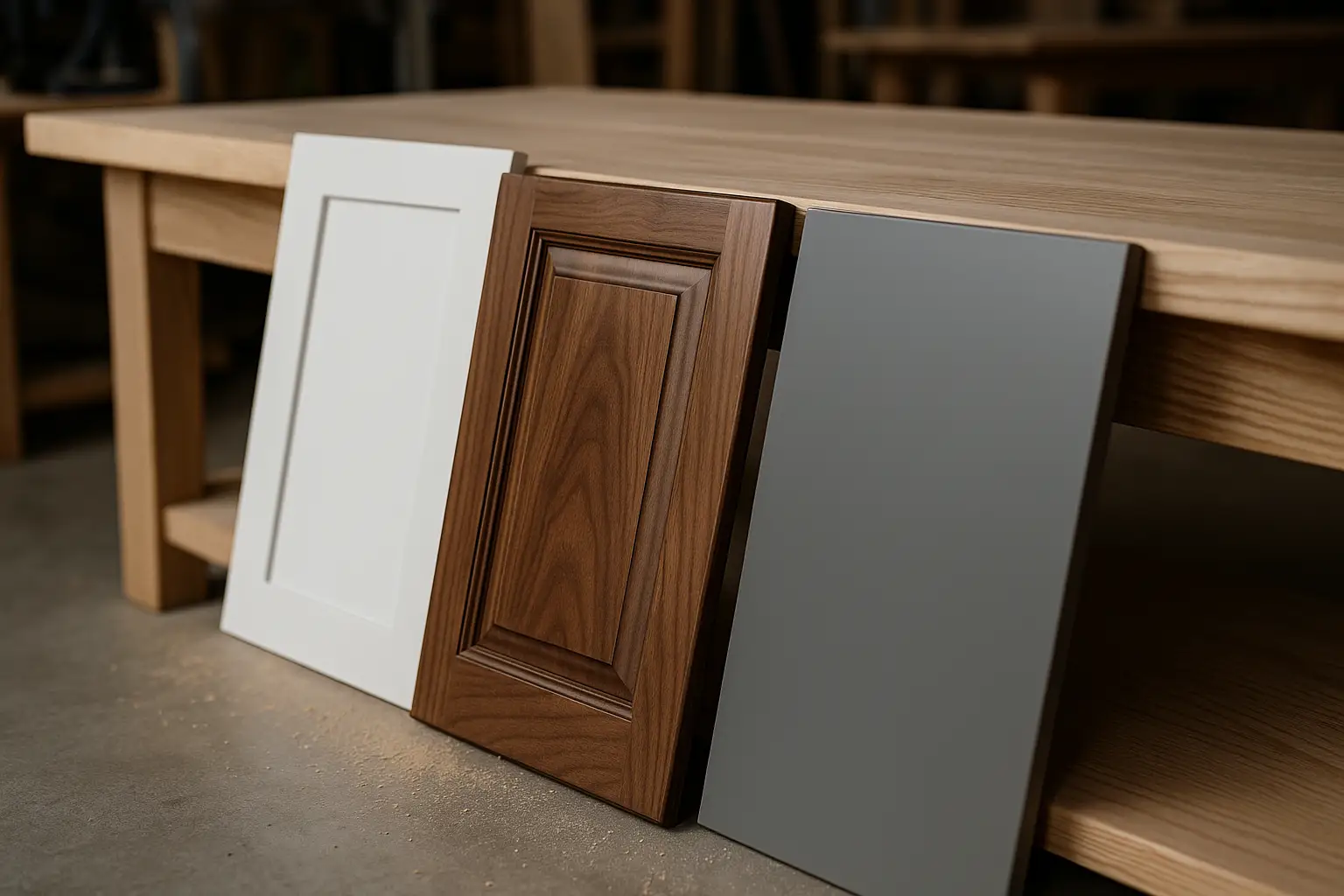
The door style you pick is the single most visible decision in a cabinet project. It sets the tone for the whole kitchen, it affects how easy the doors are to clean, and it influences cost more than most people expect. At American Built Cabinets, we build all three of the mainstream profiles, flat-panel, raised-panel, and Shaker, at our San Jose shop for homeowners and builders across the Bay Area. This guide breaks down how each one is made, where it looks right, and what it costs you in dollars and upkeep so you can choose with confidence.
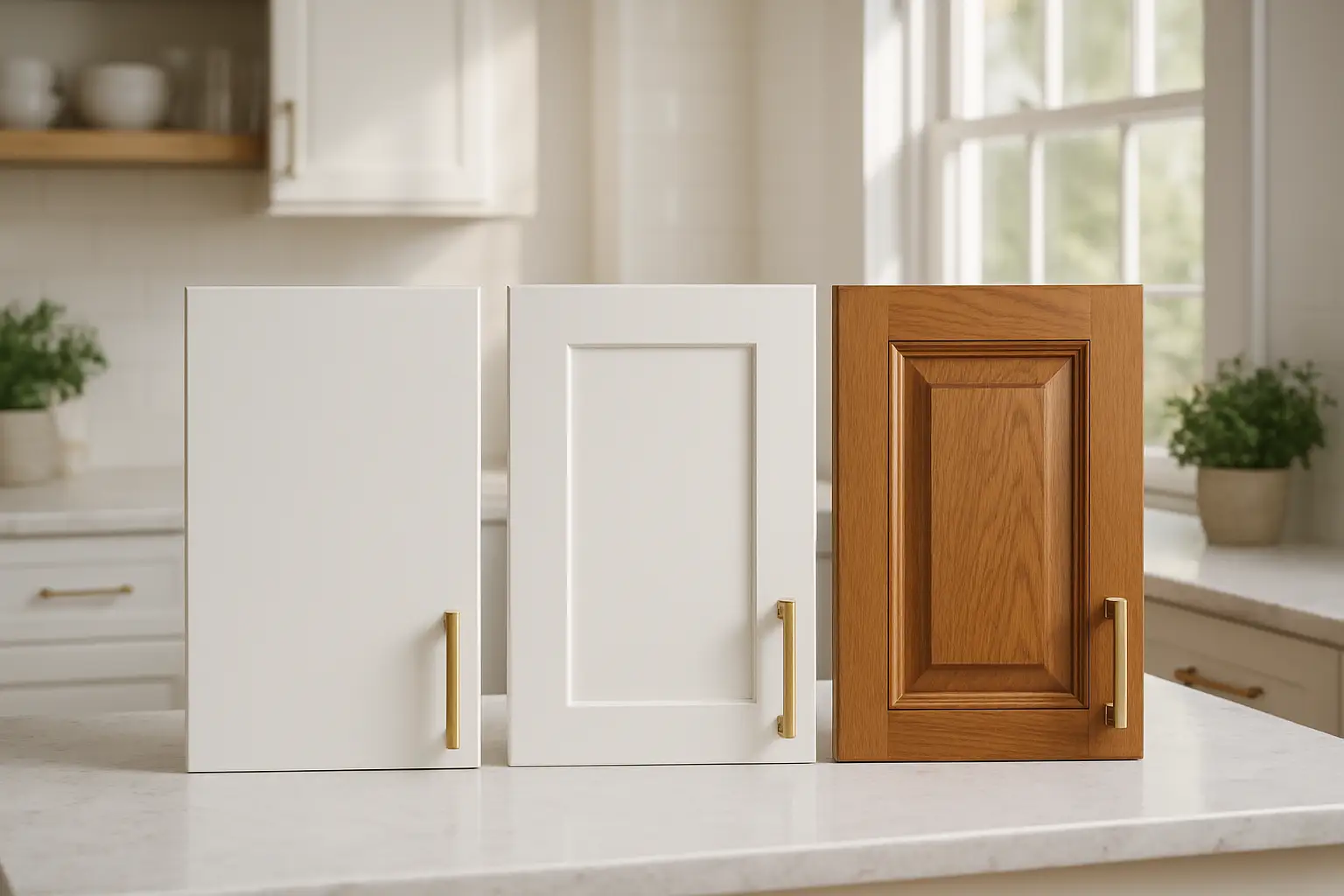
How Each Door Is Actually Built
A cabinet door is either one solid slab or a five-piece assembly: two vertical stiles, two horizontal rails, and a center panel that floats in a groove. Understanding the construction tells you almost everything about durability and price.
Flat-panel doors, sometimes called slab doors, are the simplest. A slab door is a single flat piece, usually plywood or MDF with a veneer, laminate, or painted surface. A flat-panel five-piece door uses a plain, unshaped center panel set inside a frame. Shaker doors are five-piece construction with a square-edged frame and a flat recessed center panel, no decorative profile anywhere. Raised-panel doors are also five-piece, but the center panel is machined so it rises up in the middle, and the frame edges often carry a routed profile like an ogee or bead. That extra shaping is more machine time and more material, which is why raised-panel almost always costs the most of the three.
Materials and Finish: What Holds Up in a Real Kitchen
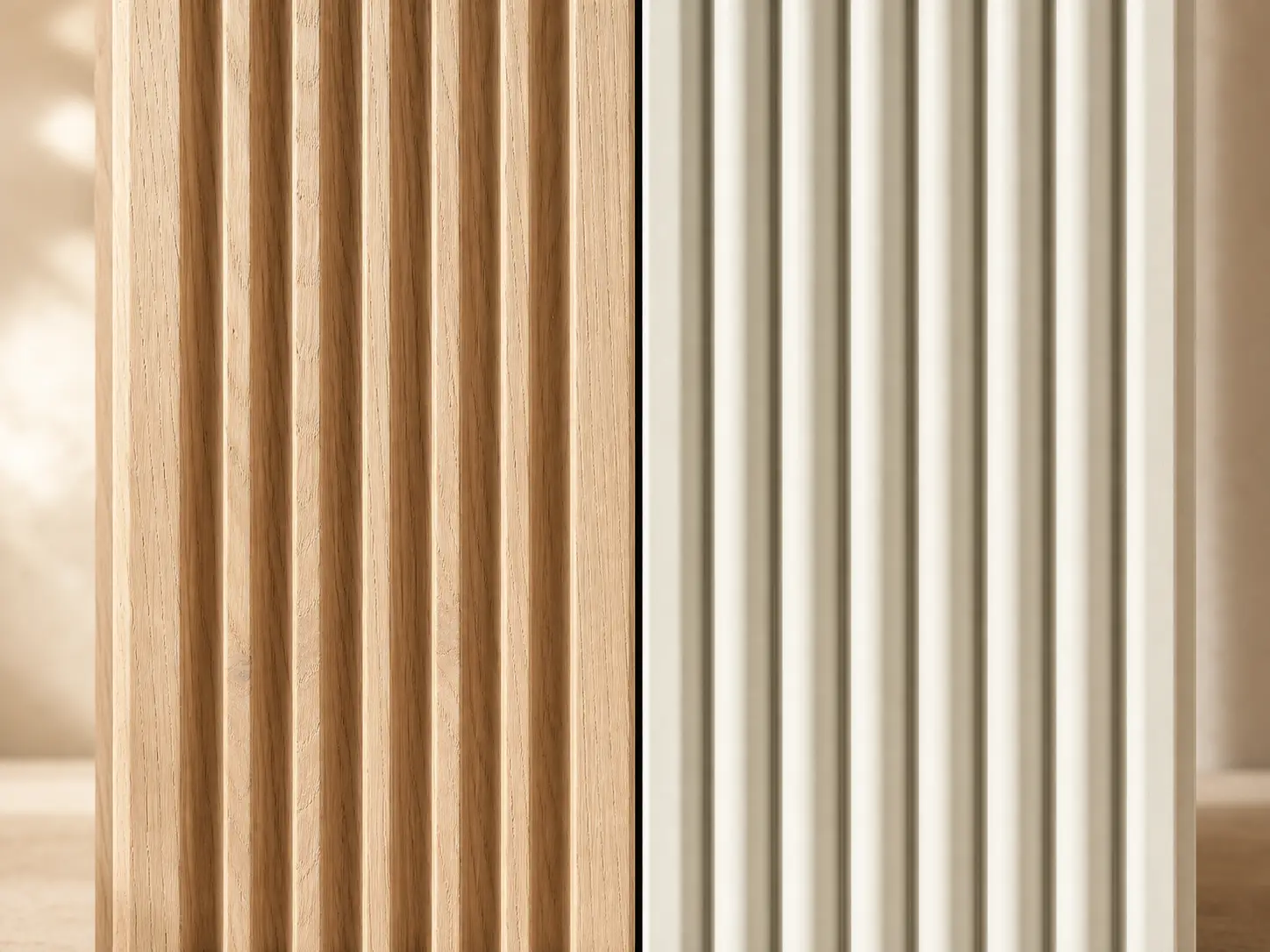
Material choice matters more than style for longevity. For painted doors, we build the frames from solid maple or poplar and use a stable MDF center panel, because MDF will not telegraph wood grain through paint and it resists the seasonal expansion that can crack paint at the joints. For stained doors, we use solid hardwood throughout, oak, maple, walnut, or hickory, so the grain reads consistently. Cabinet boxes in all our work are 3/4 inch plywood, not particleboard, which matters for screw retention on hinges and slides.
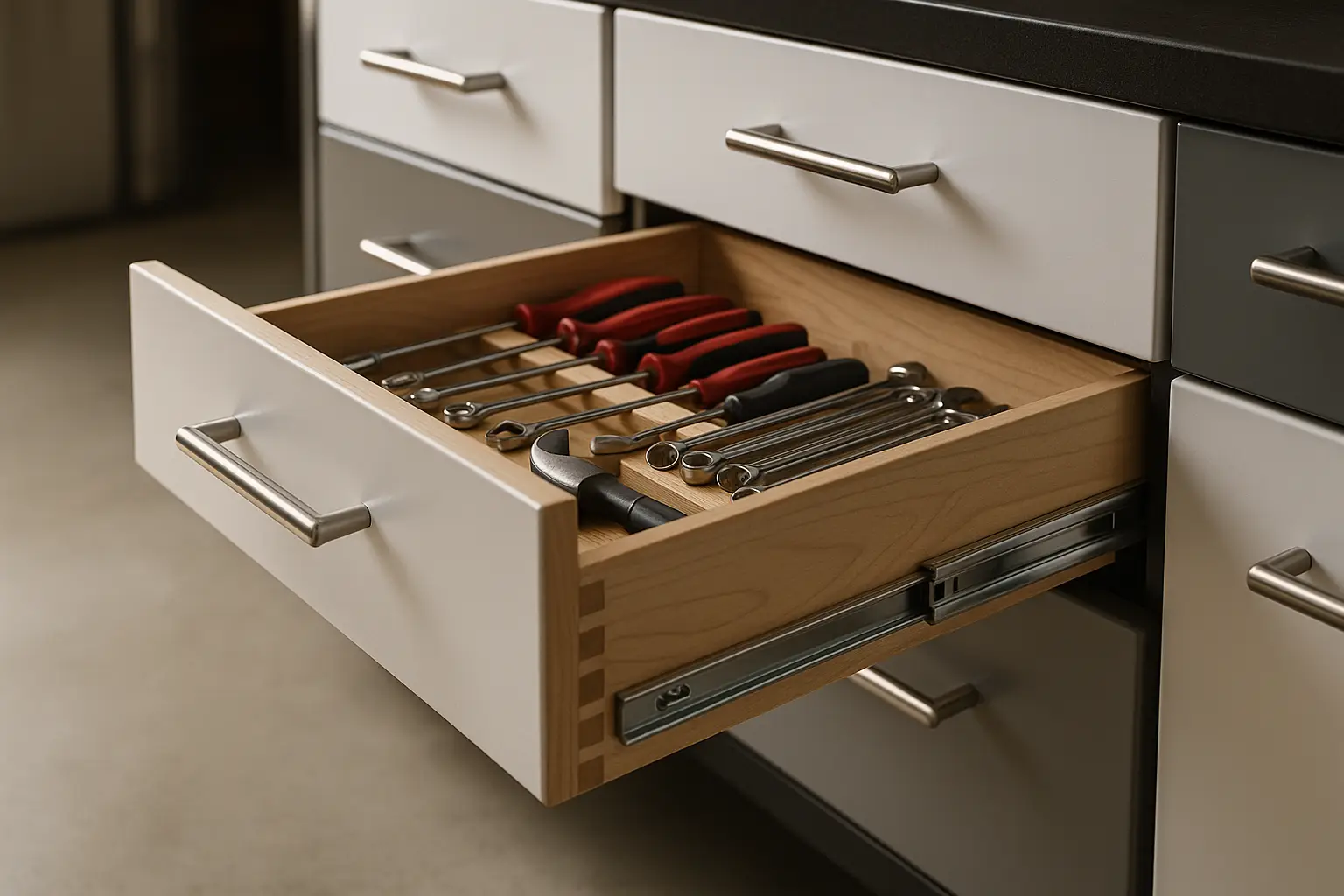
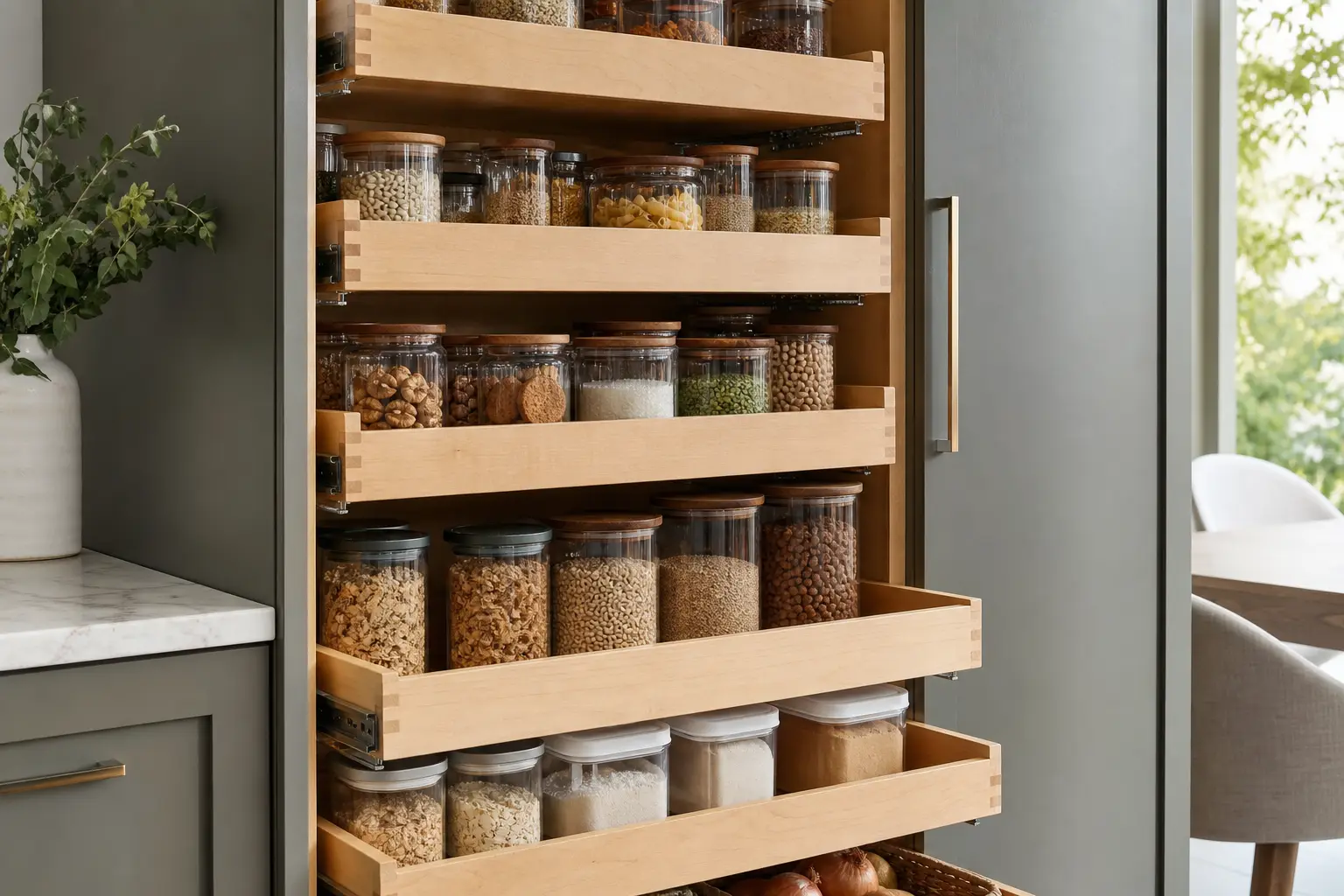
Shaker and flat-panel doors take paint beautifully because they have fewer crevices. A raised-panel door with a heavy profile gives paint more corners to pool in, and over years those detailed grooves collect grease and dust that you end up cleaning with a toothbrush. If you love the traditional look but cook every night, a painted Shaker is the low-maintenance compromise. Every door we ship pairs with soft-close hinges and, on drawers, dovetail boxes on full-extension soft-close slides, regardless of which door profile you pick.
Matching the Door to Your Home
Style should answer to the house, not just the trend cycle. Flat-panel and slab doors suit modern and contemporary homes: the Eichlers around Sunnyvale and Palo Alto, newer condos in San Francisco, and any space going for a clean, handleless look with integrated or edge pulls. A high-gloss or matte laminate slab reads crisp and hides almost nothing, so it demands tidy interiors.
Shaker is the safe middle. It works in a 1920s San Francisco bungalow, a San Mateo ranch, and a brand-new build without looking out of place, which is exactly why it has dominated Bay Area kitchens for the last decade. Raised-panel belongs to traditional and transitional homes, larger houses in Los Gatos or Saratoga where ornate trim, crown molding, and furniture-style detailing already set the tone. Put a raised-panel door in a minimalist condo and it fights the room. Put a slab door in a formal traditional kitchen and it can feel cold.
Cost, Lead Time, and How You Order
On a like-for-like basis, expect flat-panel and Shaker to sit close in price, with raised-panel running roughly 10 to 20 percent higher because of the added machining and material in the panel. Paint grade generally costs more than a natural stain because painting is a multi-step process with priming, sanding between coats, and a longer cure.
How you buy also drives price and timeline. RTA (ready-to-assemble) cabinets are the cheapest and come in fixed sizes and a short menu of door styles, fine for a rental or a budget flip. Semi-custom lets you adjust sizes in set increments and pick from a wider door and finish range. Full custom, which is what we specialize in, means any size, any door profile, any finish, built to your exact layout. Because we manufacture locally in San Jose rather than importing, our typical lead time is about three weeks, and if something arrives wrong we fix it here instead of waiting on an overseas replacement. That local control is the real reason to buy custom for a Bay Area remodel.
FAQ
Q1: Which cabinet door style is easiest to keep clean?
A1: Flat-panel slab doors are the easiest because there are no grooves or profiles to trap grease and dust. Shaker is a close second thanks to its simple square recess. Raised-panel doors have the most detailed edges and center profile, so they take the most effort to keep clean, especially near the stove.
Q2: Is Shaker still in style, or will it look dated soon?
A2: Shaker has been the most popular kitchen door style in the Bay Area for over a decade and shows no sign of fading. Its plain, symmetrical lines read as classic rather than trendy, so it works in both older homes and new construction. It is the safest long-term choice if resale value is a concern.
Q3: Are flat-panel doors cheaper than Shaker?
A3: They are usually very close in price. A simple slab door can be slightly less than Shaker, but once you add a quality painted or laminate finish the difference is small. Raised-panel is the one style that reliably costs more, typically 10 to 20 percent, because of the extra machining.
Q4: Should painted doors be MDF or solid wood?
A4: For painted doors we build solid wood frames with an MDF center panel. MDF stays flat, does not show wood grain through the paint, and resists the joint cracking that can happen when solid panels expand and contract with humidity. Stained doors, by contrast, should be all solid hardwood so the grain looks consistent.
Q5: Can I mix door styles in one kitchen?
A5: Yes, and it is common. Many homeowners use Shaker on wall and base cabinets and a slab or glass-front door on an island or accent piece. Mixing works best when you keep the finish palette tight so the change reads as intentional rather than mismatched.
Q6: How long does a custom cabinet order take in the Bay Area?
A6: Our typical lead time is about three weeks because we manufacture in San Jose rather than importing. Door style has little effect on timing. Custom finishes like a hand-applied paint with extra cure time can add a few days, and we confirm the exact schedule when your final drawings are approved.