Luxury in a kitchen is not really about the price of the counter. It shows up every day in whether the things you use are where your hand expects them, whether a deep drawer opens without a fight, and whether the pantry holds a Costco run without becoming a landslide. In Bay Area homes, where square footage is expensive and floor plans are often tight, smart interior storage is where custom cabinetry earns its keep. This is a practical tour of the storage systems worth specifying, how they are built, and where they pay off in San Jose, San Francisco, and San Mateo kitchens.
Rethink the Base Cabinets: Drawers Over Doors
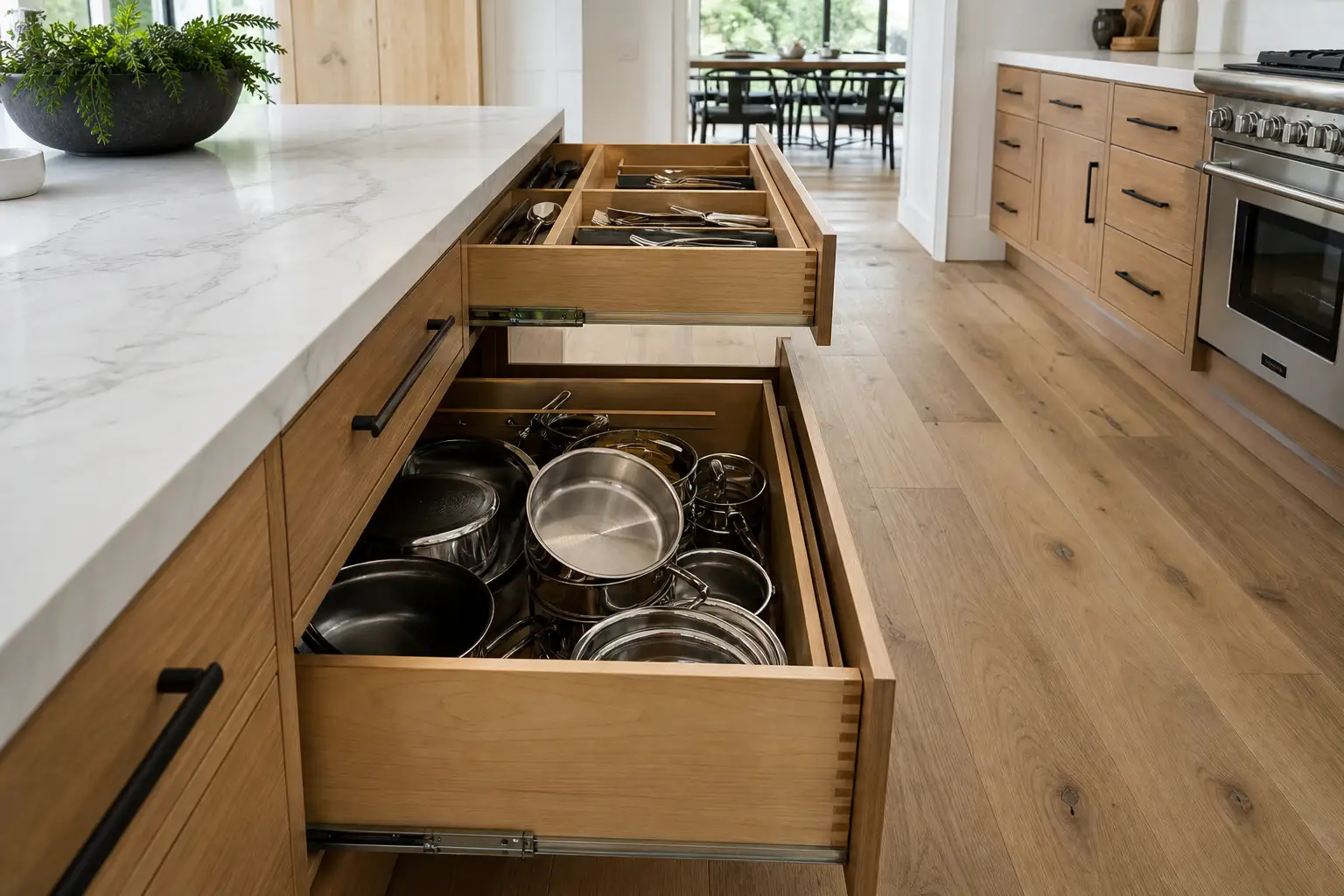
The fastest upgrade in usable storage is converting lower cabinets from doors-and-shelves to drawer banks. A base door cabinet looks like it holds a lot, but the back third is hard to reach and everything ends up stacked, so you pull out three pots to get the one at the bottom. A deep drawer on full-extension slides brings the whole contents to you at once. You see it, you reach it, and nothing hides in the back corner.
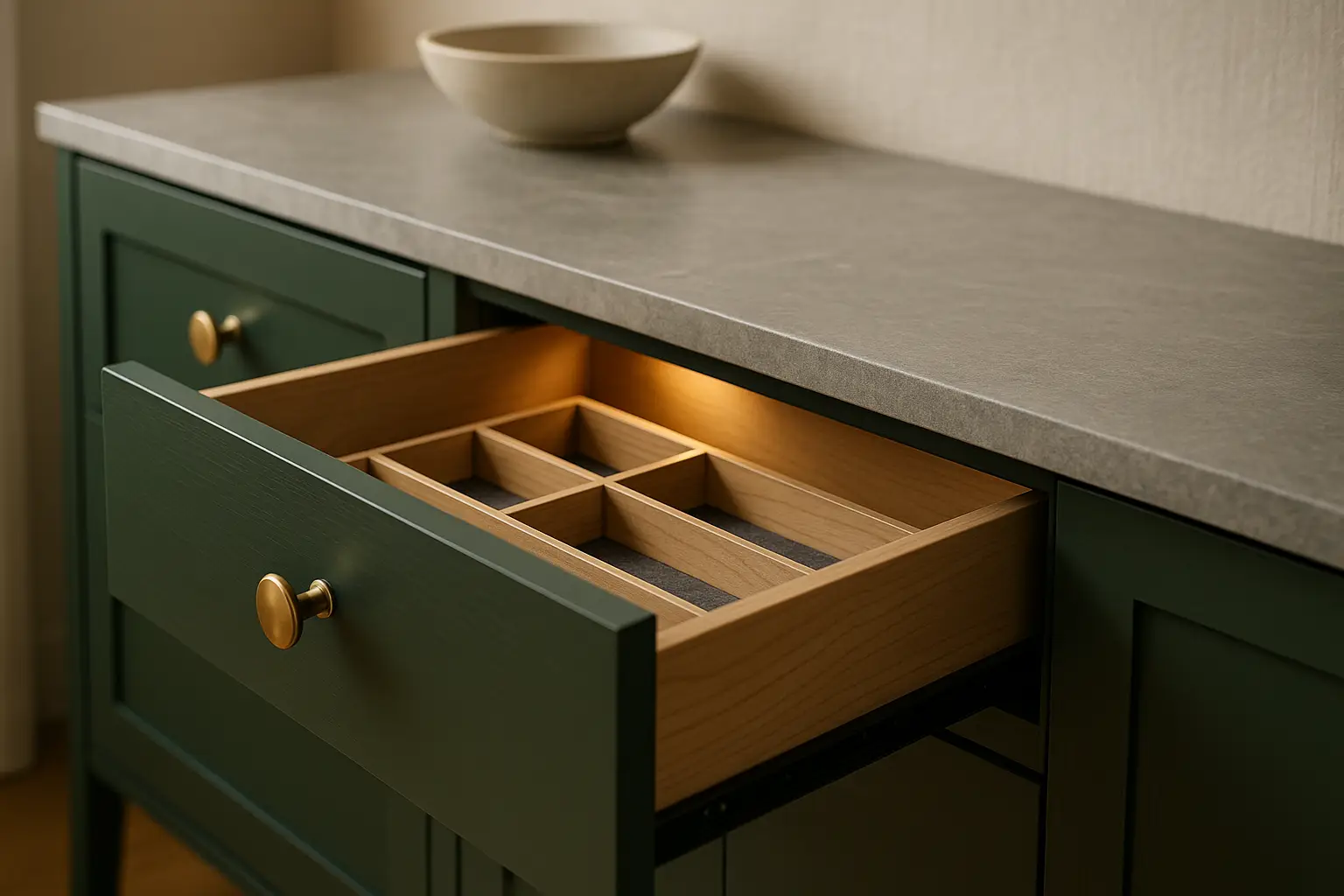
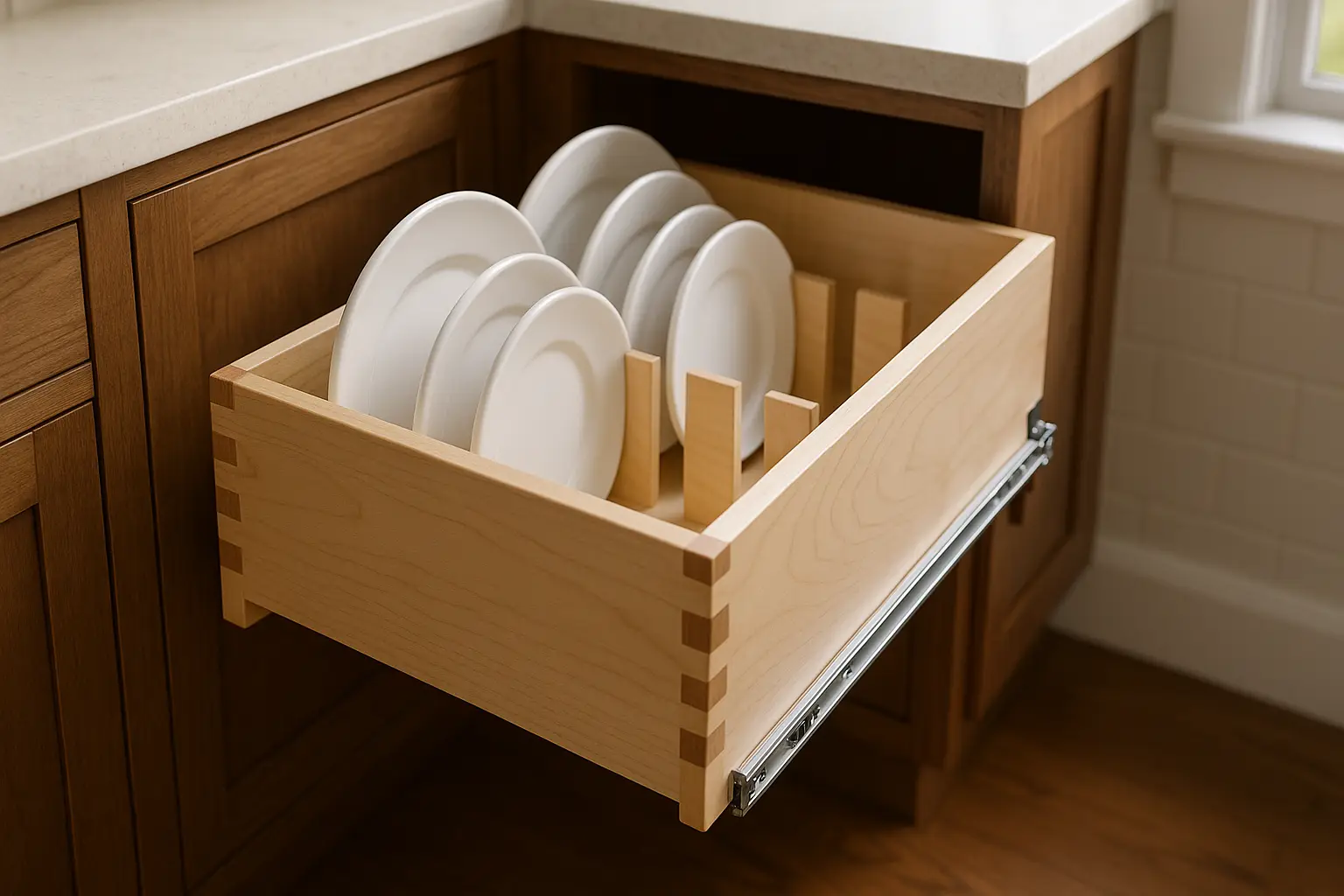
The build details are what make this feel like luxury rather than just function. We build drawer boxes from dovetailed solid maple or Baltic birch, which hold heavy stacks of cast iron and stoneware without loosening or racking. They ride on full-extension, soft-close undermount slides rated for the load, so a drawer full of dishes glides out fully and closes itself with a quiet pull. That combination, dovetail box plus undermount soft-close slide, is the baseline we design around for every base cabinet.
Solve the Corners and the Dead Zones
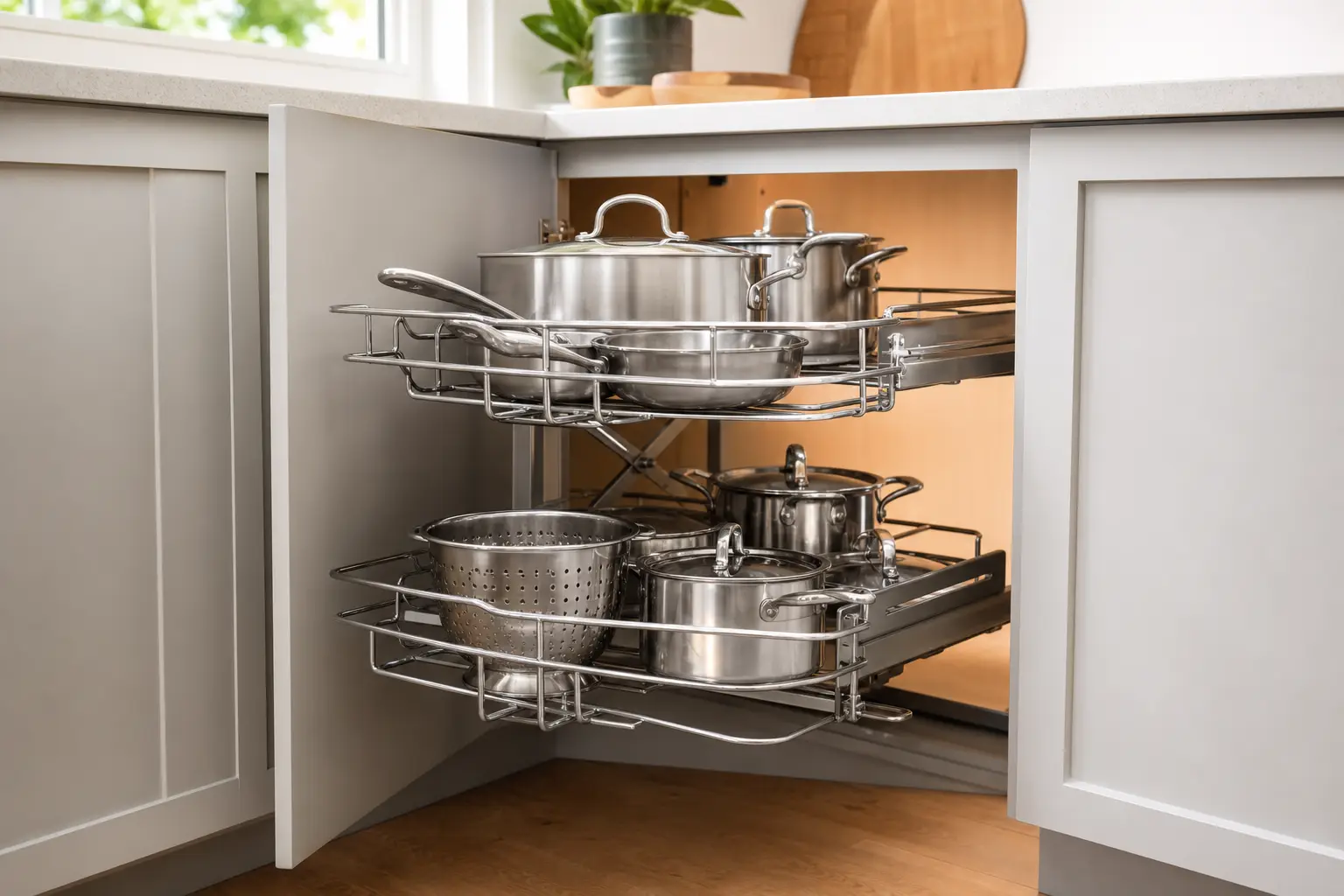
Every kitchen has spots that default to wasted space, and a custom approach is largely about reclaiming them. Blind corners, where two cabinet runs meet at ninety degrees, swallow storage into an unreachable void. A blind-corner pull-out or a swing-out system brings that back third out into the room where you can actually use it. It is not cheap hardware, but it turns dead cubic feet into daily-use space.
The other overlooked zones are vertical. Taking upper cabinets all the way to the ceiling adds a full shelf of seasonal or rarely-used storage and eliminates the dust-collecting gap on top. Toe-kick drawers under base cabinets recover a few inches of flat storage for baking sheets and platters. A narrow pull-out filler beside the range or cooktop holds oils, spices, and utensils within arm's reach of the stove. In tight San Francisco and Peninsula kitchens, these small recoveries add up to the difference between cramped and comfortable.
The Pantry, Done Right
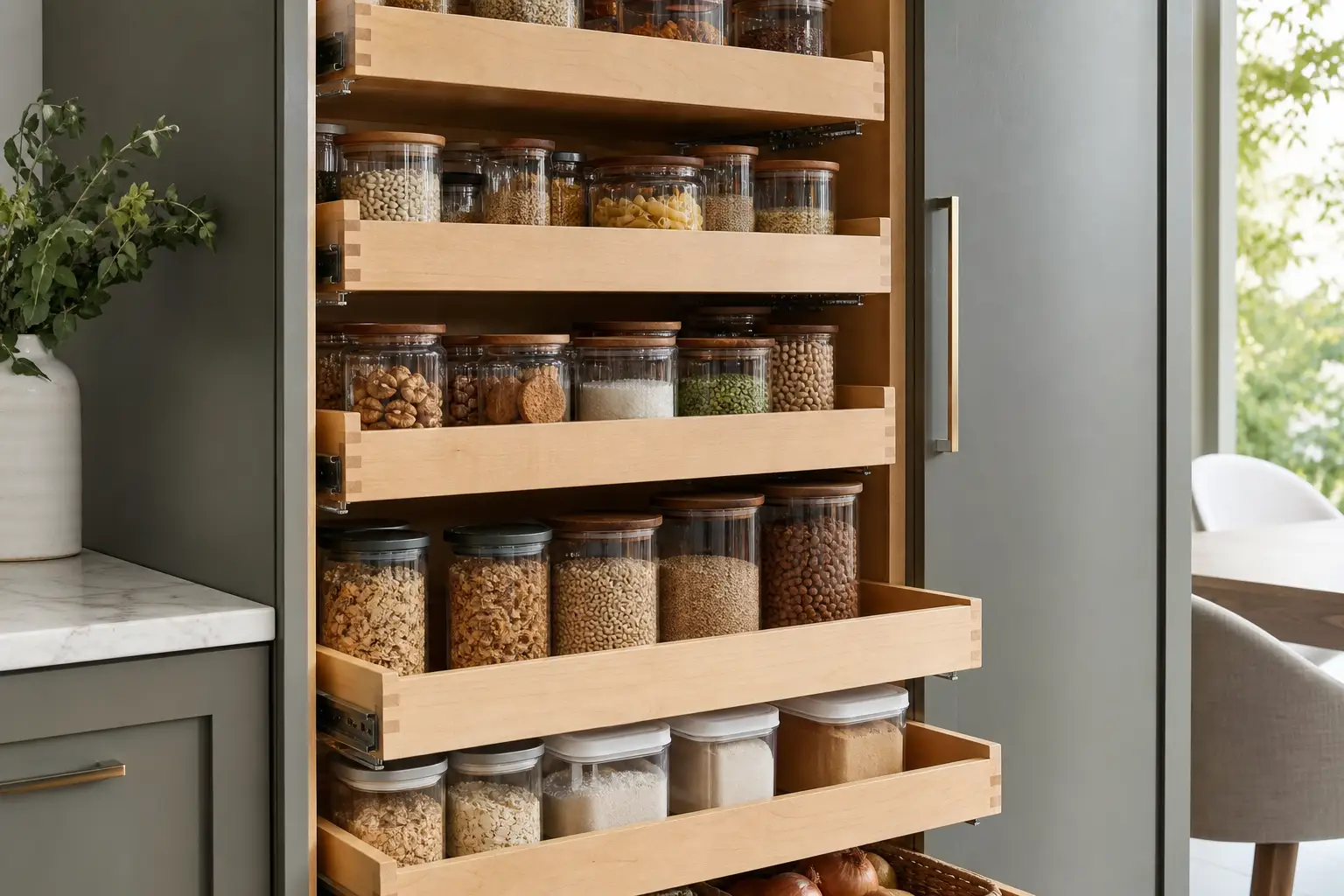
A well-built pantry is one of the clearest markers of a considered kitchen. The luxury version is not necessarily a giant walk-in, which many Bay Area floor plans cannot spare the square footage for. It is often a tall cabinet fitted with full-height pull-out units that bring shelves toward you from both sides, so a single unit five to seven feet tall gives you complete visibility of everything from front to back with one motion. Nothing gets lost behind a can of tomatoes from two years ago.
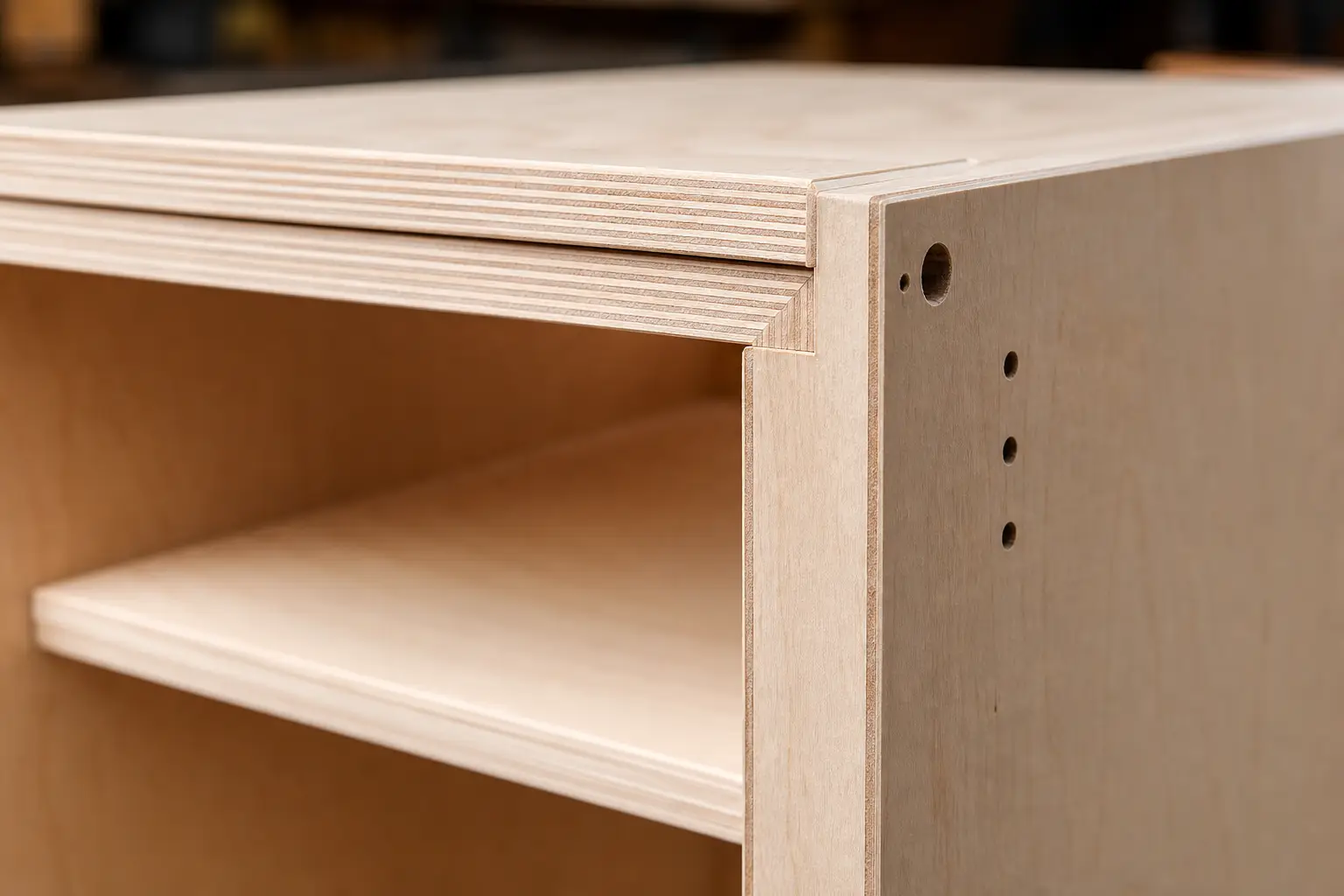
For narrower runs, a full-height slide-out larder in a nine to twelve inch cabinet tucks serious storage into a space too tight for a swinging door to be useful. Adjustable shelving matters here: we build on drilled shelf-pin systems so the interior can be reconfigured as your needs change, and we size shelf depth to real pantry goods rather than a generic stock spacing. Because everything is built to your cabinet's exact interior, there is no gap where a stock organizer almost fits.
Prep, Cleanup, and the Details You Touch Daily
Luxury storage is really about the choreography of cooking. A dedicated cutlery and utensil drawer with fitted dividers near the prep zone means you are not rummaging. A deep drawer with an adjustable peg system holds plates and bowls securely and adjusts as your dishware changes. Next to the oven, a vertical tray divider stores sheet pans, cutting boards, and cooling racks upright instead of in a leaning pile.
Cleanup deserves the same attention. A pull-out bin system with separate compartments for landfill, recycling, and compost, mounted on heavy-duty slides near the sink, keeps bins off the floor and out of sight, which is both cleaner and safer with kids or pets around. We build the surrounding cabinet to the bin system rather than shoehorning bins into a stock box, so the fit is exact and the slides carry the weight properly. These are the moving parts you interact with thousands of times a year, and getting them right is what a custom kitchen from American Built Cabinets is actually for.
FAQ
Q1: Are deep drawers really better than lower cabinets with shelves?
A1: For pots, pans, and dishes, yes, in almost every case. A deep drawer on full-extension slides brings the entire contents out to you, so you see and reach everything without kneeling or digging past a face frame. Lower door cabinets waste the back third of the space and force you to stack. We convert most base cabinets to drawer banks for this reason.
Q2: What hardware makes storage feel high end?
A2: Full-extension, soft-close undermount slides rated for heavy loads are the foundation, along with six-way adjustable soft-close hinges. Undermount slides hide the mechanism and let the drawer box use the full width. Dovetailed solid maple or Baltic birch drawer boxes ride on those slides and hold weight without racking, which is what separates a luxury feel from a builder-grade one.
Q3: How do I get more storage out of a small Bay Area kitchen?
A3: Go vertical and use the dead zones. Full-height pantry pull-outs, upper cabinets taken to the ceiling, toe-kick drawers, and corner solutions like blind-corner pull-outs recover space most kitchens waste. Custom construction lets us size each of these to your exact walls, which matters in older homes where nothing is a standard dimension.
Q4: Are cabinet organizers like spice pull-outs and dividers worth it?
A4: The useful ones are, and the gimmicky ones are not. Cutlery and utensil dividers, deep-drawer peg systems for dishes, pull-out trash and recycling, and a tray divider next to the oven get used every day and justify their cost. We steer clients away from single-purpose gadgets that only fit one appliance you might replace.
Q5: What is the best way to store trash and recycling in a modern kitchen?
A5: A pull-out with two or three bins mounted on heavy-duty slides, placed near the sink and prep zone, keeps bins out of sight and off the floor. For Bay Area homes managing landfill, recycling, and compost, a three-bin pull-out sized to your cabinet width is the clean solution, and we build the cabinet around the bin system rather than forcing bins into a stock box.
Q6: How long does custom storage-focused cabinetry take to build?
A6: Because we manufacture locally in San Jose, a full custom kitchen with pull-outs, drawer banks, and pantry systems typically takes about three weeks after the design is finalized. Building in-house also lets us size interior fittings precisely and adjust before installation, rather than ordering organizers to fit a fixed stock box.