A dedicated coffee bar has become one of the most requested add-ons in Bay Area kitchen and office projects, and it is easy to see why. It pulls the morning routine out of the main work triangle, gives the espresso machine and grinder a real home, and hides the clutter of pods, mugs, and beans behind good cabinetry. We build coffee bars for homeowners in San Jose and San Francisco and for offices and cafes across the Peninsula. The right cabinet plan turns a stretch of counter into a station that actually works. Here are the ideas worth stealing.
Start With How the Station Gets Used
A coffee bar for a family of four looks nothing like one for a thirty person office, so the cabinet plan starts with the daily routine, not the aesthetics. In a home, the goal is usually to move the coffee ritual off the main counter and out of the sink and stove zone, so morning traffic does not collide. That points toward a compact, self-contained run: machine, grinder, mugs, and beans all within one arm sweep, ideally near a water source for filling and rinsing.
An office or cafe station is a volume problem. Multiple people arrive in the same fifteen minute window, so the design has to handle throughput, spills, and restocking. That changes the cabinetry: wider counters so two people can work at once, deeper storage for bulk beans and cups, a plumbed machine to avoid constant reservoir refills, and durable surfaces that shrug off heavy use. We build these regularly for Peninsula offices, and the winning layouts treat the coffee bar like a small commercial station rather than a decorative nook.
The Cabinet Features That Do the Work
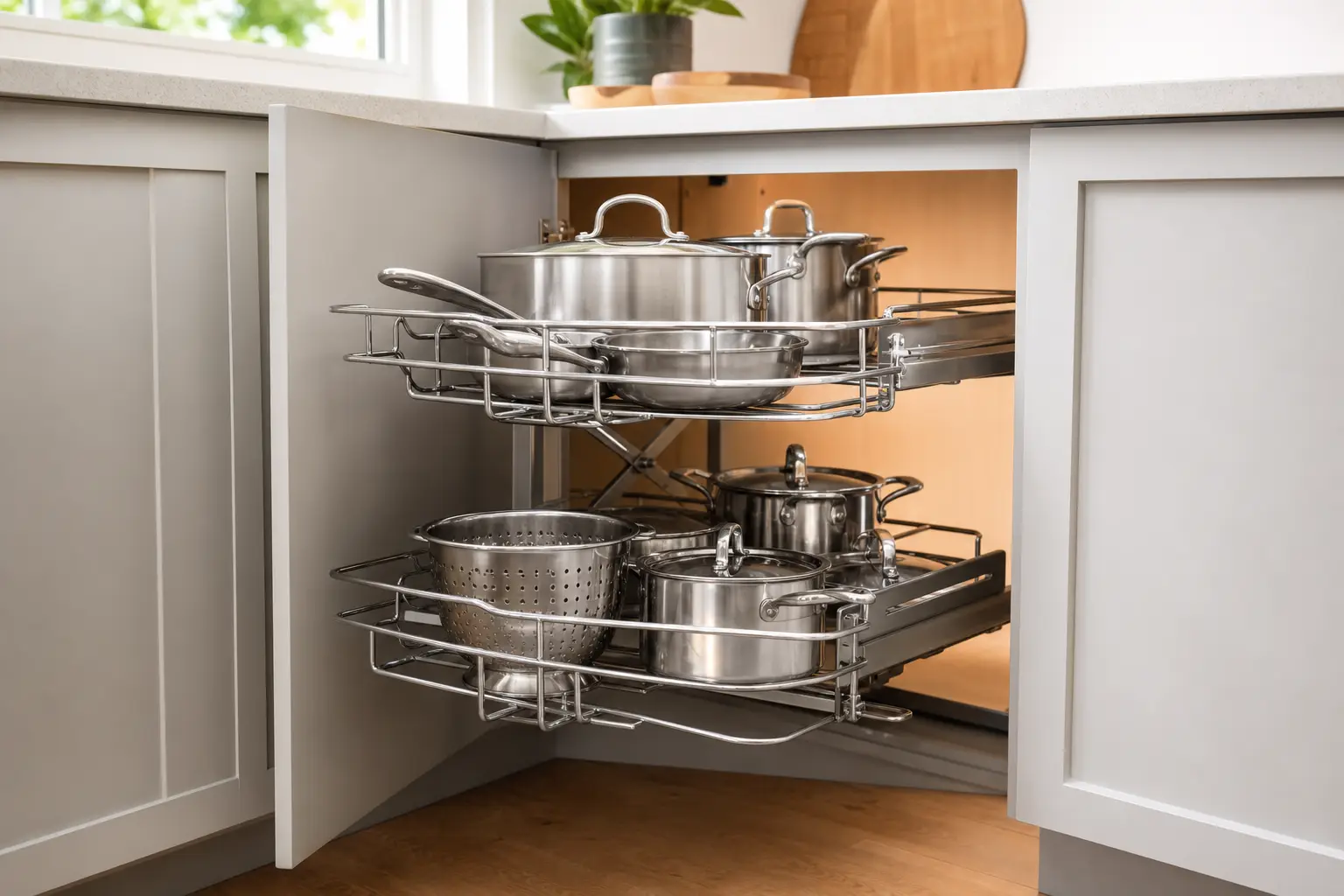
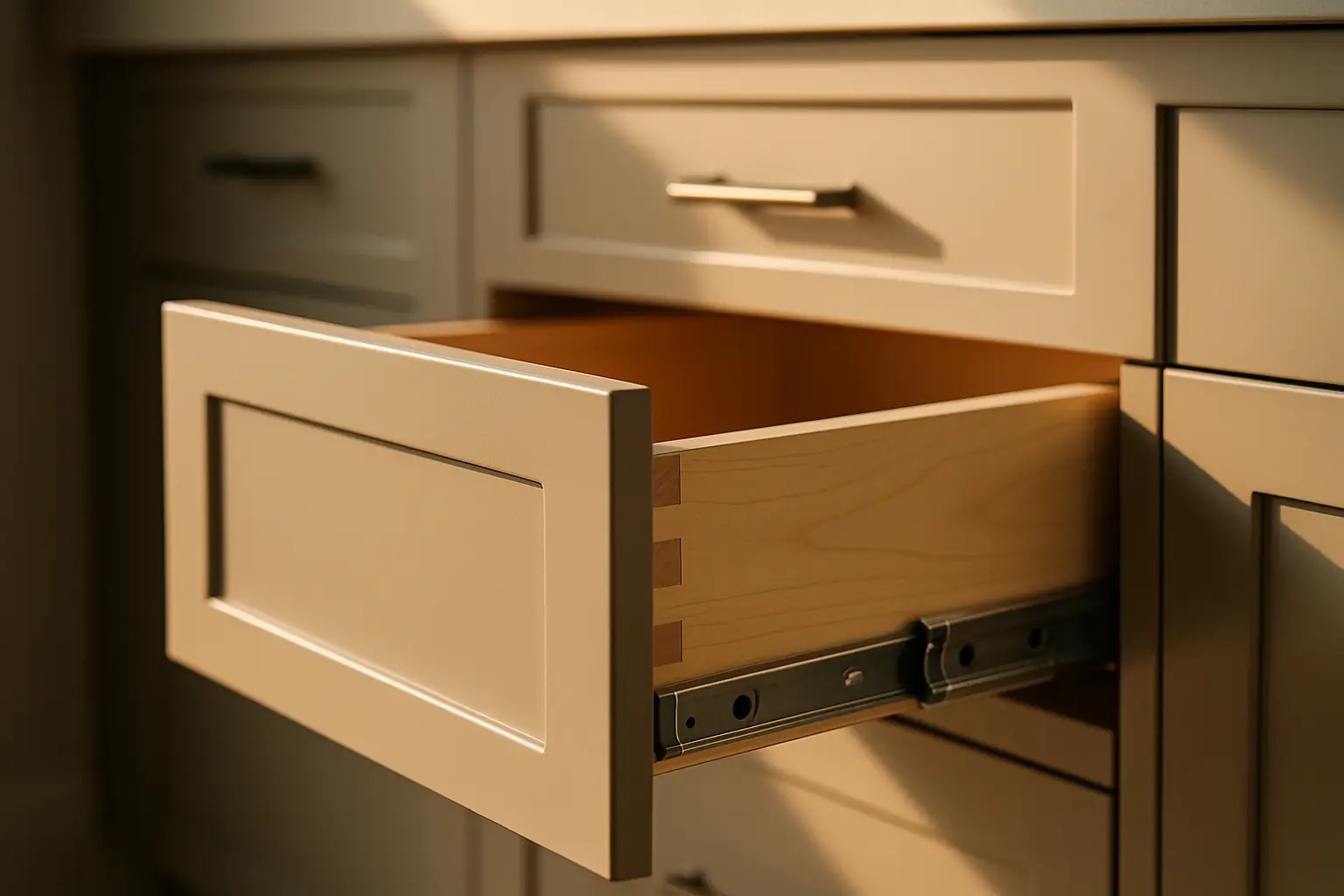
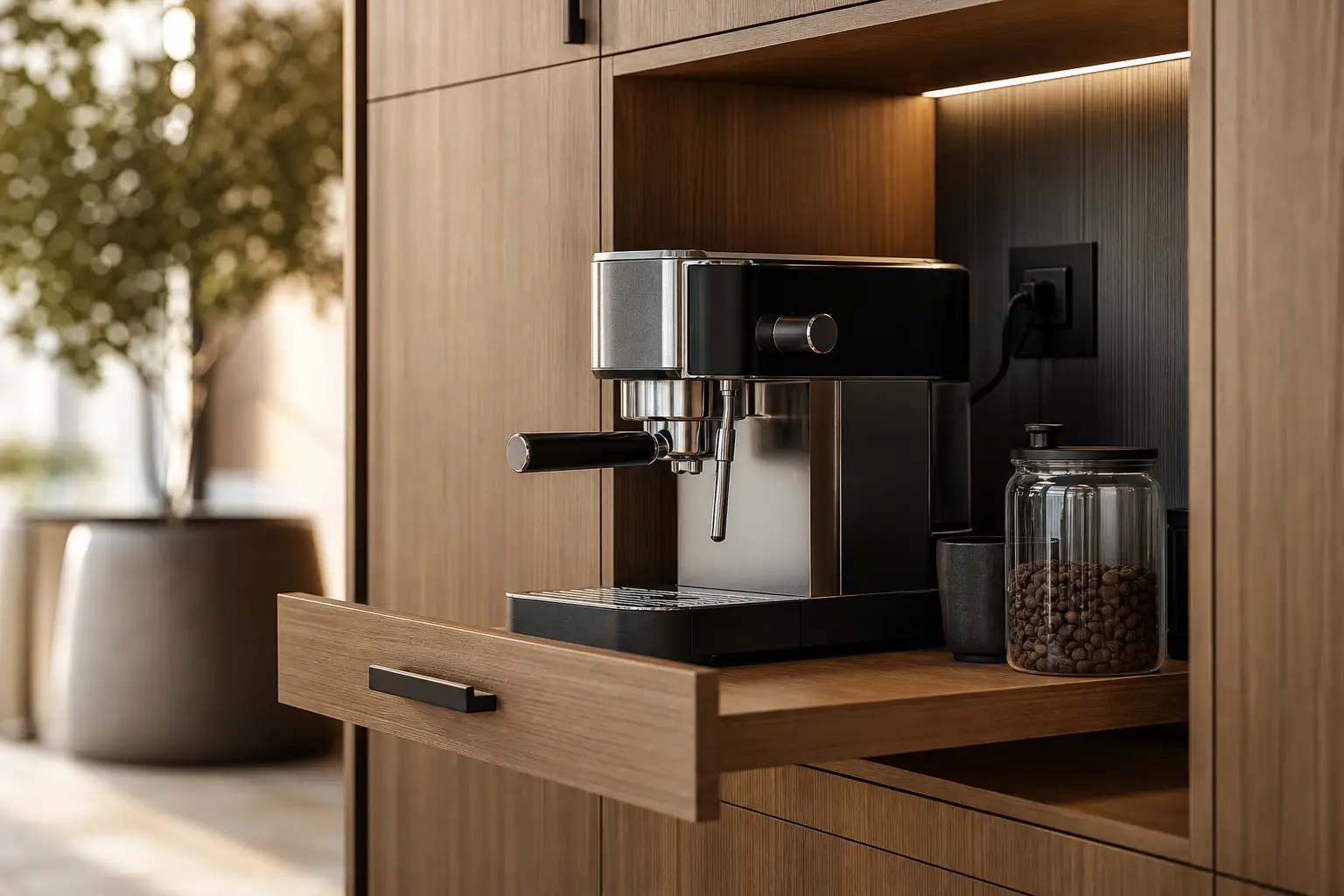
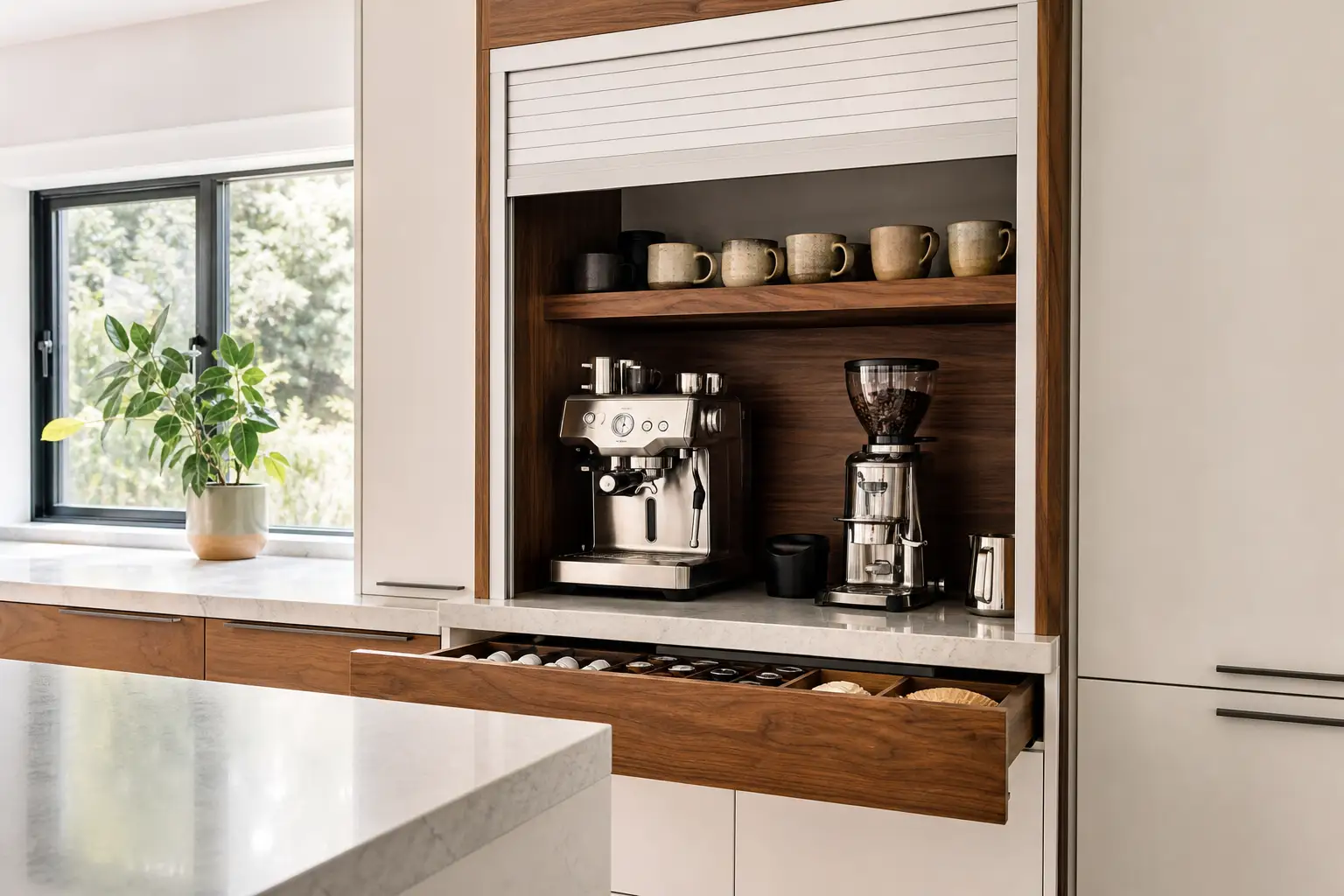
A few specific features separate a coffee bar that stays tidy from one that becomes a cluttered ledge. The appliance garage is the anchor. A cabinet with a roll-up tambour door or a pocket door hides the espresso machine and grinder behind a retractable front, so the counter reads clean when nobody is brewing. Fit it with an outlet inside and a pull-out shelf on full-extension slides, so the machine glides forward for filling the reservoir and clearing the drip tray, then tucks back out of sight.
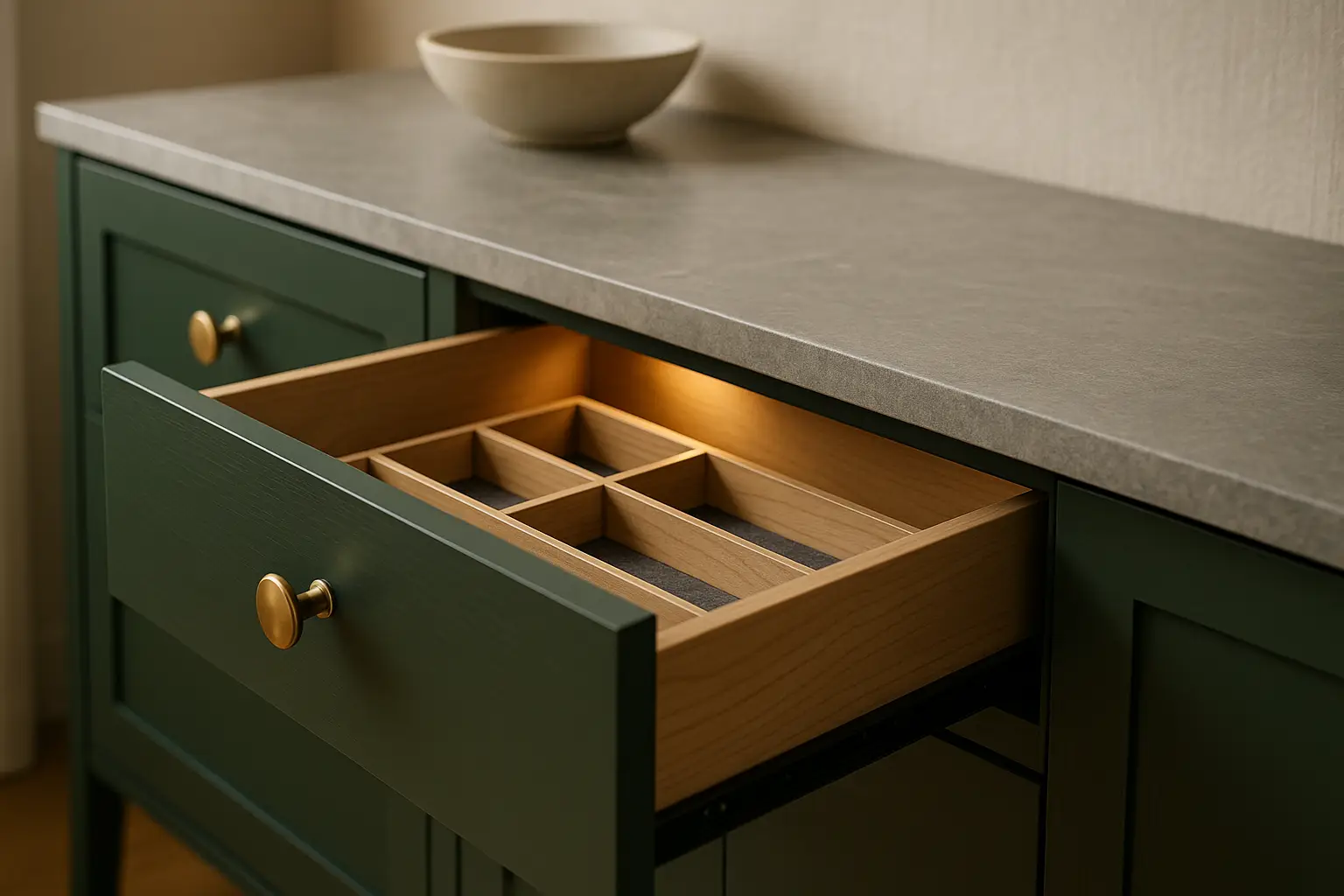
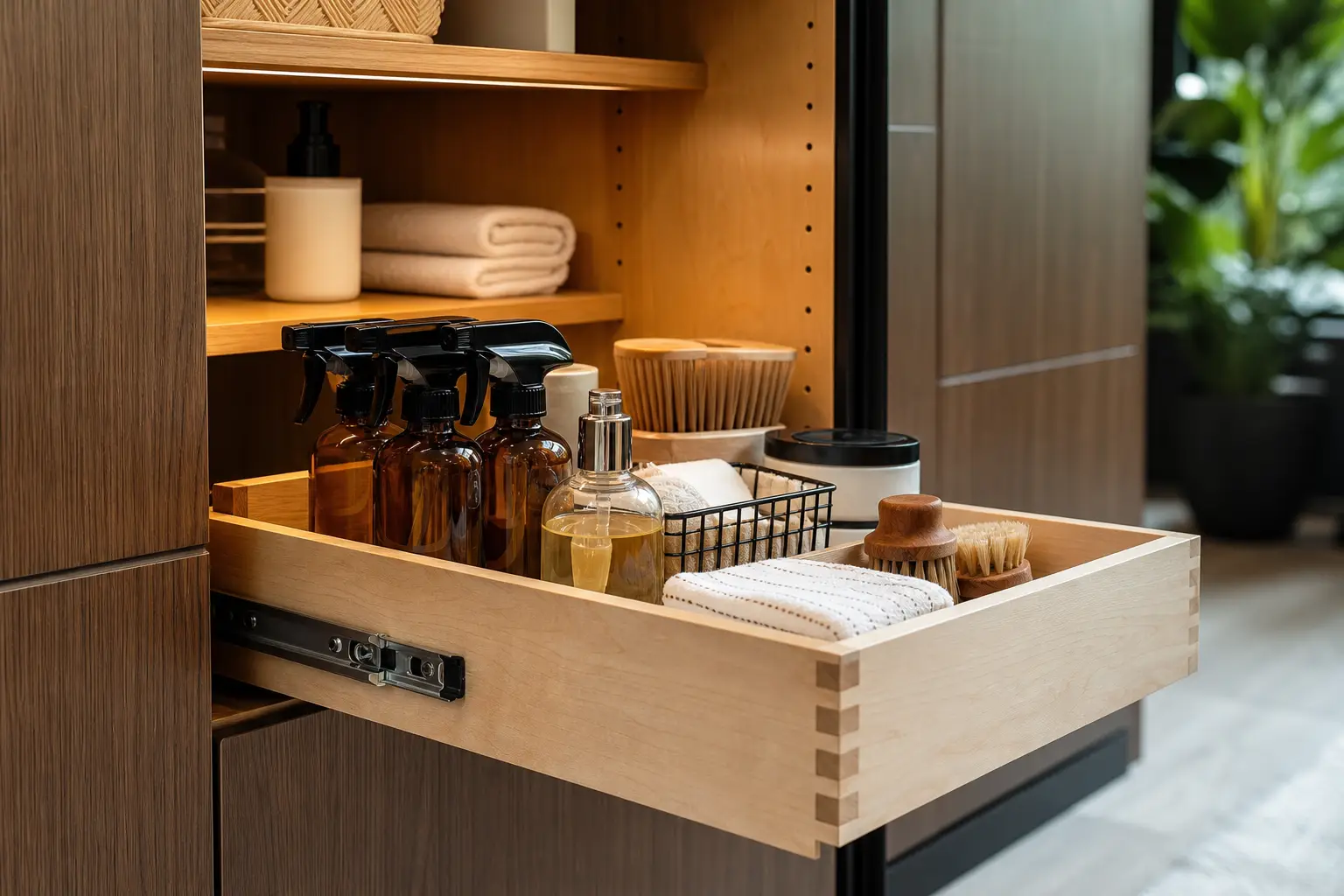
Below and around that garage, the storage should map to the ritual. A shallow drawer with a divided insert keeps pods, filters, and a scoop organized and visible. A deeper drawer holds bags of beans upright. A pull-out with airtight canisters keeps beans fresh, which matters more in the dry East Bay air than people expect. For mugs, choose between a dedicated peg drawer that cradles cups flat, or open shelving and glass-front uppers if the mugs are worth displaying. In offices we add a tall pull-out pantry for bulk cups, lids, sleeves, and stir sticks so restocking is a weekly task, not a daily scramble.
Do not forget the wet and warm details. A small undercounter refrigerator drawer for milk and creamer keeps dairy out of the main fridge and right where it is needed. A pull-out trash and recycling cabinet handles grounds, pods, and cups. And if the budget allows, a bar sink with a filtered water tap turns the station into a fully independent zone, which is transformative in a busy household or office kitchen.
Layouts That Fit Real Bay Area Spaces
Most home coffee bars land in one of three layouts. The wall niche uses a 36 to 48 inch stretch of counter, often at the end of a run or in a former desk alcove, with uppers above and drawers below. The tall pantry conversion turns a full-height cabinet into an enclosed station with a pull-out counter shelf, so the whole thing disappears behind doors when closed, which suits small San Francisco kitchens where counter space is scarce. The island or peninsula extension adds a lowered or standard-height coffee zone on the back side of an island, keeping it out of the cooking triangle while staying part of the open plan.
Dimensions matter more than people think. Give a single machine and grinder at least 24 to 30 inches of clear counter and a full 24 inches of depth so nothing hangs off the edge. Leave 15 to 18 inches of vertical clearance under the uppers if the machine has a tall bean hopper or a portafilter that swings up. Put the outlet where the cord will actually reach, ideally inside the appliance garage or just behind the machine, not around a corner. These are the details that get missed when a coffee bar is an afterthought, and they are easy to build in when the cabinets are custom.
Finishes That Make It Feel Intentional
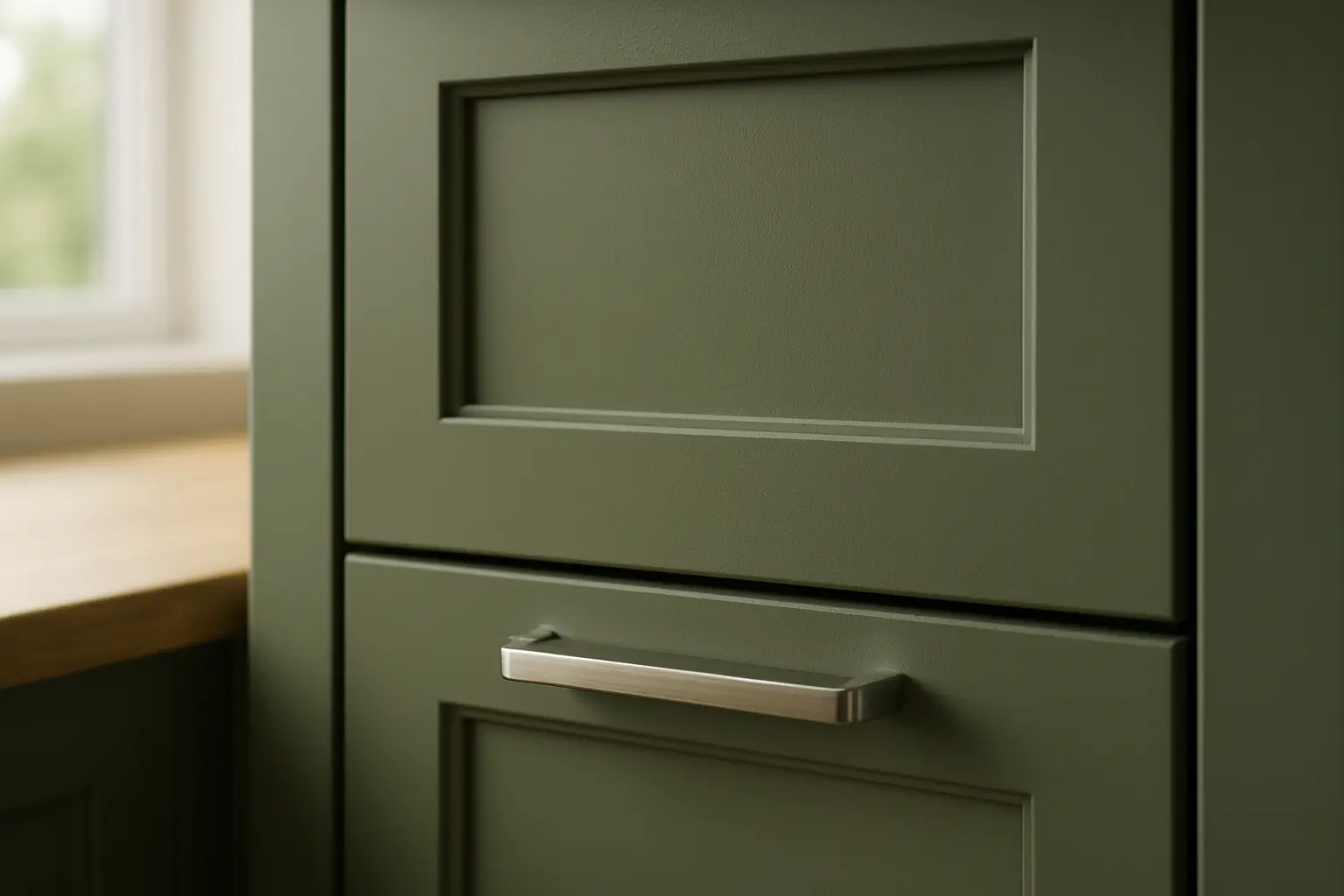
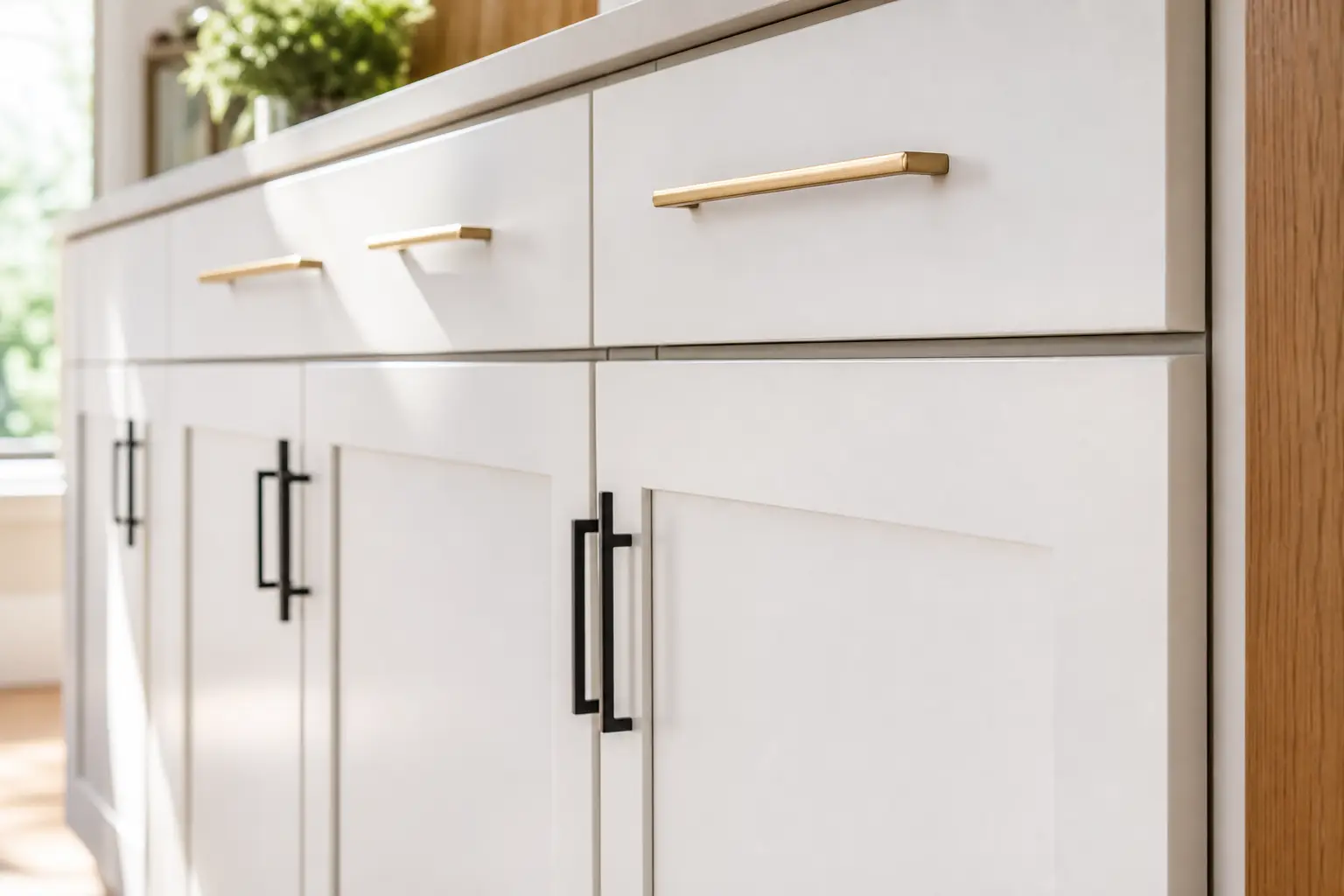
A coffee bar is a natural spot to do something a little different from the main kitchen, and Bay Area clients increasingly use it as a design accent. A two-tone approach works well: match the coffee bar cabinet boxes to the kitchen but give the fronts a contrasting finish, a walnut veneer against white painted cabinets, or a deep matte green against light oak. Because the station is a defined zone, the contrast reads as intentional rather than mismatched. Open shelving in the same wood as the fronts ties it together and shows off mugs or a favorite grinder.
For surfaces, durability should lead. Quartz and porcelain counters handle heat from a portafilter, resist staining from grounds and coffee oils, and wipe clean, which is why we steer most coffee bars toward them over marble. A tiled or slab backsplash behind the machine catches steam and splatter and cleans easily. In offices we specify the most wear-resistant finishes we make, because a shared coffee station takes abuse that a home bar never will.
Because American Built Cabinets manufactures these in our San Jose shop, we can match a coffee bar precisely to an existing kitchen or office millwork run, or build it as a standalone statement. The custom route also means the cabinet is sized to your actual machine and routine rather than to a stock box, and with local production the whole station typically comes together on about a three week lead time once the appliances and finishes are settled.
FAQ
Q1: How much counter space does a home coffee bar need?
A1: For a single espresso machine and grinder, plan on at least 24 to 30 inches of clear counter width and 24 inches of depth so the machine sits fully on the surface. If you want a pour-over setup, a kettle, and mug storage in reach, 36 to 48 inches is more comfortable. Height stays at standard 36 inch counter height unless you want a raised or lowered station.
Q2: Do I need a plumbed water line for a coffee bar?
A2: Only for certain machines. A standard espresso machine or drip maker uses a fillable reservoir and needs only an outlet. Prosumer and commercial machines that plumb directly benefit from a dedicated water line and a drain, which is worth planning during the cabinet layout. In offices with high volume, plumbing in is usually the better long term choice.
Q3: What is the best cabinet feature for hiding coffee bar clutter?
A3: An appliance garage with a roll-up or pocket door is the top pick. It hides the machine and grinder behind a retractable front so the counter looks clean when the station is not in use. Pair it with a dedicated outlet inside the garage and a pull-out shelf so the machine slides forward for filling and cleaning.
Q4: Can a coffee bar work in a small Bay Area kitchen?
A4: Yes. In tight San Francisco and San Jose kitchens we often build a coffee station into a single 24 or 30 inch tall cabinet stack, using a pull-out shelf for the machine, a narrow drawer for pods and filters, and open shelving above for mugs. It reclaims a slice of counter without a full remodel.
Q5: What countertop material holds up best on a coffee bar?
A5: Quartz and porcelain are the most forgiving for coffee stations because they resist heat, staining from grounds and oils, and water. Natural stone like marble looks beautiful but can etch from acidic spills, so it needs sealing and quicker cleanup. For a busy office bar, a solid quartz surface is the low maintenance answer.
Q6: How long does it take to build custom coffee bar cabinets?
A6: Because we manufacture in San Jose, a custom coffee bar runs about a three week lead time once the design, appliances, and finishes are locked in. Building locally also means we can match the coffee bar cabinets exactly to an existing kitchen or office millwork run, and handle any revisions quickly.