Storage is the quiet reason a home either feels calm or feels cluttered, and it rarely gets planned as carefully as the kitchen island or the countertop. Modern storage cabinets, meaning the tall utility cabinets, built-in walls, and dedicated organizers that live outside the kitchen work core, are where a Bay Area home actually gains breathing room. This guide covers how to specify storage cabinets that use every inch, from entryway and mudroom walls in San Jose to media and home-office built-ins in San Francisco and San Mateo.
Storage Is a Design Decision, Not an Afterthought
Most homes treat storage as whatever cabinets are left over after the kitchen is planned. That is why so many houses have a beautiful kitchen and a chaotic garage, entryway, and hall closet. Modern storage cabinets flip that order by treating dedicated storage as its own design problem with its own rules. The goal is not just more shelves. It is putting the right kind of storage in the right depth, at the right height, with hardware that makes the back of the cabinet as usable as the front.
A well-planned storage wall does something a pile of bins never will: it gives every category of stuff a home. Coats and bags at the entry, cleaning supplies in a tall utility cabinet, board games and electronics behind media doors, files and a printer in a home office built-in. When each thing has a place sized for it, the surfaces of a home stay clear, and that is what actually makes a house feel modern and calm.
Match the Cabinet Interior to What Goes Inside
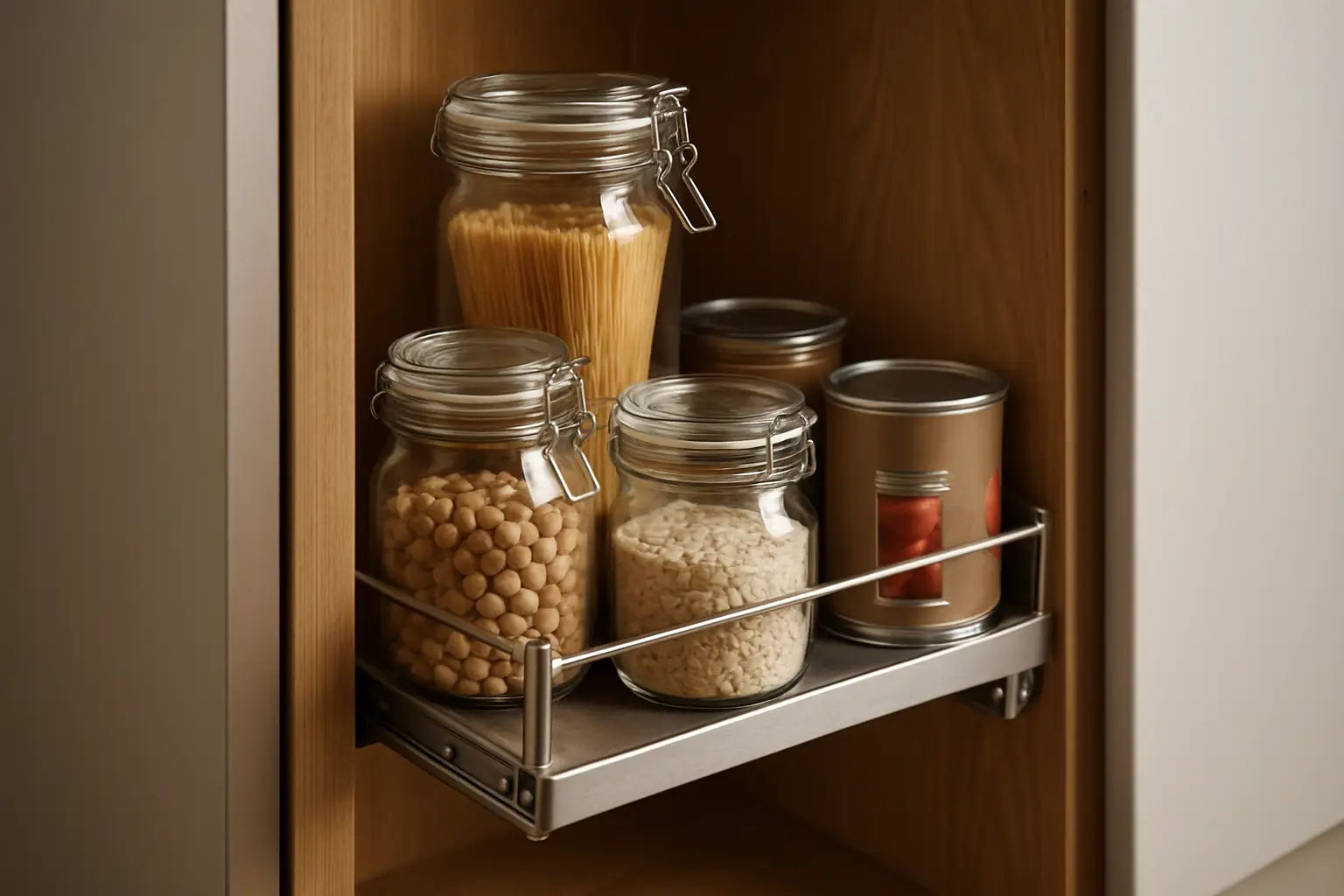
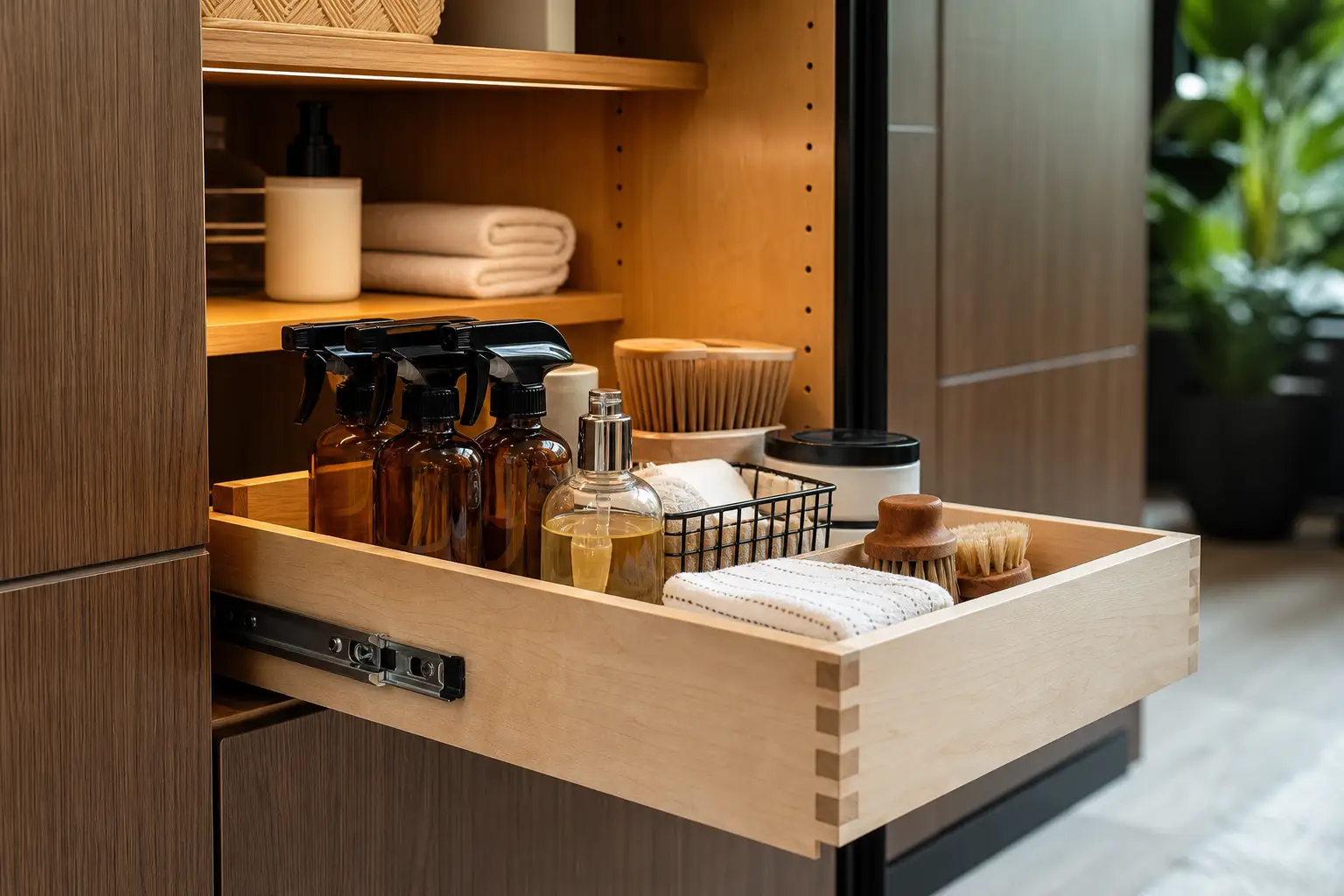
The most common storage mistake is a cabinet full of deep, fixed shelves. A shelf deeper than about 16 inches becomes a cave where items at the back are forgotten. The modern fix is to match the interior to the contents. Tall utility and broom cabinets use full-height door storage and adjustable racks so mops, vacuums, and cleaning bottles each have a slot. Pantry-style storage uses pull-out shelves that bring the whole depth forward on full-extension slides.
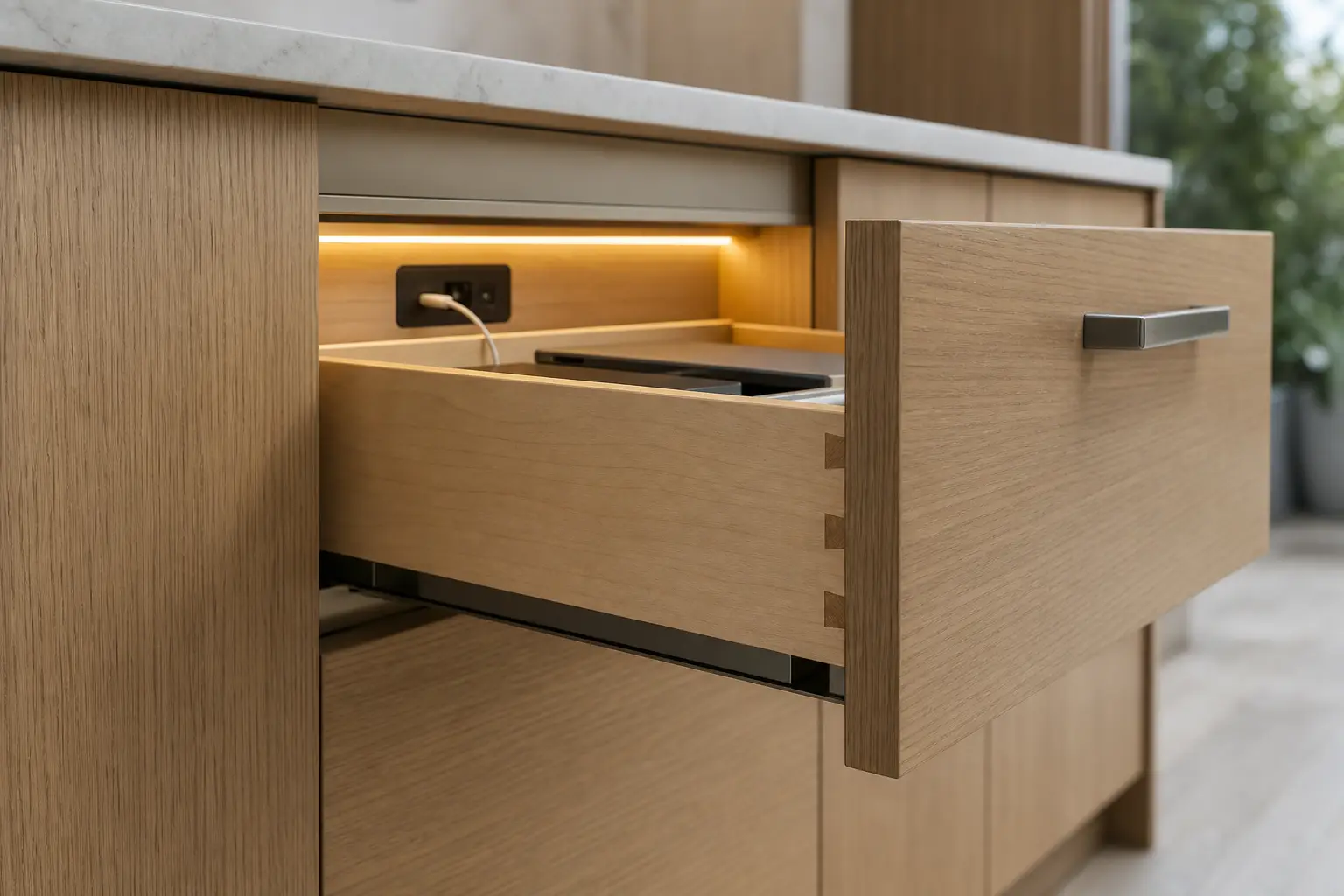
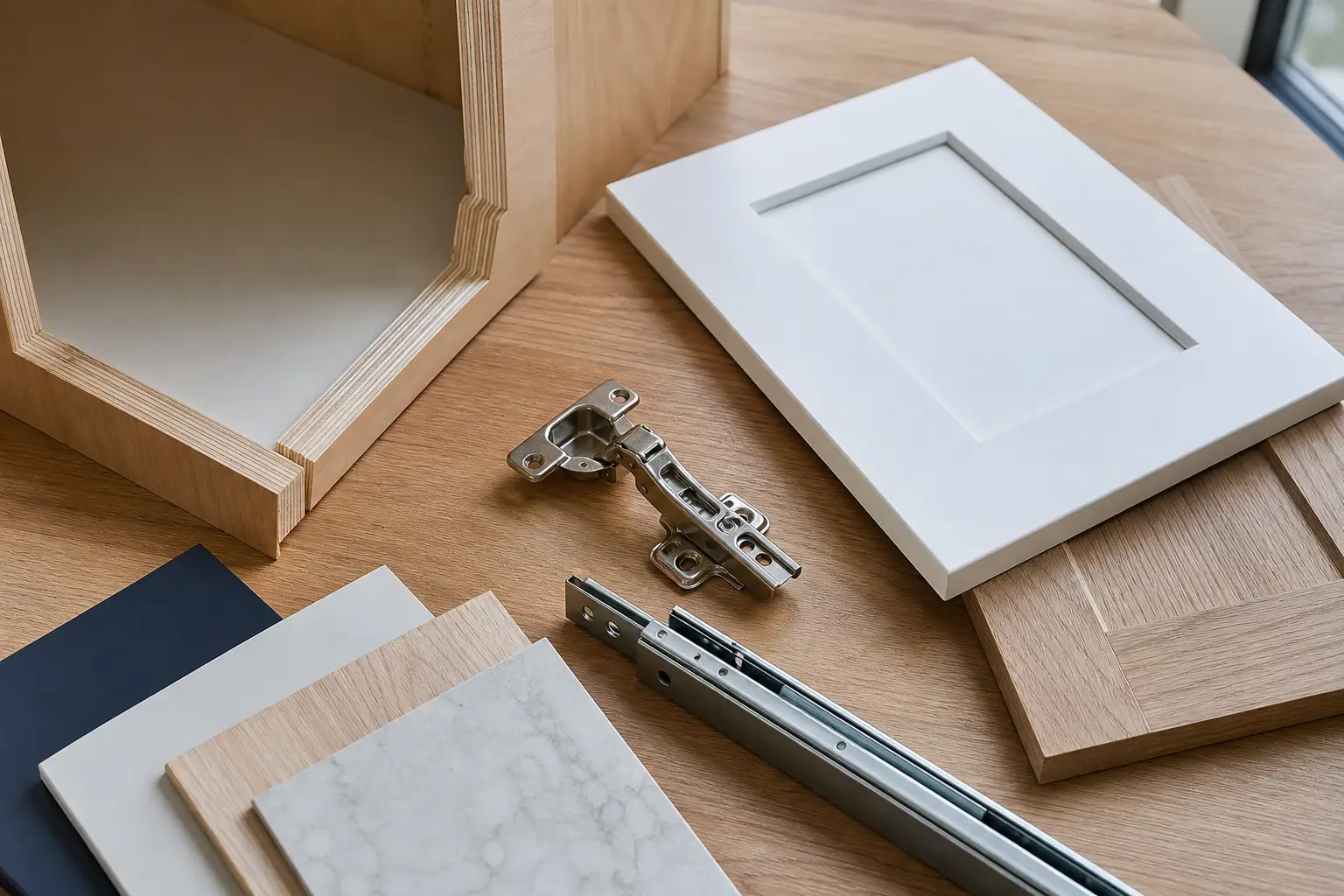
Drawers beat shelves for most small and medium items, because you see everything at once when you open them. A bank of deep drawers in a mudroom holds gloves, hats, and dog gear far better than a shelf. For heavier loads, dovetailed drawer boxes in solid maple or Baltic birch on soft-close undermount slides carry the weight without racking or sagging over years of use. Adjustable shelf pins matter too, since the way you store things changes over time and a fixed layout does not.
Storage Cabinets for the Rooms Beyond the Kitchen
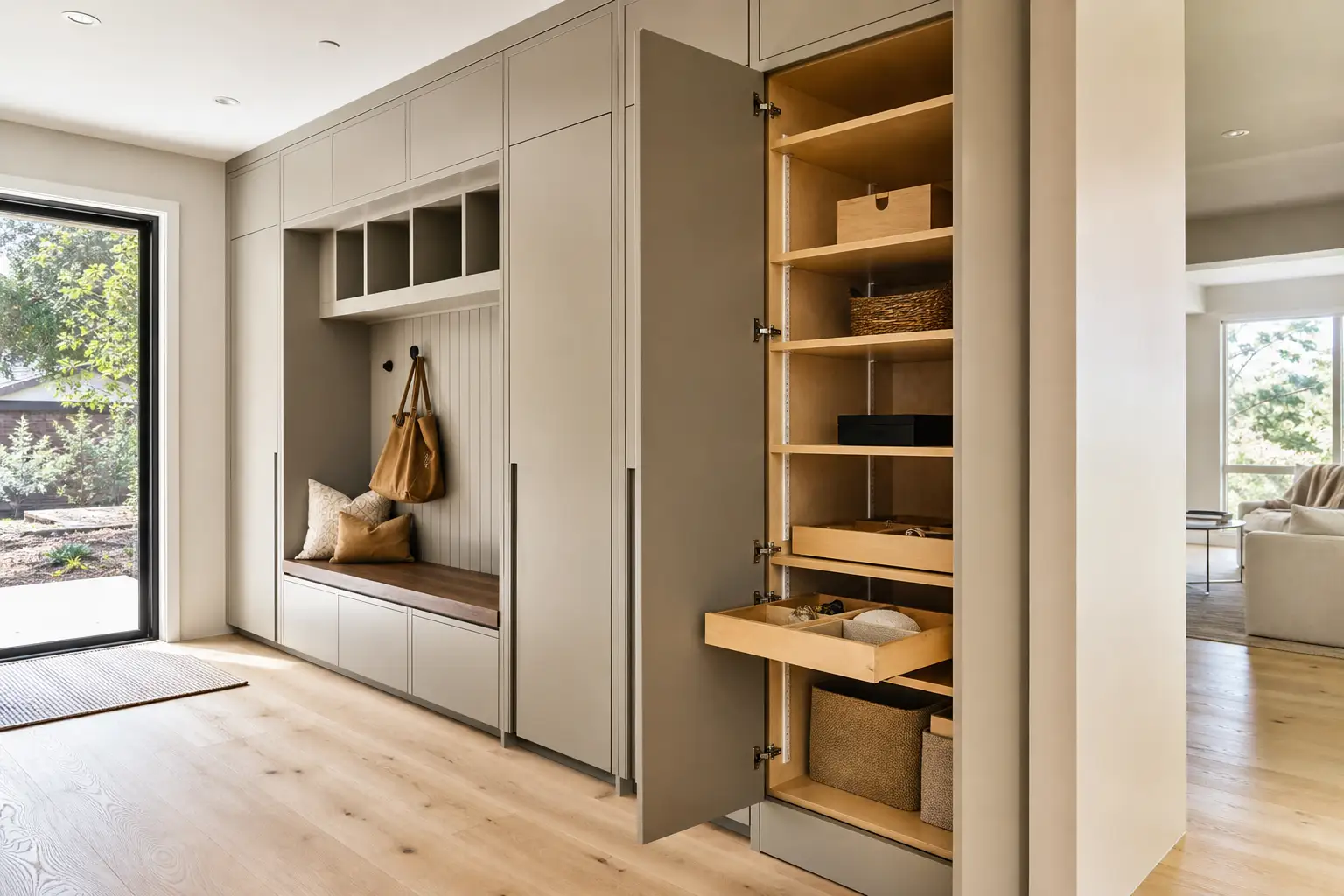
Entryways and mudrooms are the highest-value place to add storage in a Bay Area home, because they catch everything coming through the door. A built-in with a bench, cubbies or lockers above, closed drawers below, and a tall cabinet on the end for coats turns a pinch point into the most useful few feet in the house. Running it floor to ceiling captures the top zone for seasonal gear.
Media and living-room walls are the next opportunity. A modern media built-in hides components and cable clutter behind slab or handleless doors while framing the television and giving display space its own lighting. Home offices, which have become permanent fixtures since so many Bay Area workers split time between home and office, benefit from a wall of cabinets that hides a printer, files, and supplies behind clean fronts so the room reads as a room, not a warehouse. Dining rooms use tall cabinets and a buffet run for serveware and linens. In every case the storage disappears into the architecture instead of announcing itself.
Making It Read as Built-In, Not Furniture
The difference between a storage cabinet that looks intentional and one that looks like a leftover appliance comes down to fit and finish. Built-in storage should run to the ceiling and wall to wall with no awkward filler gaps, which means measuring the real space rather than forcing stock widths into it. That is the core advantage of custom construction: the cabinets fill the room exactly, including the out-of-square walls and sloped ceilings common in older San Francisco and Peninsula homes.
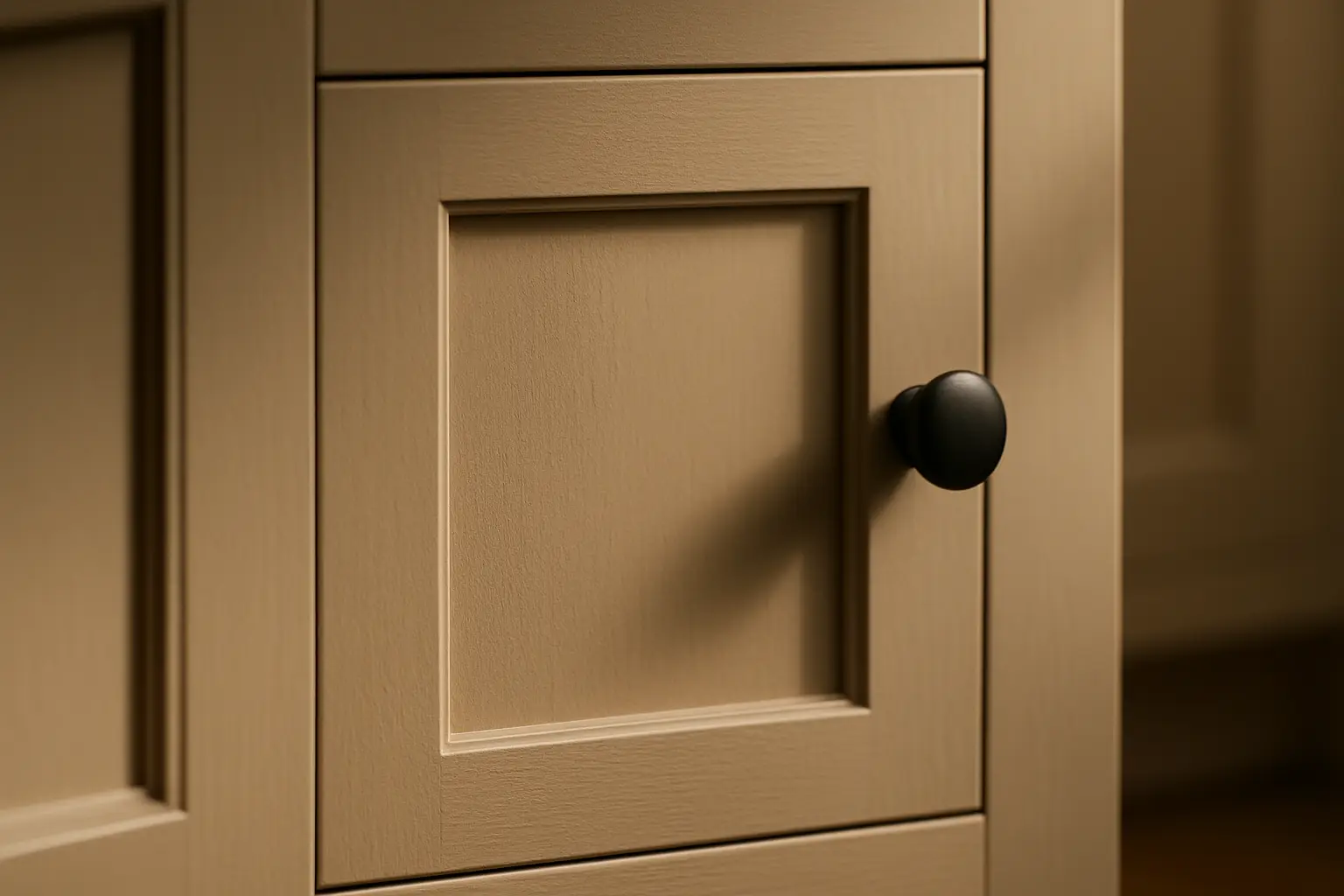
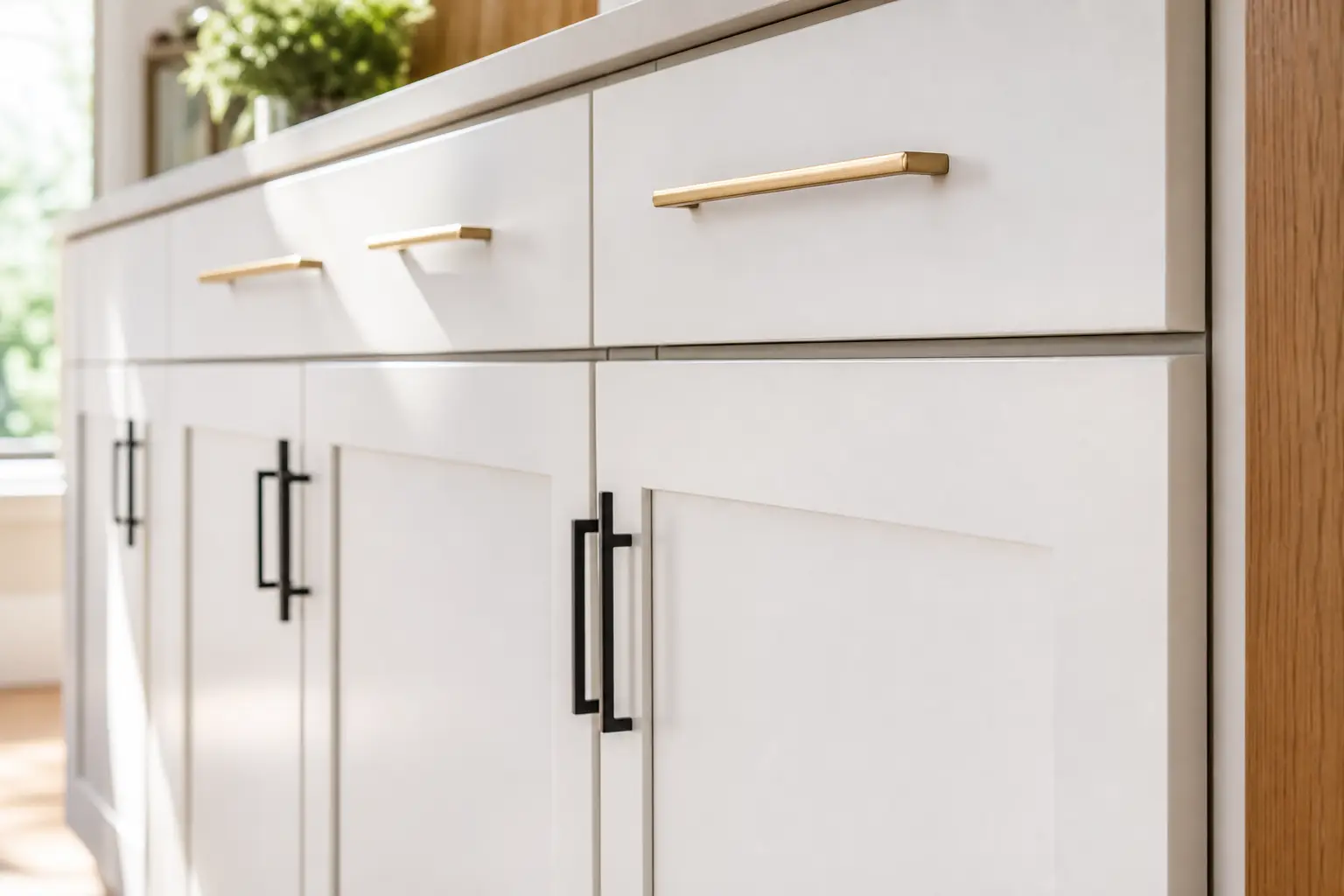
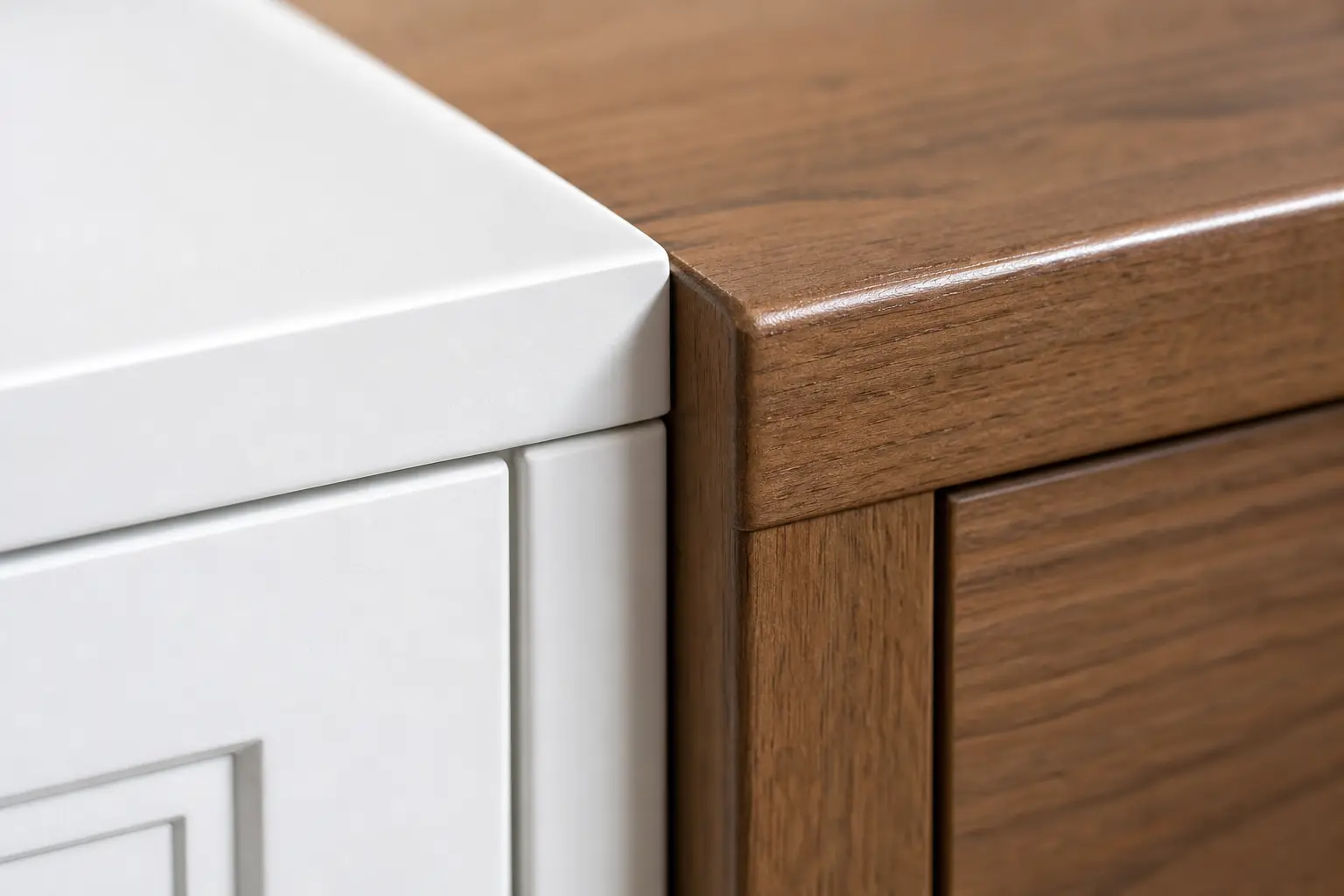
Finish ties it to the rest of the house. A storage wall in the same paint color, door style, and hardware as the kitchen reads as one continuous home rather than a bolt-on. Full-overlay or slab fronts with integrated pulls keep the look clean and modern, while a matched Shaker profile suits a more traditional house. Because American Built Cabinets builds these locally in San Jose, we can match an existing finish, hit an exact dimension, and turn the order around in about three weeks, so a storage upgrade does not become a months-long project.
FAQ
Q1: What makes a storage cabinet feel modern rather than dated?
A1: Clean full-overlay or slab fronts, handleless pulls or integrated finger channels, and floor-to-ceiling height that reads as architecture rather than furniture. The interior matters just as much: adjustable shelving, pull-out systems, and drawers instead of deep fixed shelves are what make a modern storage cabinet actually work.
Q2: How deep should a storage cabinet be?
A2: It depends on what goes inside. General household storage works well at 12 to 16 inches deep, matching pantry proportions, while a media or display cabinet can be shallower at 10 to 12 inches. Anything deeper than about 24 inches should use pull-outs, because a deep fixed shelf turns into a place where items disappear at the back.
Q3: Are floor-to-ceiling storage cabinets worth it?
A3: In most Bay Area homes, yes. Running cabinets to the ceiling captures the top zone that would otherwise collect dust, and it makes a wall read as built-in architecture. The high shelves store seasonal or rarely used items, and closing the gap above avoids the dated soffit look. It does require accurate measuring, which is where custom construction helps.
Q4: Can storage cabinets match my existing kitchen?
A4: Yes. Because we manufacture locally, we can match the door style, paint or stain color, and hardware of an existing kitchen so a new mudroom or office wall looks like part of the same home. Matching an older finish is easier when it is built to order rather than pulled from a fixed stock palette.
Q5: What interior hardware makes the biggest difference in a storage cabinet?
A5: Full-extension pull-out shelves and deep drawers do the most, because they bring the back of the cabinet to you instead of forcing you to reach past everything in front. Adjustable shelf pins let the interior change as your needs change, and soft-close slides keep heavy loaded drawers from slamming. These are the parts that separate real storage from a nice-looking box.
Q6: How long does a custom storage cabinet wall take in the Bay Area?
A6: Our typical lead time is about three weeks from our San Jose shop once the design and finish are approved. A built-in wall is planned to your exact dimensions, so it fills the space cleanly with no filler gaps, and local production means we handle fitting questions and revisions directly.