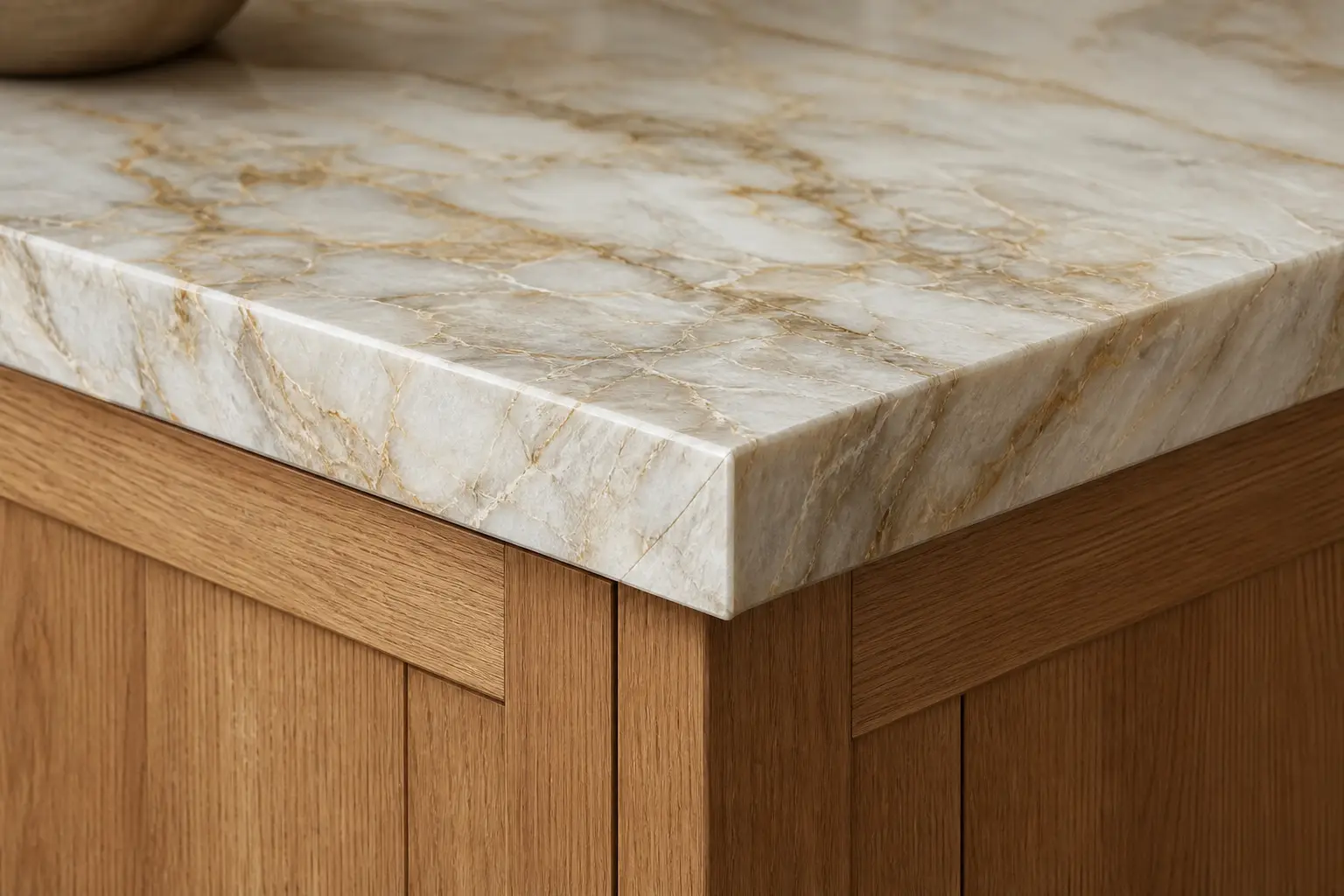
Shaker cabinets have outlasted nearly every kitchen trend of the last century, and there is a good reason they keep showing up in San Jose remodels, San Francisco flats, and San Mateo new builds. The design is simple: a five-piece door with a recessed flat center panel and clean square edges. That restraint is exactly what makes it flexible. At American Built Cabinets, we manufacture Shaker doors locally, so we can talk honestly about what separates a Shaker cabinet that looks sharp for twenty years from one that shows its age in two.
What Actually Makes a Cabinet "Shaker"
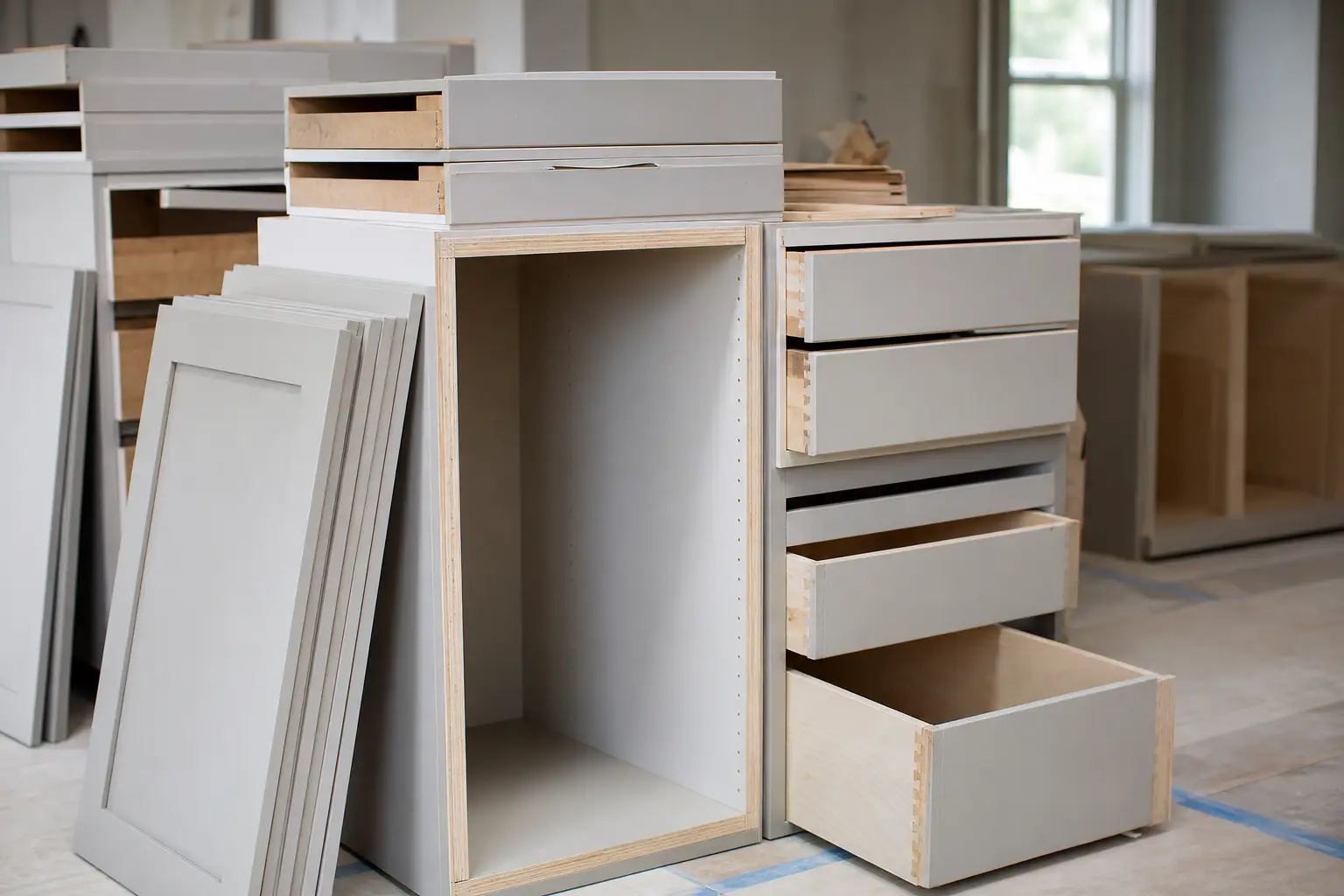
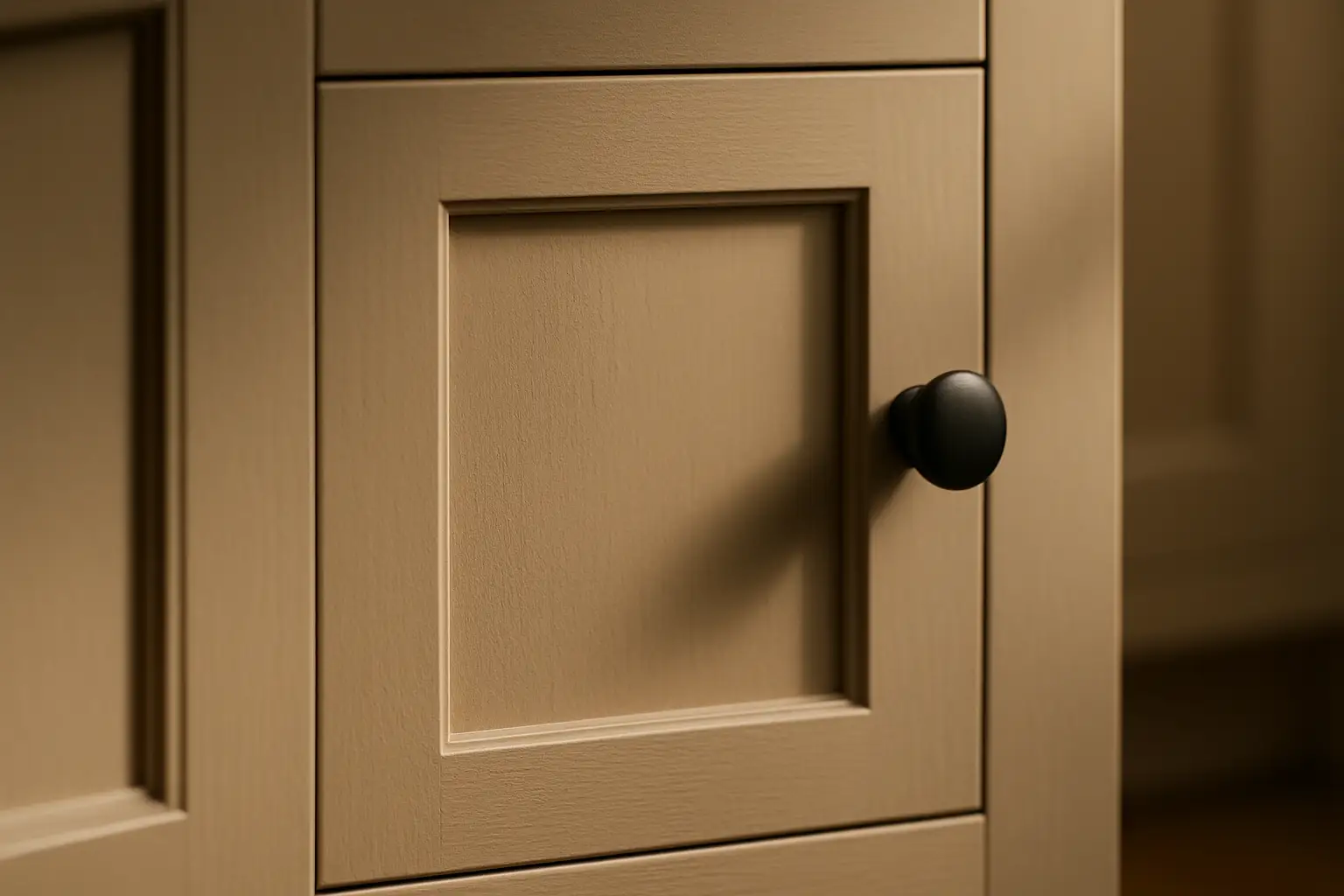
The Shaker door is a frame-and-panel construction. Four rail-and-stile pieces surround a fifth flat center panel that sits recessed inside a groove. No raised molding, no arches, no applied trim. The look descends from 19th-century Shaker furniture makers who valued function over ornament, and the proportions still read as clean today.
The details that vary matter more than most buyers expect. Stile-and-rail width is the big one: a standard Shaker frame runs around 2 to 2.5 inches wide, while a "narrow Shaker" tightens that to roughly 1.75 inches for a more contemporary feel. Inside corners can be square (a crisp, cleaner look) or slightly eased. The center panel can be flat MDF for a paint-grade finish or solid wood veneer plywood if you want visible grain under a stain. These choices are what make a Shaker kitchen feel custom rather than off-the-shelf.
Materials: Where Quality Is Won or Lost
Shaker doors are forgiving to look at but unforgiving to build cheaply. For painted Shaker cabinets, we build the door frame from solid poplar or maple and use a paint-grade MDF center panel. That combination matters: solid wood frames hold hardware and resist wear, while an MDF panel stays flat and will not telegraph wood grain or seasonal movement through a painted finish. Painted solid-wood panels are prone to hairline cracks at the joints over time, especially in kitchens near the coast where humidity swings.
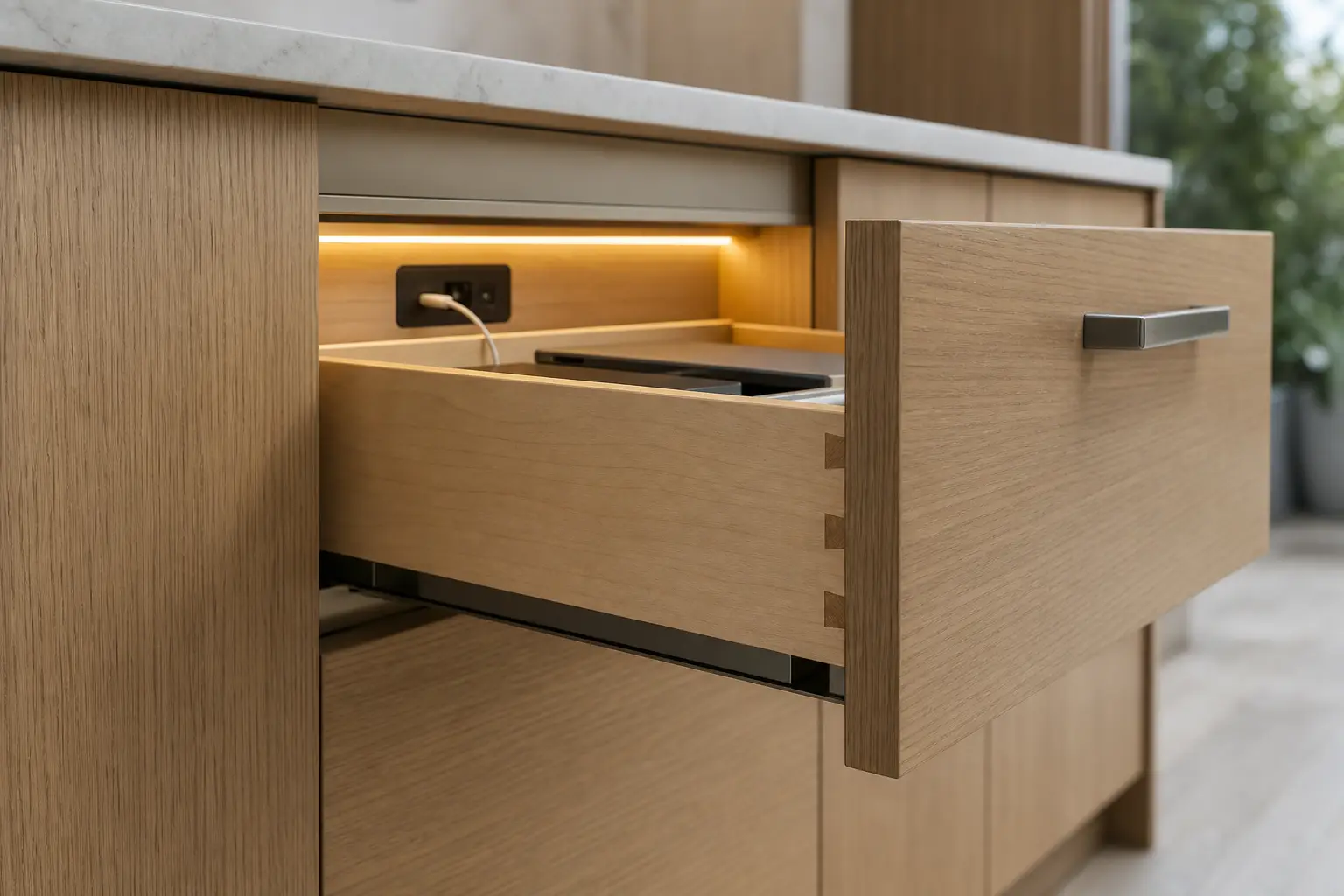
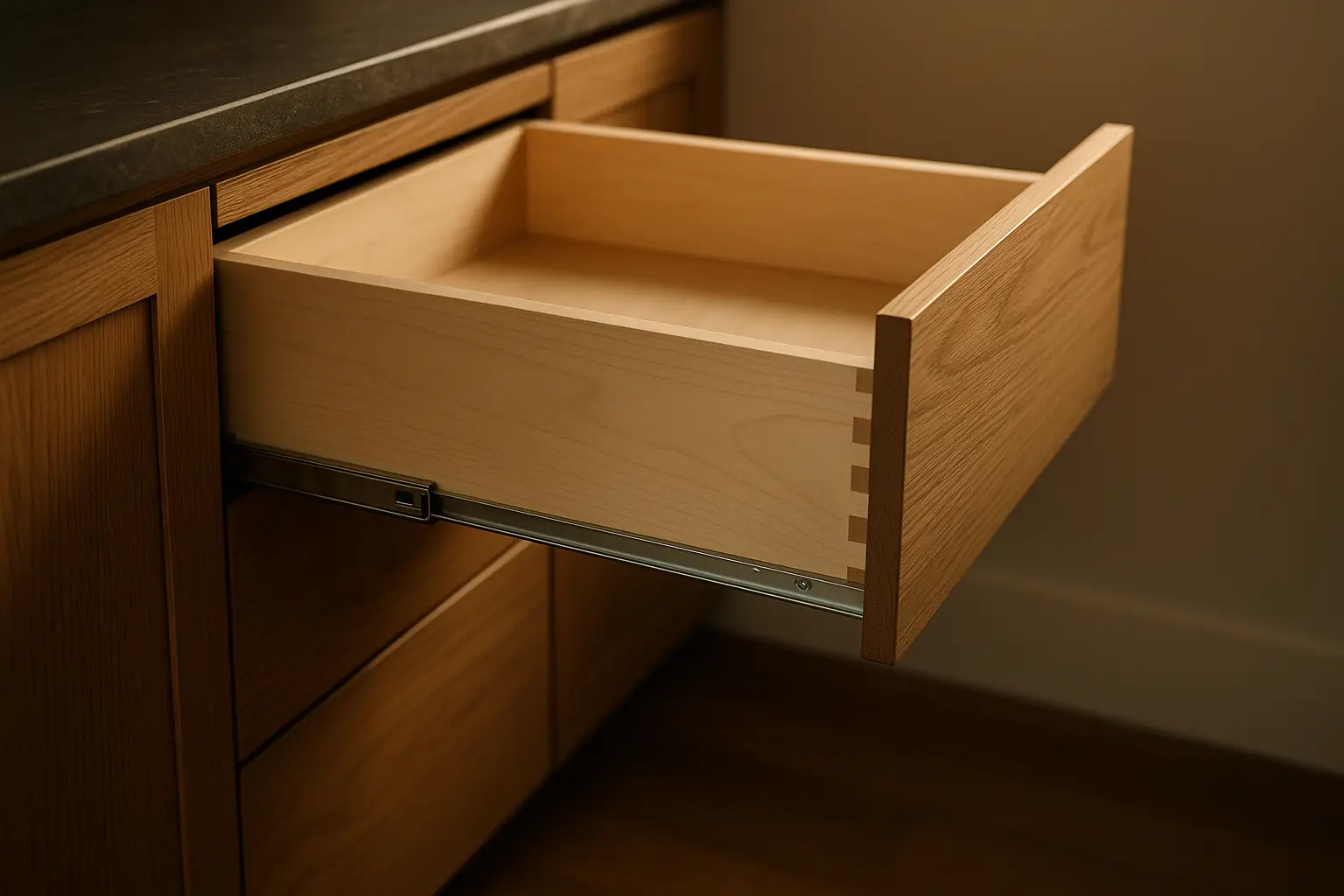
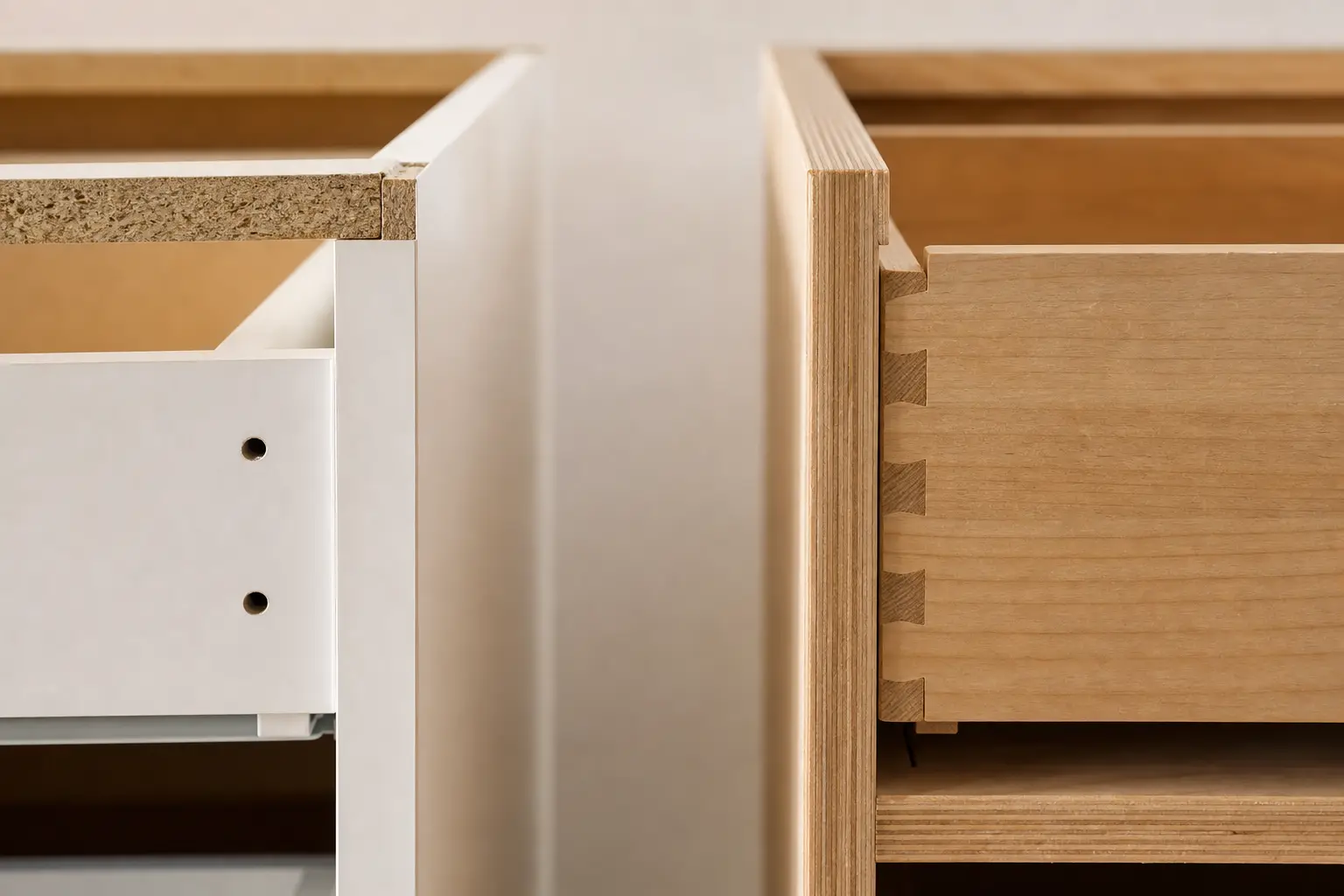
For cabinet boxes, we use 3/4-inch plywood rather than particleboard. Plywood holds screws better, resists water damage under a sink far longer, and simply weighs and sounds more solid. Drawers are built with dovetail joinery in 5/8-inch solid wood, not stapled particleboard, because a drawer box is the part of a kitchen that gets pulled ten thousand times a year. If you are comparing quotes across Bay Area shops, ask specifically what the box, the drawer, and the panel are made of. The door style being "Shaker" tells you almost nothing about the build quality underneath.
Finishes and Color for Bay Area Light
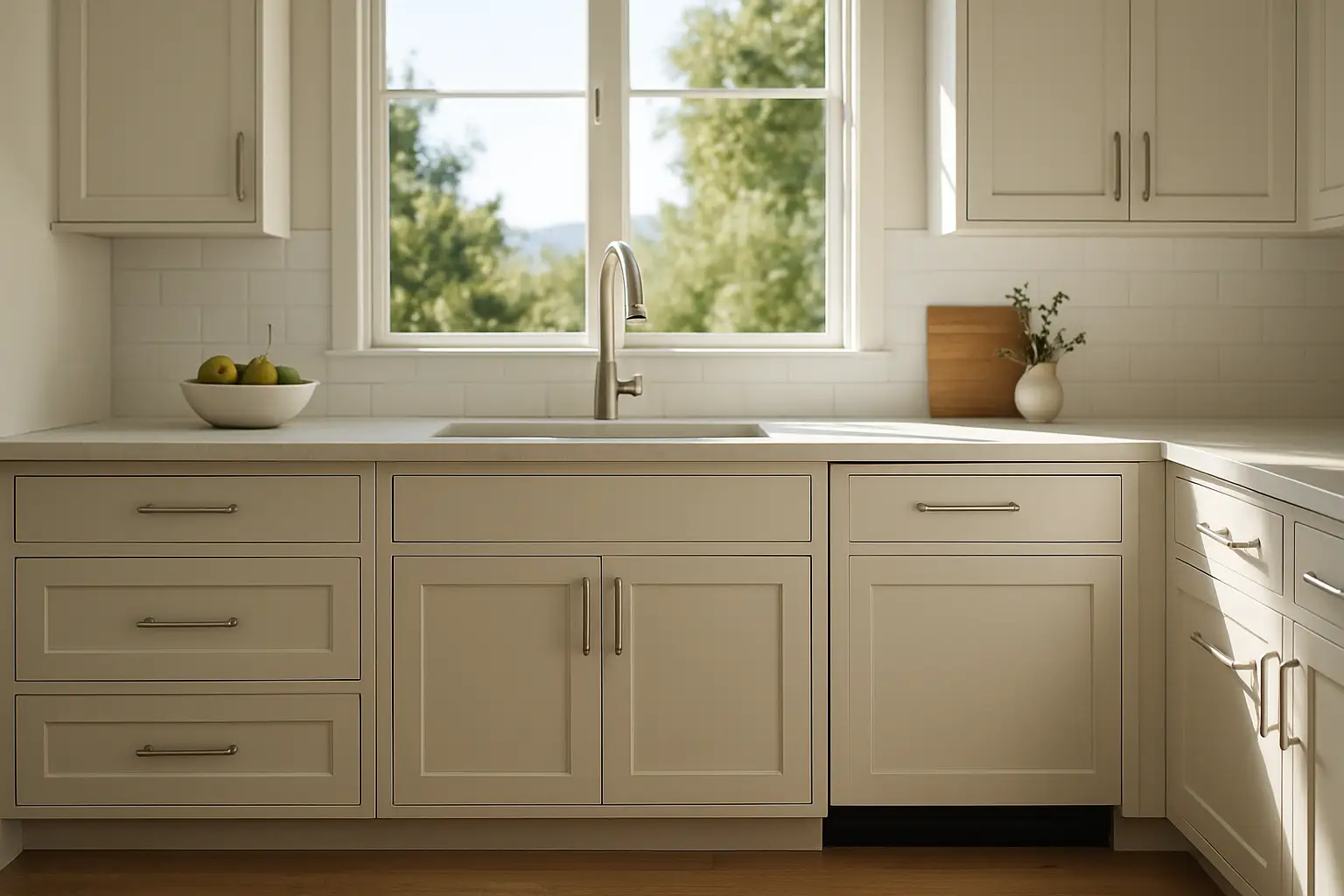
Shaker's flat panel is a canvas, and the finish decision usually outlasts the appliances. Painted white and off-white remain the most requested finishes we run, and they suit the bright, sometimes fog-filtered light common in San Francisco and coastal San Mateo homes. Warmer whites and soft greiges read better under that cooler natural light than a stark bright white, which can look clinical.
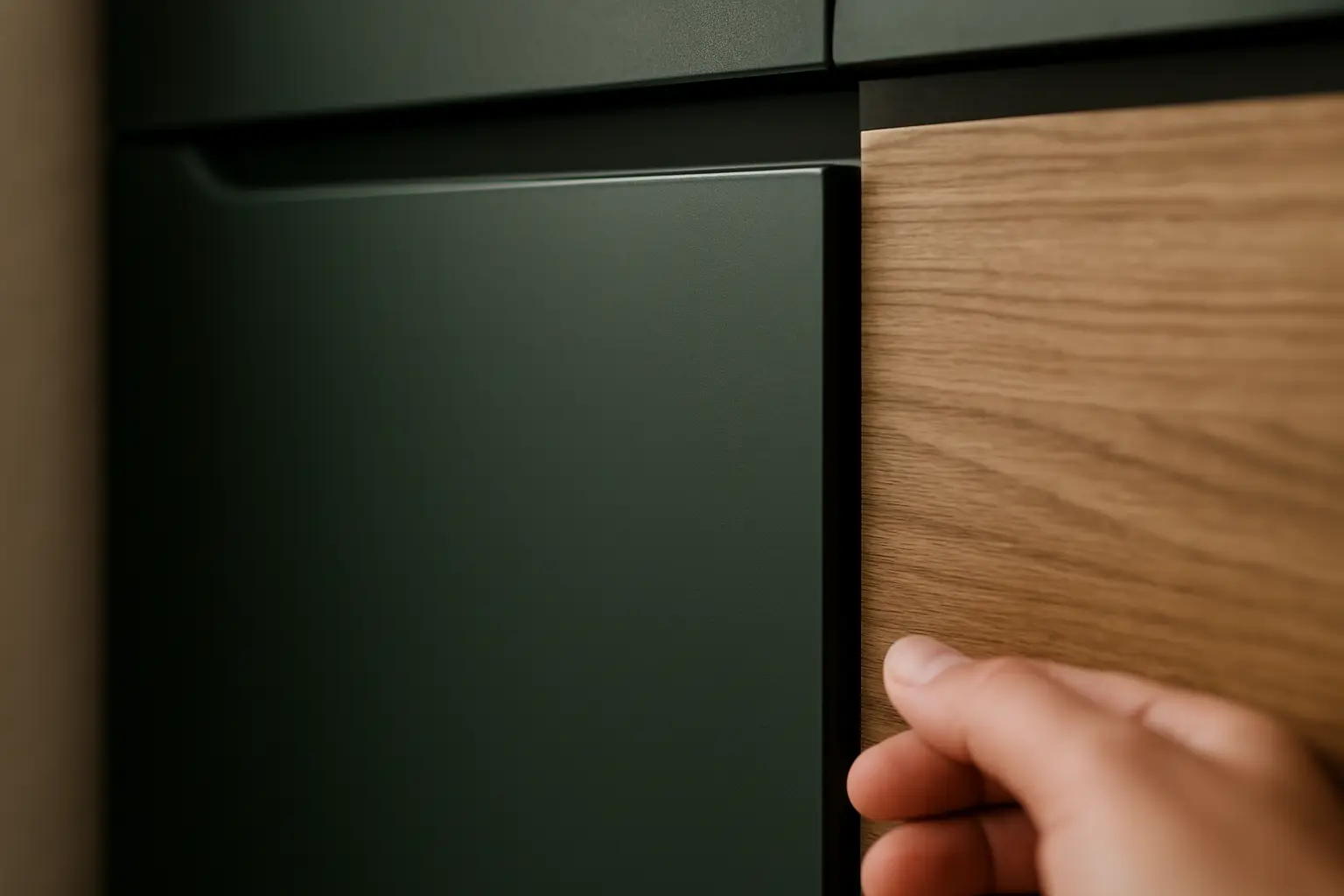
Deeper colors have become a steady request in San Jose and Peninsula remodels: navy, forest green, and charcoal on lower cabinets paired with a lighter upper run. For stained Shaker, white oak and walnut show grain beautifully in a flat panel and lean modern rather than rustic. We spray finishes in a controlled shop environment and cure them before delivery, which produces a harder, more even surface than any on-site brush or roller job. A factory-applied conversion varnish or catalyzed finish resists the grease, moisture, and daily wiping a kitchen throws at it far better than field-painted cabinets.
Choosing Your Path: RTA, Semi-Custom, or Custom
Shaker is available at every price tier, and the tier you pick should match your project, not just your budget. Ready-to-assemble (RTA) Shaker cabinets ship flat and cost the least, but you are locked into stock sizes in 3-inch increments, and filler strips end up covering the gaps. That can work for a rental unit or a straightforward layout.
Semi-custom lets you adjust sizes, finishes, and interior options within a set catalog, which handles most kitchens well. Full custom is where Shaker earns its keep in older Bay Area housing: Victorian and Eichler-era homes rarely have square walls or standard ceiling heights, and a custom Shaker run can be built to the actual dimensions of your space with taller uppers, integrated panels, and matched grain. We manufacture in San Jose with roughly a three-week lead time on most custom orders, which is considerably faster than the eight-to-twelve weeks common with imported semi-custom lines. Every order goes through our own quality check before it leaves the shop, and it carries a warranty we stand behind locally.
Hardware and Interior Function
The Shaker look is quiet, so the hardware you choose becomes the jewelry. Bar pulls and simple knobs in matte black, brushed nickel, or unlacquered brass are the common pairings, and the flat door face gives you freedom to place them cleanly. Beyond looks, the working parts are what you feel every day.
We fit soft-close concealed hinges and full-extension, soft-close drawer slides as standard. Full extension matters because it lets you reach the very back of a deep drawer without fishing around, which is the difference between a usable pot drawer and a wasted one. Interior upgrades pair naturally with Shaker fronts: pull-out trash bins, tray dividers, spice pull-outs, and roll-out shelves in base cabinets. None of these change the exterior style, so you keep the clean Shaker face while the inside works hard.
FAQ
Q1: Are Shaker cabinets going out of style?
A1: There is no sign of it. Shaker has been popular for over a century precisely because its plain frame-and-panel design does not tie itself to a decade. You can shift its feel from traditional to modern just by changing the frame width, color, and hardware, which is why it survives trend cycles that sink more decorative door styles.
Q2: What is the difference between Shaker and flat-panel (slab) doors?
A2: A slab door is one flat piece with no frame, giving a fully minimalist, modern look. A Shaker door has a recessed center panel surrounded by a four-piece frame, adding subtle depth and shadow lines. Shaker reads as a bridge between traditional and contemporary, while slab is strictly modern.
Q3: Should the center panel be MDF or solid wood?
A3: For painted cabinets, a paint-grade MDF center panel is actually the better choice because it stays flat and will not crack at the joints as solid wood can with seasonal humidity changes. For stained cabinets where you want visible grain, a wood-veneer plywood or solid wood panel is the right call. We match the panel material to the finish you choose.
Q4: How long does a custom Shaker kitchen take to get in the Bay Area?
A4: Because we manufacture in San Jose, most of our custom Shaker orders run about three weeks from finalized design to delivery. Imported semi-custom lines commonly run eight to twelve weeks. Local production also means we can correct any issue quickly rather than reordering from overseas.
Q5: What finishes hold up best in kitchens?
A5: A shop-sprayed catalyzed or conversion varnish finish outperforms field-applied paint because it cures to a harder, more uniform surface that resists grease, moisture, and repeated wiping. Painted and stained finishes both hold up well when applied this way. We cure finishes in the shop before delivery so they arrive fully hardened.
Q6: Do narrow-frame Shaker doors cost more than standard?
A6: Usually the price is similar, since it is the same construction with a slightly different frame width. Narrow Shaker (around 1.75 inches) gives a cleaner, more contemporary look, while standard (2 to 2.5 inches) reads more classic. The choice is about aesthetics and the scale of your doors rather than a big cost difference.