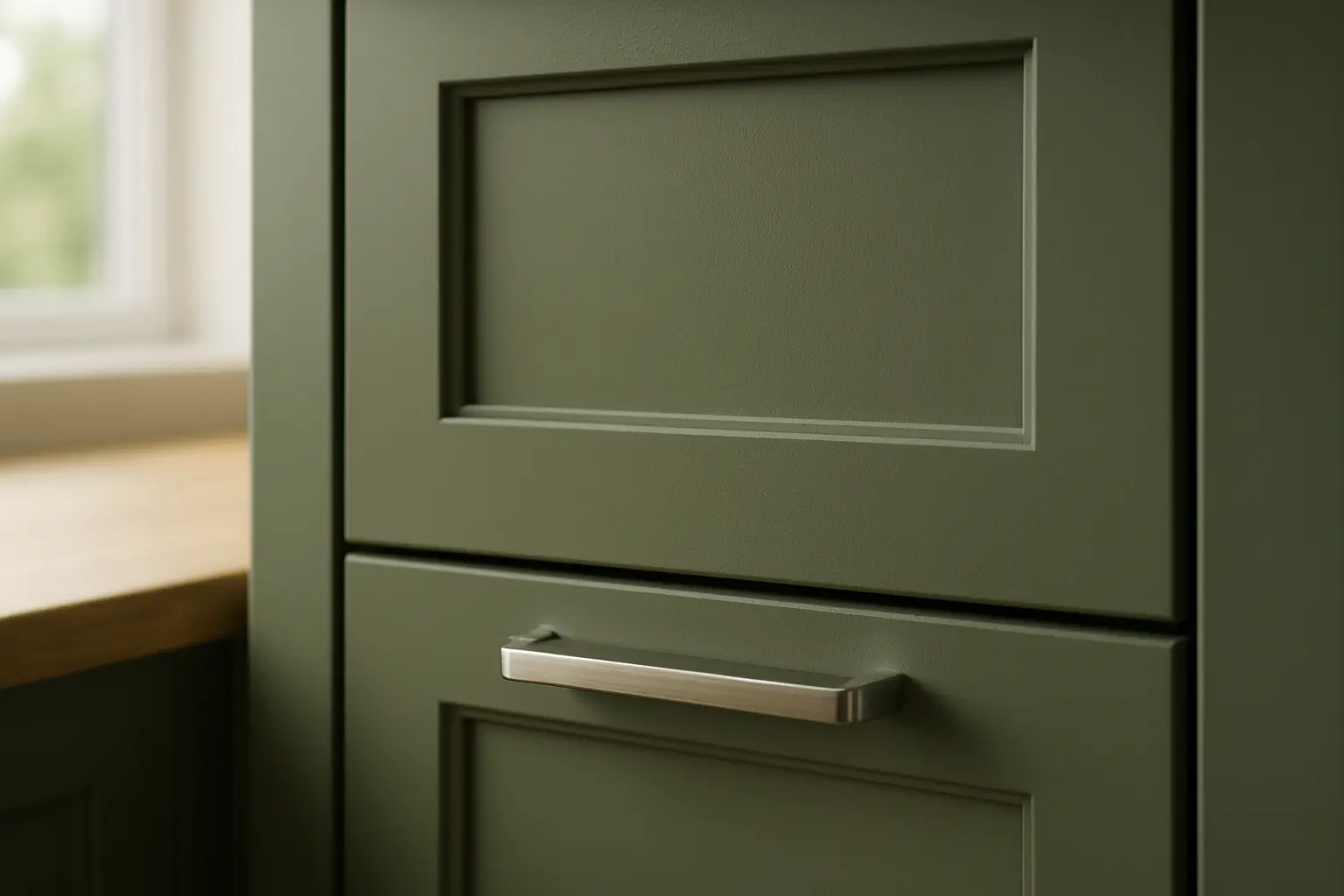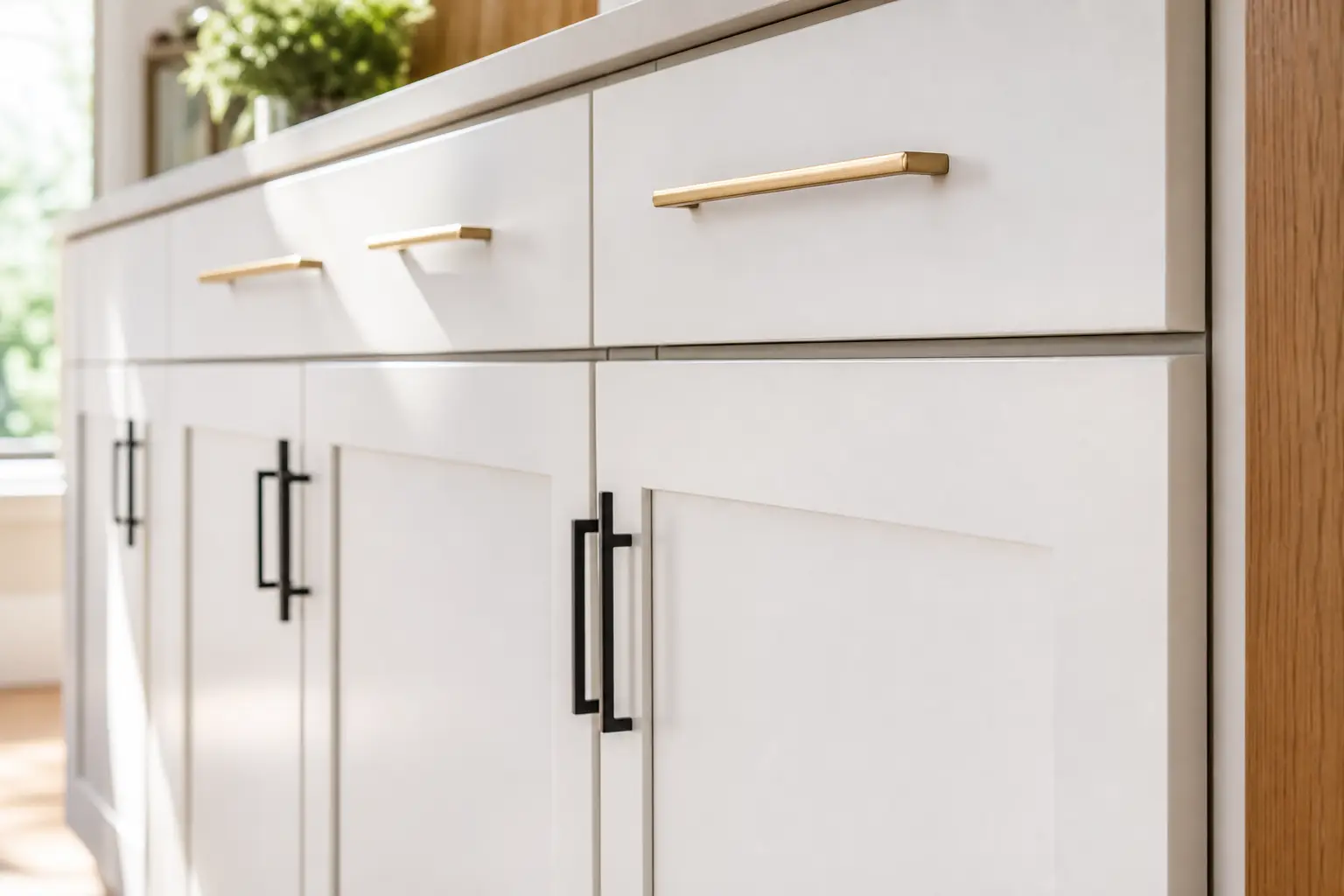
The difference between a kitchen that stays organized and one that fights you every day is rarely square footage. It is the storage engineering inside the cabinets. A well planned kitchen in a compact San Francisco flat can hold more, and hold it better, than a sprawling one full of dead corners and deep shelves you cannot reach. As we design custom cabinets for homes across San Jose and the Peninsula, a handful of storage features come up again and again because they simply work. Here are the ones worth building into any modern kitchen.
Deep Drawers Instead of Lower Shelves
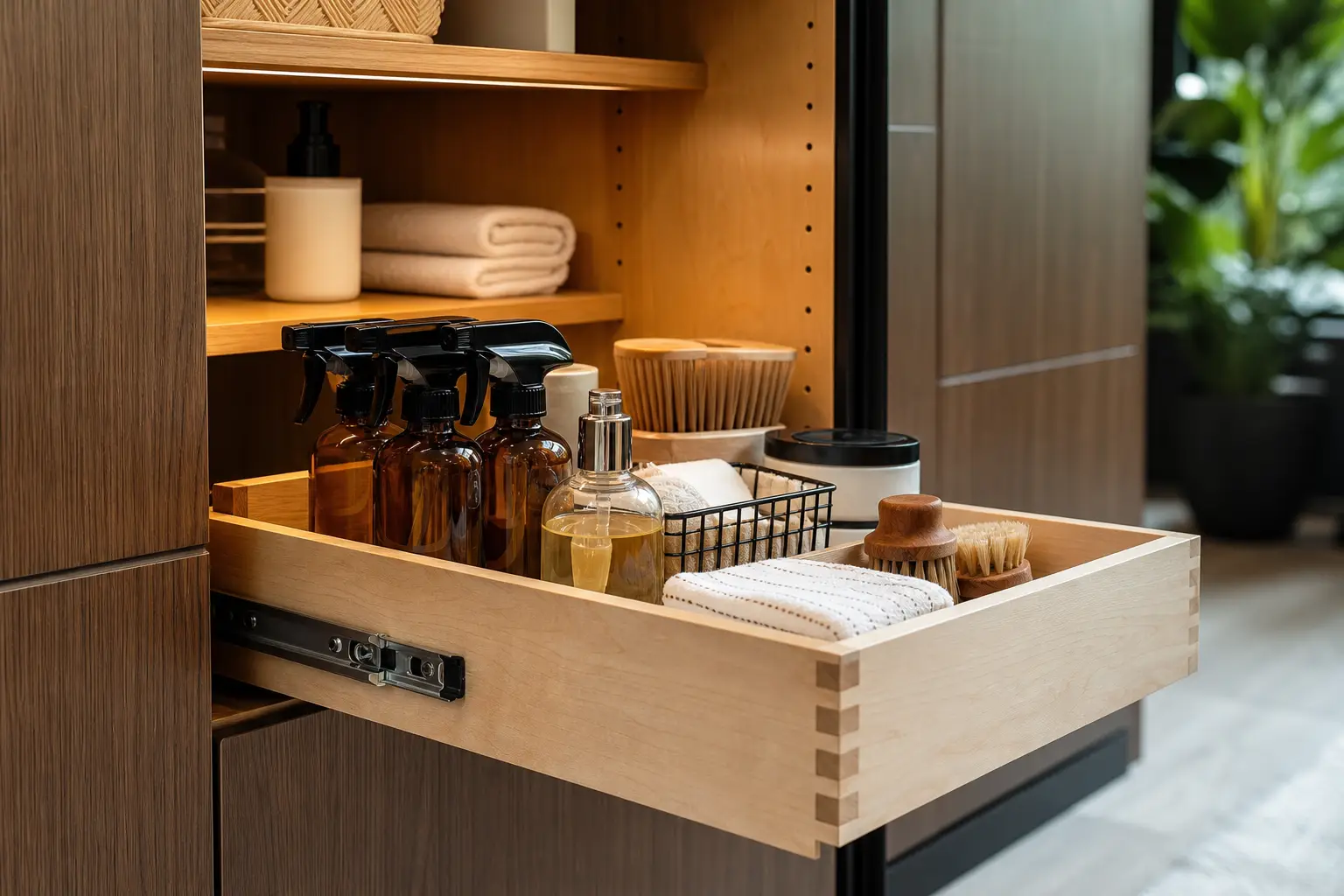
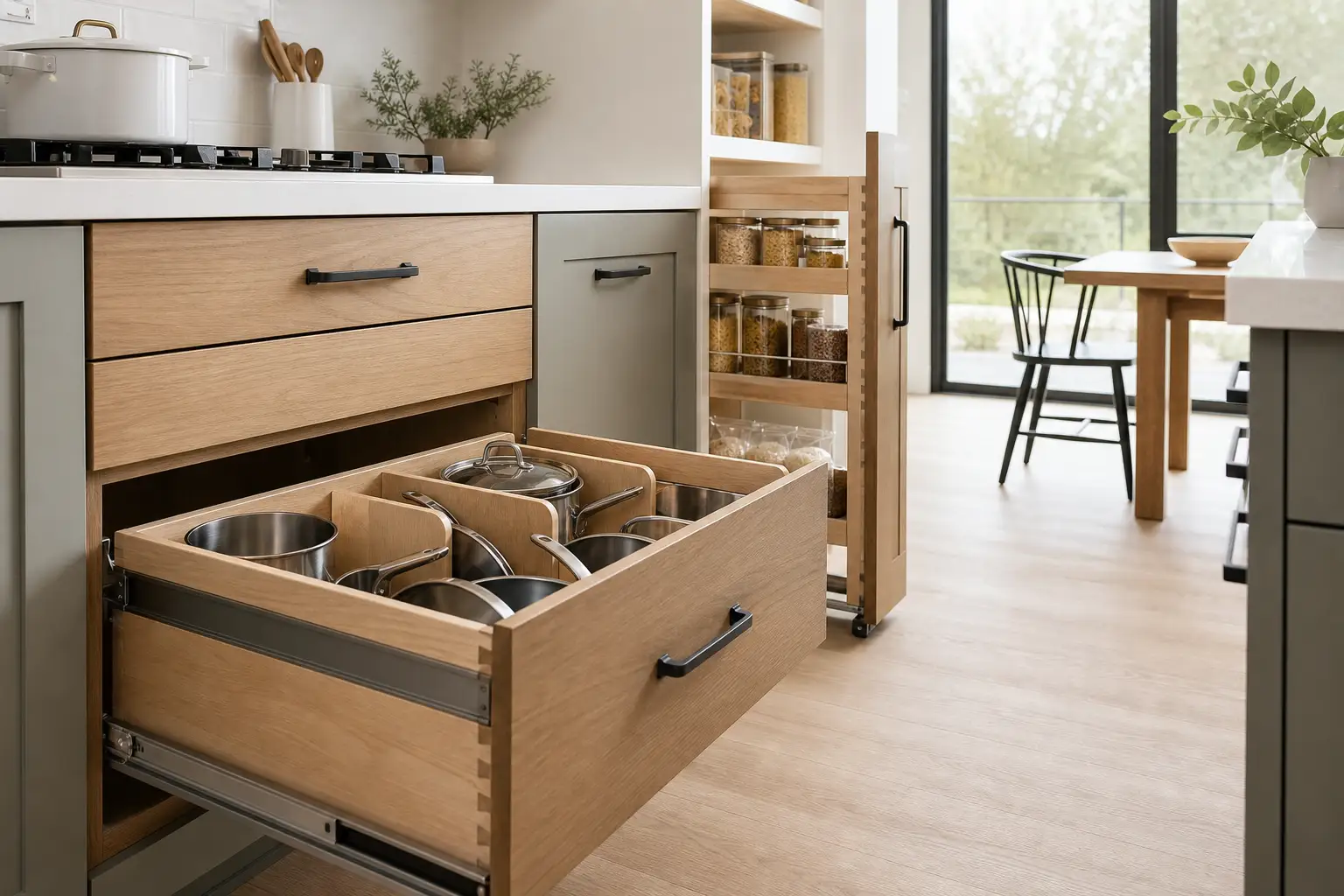
The single biggest upgrade in a modern kitchen is replacing lower cabinet shelves with deep drawers. A traditional base cabinet with a door and a shelf wastes its back third, because reaching a pot behind the sweep of the door means crouching and digging. A deep drawer on full-extension slides brings everything to you. Pull it open and the entire contents, from the front row to the back, sit in plain view at waist height.
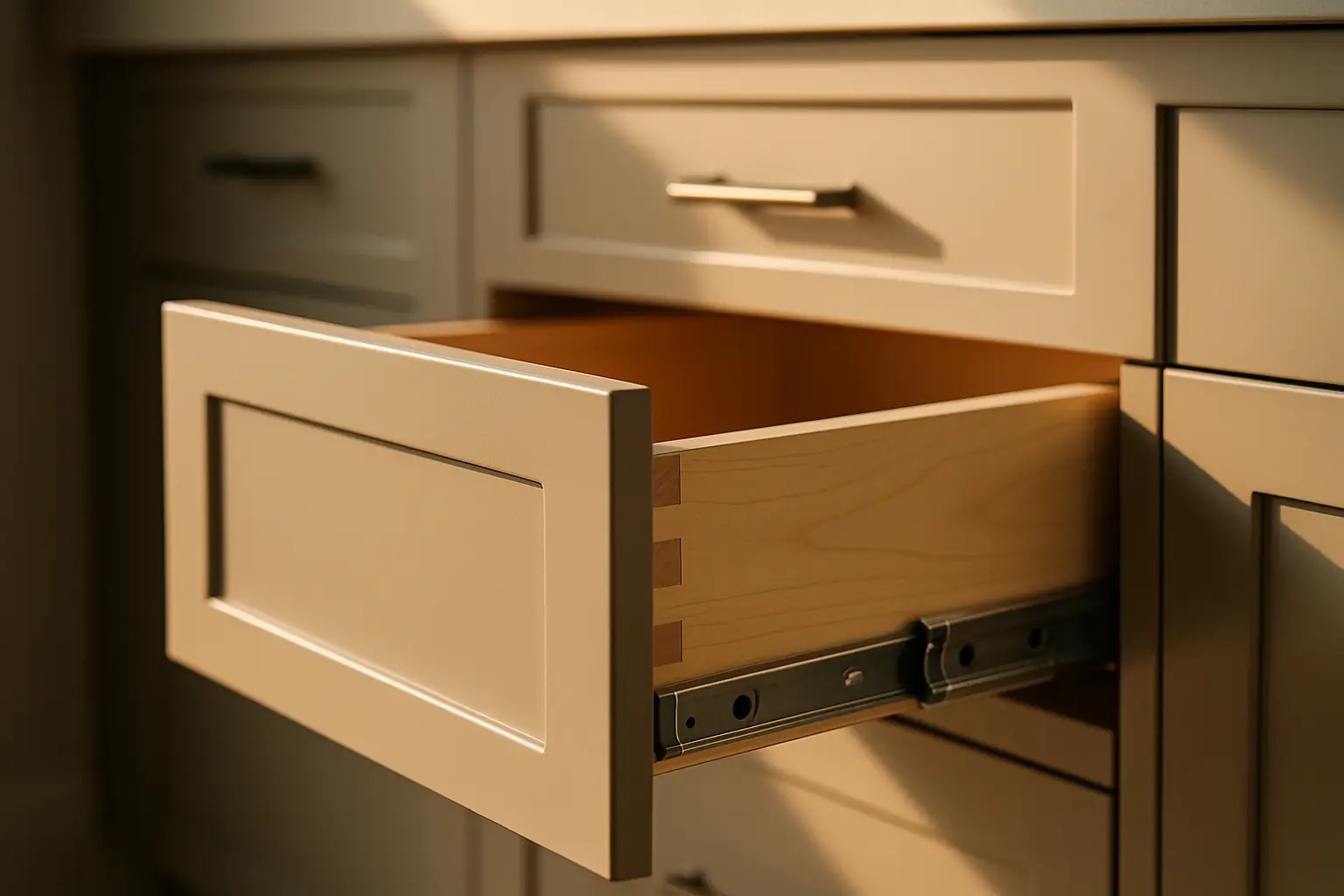
The practical gains are large. A pair of deep drawers under a cooktop holds pots, pans, and lids with dividers or pegs to keep them from sliding. A wide drawer stores dishes and bowls where you can grab a stack without reaching into a dark cabinet. Because the drawer box itself carries the load, the slide rating matters: we build drawer boxes from dovetailed maple and hang them on undermount slides rated for the weight, commonly 75 to 100 pounds, so a fully loaded drawer of stoneware glides without sag. For most base cabinets in a new kitchen, drawers beat doors, and it is not close.
Rescue Every Corner
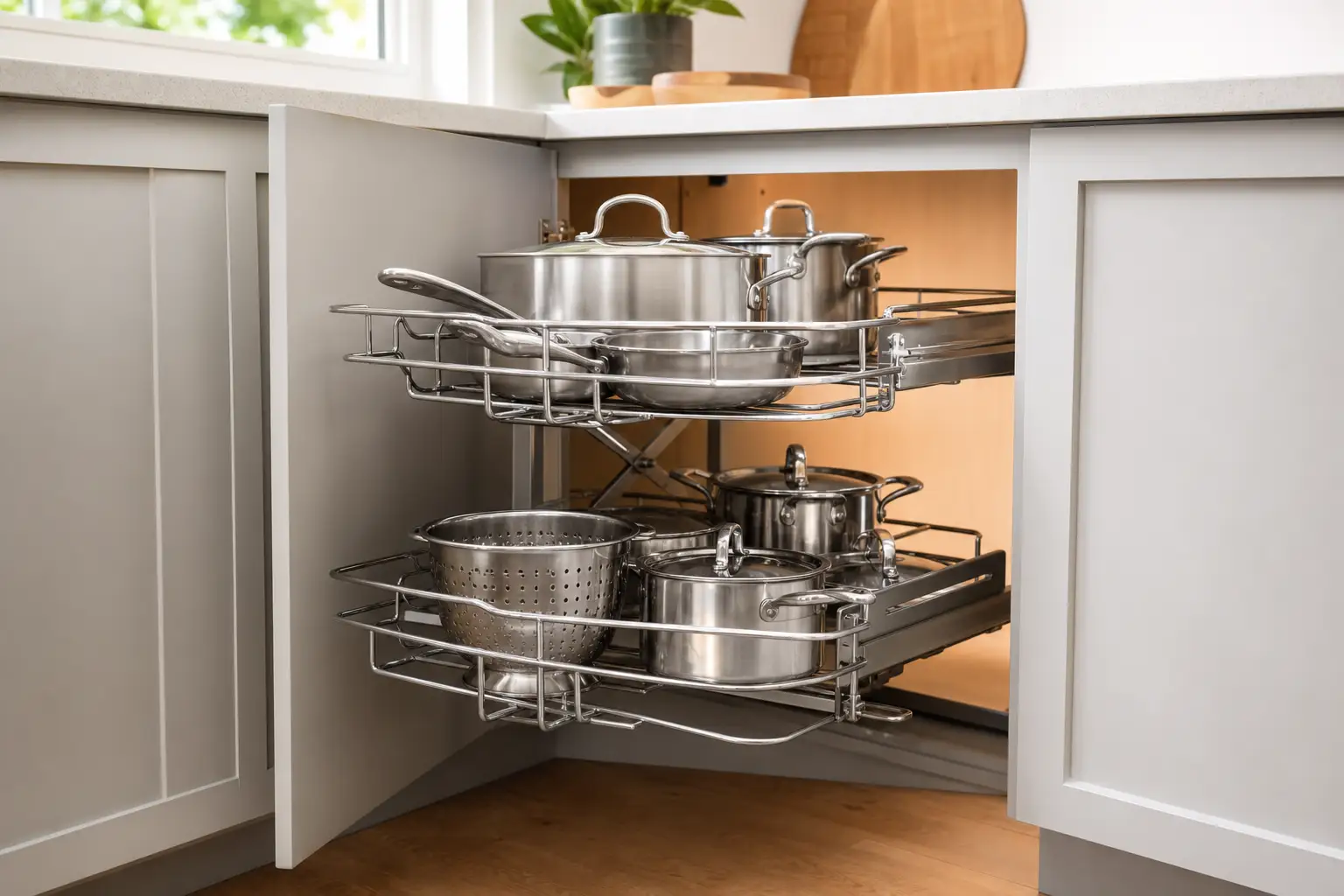
Corners are where storage goes to die. A standard blind corner cabinet has a large cavity that disappears behind the neighboring run, and without the right hardware most of it is unreachable. The fix is a blind-corner pull-out system: gliding or swing-out trays that bring the hidden contents forward into the open when you open the door. Nothing gets marooned in the back, and you recover cubic feet that would otherwise hold the appliances you forgot you owned.
For the corner where two runs meet at a right angle, a lazy Susan or a diagonal corner cabinet with rotating shelves keeps everything spinning into reach. These work especially well for small appliances, mixing bowls, and dry goods. In frameless construction the pull-outs use the full interior width because there is no face frame narrowing the opening, so you get more tray real estate than a framed cabinet of the same footprint. In the older Bay Area homes we work in, where kitchens are often chopped into awkward corners, these systems are the difference between usable and wasted space.
Vertical Space and the Tall Pantry
Most kitchens stop thinking at the standard upper cabinet height and leave a foot or more of dead air above. Running uppers to the ceiling, or adding a stacked row of glass-front cabinets above the main ones, reclaims that volume for the things you reach for a few times a year: seasonal serving pieces, the stand mixer bowl, the big roasting pan. Yes, the top shelf needs a step stool, but seldom-used items belong up there, freeing the prime real estate lower down.
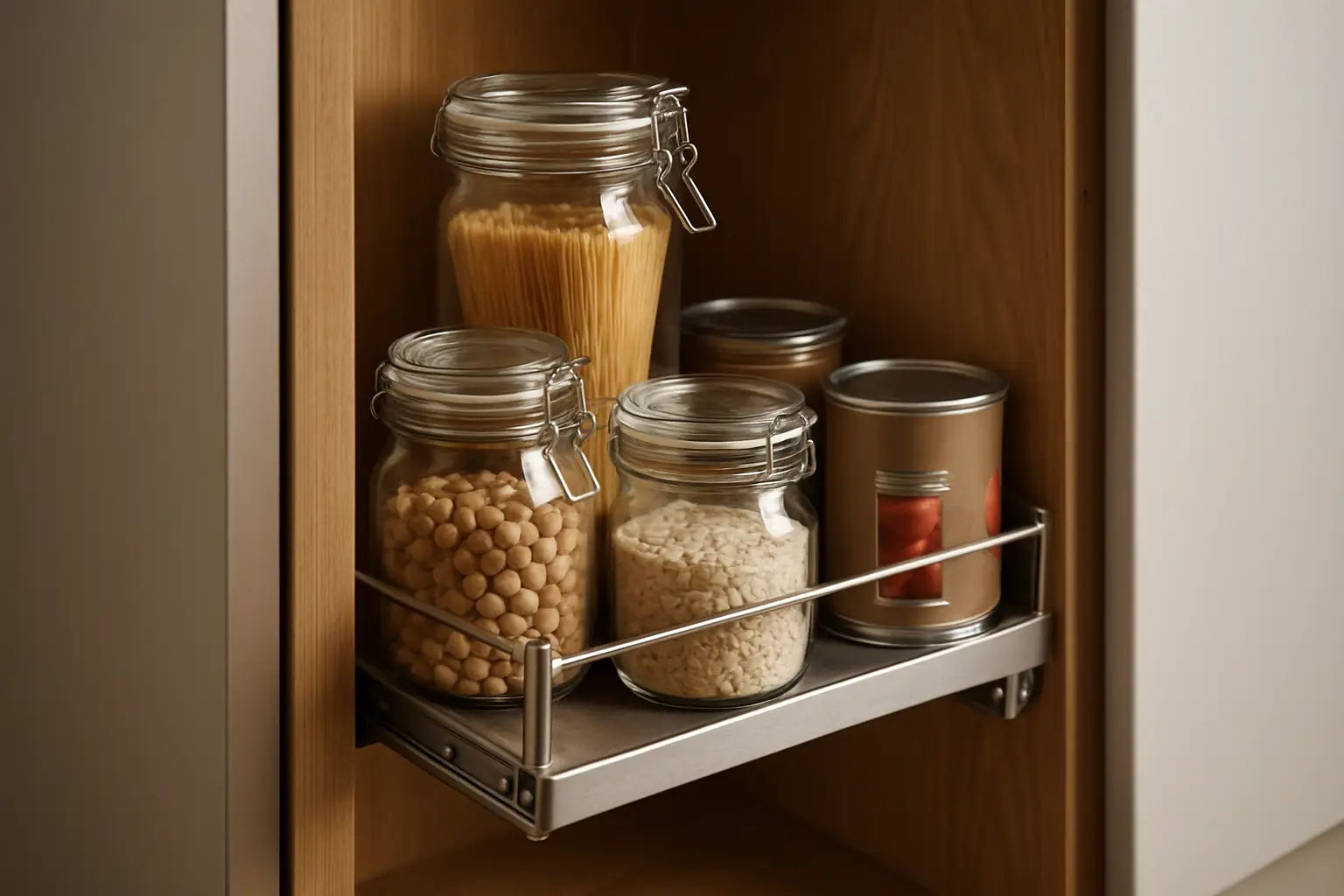
The tall pull-out pantry is the other vertical hero, and it is the answer for the many Bay Area homes that lack a walk-in pantry. A narrow floor-to-ceiling cabinet fitted with pull-out shelves or a full-height gliding rack turns a slim 12 to 18 inch gap into serious dry-goods storage. Because both sides of each shelf are visible when it slides out, nothing hides behind anything. We size these to the exact opening, which is where custom construction pays off in tight kitchens: a stock pantry cabinet forces the room to fit the box, while a custom one fits the box to the room.
The Details That Keep It Organized
Big moves like drawers and pantries create the capacity; the interior fittings keep it from turning back into chaos. Drawer dividers and pegboard systems stop utensils, dishes, and cookware from becoming a jumble. A dedicated cutlery insert, a spice drawer with tiered inserts so labels face up, and a knife block built into a drawer all put the small stuff in its place. Under the sink, a U-shaped pull-out works around the plumbing to make that notoriously awkward cabinet usable, and a tip-out tray at the sink front hides sponges and scrubbers.
Two features punch above their size. Toe-kick drawers use the dead space under base cabinets for flat items like baking sheets and platters, adding storage most people never consider. A pull-out trash and recycling cabinet, ideally with separate bins, keeps waste sorted and off the floor, which California's composting rules make more relevant than ever. And do not overlook the hardware itself: soft-close undermount slides and hinges stop the slamming that loosens joints over time, and they make a heavily used kitchen feel calm rather than clattery.
Building It All In From the Start
The reason these features work so well together is that they are engineered into the cabinet, not bolted on afterward. Aftermarket organizers rarely fit a stock cabinet cleanly, and they add cost on top of cabinets that already wasted the space. When cabinets are built custom, the drawers, pull-outs, corner systems, and pantry racks are sized to the actual openings, share the same hardware quality, and fall under a single warranty.
American Built Cabinets manufactures all of this in our San Jose shop, which means the drawer boxes, the pull-outs, and the interior fittings are made and fitted by the same team, to your kitchen's real dimensions, on about a three week lead time. That local control matters most in the irregular older homes across San Francisco and the Peninsula, where no stock cabinet lands right and the storage engineering has to be tailored to the room. Get the storage plan right and even a modest kitchen holds more, and works better, than a much larger one that was never really planned.
FAQ
Q1: Are deep drawers better than lower cabinets with shelves?
A1: For base cabinets, yes, in most cases. Deep drawers on full-extension slides bring the contents out to you, so you can reach pots, pans, and dishes stored at the back without kneeling and digging. Fixed lower shelves waste the back third of the cabinet because it is hard to see and reach. Many modern kitchens use drawers for nearly all base storage.
Q2: What is the best solution for a blind corner cabinet?
A2: A blind-corner pull-out system is the standard fix. These are hinged or gliding trays that swing the hidden contents out into the open when you open the door, so nothing gets lost in the dead space behind the corner. In frameless cabinets they use the full interior width. It is one of the highest-value upgrades in any kitchen.
Q3: How do I add storage in a small Bay Area kitchen?
A3: Go vertical and use every interior inch. Full-height uppers to the ceiling, a tall pull-out pantry in a narrow gap, toe-kick drawers under the base cabinets, and drawer-in-drawer inserts all reclaim space that stock kitchens waste. Custom cabinets let you size these to the exact room, which matters in older San Francisco and Peninsula homes.
Q4: Do soft-close drawers and hinges really matter?
A4: They matter more than most people expect. Soft-close undermount slides and hinges stop slamming, which protects the cabinet joints and the doors over years of daily use. Full-extension slides let a drawer pull all the way out so the back is usable. On heavy drawers, the slide rating, often 75 to 100 pounds, determines how much you can load safely.
Q5: What storage feature gives the best return in a remodel?
A5: Converting base cabinets to deep drawers and adding blind-corner pull-outs give the biggest daily payoff for the cost. They turn hard-to-reach cavities into usable, visible storage. A tall pull-out pantry is a close third in kitchens that lack a walk-in pantry, which describes most Bay Area homes.
Q6: Can these storage features be added to custom cabinets locally?
A6: Yes. Because we manufacture in San Jose, we build these systems into the cabinets from the start, sized to your kitchen, on about a three week lead time. Building the inserts, pull-outs, and drawer boxes in house means they fit precisely and are covered under one warranty rather than sourced from mismatched aftermarket parts.