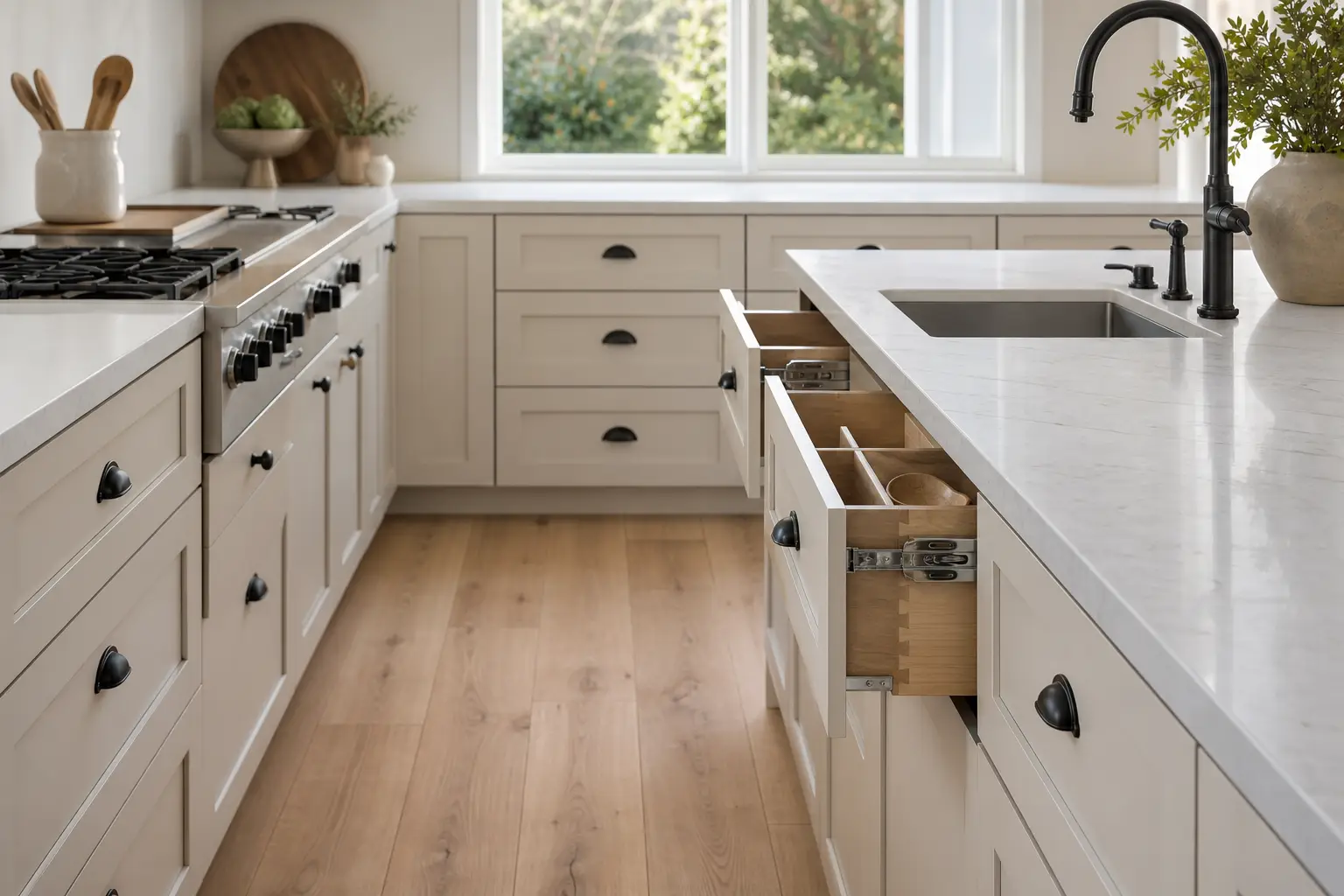
A garage in San Jose, San Francisco, or San Mateo does a lot of jobs at once: it parks the car, stores holiday bins, holds tools, and often doubles as a workshop or laundry overflow. Open shelving and big-box plastic units rarely keep up. Well-built garage cabinets change how the whole space works, giving you sealed storage that stands up to temperature swings, damp winters, and the occasional flood from a water heater. Here is how we think about garage cabinetry at American Built Cabinets, and what actually holds up over years of real use.
What Makes Garage Cabinets Different From Kitchen Cabinets
Garages are harsher environments than kitchens, and that changes the build. Temperatures can swing from the low 40s on a foggy San Mateo morning to well over 90 degrees in a closed South Bay garage in August. Humidity spikes in winter. Concrete floors wick moisture. A cabinet built for a climate-controlled kitchen can warp, delaminate, or grow mildew if you drop it into that setting without changes.
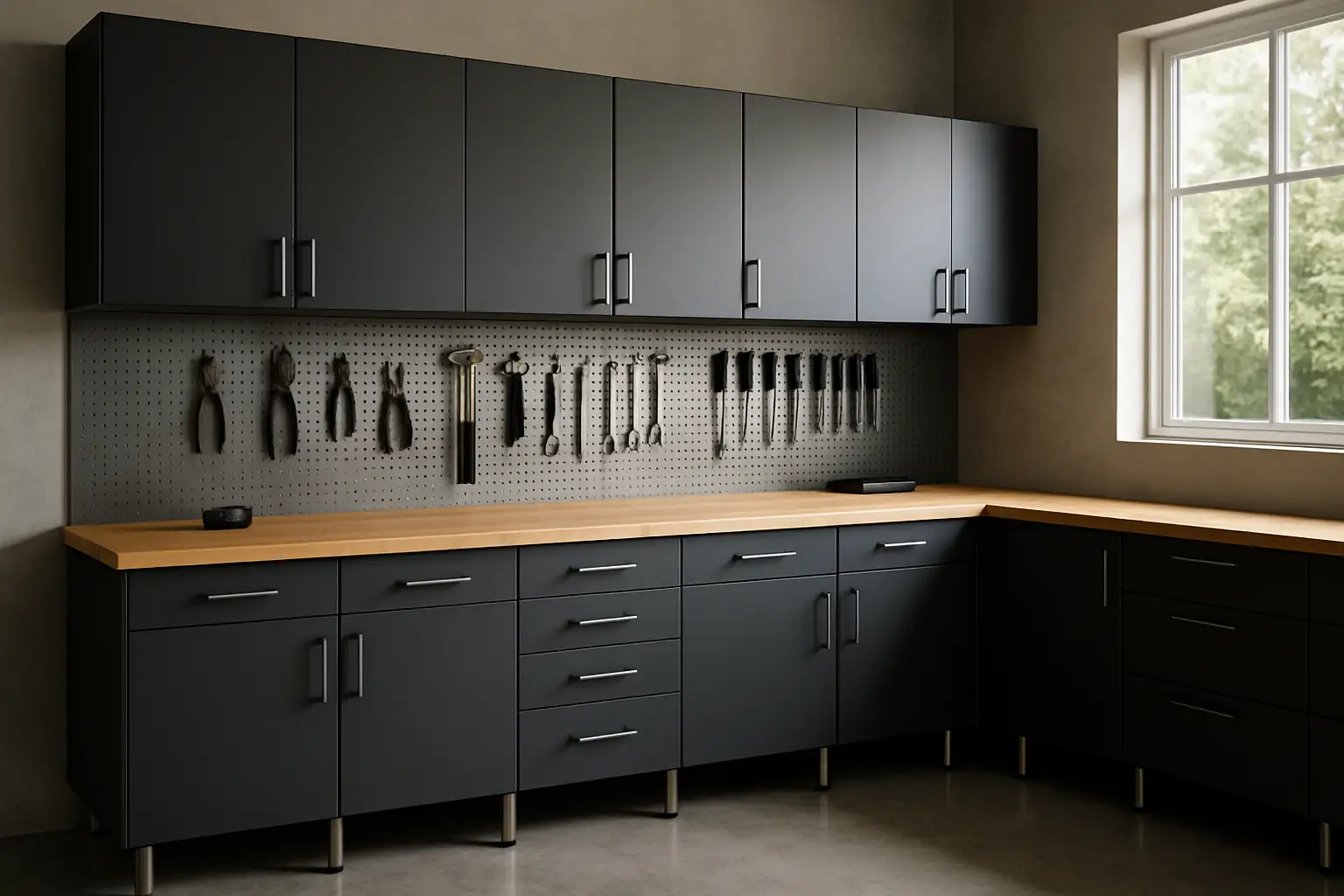
The biggest adjustment is getting the boxes off the floor. We build garage cabinets with either a recessed toe kick and moisture barrier or, more often, wall-hung uppers plus base cabinets on adjustable leveling legs that lift the box 4 to 6 inches above the slab. That gap keeps the bottom panel dry if the floor gets wet and makes it far easier to hose or squeegee the concrete. Load ratings matter too. Garage shelves routinely hold 50-pound bins, batteries, paint, and power tools, so we spec thicker shelves and more support than a typical pantry.
Materials and Finishes That Survive a Garage
For most Bay Area garages we recommend 3/4-inch plywood boxes over particleboard or standard MDF. Plywood holds screws and hardware better under heavy loads and shrugs off humidity that would swell a particleboard edge. If budget is tight, we use moisture-resistant MDF for door and drawer fronts where the flat, stable surface takes paint cleanly, but we keep it off the floor and away from direct water exposure.
Finish is where garage cabinets earn their keep. A conversion varnish or catalyzed finish gives a hard, sealed surface that resists solvents, oil, and the scuffs that come with tool storage. Thermofoil and melamine interiors wipe clean and don't absorb odors. For homeowners who want the workshop to look sharp, we also do powder-coat-style painted fronts and simple slab doors in gray, white, or graphite. Edge banding gets sealed on all four sides so no raw core is exposed to moisture. Solid wood shows up mostly on workbench tops, where a butcher-block maple surface takes abuse and can be sanded and refinished for decades.
Hardware and Configurations That Actually Get Used
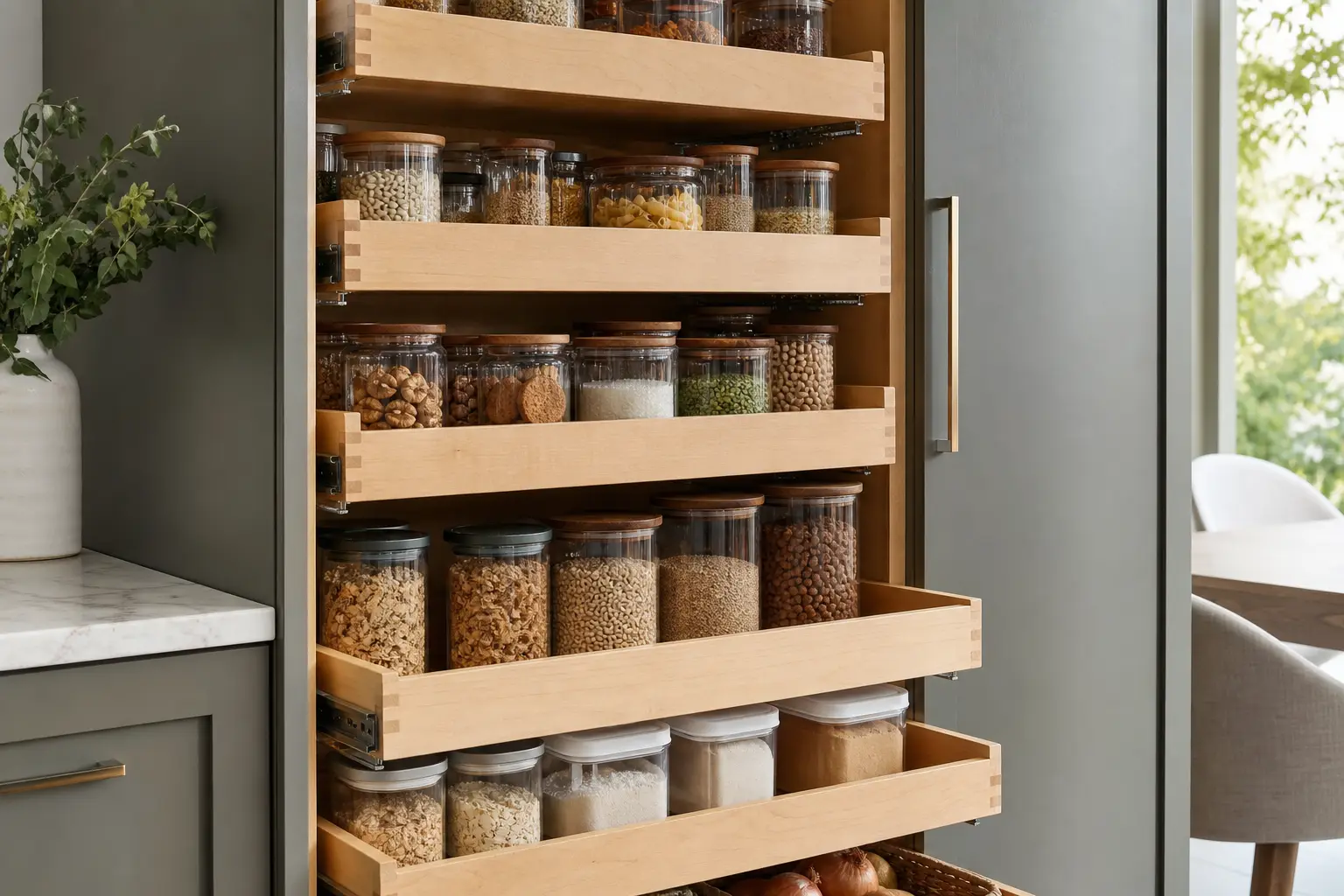
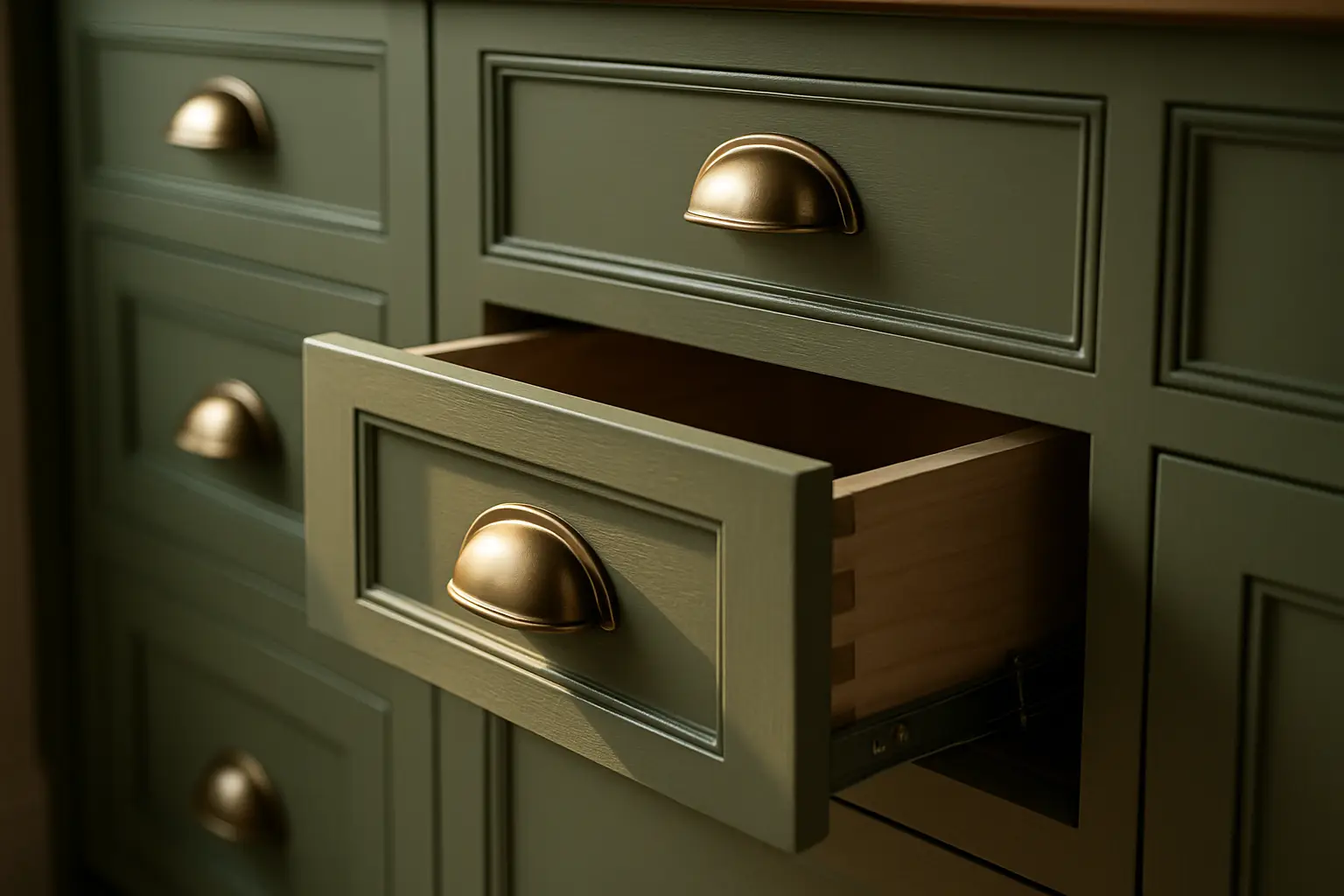
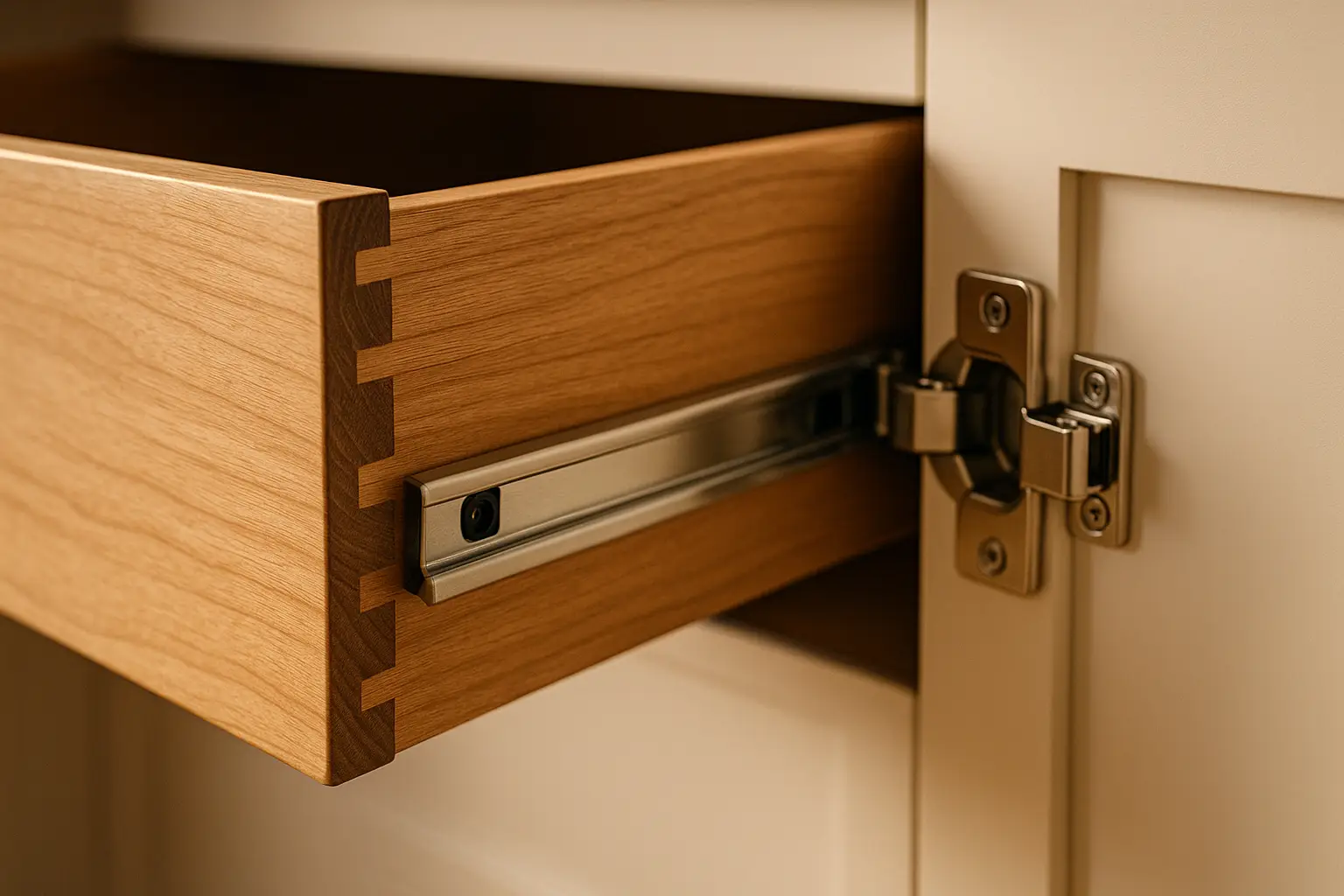
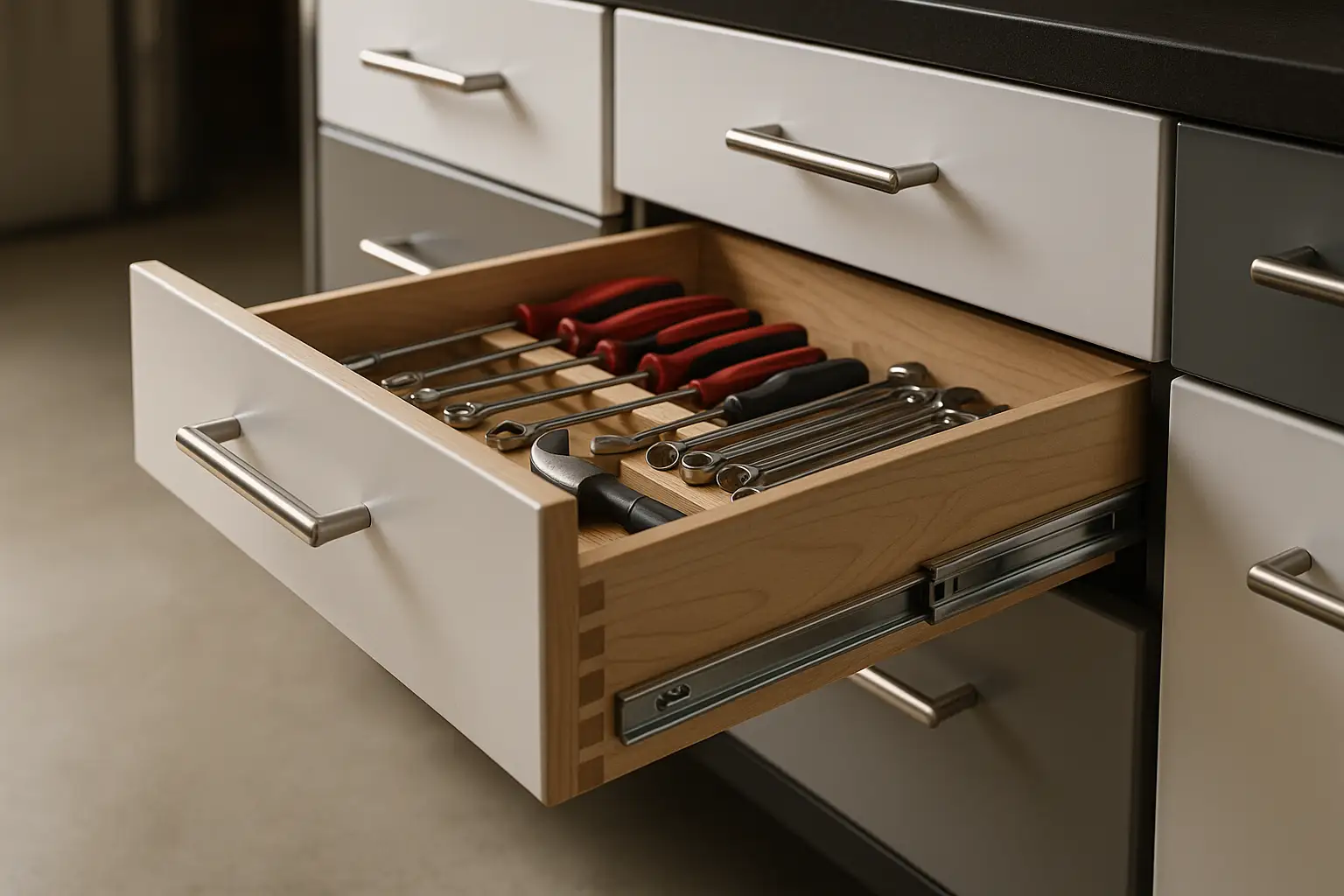
Good hardware is the difference between cabinets you enjoy and cabinets that annoy you. We use full-extension slides on garage drawers so you can reach the tool at the very back without digging, and we rate the heavy drawers at 100 pounds or more for sockets, fasteners, and cordless tool batteries. Soft-close hinges keep doors from slamming when you have your hands full, and dovetail drawer boxes hold up to the weight of hardware bins better than stapled boxes.
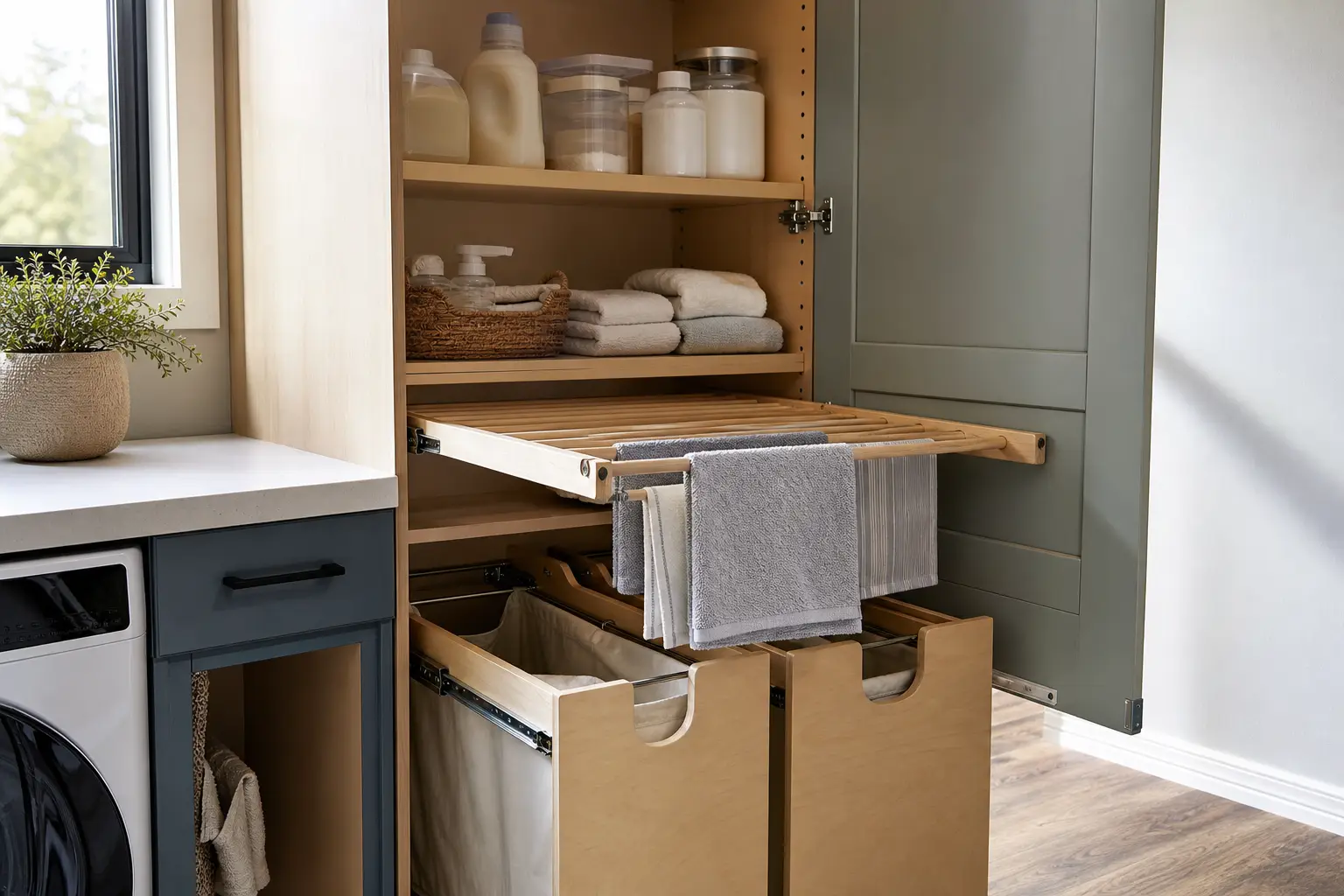
Layout should follow how you use the space. A common setup pairs tall cabinets for brooms, ladders, and a shop vac with a run of base cabinets under a work surface and wall cabinets above for lighter items. Pegboard or slatwall between uppers and the bench keeps frequently grabbed tools in reach. For households doing garage laundry, we build in a sink base and a tall utility cabinet. Overhead and wall-hung uppers free up floor space, which matters in narrow San Francisco garages where you still need to fit a car.
RTA, Semi-Custom, or Custom for Your Garage
Ready-to-assemble cabinets are the cheapest path and fine for a light-duty garage with standard dimensions. The tradeoff is limited sizes, thinner materials, and hardware you often upgrade yourself. Semi-custom lets you pick from set widths and door styles with better boxes and finishes, a good middle ground when your walls are close to standard but you want plywood construction and real slides.
Custom makes sense when the garage has obstacles: a sloped ceiling, a panel box, a water heater alcove, or a wall that is anything but square, which describes a lot of older Bay Area homes. Because we manufacture locally in San Jose, we can build to your exact wall dimensions and typically deliver in about three weeks, rather than the six to ten weeks common with cabinets shipped from out of state. Local manufacturing also means we handle warranty issues directly instead of routing a claim through a distributor.
FAQ
Q1: Will garage cabinets hold up to Bay Area humidity and temperature swings?
A1: Yes, if they are built for it. Plywood boxes, sealed edge banding, and a catalyzed finish resist the moisture and heat that damage standard cabinets. Lifting the base cabinets a few inches off the concrete slab keeps the bottom panel dry during winter dampness or a water leak.
Q2: How much weight can garage cabinets and drawers hold?
A2: Our garage base cabinets carry heavy loads on the shelves, and we spec drawer slides rated to 100 pounds or more for tool storage. Wall-hung cabinets are anchored into studs, so their capacity depends on the framing and the number of fasteners, which we size to the load you plan to store.
Q3: Should I use floor cabinets or wall-hung cabinets in the garage?
A3: Most garages benefit from both. Wall-hung uppers keep the floor clear so you can still park and sweep underneath, while base cabinets on leveling legs give you a work surface and heavy-duty drawers. In narrow San Francisco and San Mateo garages, prioritizing wall-mounted storage preserves room for the car.
Q4: What is the lead time for custom garage cabinets in the Bay Area?
A4: Because we manufacture in San Jose, custom garage cabinets typically take about three weeks from approved design to delivery. Cabinets shipped from out-of-state factories usually run six to ten weeks, and any warranty issue has to go through a distributor rather than the maker.
Q5: Are plywood cabinets worth the extra cost over particleboard?
A5: For a garage, usually yes. Plywood holds screws and hinges better under heavy loads and resists swelling if it gets damp, which particleboard does not. If budget is a concern, we can use moisture-resistant MDF for painted fronts while keeping plywood for the structural boxes.
Q6: Can you build around a water heater, electrical panel, or sloped ceiling?
A6: Yes. That is where custom work pays off, especially in older Bay Area homes with out-of-square walls and utility obstacles. We build cabinets to your exact measurements and leave required clearances around water heaters and electrical panels for code and access.