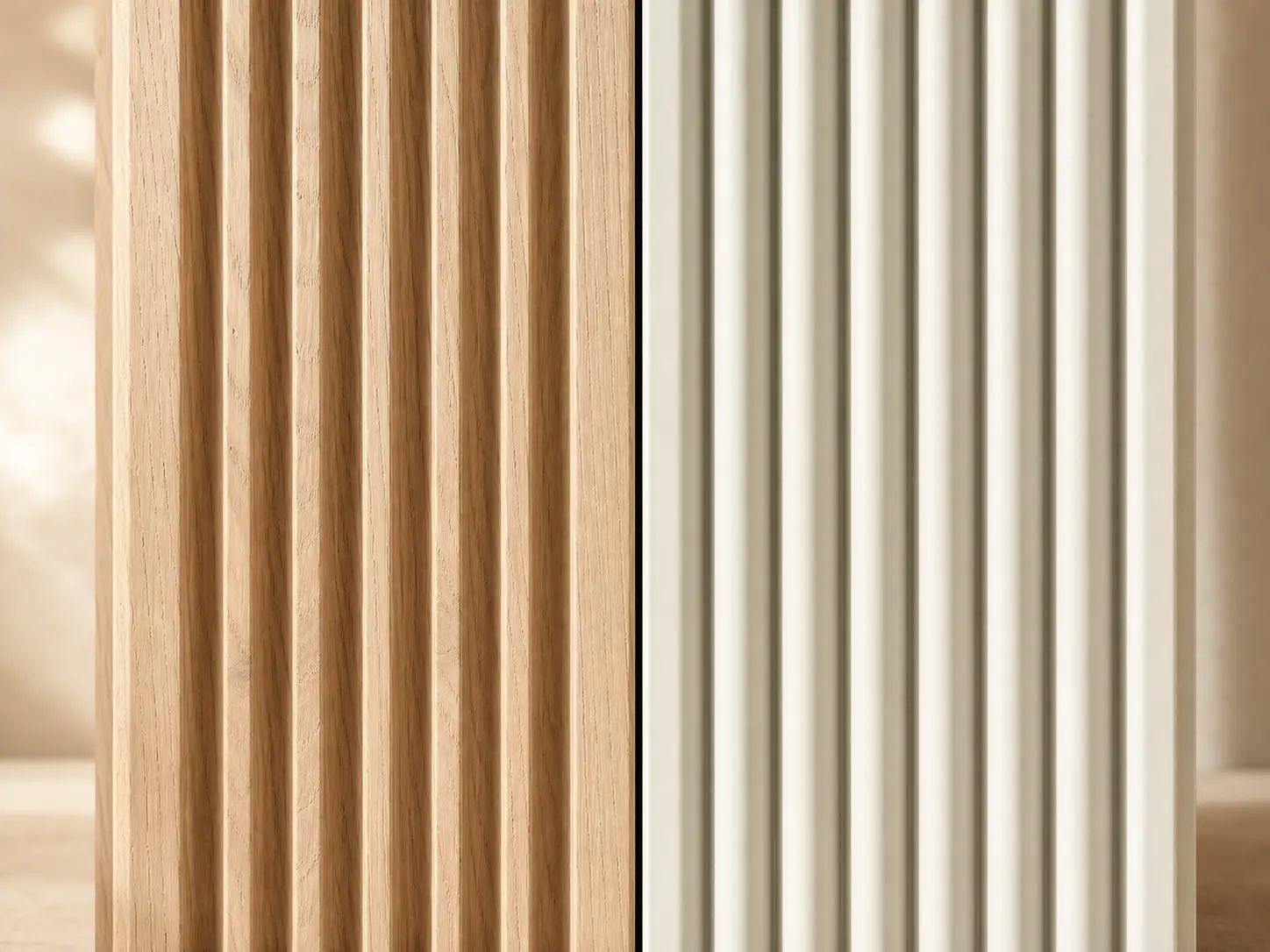
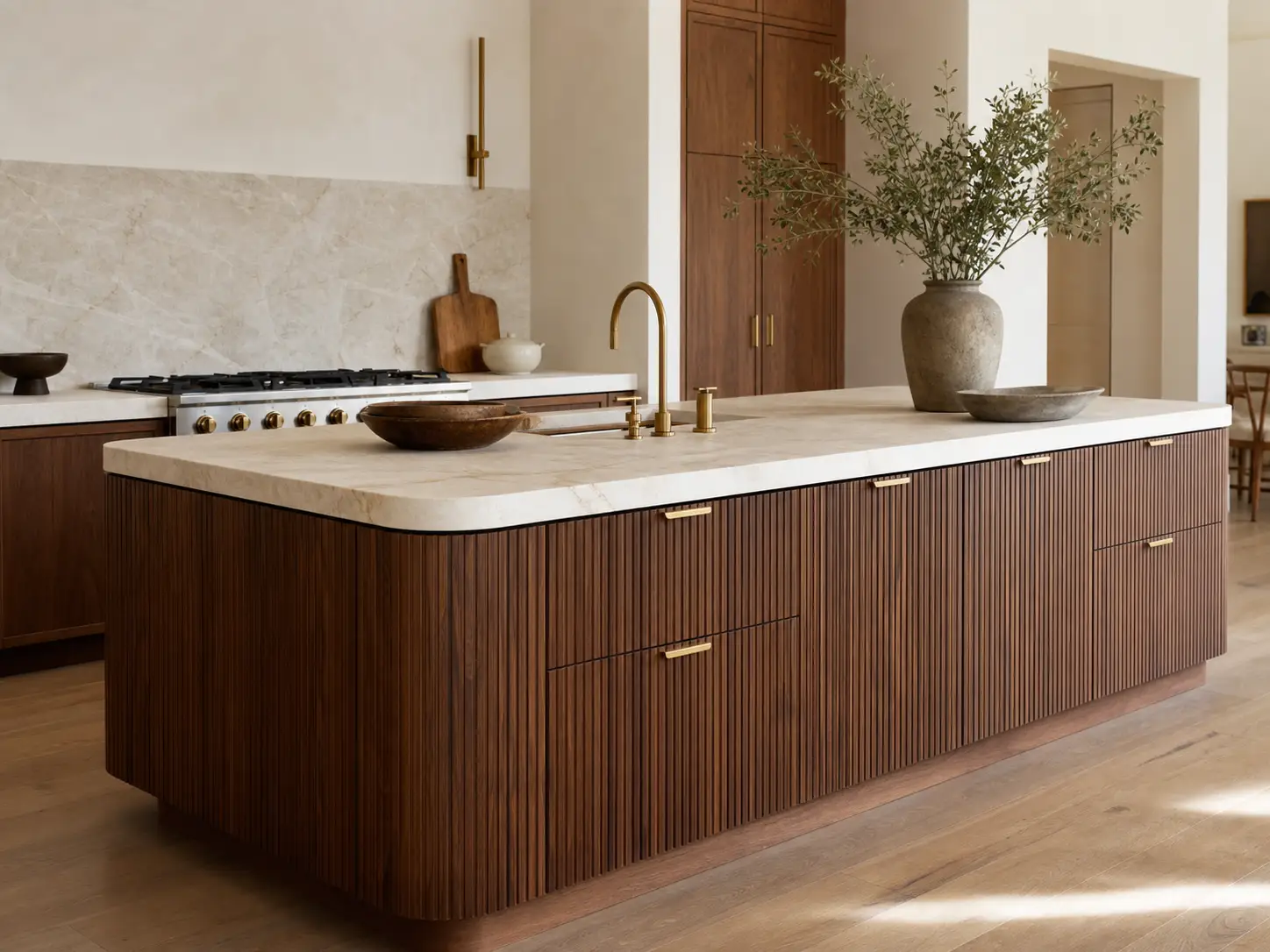
Walk through any 2026 kitchen design and you will see the same detail again and again: vertical ribs running down an island panel, a range hood, or a run of tall cabinets. Fluted and reeded fronts are back, and not as a small accent. Bay Area designers are speccing them at a rate the trade has not seen since the mid-1990s. The look is warm, architectural, and quietly expensive, which is exactly why it rewards custom work and punishes shortcuts.
Fluted vs Reeded: They Are Not the Same Thing
People use the two words interchangeably, but they describe opposite profiles, and getting it wrong on a spec sheet leads to a kitchen that does not match the reference photo.
Fluted fronts have concave grooves cut into the surface, wider channels that curve inward, usually 3/4 inch to 1 1/4 inch apart. The effect is soft and shadowed, closer to the columns on a classical building. Reeded fronts are the reverse: convex ribs that stand proud of the surface, narrower and more closely spaced, often 1/2 inch or less. The effect is tighter and more rhythmic, closer to a corduroy texture or the reeded glass you see on cabinet doors.
Both add vertical line and shadow, which is why they photograph so well. The practical differences show up in cleaning, cost, and how the profile reads across a room, and we will get to all three.
Why the Detail Came Back in 2026
The last few years of kitchen design have been a slow move away from the flat, all-white, handleless look. Homeowners want warmth and character back, and cabinet fronts are where that shows first.
Two forces are driving fluted and reeded specifically. The first is the return of warm woods. Walnut, white oak, and darker stains pair naturally with a ribbed profile because the grooves catch light and shadow along the grain, which a flat panel cannot do. The second is the furniture influence. Designers are treating cabinetry like fine furniture again, with visible detail, refined joinery, and profiles borrowed from case goods and paneling. Fluted and reeded fronts are the easiest way to bring that furniture feel into a kitchen.
It is not only a residential trend. We are seeing it on spec sheets for higher-end builder units and showroom projects across the Peninsula, usually on the island and a feature wall rather than the whole kitchen.
Where Fluted and Reeded Belong, and Where They Do Not
The detail works because it is used with restraint. Wrap an entire kitchen in reeded fronts and the room starts to look busy, and the texture stops reading as special.
The strongest placements are the ones seen from across the room: the island, especially the seating side and the ends; a range hood surround; a tall pantry or a run of full-height cabinets treated as a feature wall; and the base of a bar or coffee station. These are the surfaces people face and photograph.
The placements to avoid are the working surfaces you touch and clean constantly. Reeded fronts on the sink base or the trash pull collect grease and water in the ribs, and you will be cleaning them far more often than a flat door. A common and smart approach in Bay Area kitchens is to flute the island and hood, keep the perimeter cabinets flat, and let the texture be the accent rather than the rule.
Why This Detail Rewards Custom Work
Here is the part that matters when you are choosing who builds your cabinets. Fluted and reeded fronts are one of the clearest places where custom manufacturing separates from stock and semi-custom lines.
A real fluted front is machined from solid wood or a stable engineered core, with the grooves cut cleanly and consistently, then finished so the paint or stain sits evenly in every channel. On solid wood, the grain has to run with the flutes or the profile fights the material. On a painted front, an MDF core routes cleanly and holds a crisp edge, which is often the better choice for a smooth painted finish.
Stock and many semi-custom lines either cannot offer the profile at all or apply a thin fluted overlay that telegraphs its seams over time. The groove spacing is fixed, so it will not line up with your specific island dimensions, and the ends often get an awkward partial rib. In our San Jose shop we cut the profile to the panel, match the grain, and finish the grooves by hand where needed, so the flutes run edge to edge and the reveal stays even. That control is the whole point of the detail, and it is why a fluted island is a poor place to save money on cabinetry.
Cost follows the labor. As a rough guide, a fluted or reeded front runs meaningfully more than a comparable flat or shaker front in the same species and finish, because of the machining, the extra finishing time in the grooves, and the material waste. Since you usually apply it only to an island and a feature or two, the added cost lands on a small share of the kitchen rather than the whole run. Spent there, it buys the one detail people notice the moment they walk in.
FAQ
Q1: What is the difference between fluted and reeded cabinet fronts?
A1: Fluted fronts have concave grooves cut into the surface, usually wider and more spaced out, around 3/4 inch to 1 1/4 inch apart. Reeded fronts have convex ribs that stand proud of the surface, usually narrower and closer together, often 1/2 inch or less. Fluted reads soft and shadowed, closer to a classical column. Reeded reads tighter and more rhythmic, closer to corduroy. People swap the terms constantly, so confirm the profile with a physical sample before you approve a spec.
Q2: Are fluted or reeded cabinets harder to clean?
A2: Yes, on surfaces you touch often. The grooves collect grease, dust, and water, so they take more effort to wipe than a flat door. That is why we recommend the profile on islands, range hoods, and feature cabinets rather than on the sink base or the trash pull, where you clean constantly.
Q3: Do fluted cabinet fronts cost more than flat or shaker?
A3: Noticeably, on the fronts that get the profile. The added cost comes from machining the grooves, finishing paint or stain evenly inside every channel, and more material waste. Because the detail is usually applied only to an island and a feature or two, the extra cost lands on a small part of the kitchen rather than the whole set.
Q4: Can fluted panels be painted or stained?
A4: Both. A painted fluted front is often built on an MDF core, which routes cleanly and holds a crisp edge for a smooth finish. A stained fluted front is machined from solid wood so the grain runs with the flutes and the grooves catch light along the wood. The right core depends on whether you want a painted color or a natural wood look.
Q5: Will fluted and reeded cabinets look dated in a few years?
A5: The profile is a classic architectural detail, not a novelty, so it ages better than most trends. The way to keep it timeless is restraint: apply it to an island or a feature wall, pair it with warm woods or a quiet paint color, and avoid wrapping the whole kitchen in it. Used as an accent, it reads as considered rather than trendy.
Q6: Should I flute the whole kitchen or just the island?
A6: Usually just the island, and maybe one feature like a range hood or a tall pantry. Fluting every cabinet makes a room look busy and removes the contrast that makes the detail special. The strongest Bay Area kitchens keep the perimeter flat and let the fluted island be the focal point.