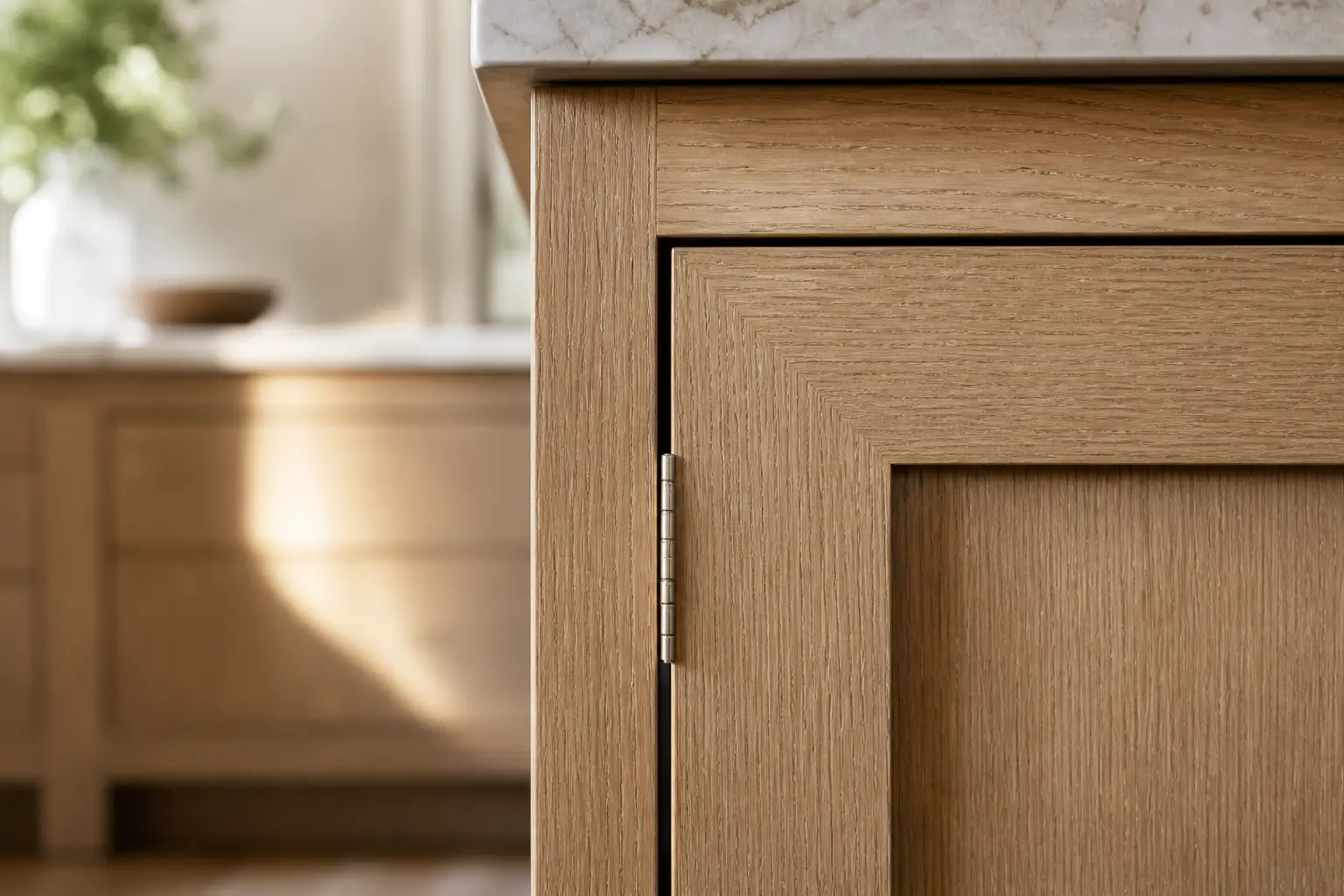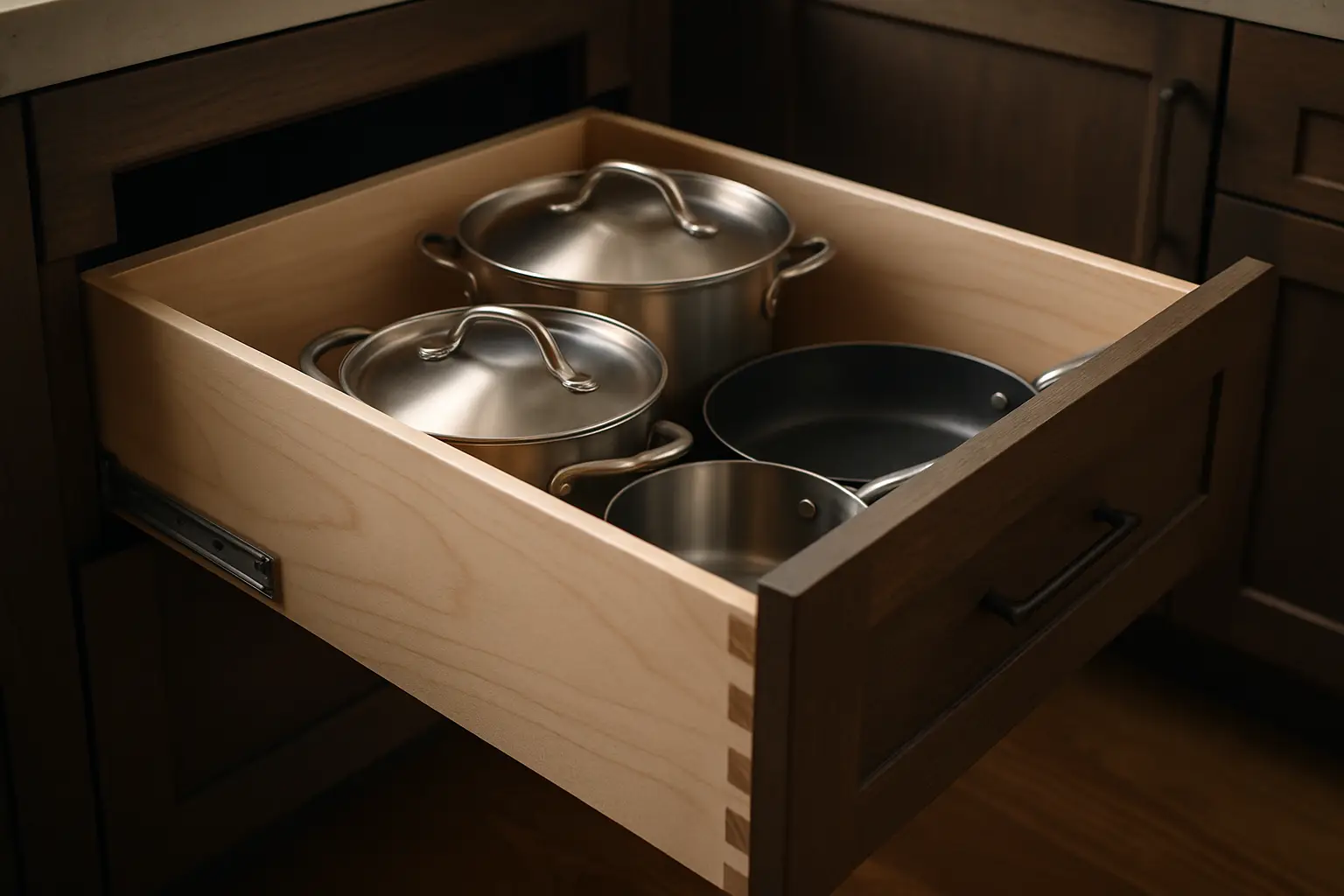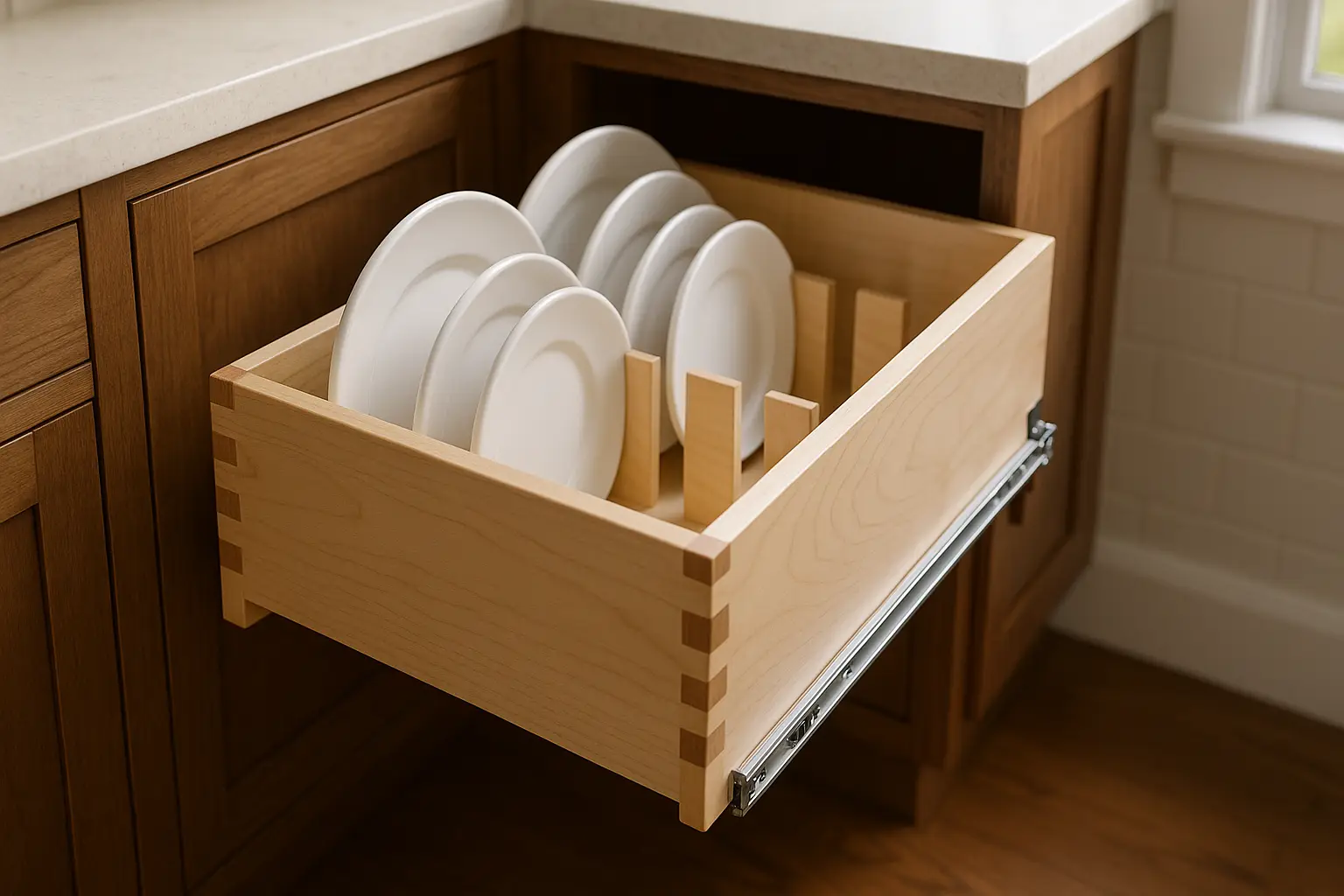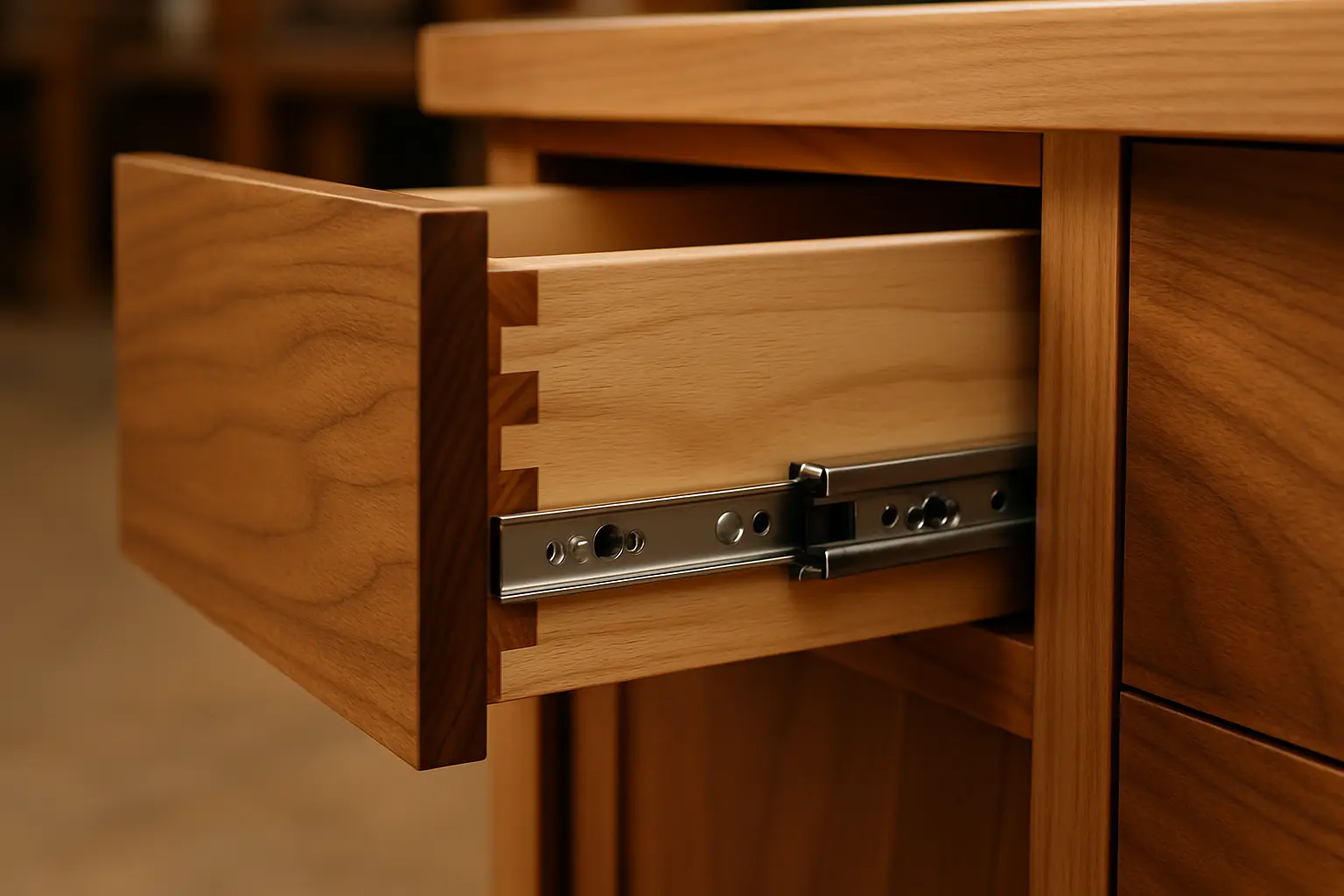
An induction cooktop affects the cutout, airflow, wiring, and drawers below it. Bay Area homeowners should resolve those details before cabinet production to protect useful storage and avoid expensive field modifications.
Select the Cooktop Before Cabinet Production
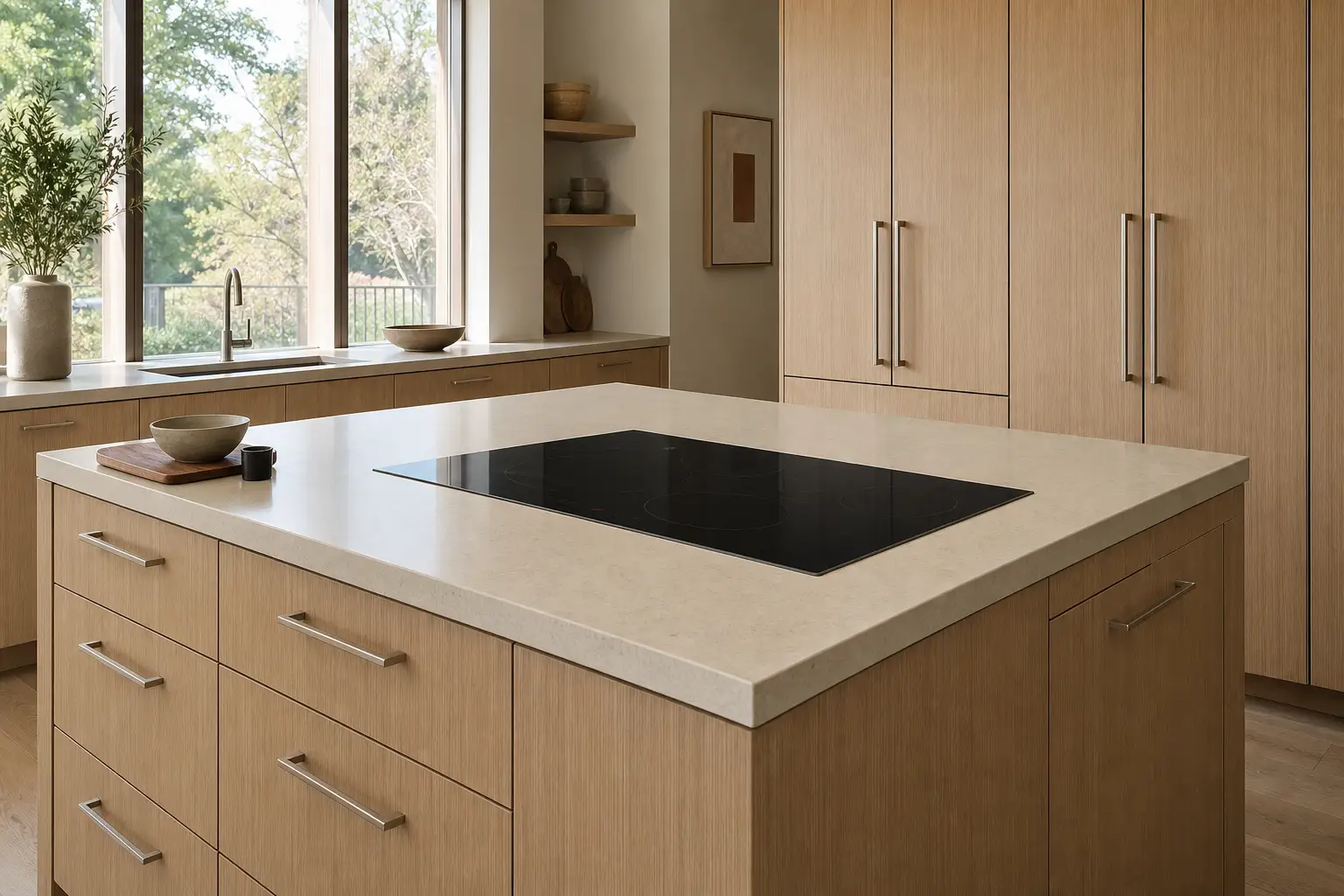
A cooktop sold as 30 inches wide will not necessarily fit every 30-inch base cabinet. The glass, the body below it, and the countertop opening have different dimensions. Flush-mounted models can require an additional recess in the stone. Even two models from one brand may use different cutouts.
Choose the exact model before final shop drawings and countertop templating. Give its current installation manual to the cabinetmaker, countertop fabricator, electrician, and ventilation installer. The cabinet section should show the cooktop body, cutout, supports, air path, electrical connection, and clear space below.
In a retrofit, measure the existing opening after removing the old appliance. A small opening may be enlarged if enough stone remains around it. An oversized opening is harder to correct and may require approved trim or new countertop material.
Preserve Airflow and Useful Drawers
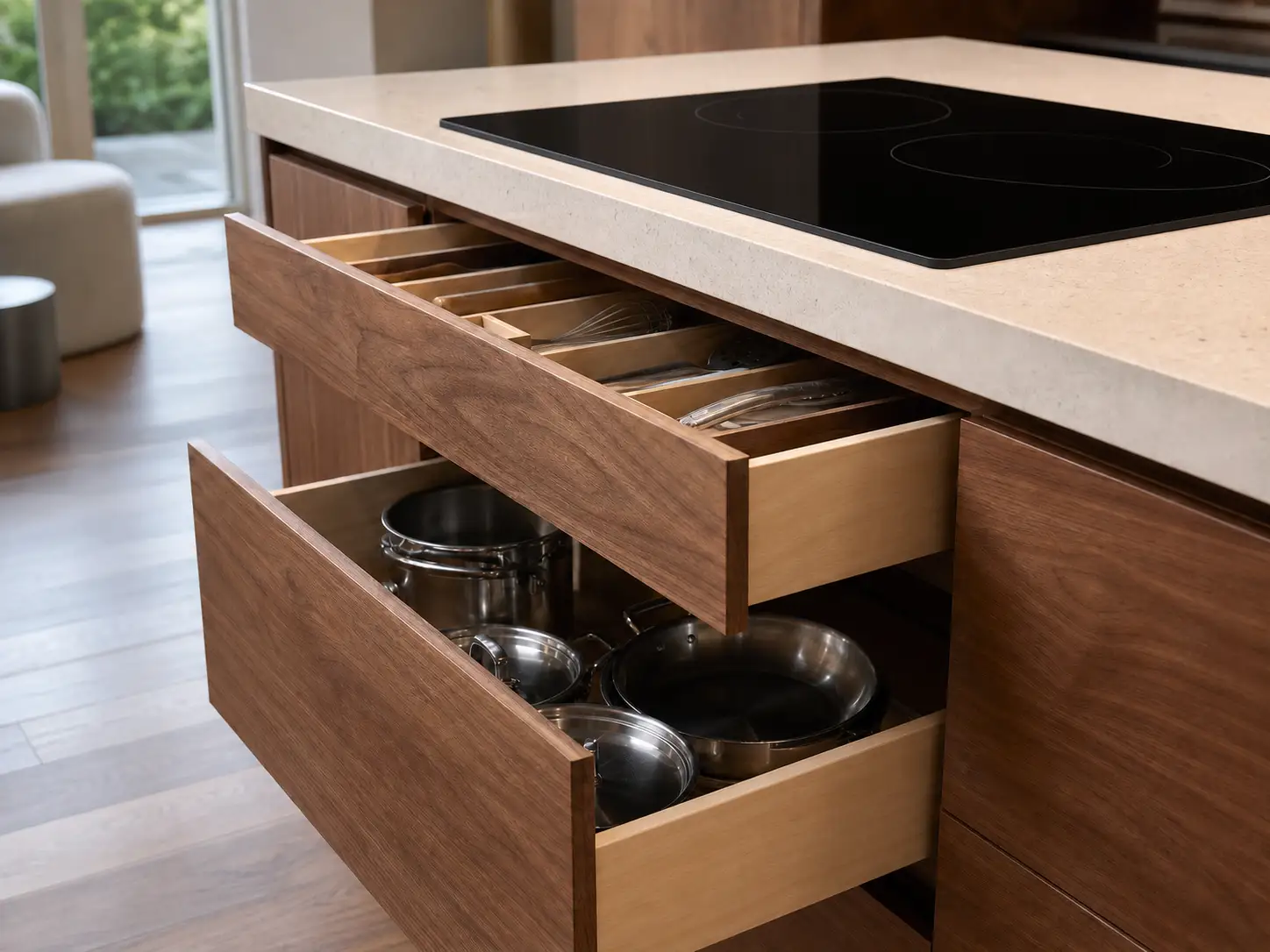
The power electronics below an induction cooktop need the manufacturer's specified airflow. That may require space behind the cabinet, a rear opening, clearance above a drawer, or a vented panel. A full back, deep drawer, or stored sheet pan must not block that path.
Clearances vary. One current Bosch installation manual, for example, calls for 65 millimeters between the worktop surface and the upper area of a drawer for that model. Do not copy that number to a different appliance. Treat the selected manual as part of the cabinet specification.
A useful drawer bank is often possible. A cabinetmaker can lower the top slides, use a shallow utensil drawer, shorten the box for a rear air channel, and place deep cookware drawers below. Full-extension, soft-close undermount slides preserve access, while dovetailed wood or well-joined plywood boxes support heavy pots.
Coordinate Power, Service Access, and Ventilation
The California Energy Commission notes that induction may require specialized electrical connections or new wiring. An electrician should determine the circuit for the selected appliance. The cabinetmaker must keep the junction point and cable route clear of drawers and air openings.
In an island, power may rise through the floor while downdraft ductwork follows a separate route. A cable should not be pinched behind a drawer or trapped behind a fixed back. A removable panel or an accessible adjoining cabinet makes future service easier.
Induction eliminates combustion at the cooktop, but food still produces grease, steam, and odors. An overhead hood remains useful. If you choose downdraft ventilation, set the blower and duct route before approving the island because they compete with drawer and service space.
Bay Area homeowners replacing gas may qualify for current assistance. In April 2026, BayREN added induction cooking to its EASE Home Program for eligible single-family homes. Confirm current eligibility and product requirements before budgeting around the program.
Match the Cabinet Type to the Retrofit
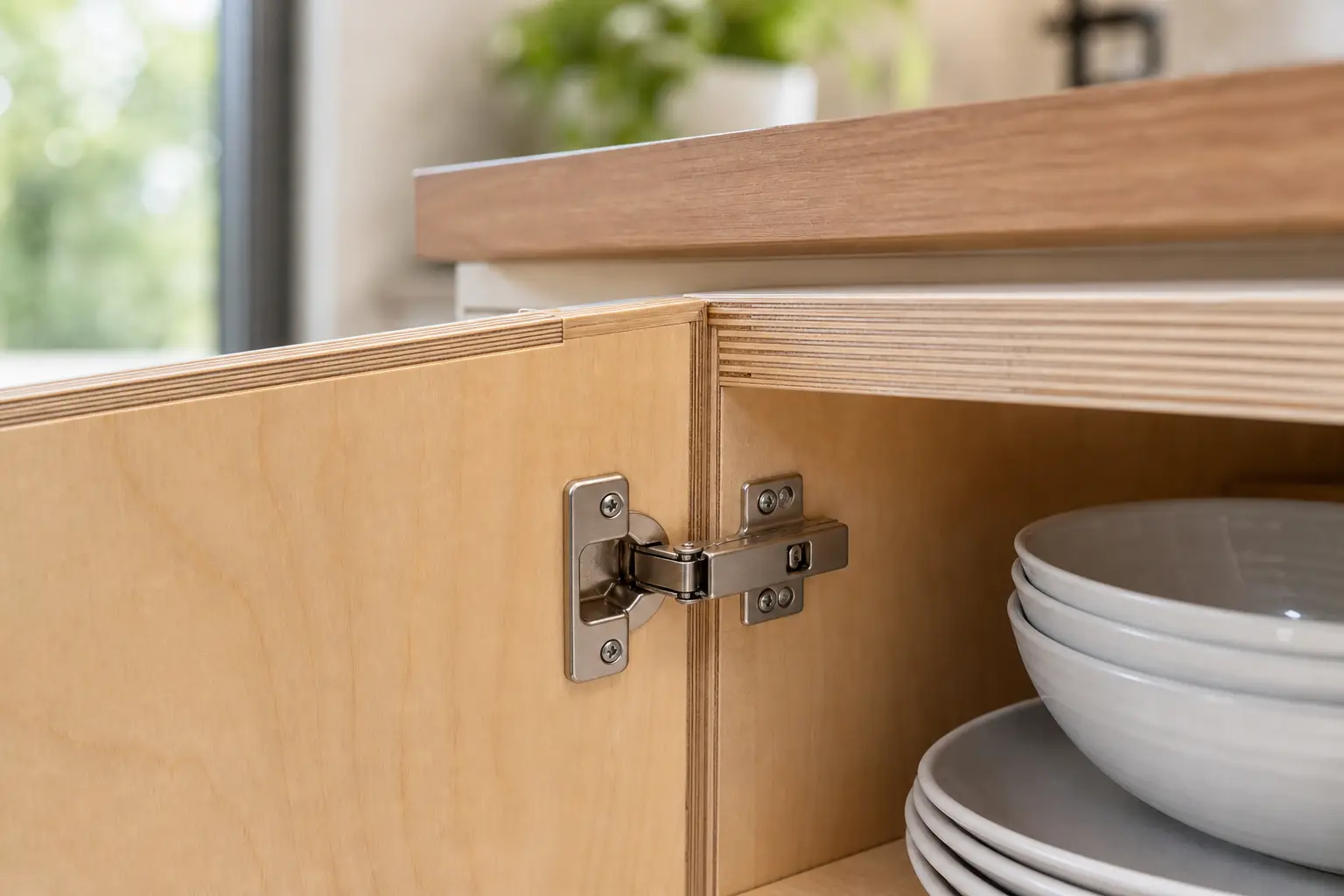
RTA cabinets can work when the appliance fits a standard base and required vents can be added without weakening the box. Fixed rail and drawer locations leave less room to solve conflicts, and field cutting may affect the warranty.
Semi-custom lines provide more drawer combinations but may restrict changes to backs and rails. Ask for a section drawing that names the exact cooktop model, not only a front elevation.
Custom cabinetry offers the most control when an existing stone opening, island duct, or valuable drawer bank creates a tight fit. A plywood box provides strong edges for rails and removable panels, MDF is suitable for stable painted fronts, and solid wood works well for drawer parts and finished details. Whatever the cabinet type, finalize the appliance, cabinet section, wiring, ventilation, and countertop detail together before fabrication.
FAQ
Q1: Can an induction cooktop fit in my existing base cabinet?
A1: Sometimes. Compare the selected cooktop's cutout, body depth, ventilation space, cable route, and required clearances with the actual cabinet. Two appliances with the same nominal width can require different openings.
Q2: Can I keep a drawer directly below an induction cooktop?
A2: Many models allow one, but the clearance and ventilation path are model-specific. The top drawer may need a shorter box, lower slides, or less depth at the rear. Follow the selected cooktop's installation manual.
Q3: Does an induction cooktop need a special electrical connection?
A3: A built-in induction cooktop may need a dedicated high-voltage circuit or new wiring. The appliance and the home determine the exact requirements, so have an electrician review the model before cabinet production.
Q4: Do I still need a range hood with induction cooking?
A4: Yes. Induction removes combustion at the cooktop, but cooking still produces grease, steam, moisture, and odors. A downdraft can work, but its blower and duct may consume much of the base cabinet.