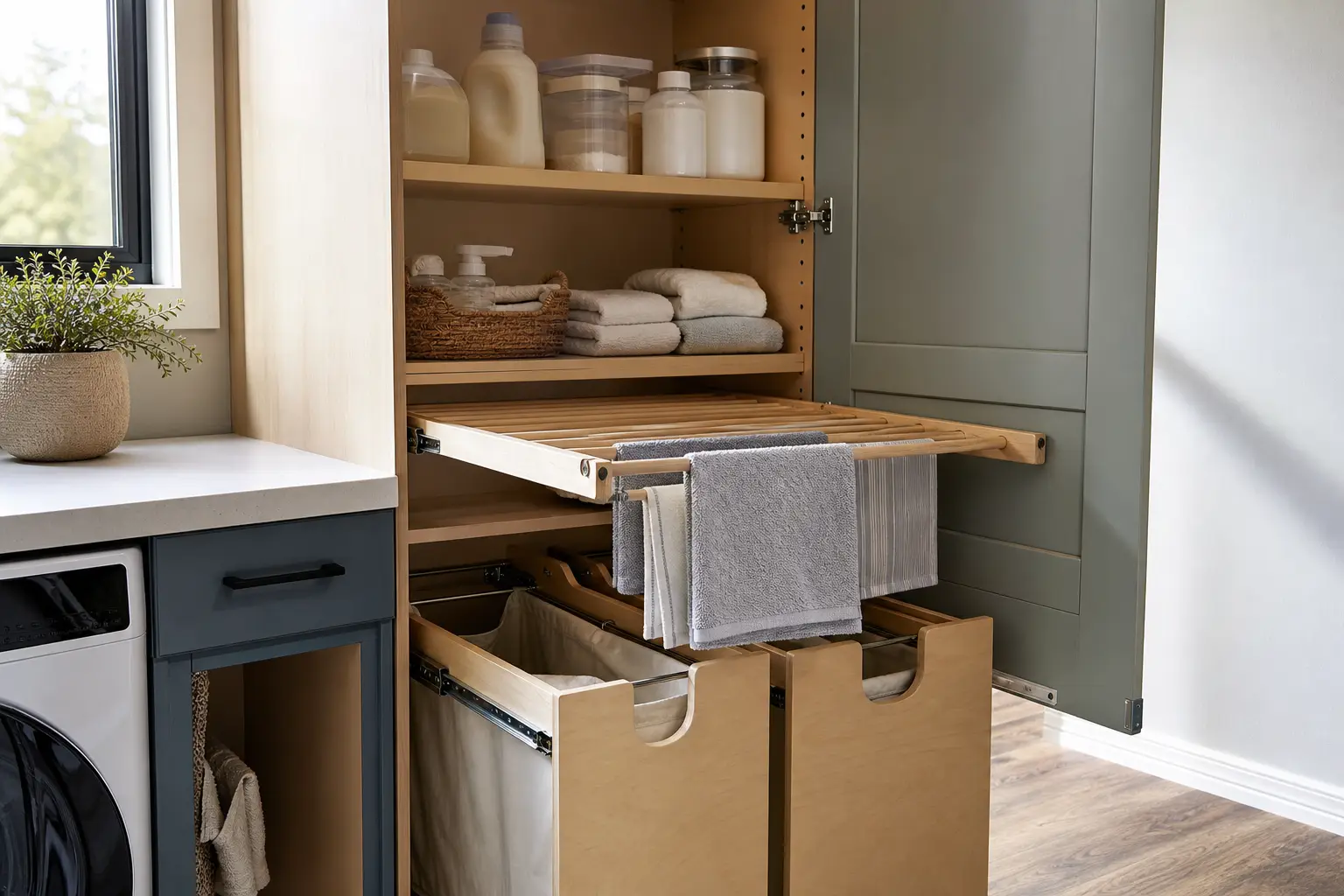
Bay Area kitchens are a mix of everything: 1920s bungalows in San Jose, mid-century ranches on the Peninsula, Victorian flats in San Francisco, and new builds in San Mateo with open floor plans. Cabinets set the tone and do most of the work, so the choices you make about door style, material, and storage matter more than paint color or countertop veining. This guide walks through cabinet ideas that hold up in real Bay Area homes, with honest tradeoffs on materials, hardware, and how long the whole thing actually takes.
Match the Cabinet Style to Your Home's Bones
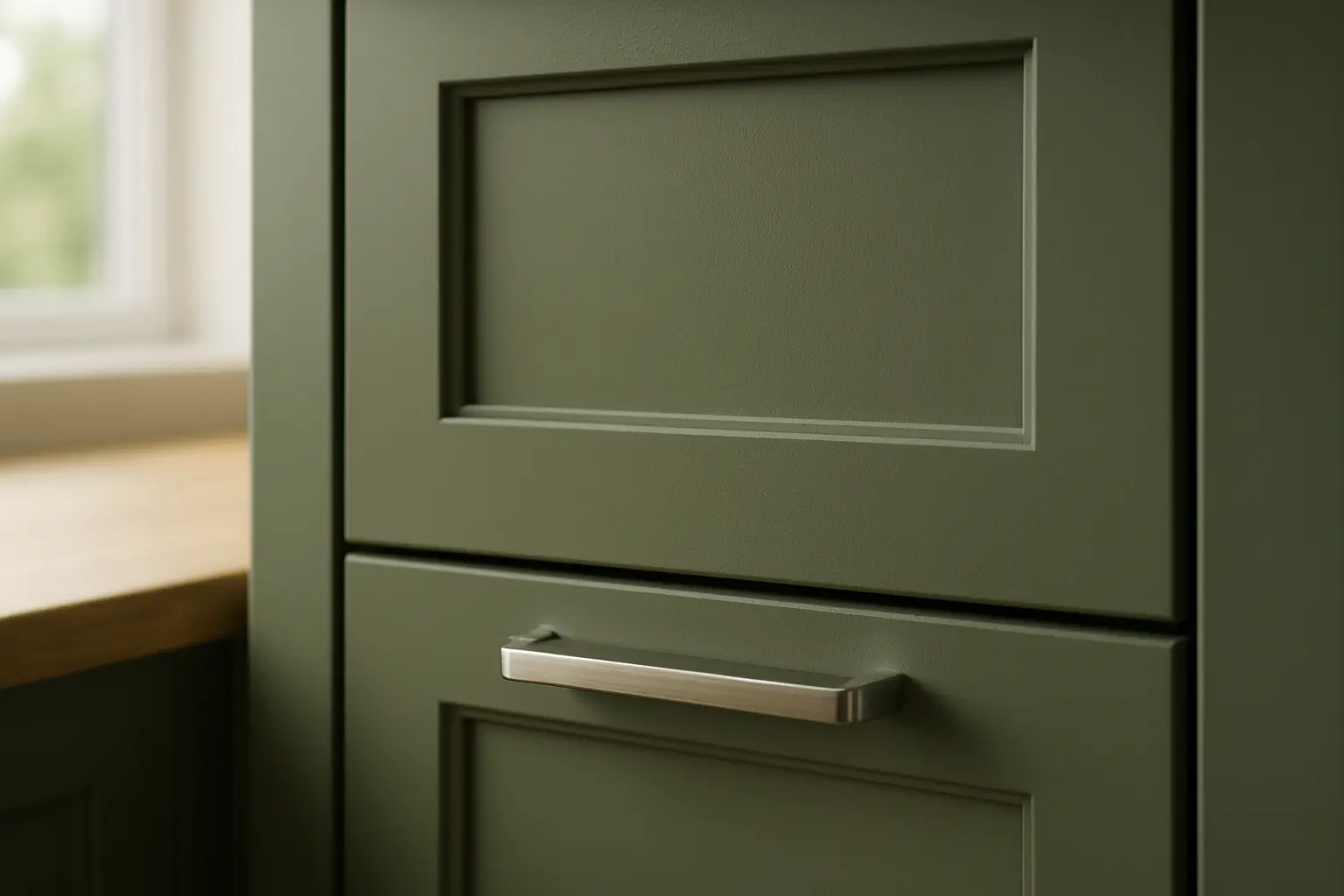
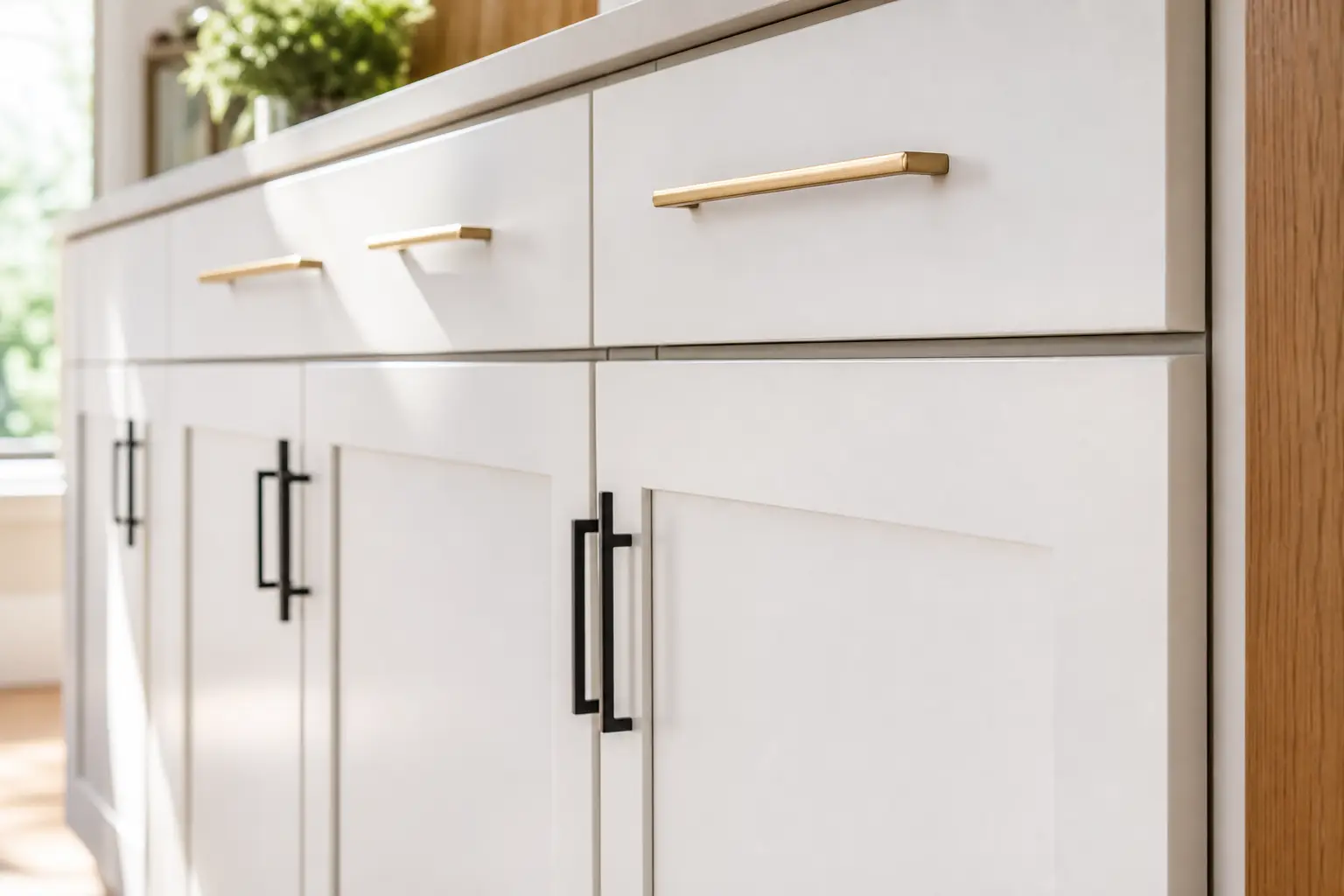
The fastest way to make a kitchen feel wrong is to fight the architecture. Shaker doors, with their clean recessed panel, are the safe workhorse: they read traditional in a Craftsman bungalow and modern when you paint them white and pair them with slab drawer fronts. For mid-century ranch homes common across Sunnyvale and Palo Alto, flat-panel slab doors in walnut or a warm rift-cut oak veneer feel period-correct without looking like a museum piece.
In San Francisco flats and older Victorians, taller ceilings give you room for cabinets that run to 42 inches or full-height with a stacked upper row and glass fronts. That vertical space is worth using, because square footage is scarce and you rarely get it back. For contemporary San Mateo builds with big windows, handleless designs with integrated finger pulls or a shallow reveal keep sight lines quiet so the light does the talking.
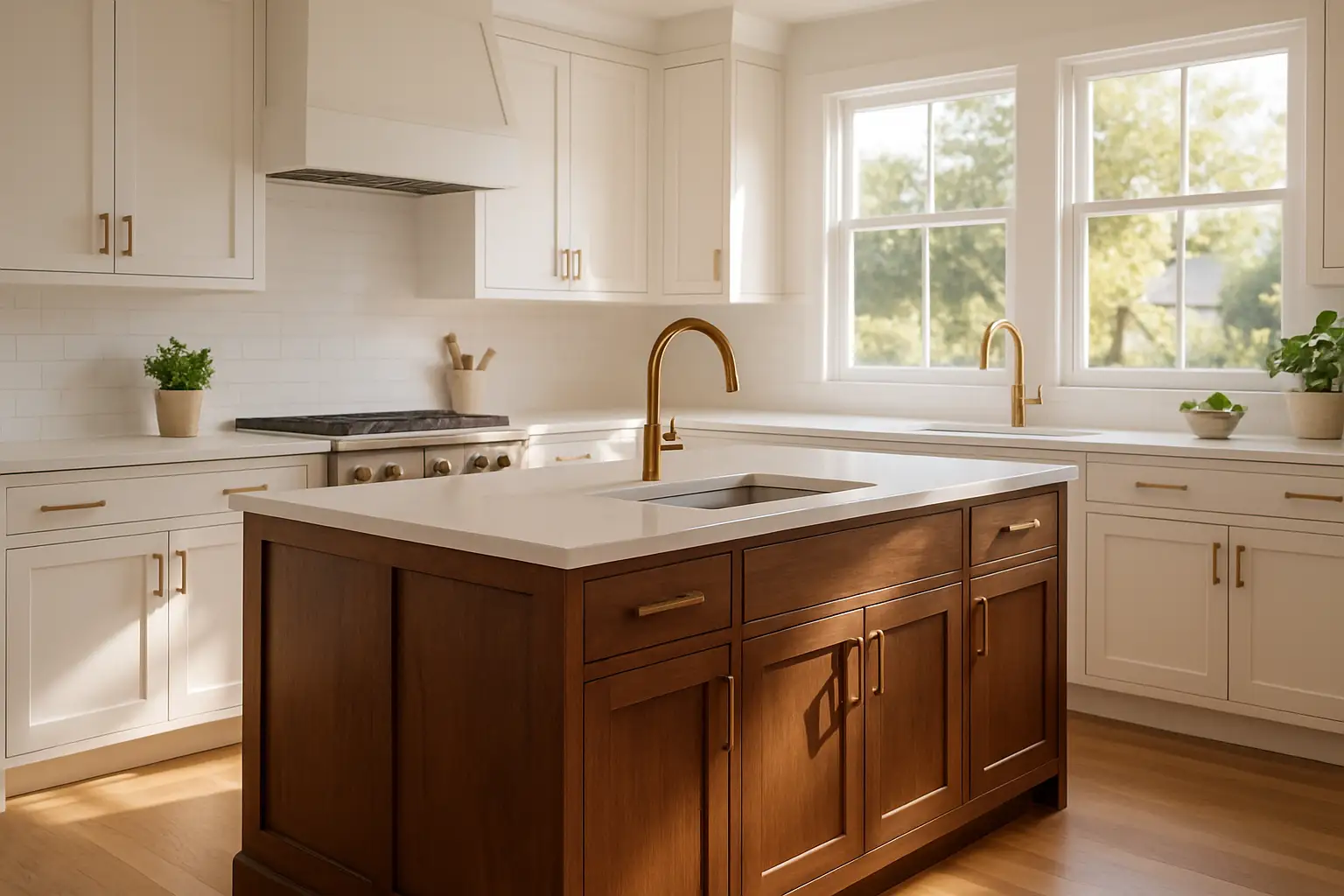
One practical note: mixing two finishes, such as painted perimeter cabinets with a wood-tone island, hides wear and adds depth without committing the whole room to a trend. It also lets you spend on a nicer wood species only where people actually look.
Materials That Survive Bay Area Kitchens
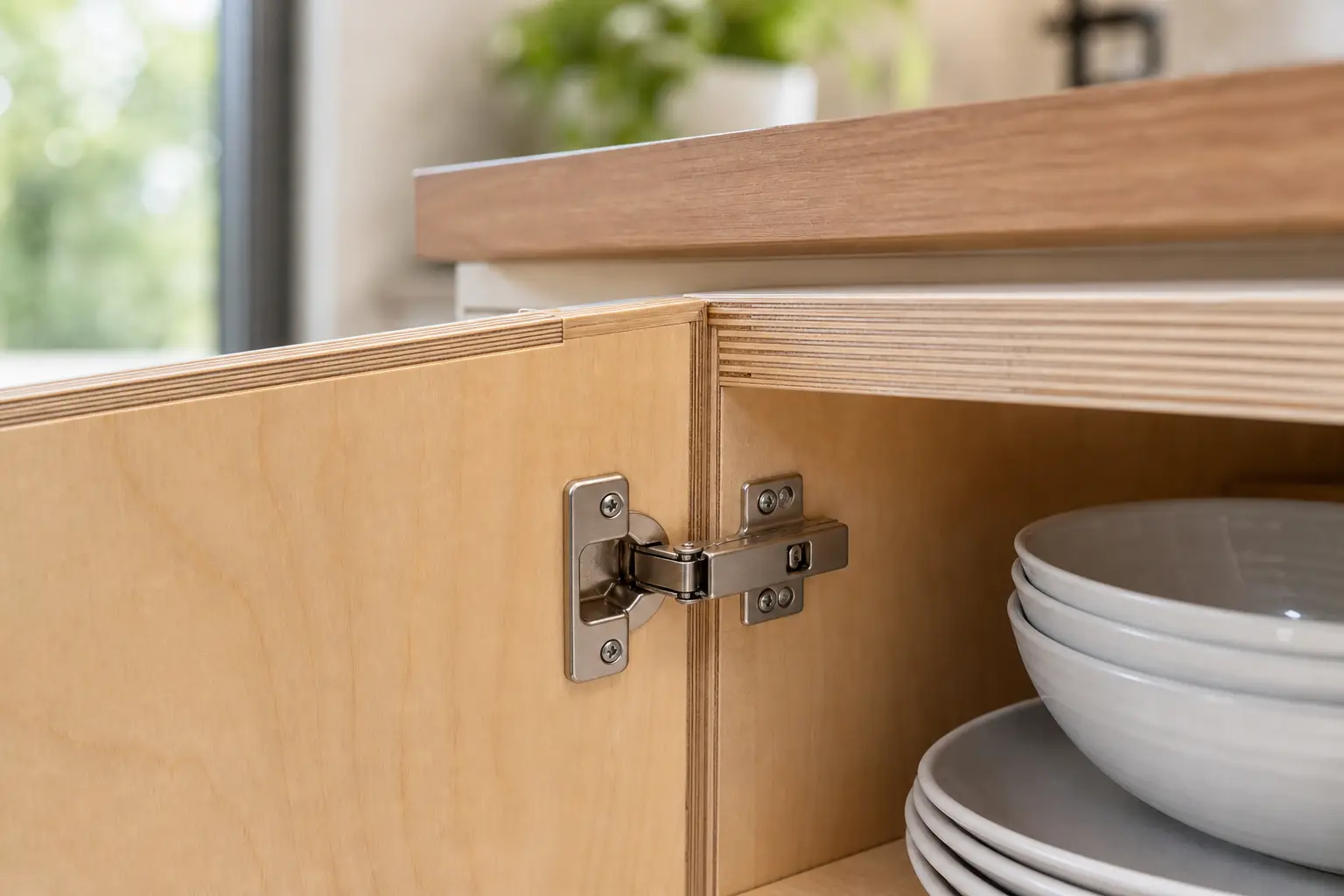
Box construction is where quality lives, and it is the part buyers see last. American Built Cabinets builds cabinet boxes from 3/4-inch plywood rather than particleboard because plywood holds screws better, resists sagging on wide spans, and shrugs off the occasional dishwasher leak or coastal humidity that particleboard swells from. Solid wood is reserved for door frames and face frames where it belongs; using it for large flat panels invites cracking as the wood moves with seasonal changes.
MDF earns its place on painted doors. Because it has no grain and no seams, a painted MDF Shaker door gives you a smoother, more uniform finish than paint-grade solid wood, and it will not telegraph joint lines over time. If you want a natural wood look, that is when solid wood and veneers come in, and species like maple, white oak, and walnut all behave differently under Bay Area light and price out very differently.
Finish matters as much as substrate. A conversion varnish or catalyzed finish stands up to grease, cleaning sprays, and the daily abuse near the range far better than a basic lacquer. Ask what topcoat is being used, not just what color.
Storage Ideas That Actually Earn Their Space
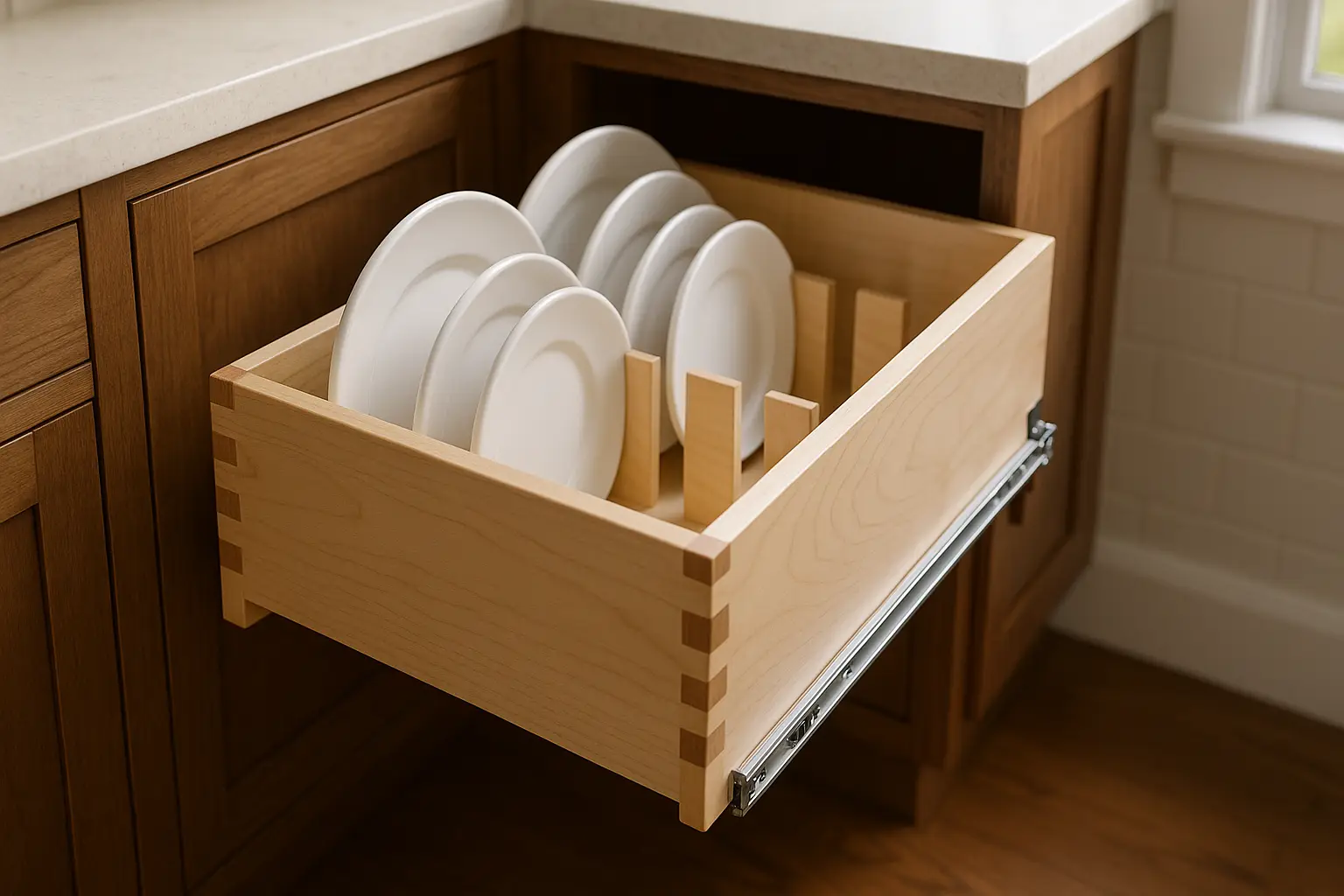
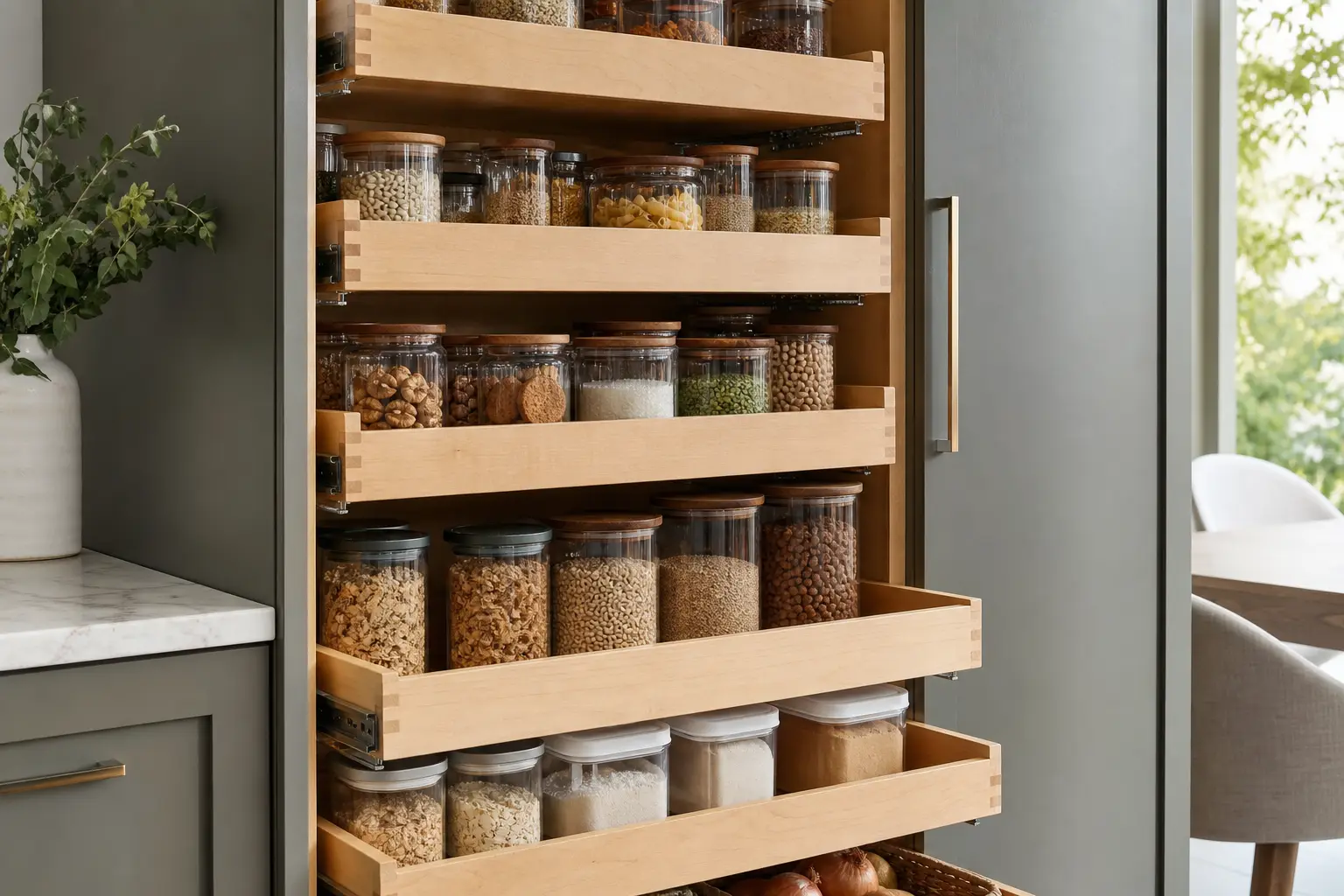
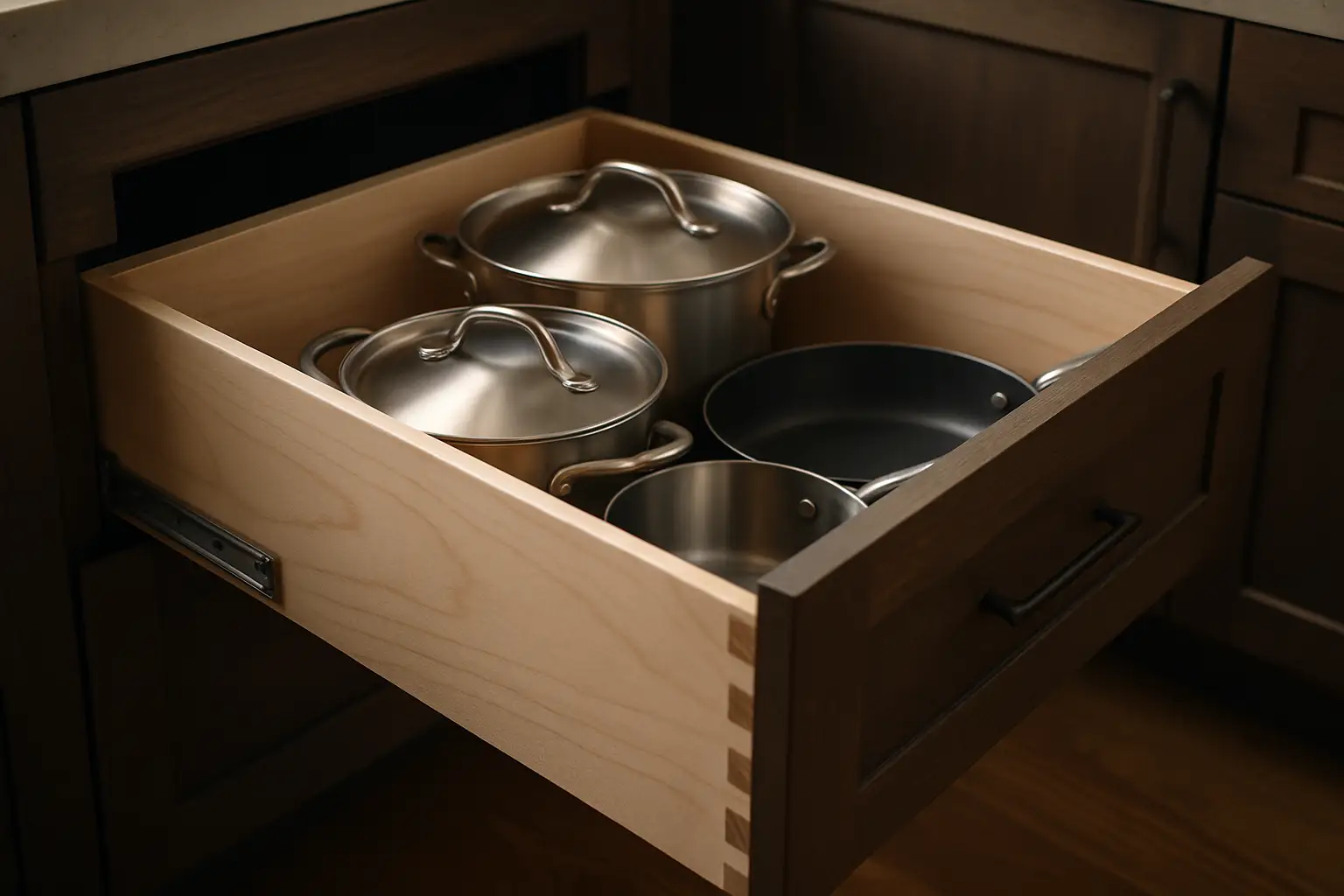
Deep drawers beat lower shelves for almost everything. Pots, pans, dishes, and even pantry goods are easier to reach in a 30-inch-wide drawer bank than behind a door where you kneel and dig. We build drawers with dovetail joinery and solid maple or birch boxes riding on full-extension undermount slides, so the drawer pulls all the way out and closes soft under load. That combination is the single biggest daily-quality-of-life upgrade in a kitchen.
Corners are where cabinets go to die. A blind corner pull-out or a well-designed lazy Susan reclaims space that would otherwise become a black hole. For narrow galley kitchens, common in San Francisco flats, a pull-out pantry between the fridge and wall turns 9 inches of dead space into real storage. In larger island layouts, a mix of a deep trash and recycling pull-out, a shallow cutlery-friendly top drawer, and outlets for charging keeps the counter clear.
Don't over-buy gadgets, though. Spice pull-outs, tray dividers, and roll-outs are worth it where you use them daily; the rest just adds cost. Plan storage around how you cook, not around the accessory catalog.
Choosing Between RTA, Semi-Custom, and Custom
Ready-to-assemble cabinets are the cheapest and fastest to get, but you take fixed sizes in 3-inch increments and fill the gaps with filler strips. That works for a rental refresh or a tight budget, less so for an older Bay Area home where nothing is square and ceilings vary. Semi-custom gives you more door styles, finishes, and modifications while still working from a set catalog, a reasonable middle ground for many kitchens.
Custom is the answer when the room has odd angles, you want a specific wood or finish, or you need cabinets sized to the exact inch to use every bit of a small footprint. Because we manufacture locally in San Jose, our custom lead time runs about three weeks, which is far shorter than the eight to twelve weeks common with cabinets shipped from out of state or overseas. That speed matters when a remodel timeline is stacking trades back to back.
For builders and contractors working across San Jose, the Peninsula, and San Francisco, local manufacturing also means we can correct a miscut or add a piece without derailing a schedule. Warranty questions get handled by the people who built the boxes, not a call center three time zones away.
FAQ
Q1: What cabinet material is best for the Bay Area's humidity and coastal air?
A1: Plywood boxes are the most reliable choice because plywood resists swelling and holds fasteners better than particleboard, which matters in kitchens near the coast or in older homes with less climate control. For painted doors, MDF gives the smoothest finish, while solid wood frames and veneers work well for natural wood looks. A catalyzed or conversion varnish topcoat adds durability against moisture and cleaning products.
Q2: What actually determines whether custom cabinets take 3 weeks or longer?
A2: Our roughly three-week San Jose lead time assumes final approved drawings, a standard door style, and one paint or stain color. Complex jobs push longer: multiple finishes, specialty inlays or glass, very large kitchens, or a species that has to be sourced. Design changes after we start cutting also reset the clock, so locking the layout before production is the single biggest thing that keeps a job on schedule.
Q3: Are white Shaker cabinets still a good choice, or are they dated?
A3: White Shaker cabinets remain a strong, versatile choice because the recessed-panel door works with both traditional and modern homes and does not lock you into a short-lived trend. To keep it feeling current, pair painted Shaker uppers with a wood-tone island or slab drawer fronts. Painted MDF doors give the cleanest, most durable painted finish.
Q4: Roughly how do RTA, semi-custom, and custom compare on price and fit?
A4: As a rule of thumb, RTA runs cheapest, semi-custom lands in the middle, and custom sits at the top, though a well-optioned semi-custom job can cost as much as a simple custom one. Semi-custom tends to break down in older Bay Area homes when walls are out of square, ceiling heights are odd, or a run needs a non-catalog width; at that point filler strips and workarounds eat the savings, and a fully custom box that fits the actual opening is the cleaner answer.
Q5: Which cabinet hardware upgrades are actually worth the money?
A5: Soft-close undermount slides, full-extension drawer glides, and soft-close hinges deliver the biggest daily improvement and reduce wear over time. Dovetailed solid-wood drawer boxes last far longer than stapled particleboard ones. Specialty inserts like spice pull-outs or tray dividers are worth it only where you'll use them daily; beyond that they mostly add cost.
Q6: Should I choose deep drawers or standard doors with shelves in a base cabinet?
A6: Deep drawer banks are more practical for pots, pans, dishes, and even pantry storage because you pull everything out and see it at once instead of kneeling to reach the back of a shelf. Drawers cost a bit more than a door-and-shelf cabinet, but the everyday convenience usually justifies it, especially in the main cooking zone.