When you search for kitchen cabinets near me from a home in San Jose, San Francisco, or San Mateo, you get a mix of big-box displays, online RTA sellers, and local manufacturers, and they are not the same purchase. The word near matters more than most buyers expect. It affects how fast you get cabinets, how well they fit an older Bay Area house, and who picks up the phone when a door needs adjusting two years in. This guide breaks down what a local search actually turns up, how to tell quality apart before you pay, and where buying from a nearby manufacturer changes the outcome.
What "Kitchen Cabinets Near Me" Actually Gets You Here
A local search in the Bay Area returns three very different types of seller wearing similar photos. There are the big-box home centers, which sell stock and semi-custom lines from national brands out of a warehouse. There are online RTA sites that ship flat-pack boxes to your door. And there are local manufacturers who design and build cabinets in a nearby shop. All three show up under the same query, so the label near me tells you almost nothing about what you are buying.
The distinction that matters is where the cabinets are actually made. A retailer around the corner may still be ordering from a factory two thousand miles away, which means your near me store carries the same 6 to 10 week lead time and distant warranty chain as buying sight unseen. A local manufacturer, by contrast, controls the build, the schedule, and the fix when something needs adjusting. In older San Francisco flats and Peninsula homes where nothing is square, that control is the difference between cabinets that fit the room and cabinets the room has to accommodate.
The Three Places Bay Area Buyers Really Shop
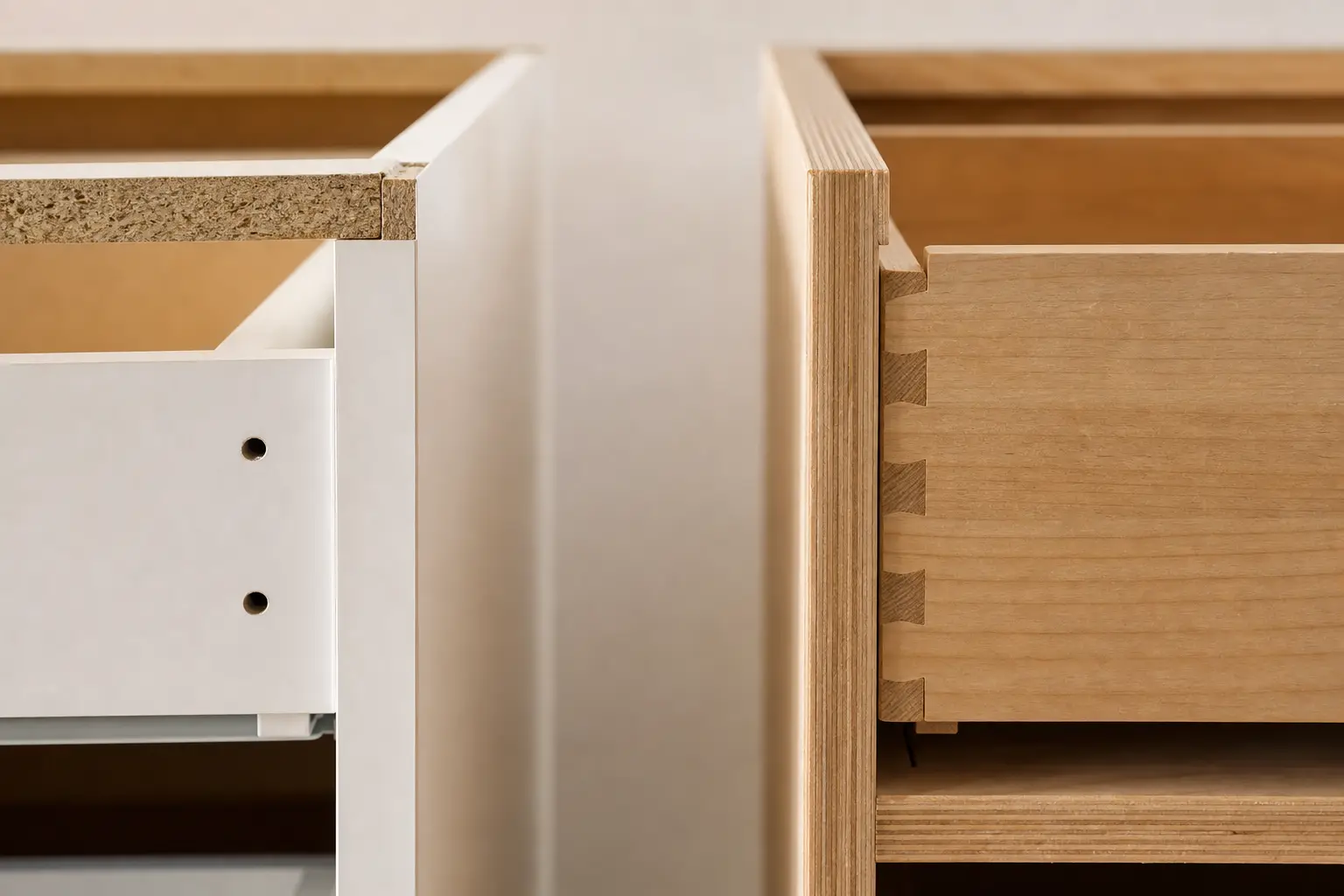
Big-box stock cabinets are the fastest and cheapest path for a standard layout. They come in fixed 3-inch increments, so if your wall is 121 inches you get 120 inches of cabinet and an inch of filler. Boxes are often 1/2-inch particleboard, hardware is basic, and the design help is limited to whoever is on the floor that day. For a rental refresh or a tight-budget kitchen with a simple layout, they can be a reasonable answer.
Online RTA cabinets ship flat and assemble with cam locks or dowels. The price is low, and selection is wide, but you inherit the assembly labor and the risk. A damaged panel means a shipping claim and a wait, and the box material is inconsistent lot to lot. RTA rewards buyers who are comfortable building furniture and living with standard sizes.
Local manufacturers sit at the other end. You get design input, real size flexibility, better box and hardware standards, and a person who answers for the result. The tradeoff is that it is not the rock-bottom price of stock. For most homeowners doing a kitchen they plan to keep, the fit, the plywood construction, and the roughly three week local lead time make the value clear once the full picture is added up.
How to Judge Quality Before You Pay
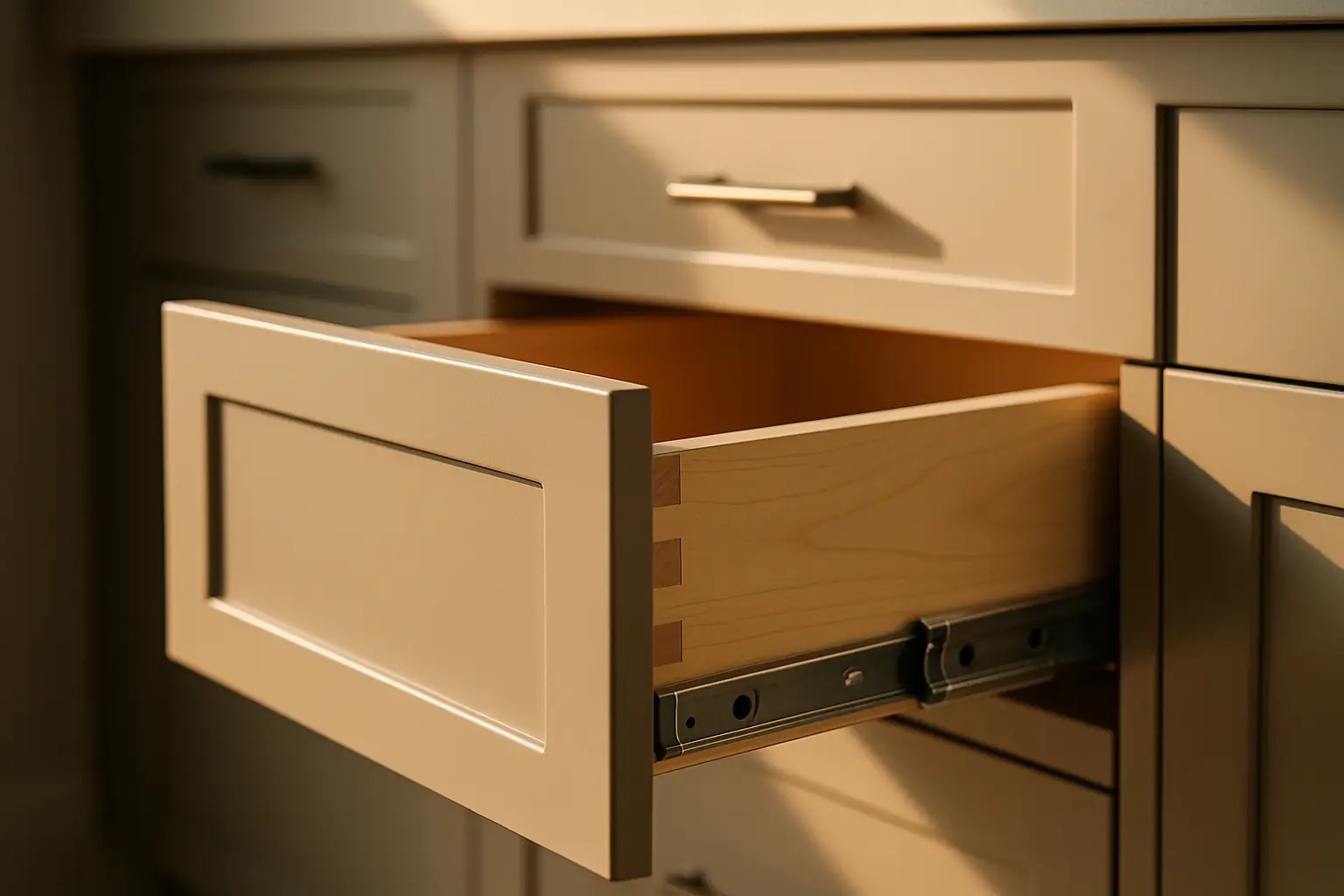
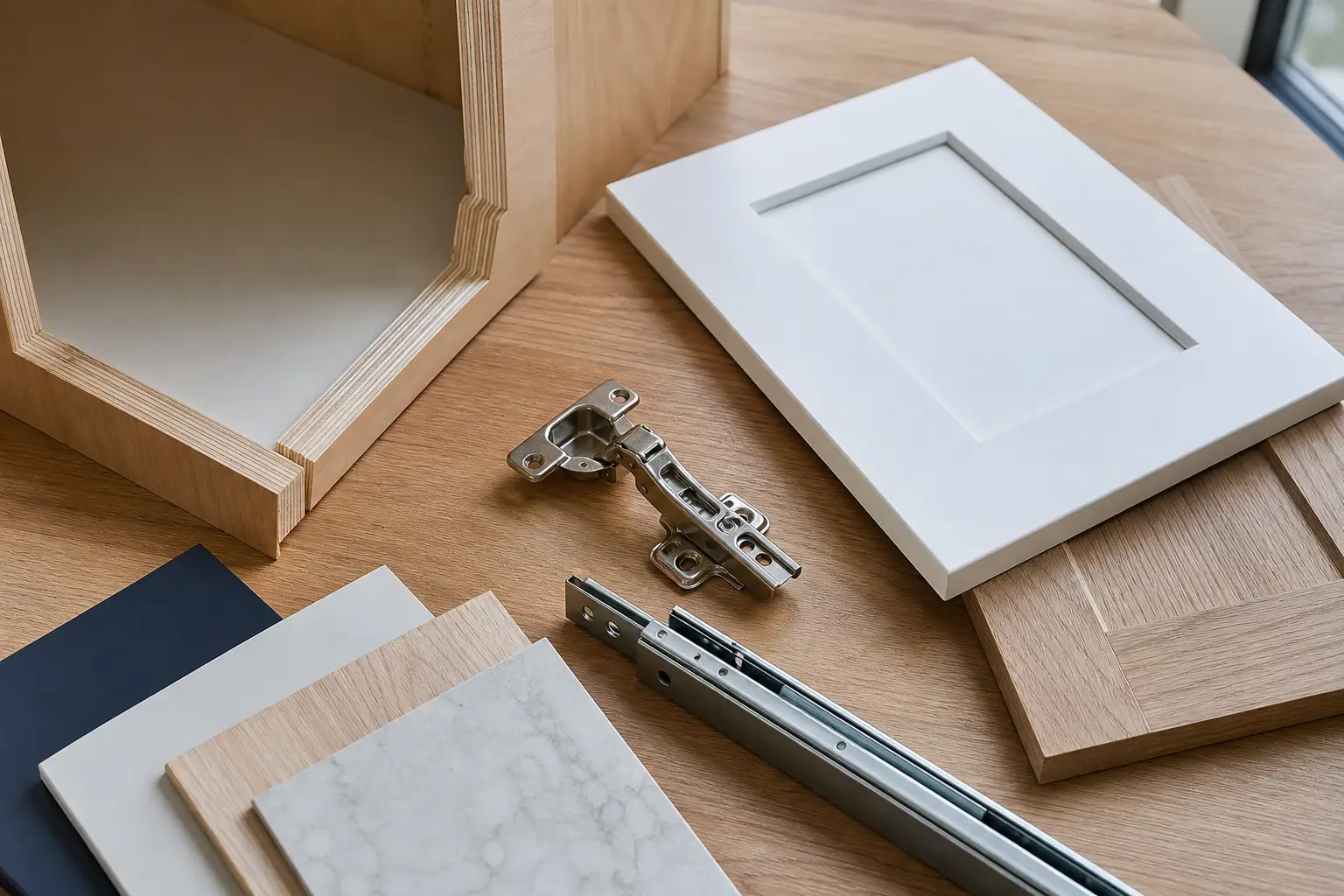
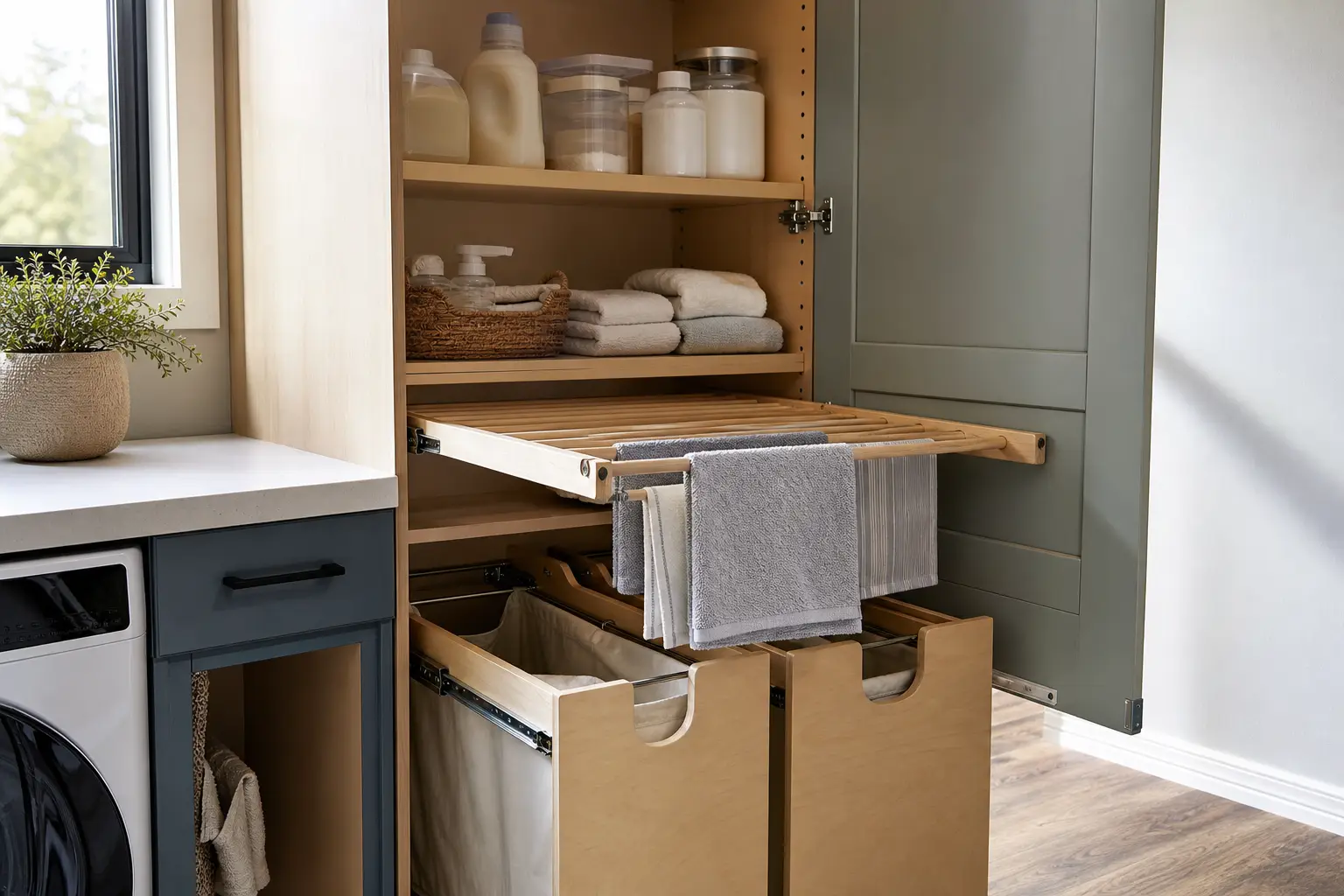
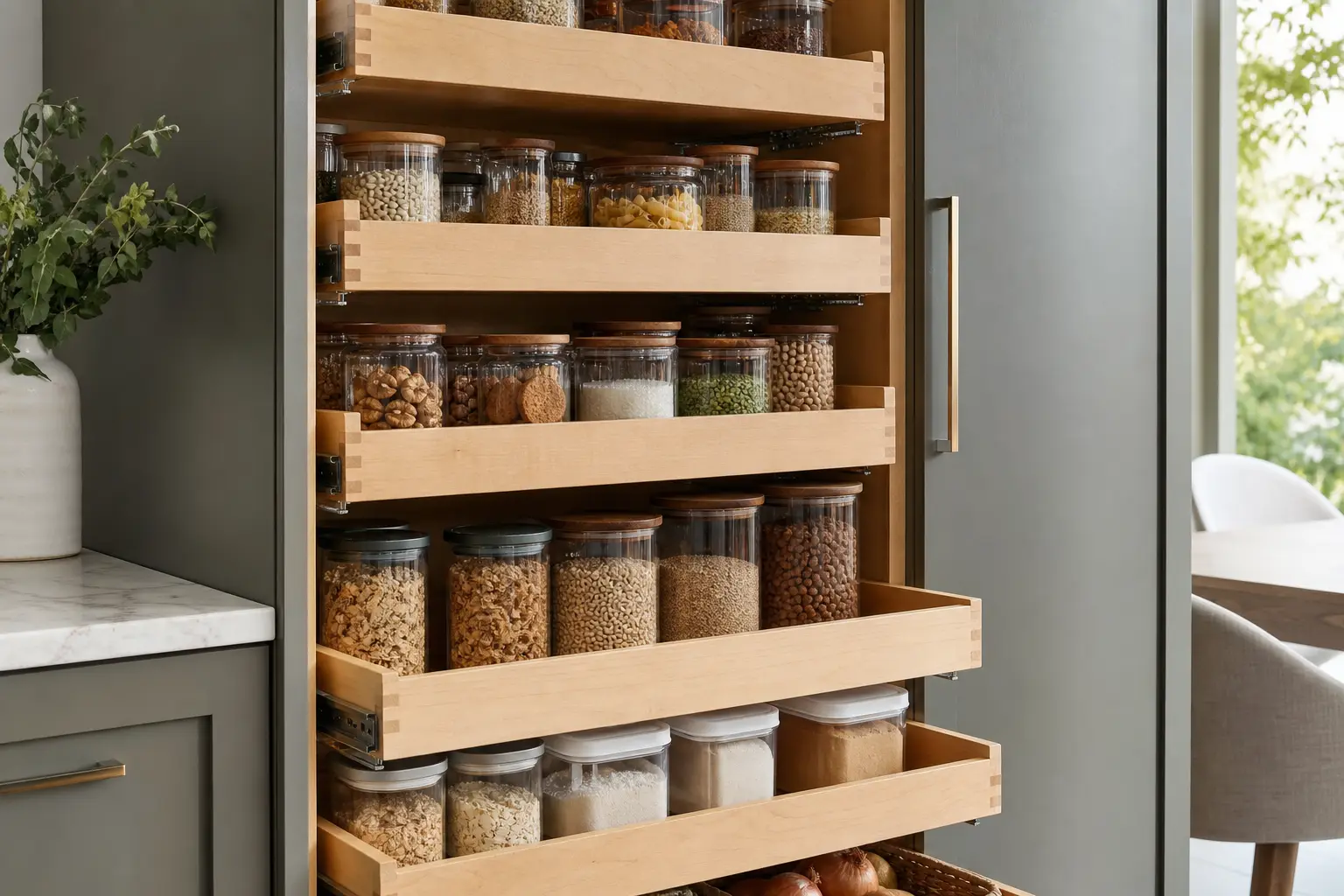
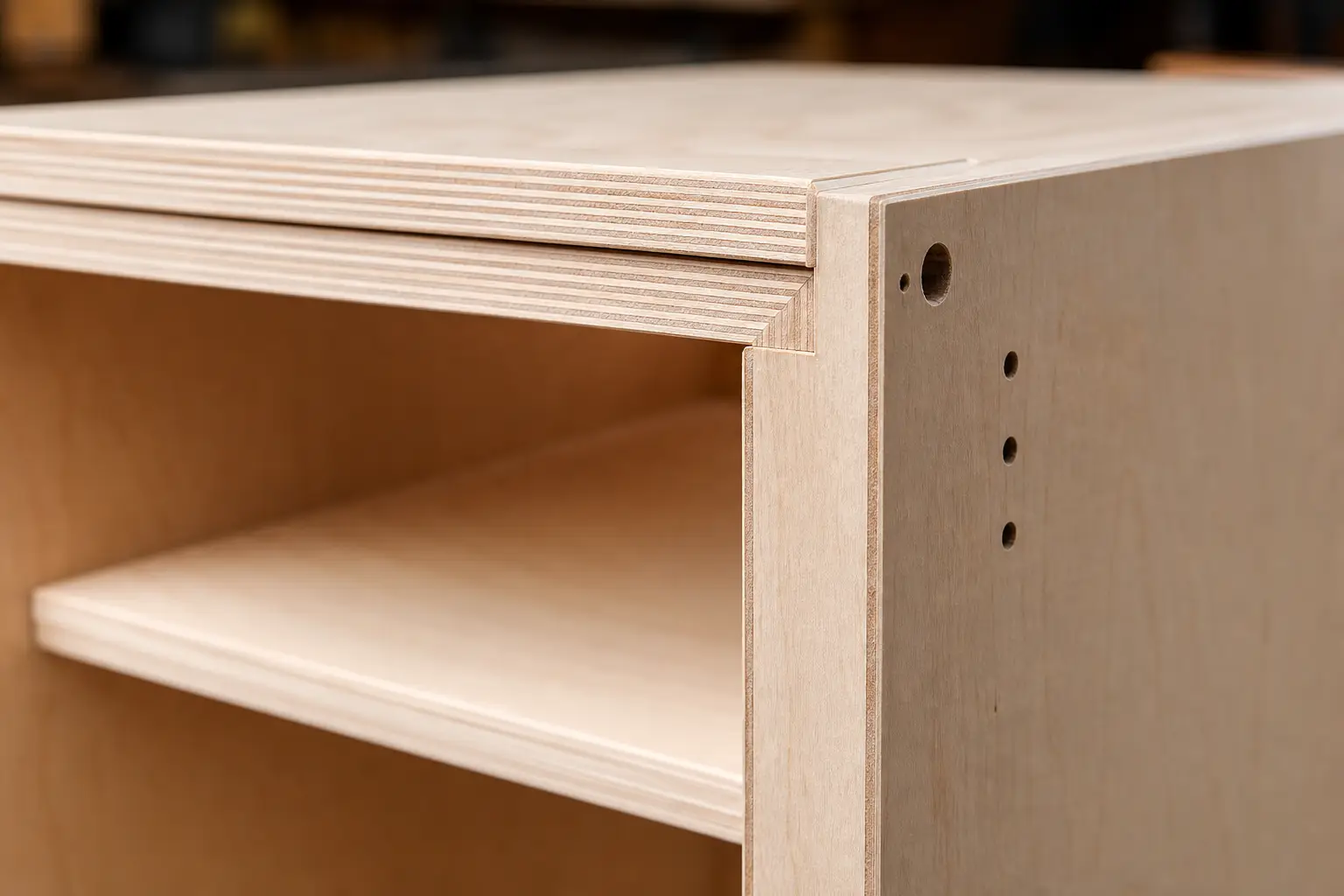
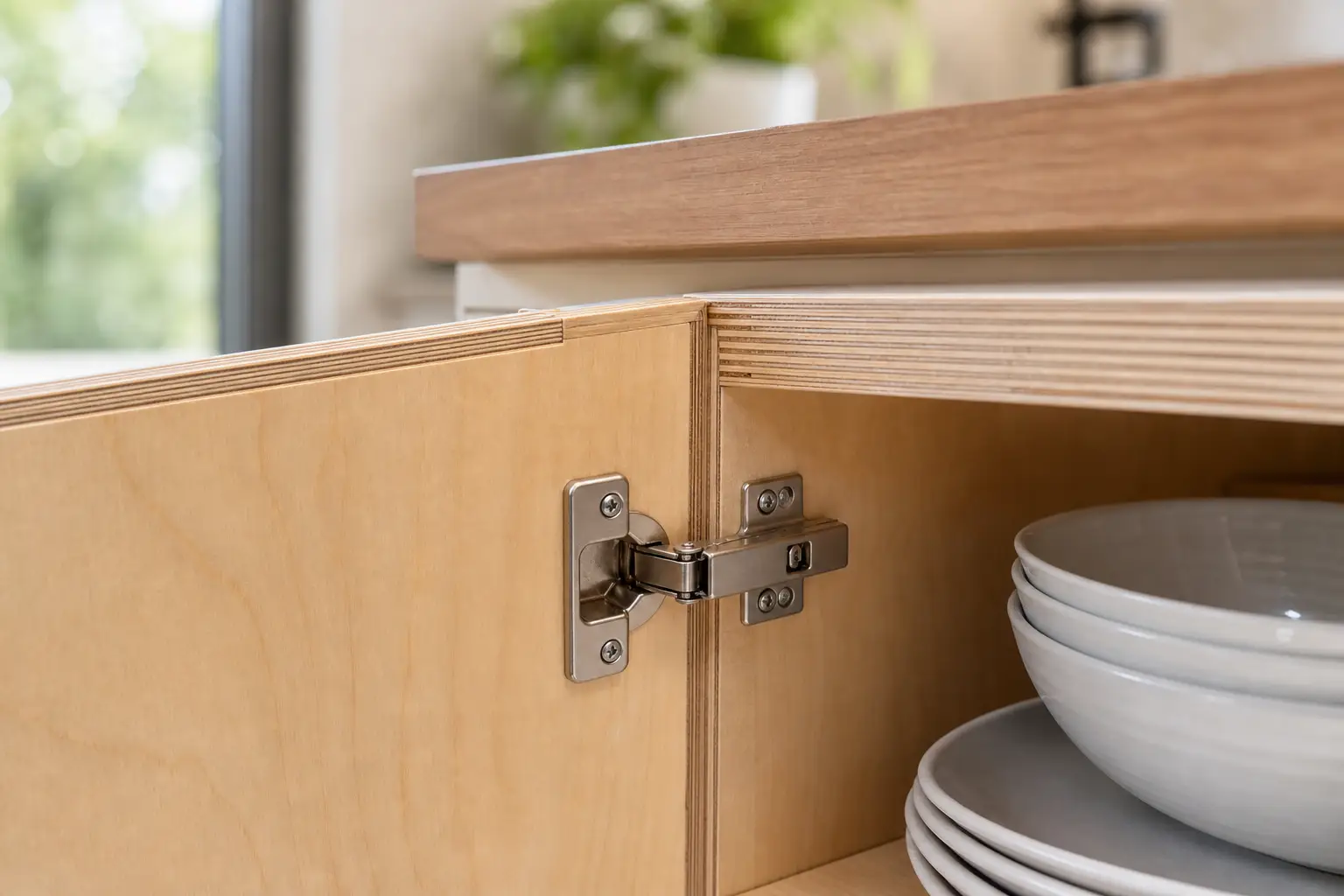
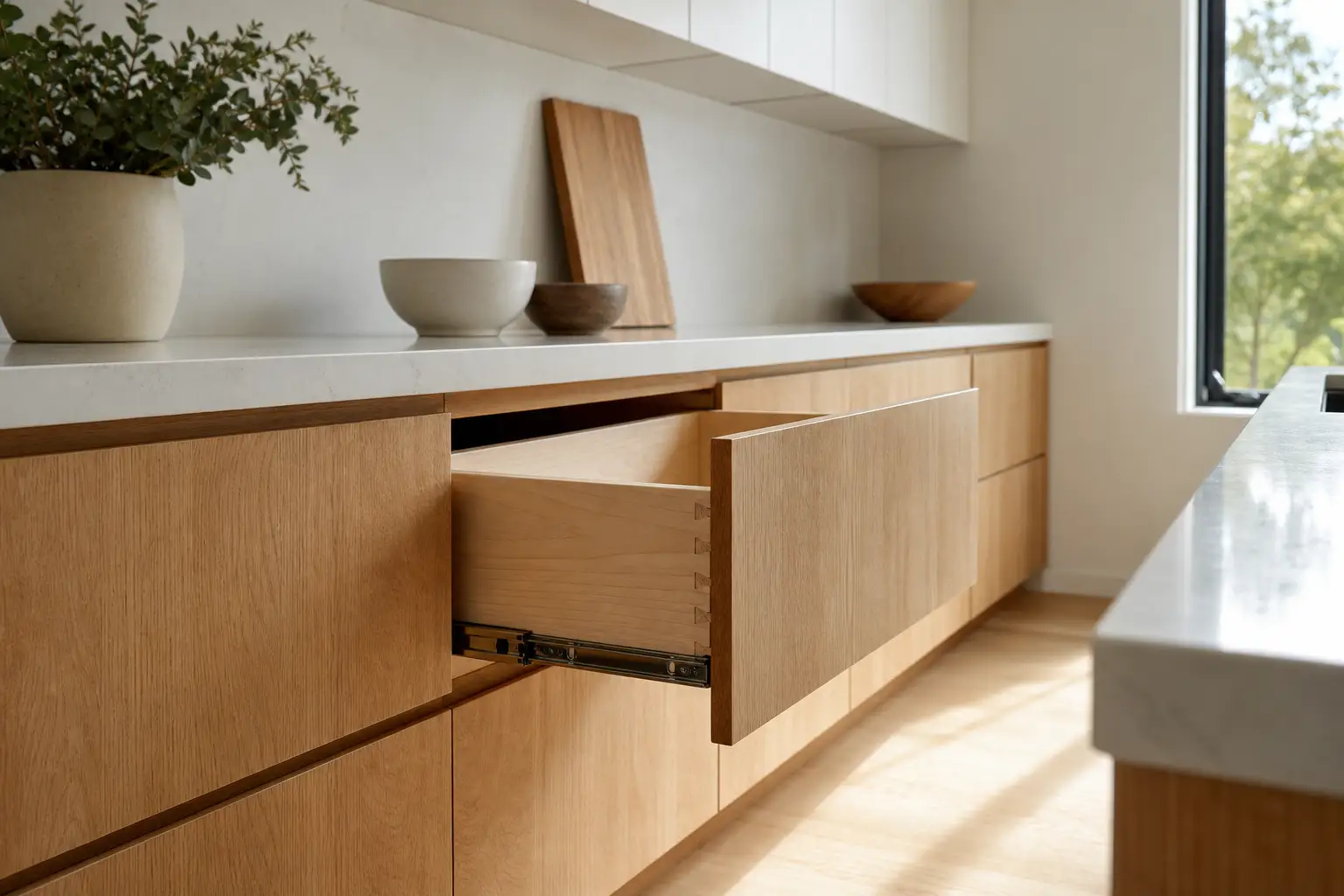
Door style is what buyers look at, but it is the worst predictor of how a kitchen ages. Four things underneath tell the real story. First, the box: 3/4-inch furniture-grade plywood holds screws and shrugs off the occasional leak, while thin particleboard swells once its edge banding is nicked. Second, the drawer box: a dovetailed solid maple or Baltic birch box stays tight after years of slamming, where a stapled or doweled box works loose. Third, the slides: full-extension undermount soft-close slides let a drawer open fully and close quietly under load. Fourth, the hinges: a six-way adjustable soft-close hinge lets an installer line doors up precisely and keeps them there.
Ask any near me seller to name those four specs plainly. A quality manufacturer answers without hedging because it is what they build every day. If the answer is vague, or the sample drawer feels light and rattles, you have learned something the showroom lighting was trying to hide.
Where Buying Local Changes the Result
Manufacturing distance quietly sets your schedule. When cabinets are built in San Jose, the standard lead time runs about three weeks from approved drawings, and delivery can be staged to land after paint and before countertops instead of sitting in your garage for a month. If a wall moves during demo or an appliance changes, a local shop can remake the affected pieces and return them to your site in the Bay Area within days.
Local also changes who owns a problem. A finish flaw or a sticky drawer two years later is a phone call to the people who built the cabinets, not a claim routed through a dealer and a factory in another state. And because American Built Cabinets finishes in-house, the whole kitchen can be color-matched across doors, drawer fronts, island panels, and appliance panels, so it reads as one designed piece rather than a set of boxes that happen to share a room. That combination of fit, speed, and accountability is what the near me search is really worth chasing.
FAQ
Q1: Are local cabinets more expensive than big-box or online options?
A1: Not always, and the comparison is rarely apples to apples. A stock big-box kitchen looks cheaper up front, but you often pay for filler strips, wasted space, and thinner particleboard boxes. Locally built semi-custom cabinets in plywood, sized to your walls, frequently land close in total cost once fit and durability are counted.
Q2: How long does it take to get kitchen cabinets in the Bay Area?
A2: National and imported lines commonly quote 6 to 10 weeks. Because we manufacture in San Jose, our typical lead time is about three weeks from approved drawings and finish selections. Local production also means revisions and replacement parts arrive in days, not through a distant distributor.
Q3: Do cabinet companies near me handle installation, or just supply?
A3: It varies. Some retailers only sell boxes and leave installation to you or a subcontractor. A full-service local manufacturer can measure, build, and coordinate installation, which keeps one party responsible for fit and finish instead of splitting blame when a reveal is off.
Q4: How do I measure my kitchen before getting a quote?
A4: Sketch the room, note wall lengths, ceiling height, and window and door locations, and mark where plumbing, gas, and appliances sit. Rough numbers are enough for a first quote. Before anything goes to the shop floor, we confirm exact field measurements, since Bay Area walls are rarely plumb.
Q5: What should I look for to judge cabinet quality before buying?
A5: Check the box material (3/4-inch plywood beats particleboard near water), the drawer box (dovetailed solid wood over stapled), the slides (full-extension undermount soft-close), and the hinges (six-way adjustable soft-close). These four things predict how the kitchen ages more than the door style does.
Q6: Can a local maker match a specific finish or door style I found online?
A6: Usually yes. Because we build doors and finish in-house, we are not locked to a fixed catalog. We can match a door profile, a custom paint color, or a stain, and produce matching panels for islands and appliance fronts so the whole kitchen reads as one piece.