Every cabinet company says it builds quality cabinets. The word is so overused it has stopped meaning much, which is a problem for a homeowner in San Jose or San Francisco trying to compare one custom maker against the next. So instead of repeating the claim, we want to show the work: the specific materials, joinery, hardware, and quality-control steps that go into a cabinet built in our shop, and why each choice matters over the ten or twenty years you will actually own the kitchen. This is what the American Built Cabinets standard means in concrete terms, and how you can check any manufacturer against the same criteria.
Quality Starts With the Box Nobody Sees
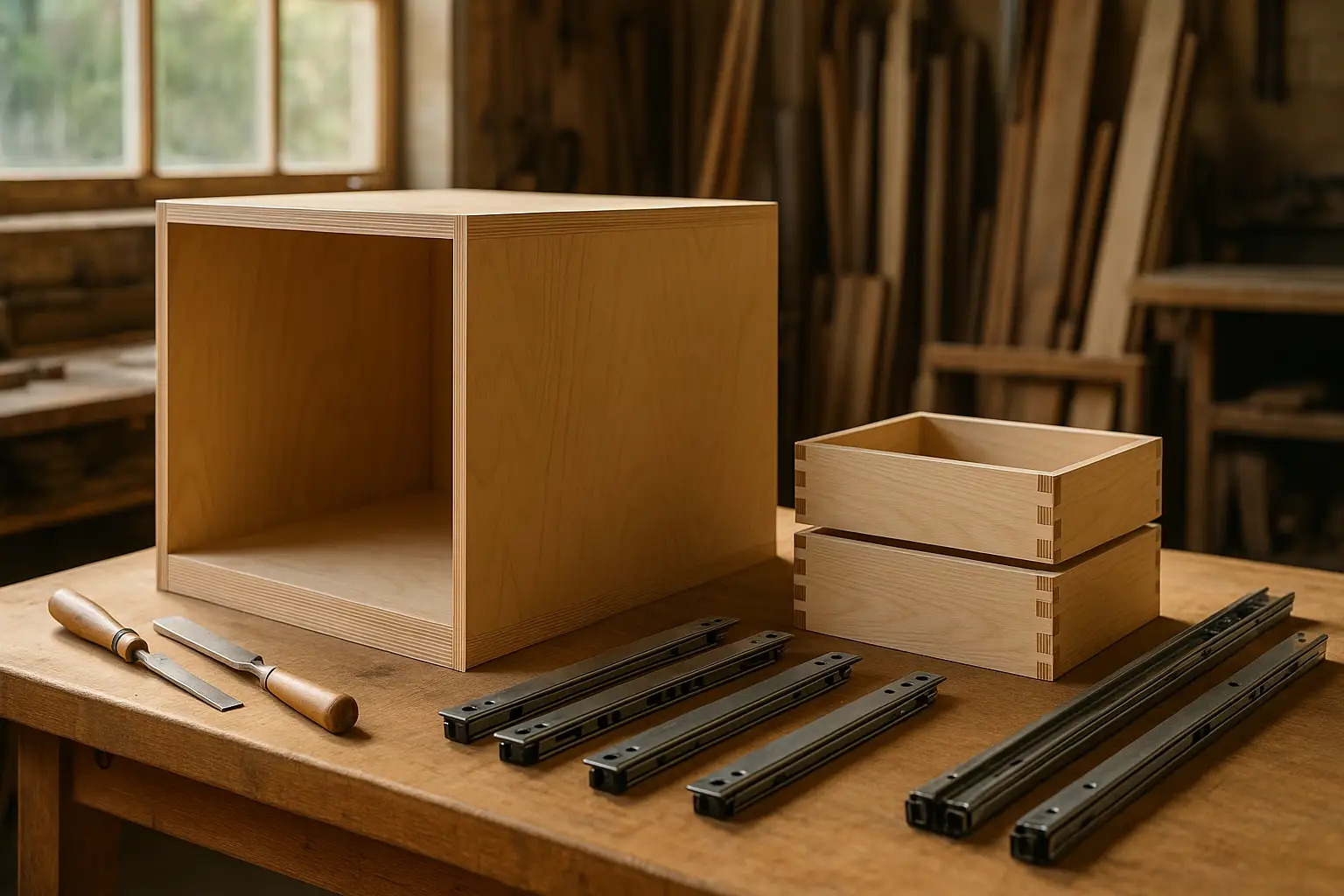
The most important part of a cabinet is the part you never look at: the box. We build our cabinet boxes from 3/4-inch furniture-grade plywood, and that specification carries more weight than any door style or color. Plywood resists the moisture and seasonal humidity swings common in Bay Area kitchens, holds screws and fasteners under load, and stays square for decades. The alternative, thin particleboard, is cheaper and denser but swells when it gets wet, strips fasteners over time, and can sag under the weight of a stone countertop. Under a sink or beneath heavy quartz, that difference is the line between a cabinet that lasts and one that fails quietly.
Panel thickness and back construction matter just as much as the material name. A full 3/4-inch panel with a solid back or a steel hanging rail keeps the box rigid and lets it carry weight without racking. Thin backs and stapled corners are where budget cabinets give themselves away, because the box loses its square over years of daily use and doors start to drift out of alignment. When you evaluate any manufacturer, start with the box: ask what it is made of, how thick it is, and how it is joined. The answer tells you most of what you need to know before you ever discuss finishes. These are also the details that independent programs like the ANSI/KCMA A161.1 cabinet certification evaluate when they put a cabinet through standardized structural and finish durability testing.
Joinery and Drawers: Where Daily Use Concentrates
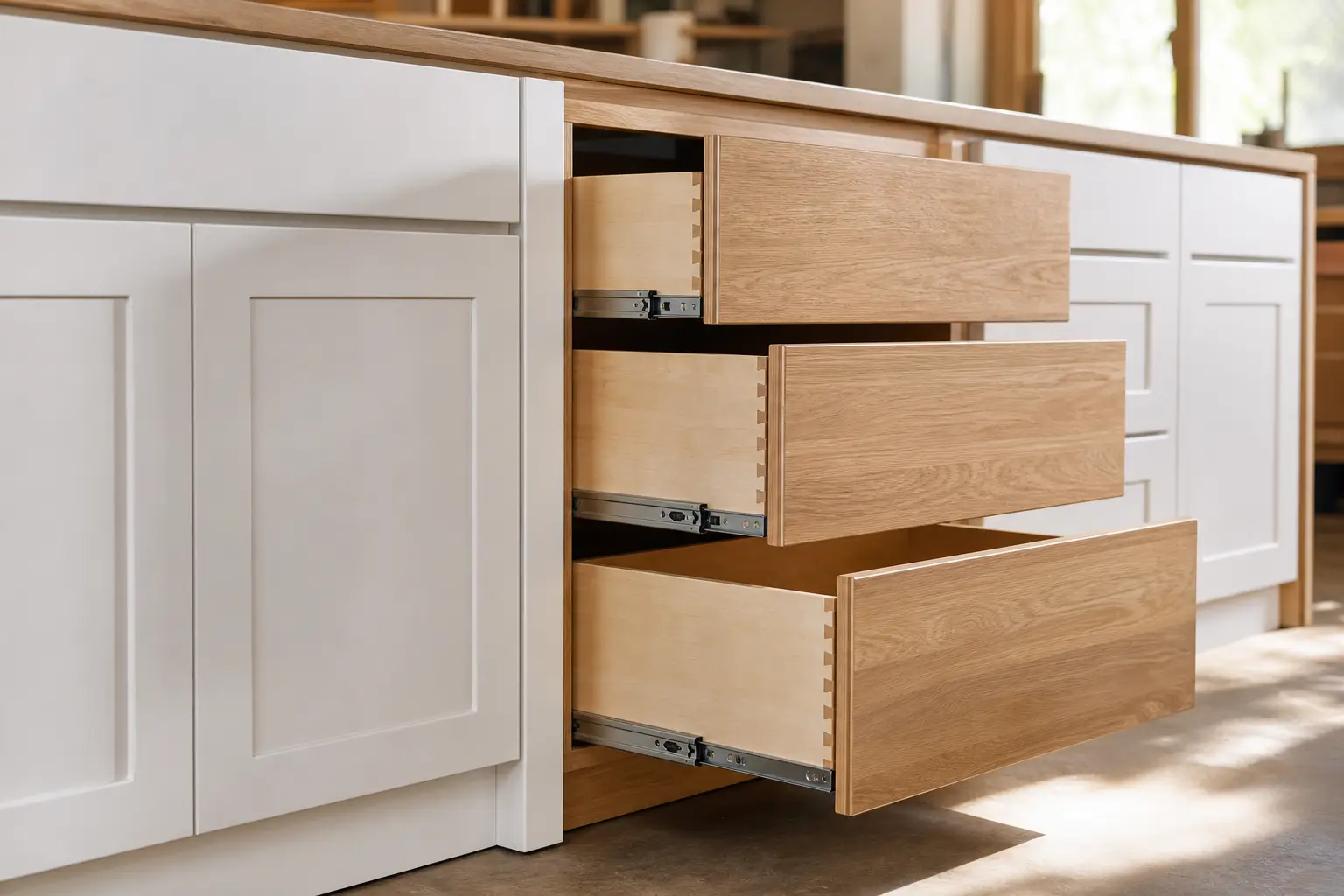
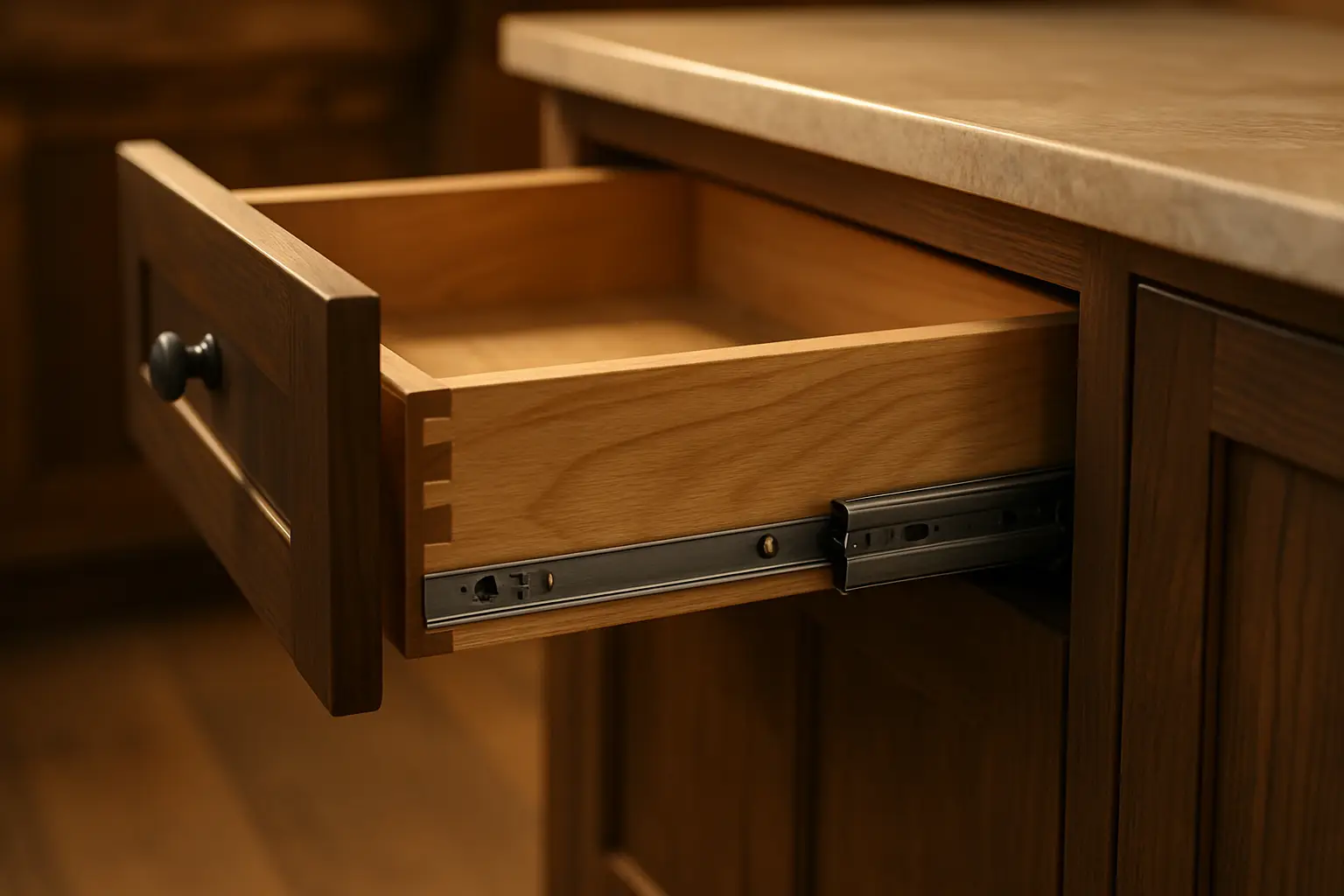
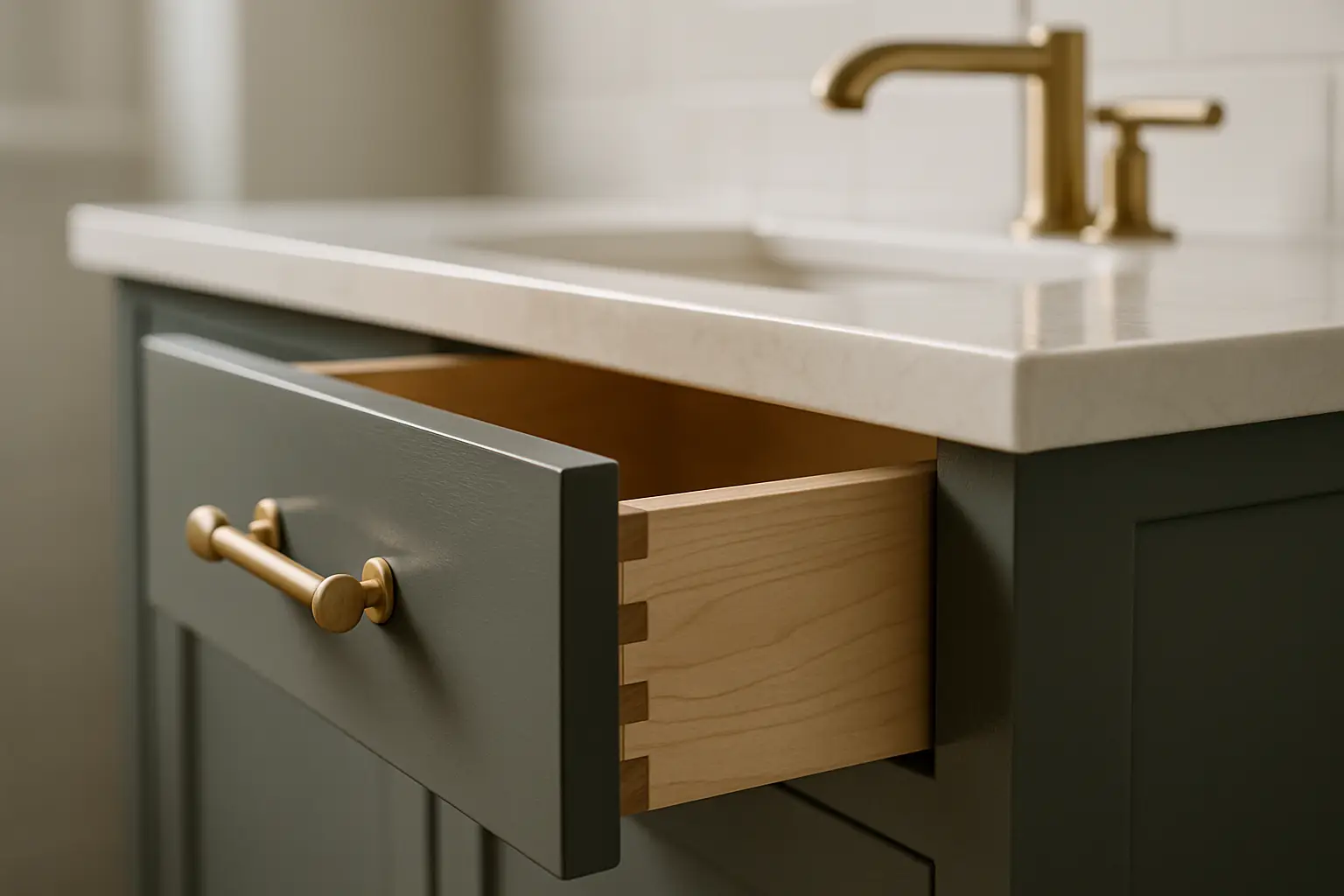
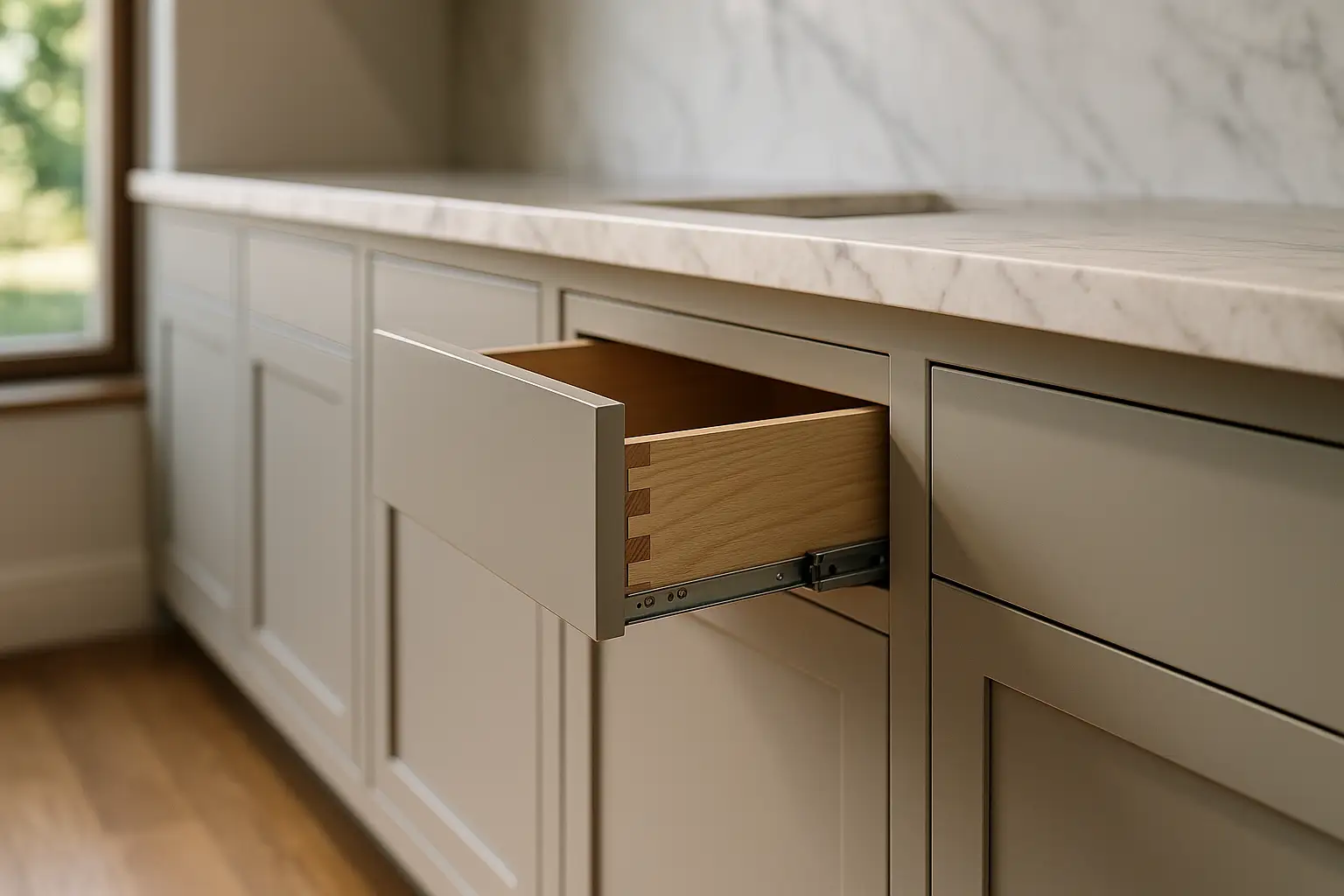
Drawers take more abuse than any other part of a kitchen, so they are the clearest test of a maker's standard. We build drawer boxes with dovetail joinery from solid maple or Baltic birch. Dovetails interlock and distribute load across the whole joint, so the box holds together through hundreds of thousands of open-and-close cycles and heavy loads of flatware, pots, or pantry goods. A stapled or doweled particleboard drawer box concentrates stress at a few points and works loose over time, which is why cheaper drawers develop a wobble within a couple of years.
The slides matter as much as the box. Full-extension, soft-close undermount slides let a drawer pull all the way out so you can reach the very back, carry the load smoothly, and close silently without slamming. Paired with a dovetailed box, they share the weight instead of concentrating it, and they stay adjusted. This combination, dovetail construction on brand-name undermount slides, is one of the most reliable signals of a well-built cabinet, precisely because it so rarely comes back for service. When we talk about a quality standard, this is the kind of unglamorous detail that decides how the kitchen feels to use every single day.
Hardware, Finish, and the Details That Age Well
Beyond the box and drawers, the hinges and the finish determine how a cabinet holds up. We use six-way adjustable soft-close hinges from established brands. The adjustability lets us align every door precisely at install, and it lets a service tech correct any drift years later, so the tight reveals on frameless doors stay crisp. Because the door carries directly on the hinge, a robust cup and a metal mounting plate are worth the small upcharge on the part you will touch thousands of times a year. Cheap two-way clip hinges are a common shortcut that shows up as misaligned doors within a year or two.
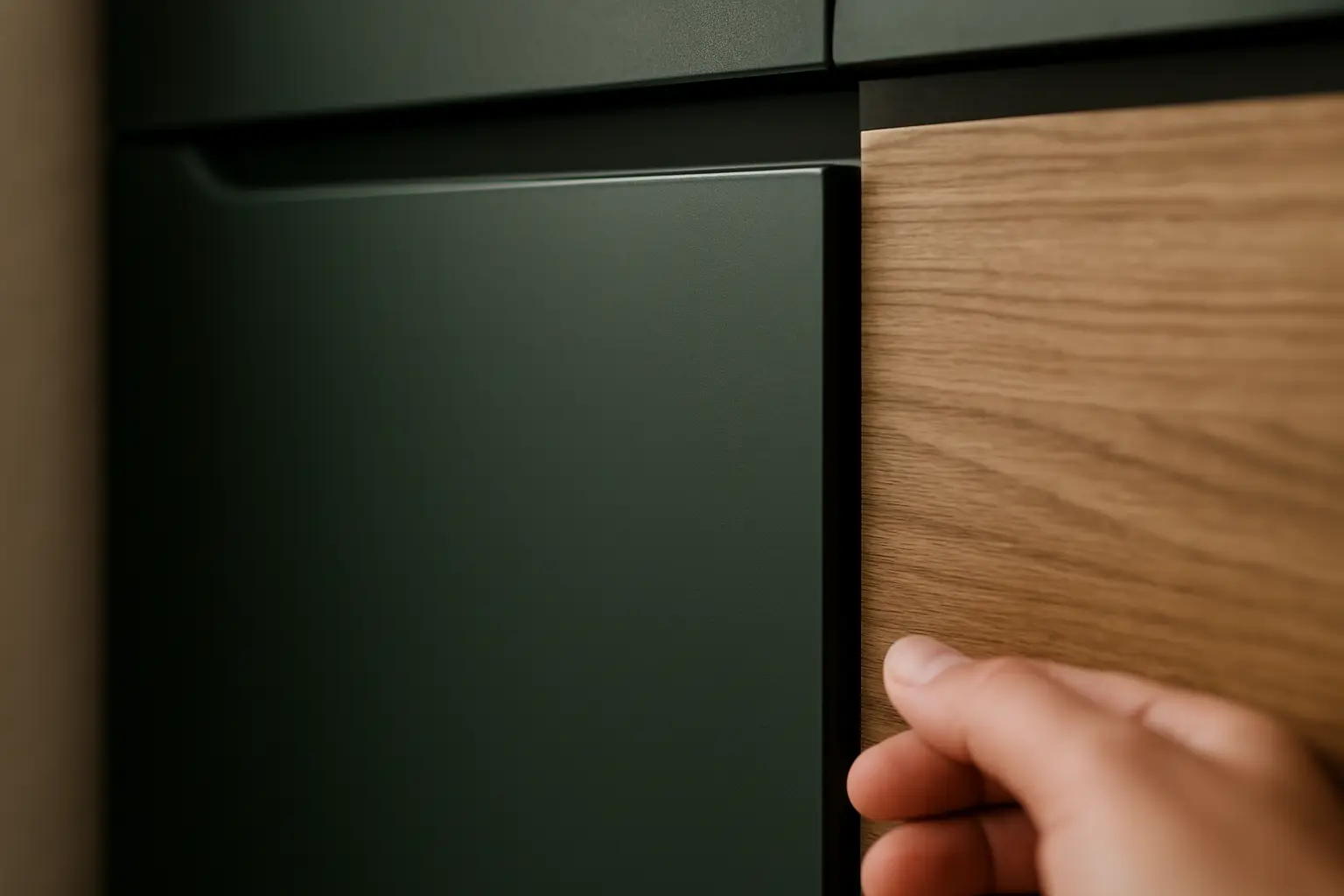
Finish is the other place quality either shows or hides. We spray and cure our finishes in-house, using catalyzed lacquer systems that harden into a smooth, durable film resisting moisture, cleaning chemicals, and daily handling. In-house finishing gives consistent film build and even sheen with no brush marks, and it means we can color-match paint and stain and keep your exact formula on record. Matching materials to their location is part of the same discipline: MDF for smooth painted fronts, plywood boxes for moisture resistance, veneer and stain where natural grain is the goal. None of these choices is exotic. Quality is mostly the accumulation of correct, unshowy decisions made consistently.
Why One Local Shop Beats a Multi-Factory Supply Chain
A standard is only real if it is applied the same way every time, and that is hard when a cabinet order is assembled from panels, doors, and boxes sourced from several different factories. Consistency erodes at every handoff. Because we manufacture in a single San Jose facility, every cabinet passes through the same team and the same inspection before it leaves the floor. We check panel quality, joinery, finish, and hardware alignment on each run, and we catch problems before delivery rather than discovering them at your house on install day. One roof, one team, one standard.
Local manufacturing also closes the loop on accountability. We keep records of every order, so if a San Francisco or San Mateo client needs a replacement part years later, we pull the original spec, mill and finish it from the same materials, and match the run. The people who built your cabinets are the people who inspect them and, if needed, service them. That is what makes our roughly three-week lead time and our limited lifetime warranty more than marketing: the same control that lets us build quickly and consistently is what lets us stand behind the work for the long term. When you compare cabinet makers, hold each one to these concrete criteria. A company operating to a genuine standard will answer every question with specifics, because the standard is the whole point.
FAQ
Q1: What makes one custom cabinet higher quality than another?
A1: Quality comes down to the box material, the joinery, the hardware, and the finish, plus the consistency of how they are assembled. A cabinet built from 3/4-inch furniture-grade plywood with dovetailed drawers, brand-name soft-close hardware, and a sprayed catalyzed finish will outlast one built from thin particleboard with stapled joints and basic hardware by many years.
Q2: Why does plywood matter more than particleboard for cabinet boxes?
A2: Furniture-grade plywood resists moisture, holds screws and fasteners under load, and stays square over time, which matters in Bay Area kitchens that see humidity swings. Particleboard is denser and cheaper but swells when it gets wet and strips fasteners more easily, so a plywood box is the more durable foundation, especially under sinks and heavy stone counters.
Q3: What hardware do quality cabinets use?
A3: Look for full-extension, soft-close undermount drawer slides and six-way adjustable soft-close hinges from established brands. This hardware carries heavy loads, closes silently, and adjusts precisely so doors and drawers stay aligned. Dovetailed solid-wood or plywood drawer boxes riding on good slides are a reliable sign of a well-built cabinet.
Q4: How do you keep quality consistent across every cabinet?
A4: Because we manufacture in one San Jose facility, every box passes through the same team and the same quality checks rather than being sourced from multiple factories. We inspect panels, joinery, finish, and hardware alignment before a run leaves the floor, and we keep records of each order so we can match and service it later.
Q5: Does building locally actually improve quality, or just speed?
A5: It improves both. Local, in-house manufacturing means one team controls materials, joinery, finishing, and inspection, so problems get caught before delivery instead of after. It also gives us a roughly three-week lead time and lets us service and color-match against your original run, which distant multi-factory supply chains struggle to do.
Q6: How can I verify a cabinet maker's quality claims before buying?
A6: Ask what the box is made of and how thick, whether drawers are dovetailed, what hardware brands are used, and how the finish is applied. Ask to see a sample door and drawer box, and ask who does quality control and warranty service. Specific answers signal a real standard, while vague reassurances usually mean corners are cut somewhere.