Ordering custom cabinets is not like buying a sofa off the floor. It runs closer to a small construction project, with measurements, material decisions, shop drawings, and a coordinated install day. Homeowners and builders across San Jose, San Francisco, and San Mateo often ask us what actually happens between the first phone call and the moment doors and drawers are hung. Here is the honest version, stage by stage, so you know what to expect and where your choices matter most.
The Design Consultation: Where Your Kitchen Actually Gets Decided
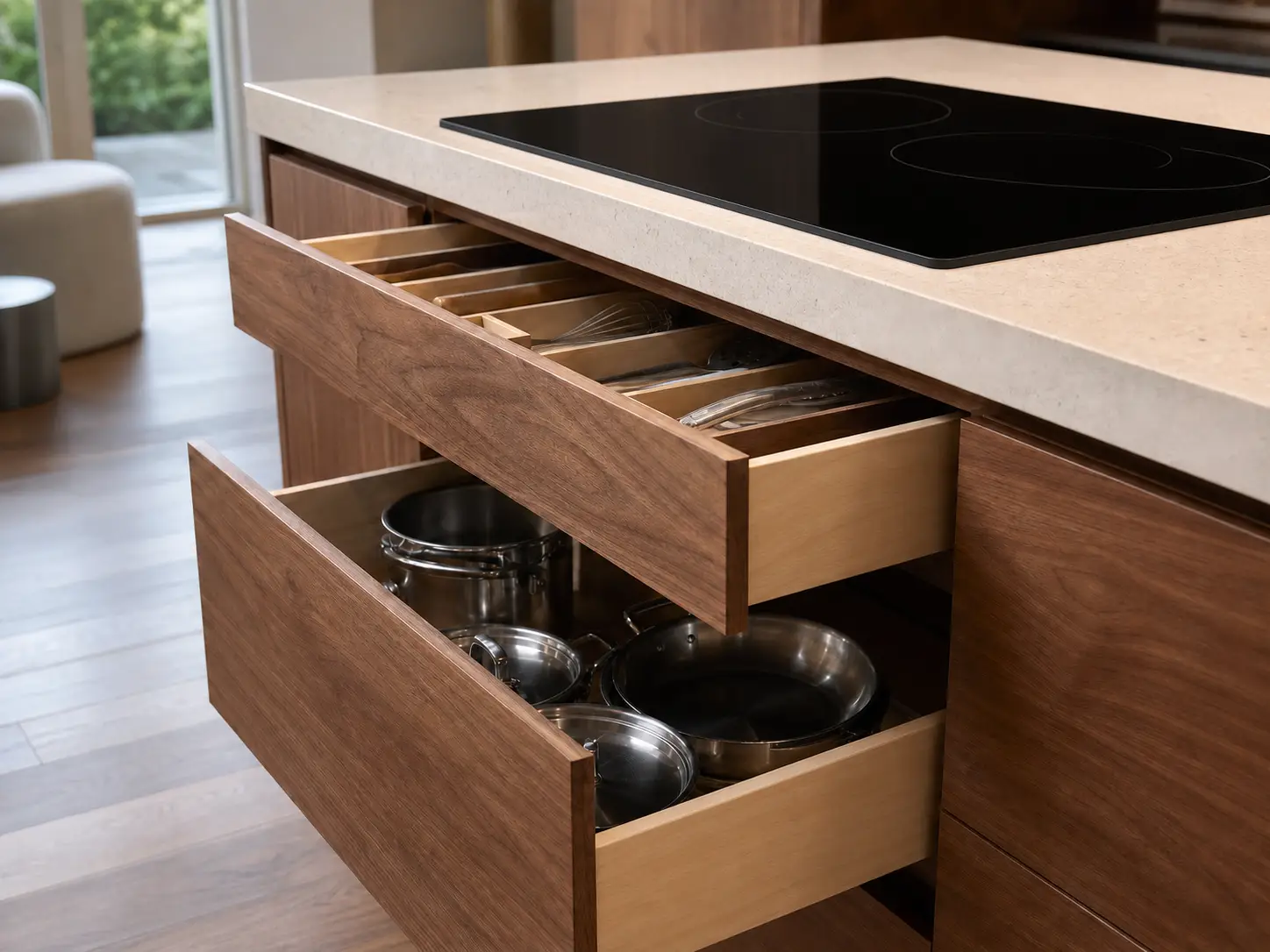
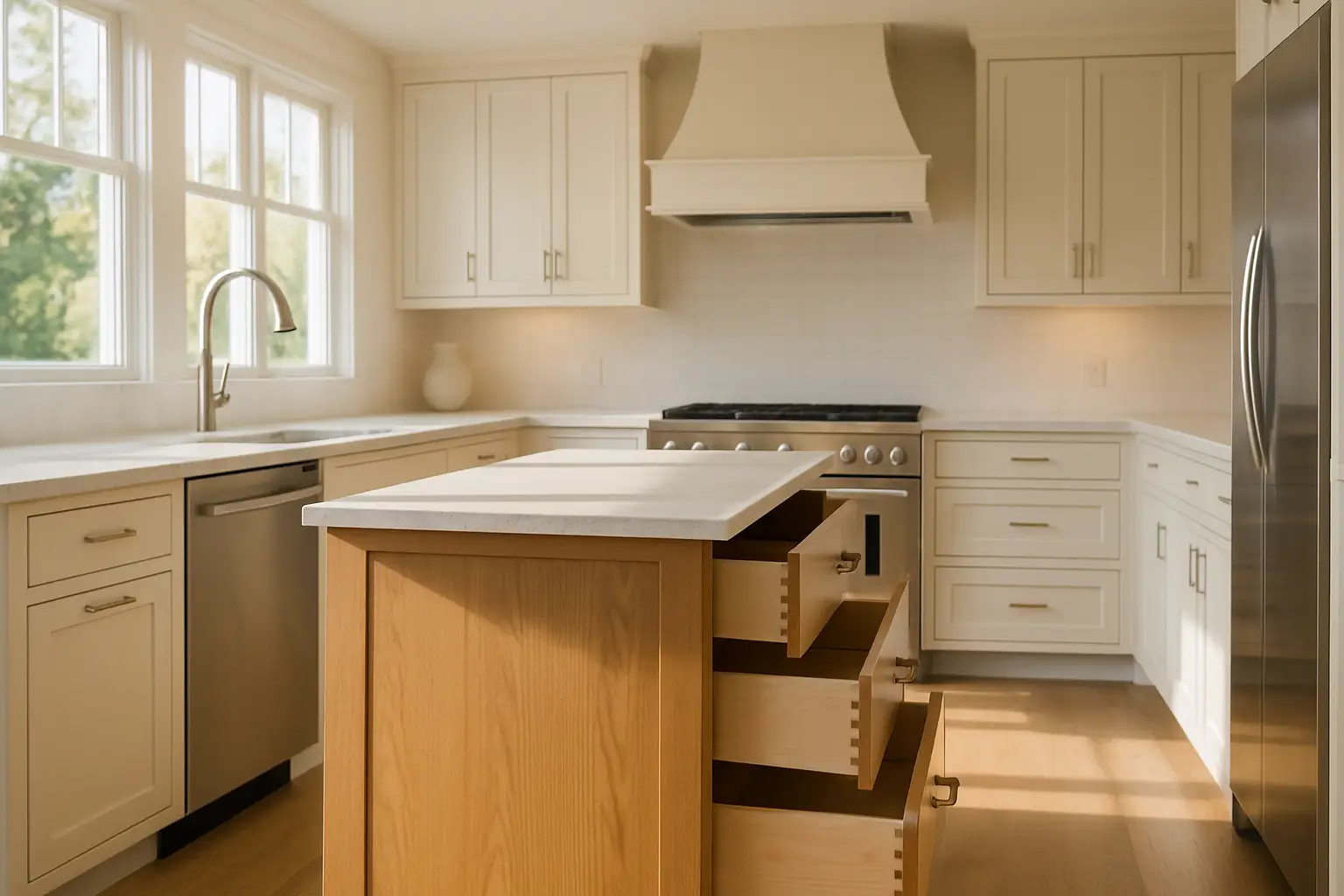
Everything starts with a conversation about how you cook, store, and move through your space. We look at the existing layout, note where plumbing and gas lines sit, and talk through what frustrates you about the current kitchen. A shallow 12-inch cabinet next to the range, a pull-out for spices, drawer banks instead of doors under the cooktop: these decisions get made here, not later.
This is also where we set expectations on construction level. Ready-to-assemble (RTA) cabinets come in fixed sizes and ship flat. Semi-custom lets you tweak standard boxes with upgraded doors and finishes. True custom, which is what American Built Cabinets builds in our San Jose shop, means the box itself is made to your dimensions, so a run that measures 94 inches gets a cabinet that fills 94 inches instead of a stock 90 plus a filler strip. We bring finish samples and door style samples so you are choosing from real wood and paint, not a screen.
Measuring, Shop Drawings, and Sign-Off
After the design direction is set, we take a precise field measurement. Walls are rarely square, floors slope, and a half-inch error at layout becomes a visible gap at install. We measure to the sixteenth, note out-of-plumb walls, and mark every obstruction.
Those measurements become shop drawings: a full elevation and plan showing each cabinet, its dimensions, hinge locations, drawer configurations, and hardware. You review and sign off before anything is cut. This is the cheapest moment to change your mind. Moving a bank of drawers on paper costs nothing; moving it after the boxes are built costs material and time. Read the drawings carefully, confirm appliance sizes against spec sheets, and check that the toe kick height and countertop overhang match what your other trades expect.
What Materials and Hardware Really Mean for the Finished Job
Cabinet quality lives in details most people never see until a drawer fails. We build boxes from plywood rather than particleboard because plywood holds screws better, resists moisture from a leaky sink, and carries weight without sagging. Face frames are milled from solid hardwood, which is what you want under a hinge screwed into the frame for twenty years. Doors are usually solid wood too, except for painted doors, where the center panel is often MDF because it will not telegraph grain or crack at the joints the way solid wood can under paint.
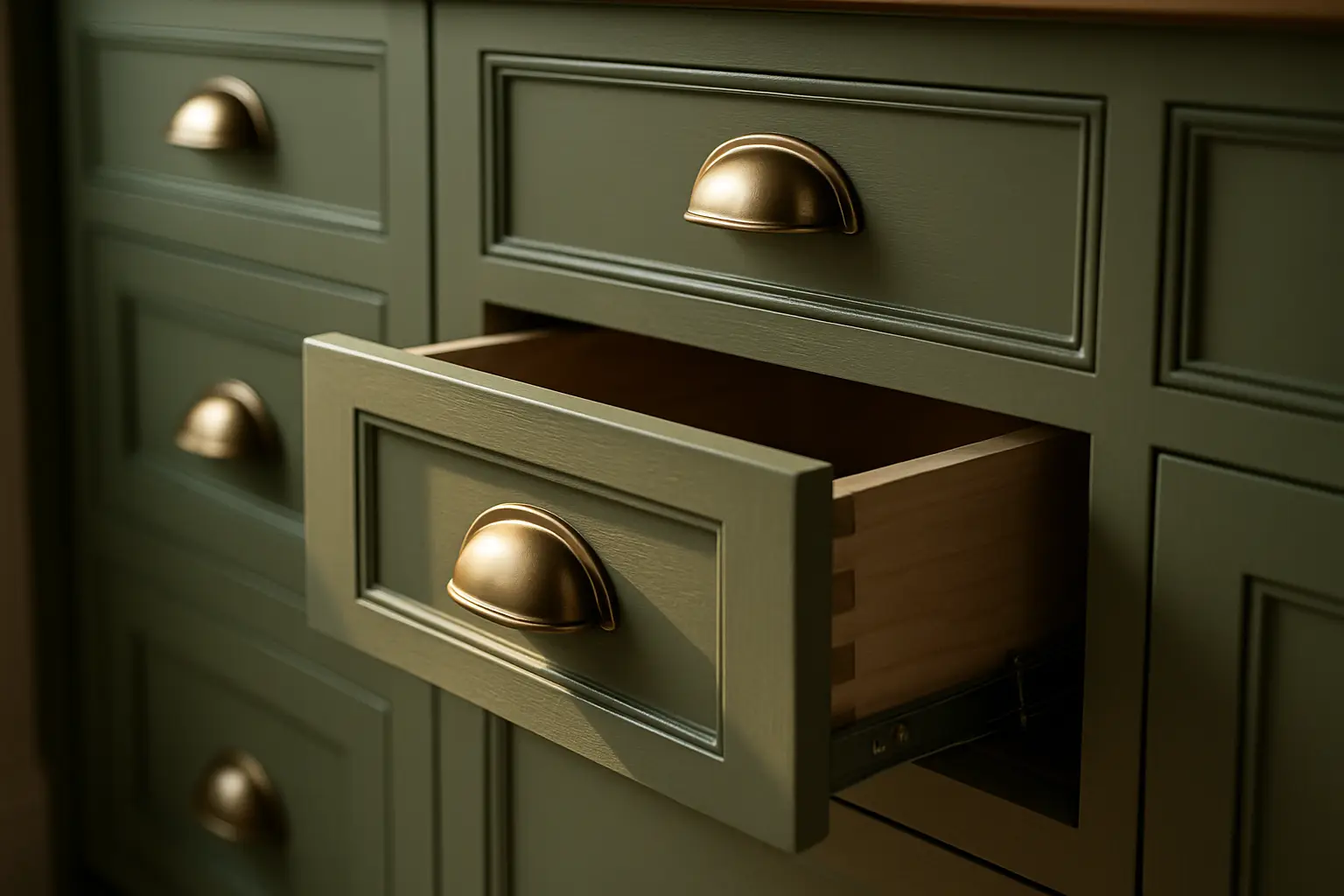
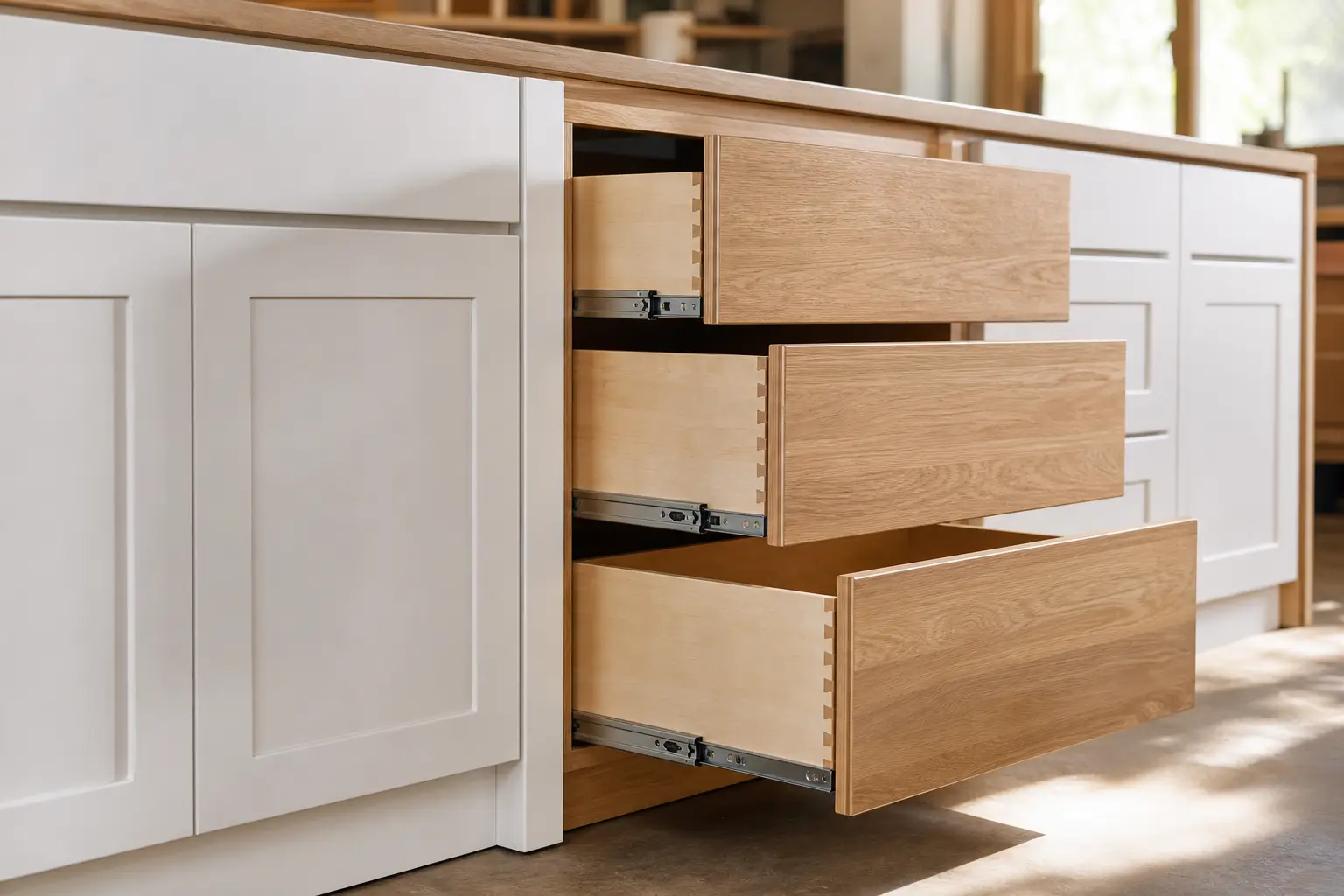
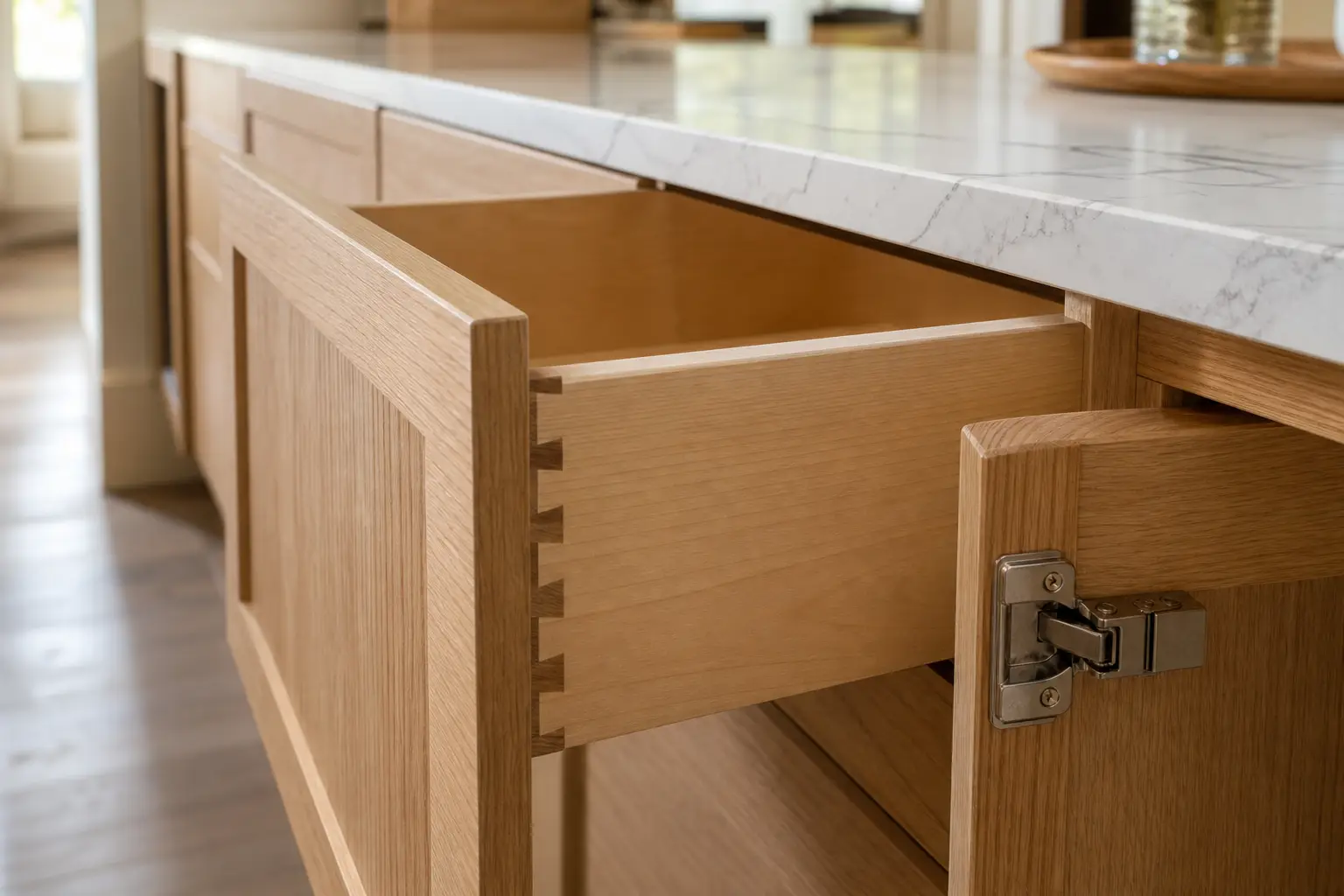
Hardware is where daily use is decided. We spec soft-close hinges and full-extension slides as standard, so drawers pull all the way out and doors do not slam. Dovetail drawer boxes hold together under years of loading far better than stapled boxes. Finish matters too: a catalyzed conversion varnish resists the grease, water, and cleaning products a kitchen throws at it. These are not upsells for their own sake, they are the difference between cabinets that look tired in five years and ones that still close cleanly in twenty.
Manufacturing and the Three-Week Reality
Because we manufacture locally instead of importing containers, our typical lead time runs about three weeks from approved drawings to finished product. That is a genuine advantage on Bay Area remodels, where framing and permit schedules shift and a twelve-week overseas order can leave a client living without a kitchen far longer than planned.
Inside the shop, your job moves through cutting, edge banding, assembly, and finishing as a batch, with quality checks between stages. Doors are sprayed and cured in a controlled environment rather than on site, which keeps dust out of the finish. Before anything leaves, we dry-fit and inspect for consistent color, square boxes, and correctly bored hinge plates. Catching a mismatched door in the shop is easy; catching it after it is on your wall is not.
Installation Day and the Punch List
Installation is choreography. We start with a level base line snapped on the wall, shim the boxes plumb, and fasten them into studs before setting faces and doors. Upper cabinets go in with attention to reveal lines so the gaps between doors read straight across the run. Fillers, scribe pieces, and toe kicks handle the reality that no wall is perfectly flat.
The job is not done when the last screw goes in. We walk the kitchen with you and build a punch list: adjust a hinge, replace a nicked panel, tweak a drawer alignment. Because we made the cabinets here in the Bay Area, warranty follow-up is a local phone call, not an overseas claim form. A door that develops a problem in year two gets handled by the same shop that built it.
FAQ
Q1: How long does the whole custom cabinet process take?
A1: From your first consultation to installation, plan on roughly five to seven weeks. Manufacturing itself runs about three weeks in our San Jose shop, so the variable is really the front end: how fast you finalize door style, finish color, and hardware. Clients who sign off on selections in a day or two land near the five-week end; drawn-out finish decisions push you toward seven.
Q2: What is the difference between RTA, semi-custom, and custom cabinets?
A2: RTA cabinets ship flat in fixed sizes and you assemble them, which is cheapest but least flexible. Semi-custom starts from standard boxes with upgraded doors, finishes, and some modifications. Custom means the box itself is built to your exact dimensions and configuration, so it fits odd walls, tall ceilings, and specific storage needs without relying on filler strips.
Q3: What hinges and drawer slides do you use, and can I upgrade?
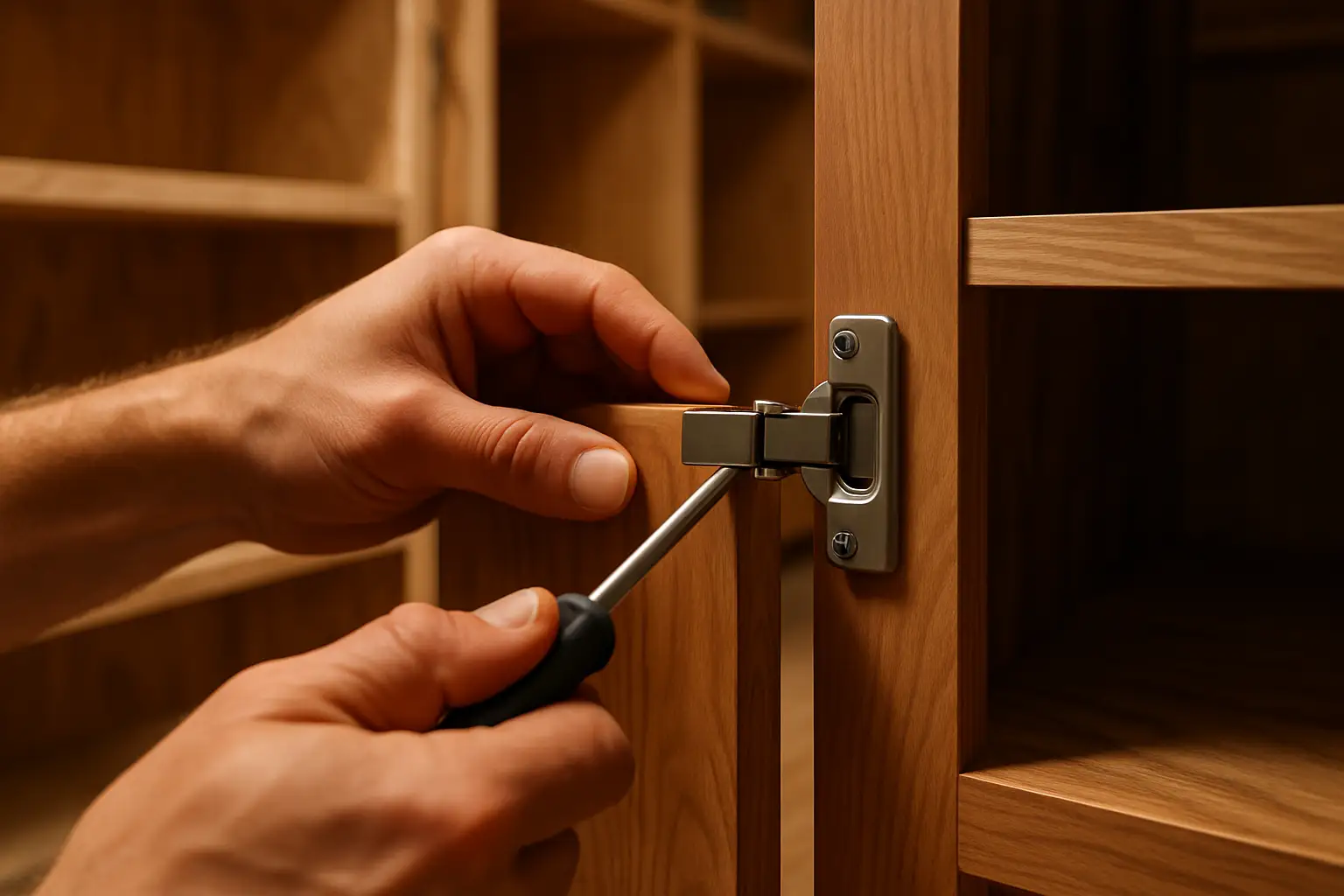
A3: Our standard is soft-close, full-extension undermount slides and six-way adjustable soft-close hinges, which let us fine-tune door alignment after install without swapping hardware. For heavy drawers, say a pot bank pulling 90 to 100 pounds, we can spec slides rated to that load. The adjustable hinges are also why a year-two door sag is usually a five-minute fix rather than a replacement.
Q4: Can I change the design after I approve the shop drawings?
A4: You can, but it is the most expensive point to make changes. Once drawings are approved we cut material to those exact specs. Small hardware or finish adjustments may still be possible early in production, but structural changes like relocating drawer banks usually mean rebuilding parts and extending the timeline. That is why we ask you to review elevations carefully before sign-off.
Q5: Do you handle installation or just deliver the cabinets?
A5: We do both. Many builders and contractors we work with across San Francisco and San Mateo install our cabinets themselves, and we supply detailed drawings for that. For homeowners we coordinate delivery and installation, including leveling, scribing to walls, and a final punch-list walkthrough.
Q6: What happens if something goes wrong after installation?
A6: Because we manufacture locally, warranty support is a direct call to the shop that built your cabinets. Hinge adjustments, finish touch-ups, or a replacement door are handled by our team rather than routed through an overseas supplier, which usually means a much faster resolution.